As this is the worlds first full video tire test, I encourage you to watch rather than read, and if you have any comments or suggestions please leave them on the YouTube page. If you'd rather read, all the glorious tire test detail can be found below the video!
Testing Methodology
Test Driver
Jonathan Benson
Tire Size
265/35 R19
Test Vehicle
BMW M2
Test Location
Professional Proving Ground
Tire Pressures
OE
Test Year
2019
Tires Tested
8
Show full testing methodologyHide methodology
Every tire is tested using calibrated instrumented measurement and structured subjective assessment. Reference tires are retested throughout each session to correct for changing conditions, ensuring fair, repeatable comparisons. Multiple reference sets are used where needed so that control tire wear does not affect accuracy.
We use professional-grade testing equipment including GPS data loggers, accelerometers, and calibrated microphones. All tires are broken in and conditioned before testing begins. For full details on our equipment, preparation process, and calibration procedures, see our complete testing methodology.
Categories Tested
Dry Braking
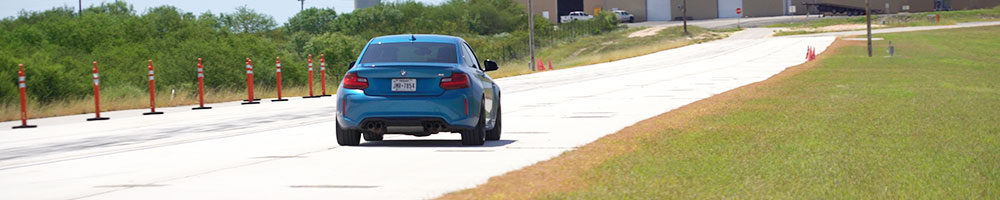
For dry braking, I drive the test vehicle at an entry speed of 110 km/h and apply full braking effort to a standstill with ABS active on clean, dry asphalt. I typically use an 100–5 km/h measurement window. My standard programme is five runs per tire set where possible, although the sequence can extend to as many as fifteen runs if conditions and tire category justify it. I analyse the full set of runs and discard statistical outliers before averaging. Reference tires are run repeatedly throughout the session to correct for changing conditions.
Dry Handling
For dry handling, I drive at the limit of adhesion around a dedicated handling circuit with ESC disabled where possible so I can assess the tire's natural balance, transient response, and limit behaviour without electronic intervention masking the result. I usually complete between two and five timed laps per tire set, depending on the circuit, tire type, and consistency of conditions. I exclude laps affected by clear driver error or obvious environmental inconsistency. Control runs are carried out frequently throughout the session, and I often use multiple sets of control tires so that wear on the references does not become a meaningful variable. For more track-focused products, I also do endurance testing, which is a set number of laps at race pace to determine tire wear patterns and heat resistance over longer driving.
Subj. Dry Handling
Objective data is only part of the picture, so I also carry out a structured subjective handling assessment at the limit of adhesion on a dedicated dry handling circuit. I score steering precision, steering response, turn-in behaviour, mid-corner balance, corner-exit traction, breakaway characteristics, and overall confidence using a standardised 1–10 scale used consistently across my testing. The final assessment combines numeric scoring with written technical commentary. I complete familiarisation laps on the control tire before evaluating each candidate.
Wet Braking
For wet braking, I drive the test vehicle at an entry speed of 88 km/h and apply full braking effort to a standstill with ABS active on an asphalt surface with a controlled water film. I typically use an 80–5 km/h measurement window to isolate tire performance from variability in the initial brake application. My standard programme is eight runs per tire set where possible, although the sequence can extend to as many as fifteen runs if conditions and tire category justify it. I analyse the full set of runs and discard statistical outliers before averaging. To correct for changing conditions, I run reference tires repeatedly throughout the session — in wet testing, typically every three candidate test sets.
Wet Handling
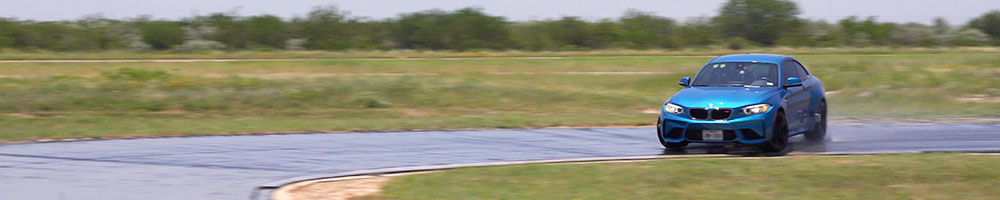
For wet handling, I drive at the limit of adhesion around a dedicated handling circuit. I generally use specialist wet circuits with kerb-watering systems designed to maintain a consistent surface condition. ESC is disabled where possible so I can assess the tire's natural balance, transient response, and limit behaviour without electronic intervention masking the result. I usually complete between two and five timed laps per tire set, depending on the circuit, tire type, and consistency of conditions. I exclude laps affected by clear driver error or obvious environmental inconsistency. Control runs are carried out frequently throughout the session, and I often use multiple sets of control tires so that wear on the references does not become a meaningful variable.
Subj. Wet Handling
Objective data is only part of the picture, so I also carry out a structured subjective handling assessment at the limit of adhesion on a dedicated wet handling circuit. I score steering precision, steering response, turn-in behaviour, mid-corner balance, aquaplaning resistance, breakaway characteristics, and overall confidence using a standardised 1–10 scale used consistently across my testing. The final assessment combines numeric scoring with written technical commentary. I complete familiarisation laps on the control tire before evaluating each candidate.
Straight Aqua
To measure straight-line aquaplaning resistance, I drive one side of the vehicle through a water trough of controlled depth, typically around 7 mm, while the opposite side remains on dry pavement. I enter at a fixed speed and then accelerate progressively. I define aquaplaning onset as the point at which the wheel travelling through the water exceeds a specified slip threshold relative to the dry-side reference wheel. I usually perform four runs per tire set and average the valid results.
Subj. Comfort
To assess comfort, I drive on a wide range of road surfaces (often dedicated comfort tracks at test facilities) at speeds from 50 to 120 km/h, including smooth motorway, coarse surfaces, expansion joints, broken pavement, and sharp-edged obstacles. I evaluate primary ride quality, secondary ride quality, impact harshness, seat-transmitted vibration, and the tire's ability to absorb sharp inputs. Ratings are assigned on a 1–10 scale relative to the reference tire.
Noise
I measure external pass-by noise in accordance with UNECE Regulation 117 and ISO 13325 using the coast-by method on a compliant test surface. Calibrated microphones are positioned beside the test lane, and the vehicle coasts through the measurement zone under controlled conditions. I record the maximum A-weighted sound pressure level in dB(A), complete multiple runs over the relevant speed range, and normalise the result to the reference speed required by the procedure.
Rolling Resistance
Rolling resistance is measured under controlled laboratory conditions in accordance with ISO 28580 and UNECE Regulation 117 Annex 6. The tire is mounted on a test wheel and loaded against a large-diameter steel drum. After thermal stabilisation at the prescribed test speed, rolling resistance force is measured at the spindle and corrected according to the relevant procedure. The result is expressed as rolling resistance coefficient, typically in kg/tonne.
How each category is weighted in the overall score:
Dry35%
Dry Braking45%
Dry Handling45%
Subj. Dry Handling9%
Wet50%
Wet Braking37%
Wet Handling37%
Subj. Wet Handling11%
Straight Aqua16%
Comfort5%
Subj. Comfort45%
Noise45%
Tire Weight9%
Value10%
Rolling Resistance100%
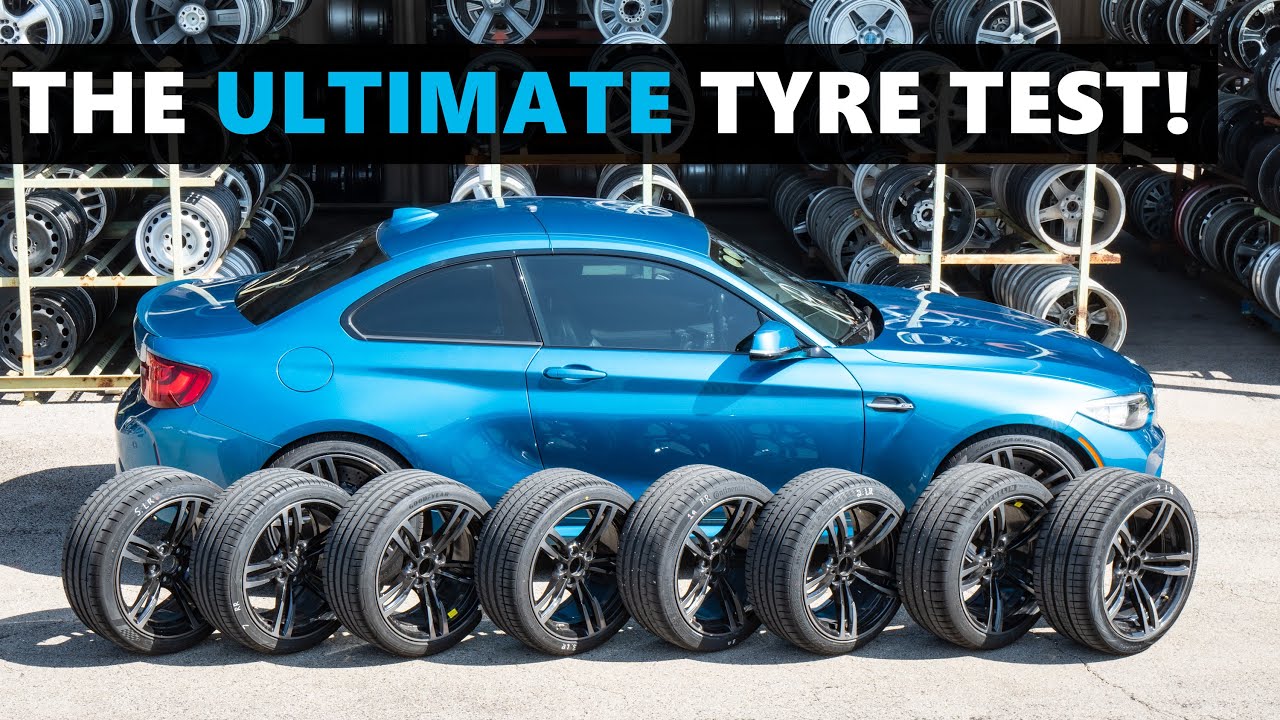
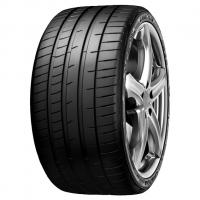
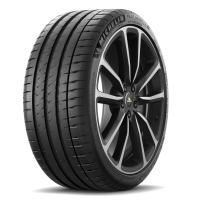
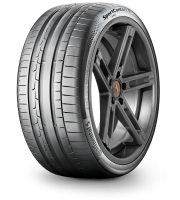
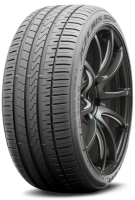
Here it is, the 2019 Tire Reviews UUHP tire test! This is a HUGE tire test, which includes the first test of the new Goodyear Eagle F1 SuperSport, and its two current top rated rivals, the Michelin Pilot Sport 4S, and the Continental SportContact 6, plus five other maximum performance summer tire patterns.
This test was conducted at Continentals test facility in Uvalde texas, and has the added advantage of all the tires (other than Goodyear) being available to both the European and American markets!
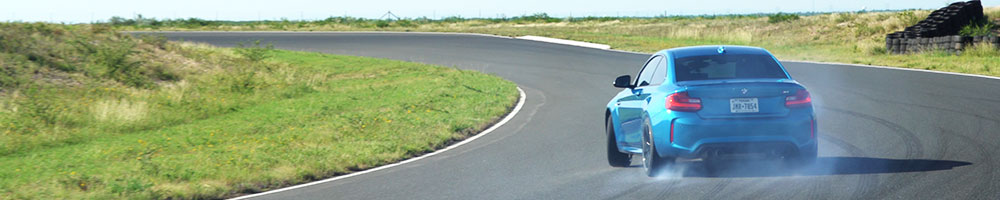
The test car is a BMW M2 wearing 245/35 R19 fronts and 265/35 R19 rears. This is a full tire test, so all the usual categories are on test including dry and wet handling, dry and wet braking, aquaplaning, rolling resistance, noise and comfort. Where this test is slightly different from other tests is we've put a greater emphasis on subjective handling scoring in the dry and wet, as we believe on a car like the BMW M2, how the car feels and how it's balanced is as important as saving a few tenths of a second.
Sadly Pirelli, Hankook, Yokohama and Nokian only made one of the two tire sizes we needed for this test in aftermarket fitment, testing mixed fitment like on the M2 is always difficult.
Dry
The gap in dry handling was extremely close between the Continental, Michelin and Goodyear, with all three tires being separated by just 0.3 seconds. Subjectively, the Continental felt the most exciting tire on test, with the quickest steering and most feedback through the front axle. The Goodyear and Michelin offered a very similar balance, which gave the M2 a little more understeer than on the Continental.
The midrange battle was won by the Vredestein, which subjectively felt as good as the Continental but was on average, 0.6 seconds behind across the lap. Falken have managed to produce a tire with good grip, but the more comfort bias of the tire made it subjectively too soft. Kumho was very fast on its first lap, but the grip fell away quickly as the tire overheated, as did the Toyo, but to a lesser degree.
Dry Handling
Spread: 3.50 s (5.8%)|Avg: 61.33 s
Dry handling time in seconds (Lower is better)
Continental Sport Contact 6
60.30 s
Michelin Pilot Sport 4 S
60.50 s
Goodyear Eagle F1 SuperSport
60.60 s
Vredestein Ultrac Vorti
60.90 s
Falken Azenis FK510
61.10 s
Kumho Ecsta PS91
61.20 s
Toyo Proxes Sport
62.20 s
Accelera PHI
63.80 s
Subj. Dry Handling
Spread: 3.40 Points (37.8%)|Avg: 7.78 Points
Subjective Dry Handling Score (Higher is better)
Continental Sport Contact 6
9.00 Points
Vredestein Ultrac Vorti
8.90 Points
Goodyear Eagle F1 SuperSport
8.70 Points
Michelin Pilot Sport 4 S
8.30 Points
Toyo Proxes Sport
7.60 Points
Kumho Ecsta PS91
7.50 Points
Falken Azenis FK510
6.60 Points
Accelera PHI
5.60 Points
Dry braking was dominated by the three premium manufacturers.
Dry Braking
Spread: 5.50 M (15.7%)|Avg: 37.29 M
Dry braking in meters (Lower is better)
Michelin Pilot Sport 4 S
35.00 M
Continental Sport Contact 6
35.40 M
Goodyear Eagle F1 SuperSport
35.80 M
Falken Azenis FK510
37.40 M
Vredestein Ultrac Vorti
37.70 M
Kumho Ecsta PS91
37.70 M
Toyo Proxes Sport
38.80 M
Accelera PHI
40.50 M
Wet
By using a BMW M2, wet handling became as much about rear grip as about front. This is where the new Goodyear excelled, offering a really neutral balance between the front and the rear of the car, while providing excellent grip across the lap. While the Vredestein couldn't match the best during wet braking, the extra rear grip it had over its rivals meant it finished the second fastest time, and it was a similar story for Toyo. Continental and Michelin were fourth and fifth, and while they both had excellent grip, both struggling more at the rear than the Goodyear to get the power down. The Falken was another tenth of a second slower, and the Kumho and the budget struggle in the wet with a lack of grip.
Wet Handling
Spread: 16.06 s (22.8%)|Avg: 74.74 s
Wet handling time in seconds (Lower is better)
Goodyear Eagle F1 SuperSport
70.37 s
Vredestein Ultrac Vorti
72.78 s
Toyo Proxes Sport
73.17 s
Continental Sport Contact 6
73.36 s
Michelin Pilot Sport 4 S
73.40 s
Falken Azenis FK510
73.54 s
Kumho Ecsta PS91
74.83 s
Accelera PHI
86.43 s
Subj. Wet Handling
Spread: 7.00 Points (77.8%)|Avg: 6.44 Points
Subjective Wet Handling Score (Higher is better)
Goodyear Eagle F1 SuperSport
9.00 Points
Vredestein Ultrac Vorti
8.00 Points
Falken Azenis FK510
7.00 Points
Toyo Proxes Sport
7.00 Points
Michelin Pilot Sport 4 S
6.50 Points
Kumho Ecsta PS91
6.00 Points
Continental Sport Contact 6
6.00 Points
Accelera PHI
2.00 Points
There was no issue with rear grip during wet braking, which highlighted the Contnental and Michelins raw grip in shallow water.
Wet Braking
Spread: 27.00 M (58.3%)|Avg: 53.00 M
Wet braking in meters (Lower is better)
Michelin Pilot Sport 4 S
46.30 M
Continental Sport Contact 6
46.90 M
Falken Azenis FK510
48.40 M
Goodyear Eagle F1 SuperSport
48.60 M
Toyo Proxes Sport
49.90 M
Vredestein Ultrac Vorti
53.80 M
Kumho Ecsta PS91
56.80 M
Accelera PHI
73.30 M
During aquaplaning testing, the Michelin showed the best balance betwen braking and aquaplaning results.
Straight Aqua
Spread: 4.00 Km/H (4.6%)|Avg: 85.04 Km/H
Float Speed in Km/H (Higher is better)
Toyo Proxes Sport
86.90 Km/H
Michelin Pilot Sport 4 S
86.70 Km/H
Falken Azenis FK510
85.90 Km/H
Continental Sport Contact 6
85.80 Km/H
Goodyear Eagle F1 SuperSport
84.70 Km/H
Vredestein Ultrac Vorti
83.80 Km/H
Kumho Ecsta PS91
83.60 Km/H
Accelera PHI
82.90 Km/H
Environment
The Continental offered an excellent low rolling resistance result in the 265 fitment.
Rolling Resistance
Spread: 1.23 kg / t (15%)|Avg: 8.87 kg / t
Rolling resistance in kg t (Lower is better)
Continental Sport Contact 6
8.18 kg / t
Accelera PHI
8.31 kg / t
Michelin Pilot Sport 4 S
8.70 kg / t
Toyo Proxes Sport
8.91 kg / t
Goodyear Eagle F1 SuperSport
9.04 kg / t
Falken Azenis FK510
9.10 kg / t
Vredestein Ultrac Vorti
9.31 kg / t
Kumho Ecsta PS91
9.41 kg / t
19,000 km
£1.45/L
8.0 L/100km
--
Annual Difference
--
Lifetime Savings
--
Extra Fuel/Energy
--
Extra CO2
Estimates based on typical driving conditions. Rolling resistance accounts for approximately 20% of IC vehicle fuel consumption and 25% of EV energy consumption. Actual savings vary based on driving style, vehicle weight, road conditions, and tire age. For comparative purposes only. Lifetime savings based on a 40,000km / 25,000 mile tread life.
The subjective comfort of all tires on test was incredibly close, however there were a couple of patterns at the extremities of the results. The Falken proved to be the most comfortable tire on test, appearing to transmit the least amount of tire noise into the cabin, and round off the bumps and road imperfections in a way other tires couldn't match. The Michelin, Continental and Toyo all had good levels of comfort, while the Goodyear and Vredestein transmitted slightly more noise, and higher levels of discomfort when hitting obstacles such as potholes.
Subj. Comfort
Spread: 3.30 Points (33.7%)|Avg: 7.85 Points
Subjective Comfort Score (Higher is better)
Falken Azenis FK510
9.80 Points
Michelin Pilot Sport 4 S
8.50 Points
Accelera PHI
8.00 Points
Continental Sport Contact 6
8.00 Points
Toyo Proxes Sport
8.00 Points
Kumho Ecsta PS91
7.00 Points
Goodyear Eagle F1 SuperSport
7.00 Points
Vredestein Ultrac Vorti
6.50 Points
The Continental proved to be quietest during drive by noise testing in the rear 265 fitment.
Noise
Spread: 1.70 dB (2.4%)|Avg: 72.84 dB
External noise in dB (Lower is better)
Continental Sport Contact 6
72.10 dB
Accelera PHI
72.30 dB
Michelin Pilot Sport 4 S
72.40 dB
Kumho Ecsta PS91
72.50 dB
Falken Azenis FK510
72.90 dB
Toyo Proxes Sport
73.30 dB
Vredestein Ultrac Vorti
73.40 dB
Goodyear Eagle F1 SuperSport
73.80 dB
There was an interesting correlation between tire weight, and the overall results.
Excellent in the key dry and wet handling testing, with great steering feel and balance whatever the conditions. No lap time drop during dry handling testing.
Slightly weak wet braking, lower than average comfort and noise levels.
The new Goodyear Eagle F1 SuperSport brings the competition to the Michelin and Goodyear rivals, finding itself close to them in all key areas, and excelling during wet handling.
Highly Recommended.
Excellent wet and dry braking, fastest tire in the dry with the best steering speed, feel and balance. Retained good levels of comfort and a low rolling resistance. No drop in lap time.
Oversteer balance in the wet made it difficult to extract a good lap time, in spite of the best front end grip.
An excellent all round tire which excels in steering feel and dry grip. The sportiest feeling tire on test.
Highly Recommended.
Excellent dry grip and handling, with one of the best steering feel on test. The balance remained in the wet, making for good wet handling times. Very small time drop off during dry handling.
Weak wet braking, high rolling resistance, low levels of comfort. Heaviest tire on test.
The Ultrac Vorti again proved itself as an excellent handling tire, offering great steering feel and balance in all conditions. Weak braking results cost the tire a higher result.
Recommended.
Very quick on first dry handling lap, with good steering feel and car balance.
Tire overheated very quickly in both dry and wet handling, which changed the balance to high levels of oversteer. Very poor wet braking. Average levels of comfort.
The Kumho PS91 initially felt like a strong tire with good steering and balance, but this soon changed as the tire heated up, resulting in instability and low levels of grip.
Conditionally Recommended.
I see the main problem with the kumho is that it doesnt seem to hold up to track use but it did start out really good, so my question is would it of fared much better if this was a street only test? I have the ps4s currently but at half the price, I've been thinking about moving to kumho, my use is mostly spirited back road drives and no track use, what would you recommend?
Hi, thanks for the amazing tire review. Would you recommend using a premium UUHP tire, like the Michelins PS4 S or the GY F1 SuperSport, also during some occasional and light trackdays? I'd love to occasionaly track my daily (Abarth 124 Spider) but I'm not sure UUHP tire can handle it.
I'm looking forward to see your video then!! I eventually choose the new Potenza Sport, which are the only UUHP tires in EU that fit in my car, but I assume they behave much like the GY F1 SS or PS4 S. I'm just worried that they "cook" and after the trackday they won't handle well (happened with the Potenza RE050 tires)
Unfortunately there is no Pilot Sport 4s in 18" so my chose initially was GY F1 Super Sport but now I saw there is yet available Michelin Pilot Super Sport to order from BMW. What is better tire of those two...Michelin Super Sport or Goodyear Super Sport? I guess Goodyear is superior in wet condition but what about dry?
I'm afraid I've not tested them against each other so I don't know. I have done a video on PSS* vs PS4S which might help a little, it's the OE tire video from a few weeks back
Having used the PS4S as a road tire I could take on track I found in 20C temps I was getting bad graining which resulted in raised patches of rubber across the tire. Given in your review you said the Goodyear handled high temps on track very well would this be a better choice do you think for my needs?
I've actually used the F1 SuperSport on track a number of times now and always been impressed with it, the tire can take some abuse! I'd be interested to read how you find it if you make the swap
Hope you will test next time also Yokohama, Yokohama is in the Top 10 of world biggest tire manufacturers but still notto find often in reviews while I get an overdose of Conti, Michelin, even if both don´t offered any new tire models in the tested sizes since years.
Have you fought e.g. how much more CO2 is connected with such a remote import to you, while e.g. Vredestein in Enschede (NL) is recently laying off almost 900 personal cars tire workers?
https://uploads.disquscdn.c... We have been running the GoodYear F1SS on our Quadrifoglio now for around 2500 miles and I am very happy with them. They are fantastic in the dry and inspire lots of confidence in the wet.
We're spending the next 10 days driving around the north of Scotland, which should put another couple of thousand spirited miles on them.
They are very good tires, and they come in the correct size for our car, unlike the Michelin.
I'll check the tread wear when we get back and update.
5200 miles and while the fronts are still good the rears are basically finished. They have lasted only slightly longer that the AR spec Corsas that came with the car, although the Goodyears are far better in the rain.
We have the winter wheels and tires on now, and we'll probably look at trying some MPS4S 295s on the rear next year. https://uploads.disquscdn.c...
I've done 13000km with 400hp fwd and I'm still at 5-5,5mm (from 7mm new). Did shift the tires front rear. And I do drive 'normal' 95% of the time, anyway they wear no more than the three sets of Michelin PS4/PSS I had before...
Ok just to clarify, the tire weight graph is in kg and is for all four tires and does not include the rim. So divide the difference by 4. Would have been good to see each tire weight by itself. thanks
Missing Hakka Black 2, Eagle F1 Asym. 3 and Asym. 5. Trying to decide on square 275/30R20 setup for Model 3.
FK510 and Asym. 3 are considerably cheaper than Hakka Black 2 and PS 4S (~£ 230 vs ~£ 300). The latter seem to have only slightly better performance but also worse noise, comfort and most importantly price. Do they perhaps hold up considerably better on track? Performance with decreased thread depth is also important.
Looking for good wear and performance on & off track (Continental ruled out partly because of wear issues on track). FK510 seem to perform well while comfortable and quiet. I'm a bit worried about the sluggish slow-to-react manner of the FK510. Is Asym. 3 & 5 the same?
The new Eagle F1 Asym. 5 is tempting, but is only available in 265/30R20 and I'm getting 10 inch rims (slightly stretched?)... :( Worth losing 10 mm? Would be an easy choice if available in 275 mm...
I guess it stand between 275 mm Asym. 3, 275 mm FK510 and 265 mm Asym. 5. Thanks. :)
Asym 3 is outdated, I've made a video on Asym 3 vs Asym 5 so you can see how that improves, though I's stick to stock sizes if possible as you'll potentially have insurance issues.
I have a hatchback Impreza STI Spec C (freshly imported from Japan) and need to buy a set of tires for it. I cannot find any good UHP tire tests for a performance AWD car.
Tire size on the Spec C is: 245/40 R18 97Y
From what i can see, none of the Michelin, Goodyear or Continental in this video are available in the UK in this size. From factory it came with Bridgestone Potenza RE070's fitted, again not available in the UK.
What UHP tire would you recommend for this?
The car will be used 99% of the time on the road but it is a second car for summer and weekends (will also have a set of winter tires for it). Best i can seem to find is the older Michelin Pilot Supersport or something like the Yokohama AD08R. I don't need anything quite as racey as the Cup 2 though.
Any advice would be much appreciated and possible idea for a another video, AWD UHP test since you've now covered RWD in this video and sort of covered FWD in the michelin tire range test.
Thanks for the reply! I shall go for that one then. Do you know if Michelin are ever planning on bringing out the PS4S in any significant range of 18" tire sizes in the UK?
As far as I'm aware, no. There might be some 18" here where OE fitments are made, but there doesn't look like there will be a range, as there is in the US.
The Goodyear Eagle F1 SuperSport will be in 18" sizes
well thats rubbish, didnt really 18" had already become and obscure wheel size. thanks for the info though i will give the Michelin PSS a go and after that will see what becomes available thanks a lot
Is it OK to mix Michelin PSS (rear) and PS4S (front)? They have very similar characteristics, correct? I couldnt find the ps4s in the size I want in the rear, so I bought another set of PSS. Now the fronts are worn too (used them for 9 years), and there's no PSS available where I live, only PS4S. Is there any drawback if I mix them? Thanks
OK got it. Thank you so much for your reply. It's very hard to get matching sets here in Indonesia. The only brands that have the sizes I want are budget brands like accelera, achilles (local brand) or track tires like yoko AD08R. I guess I'll try mixing the . Thanks again
I have been impressed by the F87 M2's stock PSS, very well balanced in all aspects, not uncomfortable at all as daily drive. I'd definitely go for the PS 4 S when they wear out (looks like they'll last for quite a while).
BTW: I don't see Eagle F1 SuperSport offered in Australia, sigh.
Sadly the tires go bigger and bigger. I am on 17" on my MK5 GTI with RE070, which I love for Daily and Trackdays. I would like to test the Contis for FWD, but starting at 19" its a no no for me... Maybe I will give the Goodyear a try, or move to Michelin Super Sports in 18".
Probably, the best combination for a wet track would be the Goodyear Eagle F1 SuperSport in the back and the Continental SC6 in the front since the Conti has the best front end grip in the wet and the Goodyear has the best rear tire. Being the front tires very important for dry/wet braking and aquaplaning, this combination could improve both the dry/wet braking and straight aqua results from a Goodyear's set of 4. It could also improve the dry handling and dry subjective feeling, noise, confort and rolling resistance (this one also meaning faster in a straight road). When in the dry season (or track) maybe one could "just" change the rear tires for a set of Contis and settle for a set of 4 and stow the 2 rear Goodyears until the rain comes back... If one chooses the Michelin Pilot Sport 4S in the front instead of the Continental SC6, he could probably get slightly better dry and wet braking, aquaplaning and comfort, but could give away some subjective dry handling. This is my extrapolation from the test results but only further private testing could tell. The Contis would also cost 28£ less for a set of 2 front tires compared with the Goodyears and 46£ less for a set of 2 compared with the Michelins, but the Contis tend to wear out fast according to some tests published in Tirereviews...
it’s ok, front will last long but rear fitted to powerfull car not more than 18-24 months/40-50k miles. Have full set fitted to e92 3.0d with 650nm and they perform well on dry and wet surface. The only downside is a noise on bad road
Great review and summary of assessment. Shame the Goodyear SuperSport tire not widely available in the UK yet. Hopefully will get better with onset of our rainy season in September.
What tires would you recommend for a Lexus RCF? I don't track the car and it's my daily so refinement is just as important outright performance, I can't decide whether to go with a more sport orientated tire (PS4s) or something with a more comfort bias such as PS4 or ASY5.
I do like to have a b-road blast every now and then but nothing too crazy.
Currently the car has ditch finders (on the car when purchased) and they need to go. I keep changing my mind and can't decide. I've previously had ASY2/3 on different cars and got on well with them, but that was on cars with ~220hp
PS4S for sure...I daily drove the previous model PSS for a few years and it was never noisy or uncomfortable whatsoever, it actually rode better than some all seasons I've had before. Then when the roads got twisty it just gripped for days and had plenty of confidence/feel.
I have the goodyears in 18" and what suprised me most was indeed their wet grip. It was still great at 2 degrees Celsius on a cold spell, much to my surprise and especially in combination with the excellent dry grip manners.
The new Pilot sports did not work great for me though. I live in UAE and its mostly dry and Hot here. I use pilot sport cup 2 and i simply love em on the ferarri world tack. I bought mines from Pitstopaabia Online
you talked about wear of the tires. Could you possibly discuss that too? If the Falkens cost say half the price of the Michelins (which they do!) but they will last half as long then Michelins win all day and the time saved, install costs, in getting new Falkens aren't worth it. Thank you for your time!
Sadly we didn't get any wear data I was happy enough with to share. Proper wear testing is very expensive and very time consuming. There are other tests on the site which do cover wear, just not of the new F1 SuperSport yet


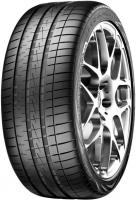
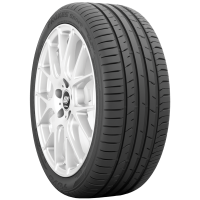
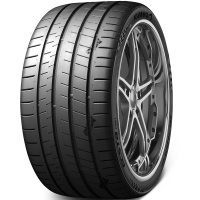
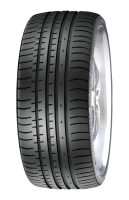
Hi, what would you recommend between PS4 normal(not PS4S) and Eagle F1 Super Sport? Ta
Check out the latest test to see the differences
I see the main problem with the kumho is that it doesnt seem to hold up to track use but it did start out really good, so my question is would it of fared much better if this was a street only test? I have the ps4s currently but at half the price, I've been thinking about moving to kumho, my use is mostly spirited back road drives and no track use, what would you recommend?
There certainly wouldn't be as much heat issue on the road, but the wet performance would remain fairly constant.
Super cool review + data!!
Hi, thanks for the amazing tire review. Would you recommend using a premium UUHP tire, like the Michelins PS4 S or the GY F1 SuperSport, also during some occasional and light trackdays? I'd love to occasionaly track my daily (Abarth 124 Spider) but I'm not sure UUHP tire can handle it.
I'm hopefully making a video on this very thing soon! And yes, those two will take it ok, the Goodyear is very good on track for a road tire.
I'm looking forward to see your video then!! I eventually choose the new Potenza Sport, which are the only UUHP tires in EU that fit in my car, but I assume they behave much like the GY F1 SS or PS4 S. I'm just worried that they "cook" and after the trackday they won't handle well (happened with the Potenza RE050 tires)
It's an interesting tire, let me know how you find them :)
I definitively will as soon as I have enough experience with them!
Unfortunately there is no Pilot Sport 4s in 18" so my chose initially was GY
F1 Super Sport but now I saw there is yet available Michelin Pilot Super Sport to order from BMW.
What is better tire of those two...Michelin Super Sport or Goodyear Super Sport?
I guess Goodyear is superior in wet condition but what about dry?
I'm afraid I've not tested them against each other so I don't know. I have done a video on PSS* vs PS4S which might help a little, it's the OE tire video from a few weeks back
I saw. I watched all your videos more then one time :)
Thanks anyway!
Having used the PS4S as a road tire I could take on track I found in 20C temps I was getting bad graining which resulted in raised patches of rubber across the tire. Given in your review you said the Goodyear handled high temps on track very well would this be a better choice do you think for my needs?
I've actually used the F1 SuperSport on track a number of times now and always been impressed with it, the tire can take some abuse! I'd be interested to read how you find it if you make the swap
Hope you will test next time also Yokohama, Yokohama is in the Top 10 of world biggest tire manufacturers but still notto find often in reviews while I get an overdose of Conti, Michelin, even if both don´t offered any new tire models in the tested sizes since years.
Have you fought e.g. how much more CO2 is connected with such a remote import to you, while e.g. Vredestein in Enschede (NL) is recently laying off almost 900 personal cars tire workers?
See https://www.tirepress.com/2...
Think about it.
https://uploads.disquscdn.c... We have been running the GoodYear F1SS on our Quadrifoglio now for around 2500 miles and I am very happy with them. They are fantastic in the dry and inspire lots of confidence in the wet.
We're spending the next 10 days driving around the north of Scotland, which should put another couple of thousand spirited miles on them.
They are very good tires, and they come in the correct size for our car, unlike the Michelin.
I'll check the tread wear when we get back and update.
Thanks for the feedback, feel free to write a review on the site if you get the time :)
5200 miles and while the fronts are still good the rears are basically finished. They have lasted only slightly longer that the AR spec Corsas that came with the car, although the Goodyears are far better in the rain.
We have the winter wheels and tires on now, and we'll probably look at trying some MPS4S 295s on the rear next year. https://uploads.disquscdn.c...
A set of rears in 5200 miles?! Are you flat out everywhere?!
I bought the car to drive, and I love exploiting it's considerable abilities wherever possible. Have you had a go in a Giulia Quadrifoglio?
I have, I actually did the Mille Miglia with SeenThroughGlass, so spent 4 days driving one VERY quickly around Italy. Great car.
So you know why I need new rear tires ;) I'm glad you enjoyed it!
I've done 13000km with 400hp fwd and I'm still at 5-5,5mm (from 7mm new). Did shift the tires front rear. And I do drive 'normal' 95% of the time, anyway they wear no more than the three sets of Michelin PS4/PSS I had before...
Ok just to clarify, the tire weight graph is in kg and is for all four tires and does not include the rim. So divide the difference by 4. Would have been good to see each tire weight by itself. thanks
Missing Hakka Black 2, Eagle F1 Asym. 3 and Asym. 5. Trying to decide on square 275/30R20 setup for Model 3.
FK510 and Asym. 3 are considerably cheaper than Hakka Black 2 and PS 4S (~£ 230 vs ~£ 300). The latter seem to have only slightly better performance but also worse noise, comfort and most importantly price. Do they perhaps hold up considerably better on track? Performance with decreased thread depth is also important.
Looking for good wear and performance on & off track (Continental ruled out partly because of wear issues on track). FK510 seem to perform well while comfortable and quiet. I'm a bit worried about the sluggish slow-to-react manner of the FK510. Is Asym. 3 & 5 the same?
The new Eagle F1 Asym. 5 is tempting, but is only available in 265/30R20 and I'm getting 10 inch rims (slightly stretched?)... :( Worth losing 10 mm? Would be an easy choice if available in 275 mm...
I guess it stand between 275 mm Asym. 3, 275 mm FK510 and 265 mm Asym. 5. Thanks. :)
Asym 3 is outdated, I've made a video on Asym 3 vs Asym 5 so you can see how that improves, though I's stick to stock sizes if possible as you'll potentially have insurance issues.
Thanks for the reply, I saw that video. Stock size is 235 up front and 275 at the rear. Going stock is not an option. :)
Which would you choose out of Asym. 5 and FK510?
What if the choice is between Asym. 3 and FK510 (availability)?
FK510 if you like comfort
I have a hatchback Impreza STI Spec C (freshly imported from Japan) and need to buy a set of tires for it.
I cannot find any good UHP tire tests for a performance AWD car.
Tire size on the Spec C is:
245/40 R18 97Y
From what i can see, none of the Michelin, Goodyear or Continental in this video are available in the UK in this size. From factory it came with Bridgestone Potenza RE070's fitted, again not available in the UK.
What UHP tire would you recommend for this?
The car will be used 99% of the time on the road but it is a second car for summer and weekends (will also have a set of winter tires for it).
Best i can seem to find is the older Michelin Pilot Supersport or something like the Yokohama AD08R. I don't need anything quite as racey as the Cup 2 though.
Any advice would be much appreciated and possible idea for a another video, AWD UHP test since you've now covered RWD in this video and sort of covered FWD in the michelin tire range test.
Thanks
The Michelin Pilot SuperSport is still an excellent handling tire with great dry grip, so that's where my money would go.
Thanks for the reply! I shall go for that one then.
Do you know if Michelin are ever planning on bringing out the PS4S in any significant range of 18" tire sizes in the UK?
As far as I'm aware, no. There might be some 18" here where OE fitments are made, but there doesn't look like there will be a range, as there is in the US.
The Goodyear Eagle F1 SuperSport will be in 18" sizes
well thats rubbish, didnt really 18" had already become and obscure wheel size. thanks for the info though i will give the Michelin PSS a go and after that will see what becomes available
thanks a lot
Is it OK to mix Michelin PSS (rear) and PS4S (front)? They have very similar characteristics, correct? I couldnt find the ps4s in the size I want in the rear, so I bought another set of PSS. Now the fronts are worn too (used them for 9 years), and there's no PSS available where I live, only PS4S. Is there any drawback if I mix them? Thanks
It's not ideal, but it's not the worst mix of tires you could have. Once the rears are worn just match them again, assuming the size is available.
The PS4S made a good step forward in wet grip so be mindful of oversteer in the wet
OK got it. Thank you so much for your reply. It's very hard to get matching sets here in Indonesia. The only brands that have the sizes I want are budget brands like accelera, achilles (local brand) or track tires like yoko AD08R. I guess I'll try mixing the . Thanks again
I have been impressed by the F87 M2's stock PSS, very well balanced in all aspects, not uncomfortable at all as daily drive. I'd definitely go for the PS 4 S when they wear out (looks like they'll last for quite a while).
BTW: I don't see Eagle F1 SuperSport offered in Australia, sigh.
Where can I check tires weight?! All numbers provided by michelin are not accurate. Where can I find googyears weight?
The video has the specific weight of the rear tires in the intro
Sadly the tires go bigger and bigger. I am on 17" on my MK5 GTI with RE070, which I love for Daily and Trackdays. I would like to test the Contis for FWD, but starting at 19" its a no no for me... Maybe I will give the Goodyear a try, or move to Michelin Super Sports in 18".
Probably, the best combination for a wet track would be the Goodyear Eagle F1 SuperSport in the back and the Continental SC6 in the front since the Conti has the best front end grip in the wet and the Goodyear has the best rear tire. Being the front tires very important for dry/wet braking and aquaplaning, this combination could improve both the dry/wet braking and straight aqua results from a Goodyear's set of 4. It could also improve the dry handling and dry subjective feeling, noise, confort and rolling resistance (this one also meaning faster in a straight road).
When in the dry season (or track) maybe one could "just" change the rear tires for a set of Contis and settle for a set of 4 and stow the 2 rear Goodyears until the rain comes back...
If one chooses the Michelin Pilot Sport 4S in the front instead of the Continental SC6, he could probably get slightly better dry and wet braking, aquaplaning and comfort, but could give away some subjective dry handling.
This is my extrapolation from the test results but only further private testing could tell.
The Contis would also cost 28£ less for a set of 2 front tires compared with the Goodyears and 46£ less for a set of 2 compared with the Michelins, but the Contis tend to wear out fast according to some tests published in Tirereviews...
Buy 4 michelins and you'll be happy
They'll certainly last longer.
it’s ok, front will last long but rear fitted to powerfull car not more than 18-24 months/40-50k miles. Have full set fitted to e92 3.0d with 650nm and they perform well on dry and wet surface. The only downside is a noise on bad road
Great review and summary of assessment. Shame the Goodyear SuperSport tire not widely available in the UK yet. Hopefully will get better with onset of our rainy season in September.
More and more sizes are rolling out :)
Hello
Thanks for the video.
What tires would you recommend for a Lexus RCF? I don't track the car and it's my daily so refinement is just as important outright performance, I can't decide whether to go with a more sport orientated tire (PS4s) or something with a more comfort bias such as PS4 or ASY5.
I do like to have a b-road blast every now and then but nothing too crazy.
Currently the car has ditch finders (on the car when purchased) and they need to go. I keep changing my mind and can't decide. I've previously had ASY2/3 on different cars and got on well with them, but that was on cars with ~220hp
Any advice would be very much appreciated.
Thanks
Dave
PS4S for sure...I daily drove the previous model PSS for a few years and it was never noisy or uncomfortable whatsoever, it actually rode better than some all seasons I've had before. Then when the roads got twisty it just gripped for days and had plenty of confidence/feel.
Thanks for the reply and I agree, think I will go with PS4S.
I agree with this, PS4S is a good shout
I have the goodyears in 18" and what suprised me most was indeed their wet grip. It was still great at 2 degrees Celsius on a cold spell, much to my surprise and especially in combination with the excellent dry grip manners.
The new Pilot sports did not work great for me though. I live in UAE and its mostly dry and Hot here. I use pilot sport cup 2 and i simply love em on the ferarri world tack. I bought mines from Pitstopaabia Online
you talked about wear of the tires. Could you possibly discuss that too? If the Falkens cost say half the price of the Michelins (which they do!) but they will last half as long then Michelins win all day and the time saved, install costs, in getting new Falkens aren't worth it. Thank you for your time!
Sadly we didn't get any wear data I was happy enough with to share. Proper wear testing is very expensive and very time consuming. There are other tests on the site which do cover wear, just not of the new F1 SuperSport yet