There's a new comfort bias summer tire to market, the Pirelli Cinturato C3! To see how good the new tire really is, I've tested it against some of its key rivals from Michelin and Continental. I've also added some new tires I've not tested before.
As usual, all the tires in this test will be tested in the dry and wet, and I'll be assessing the comfort, noise, and rolling resistance (energy use) of the tires to give you a complete overview of which tire is best.
Testing Methodology
Test Driver
Jonathan Benson
Tire Size
225/50 R17
Test Location
Professional Proving Ground
Test Year
2025
Tires Tested
7
Show full testing methodologyHide methodology
Every tire is tested using calibrated instrumented measurement and structured subjective assessment. Reference tires are retested throughout each session to correct for changing conditions, ensuring fair, repeatable comparisons. Multiple reference sets are used where needed so that control tire wear does not affect accuracy.
We use professional-grade testing equipment including GPS data loggers, accelerometers, and calibrated microphones. All tires are broken in and conditioned before testing begins. For full details on our equipment, preparation process, and calibration procedures, see our complete testing methodology.
Categories Tested
Dry Braking
For dry braking, I drive the test vehicle at an entry speed of 110 km/h and apply full braking effort to a standstill with ABS active on clean, dry asphalt. I typically use an 100–5 km/h measurement window. My standard programme is five runs per tire set where possible, although the sequence can extend to as many as fifteen runs if conditions and tire category justify it. I analyse the full set of runs and discard statistical outliers before averaging. Reference tires are run repeatedly throughout the session to correct for changing conditions.
Dry Handling
For dry handling, I drive at the limit of adhesion around a dedicated handling circuit with ESC disabled where possible so I can assess the tire's natural balance, transient response, and limit behaviour without electronic intervention masking the result. I usually complete between two and five timed laps per tire set, depending on the circuit, tire type, and consistency of conditions. I exclude laps affected by clear driver error or obvious environmental inconsistency. Control runs are carried out frequently throughout the session, and I often use multiple sets of control tires so that wear on the references does not become a meaningful variable. For more track-focused products, I also do endurance testing, which is a set number of laps at race pace to determine tire wear patterns and heat resistance over longer driving.
Subj. Dry Handling
Objective data is only part of the picture, so I also carry out a structured subjective handling assessment at the limit of adhesion on a dedicated dry handling circuit. I score steering precision, steering response, turn-in behaviour, mid-corner balance, corner-exit traction, breakaway characteristics, and overall confidence using a standardised 1–10 scale used consistently across my testing. The final assessment combines numeric scoring with written technical commentary. I complete familiarisation laps on the control tire before evaluating each candidate.
Wet Braking
For wet braking, I drive the test vehicle at an entry speed of 88 km/h and apply full braking effort to a standstill with ABS active on an asphalt surface with a controlled water film. I typically use an 80–5 km/h measurement window to isolate tire performance from variability in the initial brake application. My standard programme is eight runs per tire set where possible, although the sequence can extend to as many as fifteen runs if conditions and tire category justify it. I analyse the full set of runs and discard statistical outliers before averaging. To correct for changing conditions, I run reference tires repeatedly throughout the session — in wet testing, typically every three candidate test sets.
Wet Handling
For wet handling, I drive at the limit of adhesion around a dedicated handling circuit. I generally use specialist wet circuits with kerb-watering systems designed to maintain a consistent surface condition. ESC is disabled where possible so I can assess the tire's natural balance, transient response, and limit behaviour without electronic intervention masking the result. I usually complete between two and five timed laps per tire set, depending on the circuit, tire type, and consistency of conditions. I exclude laps affected by clear driver error or obvious environmental inconsistency. Control runs are carried out frequently throughout the session, and I often use multiple sets of control tires so that wear on the references does not become a meaningful variable.
Subj. Wet Handling
Objective data is only part of the picture, so I also carry out a structured subjective handling assessment at the limit of adhesion on a dedicated wet handling circuit. I score steering precision, steering response, turn-in behaviour, mid-corner balance, aquaplaning resistance, breakaway characteristics, and overall confidence using a standardised 1–10 scale used consistently across my testing. The final assessment combines numeric scoring with written technical commentary. I complete familiarisation laps on the control tire before evaluating each candidate.
Straight Aqua
To measure straight-line aquaplaning resistance, I drive one side of the vehicle through a water trough of controlled depth, typically around 7 mm, while the opposite side remains on dry pavement. I enter at a fixed speed and then accelerate progressively. I define aquaplaning onset as the point at which the wheel travelling through the water exceeds a specified slip threshold relative to the dry-side reference wheel. I usually perform four runs per tire set and average the valid results.
Curved Aquaplaning
For curved aquaplaning, I use a circular track, typically around 100 metres in diameter, with a flooded arc of controlled water depth, usually about 7 mm. The vehicle is instrumented with GPS telemetry and a tri-axial accelerometer. I drive through the flooded section at progressively increasing speed, typically in 5 km/h increments, and record the minimum sustained lateral acceleration at each step. The test continues until lateral acceleration collapses, indicating complete aquaplaning. The result is expressed as remaining lateral acceleration in m/s² as speed rises.
Subj. Comfort
To assess comfort, I drive on a wide range of road surfaces (often dedicated comfort tracks at test facilities) at speeds from 50 to 120 km/h, including smooth motorway, coarse surfaces, expansion joints, broken pavement, and sharp-edged obstacles. I evaluate primary ride quality, secondary ride quality, impact harshness, seat-transmitted vibration, and the tire's ability to absorb sharp inputs. Ratings are assigned on a 1–10 scale relative to the reference tire.
Noise
I measure external pass-by noise in accordance with UNECE Regulation 117 and ISO 13325 using the coast-by method on a compliant test surface. Calibrated microphones are positioned beside the test lane, and the vehicle coasts through the measurement zone under controlled conditions. I record the maximum A-weighted sound pressure level in dB(A), complete multiple runs over the relevant speed range, and normalise the result to the reference speed required by the procedure.
Rolling Resistance
Rolling resistance is measured under controlled laboratory conditions in accordance with ISO 28580 and UNECE Regulation 117 Annex 6. The tire is mounted on a test wheel and loaded against a large-diameter steel drum. After thermal stabilisation at the prescribed test speed, rolling resistance force is measured at the spindle and corrected according to the relevant procedure. The result is expressed as rolling resistance coefficient, typically in kg/tonne.
How each category is weighted in the overall score:
Dry35%
Dry Braking45%
Dry Handling45%
Subj. Dry Handling10%
Wet50%
Wet Braking40%
Wet Handling35%
Subj. Wet Handling10%
Straight Aqua10%
Curved Aquaplaning5%
Comfort5%
Subj. Comfort50%
Noise50%
Value10%
Rolling Resistance100%
Dry
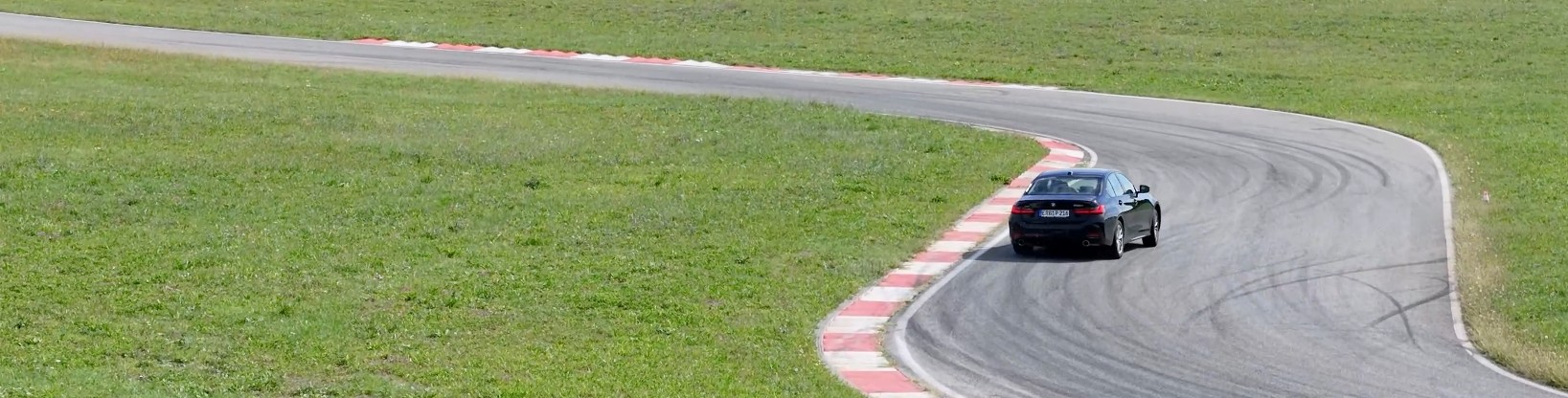
Dry handling was very close! As always for the dry I'm not just testing outright lap time, as that is probably less interesting for this category of tire, but we're digging deep into things like steering precision and predictability, things which impact your life on the road with these tires.
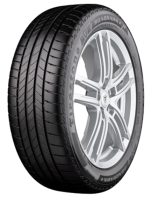
The Firestone was lovely and predictable driving around, light steering, but as you sped up the rear got saturated quickly.
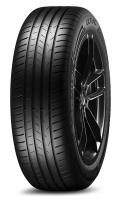
The Vredestein felt pretty bouncy, the steering wasn't precise and the softness of the tire meant the rear took time to stabilise when turning which isn't a feeling I enjoy, it means you're guessing where the car is going. Otherwise, great grip.
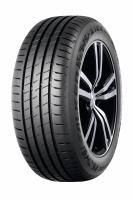
The Falken felt more sporty, and was very stable, this new falken continues to perform well.
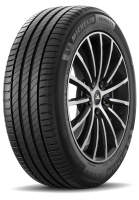
The top three were pretty difficult to pick from, which were the Conti, Michelin and Pirelli. The Conti had the quickest steering but did feel a touch elastic in this size, whereas the Michelin and Pirelli both felt very stable, rounded, mature and had excellent grip.
Subjectively it was very hard to pick a favorite between Michelin and Pirelli, but as the Pirelli was faster around the lap, it won.
Dry Handling
Spread: 1.86 s (2.2%)|Avg: 86.21 s
Dry handling time in seconds (Lower is better)
Falken ZIEX ZE320
85.54 s
Pirelli Cinturato C3
85.61 s
Continental PremiumContact 7
85.73 s
Firestone Roadhawk 2 ENLITEN
86.22 s
Michelin Primacy 4 Plus
86.43 s
Vredestein Ultrac
86.57 s
Goodtrip GR 66
87.40 s
The Pirelli Cinturato C3 needed just 34.13 meters to stop from 100 km/h, while the Goodtrip GR 66 took nearly 3 meters longer at 37.09 meters.
Dry Braking
Spread: 2.96 M (8.7%)|Avg: 35.00 M
Dry braking in meters (100 - 5 km/h) (Lower is better)
Dry Braking: Safety Impact: Best vs Worst Tire
Wet
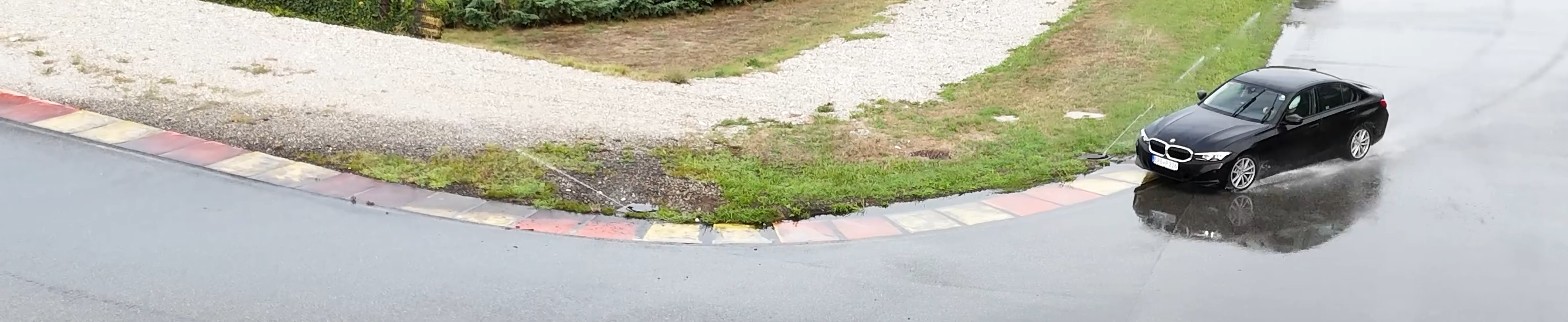
It's been a while since I wet tested in a RWD car, and while safety systems have come a long way, it is a nice reminder how important tires are.
The Goodtrip must have been named ironically as you wouldn't have a good trip in the wet. To be fair to it, it's not the worst cheap tire I've ever used, but it certainly doesn't compare to the rest.
Next up was the Michelin Primacy 4+, as usual this was classic Michelin, super safe feeling with plenty of understeer. The French tire is now a little down on grip, showing its age as one of the oldest tires in this test.
The top 5 were separated by less than 3% which is crazy close on such a complicated track. While all the times were close, as usual, the grip was delivered in varying ways.
The Firestone was an easy tire to drive, the rear felt very planted and it posted a good time, it didn't feel special but it wasn't particularly bad in any way either.
Next up was the Continental, and we're now 1.8% away from the best so these is a very tight group.
I usually love Continental in subjective handling, but in this size and this vehicle it didn't really gel for me. Still loads of grip, but the rear was a little behind the front, and the front had high levels of understeer. But again, we're within 2% of the best.
Third and second was the new Pirelli and the Vredestein Ultrac. The Pirelli felt like one of the best on this vehicle with nice steering and a solid balance, whereas the Vredestein felt a little sluggish in comparison but like always, the Ultrac had buckets of grip.
Finally, the new Falken posted the fastest time by the smallest of margins. It felt very similar to the vredestein, as in a little sluggish compared to the Pirelli, but loads of grip and no issue with the deeper water on the track.
Wet Handling
Spread: 11.54 s (11%)|Avg: 108.56 s
Wet handling time in seconds (Lower is better)
Falken ZIEX ZE320
105.18 s
Vredestein Ultrac
106.28 s
Pirelli Cinturato C3
106.63 s
Continental PremiumContact 7
107.14 s
Firestone Roadhawk 2 ENLITEN
108.05 s
Michelin Primacy 4 Plus
109.92 s
Goodtrip GR 66
116.72 s
A very close handling test, so let's see if braking is can spread things out!
The Continental PremiumContact 7 showed its wet weather ability by stopping in just 24.61 meters from 80 km/h. The Goodtrip GR 66 needed an extra 9.4 meters to stop, taking 34 meters in total - a significant safety gap between best and worst.
Wet Braking
Spread: 9.39 M (38.2%)|Avg: 27.08 M
Wet braking in meters (80 - 5 km/h) (Lower is better)
Wet Braking: Safety Impact: Best vs Worst Tire
The Continental PremiumContact 7 maintained grip up to 98.1 km/h before aquaplaning, while the Goodtrip GR 66 lost control at just 88.2 km/h.
Straight Aqua
Spread: 9.90 Km/H (10.1%)|Avg: 94.64 Km/H
Float Speed in Km/H (Higher is better)
Continental PremiumContact 7
98.10 Km/H
Michelin Primacy 4 Plus
97.70 Km/H
Pirelli Cinturato C3
95.70 Km/H
Falken ZIEX ZE320
95.50 Km/H
Vredestein Ultrac
95.20 Km/H
Firestone Roadhawk 2 ENLITEN
92.10 Km/H
Goodtrip GR 66
88.20 Km/H
The Pirelli Cinturato C3 generated the most grip in curved aquaplaning with 2.6 m/s², while the Falken could only manage 2.27 m/s². Unlike other wet tests, the Goodtrip wasn't the worst performer here.
Curved Aquaplaning
Spread: 0.33 m/sec2 (12.7%)|Avg: 2.48 m/sec2
Remaining lateral acceleration (Higher is better)
Pirelli Cinturato C3
2.60 m/sec2
Michelin Primacy 4 Plus
2.58 m/sec2
Continental PremiumContact 7
2.57 m/sec2
Vredestein Ultrac
2.55 m/sec2
Firestone Roadhawk 2 ENLITEN
2.47 m/sec2
Goodtrip GR 66
2.35 m/sec2
Falken ZIEX ZE320
2.27 m/sec2
Comfort
The Michelin Primacy 4+ led the comfort ratings with a perfect 10/10 score. The Goodtrip GR 66 scored lowest at 7/10, feeling somewhat firm in all impact conditions.
Subj. Comfort
Spread: 3.00 Points (30%)|Avg: 8.93 Points
Subjective Comfort Score (Higher is better)
Michelin Primacy 4 Plus
10.00 Points
Vredestein Ultrac
9.50 Points
Continental PremiumContact 7
9.50 Points
Falken ZIEX ZE320
9.00 Points
Pirelli Cinturato C3
9.00 Points
Firestone Roadhawk 2 ENLITEN
8.50 Points
Goodtrip GR 66
7.00 Points
The Vredestein Ultrac was the quietest tire tested at 70.9 dB, while the Continental PremiumContact 7 was the loudest at 73.2 dB.
Noise
Spread: 2.30 dB (3.2%)|Avg: 71.96 dB
External noise in dB (Lower is better)
Vredestein Ultrac
70.90 dB
Michelin Primacy 4 Plus
71.10 dB
Falken ZIEX ZE320
71.20 dB
Pirelli Cinturato C3
71.90 dB
Firestone Roadhawk 2 ENLITEN
72.60 dB
Goodtrip GR 66
72.80 dB
Continental PremiumContact 7
73.20 dB
Value
The Firestone Roadhawk 2 ENLITEN had the lowest rolling resistance at 7.3 kg/t, while the Goodtrip GR 66 was least efficient at 7.9 kg/t. A close group overall.
Rolling Resistance
Spread: 0.63 kg / t (8.6%)|Avg: 7.68 kg / t
Rolling resistance in kg t (Lower is better)
Firestone Roadhawk 2 ENLITEN
7.31 kg / t
Michelin Primacy 4 Plus
7.57 kg / t
Pirelli Cinturato C3
7.70 kg / t
Continental PremiumContact 7
7.72 kg / t
Falken ZIEX ZE320
7.77 kg / t
Vredestein Ultrac
7.78 kg / t
Goodtrip GR 66
7.94 kg / t
19,000 km
£1.45/L
8.0 L/100km
--
Annual Difference
--
Lifetime Savings
--
Extra Fuel/Energy
--
Extra CO2
Estimates based on typical driving conditions. Rolling resistance accounts for approximately 20% of IC vehicle fuel consumption and 25% of EV energy consumption. Actual savings vary based on driving style, vehicle weight, road conditions, and tire age. For comparative purposes only. Lifetime savings based on a 40,000km / 25,000 mile tread life.
Strong dry performance with the best dry braking distance, excellent dry handling characteristics and impressive wet performance with near class-leading scores in both curved aquaplaning and braking.
Slightly lower comfort levels on harsh impacts when compared to the best.
The new Cinturato C3 is an excellent upgrade to the P7 C2. This tire had no real weaknesses, just a string of excellent performances across both wet and dry tests. While it might not have the absolute highest scores in comfort or refinement, the balance of performance puts it at the top of this test.
Dominated the wet tests with best-in-test wet braking and straight aquaplaning performance, matched with good dry grip and handling balance.
The noisiest tire in test at 73.2 dB, and showed some slight balance issues in wet handling with the rear end feeling less planted than the front.
The PremiumContact 7 continues Continental's strong run of form, matching the Pirelli's overall performance. The tire clearly prioritized safety with its class-leading wet grip, but the higher noise levels and slight handling imbalance kept it from another clear win.
Class-leading refinement with the lowest noise levels and excellent comfort scores. Strong wet handling performance with consistent, predictable behavior.
Bouncy handling characteristics in the dry with slower rear response to direction changes. One of the highest rolling resistance scores, though the group was very close.
The Ultrac proves Vredestein knows how to make a refined tire. While it might not have the outright performance of the top three, its comfort and refinement make it a solid choice for drivers prioritizing these characteristics.
Posted the fastest times in both wet and dry handling, demonstrating excellent grip and balance. Near the top of the pack for noise levels with good overall refinement.
Struggled with curved aquaplaning, posting the worst result in test. Higher than average rolling resistance impacts, though the group was very close.
Falken keeps improving with each new tire, and the ZE320 shows they can compete with the premium brands. The handling performance in both wet and dry was impressive, but the curved aquaplaning performance suggests there's still room for improvement.
Best-in-test comfort scores and second quietest tire tested. Low rolling resistance.
Wet performance now showing the tire's age, with longer stopping distances and slower handling times than the newer designs.
The Primacy 4+ demonstrates Michelin's comfort expertise but shows its age in wet performance. While still a safe, capable tire, newer designs have moved the game on in terms of outright grip and handling. I look forward to testing the Primacy 5 in the near future.
Best rolling resistance of any tire tested and predictable handling characteristics with no nasty surprises.
Poor straight aquaplaning performance, longer wet braking distances than the class leaders, and below average comfort scores.
The Roadhawk 2 ENLITEN shows promise with its efficiency focus, but falls short in too many key areas to challenge the leaders. While safe and predictable, it lacks the all-round performance needed in this competitive segment.
Significantly lower price than the other tires tested.
Longest wet braking distances, poorest handling times, lowest comfort scores and highest rolling resistance showing consistent weakness across all test criteria.
The budget price brings budget performance, with the GR 66 trailing significantly in almost every test. While much cheaper than the premium brands, the performance gap is too large to make this a recommended choice in any category.
For someone who drives mostly on empty b-roads and lives for cornering but does not care for speed as such but being close to the limit (with margin for unexpected etc.). Would C3 225/45/17 XL be a good pairing to Civic 1.6diesel 10th gen (OEM is 215/50/17)? I am also considering PS5 215/50/17 and F1 Asy6 225/45/17 from UHP segment but I am afraid that extra grip will make the chassis hit the limit first, which makes for boring ride. Also I am looking for great communication and liveliness from tire which I do not think PS5 gives, nor Asy6 even if better at it (I owned gen 2 of Goodyear F1).
Best tire I used was Pzero Nero back in the day on my MX-5. With very stiff wall, limited and snappy grip but with progressive sand paper like feeling to slide recovery :). Real joy to drive. Driver's tire. I believe that is what Pirelli still do, driver's tires? Can C3 be considered as such? And the main question is it better in this particular function than PS5 / Asy6?
Sadly I cannot get PZ5 in the size I need as it probably would be my tire of choice.
If you can find it in 94v you're fine to fit it, often the 91 and 94 versions of the tires are the same as it's cheaper to product one instead of two lines for very similar products.
I’d like to propose that you consider adding RIM PROTECTION as a highlighted feature in your tire reviews. While it doesn’t necessarily need to be tested exhaustively, it’s a feature that I, along with many other customers, truly value. Not all tire manufacturers provide rim protection, but it makes a significant difference to those of us who care about preserving our rims from damage caused by curbs.
Personally, I would not consider purchasing a tire that doesn’t offer rim protection, and I believe many others share this sentiment. Including it in your reviews could help guide us in making more informed decisions.
Thank you for considering this suggestion, and I look forward to seeing this feature in future reviews!
Hey Jon, What would be the more comfortable tire on a Honda Civic 1.8 140ps . The cinturato C3 with a load index 94 or the Pilot sport 5 with a load index of 91? The reccommended load index is 91
It should be C3 due to much softer construction in general. Good indication how soft the carcass of the tire will be is rolling resistance - the lower the softer.
That is why tires like outgoing Potenza Sport are dying breed. ECO bureaucracy is changing the landscape, and of course not for better for car enthusiasts.
Read this review a few times and you're right, I've just had 4 new Ultrac+ (225/60/18) put on my Outback, impressively quiet, very comfortable and a decent wedge less than 'premium" options. If they handle as well in the wet as the test suggests, I'll be even happier.
Hey Jon we got pirelli pz5, hankook s1evo4 and kumho ps72 out, any updates for this years UHP test? Also would be amazing to finally see Falken fk520 in a UHP test from you.
Super! Would these tests translate to a 16 inch fwd car?! Interesting to see C3 coming through well. As yet it isn't made in a 91V rating for a 16 inch wheel, so considering getting it in 94 load setting, or the PremContact 7 in 91. Also be good to compare the Primacy 5.
Interesting that, despite being poorest in curved aquaplaning, the ZE 320 had 'no issue with the deeper water on the track'. Care to comment on the bit of tension here? Perhaps the aquaplaning test water depth is deeper again (why not list it?).
The best answer I can give is sometimes tires testing does not make sense. Generally wet handling is 1mm and straight / curved aqua between 7 and 10mm.
The deeper water parts on the track were puddles in places so deeper again, which might indicate the falken had a narrower profile. I didn't measure it this time.
I suspect that the best explanatory hypothesis is that even the puddley bits of the wet track were not 7-10 mm. If they were, then my next hypothesis would be that, as it's a puddle & not an extended bit of deep water (as in an aquaplaning test), the tire would be in & out of it very quickly & the capacity of the tread voids to briefly store water rather than move it out might be explanatorily significant. There's always sense to be made even if one can't make it!



Hey Jon,
For someone who drives mostly on empty b-roads and lives for cornering but does not care for speed as such but being close to the limit (with margin for unexpected etc.). Would C3 225/45/17 XL be a good pairing to Civic 1.6diesel 10th gen (OEM is 215/50/17)? I am also considering PS5 215/50/17 and F1 Asy6 225/45/17 from UHP segment but I am afraid that extra grip will make the chassis hit the limit first, which makes for boring ride. Also I am looking for great communication and liveliness from tire which I do not think PS5 gives, nor Asy6 even if better at it (I owned gen 2 of Goodyear F1).
Best tire I used was Pzero Nero back in the day on my MX-5. With very stiff wall, limited and snappy grip but with progressive sand paper like feeling to slide recovery :). Real joy to drive. Driver's tire. I believe that is what Pirelli still do, driver's tires? Can C3 be considered as such? And the main question is it better in this particular function than PS5 / Asy6?
Sadly I cannot get PZ5 in the size I need as it probably would be my tire of choice.
Thank you
I am finding it hard to locate the C3 in Golf format, ie 205/55 R16 91V....reinforced or 94 are there.
Is it made in this format? Thank you.
If you can find it in 94v you're fine to fit it, often the 91 and 94 versions of the tires are the same as it's cheaper to product one instead of two lines for very similar products.
Dear Tire Reviews Team,
I’d like to propose that you consider adding RIM PROTECTION as a highlighted feature in your tire reviews. While it doesn’t necessarily need to be tested exhaustively, it’s a feature that I, along with many other customers, truly value. Not all tire manufacturers provide rim protection, but it makes a significant difference to those of us who care about preserving our rims from damage caused by curbs.
Personally, I would not consider purchasing a tire that doesn’t offer rim protection, and I believe many others share this sentiment. Including it in your reviews could help guide us in making more informed decisions.
Thank you for considering this suggestion, and I look forward to seeing this feature in future reviews!
Best regards,
Mauro van Leijden
Hey Jon, What would be the more comfortable tire on a Honda Civic 1.8 140ps . The cinturato C3 with a load index 94 or the Pilot sport 5 with a load index of 91? The reccommended load index is 91
is that because you can't get the C3 in 91??
Yes exactly. I actually got the c3 in 94. It is soft and forgiving on potholes, but not as sporty as I would like it.
It should be C3 due to much softer construction in general. Good indication how soft the carcass of the tire will be is rolling resistance - the lower the softer.
That is why tires like outgoing Potenza Sport are dying breed. ECO bureaucracy is changing the landscape, and of course not for better for car enthusiasts.
Agreed
Read this review a few times and you're right, I've just had 4 new Ultrac+ (225/60/18) put on my Outback, impressively quiet, very comfortable and a decent wedge less than 'premium" options. If they handle as well in the wet as the test suggests, I'll be even happier.
Yay
Hey Jon we got pirelli pz5, hankook s1evo4 and kumho ps72 out, any updates for this years UHP test? Also would be amazing to finally see Falken fk520 in a UHP test from you.
My test should be out next week with the PZ5 and FK520 in.
Super! Would these tests translate to a 16 inch fwd car?! Interesting to see C3 coming through well. As yet it isn't made in a 91V rating for a 16 inch wheel, so considering getting it in 94 load setting, or the PremContact 7 in 91. Also be good to compare the Primacy 5.
Generally there is good crossover between drivetrains.
Interesting that, despite being poorest in curved aquaplaning, the ZE 320 had 'no issue with the deeper water on the track'. Care to comment on the bit of tension here?
Perhaps the aquaplaning test water depth is deeper again (why not list it?).
The best answer I can give is sometimes tires testing does not make sense. Generally wet handling is 1mm and straight / curved aqua between 7 and 10mm.
The deeper water parts on the track were puddles in places so deeper again, which might indicate the falken had a narrower profile. I didn't measure it this time.
I suspect that the best explanatory hypothesis is that even the puddley bits of the wet track were not 7-10 mm.
If they were, then my next hypothesis would be that, as it's a puddle & not an extended bit of deep water (as in an aquaplaning test), the tire would be in & out of it very quickly & the capacity of the tread voids to briefly store water rather than move it out might be explanatorily significant.
There's always sense to be made even if one can't make it!
Nice test! Always looking forward to your tests.
Too bad you didn’t get a hold of the new Ultrac+.
I’m currently deciding between ultrac+ and ze320 so nice to see the falken is a good tire and it seems comfortable.