For the longest time the Michelin CrossClimate 2 has been the best all season / all weather tire on the market, winning more tests than any other tires in its category, including my tests for the last 3 years!
However, since last year's test there have been not one, not two, but three new premium all season tires launched, all looking to dethrone the CrossClimate 2 from its category top spot.
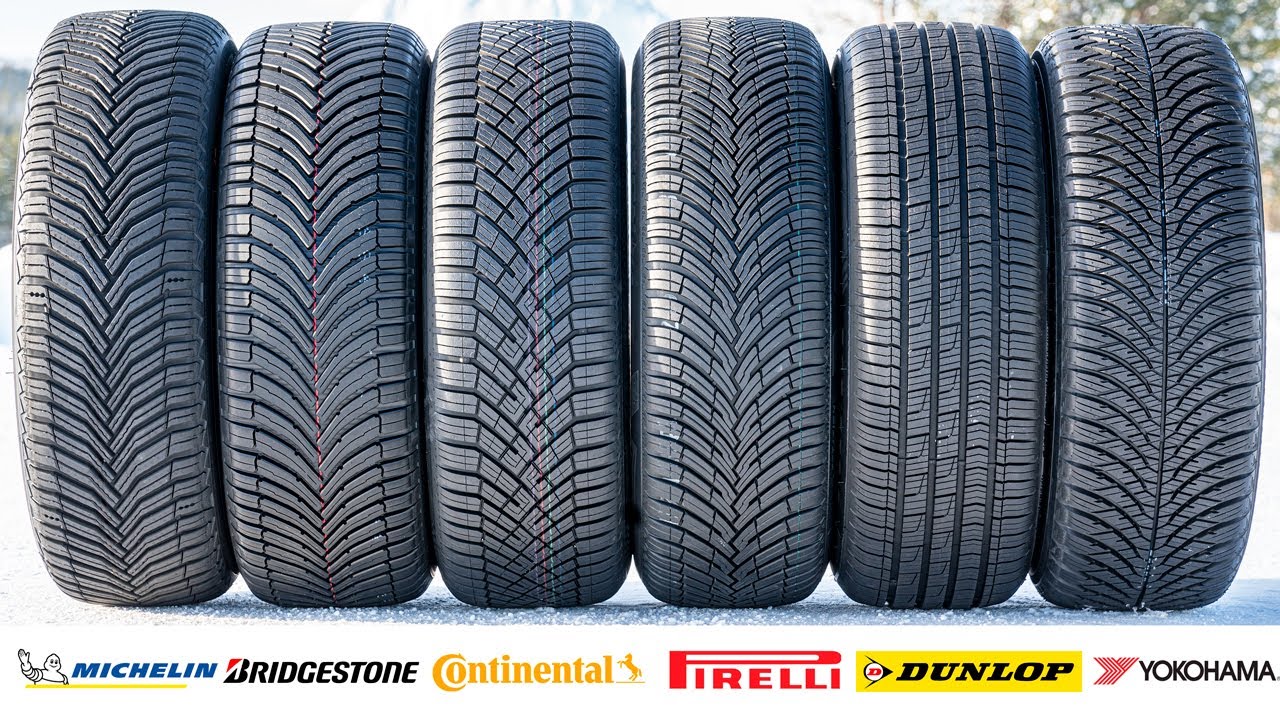
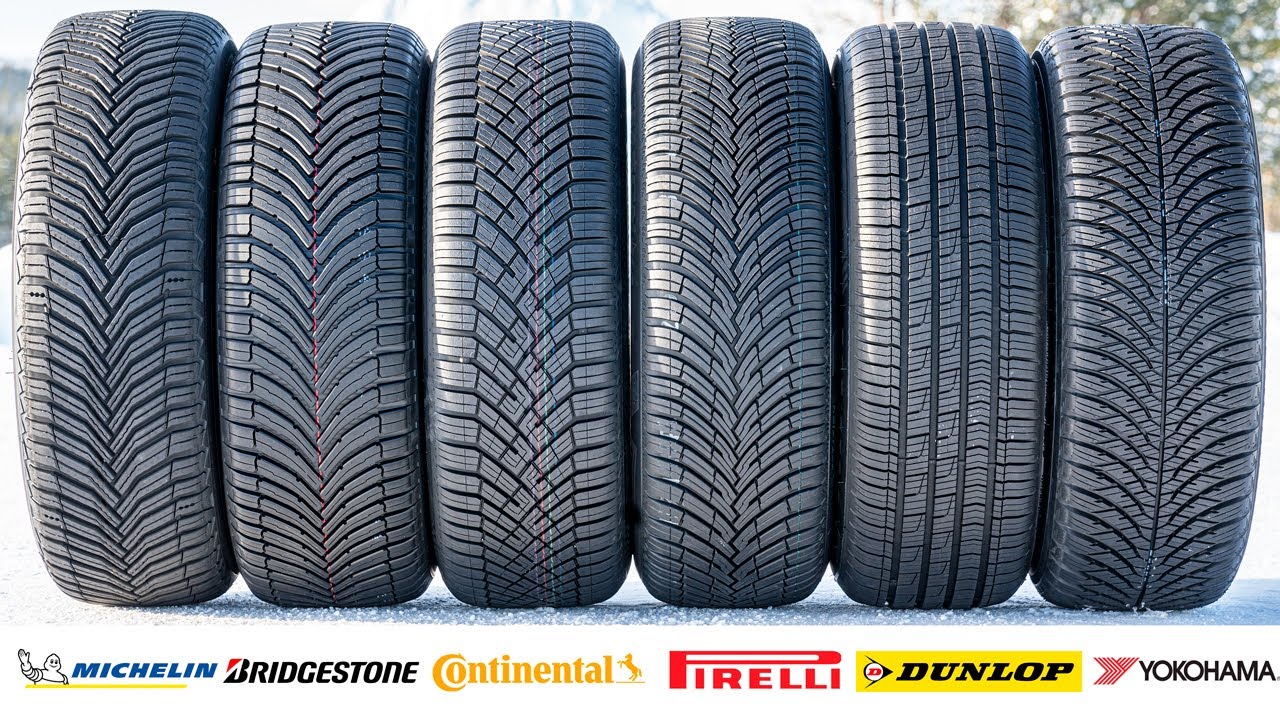
Naturally I had to find out whether any of these new tires from Bridgestone, Continental and Pirelli can match the Michelin, so as usual I'll be testing everything, including wear, to see which is best! And I've also thrown in a couple of tires Dunlop and Yokohama, because why not.
Can any of these new tires really challenge the CrossClimate 2, or are they all going to be left wanting for more? Read on to find out!
Testing Methodology
Test Driver
Jonathan Benson
Tire Size
205/55 R16
Test Location
Professional Proving Ground
Test Year
2024
Tires Tested
7
Show full testing methodologyHide methodology
Every tire is tested using calibrated instrumented measurement and structured subjective assessment. Reference tires are retested throughout each session to correct for changing conditions, ensuring fair, repeatable comparisons. Multiple reference sets are used where needed so that control tire wear does not affect accuracy.
We use professional-grade testing equipment including GPS data loggers, accelerometers, and calibrated microphones. All tires are broken in and conditioned before testing begins. For full details on our equipment, preparation process, and calibration procedures, see our complete testing methodology.
Categories Tested
Dry Braking
For dry braking, I drive the test vehicle at an entry speed of 110 km/h and apply full braking effort to a standstill with ABS active on clean, dry asphalt. I typically use an 100–5 km/h measurement window. My standard programme is five runs per tire set where possible, although the sequence can extend to as many as fifteen runs if conditions and tire category justify it. I analyse the full set of runs and discard statistical outliers before averaging. Reference tires are run repeatedly throughout the session to correct for changing conditions.
Dry Handling
For dry handling, I drive at the limit of adhesion around a dedicated handling circuit with ESC disabled where possible so I can assess the tire's natural balance, transient response, and limit behaviour without electronic intervention masking the result. I usually complete between two and five timed laps per tire set, depending on the circuit, tire type, and consistency of conditions. I exclude laps affected by clear driver error or obvious environmental inconsistency. Control runs are carried out frequently throughout the session, and I often use multiple sets of control tires so that wear on the references does not become a meaningful variable. For more track-focused products, I also do endurance testing, which is a set number of laps at race pace to determine tire wear patterns and heat resistance over longer driving.
Subj. Dry Handling
Objective data is only part of the picture, so I also carry out a structured subjective handling assessment at the limit of adhesion on a dedicated dry handling circuit. I score steering precision, steering response, turn-in behaviour, mid-corner balance, corner-exit traction, breakaway characteristics, and overall confidence using a standardised 1–10 scale used consistently across my testing. The final assessment combines numeric scoring with written technical commentary. I complete familiarisation laps on the control tire before evaluating each candidate.
Wet Braking
For wet braking, I drive the test vehicle at an entry speed of 88 km/h and apply full braking effort to a standstill with ABS active on an asphalt surface with a controlled water film. I typically use an 80–5 km/h measurement window to isolate tire performance from variability in the initial brake application. My standard programme is eight runs per tire set where possible, although the sequence can extend to as many as fifteen runs if conditions and tire category justify it. I analyse the full set of runs and discard statistical outliers before averaging. To correct for changing conditions, I run reference tires repeatedly throughout the session — in wet testing, typically every three candidate test sets.
Wet Handling
For wet handling, I drive at the limit of adhesion around a dedicated handling circuit. I generally use specialist wet circuits with kerb-watering systems designed to maintain a consistent surface condition. ESC is disabled where possible so I can assess the tire's natural balance, transient response, and limit behaviour without electronic intervention masking the result. I usually complete between two and five timed laps per tire set, depending on the circuit, tire type, and consistency of conditions. I exclude laps affected by clear driver error or obvious environmental inconsistency. Control runs are carried out frequently throughout the session, and I often use multiple sets of control tires so that wear on the references does not become a meaningful variable.
Subj. Wet Handling
Objective data is only part of the picture, so I also carry out a structured subjective handling assessment at the limit of adhesion on a dedicated wet handling circuit. I score steering precision, steering response, turn-in behaviour, mid-corner balance, aquaplaning resistance, breakaway characteristics, and overall confidence using a standardised 1–10 scale used consistently across my testing. The final assessment combines numeric scoring with written technical commentary. I complete familiarisation laps on the control tire before evaluating each candidate.
Wet Circle
For wet lateral grip testing, I use a circular track of fixed radius, typically between 30 and 50 metres, broadly aligned with ISO 4138 principles. The surface is wetted in a controlled and repeatable manner. I progressively increase speed until the maximum sustainable cornering speed is reached. I normally record multiple laps in both clockwise and counterclockwise directions to reduce the influence of camber, banking, or directional track bias. I then calculate average lateral acceleration and compare the result with the reference tire.
Straight Aqua
To measure straight-line aquaplaning resistance, I drive one side of the vehicle through a water trough of controlled depth, typically around 7 mm, while the opposite side remains on dry pavement. I enter at a fixed speed and then accelerate progressively. I define aquaplaning onset as the point at which the wheel travelling through the water exceeds a specified slip threshold relative to the dry-side reference wheel. I usually perform four runs per tire set and average the valid results.
Curved Aquaplaning
For curved aquaplaning, I use a circular track, typically around 100 metres in diameter, with a flooded arc of controlled water depth, usually about 7 mm. The vehicle is instrumented with GPS telemetry and a tri-axial accelerometer. I drive through the flooded section at progressively increasing speed, typically in 5 km/h increments, and record the minimum sustained lateral acceleration at each step. The test continues until lateral acceleration collapses, indicating complete aquaplaning. The result is expressed as remaining lateral acceleration in m/s² as speed rises.
Snow Braking
For snow braking, I drive the test vehicle at an entry speed of 50 km/h and apply full braking effort to a standstill with ABS active on a groomed, compacted snow surface, measuring 45-5 km/h. I generally use a wide VDA (vehicle dynamic area) and progressively move across the surface between runs so that no tire ever brakes on the same piece of snow twice. My standard programme is twelve runs per tire set, although the sequence can extend further if the data justify it. I analyse the full set of runs and discard statistical outliers before averaging. The surface is regularly groomed throughout the session. To correct for changing snow surface conditions, I run reference tires repeatedly — typically every two candidate test sets.
Snow Traction
For snow traction, I accelerate the vehicle from rest on a groomed snow surface with traction control active and measure speed and time using GPS telemetry. I typically use a 5–35 km/h measurement window to reduce the influence of launch transients and powertrain irregularities. I use a wide VDA (vehicle dynamic area) and progressively move across the surface between runs so that no tire ever accelerates on the same piece of snow twice. The surface is regularly groomed throughout the session. I complete multiple runs per tire set and average the valid results. Reference tires are run typically every two candidate test sets to correct for changing snow surface conditions.
Snow Handling
For snow handling, I drive at the limit of adhesion around a dedicated snow handling circuit with ESC disabled where possible. The circuit is groomed and prepared after every run while tires are being changed, so each set runs on a consistently prepared surface. I usually complete between two and five timed laps per tire set, excluding laps affected by clear driver error or obvious environmental inconsistency. Because snow surfaces degrade more rapidly than asphalt, control runs are carried out more frequently — typically every two candidate test sets.
Subj. Snow Handling
Objective data is only part of the picture, so I also carry out a structured subjective handling assessment at the limit of adhesion on a dedicated snow handling circuit. The circuit is groomed and prepared after every run while tires are being changed, so each set runs on a consistently prepared surface. I score steering precision, turn-in behaviour, mid-corner balance, corner-exit traction, breakaway characteristics, and overall confidence on snow using a standardised 1–10 scale used consistently across my testing. The final assessment combines numeric scoring with written technical commentary. I complete familiarisation laps on the control tire before evaluating each candidate.
Snow Circle
For snow lateral grip testing, I use a circular snow track of fixed radius, broadly aligned with ISO 4138 principles. The surface is regularly groomed throughout the session. I progressively increase speed until the maximum sustainable cornering speed is reached. I normally record multiple laps in both clockwise and counterclockwise directions to reduce the influence of surface bias. Because snow surfaces degrade more rapidly, the control tire is retested at regular intervals and I often use multiple sets of control tires.
Ice Braking
For ice braking, I drive the test vehicle at an entry speed of 35 km/h and apply full braking effort to a standstill with ABS active on a prepared ice surface. Surface temperature is continuously monitored as ice friction properties vary substantially with temperature. My standard programme is twelve runs per tire set but with ice testing, you often do many more. I analyse the full set of runs and discard statistical outliers before averaging. Reference tires are run typically every two candidate test sets to correct for changing surface conditions.
Ice Traction
For ice traction, I accelerate the vehicle from rest on a prepared ice surface with traction control active and measure speed and time using GPS telemetry. I typically use a 5–35 km/h measurement window to reduce the influence of launch transients. I use a wide VDA (vehicle dynamic area) and progressively move across the surface between runs so that no tire ever accelerates on the same piece of ice twice. Surface temperature is continuously monitored. I complete multiple runs per tire set and average the valid results, with reference tires run typically every two candidate test sets.
Noise
I measure external pass-by noise in accordance with UNECE Regulation 117 and ISO 13325 using the coast-by method on a compliant test surface. Calibrated microphones are positioned beside the test lane, and the vehicle coasts through the measurement zone under controlled conditions. I record the maximum A-weighted sound pressure level in dB(A), complete multiple runs over the relevant speed range, and normalise the result to the reference speed required by the procedure.
Wear
I do not conduct tread wear testing myself; where wear is included in a programme, it is carried out by a contracted specialist test provider using either an on-road convoy method or an accelerated machine-based method. In convoy wear testing, multiple vehicles run a defined public-road route over an extended distance, with tread depth measured at intervals and tires rotated methodically to reduce positional and vehicle-specific effects. In accelerated machine wear testing, the tire is run on a specialised roadwheel or rough-surfaced drum system designed to simulate real-world wear under controlled load, speed, alignment, and force inputs. I then use the contracted provider's measured wear rate relative to the reference tire to estimate projected tread life.
Rolling Resistance
Rolling resistance is measured under controlled laboratory conditions in accordance with ISO 28580 and UNECE Regulation 117 Annex 6. The tire is mounted on a test wheel and loaded against a large-diameter steel drum. After thermal stabilisation at the prescribed test speed, rolling resistance force is measured at the spindle and corrected according to the relevant procedure. The result is expressed as rolling resistance coefficient, typically in kg/tonne.
How each category is weighted in the overall score:
Dry30%
Dry Braking55%
Dry Handling35%
Subj. Dry Handling10%
Wet40%
Wet Braking40%
Wet Handling30%
Subj. Wet Handling10%
Wet Circle5%
Straight Aqua10%
Curved Aquaplaning5%
Snow10%
Snow Braking30%
Snow Traction20%
Snow Handling30%
Subj. Snow Handling10%
Snow Circle10%
Ice5%
Ice Braking60%
Ice Traction40%
Comfort5%
Noise100%
Value10%
Wear30%
Value30%
Rolling Resistance40%
Wet
I say it every year, but the wet performance of an all season tire is the most important performance.
As always I've thrown in a budget tire , and this time it's exceptionally bad. I don't recall ever having to concentrate so hard to stay on the track, and this is on a 1.4 golf. On a RWD vehicle this would be fully impossible.
As for the rest, they were all pretty good in wet handling. Yokohama and Michelin were the slowest of the bunch, both exhibiting quite a lot of understeer and the yokohama having a particularly soft steering feel, but they were fine.
A small amount ahead was the Bridgestone and dunlop, and it turns out not only does the Bridgestone look like the Michelin, but at least in wet handling it behaves like the Michelin too as it had more understeer than the tires ahead. Great levels of grip, but just not the best balance for track, but nice and safe for the road.
The Dunlop is the only asymmetric tire of the group, and it has the word sport in its name so it's is noticeable different to the rest? Well, not really. It was lovely to drive, and predictable, but didn't feel like the sports tire of the group.
The final two essentially tied for the win, which was the new Pirelli and Continental. The Pirelli did feel like the sports tire of hte group, but by tiny margins. It was a great steering tire with a nice neutral balance, the negative compare to the Conti was it just didn't have quite the detail at the very limit.
The Conti was excellent, a really well rounded tire around the lap, and while it wasn't as quick to steer as the pirelli it did give you a little more notice of where things were.
Wet Handling
Spread: 13.60 s (15.8%)|Avg: 88.97 s
Wet handling time in seconds [Average Temperature 21c] (Lower is better)
Continental AllSeasonContact 2
86.10 s
Pirelli Cinturato All Season SF3
86.20 s
Dunlop Sport All Season
87.00 s
Bridgestone Turanza All Season 6
87.20 s
Michelin CrossClimate 2
87.90 s
Yokohama BluEarth 4S AW21
88.70 s
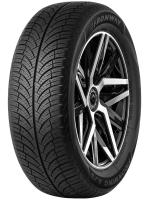
Fronway Fronwing AS
99.70 s
What about the all important braking? Bridgestone performed extremely well, with nearly a meter to second place, which was the new Continental, which was over a meter to third placed Pirelli. Very impressive from Bridgestone.
The budget was again terrifyingly bad, and where the Bridgestone had you stopped, you were still doing 45.1 km/h, that's braking from JUST 80 km/h. Over half the speed.
Wet Braking
Spread: 15.50 M (46.7%)|Avg: 37.66 M
Wet braking in meters (80 - 5 km/h) [Average Temperature 17.5c] (Lower is better)
Wet Braking: Safety Impact: Best vs Worst Tire
None of the tires really had any aquaplaning issues during wet handling, but once again Pirelli was at the front in the aquaplaning test with a clear margin, followed by Bridgestone and Michelin.
Straight Aqua
Spread: 14.00 Km/H (16.6%)|Avg: 78.03 Km/H
Float Speed in Km/H (Higher is better)
Pirelli Cinturato All Season SF3
84.20 Km/H
Bridgestone Turanza All Season 6
81.30 Km/H
Michelin CrossClimate 2
80.10 Km/H
Continental AllSeasonContact 2
78.50 Km/H
Dunlop Sport All Season
76.40 Km/H
Yokohama BluEarth 4S AW21
75.50 Km/H
Fronway Fronwing AS
70.20 Km/H
Dry
As these are 16" all season tires, out and out laptime isn't the most important factory for them in the dry, braking is way more important, but I have spent a lot of time doing steering response testing and aggressive lane changes to see how they handle in more normal use. Plus of course the dry handling lap as it's fun.
The slowest on the lap was the fronway. During the lane changes it actually felt pretty good, feeling more direct than the others but once you got it on track it had some wonderfully comical noisy understeer.
The rest of the tires were pretty close in handling and lane changes. Yokohama and Michelin were a little more understeer bias around the lap, but the michelin did have some of the best sub limit steering.
The Bridgestone was a little vague around centre which I didn't like, but once you were turning it felt reactive and sporty, which I liked. I'm not sure if overall it was my favourite but a very good tire, and fast around the lap with good brakes.
The Continental and Dunlop matched overall on laptime. The Asymmetric pattern of the Dunlop reacted quickly which was lovely, but the tire seemed to take a second to settle on the sidewall. The Continental was a joy to drive, one of only two tires you felt like you were really in control on the handling lap as the car reacted well to steering and throttle inputs well, really impressive lap and good during sublimit too.
But the quickest, and my favorite around sublimit was the Pirelli. Not only was this the most stable during the lane change and has some of the nicest steering, it also felt the most summer like during the lap, which is what I really want from an all season tire. Great job Pirelli, this new SF3 is shaping up really nicely, but also great job to Conti, Dunlop and Bridgestone.
Dry Handling
Spread: 2.70 s (4.9%)|Avg: 56.30 s
Dry handling time in seconds (Lower is better)
Pirelli Cinturato All Season SF3
55.40 s
Dunlop Sport All Season
55.80 s
Continental AllSeasonContact 2
55.80 s
Bridgestone Turanza All Season 6
56.00 s
Michelin CrossClimate 2
56.40 s
Yokohama BluEarth 4S AW21
56.60 s
Fronway Fronwing AS
58.10 s
Dry braking reconfirmed the Pirelli was the best in the dry as it had over a meter lead to the next best, which was the Bridgestone. This meant the usual dry braking master, the Michelin could only place third, with a bit of a gap to the last four tires. Like in the wet, the residual speed calculation told a stark story, with the worst tire of the group still going nearly 40 km/h when the best had stopped.
Dry Braking
Spread: 6.60 M (17.5%)|Avg: 41.16 M
Dry braking in meters (100 - 5 km/h) [Average Temperature 17.5c] (Lower is better)
Dry Braking: Safety Impact: Best vs Worst Tire
Snow
The good news is that once again all the all season tires performed well in the snow, apart from maybe the Dunlop. It wasn't terrible, but as I've already mentioned it's the only non-directional tire of the group you can really see why all these tires are going directional now - asymmetric tires struggle in the snow. It was the slowest around the lap and gave the usually very stable golf a quite wandery rear end. It was the most fun if you want a challenge but not the best balance for the road.
Next up was the Bridgestone. This felt very comfortable over the snow which is weird, and once again the steering was very light. The balance was very good, the rear was planted, but it just didn't quite have the grip of the best. Snow and wet are VERY hard to do well in a single tire, and the big advantage it has in wet braking seems to have cost it some snow performance.
The Yokohama was another step up in grip. You never really felt like you were going quickly as it was all undramatic, but it felt really good during traction and braking. A good tire in the snow.
Fourth and third places were tied by the new Continental and the budget Fronway! While the times were all but identical, the Continental was the more predictable to drive and felt better out of the corners. Obviously the big difference is that the Conti worked well in the dry and wet too, whereas the fronway was simply horrible, THIS is the difference between a cheap tire that does one thing well and a premium tire that does everything well.
Second place went to the new Pirelli, and like in the dry and wet it was really fun to drive. It was the happiest when turning, but also did a really good job of traction and braking while turning. I really enjoyed this tire, it was second best in lap time and almost my favourite to drive in the snow.
However, once again the Michelin CrossClimate 2 was the best in snow handling. As always I was testing blind and about half way round lap 1 of set 4 I was wondering if it was the Michelin as it was just awesome in the snow. Strong braking, very good transient grip, safe balance, it did it all. While it might have been surpassed in the dry and the wet, it seems the Michelin is still the king of the snow.
Snow Handling
Snow Handling
Spread: 4.77 s (5.3%)|Avg: 93.00 s
Snow handling time in seconds [Average Temperature -5c] (Lower is better)
Michelin CrossClimate 2
90.68 s
Pirelli Cinturato All Season SF3
91.99 s
Fronway Fronwing AS
92.16 s
Continental AllSeasonContact 2
92.18 s
Yokohama BluEarth 4S AW21
93.51 s
Bridgestone Turanza All Season 6
95.01 s
Dunlop Sport All Season
95.45 s
How does all this line up with the objective tests, traction, braking and snow circle? Pretty well. The Conti and Yoko were joint best in snow traction, the Michelin and Yoko were joint best in snow braking, and of course the Michelin was the best in snow circle.
Snow Braking
Spread: 1.20 M (6.8%)|Avg: 18.01 M
Snow braking in meters (40 - 0 km/h) [Average Temperature -1c] (Lower is better)
Yokohama BluEarth 4S AW21
17.60 M
Michelin CrossClimate 2
17.60 M
Fronway Fronwing AS
17.90 M
Dunlop Sport All Season
18.00 M
Continental AllSeasonContact 2
18.00 M
Bridgestone Turanza All Season 6
18.20 M
Pirelli Cinturato All Season SF3
18.80 M
Snow Traction
Spread: 1.07 s (13.3%)|Avg: 8.48 s
Snow acceleration time (0 - 20 km/h) (Lower is better)
Yokohama BluEarth 4S AW21
8.04 s
Continental AllSeasonContact 2
8.04 s
Dunlop Sport All Season
8.46 s
Pirelli Cinturato All Season SF3
8.46 s
Bridgestone Turanza All Season 6
8.57 s
Michelin CrossClimate 2
8.69 s
Fronway Fronwing AS
9.11 s
Ice
In a rare change of pace, I actually had the time to test ice. The Pirelli was the best in ice traction with the Continental very close behind, and the budget Fronway again doing well. At this point I'm assuming the Fronway as simply a winter compound molded into an all season pattern.
Ice braking had the Yokohama performing very well, with the Continental again extremely close, and the Michelin third. That means on average, the Continental was the best on ice, though none of these tires will have been designed with ice in mind.
Ice Traction
Spread: 0.88 s (18.8%)|Avg: 5.04 s
Ice acceleration time (0 - 20 km/h) [Average Temperature -5c] (Lower is better)
Pirelli Cinturato All Season SF3
4.68 s
Continental AllSeasonContact 2
4.78 s
Bridgestone Turanza All Season 6
4.88 s
Fronway Fronwing AS
4.94 s
Michelin CrossClimate 2
4.97 s
Yokohama BluEarth 4S AW21
5.44 s
Dunlop Sport All Season
5.56 s
Ice Braking
Spread: 0.99 M (15.3%)|Avg: 6.89 M
Ice braking in meters (20 - 0 km/h) [Average Temperature -5c] (Lower is better)
Yokohama BluEarth 4S AW21
6.48 M
Continental AllSeasonContact 2
6.67 M
Michelin CrossClimate 2
6.79 M
Fronway Fronwing AS
6.79 M
Pirelli Cinturato All Season SF3
6.89 M
Bridgestone Turanza All Season 6
7.11 M
Dunlop Sport All Season
7.47 M
Value
The wear results for this test again come from a real world convoy test, which is the gold standard in wear testing and provides more accurate results compared to machine testing. Sadly it's also very expensive, so the budget tire wasn't included.
The results had the new Continental as best of the group, projected to cover nearly 50,000 kilometers before reading 1.6mm. When you consider how good the grip of the tire has been thats very impressive. The surprise result was the new Bridgestone in second place! In recent years Bridgestone have nearly always underperformed in wear tests, but this new tire did incredibly well and hopefully a trend that will continue. If you're from north america you might be confused at the Michelin CrossClimate 2 in third as your tire has a 60,000 mile warranty, don't fret, this is the EU version that has much lower rolling resistance, but a lower starting tread depth.
When you compare wear against purchase price you get a value metric, which the Continental also led, with the Yokohama sliding into second place thanks to good wear and a low purchase price. The real losers were the Michelin thanks to its high purchase price, and the Pirelli as it underperformed in the wear test.
Michelin had the lowest rolling resistance, closely followed by the Dunlop, and the Yokohama lost some of its value points with the highest rolling resistance, over 30% more than the best.
Rolling Resistance
Spread: 2.20 kg / t (31.5%)|Avg: 7.81 kg / t
Rolling resistance in kg t (Lower is better)
Michelin CrossClimate 2
6.98 kg / t
Dunlop Sport All Season
7.06 kg / t
Continental AllSeasonContact 2
7.25 kg / t
Fronway Fronwing AS
7.62 kg / t
Pirelli Cinturato All Season SF3
7.86 kg / t
Bridgestone Turanza All Season 6
8.71 kg / t
Yokohama BluEarth 4S AW21
9.18 kg / t
19,000 km
£1.45/L
8.0 L/100km
--
Annual Difference
--
Lifetime Savings
--
Extra Fuel/Energy
--
Extra CO2
Estimates based on typical driving conditions. Rolling resistance accounts for approximately 20% of IC vehicle fuel consumption and 25% of EV energy consumption. Actual savings vary based on driving style, vehicle weight, road conditions, and tire age. For comparative purposes only. Lifetime savings based on a 40,000km / 25,000 mile tread life.
Comfort
Finally I didn't get a chance to properly dig into comfort, but these are a 16" tire and they were all pretty smooth. The external noise test was all very close, and my gut says the Bridgestone, Dunlop or Michelin would be the most comfortable in general.
Very good in dry handling, best in wet handling with short wet braking, best snow traction, best in ice overall, lowest wear on test, best value tire on test, low rolling resistance.
Extended dry braking, low aquaplaning resistance.
The new Continental AllSeasonContact 2 was the tire that does everything well. The only negative point I can really mention is that it wasn't that great in curved aquaplaning, and ideally I'd like to see it better in dry braking, but in all the other tests it was just great. And it had the lowest wear which made it the cheapest tire per 1000km. And it had low rolling resistance. And excellent snow grip, and was the best in the wet. And the best overall on ice. You get the idea. Outstanding product from Continental.
Good in the dry and wet, good aquaplaning resistance, low wear, good value.
Below average snow performance (but still way ahead of a summer tire), average rolling resistance.
The new Bridgestone Turanza All Season 6 is a well balanced mild climate all season tire. Bridgestone has clearly focused on improving the treadlife of the tire, which historically has been a weak point, while retaining the excellent dry and wet performance. The snow performance wasn't great compared to the best, but it's going to be way better than a summer tire so if you're in a region that rarely gets snow, this is a really great tire. The only thing it seems to have reduced in order to improve the wear is rolling resistance, as that was relatively high, but overall the new Bridgestone is an excellent product.
Best in dry with shortest braking distance and fastest lap time, very good in wet, best aquaplaning resistance on test, very good in snow traction and snow handling, best ice traction, low noise.
The Pirelli Cinturato All Season SF3 would have been the test winner if I hadn't tested wear, and honestly, was my favorite tire to drive on. It was the best in the dry, one of the best in the wet, very good around snow handling and its rolling resistance was plenty good enough too. The fact it has high wear might not be an issue for some, plus it's not much higher cost per 1000km than the Michelin, but if wear is important to you, then this is not the tire to buy. Certainly the most summer feeling of all season tire which will be appealing to some
Good grip in the dry, high aquaplaning resistance, best in snow, lowest noise in test, lowest rolling resistance on test.
Long wet braking, high purchase price with average wear means expensive per km.
The Michelin CrossClimate 2, the tire that's won every test I've featured it in, dropped down to fourth behind the new trio of tires. I think the biggest surprise wasn't that it was the best in the snow, I've said this tire is too good in the snow many times, or had the lowest rolling resistance on test, it's always done that well, but the fact it wasn't best in dry braking which is historically the Michelins party piece. I really hope Michelin can bring wet improvements to the next product, even if that means sacrificing a little snow. The CrossClimate 2 is still a great all season tire, but according to this test, it's no longer the greatest
Good handling in the dry and wet, good snow braking, low rolling resistance.
Extended braking distances in the dry and wet, lowest grip on ice, increased wear resulting in average value.
The Dunlop Sport All Season is another good tire, but another tire that was out classed by the new breed. Its asymmetric pattern left it vulnerable in snow handling, and while it was good in the dry and wet handling tests, it struggled in braking. It did have a low rolling resistance and its wear result was ok, plus is had a low rolling resistance making it cheap at the pumps.
Very high levels of grip in snow, best ice braking, lower purchase price.
Low levels of grip in the wet, long dry braking, very high rolling resistance.
The Yokohama BluEarth 4S AW21 is another tire that is better in the snow and ice than the dry and wet. It's not a bad product, and it was very good in the snow, but perhaps a bit too good for an all season tire as it was firmly outclassed when not in winter conditions.
For the price, the Fronway Fronwing AS was awesome in the snow. But as this is an all season tire test, and it it had extremely low wet grip, it does not make it a good all season purchase. The Fronway is one of the worst tires I've had in the wet for a while.
Great and unbiased test, thank you! I have been using Michelin CC1 tires for 7 years on my Suzuki SX4 Scross, with 60,000 km. I am thinking about replacing them. Which would you recommend? CC2 or Conti Allseason contact 2? I am a little concerned about Conti's poorer aquaplaning resistance.
The temperature fluctuates throughout the year here, even in winter it can be 10 degrees, but also -10, with little snow and more rain. (But it's okay if the tires don't let me down in the snow either.) Spring and autumn also show great fluctuations. Summers, on the other hand, are hot. I have read in several places that ASC2 tend to slip in hot weather, making the car unstable. Could this be true? I don't dare to try them. Plus, the short lifespan is also a concern.
The expected tread life is higher than a lot of all seasons, and i've tested these in 30c+ heat at least once (sadly we don't control the weather) and they were fine. All all season tires will slip a little in the dry compared to a summer tire, hot weather would make the slightly worse but marginally. It depends on the compromise you want from an all season tire.
Hello! I am looking to refresh the tires on my Opel Astra. Context : 205 55 r16 is the tire size. I currenly own 2 sets of wheels ; 1. Summer - Dunlop SportBluResponse DOT 4815 - good shape just a bit old 2. Winter - Nokian WRA4 DOT 4318 - goodish shape, sadly worn in 2022 and 2023 without swapping. I live in Romania
My question is : should i buy a good set of AllSeasons (probably Pirelli's) and sell my winter wheels as is or buy 4 new Dunlops and 2 Nokian winter ones? What would you do? Price is the same for the 4 vs 4+2 where i live. Thanks in advance!
This is a great review, however I noticed that both your dry and wet weather testing was done at 17.5 degrees. I drive a lot in UK autumn/winter where temps often hover from 2 - 8 degrees when wet or damp and I've found some compounds cope very well with the lower temps whilst others really suffer in the wet when temps get below 10 degrees.
I wondered if this you can include slightly lower temp (but not snow or ice) tests in the future? Or is there some way to use the other test data to draw some conclusions on how each tire performs in more typical northerly UK conditions?
I have 4 all-season Avon tires and the front two need to be replaced soon. All four tires have small cracks in the thread areas. I don't drive much, around 5k-6k per year, is it worth spending money on premium tires when I mostly drive in the city?
I was thinking about Yokohama. Can you recommend any other brand? I drive Nissan QQ 2011.
I came with the same question, which would be better continental or goodyear? We have RAV4 2017 hybrid and we are mostly in the town or country roads, nothing sporty but we want the safer ones.
Thanks for the great review. I am looking for All Season Tires 235/55 R19. I am quite a noob. In the ADAC Test from 2024 the Goodyear Vector 4Seasons Gen 3 ranked first. Which one would you recommend and why? The Continental Allseason Contact 2 or the Goodyear or another tire. I live in a big German City with snow for only a couple of days per year though we usually go skiing for one week and have snow chains with us for severe snow conditions. Safety is the most important, yet wear and rolling resistance are also important for us. Thanks in advance!
Thanks for another great review. I am currently considering buying new tires for the winter, but I'm also thinking about all-season ones. I live in Slovakia, where most of the winter is wet and dry. There are a few days when there may be snow on the road, either fresh or wet. I drive on packed and icy roads a few times when I go to the mountains. My Vredestein Wintrac Pro tires, which I've had for 5 seasons, are wearing out, and they worked quite well for my driving. I am considering new winter tires, Continental TS870p, or the all-season Continental AllSeasonContact 2. Could you directly compare them? I haven't found relevant data for a comparison in the same size and on the same car, but it seems to me that the TS870p might be slightly better on ice and perhaps (if at all) on snow. However, on wet and dry surfaces, the ASC2 should perform better. In transitional conditions, which prevail during most of the period from October to April, the all-season tires should be better, so I'm wondering if it's worth buying strictly winter tires. Thank you.
I've got the Bridgestone on for nearly a year now. While I cannot speak to its snow performance because all roads were cleared up before I could experience it, what I can say it is a very comfortable tire in 225/45 R17 size. It gives a 'plush' feel, even when highly inflated (running around 38). I suspect it's because of the tread structure. Of course, it is not as sharp as a consequence, but the grip is there, as you would expect from a premium tire. Also, wear looks good after a year, done probably around 15k on it, they still look young.
Hi Jonathan, amazing work as always! One question I have for you, which I can’t find an answer to anywhere - why are UHP all season tires not offered in the UK?
they seem like the perfect tire for milder parts of the country, southern areas especially.
Do you think this segment will ever be sold in the UK?
I believe it's because they don't (can't) meet 3PMSF. While this isn't a problem in the UK it is a problem of mixed messaging selling an "all season" tire in the parts of europe 3PMSF is required in winter
Thank you for the quick reply! Ok understood, shame that we miss out on a whole segment. What would you say is the most high performing all season tire in the summer that is available in the UK? Based on what i have read, it looks like it's the Pirelli SF3? If one were willing to sacrifice snow/ice performance a bit, would there be another tire that's even better?
Certainly looking forward to your upcoming tests looking at all seasons in summer and winter!
Jonathan ! After watching previous episode about AS tires decided to buy kleber Quadraxer3. By the end of september I will have been on them a year. Great on dry, good on snow, birdish sound on wet and damn silent on all surfaces. But I still have my winter tires dunlop winter sport 5 6 year old with 5.85 mm of depth. Is it worth concidering putting them (dunlop) back for one and last winter or is it better to stick to almost new (10000km done so far)kleber quadraxer3? Is a 6 year old dunlop (no cracks, no damage) any worth for winter condition.?
I guess that comes down to affordability. I would imagine the quadraxer 3 would be on par with the old dunlop in the snow and maybe even ice, however you are effectively leaving money on the table by scrapping the Dunlops. 6 years is certainly near the end of life so depending on the compound performance they might already be past their best.
Thx for replay. So I will stick to quadraxer 3 still the incoming winter. Fresh tire is always a fresh one and nor worn. The revious winter., here in Poland, we had 2 weeks in december and 2 weeks in february full snow. Thats all as far as snow is concerned. In the times rain, mud thats all. Kleber was far from good. It was excellent in snow.
Really complete and extremely clear tests! Unfortunately I only found this site last week. I only knew TCS tests which are much much less detailed.
Now my question. I am waiting for a new Skoda Karoq 4x4 in September and thinking to replace the summer tires with all season as soon as the car is available. My choice would be Pirelli even if I know I will need to replace them in three yeas (anyway much less expensive than buying 4 winter + cost of changing two times a year + replacing 8 tires for aging).
My question is: do you think that high Pirelli wear rate implies also weakness / easy damaging on hard surface like (light) offroad?
Guys, I am having a hard time choosing between Michelin CrossClimate 2, Continental AllSeasonContact 2 and Kleber Quadraxer 3.
The main point - it has to have the best winter capabilities: snow and hopefully, ice. I was thinking to buy Kleber, but then saw this Continental test. Just wondering if it is a bit worse in snow then Kleber/Michelin. Seems that it's better on ice though.
Sadly not, the US market has slightly different demands. There is a US version of it coming, for now check out the new Nokian WRG5 or this looks very promising https://www.tire-reviews.co...
Firstly, big fan of your work - keep it up! Secondly, I’m looking to switch to all seasons on my rwd BMW 320i Touring for the changeable Scottish weather. I’ve spent a lot of time searching online, but I’m struggling to find anything to fit both the front and rear due to the car having a staggered wheel set up and needing run flats (no spare wheel)
Any advice for something that would be suitable in 225/45/18 front and 255/40/18 rear? I would love to use one of the new continental, Pirelli or Bridgestones, but so far all I can find is the Hankook Kinergy 4S2.
Thanks for your reply. Yeh it’s an annoying wheel size that I didn’t really consider when buying the car. One final option is that I could ditch the run flats entirely and then the CC2 comes into play. Not sure if that’s smart or not though?
Lots of people write in to say they ditched the runflats and are really happy with the choice as there's usually a huge increase in grip and better comfort, but extended mobility is a very personal choice.
Sadly not, the US market has slightly different demands. There is a US version of it coming, for now check out the new Nokian WRG5 or this looks very promising https://www.tire-reviews.co...
Since there won't be many tests due to the lack of new tires that will debut in 2024, would you entertain a suggestion for a test? Equip a car with two Continental ExtremeContact DWS 06+ tires in the front and two Michelin Pilot Sport All Season 4 in the rear, and then repeat the test with two different Michelin Pilot Sport All Season 4 in the front and two different Continental ExtremeContact DWS 06+ tires in the rear and see how they perform. Find out which way works better, and whether the car performs better with mixed tires or kept all the same. That would satisfy my curiosity. But if not, then it will just have to remain a dream :)
Thanks for your YouTube channel and all the testing that you do!
Hi! I need some specific help here. I need to change tires on an e38 bmw 7 series. 235/60/16... All I can find are SUV XL tires and I dont know if it's OK to fit them. Please help. I'm in the market for all season tires for this car. Location: western + central europe. Thanks!
After ~37k+ km and almost 3 years, its time to change Michelin CC2 to something else, because tread now is down to about 4mm, tire is quite cracked and about this I am shocked. What I think about CC2: Good comfort, good in snow, bad on ice, not so great on wet tarmac, okayish on dry tarmac in sharp corners, not so great on gravel. Thinking to go to Continental AllSeasonContact 2 in autumn.
Continental looks great all-around, but it lost 10% on dry breaking to no.1 Pirelli. This is THE ONE most important category! 4m longer braking... Bridgestone loses on ice and snow to everyone. I think the best all-arounder is stil Michelin or maybe Pirelli(with the worse snow braking, but still only about 5%). Which is not so surpise - the most expensive tires.
Please, in the test, was this the newer ENLITEN family tire or plain and older? It would be important as it developed further. I hope I get a quick answer.
Hello, i like your reviews very much! I'm currently deciding which of these to take as a replacement for my Nokian WRD4. My question would be which acts better on accelerations for a high torque front wheel drive Octavia VRS with 350hp and 500nm? Considering that summer Goodyear Asymmetric 6 225/40R18 i sometimes loose grip even in 4th gear. So which of these have the better grip on wet/dry? Thanks in advance!
Hello, question, why 94V and not 91H? I am looking to buy AS tires for my Ford Focus MK2 Facelift 1.8tdci and I thought 94H would be overkill because they have this "XL" rating (both Crossclimate2 and Allseasoncontact 2) and it would harm performance in curves and make driving feel stiffer. In exchange they seem to have a better fuel rating index (B vs. C), and I guess they'll last longer because "XL" tires are made more durable? But that's what I think, is there really any disadvantage to it? Should I buy 205/55 R16 91H or 94H XL Continental Allseasoncontact 2
hello i live in Greece,i have peugeot 3008 and i want all season tires,which to buy? (i need more dry and wet to be good beacause we dont have snow here,just a little bit for 1-3 days maybe and not)
Hi guys! I've been thinking to purchase one of the top all season tires for a while. I live in Kyiv, Ukraine and only drive in the city. We do get snow and slush. Sometimes, the road may be covered with a bit of ice, but not on the main roads I guess. The winter temperatures are usually around -3 - -5 C. Sometimes a bit lower. I've previously used Nokian WR G2, that are probably closer to all seasons than to real winter tires and they did good. I also used Michelin X-Ice, which are true winters - good too. Never used studded tires as I don't see the value for where I live. From the experts point of view, do you think Micheline CrossClimate 2, Continental or Kleber Quadraxer 3 would work well for these winter conditions? They seem to be, according to all the tests that I have seen, just wanted to hear from someone who actually used those. Thank you!
The area the all seasons struggle with is ice, but in reality they won't be much behind the WRG2 if any (that's an old tech tire now) so I would say it seems like a good idea.
What tire do you recommend for the mountain area in Romania, where it can get very hot in the summer and also snow can be an issue in winter? I have used Michelin Cross Climate for the last 8 years and because they were not so good in the snow I bought Continental TS860 winter tires too. Wear is not an issue because I still have 4mm of thread pattern left on the Cross Climate... I have to change them because the tires seem to be too old for safe usage. Should I try a new generation of All Season tires or should I have learned my lesson and go for Summer tires and Winter Tires? The good part about all season tires as summer tires is that during spring it can get up to 28C hot and next days it can snow again, so there are a lot of safety reserves in all conditions. Thank you for your recommendations.
Are these measuments also meningful for the 195/55 R16 tire size? Or is it better to refer to your previous "2023 Tire Reviews All Season Tire Test" which was conducted on 195/65 R15 tire size?
Goodyear Vector 4Seasons Gen3 were not included in the test; are these, today, still a safe choice or rather a "thing of the past" (for the 195/55 R16 tire size)?
I suppose test measurements were taken on tires at their 100% full tread depth; do also they remain valid along the tires life span ( e.g. at 50% and 30% remaining tread depth)? Also, does tread wear determine a change in the ranking position of the different tire models?
Actually, I need to replace my first generation Goodyear Vector 4Seasons tires, which have reached their limits (2mm tread depth). I almost drive on urban roads and highways (rarely on extra-urban or winding roads); I live in region with temperatures spanning from -3°C to over 30°C. Mostly and mainly, I am interested in performances on dry and wet road coditions; a bit on iced one; snow might be a climate accident but noy my habit at all. My shortlist (for the 195/55 R16 size) includes: Continental AllSeasonContact, Bridgestone Turanza AllSeason 6 and Goodyear Vector 4Seasons Gen-3. I'd love reading your recommendation.
I noticed also that Pirelli make a very big step forward, the predecessors had a hard time to reach average performance. The Pirelli would also my 1st choice if I would buy an Allseason
The Bridgestone did also much better in overall performance than the A005 and I´m surprised in the wear performance. The Potenza Sport was devalued in the last tests because of awful wear performance. But yeah, it looks like a copy from the CC2. Hope, it would not be like in the past where all Winter Tires look like the Goodyear UG 4
The Conti reminds me a bit of 1st Goodyear Vector and the copy, my unknown Hankook All Season from 1991 (which even Hankook can´t remember). To sad, I don´t found pictures of these tires
It is time for me to change my all season tiers. I'm driving Skoda Octavia Wagon, tire size 225/45/17. I live in South East Euore, where we have hot summers and winters are mainly cold and rainy and sometimes with little snow. I'm a familiy man and I need a tayre that is good, relaible, good wear, performance also. I have narrowed to following tiers Bridgestone Turanza All Season 6, Continental Contact 2, Goodyear Vector Gen3 and CrossClimate 2. If I need to put them in order it should go something like this Continetal, Goodyear, Bridgestone and CC2.
I'm even considering Kleber Quadrarex 3.
Which one do you recomend? Or do you have something else to recomend? Thank you for your time and help!
Hello, I have decided to go with Conti Contact 2, instead of Bridgestone Truanza 6. For me neck to neck tires. Reasons why I went with Conti was almost the same price. Bridgestone are ten euros chipper per tire then Conti 2, but wear is better on Conti2. Conti 2 have 10k more on wear. Thats why I went for Conti 2. If price difference would be bigger, then probably go with Bridgestone. Either way I'm satisfied with my decision, already made 3000 km. My recommendation for the Conti 2.
I wonder why the dry braking tests are done from rather conservative 100 km/h and not from highway speeds (120 km/h / 130 km/h or even 160 km/h).
With winter tires I have noticed that during emergency braking from higher speeds (100+ km/h or few times even from 80 km/h when using witer tires in hot weather) at some point the tires started to melt and there was a clear jerk as the deceleration was suddely reduced. During the first two seconds the deceleration was excellent as expected on premium winter tires. However, somewhere close to the third second of the emergency braking the melting occured and it was almost like a switch from dry braking on premium tires to wet braking on budget tires. I have never observed anyting like this with summer tires as i tend to use UHP tires in summer. I suspect all season tires might suffer from this as well. For this reason I wonder what the winter tire results might be when dry braking from highway speeds.
We allow enough cooling between the runs to not trouble the brakes. You don't really see any difference in results starting from a higher speed, and for certain tire categories the 5 or so stops we do for dry braking is so damaging by the 5th stop your data variance is too high.
I live in Southern Europe, the weather is quite hot from May-September. Because of my job I travel 70km daily and during winter about half of this road is quite tricky, especially in the morning. It's not that bad tho to use two pairs in summer and winter, so I decided the all seasons. So, I'm searching for the most summer oriented tires that would be capable to step in the snow if needed, but I'm afraid the extreme weather conditions for my area for these tires would be the +30°C during summer. I'd love reading your recommendation. Thx...
I want to take the opportunity (since high temperatures were mentioned here) and ask, if you have ever had the chance to notice any significant deviation from your test results (mainly regarding dry, rolling resistance and wear tests, obviously), when the temperature goes above 30°C (or, even better 35°C), since your ordinary tests are traditionally done below 25°C. It would be very interesting if at some point a series of tests could be done (even once) in more southern regions, in summer, and determine if such high temperatures significantly affect the tires' behavior. This would allow residents in southern Europe for example, to understand if and how your common test results relate to these regions.
Interesting. Pirelli excels in seven tests, so it is still third. The winner Continental is the best in four tests, while the second Bridgestone excels in only one test. I think I will still buy Pirelli.
Great reviews!! I am driving a Mercedes '17 E300 4matic. All season fan as I have been living in moderate climates. Moving to Wisconsin for work now so instead of buying two sets of tires would like one great set (also for winter conditions). Michelin CC2 is a great choice, but have you done a report on the Continental Extreme Contract Plus? Or a head to head comparison? Please note here the Conti's are USD $100 cheaper per tire than the CC2. (Even the Pilot AS4 are $70 cheaper per tire than the CC2). Love a quiet ride with secure handling. Please note, love good handling but it is an E300 and not a sports car which I totally understand. Any feedback would be greatly appreciated.
Jonathan you say that wet performance is the most important attribute in an AS tire but I wondered if you could explain why it's more important than dry. Clearly snow is a nice to have and the MCC2 is too good in this respect and needs to trade off for wet performance but surely dry and wet are equally important?
This preference for wet also explains some frankly bizarre conclusions in otherwise exemplary German tire tests where frankly unacceptably poor dry braking was ignored due to stellar wet performance.
Generally there are bigger differences in wet performance than dry, though this test has certainly spread out dry braking! This is why we focus on wet more, especially in summer tires as its where a good tire makes the difference.
I bought Bridgestone weather control A001 to replace Michelin Crossclimate but i don't have opinion because are new.What is your point of view about these tires?
I was not able to find any news regarding the new Dunlop All Season 2, not on the Dunlop site not anywhere else, despite this pictures of this new tire circulate. Will it replace the current Dunlop Sport All Season after its very short run on the market. (it would remind me a little the Goodyear Opti Grip story). From the pictures the Dunlop All Season 2 looks exactly like the Goodyear Vector 4 Seasons Gen 3 without the central groove.
I did some homework :) of the brands under Goodyear (Dunlop, Fulda, Sava, Debica, Cooper, Avon) there are multiple all seasons tires with extremely similar pattern, the Goodyear Vector 4 Seasons Gen 3 Efficiency C wet B (size 205/55 16) is the only one with the central groove and was place on the European market the 4th week of 2020, the Sava All Weather eff. C wet C was placed on the market the 43th week of 2020, the Debica Navigator 3 eff. C wet C was placed on the EU market on the 01/05/2021 (this is the date you usually get when a tire was present on the market at that date but a precise week for placement on the market cannot be traced back) and finally the Dunlop All Season 2 eff. C wet C was placed on the market the 50th week of 2023. From the digging I made it seems the pattern is shared across multiple brands and that the Goodyear has a slight edge regarding wet.
I am quite surprised by underperformance of a Michelin CC2 in your test and is somewhat at odds with other tests (e.g. AutoBild). OK, The new Bridgestone has always been better in wet, but not by so much and new Michelin CC2 has always been better in dry. Overall, it has always been a very close call. What happened here?
Were the condition different (temperature in dry test?)
Do tire dimensions play a role? 225/45 R17 in AutoBild test vs. 205/55 R16 in yours? Sidewalls rigidity does effect handling, maybe also braking?
Is quality of Michelin tires inconsistent?
Do you expect Michelin CC2 SUV (225/50 R18) with reinforced sidewall to perform differently?
Unfortunately I ordere a new set of Michelin CC2 SUV (225/50 R18) for my BMW X1 xDrive just days before you published you test. And they were not cheap either. I was leaning towards new Bridgestone anyway, but were somewhat hard to find...perhaps I should try harder.. Did I make a mistake?
In dry braking conditions don't play a big role. Size certainly does which why we might see the difference.
Michelin quality is more consistent than anyone in the industry so it's not that.
The SUV editions of the CC2 are essentially the same as the regular.
I do not thing you've made a mistake, the CC2 is still an excellent all round package, and in larger sizes the dry braking might be reversed. The CC2 has never been the strongest in the wet, but it isn't a disaster compared to other products.
A suggestion to Tirereviews team: you could calculate the total cost of ownership per kilometer when data is available. You have often calculated value for tires, but it doesn’t take into account the rolling resistance, cost of changing tires or interest rate. Rolling resistance could be estimated on a average fuel consuming car, for example VW Golf.
So having been driven (pun intended) to do ever more research into tires and their likely availability and having spoken to customer service at Bridgestone, Continental and Michelin on multiple occasions about tire availability over the last 6 months - I fear I am becoming or even may have become a tire geek/bore.
The Bridgestone site has tire availability table that shows the IPC number of a specific size that can then be looked up on the EPREL website https://eprel.ec.europa.eu/screen/product/tires This also enables you to look up other of the new Continental and Pirelli All season tires in your desired configuration/size.
Sadly for me, as I am looking for a 245/40 R18, there are none of the new Bridgestone/Pirelli/Continental tires that have been issued with EU tire labels. This ties up with what I was told by Continental that they have not had authorisation to make the other new sizes yet.
So, if you want to find out whether your tire is likely to be released soon then visit eprel site and look up your tire as the new Pirelli Cinturato All Season SF3, Bridgestone Turanza All Season 6 and Continental Allseasoncontact 2 can all be found in various sizes.
What I can therefore deduce is that the size I am looking for is unlikely to be available any time soon ☹ Unless Jonathan and the team have insights into how EPREL do testing i.e. continually, in batches at specific times of the year - I suspect the former
Hope you find the tire you are looking for and this proves helpful.
I'm afraid I don't know how EPREL does its testing, but as you said the tires are usually in the database a chunk of time before they hit the market. 245/r40 R18 is not a common size so it will be down the priority list for moulds sadly.
Awesome review as always. This page/platform is pure gold. It is very interesting for me, that the Conti won, and the Michelin is off the podium. I know it is a personal preference what do you want from a 4season, but IMO snow grip is crucial. Even if it is 3days in a year. I would buy a summer tire if there is no snow, and i would buy a dedicated winter tire if its more then ... dunno 60days of snow. Couple of days is the territory of 4seasons, and- those are the very dangeaorus ones, where a perfect snow grip is needed to avoid crashes, etc. But now the testwinner is much worse than the Mich on snow and not much-much better in the other areas. For me the overall winner has to be in the top3 in snow... or to go further it has to be very very good on snow, no matter what is the place :D. On the other side its good to see that the others are catching up; and so sad that there was no room for the Vector from GY. :D
My view is that even the worst tire here is so far ahead of a summer tire, the difference in the snow for those 3 days will be out weighed by the different in the wet for 150 days! That said, everyone has their own priorities which is why you can change the score weighting and pick your own winner :)
Pirelli Cinturato All Season SF3 are 45% more expensive than Michelin CrossClimate 2, at least in Serbia. I've noticed that Pirellis here are always more expensive than Michelins, while it is the other way around in other countries. :(
Could be just the small size all season thing. In 235/45 R18 the PZ4 are a bit cheaper or the same price as PS5 (depending on the store). PS4S is almost double the price.
Very useful test for choosing my next AS tires. Interesting how wet grip EU label B tires Bridgestone and Continental outperform wet grip EU label A tire Pirelli in your wet braking test.
Is it OK to compare those dry/wet results with ie Conti PC7 tested here ? Those were from the same speed (80km/h)? So ASC2 need 41,4m and PC7 only 35,27m ? I mean the difference is massive! Same for wet but diff is much less but still;
Still weighing pros/cons between allseason and season tires in the south of Poland where driving mostly around the city and sometimes local roads with snow lying longer but still nothing serious; But is the much worse wet/dry results (if in fact same test condition) worth the sacrifice?
Braking distances can vary quite a lot based on conditions so it's not a direct comparison, but check out some of the other tests on the site with a summer tire in the all season test and you'll see you're not that far off.
On the Pirelli's, they wear faster and only start at 7mm thread depth. AFAIK below 4mm winter capability really starts to degrade. Would this not mean that the window you can use the Pirelli reliably in snow is quite limited?
I thought a bit on this and wanted to touch upon two things:
1 Thread to 3.5mm as usefull test addition 2 Braking performance vs. thread depth.
1 Thread to 3.5mm as usefull test addition I was thinking would it not be usefull to also list the wear till 3-4mm to show how quickly a tire drops down to a thread depth that is still usefull for safe driving in snow? The nice thing is this additional information does not require additional testing but can simply be interpolated from the existing wear value from original thread depth to 1.6mm.
Based on this test it would look like this: https://uploads.disquscdn.c... This table shows that tires that have good wear rates but start with a low thread depth, don't wear as long till a depth that is still safe for snow. Examples of this are the Michelin CrossClimate and the Pirelli SF3.
2 Braking performance vs. thread depth. Would it be correct to say that, everything being equal, tires will a lower thread depth perform better in mainly the braking test (perhaps due to a decreased bending moment working on the thread blocks). For instance the Continental with 7.9mm thread depth performs much worse in the braking than the Pirelli with 7mm depth. I was wondering, how would the Continental perform in the braking test when it's thread depth has worn down to the same 7mm as the Pirelli. If there is indeed a clear correlation between thread depth and for instance braking, it feels a bit unfair towards the brands that are generous to their customers by providing them with a beefy thread depth and it rewards brands that focus their product on performing well in the tests by minimizing the orginal thread depth. I mean, if the Continental brakes a lot better at 7mm, compared to 7.9mm, you still get that better braking performance after you have driven it for a year and it has worn down to that depth.
This would of course be too much work to do another set of tests with all tires when they are worn to the same thread depth, but perhaps picking one tire with a generous thread depth and do another test would be interesting to see. Perhaps even if it is only tested once, to test the priniciple.
1) Agreed, I'll add it in future tests 2) Tread depth does play a role but I'm not sure the Conti would suddenly match the Pirelli at 7mm. Also this sort of test would punish companies with better wearing compound, such as michelin. Generally they can start with less generous tread depth but still out perform may products in wear (perhaps not this test though)
Jonathan, great test and great comments and as you rightly say these 3 new tires are a game changer. The challenge now, in the UK at least, is the availability of these tires as most manufacturers seems to be suggesting April (ish) I played with the figures (a lot) and using my normal weighting that focuses more on wet/dry braking than snow/ice and also keeps comfort at circa 10% but reduces value to only 5% it is interesting that the Bridgestone comes out 1st then continental then Pirelli. My heart says Pirelli (fun), the data says Bridgestone (safest) but I have to say I think I will look for the Continentals. This will of course be dependent upon which becomes available first as I am touring in May and need to change them before that (worst case may be the Michelin as I have a pair of ditch finders on the back wheels at the moment) I might be heart broken if I can only get the Pirellis :-D Superb job and well worth the wait THANK YOU!!!
1) Do you have any insights on the interior noise differences between the Conti and Bridgestone?
2) Do you think that 15% snow/ice is the most representative for northern England, or would you weight snow/ice lower and bump up dry/wet weighting?
3) As a one tire set all year round for northern England, do you think that All Seasons are still the right choice, or do you think they sacrifice too much dry/wet grip at warm temps compared to summer tires?
Thanks again, always a pleasure reading your insights.
1) Sorry, I don't. 2) That's up to you really. Lots of people argue that snow is the most important aspect even if you only see 2 snow days a winter. I disagree but everyone has their own opinion. 3) I'll find out later this year as I have a summer tire in the all season test. I think I'd maybe consider the Bridgestone or Pirelli on a non-performance car.
For the three new tires, what tread depth are they certified to still work on snow to? I know Michelin make a big deal out of their tires still being safe and usable all the way down to 2mm which is a big plus point in terms of longevity. Do the Conti, Bridgestone and Pirelli also have full depth sipes in the tread or do they need replacing at 4mm like full winter tires do?
Michelin marketing makes a big deal of it but in reality their performance at 2mm isn't that far different from any other premium brand, so I expect they'll all be pretty similar at 2mm.
How is it possible that Continental AllSeasonContact 2 and Pirelli Cinturato All Season SF3 are not available in size 235/50R19 for cars such as Peugeot 3008/Opel Grandland/VW Tiguan/Hyundai Tuscon/Kia Sportage? These are millions of cars on the market.
In the global scale of things, that's a pretty low volume size. When new tires are launched they focus on high volume sizes, maybe it's worth emailing some of the brands to see if they have any plans for that size this year.
Great test, thanks! But i have a question... what about the Hankook Kinergy 4S2? I switched to this from MCC2, I am absolutely satisfied with it, while it is visibly cheaper.





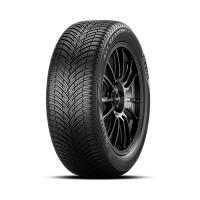
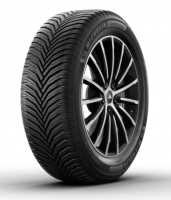
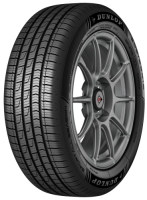
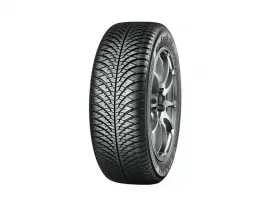
Great and unbiased test, thank you!
I have been using Michelin CC1 tires for 7 years on my Suzuki SX4 Scross, with 60,000 km.
I am thinking about replacing them. Which would you recommend? CC2 or Conti Allseason contact 2?
I am a little concerned about Conti's poorer aquaplaning resistance.
ASC2 for the wet grip.
The temperature fluctuates throughout the year here, even in winter it can be 10 degrees, but also -10, with little snow and more rain. (But it's okay if the tires don't let me down in the snow either.) Spring and autumn also show great fluctuations. Summers, on the other hand, are hot.
I have read in several places that ASC2 tend to slip in hot weather, making the car unstable. Could this be true? I don't dare to try them. Plus, the short lifespan is also a concern.
I've not heard either of those things
Read the comment section:
https://www.tyrereviews.com/Tyre/Continental/AllSeasonContact-2.htm
The expected tread life is higher than a lot of all seasons, and i've tested these in 30c+ heat at least once (sadly we don't control the weather) and they were fine. All all season tires will slip a little in the dry compared to a summer tire, hot weather would make the slightly worse but marginally. It depends on the compromise you want from an all season tire.
Thank you! If it's no worse than CC+, then there's no problem.
Mileage should be the same, dry grip will likely be a tiny fraction down on cc+ but it should have better wet grip, way better snow.
:O Compared to ASC2? Wasn't it really good when it wet?
The CC+ was good in the wet when it was launched but modern all season tire are much better
Hello!
I am looking to refresh the tires on my Opel Astra.
Context : 205 55 r16 is the tire size.
I currenly own 2 sets of wheels ; 1. Summer - Dunlop SportBluResponse DOT 4815 - good shape just a bit old
2. Winter - Nokian WRA4 DOT 4318 - goodish shape, sadly worn in 2022 and 2023 without swapping.
I live in Romania
My question is : should i buy a good set of AllSeasons (probably Pirelli's) and sell my winter wheels as is or buy 4 new Dunlops and 2 Nokian winter ones? What would you do? Price is the same for the 4 vs 4+2 where i live.
Thanks in advance!
Summers are Alloys while Winters are Steelies. Thread-wise both are still ok but i am worried blow-outs may occur soon on the summer set.
This is a great review, however I noticed that both your dry and wet weather testing was done at 17.5 degrees. I drive a lot in UK autumn/winter where temps often hover from 2 - 8 degrees when wet or damp and I've found some compounds cope very well with the lower temps whilst others really suffer in the wet when temps get below 10 degrees.
I wondered if this you can include slightly lower temp (but not snow or ice) tests in the future? Or is there some way to use the other test data to draw some conclusions on how each tire performs in more typical northerly UK conditions?
Thanks!
I always try and test at cool times of the year but sadly I've yet the master the weather so sometimes we have to go with the cards we're dealt.
Hi,
I have 4 all-season Avon tires and the front two need to be replaced soon. All four tires have small cracks in the thread areas. I don't drive much, around 5k-6k per year, is it worth spending money on premium tires when I mostly drive in the city?
I was thinking about Yokohama. Can you recommend any other brand? I drive Nissan QQ 2011.
Thanks
I always thing the best tires possible are worth it. Just get one that wears quickly ;)
Hey. Why didn't you include Goodyear Vector 4Seasons Gen 3 in this test? Goodyear ranked second in 2023 test.
I'll include it next year
I came with the same question, which would be better continental or goodyear? We have RAV4 2017 hybrid and we are mostly in the town or country roads, nothing sporty but we want the safer ones.
Thank you.
Forget to mention UK weather.
Hopefully this will help you both
https://www.tyrereviews.com...
Thanks for the great review.
I am looking for All Season Tires 235/55 R19. I am quite a noob.
In the ADAC Test from 2024 the Goodyear Vector 4Seasons Gen 3 ranked first.
Which one would you recommend and why? The Continental Allseason Contact 2 or the Goodyear or another tire.
I live in a big German City with snow for only a couple of days per year though we usually go skiing for one week and have snow chains with us for severe snow conditions. Safety is the most important, yet wear and rolling resistance are also important for us.
Thanks in advance!
The conti is better in the dry, so the Conti.
Thanks for another great review. I am currently considering buying new tires for the winter, but I'm also thinking about all-season ones. I live in Slovakia, where most of the winter is wet and dry. There are a few days when there may be snow on the road, either fresh or wet. I drive on packed and icy roads a few times when I go to the mountains. My Vredestein Wintrac Pro tires, which I've had for 5 seasons, are wearing out, and they worked quite well for my driving. I am considering new winter tires, Continental TS870p, or the all-season Continental AllSeasonContact 2. Could you directly compare them? I haven't found relevant data for a comparison in the same size and on the same car, but it seems to me that the TS870p might be slightly better on ice and perhaps (if at all) on snow. However, on wet and dry surfaces, the ASC2 should perform better. In transitional conditions, which prevail during most of the period from October to April, the all-season tires should be better, so I'm wondering if it's worth buying strictly winter tires. Thank you.
Why in this year comparison there is no Good Year?
I Wanted to test tires I'd not tested before and use the Michelin as the reference.
Any thoughts on the Nokian Remedy 5s ...
I had the 4s which were medicore. The 5s are apparently much improved.
I would appreciate feedback
I should be testing them next year, Nokian are very confident in their performance.
I've got the Bridgestone on for nearly a year now. While I cannot speak to its snow performance because all roads were cleared up before I could experience it, what I can say it is a very comfortable tire in 225/45 R17 size. It gives a 'plush' feel, even when highly inflated (running around 38). I suspect it's because of the tread structure. Of course, it is not as sharp as a consequence, but the grip is there, as you would expect from a premium tire. Also, wear looks good after a year, done probably around 15k on it, they still look young.
Hi Jonathan, amazing work as always! One question I have for you, which I can’t find an answer to anywhere - why are UHP all season tires not offered in the UK?
they seem like the perfect tire for milder parts of the country, southern areas especially.
Do you think this segment will ever be sold in the UK?
I believe it's because they don't (can't) meet 3PMSF. While this isn't a problem in the UK it is a problem of mixed messaging selling an "all season" tire in the parts of europe 3PMSF is required in winter
Thank you for the quick reply! Ok understood, shame that we miss out on a whole segment. What would you say is the most high performing all season tire in the summer that is available in the UK? Based on what i have read, it looks like it's the Pirelli SF3? If one were willing to sacrifice snow/ice performance a bit, would there be another tire that's even better?
Certainly looking forward to your upcoming tests looking at all seasons in summer and winter!
SF3 or T6AS has my vote.
Jonathan ! After watching previous episode about AS tires decided to buy kleber Quadraxer3. By the end of september I will have been on them a year. Great on dry, good on snow, birdish sound on wet and damn silent on all surfaces. But I still have my winter tires dunlop winter sport 5 6 year old with 5.85 mm of depth. Is it worth concidering putting them (dunlop) back for one and last winter or is it better to stick to almost new (10000km done so far)kleber quadraxer3? Is a 6 year old dunlop (no cracks, no damage) any worth for winter condition.?
I guess that comes down to affordability. I would imagine the quadraxer 3 would be on par with the old dunlop in the snow and maybe even ice, however you are effectively leaving money on the table by scrapping the Dunlops. 6 years is certainly near the end of life so depending on the compound performance they might already be past their best.
Thx for replay. So I will stick to quadraxer 3 still the incoming winter. Fresh tire is always a fresh one and nor worn. The revious winter., here in Poland, we had 2 weeks in december and 2 weeks in february full snow. Thats all as far as snow is concerned. In the times rain, mud thats all. Kleber was far from good. It was excellent in snow.
Really complete and extremely clear tests! Unfortunately I only found this site last week. I only knew TCS tests which are much much less detailed.
Now my question.
I am waiting for a new Skoda Karoq 4x4 in September and thinking to replace the summer tires with all season as soon as the car is available. My choice would be Pirelli even if I know I will need to replace them in three yeas (anyway much less expensive than buying 4 winter + cost of changing two times a year + replacing 8 tires for aging).
My question is: do you think that high Pirelli wear rate implies also weakness / easy damaging on hard surface like (light) offroad?
Thank you!
Thanks for the great test again!
Guys, I am having a hard time choosing between Michelin CrossClimate 2, Continental AllSeasonContact 2 and Kleber Quadraxer 3.
The main point - it has to have the best winter capabilities: snow and hopefully, ice. I was thinking to buy Kleber, but then saw this Continental test. Just wondering if it is a bit worse in snow then Kleber/Michelin. Seems that it's better on ice though.
Thank you!
Continental AllSeasonContact2 will NOT be released in the US - just talked to a Continental rep. Any other info on this would be great. Thanks
Sadly not, the US market has slightly different demands. There is a US version of it coming, for now check out the new Nokian WRG5 or this looks very promising https://www.tire-reviews.co...
Firstly, big fan of your work - keep it up! Secondly, I’m looking to switch to all seasons on my rwd BMW 320i Touring for the changeable Scottish weather. I’ve spent a lot of time searching online, but I’m struggling to find anything to fit both the front and rear due to the car having a staggered wheel set up and needing run flats (no spare wheel)
Any advice for something that would be suitable in 225/45/18 front and 255/40/18 rear? I would love to use one of the new continental, Pirelli or Bridgestones, but so far all I can find is the Hankook Kinergy 4S2.
Thanks in advance!
If you can only find the hankook then that is the obvious choice. Sadly that 18" rear is quite a low volume size
Thanks for your reply. Yeh it’s an annoying wheel size that I didn’t really consider when buying the car. One final option is that I could ditch the run flats entirely and then the CC2 comes into play. Not sure if that’s smart or not though?
Lots of people write in to say they ditched the runflats and are really happy with the choice as there's usually a huge increase in grip and better comfort, but extended mobility is a very personal choice.
for some reason the Conti isn't available in the US :-(
They don't have an all weather tire in the US yet sadly. I'm sure one is coming.
Sadly not, the US market has slightly different demands. There is a US version of it coming, for now check out the new Nokian WRG5 or this looks very promising https://www.tire-reviews.co...
Since there won't be many tests due to the lack of new tires that will debut in 2024, would you entertain a suggestion for a test? Equip a car with two Continental ExtremeContact DWS 06+ tires in the front and two Michelin Pilot Sport All Season 4 in the rear, and then repeat the test with two different Michelin Pilot Sport All Season 4 in the front and two different Continental ExtremeContact DWS 06+ tires in the rear and see how they perform. Find out which way works better, and whether the car performs better with mixed tires or kept all the same. That would satisfy my curiosity. But if not, then it will just have to remain a dream :)
Thanks for your YouTube channel and all the testing that you do!
That does sound fun but PG time is very expensive and it's so niche it will be low priority so might not happen. I'll put it on the list though.
I'm just happy that you are even considering it :)
Hi! I need some specific help here. I need to change tires on an e38 bmw 7 series.
235/60/16...
All I can find are SUV XL tires and I dont know if it's OK to fit them. Please help. I'm in the market for all season tires for this car. Location: western + central europe. Thanks!
Generally it's fine to fit the SUV version of the tires if that's all you can find. Generally the suv marking is just marketing.
After ~37k+ km and almost 3 years, its time to change Michelin CC2 to something else, because tread now is down to about 4mm, tire is quite cracked and about this I am shocked. What I think about CC2: Good comfort, good in snow, bad on ice, not so great on wet tarmac, okayish on dry tarmac in sharp corners, not so great on gravel.
Thinking to go to Continental AllSeasonContact 2 in autumn.
Where in the world are you?
Continental looks great all-around, but it lost 10% on dry breaking to no.1 Pirelli. This is THE ONE most important category! 4m longer braking... Bridgestone loses on ice and snow to everyone. I think the best all-arounder is stil Michelin or maybe Pirelli(with the worse snow braking, but still only about 5%). Which is not so surpise - the most expensive tires.
Michelin wet braking needs to improve.
I can't find any of the "highly recommended" all season tires from this article for my car (235/45 R18) at Discount Tire :(
:( The US CC2 is very good
Hello TireReviews!
https://www.bridgestone.co.uk/car-tires/summer-tires-turanza/turanza-all-season-6
Please, in the test, was this the newer ENLITEN family tire or plain and older? It would be important as it developed further. I hope I get a quick answer.
The tire i tested does have the enliten marking on the sidewall, I believe they all did at launch.
Hello, i like your reviews very much! I'm currently deciding which of these to take as a replacement for my Nokian WRD4. My question would be which acts better on accelerations for a high torque front wheel drive Octavia VRS with 350hp and 500nm? Considering that summer Goodyear Asymmetric 6 225/40R18 i sometimes loose grip even in 4th gear. So which of these have the better grip on wet/dry? Thanks in advance!
Asym 6 will be a big upgrade on the WRD4 and is a wonderful tire for a VRS
Hello, question, why 94V and not 91H? I am looking to buy AS tires for my Ford Focus MK2 Facelift 1.8tdci and I thought 94H would be overkill because they have this "XL" rating (both Crossclimate2 and Allseasoncontact 2) and it would harm performance in curves and make driving feel stiffer. In exchange they seem to have a better fuel rating index (B vs. C), and I guess they'll last longer because "XL" tires are made more durable? But that's what I think, is there really any disadvantage to it? Should I buy 205/55 R16 91H or 94H XL Continental Allseasoncontact 2
A lot of the time the 91H tires in this size are the same as the 94V now. It reduces manufacturing complexity.
hello i live in Greece,i have peugeot 3008 and i want all season tires,which to buy? (i need more dry and wet to be good beacause we dont have snow here,just a little bit for 1-3 days maybe and not)
tire size is 225/55/18
Have you watched video?
The Pirelli is the best for dry/wet currently.
Hi guys! I've been thinking to purchase one of the top all season tires for a while. I live in Kyiv, Ukraine and only drive in the city. We do get snow and slush. Sometimes, the road may be covered with a bit of ice, but not on the main roads I guess. The winter temperatures are usually around -3 - -5 C. Sometimes a bit lower. I've previously used Nokian WR G2, that are probably closer to all seasons than to real winter tires and they did good. I also used Michelin X-Ice, which are true winters - good too. Never used studded tires as I don't see the value for where I live. From the experts point of view, do you think Micheline CrossClimate 2, Continental or Kleber Quadraxer 3 would work well for these winter conditions? They seem to be, according to all the tests that I have seen, just wanted to hear from someone who actually used those. Thank you!
The area the all seasons struggle with is ice, but in reality they won't be much behind the WRG2 if any (that's an old tech tire now) so I would say it seems like a good idea.
Thank you so much! I really appreciate your feedback! And thanks for amazing reviews, I've watched lots of them. Have a great weekend.
What tire do you recommend for the mountain area in Romania, where it can get very hot in the summer and also snow can be an issue in winter? I have used Michelin Cross Climate for the last 8 years and because they were not so good in the snow I bought Continental TS860 winter tires too. Wear is not an issue because I still have 4mm of thread pattern left on the Cross Climate... I have to change them because the tires seem to be too old for safe usage. Should I try a new generation of All Season tires or should I have learned my lesson and go for Summer tires and Winter Tires? The good part about all season tires as summer tires is that during spring it can get up to 28C hot and next days it can snow again, so there are a lot of safety reserves in all conditions. Thank you for your recommendations.
Thanks for your effort and utmost useful reviews.
Are these measuments also meningful for the 195/55 R16 tire size? Or is it better to refer to your previous "2023 Tire Reviews All Season Tire Test" which was conducted on 195/65 R15 tire size?
Goodyear Vector 4Seasons Gen3 were not included in the test; are these, today, still a safe choice or rather a "thing of the past" (for the 195/55 R16 tire size)?
I suppose test measurements were taken on tires at their 100% full tread depth; do also they remain valid along the tires life span ( e.g. at 50% and 30% remaining tread depth)? Also, does tread wear determine a change in the ranking position of the different tire models?
Actually, I need to replace my first generation Goodyear Vector 4Seasons tires, which have reached their limits (2mm tread depth). I almost drive on urban roads and highways (rarely on extra-urban or winding roads); I live in region with temperatures spanning from -3°C to over 30°C. Mostly and mainly, I am interested in performances on dry and wet road coditions; a bit on iced one; snow might be a climate accident but noy my habit at all. My shortlist (for the 195/55 R16 size) includes: Continental AllSeasonContact, Bridgestone Turanza AllSeason 6 and Goodyear Vector 4Seasons Gen-3.
I'd love reading your recommendation.
Thanks
Big Thanks for the very nice review.
I noticed also that Pirelli make a very big step forward, the predecessors had a hard time to reach average performance. The Pirelli would also my 1st choice if I would buy an Allseason
The Bridgestone did also much better in overall performance than the A005 and I´m surprised in the wear performance. The Potenza Sport was devalued in the last tests because of awful wear performance. But yeah, it looks like a copy from the CC2. Hope, it would not be like in the past where all Winter Tires look like the Goodyear UG 4
The Conti reminds me a bit of 1st Goodyear Vector and the copy, my unknown Hankook All Season from 1991 (which even Hankook can´t remember). To sad, I don´t found pictures of these tires
Hello,
It is time for me to change my all season tiers. I'm driving Skoda Octavia Wagon, tire size 225/45/17.
I live in South East Euore, where we have hot summers and winters are mainly cold and rainy and sometimes with little snow. I'm a familiy man and I need a tayre that is good, relaible, good wear, performance also.
I have narrowed to following tiers Bridgestone Turanza All Season 6, Continental Contact 2, Goodyear Vector Gen3 and CrossClimate 2. If I need to put them in order it should go something like this Continetal, Goodyear, Bridgestone and CC2.
I'm even considering Kleber Quadrarex 3.
Which one do you recomend? Or do you have something else to recomend? Thank you for your time and help!
The Conti won this test so it seems like a good option to me
Hello, I have decided to go with Conti Contact 2, instead of Bridgestone Truanza 6. For me neck to neck tires. Reasons why I went with Conti was almost the same price. Bridgestone are ten euros chipper per tire then Conti 2, but wear is better on Conti2. Conti 2 have 10k more on wear. Thats why I went for Conti 2. If price difference would be bigger, then probably go with Bridgestone.
Either way I'm satisfied with my decision, already made 3000 km.
My recommendation for the Conti 2.
Let us know how you like them
I wonder why the dry braking tests are done from rather conservative 100 km/h and not from highway speeds (120 km/h / 130 km/h or even 160 km/h).
With winter tires I have noticed that during emergency braking from higher speeds (100+ km/h or few times even from 80 km/h when using witer tires in hot weather) at some point the tires started to melt and there was a clear jerk as the deceleration was suddely reduced. During the first two seconds the deceleration was excellent as expected on premium winter tires. However, somewhere close to the third second of the emergency braking the melting occured and it was almost like a switch from dry braking on premium tires to wet braking on budget tires.
I have never observed anyting like this with summer tires as i tend to use UHP tires in summer. I suspect all season tires might suffer from this as well.
For this reason I wonder what the winter tire results might be when dry braking from highway speeds.
Maybe because at higher speed, the brakes are the limiting factor, not the tires?
We allow enough cooling between the runs to not trouble the brakes. You don't really see any difference in results starting from a higher speed, and for certain tire categories the 5 or so stops we do for dry braking is so damaging by the 5th stop your data variance is too high.
Thank You!
I live in Southern Europe, the weather is quite hot from May-September. Because of my job I travel 70km daily and during winter about half of this road is quite tricky, especially in the morning. It's not that bad tho to use two pairs in summer and winter, so I decided the all seasons. So, I'm searching for the most summer oriented tires that would be capable to step in the snow if needed, but I'm afraid the extreme weather conditions for my area for these tires would be the +30°C during summer.
I'd love reading your recommendation.
Thx...
Tough conditions for any tire, but really all the tires in this test woudl be fine (apart from maybe the dunlop in the deep snow)
I want to take the opportunity (since high temperatures were mentioned here) and ask, if you have ever had the chance to notice any significant deviation from your test results (mainly regarding dry, rolling resistance and wear tests, obviously), when the temperature goes above 30°C (or, even better 35°C), since your ordinary tests are traditionally done below 25°C.
It would be very interesting if at some point a series of tests could be done (even once) in more southern regions, in summer, and determine if such high temperatures significantly affect the tires' behavior. This would allow residents in southern Europe for example, to understand if and how your common test results relate to these regions.
I'd say Vredestein Quatrac Pro, I live in Milan, nearly 40 degrees in summer, often under zero in winter, I think it’s a safe bet,
Interesting.
Pirelli excels in seven tests, so it is still third.
The winner Continental is the best in four tests, while the second Bridgestone excels in only one test.
I think I will still buy Pirelli.
That's where my money would go, but then I can write off tires as a business expense so the wear isn't an issue for me.
Great reviews!! I am driving a Mercedes '17 E300 4matic. All season fan as I have been living in moderate climates. Moving to Wisconsin for work now so instead of buying two sets of tires would like one great set (also for winter conditions). Michelin CC2 is a great choice, but have you done a report on the Continental Extreme Contract Plus? Or a head to head comparison? Please note here the Conti's are USD $100 cheaper per tire than the CC2. (Even the Pilot AS4 are $70 cheaper per tire than the CC2). Love a quiet ride with secure handling. Please note, love good handling but it is an E300 and not a sports car which I totally understand. Any feedback would be greatly appreciated.
The DWS is a UHP all season so not 3 peak rated, it's much weaker in the snow, but better in the dry and wet.
Jonathan you say that wet performance is the most important attribute in an AS tire but I wondered if you could explain why it's more important than dry. Clearly snow is a nice to have and the MCC2 is too good in this respect and needs to trade off for wet performance but surely dry and wet are equally important?
This preference for wet also explains some frankly bizarre conclusions in otherwise exemplary German tire tests where frankly unacceptably poor dry braking was ignored due to stellar wet performance.
Generally there are bigger differences in wet performance than dry, though this test has certainly spread out dry braking! This is why we focus on wet more, especially in summer tires as its where a good tire makes the difference.
I bought Bridgestone weather control A001 to replace Michelin Crossclimate but i don't have opinion because are new.What is your point of view about these tires?
A001 was replaced by the a005 which was replaced by the a005 EVO which was replaced by the Turanza All Season 6.
The A001 was a great tire for its time but it's now getting on in years
Yes i did wrong,i bought the A005 Evo weather control before 2 months as brand new.Was produced 2023.
Why is there first generation Dunlop in the test and not the brand new second generation Dunlop All Season 2?
The new version wasn't available when we started this test 8 months ago.
I was not able to find any news regarding the new Dunlop All Season 2, not on the Dunlop site not anywhere else, despite this pictures of this new tire circulate. Will it replace the current Dunlop Sport All Season after its very short run on the market. (it would remind me a little the Goodyear Opti Grip story). From the pictures the Dunlop All Season 2 looks exactly like the Goodyear Vector 4 Seasons Gen 3 without the central groove.
The Dunlop missed all the tests this year by coming out so late, but it wouldn't surprise me if it's mostly previous generation Goodyear.
this new Dunlop All Season 2 looks exactly the same as the Sava All Weather, also from the Goodyear brands family.
Nice spot! It's probably the same tire.
I did some homework :)
of the brands under Goodyear (Dunlop, Fulda, Sava, Debica, Cooper, Avon) there are multiple all seasons tires with extremely similar pattern, the Goodyear Vector 4 Seasons Gen 3 Efficiency C wet B (size 205/55 16) is the only one with the central groove and was place on the European market the 4th week of 2020, the Sava All Weather eff. C wet C was placed on the market the 43th week of 2020, the Debica Navigator 3 eff. C wet C was placed on the EU market on the 01/05/2021 (this is the date you usually get when a tire was present on the market at that date but a precise week for placement on the market cannot be traced back) and finally the Dunlop All Season 2 eff. C wet C was placed on the market the 50th week of 2023.
From the digging I made it seems the pattern is shared across multiple brands and that the Goodyear has a slight edge regarding wet.
Good digging!
These days the tier 2 brands are essentially taking previous generation tier 1 products, and as you've noticed, being shared across multiple brands.
I am quite surprised by underperformance of a Michelin CC2 in your test and is somewhat at odds with other tests (e.g. AutoBild). OK, The new Bridgestone has always been better in wet, but not by so much and new Michelin CC2 has always been better in dry. Overall, it has always been a very close call.
What happened here?
Were the condition different (temperature in dry test?)
Do tire dimensions play a role? 225/45 R17 in AutoBild test vs. 205/55 R16 in yours?
Sidewalls rigidity does effect handling, maybe also braking?
Is quality of Michelin tires inconsistent?
Do you expect Michelin CC2 SUV (225/50 R18) with reinforced sidewall to perform differently?
Unfortunately I ordere a new set of Michelin CC2 SUV (225/50 R18) for my BMW X1 xDrive just days before you published you test. And they were not cheap either. I was leaning towards new Bridgestone anyway, but were somewhat hard to find...perhaps I should try harder..
Did I make a mistake?
In dry braking conditions don't play a big role. Size certainly does which why we might see the difference.
Michelin quality is more consistent than anyone in the industry so it's not that.
The SUV editions of the CC2 are essentially the same as the regular.
I do not thing you've made a mistake, the CC2 is still an excellent all round package, and in larger sizes the dry braking might be reversed. The CC2 has never been the strongest in the wet, but it isn't a disaster compared to other products.
A suggestion to Tirereviews team: you could calculate the total cost of ownership per kilometer when data is available. You have often calculated value for tires, but it doesn’t take into account the rolling resistance, cost of changing tires or interest rate. Rolling resistance could be estimated on a average fuel consuming car, for example VW Golf.
Interesting idea, I'll put that on the todo list!
So having been driven (pun intended) to do ever more research into tires and their likely availability and having spoken to customer service at Bridgestone, Continental and Michelin on multiple occasions about tire availability over the last 6 months - I fear I am becoming or even may have become a tire geek/bore.
The Bridgestone site has tire availability table that shows the IPC number of a specific size that can then be looked up on the EPREL website https://eprel.ec.europa.eu/screen/product/tires This also enables you to look up other of the new Continental and Pirelli All season tires in your desired configuration/size.
Sadly for me, as I am looking for a 245/40 R18, there are none of the new Bridgestone/Pirelli/Continental tires that have been issued with EU tire labels. This ties up with what I was told by Continental that they have not had authorisation to make the other new sizes yet.
So, if you want to find out whether your tire is likely to be released soon then visit eprel site and look up your tire as the new Pirelli Cinturato All Season SF3, Bridgestone Turanza All Season 6 and Continental Allseasoncontact 2 can all be found in various sizes.
What I can therefore deduce is that the size I am looking for is unlikely to be available any time soon ☹ Unless Jonathan and the team have insights into how EPREL do testing i.e. continually, in batches at specific times of the year - I suspect the former
Hope you find the tire you are looking for and this proves helpful.
I'm afraid I don't know how EPREL does its testing, but as you said the tires are usually in the database a chunk of time before they hit the market. 245/r40 R18 is not a common size so it will be down the priority list for moulds sadly.
Awesome review as always. This page/platform is pure gold.
It is very interesting for me, that the Conti won, and the Michelin is off the podium. I know it is a personal preference what do you want from a 4season, but IMO snow grip is crucial. Even if it is 3days in a year. I would buy a summer tire if there is no snow, and i would buy a dedicated winter tire if its more then ... dunno 60days of snow. Couple of days is the territory of 4seasons, and- those are the very dangeaorus ones, where a perfect snow grip is needed to avoid crashes, etc.
But now the testwinner is much worse than the Mich on snow and not much-much better in the other areas. For me the overall winner has to be in the top3 in snow... or to go further it has to be very very good on snow, no matter what is the place :D.
On the other side its good to see that the others are catching up; and so sad that there was no room for the Vector from GY. :D
My view is that even the worst tire here is so far ahead of a summer tire, the difference in the snow for those 3 days will be out weighed by the different in the wet for 150 days! That said, everyone has their own priorities which is why you can change the score weighting and pick your own winner :)
Pirelli Cinturato All Season SF3 are 45% more expensive than Michelin CrossClimate 2, at least in Serbia. I've noticed that Pirellis here are always more expensive than Michelins, while it is the other way around in other countries. :(
That's very unusual! Perhaps the price will come down. How does the PZ4 compare to the PS5/PS4S?
Could be just the small size all season thing. In 235/45 R18 the PZ4 are a bit cheaper or the same price as PS5 (depending on the store). PS4S is almost double the price.
PS4S usually has a small premium over the PS5, shouldn't be double, might be a stock issue
Very useful test for choosing my next AS tires. Interesting how wet grip EU label B tires Bridgestone and Continental outperform wet grip EU label A tire Pirelli in your wet braking test.
Yep! Something I hope to have time to dig into this year.
Is it OK to compare those dry/wet results with ie Conti PC7 tested here ?
Those were from the same speed (80km/h)? So ASC2 need 41,4m and PC7 only 35,27m ? I mean the difference is massive! Same for wet but diff is much less but still;
Still weighing pros/cons between allseason and season tires in the south of Poland where driving mostly around the city and sometimes local roads with snow lying longer but still nothing serious; But is the much worse wet/dry results (if in fact same test condition) worth the sacrifice?
Great test anyway!
Unexpected turn; Finally bought Pirelli Cinturato P7 C2 summer tires DOT2024 with a great discount (300PLN ->69eu/pc) Will worry about winter later :)
:D let me know how you like them.
Braking distances can vary quite a lot based on conditions so it's not a direct comparison, but check out some of the other tests on the site with a summer tire in the all season test and you'll see you're not that far off.
Is the Continental AllSeasonContact 2 available in the US?
Not yet.
It would be interesting to see direct comparison between best all season tires and best summer tires in summer and winter tires in winter.
That's coming this year
On the Pirelli's, they wear faster and only start at 7mm thread depth. AFAIK below 4mm winter capability really starts to degrade. Would this not mean that the window you can use the Pirelli reliably in snow is quite limited?
4mm is a little high, the rear drop starts around 3mm, but yes it means the Pirellis window for peak performance is smaller than the other tires
I thought a bit on this and wanted to touch upon two things:
1 Thread to 3.5mm as usefull test addition
2 Braking performance vs. thread depth.
1 Thread to 3.5mm as usefull test addition
I was thinking would it not be usefull to also list the wear till 3-4mm to show how quickly a tire drops down to a thread depth that is still usefull for safe driving in snow? The nice thing is this additional information does not require additional testing but can simply be interpolated from the existing wear value from original thread depth to 1.6mm.
Based on this test it would look like this:
https://uploads.disquscdn.c...
This table shows that tires that have good wear rates but start with a low thread depth, don't wear as long till a depth that is still safe for snow. Examples of this are the Michelin CrossClimate and the Pirelli SF3.
2 Braking performance vs. thread depth.
Would it be correct to say that, everything being equal, tires will a lower thread depth perform better in mainly the braking test (perhaps due to a decreased bending moment working on the thread blocks). For instance the Continental with 7.9mm thread depth performs much worse in the braking than the Pirelli with 7mm depth. I was wondering, how would the Continental perform in the braking test when it's thread depth has worn down to the same 7mm as the Pirelli. If there is indeed a clear correlation between thread depth and for instance braking, it feels a bit unfair towards the brands that are generous to their customers by providing them with a beefy thread depth and it rewards brands that focus their product on performing well in the tests by minimizing the orginal thread depth. I mean, if the Continental brakes a lot better at 7mm, compared to 7.9mm, you still get that better braking performance after you have driven it for a year and it has worn down to that depth.
This would of course be too much work to do another set of tests with all tires when they are worn to the same thread depth, but perhaps picking one tire with a generous thread depth and do another test would be interesting to see. Perhaps even if it is only tested once, to test the priniciple.
Excellent comment!
1) Agreed, I'll add it in future tests
2) Tread depth does play a role but I'm not sure the Conti would suddenly match the Pirelli at 7mm. Also this sort of test would punish companies with better wearing compound, such as michelin. Generally they can start with less generous tread depth but still out perform may products in wear (perhaps not this test though)
Well, maybe it's time Goodyear to present Vector4season 4th generetion...
I think it will be 5 as goodyear don't do 4!
Jonathan, great test and great comments and as you rightly say these 3 new tires are a game changer. The challenge now, in the UK at least, is the availability of these tires as most manufacturers seems to be suggesting April (ish)
I played with the figures (a lot) and using my normal weighting that focuses more on wet/dry braking than snow/ice and also keeps comfort at circa 10% but reduces value to only 5% it is interesting that the Bridgestone comes out 1st then continental then Pirelli.
My heart says Pirelli (fun), the data says Bridgestone (safest) but I have to say I think I will look for the Continentals. This will of course be dependent upon which becomes available first as I am touring in May and need to change them before that (worst case may be the Michelin as I have a pair of ditch finders on the back wheels at the moment)
I might be heart broken if I can only get the Pirellis :-D
Superb job and well worth the wait THANK YOU!!!
I wouldn't be so sad if you could only get the Pirellis
Great test again Jon as always!
Few questions:
1) Do you have any insights on the interior noise differences between the Conti and Bridgestone?
2) Do you think that 15% snow/ice is the most representative for northern England, or would you weight snow/ice lower and bump up dry/wet weighting?
3) As a one tire set all year round for northern England, do you think that All Seasons are still the right choice, or do you think they sacrifice too much dry/wet grip at warm temps compared to summer tires?
Thanks again, always a pleasure reading your insights.
1) Sorry, I don't.
2) That's up to you really. Lots of people argue that snow is the most important aspect even if you only see 2 snow days a winter. I disagree but everyone has their own opinion.
3) I'll find out later this year as I have a summer tire in the all season test. I think I'd maybe consider the Bridgestone or Pirelli on a non-performance car.
For the three new tires, what tread depth are they certified to still work on snow to? I know Michelin make a big deal out of their tires still being safe and usable all the way down to 2mm which is a big plus point in terms of longevity. Do the Conti, Bridgestone and Pirelli also have full depth sipes in the tread or do they need replacing at 4mm like full winter tires do?
Michelin marketing makes a big deal of it but in reality their performance at 2mm isn't that far different from any other premium brand, so I expect they'll all be pretty similar at 2mm.
How is it possible that Continental AllSeasonContact 2 and Pirelli Cinturato All Season SF3 are not available in size 235/50R19 for cars such as Peugeot 3008/Opel Grandland/VW Tiguan/Hyundai Tuscon/Kia Sportage? These are millions of cars on the market.
In the global scale of things, that's a pretty low volume size. When new tires are launched they focus on high volume sizes, maybe it's worth emailing some of the brands to see if they have any plans for that size this year.
Great test, thanks! But i have a question... what about the Hankook Kinergy 4S2? I switched to this from MCC2, I am absolutely satisfied with it, while it is visibly cheaper.
I only had budget for 6 in the wear test and I wanted to test new tires where possible.