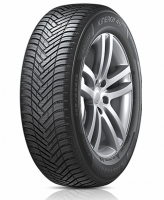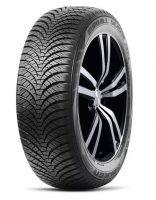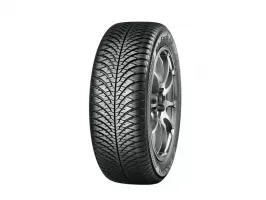


Tested 6 times by independent publications, the Yokohama BluEarth 4S AW21 averages a finish of 14th. Its strongest discipline is Wet Braking, beating 34% of the field across 6 tests; its weakest is Dry Braking, at 25% across 6 tests.
6Independent tests
0Test wins
0Podium finishes
14thAverage finish
28%Field beaten on average
4Publications
Advertisement
6 tests, 2019 to 2025
Share of the field beaten in each test, oldest to newest. Hover or tap a point for the test.
The Yokohama BluEarth-4S AW21 performs below expectations in this test. The tire only manages competitive results in wet conditions, while taking last or near-last positions in most other categories. Disappointingly, it loses the overall competition to the budget-focused Dębica despite being more expensive. The BluEarth-4S AW21 also records the highest noise levels and the worst rolling resistance of all tested tires, negatively impacting both comfort and fuel efficiency. Manufactured in the Philippines, this mid-segment tire struggles to justify its price point given its underwhelming overall performance.
Strong: Wet Handling ·Weak: Dry Braking, Snow Traction, Snow Handling, Noise, Rolling Resistance ·Winner: Nokian Seasonproof 2
Record by discipline
Where the Yokohama BluEarth 4S AW21 finished in each measured discipline, across every test that measured it against at least two other tires. Field beaten is the share of the other tires it outranked in that measurement.
Record by discipline
Discipline
Tests
Avg finish
Field beaten
Firsts
Dry
Dry Braking Weak
6
P14.5 of 21.5
25%
-
Dry Handling
2
P4.5 of 7
42%
-
Subj. Dry Handling
1
P4 of 7
50%
-
Wet
Wet Braking Strong
6
P13.7 of 21.5
34%
-
Wet Braking - Concrete
1
P10 of 16
40%
-
Wet Handling
2
P4 of 7
50%
-
Subj. Wet Handling
1
P6 of 7
17%
-
Wet Circle
1
P6 of 7
17%
-
Straight Aqua
3
P7.7 of 10
26%
-
Curved Aquaplaning
2
P9 of 11.5
22%
-
Snow
Snow Braking
3
P2.7 of 10
79%
1
Snow Traction
3
P6 of 10
47%
1
Snow Handling
2
P6 of 7
17%
-
Subj. Snow Handling
1
P4 of 7
50%
-
Snow Circle
1
P5 of 7
33%
-
Ice
Ice Braking
2
P7.5 of 11.5
57%
1
Ice Traction
1
P6 of 7
17%
-
Comfort
Noise
3
P9.7 of 10
2%
-
Tire Weight
1
P16 of 16
0%
-
Value
Wear
2
P9.5 of 11.5
28%
-
Value
1
P3 of 7
67%
-
Rolling Resistance
2
P7 of 7
0%
-
Fuel Consumption
1
P15 of 16
7%
-
Abrasion
1
P16 of 16
0%
-
Head-to-head record
Overall finishing position against the tires that have most often shared a test with the Yokohama BluEarth 4S AW21. Only tires tested alongside it at least three times are listed.
Across six all-season tests, the Yokohama BluEarth 4S AW21 shows a clear pattern of weak dry braking and efficiency, mixed wet performance, and sporadically strong snow/ice stopping. Average overall ranking is poor (14.2), dragged down by bottom-tier dry braking, aquaplaning, high rolling resistance, heavy weight, and high abrasion. However, it can deliver competitive snow braking and occasional strong wet handling laps.
Overall, the tire suits climates prioritizing winter grip over summer performance. Its wet handling pace can be respectable, but braking (dry and wet) is generally below class leaders, and comfort/efficiency (noise, fuel use, RR) are consistent weaknesses.
Performance Strengths
Snow and Ice Braking PerformanceStrongDetails
1st place snow braking in 2024 test (17.6 m)
1st place ice braking in 2024 test (6.48 m)
3rd/16 snow braking in 2024 ADAC (+5% from best)
Wet Handling PaceModerateDetails
2nd/7 wet handling in 2025 Motor (+0.5% from best)
The Yokohama BluEarth-4S AW21 performs below expectations in this test. The tire only manages competitive results in wet conditions, while taking last or near-last positions in most other categories. Disappointingly, it loses the overall competition to the budget-focused Dębica despite being more expensive. The BluEarth-4S AW21 also records the highest noise levels and the worst rolling resistance of all tested tires, negatively impacting both comfort and fuel efficiency. Manufactured in the Philippines, this mid-segment tire struggles to justify its price point given its underwhelming overall performance.
The Yokohama BluEarth-4S tire receives an overall adequate rating for driving safety. It shows significant weaknesses on dry roads at high temperatures and misses good ratings on both wet and winter surfaces.
On dry surfaces, the tire offers barely adequate steering feedback and lacks precision. The driver must make frequent corrections due to delayed steering response and inconsistent cornering. The test vehicle tends to oversteer early in dynamic maneuvers, resulting in an adequate rating for limit behavior. Braking distance is rated as satisfactory.
On wet roads, the BluEarth-4S performs satisfactorily. It narrowly misses a good rating in braking tests, while its aquaplaning resistance and handling are clearly rated as satisfactory. The tire struggles to effectively combine longitudinal and lateral forces and tends to under- or oversteer relatively early.
In winter conditions, the Yokohama achieves a satisfactory result. It scores well in snow braking but only satisfactory in traction and snow handling. The test vehicle offers satisfactory steering precision, but with a narrow and low performance limit. Ice braking performance is also rated as satisfactory.
Environmentally, the Japanese-made Yokohama BluEarth-4S receives a satisfactory rating. It achieves only satisfactory scores in projected mileage, wear, and efficiency. The tire is criticized for production residues on new tires, which unnecessarily impact the environment during initial use..
WeakDry BrakingNoiseTire WeightWearFuel ConsumptionAbrasion WinnerGoodyear Vector 4Seasons Gen 3
The Yokohama BluEarth 4S AW21 is another tire that is better in the snow and ice than the dry and wet. It's not a bad product, and it was very good in the snow, but perhaps a bit too good for an all season tire as it was firmly outclassed when not in winter conditions.