



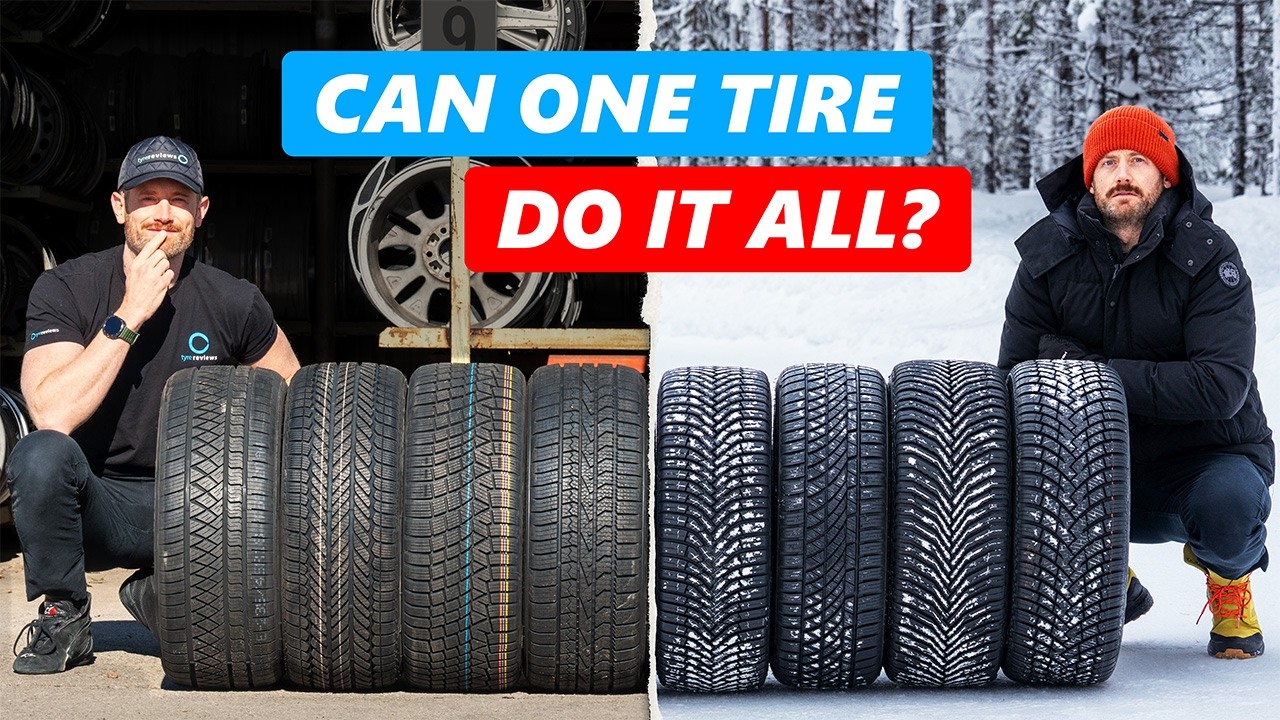
Continental have just released a brand new all weather tire, the SecureContact AW, and to find out how good it really is I put it up against seven rivals, including the very best from Michelin, Bridgestone, Goodyear and Pirelli, two tires I had never tested before and the cheapest tire I could buy in the size. All weather tires carry the three peak mountain snowflake and are meant to stay on the car all year, so I tested all eight in the snow, on ice, in the wet and in the dry, and measured noise, comfort and rolling resistance, to see which really works best in all weathers.
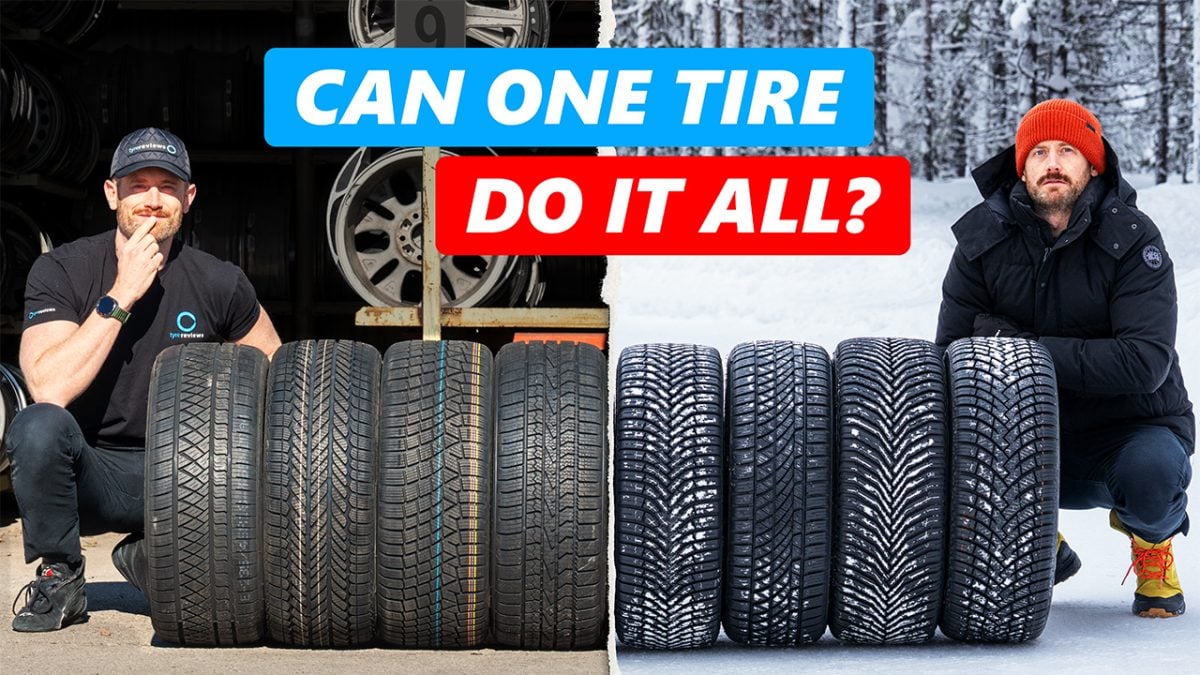
The established names are the Michelin CrossClimate 2 AW, Bridgestone WeatherPeak, Goodyear Assurance WeatherReady 2 and Pirelli Cinturato WeatherActive. The Falken Aklimate and Hankook Weatherflex GT are new to me, and as always I bought the cheapest tire I could find in the size, which this year was the Atturo AZ810. These are North American market tires in 235/45 R18.
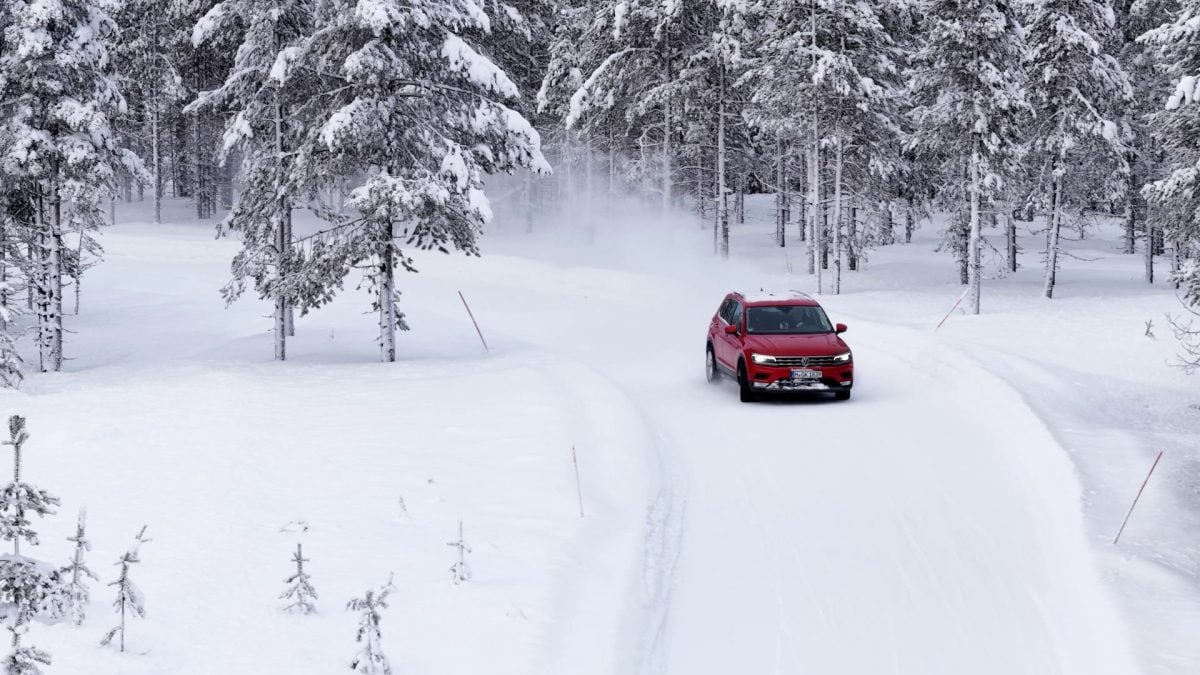
Test setup & methodology
The test setting, the conditions recorded and how the results contribute to the score.
Show full testing methodology
Recorded test conditions
- Dry Braking
- 62.1 → 3.1 mph
- Dry Handling
- 63–72 °F
- Wet Braking
- 49.7 → 3.1 mph
- Wet Handling
- 63–70 °F
- Snow Braking
- 24.9 → 3.1 mph · -4–-6 °F
- Snow Traction
- 0.0 → 12.4 mph · 9 °F
- Snow Handling
- -8–-4 °F
- Ice Braking
- 12.4 → 3.1 mph
- Ice Traction
- 0.0 → 12.4 mph
Score Weighting
This test uses rated scoring. In each discipline the best tire scores 100 and every 1% behind it costs the rate shown, never below zero. Each rate is set from how far that measurement spread among these tires, so each weight is that discipline’s real share of the result, however widely the tires finished apart. Where the tires finished almost level, a discipline is scaled up no more than double, so a near tie cannot decide the result. Tires within 0.4 points of the best tire in their group share its place. Category weights contribute to the overall score. Within each category, discipline weights divide that category’s share. Published finishing positions also need to be read alongside the editorial verdict.
| Test | Within category | Share of overall score | Rate |
|---|---|---|---|
| Dry · 25% | |||
| Dry Braking | 50% | 12.5% | 1.28 |
| Dry Handling | 40% | 10% | 8 |
| Subj. Dry Handling | 10% | 2.5% | 0.98 |
| Wet · 35% | |||
| Wet Braking | 40% | 14% | 0.58 |
| Wet Handling | 35% | 12.25% | 1.21 |
| Subj. Wet Handling | 5% | 1.75% | 0.5 |
| Wet Circle | 5% | 1.75% | 1.67 |
| Straight Aqua | 10% | 3.5% | 0.79 |
| Curved Aquaplaning | 5% | 1.75% | 0.33 |
| Snow · 20% | |||
| Snow Braking | 30% | 6% | 0.49 |
| Snow Traction | 30% | 6% | 0.95 |
| Snow Handling | 20% | 4% | 1.53 |
| Subj. Snow Handling | 10% | 2% | 0.54 |
| Snow Cornering | 10% | 2% | 0.64 |
| Ice · 5% | |||
| Ice Braking | 50% | 2.5% | 1.07 |
| Ice Traction | 50% | 2.5% | 0.8 |
| Comfort · 5% | |||
| Subj. Comfort | 50% | 2.5% | 0.91 |
| Noise | 50% | 2.5% | 1.8 |
| Value · 10% | |||
| Value | 20% | 2% | 0.32 |
| Rolling Resistance | 80% | 8% | 1.2 |
Our standard methods
The conditions above are recorded for this test. The descriptions below explain our standard procedures; measurement windows and run counts can vary by test.
Dry Braking
For dry braking, I drive the test vehicle at an entry speed of 110 km/h and apply full braking effort to a standstill with ABS active on clean, dry asphalt. I typically use an 100–5 km/h measurement window. My standard programme is five runs per tire set where possible, although the sequence can extend to as many as fifteen runs if conditions and tire category justify it. I analyze the full set of runs and discard statistical outliers before averaging. Reference tires are run repeatedly throughout the session to correct for changing conditions.
Dry Handling
For dry handling, I drive at the limit of adhesion around a dedicated handling circuit with ESC disabled where possible so I can assess the tire's natural balance, transient response, and limit behavior without electronic intervention masking the result. I usually complete between two and five timed laps per tire set, depending on the circuit, tire type, and consistency of conditions. I exclude laps affected by clear driver error or obvious environmental inconsistency. Control runs are carried out frequently throughout the session, and I often use multiple sets of control tires so that wear on the references does not become a meaningful variable. For more track-focused products, I also do endurance testing, which is a set number of laps at race pace to determine tire wear patterns and heat resistance over longer driving.
Subj. Dry Handling
I also carry out a structured subjective handling assessment at the limit of adhesion on a dedicated dry handling circuit. I score steering precision, steering response, turn-in behavior, mid-corner balance, corner-exit traction, breakaway characteristics, and overall confidence using a standardised 1–10 scale used consistently across my testing. The final assessment combines numeric scoring with written technical commentary. I complete familiarisation laps on the control tire before evaluating each candidate.
Wet Braking
For wet braking, I drive the test vehicle at an entry speed of 88 km/h and apply full braking effort to a standstill with ABS active on an asphalt surface with a controlled water film. I typically use an 80–5 km/h measurement window to isolate tire performance from variability in the initial brake application. My standard programme is eight runs per tire set where possible, although the sequence can extend to as many as fifteen runs if conditions and tire category justify it. I analyze the full set of runs and discard statistical outliers before averaging. To correct for changing conditions, I run reference tires repeatedly throughout the session — in wet testing, typically every three candidate test sets.
Wet Handling
For wet handling, I drive at the limit of adhesion around a dedicated handling circuit. I generally use specialist wet circuits with kerb-watering systems designed to maintain a consistent surface condition. ESC is disabled where possible so I can assess the tire's natural balance, transient response, and limit behavior without electronic intervention masking the result. I usually complete between two and five timed laps per tire set, depending on the circuit, tire type, and consistency of conditions. I exclude laps affected by clear driver error or obvious environmental inconsistency. Control runs are carried out frequently throughout the session, and I often use multiple sets of control tires so that wear on the references does not become a meaningful variable.
Subj. Wet Handling
I also carry out a structured subjective handling assessment at the limit of adhesion on a dedicated wet handling circuit. I score steering precision, steering response, turn-in behavior, mid-corner balance, aquaplaning resistance, breakaway characteristics, and overall confidence using a standardised 1–10 scale used consistently across my testing. The final assessment combines numeric scoring with written technical commentary. I complete familiarisation laps on the control tire before evaluating each candidate.
Wet Circle
For wet lateral grip testing, I use a circular track of fixed radius, typically between 30 and 50 meters, broadly aligned with ISO 4138 principles. The surface is wetted in a controlled and repeatable manner. I progressively increase speed until the maximum sustainable cornering speed is reached. I normally record multiple laps in both clockwise and counterclockwise directions to reduce the influence of camber, banking, or directional track bias. I then calculate average lateral acceleration and compare the result with the reference tire.
Straight Aqua
To measure straight-line aquaplaning resistance, I drive one side of the vehicle through a water trough of controlled depth, typically around 7 mm, while the opposite side remains on dry pavement. I enter at a fixed speed and then accelerate progressively. I define aquaplaning onset as the point at which the wheel travelling through the water exceeds a specified slip threshold relative to the dry-side reference wheel. I usually perform four runs per tire set and average the valid results.
Curved Aquaplaning
For curved aquaplaning, I use a circular track, typically around 100 meters in diameter, with a flooded arc of controlled water depth, usually about 7 mm. The vehicle is instrumented with GPS telemetry and a tri-axial accelerometer. I drive through the flooded section at progressively increasing speed, typically in 5 km/h increments, and record the minimum sustained lateral acceleration at each step. The test continues until lateral acceleration collapses, indicating complete aquaplaning. The result is expressed as remaining lateral acceleration in m/s² as speed rises.
Snow Braking
For snow braking, I drive the test vehicle at an entry speed of 50 km/h and apply full braking effort to a standstill with ABS active on a groomed, compacted snow surface, measuring 45-5 km/h. I generally use a wide VDA (vehicle dynamic area) and progressively move across the surface between runs so that no tire ever brakes on the same piece of snow twice. My standard programme is twelve runs per tire set, although the sequence can extend further if the data justify it. I analyze the full set of runs and discard statistical outliers before averaging. The surface is regularly groomed throughout the session. To correct for changing snow surface conditions, I run reference tires repeatedly — typically every two candidate test sets.
Snow Traction
For snow traction, I accelerate the vehicle from rest on a groomed snow surface with traction control active and measure speed and time using GPS telemetry. I typically use a 5–35 km/h measurement window to reduce the influence of launch transients and powertrain irregularities. I use a wide VDA (vehicle dynamic area) and progressively move across the surface between runs so that no tire ever accelerates on the same piece of snow twice. The surface is regularly groomed throughout the session. I complete multiple runs per tire set and average the valid results. Reference tires are run typically every two candidate test sets to correct for changing snow surface conditions.
Snow Handling
For snow handling, I drive at the limit of adhesion around a dedicated snow handling circuit with ESC disabled where possible. The circuit is groomed and prepared after every run while tires are being changed, so each set runs on a consistently prepared surface. I usually complete between two and five timed laps per tire set, excluding laps affected by clear driver error or obvious environmental inconsistency. Because snow surfaces degrade more rapidly than asphalt, control runs are carried out more frequently — typically every two candidate test sets.
Subj. Snow Handling
I also carry out a structured subjective handling assessment at the limit of adhesion on a dedicated snow handling circuit. The circuit is groomed and prepared after every run while tires are being changed, so each set runs on a consistently prepared surface. I score steering precision, turn-in behavior, mid-corner balance, corner-exit traction, breakaway characteristics, and overall confidence on snow using a standardised 1–10 scale used consistently across my testing. The final assessment combines numeric scoring with written technical commentary. I complete familiarisation laps on the control tire before evaluating each candidate.
Snow Cornering
For snow cornering, I drive the test vehicle through dedicated snow cornering sections at progressively increasing speeds. The surface is regularly groomed throughout the session. Lateral acceleration is measured using GPS telemetry and accelerometers. Multiple runs are averaged. Because snow surfaces degrade more rapidly, the control tire is retested frequently to account for changing conditions.
Ice Braking
For ice braking, I drive the test vehicle at an entry speed of 35 km/h and apply full braking effort to a standstill with ABS active on a prepared ice surface. Surface temperature is continuously monitored as ice friction properties vary substantially with temperature. My standard programme is twelve runs per tire set but with ice testing, you often do many more. I analyze the full set of runs and discard statistical outliers before averaging. Reference tires are run typically every two candidate test sets to correct for changing surface conditions.
Ice Traction
For ice traction, I accelerate the vehicle from rest on a prepared ice surface with traction control active and measure speed and time using GPS telemetry. I typically use a 5–35 km/h measurement window to reduce the influence of launch transients. I use a wide VDA (vehicle dynamic area) and progressively move across the surface between runs so that no tire ever accelerates on the same piece of ice twice. Surface temperature is continuously monitored. I complete multiple runs per tire set and average the valid results, with reference tires run typically every two candidate test sets.
Subj. Comfort
To assess comfort, I drive on a wide range of road surfaces (often dedicated comfort tracks at test facilities) at speeds from 50 to 120 km/h, including smooth motorway, coarse surfaces, expansion joints, broken pavement, and sharp-edged obstacles. I evaluate primary ride quality, secondary ride quality, impact harshness, seat-transmitted vibration, and the tire's ability to absorb sharp inputs. Ratings are assigned on a 1–10 scale relative to the reference tire.
Noise
I measure external pass-by noise in accordance with UNECE Regulation 117 and ISO 13325 using the coast-by method on a compliant test surface. Calibrated microphones are positioned beside the test lane, and the vehicle coasts through the measurement zone under controlled conditions. I record the maximum A-weighted sound pressure level in dB(A), complete multiple runs over the relevant speed range, and normalise the result to the reference speed required by the procedure.
Rolling Resistance
Rolling resistance is measured under controlled laboratory conditions in accordance with ISO 28580 and UNECE Regulation 117 Annex 6. The tire is mounted on a test wheel and loaded against a large-diameter steel drum. After thermal stabilisation at the prescribed test speed, rolling resistance force is measured at the spindle and corrected according to the relevant procedure. The result is expressed as rolling resistance coefficient, typically in kg/tonne.
Dry Braking
It should come as no surprise that the Michelin CrossClimate 2 AW was the best in dry braking, stopping from 62 mph in 127 feet. The Goodyear and the Atturo tied for second on 134 feet, 7 feet behind, and the new Continental gave up a little here, fourth on 135 feet. The Bridgestone WeatherPeak and Falken Aklimate struggled, both more than 10% further than the Michelin, with the Bridgestone last on 147 feet.
Dry Braking
Dry braking in feet (62 - 3 mph)
Lower is better ↓| Position / Tire | Result | Gap to best | Residual speed |
|---|---|---|---|
| 127 ft | Best | 0 mph | |
| 134 ft | +7 ft | 18 mph | |
| 134 ft | +7 ft | 18 mph | |
| 135 ft | +8 ft | 19 mph | |
| 137 ft | +10 ft | 21 mph | |
| 138 ft | +11 ft | 23 mph | |
| 142 ft | +15 ft | 26 mph | |
| 147 ft | +20 ft | 29 mph |
The difference between best and worst was 15.4% (20 ft ≈ 1.3 Car Lengths). From 80 mph, the Bridgestone WeatherPeak would still be travelling at 29 mph when the Michelin CrossClimate 2 AW had stopped.
Residual speed is calculated from the measured braking distances, assuming constant deceleration; it is not a separate measurement.

Dry Handling
The Camry's hybrid system hampered the dry handling laps even more than the wet ones, so I would not read much into the small gaps here. The Falken Aklimate set the fastest lap, and the first six tires were covered by less than four tenths of a second. The Bridgestone and Pirelli were the outliers, both around a second and a half off the Falken.
Dry Handling
Dry handling time in seconds [Average Temperature 67°F]
Lower is better ↓| Position / Tire | Result | Gap to best |
|---|---|---|
| 77.07 s | Best | |
| 77.26 s | +0.19 s | |
| 77.32 s | +0.25 s | |
| 77.35 s | +0.28 s | |
| 77.37 s | +0.30 s | |
| 77.43 s | +0.36 s | |
| 78.56 s | +1.49 s | |
| 78.58 s | +1.51 s |
All the tires in the Dry Handling test finished less than 3% apart.
Subjectively, I graded the Michelin the best in the dry, with the best transition behavior and steering feel of the group. The Hankook, Continental and Falken were close behind and also showed excellent performance around the lap, all neutral and predictable. The Goodyear had a slightly oversteering balance, and the Atturo had the least steering feel, so it scored lowest here even though its lap time was competitive.
Wet Braking
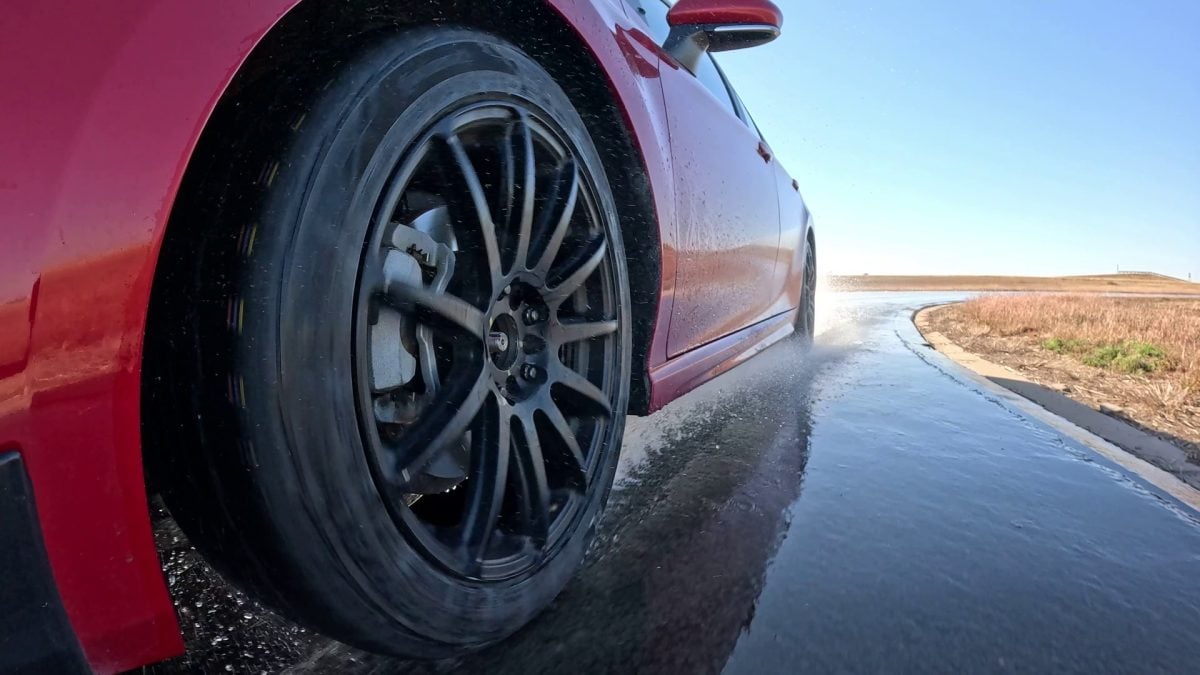
The new Continental SecureContact AW was the best in wet braking, stopping from 50 mph in 105 feet. The Michelin was a close second, with the Goodyear third and the Hankook fourth, all within 3 feet of the Continental. After that the gaps grow quickly. The Pirelli and Falken needed more than 10 feet further than the Continental, and the Bridgestone was last on 121 feet, 15.8% further. Scaled up to a motorway stop from 81 mph, you would still be doing about 30 mph on the Bridgestone at the moment the car on the Continental had stopped, so wet braking really does make a difference.
Wet Braking
Wet braking in feet (50 - 3 mph)
Lower is better ↓| Position / Tire | Result | Gap to best | Residual speed |
|---|---|---|---|
| 105 ft | Best | 0 mph | |
| 106 ft | +1 ft | 8 mph | |
| 107 ft | +2 ft | 10 mph | |
| 108 ft | +3 ft | 13 mph | |
| 111 ft | +6 ft | 19 mph | |
| 116 ft | +11 ft | 24 mph | |
| 116 ft | +11 ft | 25 mph | |
| 121 ft | +16 ft | 30 mph |
The difference between best and worst was 15.8% (16 ft ≈ 1.1 Car Lengths). From 80 mph, the Bridgestone WeatherPeak would still be travelling at 30 mph when the Continental SecureContact AW had stopped.
Residual speed is calculated from the measured braking distances, assuming constant deceleration; it is not a separate measurement.
Wet Handling
The Continental was also fastest around the wet handling circuit, just over a tenth of a second ahead of the Goodyear, with the Hankook third and the Michelin fourth. The Michelin in fourth was a bit of a surprise to me, as I expected it to be closer to the front in the wet. The Pirelli and Atturo were next, then the Falken, and the Bridgestone was the slowest tire, more than six seconds off the Continental. A premium name in last place might surprise you, but it is something of a running trend for the WeatherPeak, which also struggled in the wet in my 2025 all weather test.
Wet Handling
Wet handling time in seconds [Average Temperature 66°F]
Lower is better ↓| Position / Tire | Result | Gap to best |
|---|---|---|
| 72.69 s | Best | |
| 72.83 s | +0.14 s | |
| 74.17 s | +1.48 s | |
| 74.89 s | +2.20 s | |
| 76.16 s | +3.47 s | |
| 76.4 s | +3.71 s | |
| 77.87 s | +5.18 s | |
| 78.86 s | +6.17 s |
The difference between best and worst was 8.5% (6.17 s).
If there was one word I could use to describe the SecureContact AW in the wet, it would be secure. It was not the most dynamic or sporty tire, and it was not as direct as the Goodyear or even the Hankook, but it gave you predictability, an easy balance, confidence and huge amounts of grip. You got to the end of a lap feeling you had done a great job, and then the same again on the next one. There was nothing surprising about the tire, which for a street tire is one of the highest compliments I can give it.
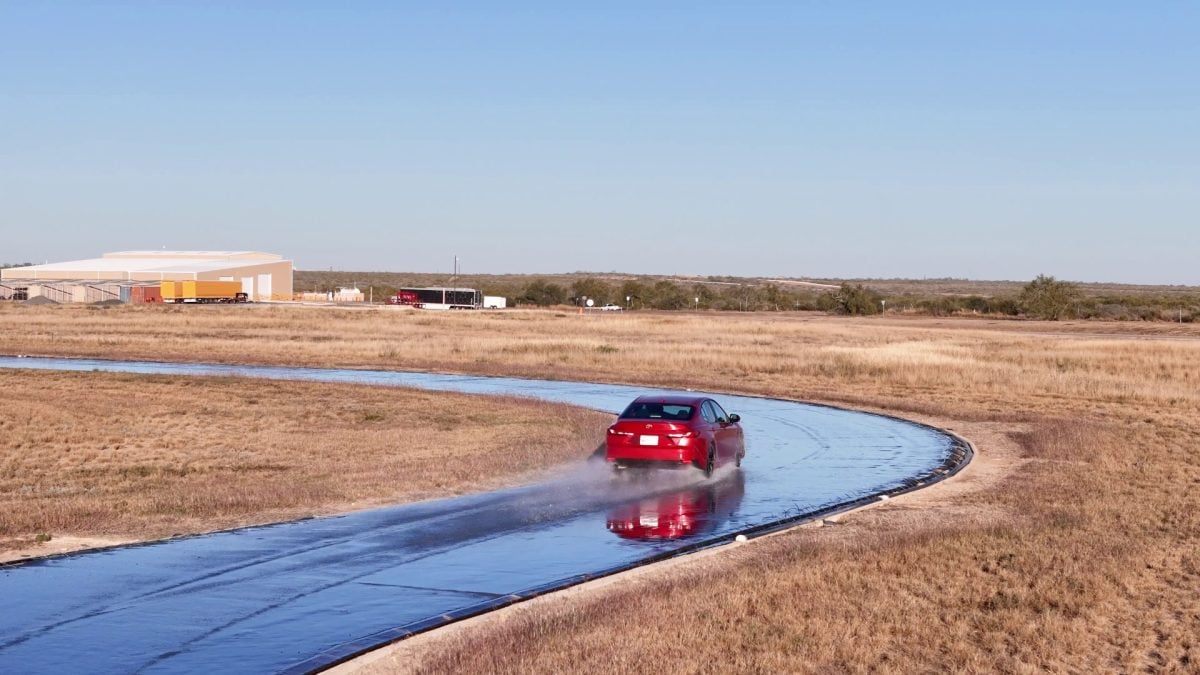
The Goodyear Assurance WeatherReady 2 was my favorite to drive. I chose it for one of my own cars because I like it so much dynamically, and on this Camry I liked it again. It had the sharpest steering of the group, and while it was not quite the grippiest, it is a really good tire in the wet. The Hankook Weatherflex GT was very impressive for a tire I had never driven before. The steering was direct and sharp, but never twitchy or nervous, the balance was neutral, and you got round the lap feeling you had good levels of grip, which you did. The Michelin was a lovely, easy tire to drive, with fairly direct steering and good predictability, though funnily enough it did not feel quite as much like a Michelin as the Pirelli did.
The Pirelli felt very Michelin, which is a compliment for a street tire. It was easy and predictable, and it broke into understeer early, which most people find easier to deal with than oversteer. It did not have the most grip in the test and that understeer cost it some lap time, but I enjoyed it for its safe balance. The Atturo beat my expectations. I assumed the cheapest tire in the test would be the slowest, and it was not, because its grip levels were reasonable. Where it struggled was its behavior at the limit, where it would break into oversteer fairly quickly, and it gave me my only half spin in a long time, so predictability is where the budget tire falls down. The Falken lacked the ultimate grip of the premium tires and was a little imprecise around the limit, and I expected a little more from it. The Bridgestone felt more like a winter tire, with soft steering and a lack of bite. It has a wide window when sliding, so it is easy to control, but it starts sliding far too early.
Wet Circle
The wet circle measures steady cornering grip on a wet surface, and the Continental was quickest again, a third of a second ahead of the Michelin. The Bridgestone was third, a better result than its wet handling lap would suggest, and the Falken and Atturo were the slowest.
Wet Circle
Wet Circle Lap Time in seconds
Lower is better ↓| Position / Tire | Result | Gap to best |
|---|---|---|
| 13.08 s | Best | |
| 13.41 s | +0.33 s | |
| 13.46 s | +0.38 s | |
| 13.58 s | +0.50 s | |
| 13.6 s | +0.52 s | |
| 13.79 s | +0.71 s | |
| 13.97 s | +0.89 s | |
| 13.98 s | +0.90 s |
The difference between best and worst was 6.9% (0.9 s).
Straight Aquaplaning
If deep water is your concern, the good news is I tested both straight and curved aquaplaning. In a straight line the Michelin narrowly beat the Bridgestone, with the Hankook right up there too, the three of them covered by less than 0.3 mph. The Pirelli, Goodyear, Falken and Continental were a step further back, and the Atturo was well behind the rest, aquaplaning at more than 6 mph lower than the Michelin.
Straight Aqua
Float Speed in mph
Higher is better ↑| Position / Tire | Result | Gap to best |
|---|---|---|
| 46.4 mph | Best | |
| 46.2 mph | -0.2 mph | |
| 46.2 mph | -0.2 mph | |
| 44.1 mph | -2.3 mph | |
| 43.6 mph | -2.8 mph | |
| 43.6 mph | -2.8 mph | |
| 43.2 mph | -3.2 mph | |
| 39.8 mph | -6.6 mph |
The difference between best and worst was 14.2% (6.6 mph).
Curved Aquaplaning
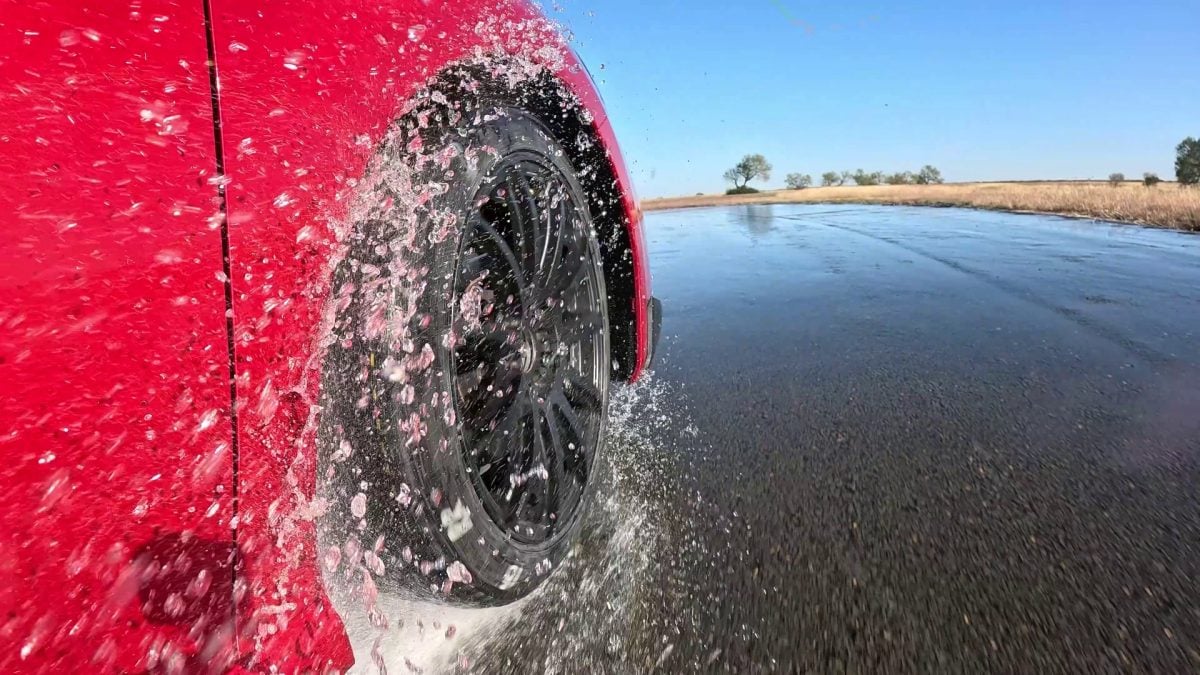
The top three were the same in curved aquaplaning, just with the Hankook Weatherflex GT now clearly ahead of the Bridgestone, and the Michelin third. The Continental was seventh in both aquaplaning tests, with the Atturo last again, so this is the one area of the wet where the new Continental gives something away to its rivals.
Curved Aquaplaning
Remaining lateral acceleration
Higher is better ↑| Position / Tire | Result | Gap to best |
|---|---|---|
| 10.0 ft/s² | Best | |
| 9.0 ft/s² | -1.0 ft/s² | |
| 8.7 ft/s² | -1.3 ft/s² | |
| 8.2 ft/s² | -1.8 ft/s² | |
| 7.6 ft/s² | -2.4 ft/s² | |
| 7.4 ft/s² | -2.6 ft/s² | |
| 7.3 ft/s² | -2.7 ft/s² | |
| 6.4 ft/s² | -3.6 ft/s² |
The difference between best and worst was 36.1% (3.6 ft/s²).
Snow Braking
The Michelin was the best in snow braking, stopping from 25 mph in 52 feet, with the Continental and the Bridgestone WeatherPeak essentially tied behind it. The Goodyear and Hankook followed, and the Pirelli, Falken and Atturo were the weakest, with the Atturo needing 8 feet more than the Michelin, 15.6% further.
Snow Braking
Snow braking in feet (25 - 3 mph) [Average Temperature -5°F]
Lower is better ↓| Position / Tire | Result | Gap to best | Residual speed |
|---|---|---|---|
| 52 ft | Best | 0 mph | |
| 53 ft | +1 ft | 9 mph | |
| 53 ft | +1 ft | 10 mph | |
| 54 ft | +2 ft | 16 mph | |
| 56 ft | +4 ft | 20 mph | |
| 58 ft | +6 ft | 25 mph | |
| 60 ft | +8 ft | 29 mph | |
| 60 ft | +8 ft | 29 mph |
The difference between best and worst was 15.6% (8 ft ≈ 0.6 Car Lengths). From 80 mph, the Atturo AZ810 would still be travelling at 29 mph when the Michelin CrossClimate 2 AW had stopped.
Residual speed is calculated from the measured braking distances, assuming constant deceleration; it is not a separate measurement.

Snow Traction
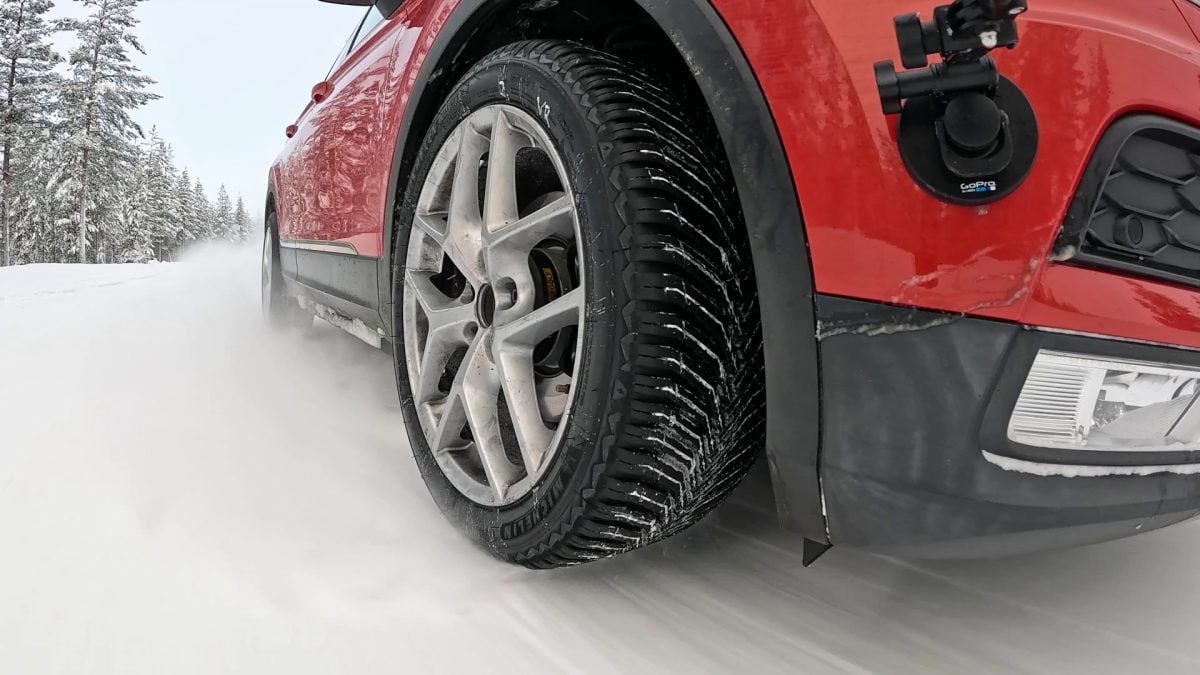
The Continental exactly matched the Michelin in snow traction, the pair clearly ahead of the rest. The Hankook, Bridgestone and Pirelli were a close group behind, then the Goodyear, and the Atturo and Falken were the slowest to accelerate.
Snow Traction
Snow acceleration time (0 - 12 mph) [Average Temperature 9°F]
Lower is better ↓| Position / Tire | Result | Gap to best |
|---|---|---|
| 3.75 s | Best | |
| 3.75 s | Best | |
| 4.02 s | +0.27 s | |
| 4.04 s | +0.29 s | |
| 4.05 s | +0.30 s | |
| 4.14 s | +0.39 s | |
| 4.22 s | +0.47 s | |
| 4.24 s | +0.49 s |
The difference between best and worst was 13.1% (0.49 s).
Snow Handling
We had a good spread of tires in snow handling, which does not always happen these days, and the cheapest tire was not the slowest around the lap. That was the Falken, almost eight seconds off the Michelin CrossClimate 2 AW, which was fastest. The Continental was second, two seconds behind the Michelin, the Hankook, Bridgestone and Atturo were a close group next, and the Goodyear and Pirelli were sixth and seventh. Snow braking and traction lined up with the handling, with the Michelin the best in all three.
Snow Handling
Snow handling time in seconds [Average Temperature -6°F]
Lower is better ↓| Position / Tire | Result | Gap to best |
|---|---|---|
| 84.27 s | Best | |
| 86.28 s | +2.01 s | |
| 86.92 s | +2.65 s | |
| 87.44 s | +3.17 s | |
| 88.17 s | +3.90 s | |
| 89.01 s | +4.74 s | |
| 90.99 s | +6.72 s | |
| 92.25 s | +7.98 s |
The difference between best and worst was 9.5% (7.98 s).
The Michelin was outstanding in the snow, as it is in every test I do. It was the one tire I rated good to excellent rather than just good, and it simply did everything a little better than everyone else. The Continental got closer to it than any other tire. It was not quite as fast, but I think it did everything the most predictably, in all circumstances. It was the least upset by the icy sections of the circuit, and it gave you a big window of recovery when steering and when sliding, so once you were past the limit you knew how to recover the car, which is a very good quality in a tire. Even so, if you were driving down a snowy lane, you would pick the Michelin.
The Hankook was pleasant to drive and did what you expected it to, but its braking was a struggle compared to the best, especially when braking and turning at the same time. The Bridgestone was a bit of an unclear tire. It did not give a huge amount of feedback at the limit and felt a little sloppy, but when I looked at the lap time, it had over-delivered. The grip is there, it just does not deliver it in a particularly clear way, and for getting unstuck on a hill or that one snowy day you might see, the Bridgestone has more than enough winter grip. The Atturo over-performed for its price point and was nice to drive, with nothing really negative to say about it, other than it needs a little more grip to get up there with the best.
I have tested the Goodyear a number of times before, and it has never been the best in the snow, so I was not expecting huge things from it. In this group it was okay. It lacked a little traction compared to the best and needed a more delicate touch, breaking into understeer a little earlier, but it was stable and I had no concerns about it as an all weather tire. I don't think an all weather tire needs winter tire levels of snow performance, even though some of the better tires in this test have it.
The Pirelli was a disappointment. In my 2025 all weather test, the SUV version, the Scorpion WeatherActive, was under 2% off the fastest snow lap, but not here. Its traction was better than its braking and steering, so it felt good accelerating out of a corner, and then when I stood on the brakes and tried to turn into the next one, there was less grip than I expected. It was the only tire that caught me out on the snow. I'm not sure why it was weaker than before. It may be the size, or the very cold temperature, which is unusual for this kind of tire. The Falken was safe, with an understeer balance, but mostly because it did not have the grip to turn into the corner. You would arrive at a corner willing it to turn, and it would just creep in. Its traction and braking were also down on the best.
Subj. Snow Handling
Subjective Snow Handling Score
Higher is better ↑| Position / Tire | Result | Gap to best |
|---|---|---|
| 8.6 Points | Best | |
| 8.3 Points | -0.30 Points | |
| 8.2 Points | -0.40 Points | |
| 8.1 Points | -0.50 Points | |
| 8.1 Points | -0.50 Points | |
| 7.6 Points | -1.00 Points | |
| 7.2 Points | -1.40 Points | |
| 7 Points | -1.60 Points |
The difference between best and worst was 18.6% (1.6 Points).
Snow Cornering
Snow cornering measures lateral grip on snow, and it followed the same pattern, with the Michelin generating the most grip, the Bridgestone and Continental next, and the Atturo, Pirelli and Falken at the bottom.
Snow Cornering
Average Lateral Acceleration in G
Higher is better ↑| Position / Tire | Result | Gap to best |
|---|---|---|
| 0.36 g | Best | |
| 0.34 g | -0.02 g | |
| 0.33 g | -0.03 g | |
| 0.33 g | -0.03 g | |
| 0.32 g | -0.04 g | |
| 0.31 g | -0.05 g | |
| 0.31 g | -0.05 g | |
| 0.3 g | -0.06 g |
The difference between best and worst was 16.7% (0.06 g).
Ice Braking
The Michelin won again on ice, this time with the Goodyear stepping up to second and the Continental third in both ice tests. In ice braking the Michelin and Goodyear were almost inseparable, and the Falken was clearly the weakest, needing 3 feet more than the Michelin on a very short stop.
Ice Braking
Ice braking in feet (12 - 3 mph)
Lower is better ↓| Position / Tire | Result | Gap to best | Residual speed |
|---|---|---|---|
| 20 ft | Best | 0 mph | |
| 20 ft | 0 ft | 3 mph | |
| 20 ft | 0 ft | 10 mph | |
| 21 ft | +1 ft | 15 mph | |
| 21 ft | +1 ft | 16 mph | |
| 21 ft | +1 ft | 18 mph | |
| 21 ft | +1 ft | 20 mph | |
| 23 ft | +3 ft | 29 mph |
The difference between best and worst was 15.5% (3 ft). From 80 mph, the Falken Aklimate would still be travelling at 29 mph when the Michelin CrossClimate 2 AW had stopped.
Residual speed is calculated from the measured braking distances, assuming constant deceleration; it is not a separate measurement.
Ice Traction
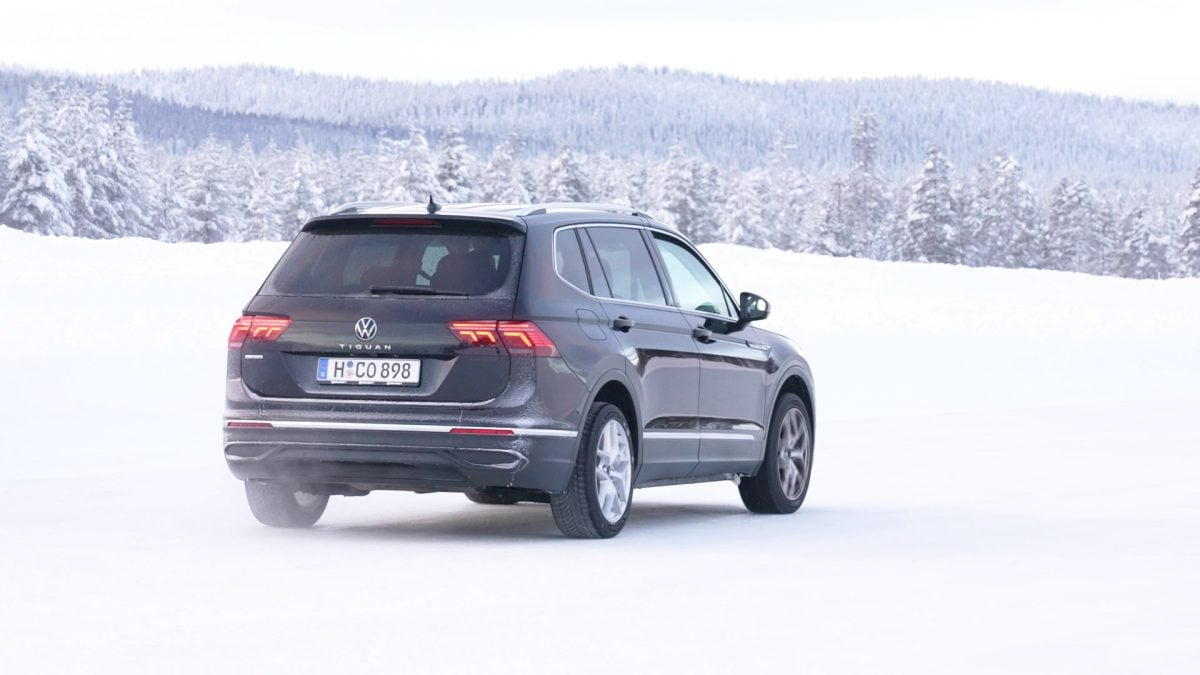
The Michelin had the best ice traction by a clear margin, with the Goodyear second and the Continental and Atturo close behind. The Falken was last on ice again.
Ice Traction
Ice acceleration time (0 - 12 mph)
Lower is better ↓| Position / Tire | Result | Gap to best |
|---|---|---|
| 5.43 s | Best | |
| 5.82 s | +0.39 s | |
| 5.94 s | +0.51 s | |
| 5.97 s | +0.54 s | |
| 6.14 s | +0.71 s | |
| 6.23 s | +0.80 s | |
| 6.34 s | +0.91 s | |
| 6.9 s | +1.47 s |
The difference between best and worst was 27.1% (1.47 s).
Comfort
I ran subjective noise and comfort on the road, plus lane change stability. Honestly, all the tires were incredibly close, and only the Hankook Weatherflex GT was a real standout, so if comfort is your thing, it's the Hankook. The Pirelli, Goodyear and Continental were also very strong, and the Atturo was rated lowest. On the same drive, the Pirelli had the most precise steering and the best lane change stability, and the Atturo was the weakest in a lane change.
Subj. Comfort
Subjective Comfort Score
Higher is better ↑| Position / Tire | Result | Gap to best |
|---|---|---|
| 10 Points | Best | |
| 9.5 Points | -0.50 Points | |
| 9.5 Points | -0.50 Points | |
| 9.5 Points | -0.50 Points | |
| 9 Points | -1.00 Points | |
| 9 Points | -1.00 Points | |
| 9 Points | -1.00 Points | |
| 8.75 Points | -1.25 Points |
The difference between best and worst was 12.5% (1.25 Points).
Noise
In the pass-by noise test at 50 mph, the Pirelli Cinturato WeatherActive was the quietest tire by more than a decibel, with the Atturo, Bridgestone and Continental next. The Falken was the loudest, with the Michelin and Hankook not far behind it, and the Falken was also the noisiest tire from inside the car. Pass-by noise is measured outside the car, so it does not always match what you hear from the driver's seat.
Noise
External noise in dB
Lower is better ↓| Position / Tire | Result | Gap to best |
|---|---|---|
| 71.1 dB | Best | |
| 72.4 dB | +1.30 dB | |
| 72.7 dB | +1.60 dB | |
| 72.9 dB | +1.80 dB | |
| 74.1 dB | +3.00 dB | |
| 74.5 dB | +3.40 dB | |
| 74.7 dB | +3.60 dB | |
| 75.4 dB | +4.30 dB |
The difference between best and worst was 6% (4.3 dB).
Value
Value is the price per 1,000 miles of tread warranty. The Atturo was by far the cheapest tire to buy, so even with the shortest warranty in the test it works out the cheapest per mile, assuming it reaches that warranty. The Hankook and Bridgestone were next, helped by the longest warranties in the test, and the Michelin was the most expensive per mile, as it was also the most expensive tire to buy.
Value
Dollars/1000 miles based on mileage warranty
Lower is better ↓| Position / Tire | Result | Gap to best | cost per 1,000 miles |
|---|---|---|---|
| 2.04 Price/1000 | Best | $9.95 | |
| 3.14 Price/1000 | +1.10 Price/1000 | $16.32 | |
| 3.15 Price/1000 | +1.11 Price/1000 | $16.21 | |
| 3.31 Price/1000 | +1.27 Price/1000 | $17.36 | |
| 3.63 Price/1000 | +1.59 Price/1000 | $17.23 | |
| 4.02 Price/1000 | +1.98 Price/1000 | $25.33 | |
| 4.12 Price/1000 | +2.08 Price/1000 | $19.65 | |
| 4.18 Price/1000 | +2.14 Price/1000 | $20.64 |
The difference between best and worst was 104.9% (2.14 Price/1000). Over 25,000 miles the cheapest tire to own (Atturo AZ810) works out $384 cheaper than the most expensive (Goodyear Assurance WeatherReady 2).
How this is calculated
Tire life here is the manufacturer's treadwear warranty, NOT measured wear - treat it as the maker's promise, not a test result.
Tire life is the manufacturer's treadwear warranty, not measured wear. Assumes a typical car doing 29 mpg (rolling resistance causing 20% of fuel use), fuel at $3.60 per gallon and $80 fitting per set of four. US prices are from the time of the 2025 test; financing costs are excluded.
Rolling Resistance
Rolling resistance is how much energy a tire uses, so it affects how much fuel you burn, or the range of an electric car. If you ignore the Goodyear, all the tires were fairly close. The Atturo AZ810 had the lowest rolling resistance, closely followed by the Continental, with the Pirelli third and the Continental's main rival, the Michelin, a little way back in fifth. The Goodyear Assurance WeatherReady 2 was a long way behind the rest, using about a quarter more energy than the Continental and almost a third more than the Atturo, and that adds up: the chart works out what it costs you in fuel each year.
Rolling Resistance
Rolling resistance in kg t
Lower is better ↓| Position / Tire | Result | Gap to best | Extra fuel / year |
|---|---|---|---|
| 8.27 kg/t | Best | $0 | |
| 8.73 kg/t | +0.46 kg/t | $16 | |
| 8.89 kg/t | +0.62 kg/t | $22 | |
| 9.1 kg/t | +0.83 kg/t | $29 | |
| 9.14 kg/t | +0.87 kg/t | $31 | |
| 9.15 kg/t | +0.88 kg/t | $31 | |
| 9.25 kg/t | +0.98 kg/t | $35 | |
| 10.95 kg/t | +2.68 kg/t | $95 |
The difference between best and worst was 32.4% (2.68 kg / t). Over 12,000 miles a year at $3.60/gal, the Goodyear Assurance WeatherReady 2 uses about 26 gal ($95) more fuel than the Atturo AZ810.
Adjust the assumptions
Calculated estimates, not additional measurements. Use the controls to explore the assumptions.
Results
We have a joint result at the top, with the Continental SecureContact AW and Michelin CrossClimate 2 AW pretty much in a league of their own, though they do things slightly differently. The Hankook Weatherflex GT finished an impressive third, the Atturo AZ810 and Goodyear Assurance WeatherReady 2 shared fourth, and the Bridgestone WeatherPeak was last.
 The BEST All Weather Tires for 2026/27Watch the full video of this test on YouTube Watch on YouTube
Continental SecureContact AW
235/45 R18 98V XL
Category scores (% of best)
All discipline results (20)
Discipline positions compare the ranked tires in this test, not the whole market. These are individual measurements, not weighted overall scores.
| Test | Position in discipline | Result | Gap to best |
|---|---|---|---|
| Dry BrakingLower is better | 4th / 8 | 135 ft | +8 ft |
| Dry HandlingLower is better | 2nd / 8 | 77.26 s | +0.19 s |
| Subj. Dry HandlingHigher is better | 2nd / 8 | 8.3 Points | -0.30 Points |
| Wet BrakingLower is better | 1st / 8 | 105 ft | Best in this discipline |
| Wet HandlingLower is better | 1st / 8 | 72.69 s | Best in this discipline |
| Subj. Wet HandlingHigher is better | 3rd / 8 | 8.2 Points | -0.30 Points |
| Wet CircleLower is better | 1st / 8 | 13.08 s | Best in this discipline |
| Straight AquaHigher is better | 7th / 8 | 43.2 mph | -3.2 mph |
| Curved AquaplaningHigher is better | 7th / 8 | 7.3 ft/s² | -2.7 ft/s² |
| Snow BrakingLower is better | 2nd / 8 | 53 ft | +1 ft |
| Snow TractionLower is better | 1st / 8 | 3.75 s | Best in this discipline |
| Snow HandlingLower is better | 2nd / 8 | 86.28 s | +2.01 s |
| Subj. Snow HandlingHigher is better | 2nd / 8 | 8.3 Points | -0.30 Points |
| Snow CorneringHigher is better | 3rd / 8 | 0.334 g | -0.02 g |
| Ice BrakingLower is better | 3rd / 8 | 20 ft | 0 ft |
| Ice TractionLower is better | 3rd / 8 | 5.94 s | +0.51 s |
| Subj. ComfortHigher is better | 2nd / 8 | 9.5 Points | -0.50 Points |
| NoiseLower is better | 4th / 8 | 72.9 dB | +1.80 dB |
| ValueLower is better | 5th / 8 | 3.63 Price/1000 | +1.59 Price/1000 |
| Rolling ResistanceLower is better | 2nd / 8 | 8.73 kg/t | +0.46 kg/t |
- Production
- 1325(25)
- Origin
- Romania
- UTQG
- 700 A A
- Shore
- 67
- 3PMSF
- Yes
- Weight
- 11.01 kgs
- Tread
- 8.2 mm
- Price
- 217.99
Michelin CrossClimate 2 AW
235/45 R18 98V XL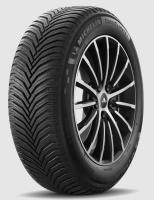
Category scores (% of best)
All discipline results (20)
Discipline positions compare the ranked tires in this test, not the whole market. These are individual measurements, not weighted overall scores.
| Test | Position in discipline | Result | Gap to best |
|---|---|---|---|
| Dry BrakingLower is better | 1st / 8 | 127 ft | Best in this discipline |
| Dry HandlingLower is better | 6th / 8 | 77.43 s | +0.36 s |
| Subj. Dry HandlingHigher is better | 1st / 8 | 8.6 Points | Best in this discipline |
| Wet BrakingLower is better | 2nd / 8 | 106 ft | +1 ft |
| Wet HandlingLower is better | 4th / 8 | 74.89 s | +2.20 s |
| Subj. Wet HandlingHigher is better | 3rd / 8 | 8.2 Points | -0.30 Points |
| Wet CircleLower is better | 2nd / 8 | 13.41 s | +0.33 s |
| Straight AquaHigher is better | 1st / 8 | 46.4 mph | Best in this discipline |
| Curved AquaplaningHigher is better | 3rd / 8 | 8.7 ft/s² | -1.3 ft/s² |
| Snow BrakingLower is better | 1st / 8 | 52 ft | Best in this discipline |
| Snow TractionLower is better | 1st / 8 | 3.75 s | Best in this discipline |
| Snow HandlingLower is better | 1st / 8 | 84.27 s | Best in this discipline |
| Subj. Snow HandlingHigher is better | 1st / 8 | 8.6 Points | Best in this discipline |
| Snow CorneringHigher is better | 1st / 8 | 0.358 g | Best in this discipline |
| Ice BrakingLower is better | 1st / 8 | 20 ft | Best in this discipline |
| Ice TractionLower is better | 1st / 8 | 5.43 s | Best in this discipline |
| Subj. ComfortHigher is better | 5th / 8 | 9 Points | -1.00 Points |
| NoiseLower is better | 7th / 8 | 74.7 dB | +3.60 dB |
| ValueLower is better | 8th / 8 | 4.18 Price/1000 | +2.14 Price/1000 |
| Rolling ResistanceLower is better | 5th / 8 | 9.14 kg/t | +0.87 kg/t |
- Production
- 4225(11), 4125(1), 4425(1), 1225(1), 1125(1)
- Origin
- USA
- UTQG
- 640 B A
- Shore
- 66
- 3PMSF
- Yes
- Weight
- 11.69 kgs
- Tread
- 7.9 mm
- Price
- 250.99
Hankook Weatherflex GT
235/45 R18 98V XL
Category scores (% of best)
All discipline results (20)
Discipline positions compare the ranked tires in this test, not the whole market. These are individual measurements, not weighted overall scores.
| Test | Position in discipline | Result | Gap to best |
|---|---|---|---|
| Dry BrakingLower is better | 6th / 8 | 138 ft | +11 ft |
| Dry HandlingLower is better | 5th / 8 | 77.37 s | +0.30 s |
| Subj. Dry HandlingHigher is better | 2nd / 8 | 8.3 Points | -0.30 Points |
| Wet BrakingLower is better | 4th / 8 | 108 ft | +3 ft |
| Wet HandlingLower is better | 3rd / 8 | 74.17 s | +1.48 s |
| Subj. Wet HandlingHigher is better | 2nd / 8 | 8.4 Points | -0.10 Points |
| Wet CircleLower is better | 5th / 8 | 13.6 s | +0.52 s |
| Straight AquaHigher is better | 3rd / 8 | 46.2 mph | -0.2 mph |
| Curved AquaplaningHigher is better | 1st / 8 | 10.0 ft/s² | Best in this discipline |
| Snow BrakingLower is better | 5th / 8 | 56 ft | +4 ft |
| Snow TractionLower is better | 3rd / 8 | 4.02 s | +0.27 s |
| Snow HandlingLower is better | 3rd / 8 | 86.92 s | +2.65 s |
| Subj. Snow HandlingHigher is better | 4th / 8 | 8.1 Points | -0.50 Points |
| Snow CorneringHigher is better | 4th / 8 | 0.325 g | -0.03 g |
| Ice BrakingLower is better | 7th / 8 | 21 ft | +1 ft |
| Ice TractionLower is better | 7th / 8 | 6.34 s | +0.91 s |
| Subj. ComfortHigher is better | 1st / 8 | 10 Points | Best in this discipline |
| NoiseLower is better | 6th / 8 | 74.5 dB | +3.40 dB |
| ValueLower is better | 2nd / 8 | 3.14 Price/1000 | +1.10 Price/1000 |
| Rolling ResistanceLower is better | 6th / 8 | 9.15 kg/t | +0.88 kg/t |
- Production
- 3924(15)
- Origin
- Indonesia
- UTQG
- 640 A A
- Shore
- 73
- 3PMSF
- Yes
- Weight
- 11.23 kgs
- Tread
- 8.3 mm
- Price
- 219.99
Goodyear Assurance WeatherReady 2
235/45 R18 98W XL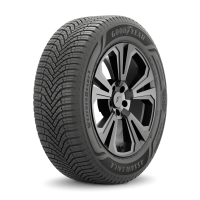
Category scores (% of best)
All discipline results (20)
Discipline positions compare the ranked tires in this test, not the whole market. These are individual measurements, not weighted overall scores.
| Test | Position in discipline | Result | Gap to best |
|---|---|---|---|
| Dry BrakingLower is better | 2nd / 8 | 134 ft | +7 ft |
| Dry HandlingLower is better | 4th / 8 | 77.35 s | +0.28 s |
| Subj. Dry HandlingHigher is better | 5th / 8 | 8 Points | -0.60 Points |
| Wet BrakingLower is better | 3rd / 8 | 107 ft | +2 ft |
| Wet HandlingLower is better | 2nd / 8 | 72.83 s | +0.14 s |
| Subj. Wet HandlingHigher is better | 1st / 8 | 8.5 Points | Best in this discipline |
| Wet CircleLower is better | 4th / 8 | 13.58 s | +0.50 s |
| Straight AquaHigher is better | 5th / 8 | 43.6 mph | -2.8 mph |
| Curved AquaplaningHigher is better | 6th / 8 | 7.4 ft/s² | -2.6 ft/s² |
| Snow BrakingLower is better | 4th / 8 | 54 ft | +2 ft |
| Snow TractionLower is better | 6th / 8 | 4.14 s | +0.39 s |
| Snow HandlingLower is better | 6th / 8 | 89.01 s | +4.74 s |
| Subj. Snow HandlingHigher is better | 4th / 8 | 8.1 Points | -0.50 Points |
| Snow CorneringHigher is better | 5th / 8 | 0.323 g | -0.04 g |
| Ice BrakingLower is better | 2nd / 8 | 20 ft | 0 ft |
| Ice TractionLower is better | 2nd / 8 | 5.82 s | +0.39 s |
| Subj. ComfortHigher is better | 2nd / 8 | 9.5 Points | -0.50 Points |
| NoiseLower is better | 5th / 8 | 74.1 dB | +3.00 dB |
| ValueLower is better | 6th / 8 | 4.02 Price/1000 | +1.98 Price/1000 |
| Rolling ResistanceLower is better | 8th / 8 | 10.95 kg/t | +2.68 kg/t |
- Production
- 4225(10), 4325(1), 2325(1), 4224(3)
- Origin
- Canada
- UTQG
- 700 A A
- Shore
- 69
- 3PMSF
- Yes
- Weight
- 12.16 kgs
- Tread
- 8.5 mm
- Price
- 240.99
Atturo AZ810
235/45 R18 98Y XL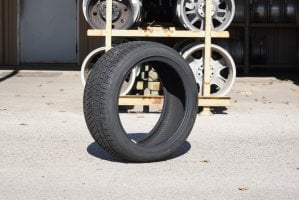
Category scores (% of best)
All discipline results (20)
Discipline positions compare the ranked tires in this test, not the whole market. These are individual measurements, not weighted overall scores.
| Test | Position in discipline | Result | Gap to best |
|---|---|---|---|
| Dry BrakingLower is better | 2nd / 8 | 134 ft | +7 ft |
| Dry HandlingLower is better | 3rd / 8 | 77.32 s | +0.25 s |
| Subj. Dry HandlingHigher is better | 8th / 8 | 7.3 Points | -1.30 Points |
| Wet BrakingLower is better | 5th / 8 | 111 ft | +6 ft |
| Wet HandlingLower is better | 6th / 8 | 76.4 s | +3.71 s |
| Subj. Wet HandlingHigher is better | 7th / 8 | 7.1 Points | -1.40 Points |
| Wet CircleLower is better | 8th / 8 | 13.98 s | +0.90 s |
| Straight AquaHigher is better | 8th / 8 | 39.8 mph | -6.6 mph |
| Curved AquaplaningHigher is better | 8th / 8 | 6.4 ft/s² | -3.6 ft/s² |
| Snow BrakingLower is better | 8th / 8 | 60 ft | +8 ft |
| Snow TractionLower is better | 7th / 8 | 4.22 s | +0.47 s |
| Snow HandlingLower is better | 5th / 8 | 88.17 s | +3.90 s |
| Subj. Snow HandlingHigher is better | 6th / 8 | 7.6 Points | -1.00 Points |
| Snow CorneringHigher is better | 6th / 8 | 0.31 g | -0.05 g |
| Ice BrakingLower is better | 6th / 8 | 21 ft | +1 ft |
| Ice TractionLower is better | 4th / 8 | 5.97 s | +0.54 s |
| Subj. ComfortHigher is better | 8th / 8 | 8.75 Points | -1.25 Points |
| NoiseLower is better | 2nd / 8 | 72.4 dB | +1.30 dB |
| ValueLower is better | 1st / 8 | 2.04 Price/1000 | Best in this discipline |
| Rolling ResistanceLower is better | 1st / 8 | 8.27 kg/t | Best in this discipline |
- Production
- 0525(8), 3925(7)
- Origin
- Thailand
- UTQG
- 420 A A
- Shore
- 67
- 3PMSF
- Yes
- Weight
- 10.54 kgs
- Tread
- 7.0 mm
- Price
- 91.99
Pirelli Cinturato WeatherActive
235/45 R18 98W XL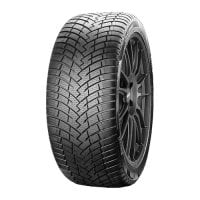
Category scores (% of best)
All discipline results (20)
Discipline positions compare the ranked tires in this test, not the whole market. These are individual measurements, not weighted overall scores.
| Test | Position in discipline | Result | Gap to best |
|---|---|---|---|
| Dry BrakingLower is better | 5th / 8 | 137 ft | +10 ft |
| Dry HandlingLower is better | 8th / 8 | 78.58 s | +1.51 s |
| Subj. Dry HandlingHigher is better | 6th / 8 | 7.9 Points | -0.70 Points |
| Wet BrakingLower is better | 6th / 8 | 116 ft | +11 ft |
| Wet HandlingLower is better | 5th / 8 | 76.16 s | +3.47 s |
| Subj. Wet HandlingHigher is better | 5th / 8 | 8.1 Points | -0.40 Points |
| Wet CircleLower is better | 6th / 8 | 13.79 s | +0.71 s |
| Straight AquaHigher is better | 4th / 8 | 44.1 mph | -2.3 mph |
| Curved AquaplaningHigher is better | 4th / 8 | 8.2 ft/s² | -1.8 ft/s² |
| Snow BrakingLower is better | 6th / 8 | 58 ft | +6 ft |
| Snow TractionLower is better | 5th / 8 | 4.05 s | +0.30 s |
| Snow HandlingLower is better | 7th / 8 | 90.99 s | +6.72 s |
| Subj. Snow HandlingHigher is better | 8th / 8 | 7 Points | -1.60 Points |
| Snow CorneringHigher is better | 7th / 8 | 0.307 g | -0.05 g |
| Ice BrakingLower is better | 4th / 8 | 21 ft | +1 ft |
| Ice TractionLower is better | 5th / 8 | 6.14 s | +0.71 s |
| Subj. ComfortHigher is better | 2nd / 8 | 9.5 Points | -0.50 Points |
| NoiseLower is better | 1st / 8 | 71.1 dB | Best in this discipline |
| ValueLower is better | 7th / 8 | 4.12 Price/1000 | +2.08 Price/1000 |
| Rolling ResistanceLower is better | 3rd / 8 | 8.89 kg/t | +0.62 kg/t |
- Production
- 1825(10), 1725(2), 2925(1), 1925(1), 3324(1)
- Origin
- Brazil
- UTQG
- 700 A A
- Shore
- 66
- 3PMSF
- Yes
- Weight
- 12.07 kgs
- Tread
- 8.4 mm
- Price
- 247.24
Falken Aklimate
235/45 R18 98V XL
Category scores (% of best)
All discipline results (20)
Discipline positions compare the ranked tires in this test, not the whole market. These are individual measurements, not weighted overall scores.
| Test | Position in discipline | Result | Gap to best |
|---|---|---|---|
| Dry BrakingLower is better | 7th / 8 | 142 ft | +15 ft |
| Dry HandlingLower is better | 1st / 8 | 77.07 s | Best in this discipline |
| Subj. Dry HandlingHigher is better | 2nd / 8 | 8.3 Points | -0.30 Points |
| Wet BrakingLower is better | 7th / 8 | 116 ft | +11 ft |
| Wet HandlingLower is better | 7th / 8 | 77.87 s | +5.18 s |
| Subj. Wet HandlingHigher is better | 6th / 8 | 7.6 Points | -0.90 Points |
| Wet CircleLower is better | 7th / 8 | 13.97 s | +0.89 s |
| Straight AquaHigher is better | 6th / 8 | 43.6 mph | -2.8 mph |
| Curved AquaplaningHigher is better | 5th / 8 | 7.6 ft/s² | -2.4 ft/s² |
| Snow BrakingLower is better | 7th / 8 | 60 ft | +8 ft |
| Snow TractionLower is better | 8th / 8 | 4.24 s | +0.49 s |
| Snow HandlingLower is better | 8th / 8 | 92.25 s | +7.98 s |
| Subj. Snow HandlingHigher is better | 7th / 8 | 7.2 Points | -1.40 Points |
| Snow CorneringHigher is better | 8th / 8 | 0.304 g | -0.05 g |
| Ice BrakingLower is better | 8th / 8 | 23 ft | +3 ft |
| Ice TractionLower is better | 8th / 8 | 6.9 s | +1.47 s |
| Subj. ComfortHigher is better | 5th / 8 | 9 Points | -1.00 Points |
| NoiseLower is better | 8th / 8 | 75.4 dB | +4.30 dB |
| ValueLower is better | 4th / 8 | 3.31 Price/1000 | +1.27 Price/1000 |
| Rolling ResistanceLower is better | 7th / 8 | 9.25 kg/t | +0.98 kg/t |
- Production
- 4324(5), 2125(3), 2225(1), 5024(6)
- Origin
- Thailand
- UTQG
- 640 A A
- Shore
- 69
- 3PMSF
- Yes
- Weight
- 11.67 kgs
- Tread
- 8.5 mm
- Price
- 215.00
Bridgestone WeatherPeak
235/45 R18 94V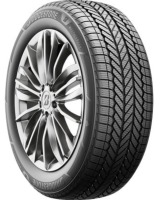
Category scores (% of best)
All discipline results (20)
Discipline positions compare the ranked tires in this test, not the whole market. These are individual measurements, not weighted overall scores.
| Test | Position in discipline | Result | Gap to best |
|---|---|---|---|
| Dry BrakingLower is better | 8th / 8 | 147 ft | +20 ft |
| Dry HandlingLower is better | 7th / 8 | 78.56 s | +1.49 s |
| Subj. Dry HandlingHigher is better | 6th / 8 | 7.9 Points | -0.70 Points |
| Wet BrakingLower is better | 8th / 8 | 121 ft | +16 ft |
| Wet HandlingLower is better | 8th / 8 | 78.86 s | +6.17 s |
| Subj. Wet HandlingHigher is better | 7th / 8 | 7.1 Points | -1.40 Points |
| Wet CircleLower is better | 3rd / 8 | 13.46 s | +0.38 s |
| Straight AquaHigher is better | 2nd / 8 | 46.2 mph | -0.2 mph |
| Curved AquaplaningHigher is better | 2nd / 8 | 9.0 ft/s² | -1.0 ft/s² |
| Snow BrakingLower is better | 3rd / 8 | 53 ft | +1 ft |
| Snow TractionLower is better | 4th / 8 | 4.04 s | +0.29 s |
| Snow HandlingLower is better | 4th / 8 | 87.44 s | +3.17 s |
| Subj. Snow HandlingHigher is better | 3rd / 8 | 8.2 Points | -0.40 Points |
| Snow CorneringHigher is better | 2nd / 8 | 0.337 g | -0.02 g |
| Ice BrakingLower is better | 5th / 8 | 21 ft | +1 ft |
| Ice TractionLower is better | 6th / 8 | 6.23 s | +0.80 s |
| Subj. ComfortHigher is better | 5th / 8 | 9 Points | -1.00 Points |
| NoiseLower is better | 3rd / 8 | 72.7 dB | +1.60 dB |
| ValueLower is better | 3rd / 8 | 3.15 Price/1000 | +1.11 Price/1000 |
| Rolling ResistanceLower is better | 4th / 8 | 9.1 kg/t | +0.83 kg/t |
- Production
- 2324(7), 2424(7), 2124(1)
- Origin
- Mexico
- UTQG
- 700 A A
- Shore
- 71
- 3PMSF
- Yes
- Weight
- 11.13 kgs
- Tread
- 7.5 mm
- Price
- 220.68
Discussion