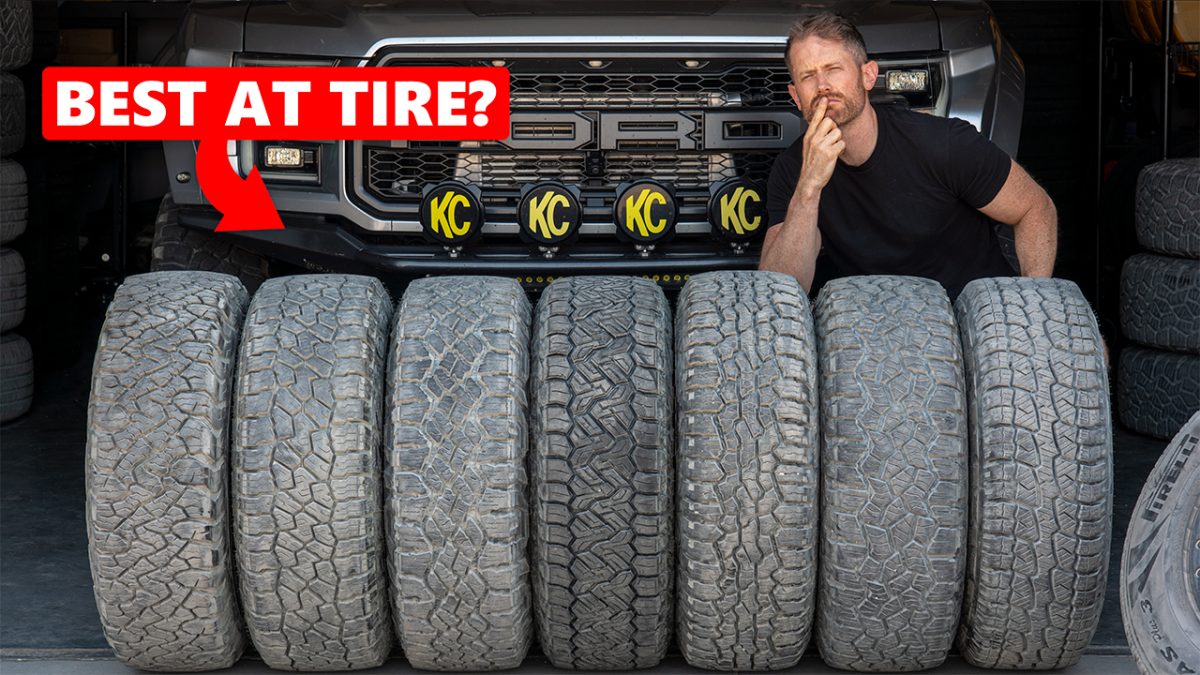
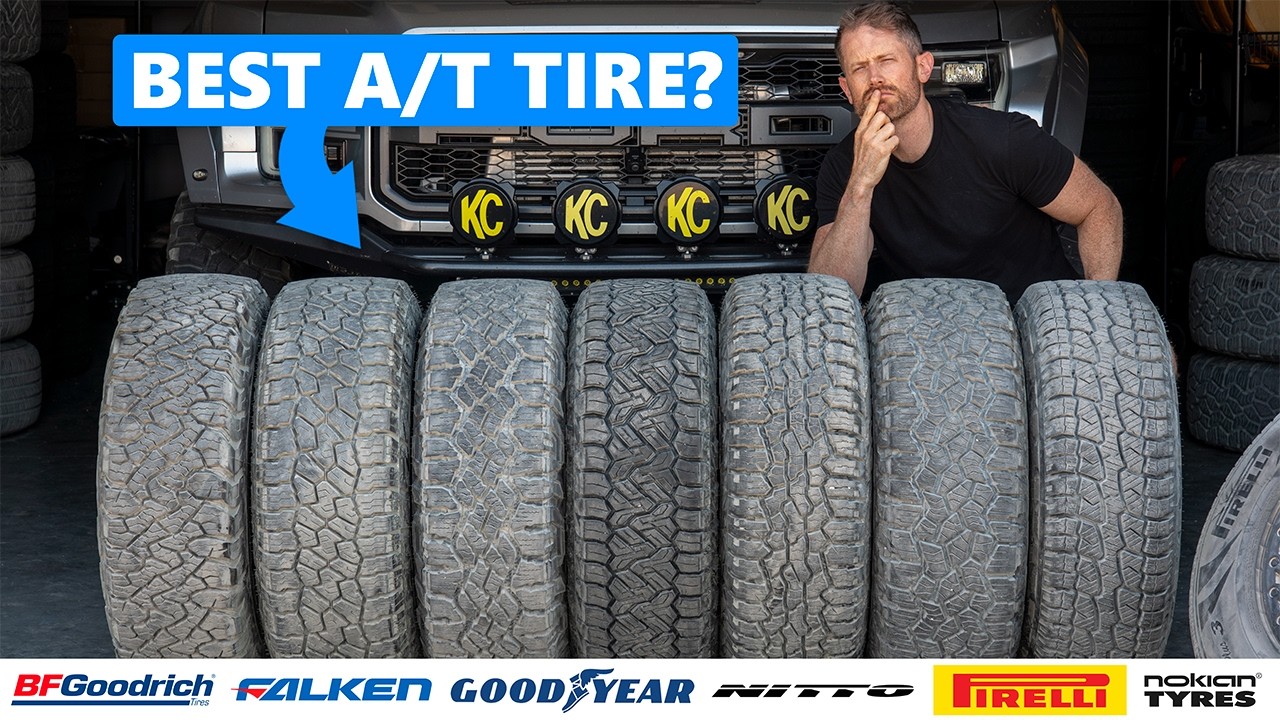
This is the most in-depth all-terrain tire test I have ever put together. It took nearly a year, involved snow and ice testing in Northern Europe, wet and dry testing in Central Europe, and dirt testing in Utah, all to work out where the newest aggressive all-terrain tires are good, and where the compromises are.
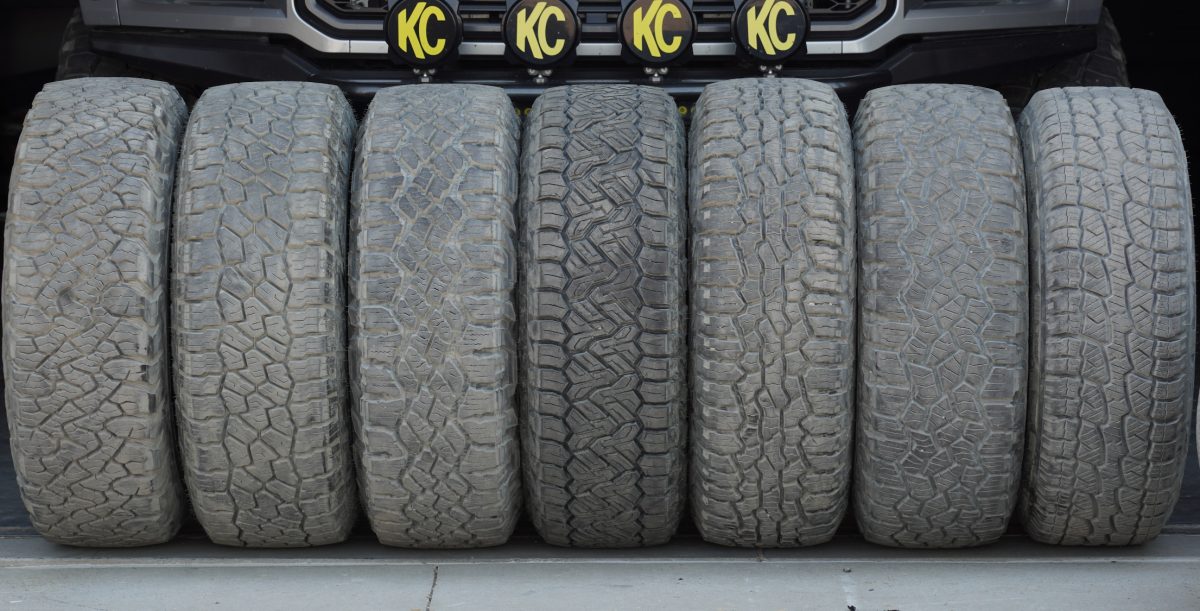
The size was 265/70 R17 and the main vehicle was a Ford Ranger Raptor. I tested seven all-terrain tires - six of the newer, more aggressive options plus the milder budget Westlake - and I also included the Pirelli Scorpion AS Plus 3 as an all-season reference tire. That reference tire is not here because I think you should use it for serious off-roading. It is here because it shows exactly what you gain and lose when you move from a road-biased all-season to a proper all-terrain.
One other important point: for this test I ran the exact same set of tires through every test, starting with snow and finishing with dirt. Usually I would have multiple sets for different surfaces, but for this one I wanted to see the complete picture from the same tires. As always with off-road testing, track evolution is the awkward bit, so where the data needs context, I will give it.
Testing Methodology
Test Driver
Jonathan Benson
Tire Size
265/70 R17
Test Location
Professional Proving Ground
Test Year
2026
Tires Tested
7
Show full testing methodologyHide methodology
Every tire is tested using calibrated instrumented measurement and structured subjective assessment. Reference tires are retested throughout each session to correct for changing conditions, ensuring fair, repeatable comparisons. Multiple reference sets are used where needed so that control tire wear does not affect accuracy.
We use professional-grade testing equipment including GPS data loggers, accelerometers, and calibrated microphones. All tires are broken in and conditioned before testing begins. For full details on our equipment, preparation process, and calibration procedures, see our complete testing methodology.
Categories Tested
Dry Braking
For dry braking, I drive the test vehicle at an entry speed of 110 km/h and apply full braking effort to a standstill with ABS active on clean, dry asphalt. I typically use an 100–5 km/h measurement window. My standard programme is five runs per tire set where possible, although the sequence can extend to as many as fifteen runs if conditions and tire category justify it. I analyse the full set of runs and discard statistical outliers before averaging. Reference tires are run repeatedly throughout the session to correct for changing conditions.
Subj. Dry Handling
Objective data is only part of the picture, so I also carry out a structured subjective handling assessment at the limit of adhesion on a dedicated dry handling circuit. I score steering precision, steering response, turn-in behaviour, mid-corner balance, corner-exit traction, breakaway characteristics, and overall confidence using a standardised 1–10 scale used consistently across my testing. The final assessment combines numeric scoring with written technical commentary. I complete familiarisation laps on the control tire before evaluating each candidate.
Wet Braking
For wet braking, I drive the test vehicle at an entry speed of 88 km/h and apply full braking effort to a standstill with ABS active on an asphalt surface with a controlled water film. I typically use an 80–5 km/h measurement window to isolate tire performance from variability in the initial brake application. My standard programme is eight runs per tire set where possible, although the sequence can extend to as many as fifteen runs if conditions and tire category justify it. I analyse the full set of runs and discard statistical outliers before averaging. To correct for changing conditions, I run reference tires repeatedly throughout the session — in wet testing, typically every three candidate test sets.
Wet Handling
For wet handling, I drive at the limit of adhesion around a dedicated handling circuit. I generally use specialist wet circuits with kerb-watering systems designed to maintain a consistent surface condition. ESC is disabled where possible so I can assess the tire's natural balance, transient response, and limit behaviour without electronic intervention masking the result. I usually complete between two and five timed laps per tire set, depending on the circuit, tire type, and consistency of conditions. I exclude laps affected by clear driver error or obvious environmental inconsistency. Control runs are carried out frequently throughout the session, and I often use multiple sets of control tires so that wear on the references does not become a meaningful variable.
Subj. Wet Handling
Objective data is only part of the picture, so I also carry out a structured subjective handling assessment at the limit of adhesion on a dedicated wet handling circuit. I score steering precision, steering response, turn-in behaviour, mid-corner balance, aquaplaning resistance, breakaway characteristics, and overall confidence using a standardised 1–10 scale used consistently across my testing. The final assessment combines numeric scoring with written technical commentary. I complete familiarisation laps on the control tire before evaluating each candidate.
Straight Aqua
To measure straight-line aquaplaning resistance, I drive one side of the vehicle through a water trough of controlled depth, typically around 7 mm, while the opposite side remains on dry pavement. I enter at a fixed speed and then accelerate progressively. I define aquaplaning onset as the point at which the wheel travelling through the water exceeds a specified slip threshold relative to the dry-side reference wheel. I usually perform four runs per tire set and average the valid results.
Snow Braking
For snow braking, I drive the test vehicle at an entry speed of 50 km/h and apply full braking effort to a standstill with ABS active on a groomed, compacted snow surface, measuring 45-5 km/h. I generally use a wide VDA (vehicle dynamic area) and progressively move across the surface between runs so that no tire ever brakes on the same piece of snow twice. My standard programme is twelve runs per tire set, although the sequence can extend further if the data justify it. I analyse the full set of runs and discard statistical outliers before averaging. The surface is regularly groomed throughout the session. To correct for changing snow surface conditions, I run reference tires repeatedly — typically every two candidate test sets.
Snow Traction
For snow traction, I accelerate the vehicle from rest on a groomed snow surface with traction control active and measure speed and time using GPS telemetry. I typically use a 5–35 km/h measurement window to reduce the influence of launch transients and powertrain irregularities. I use a wide VDA (vehicle dynamic area) and progressively move across the surface between runs so that no tire ever accelerates on the same piece of snow twice. The surface is regularly groomed throughout the session. I complete multiple runs per tire set and average the valid results. Reference tires are run typically every two candidate test sets to correct for changing snow surface conditions.
Snow Handling
For snow handling, I drive at the limit of adhesion around a dedicated snow handling circuit with ESC disabled where possible. The circuit is groomed and prepared after every run while tires are being changed, so each set runs on a consistently prepared surface. I usually complete between two and five timed laps per tire set, excluding laps affected by clear driver error or obvious environmental inconsistency. Because snow surfaces degrade more rapidly than asphalt, control runs are carried out more frequently — typically every two candidate test sets.
Subj. Snow Handling
Objective data is only part of the picture, so I also carry out a structured subjective handling assessment at the limit of adhesion on a dedicated snow handling circuit. The circuit is groomed and prepared after every run while tires are being changed, so each set runs on a consistently prepared surface. I score steering precision, turn-in behaviour, mid-corner balance, corner-exit traction, breakaway characteristics, and overall confidence on snow using a standardised 1–10 scale used consistently across my testing. The final assessment combines numeric scoring with written technical commentary. I complete familiarisation laps on the control tire before evaluating each candidate.
Dirt Handling
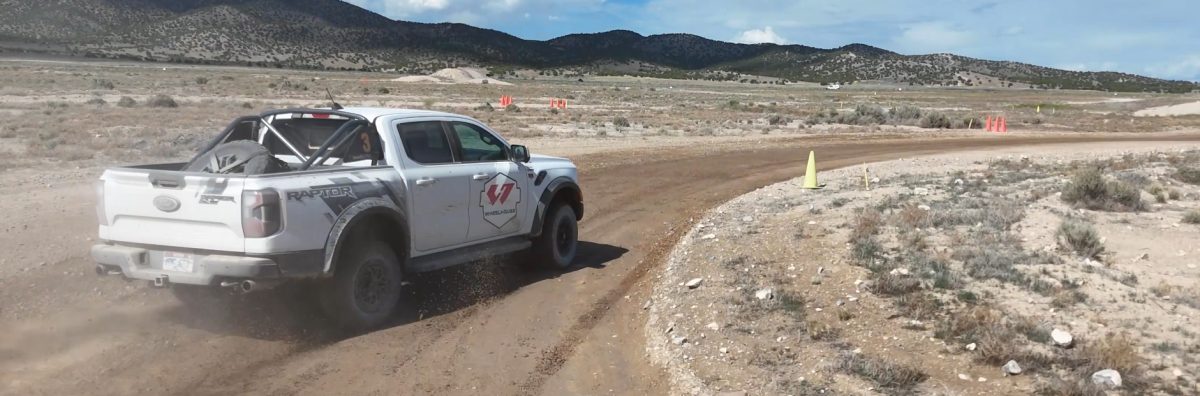
For dirt handling, I drive at the limit of adhesion around a dedicated dirt handling course with ESC typically disabled. I complete multiple timed laps per tire set, excluding laps affected by driver error or environmental inconsistency. Because natural surfaces are inherently variable, I place particular emphasis on repeat runs, careful reference tracking, and averaged results. The control tire is retested at regular intervals.
Subj. Dirt Handling
Objective data is only part of the picture, so I also carry out a structured subjective handling assessment on a dedicated dirt course. I score steering feel, traction, stability, breakaway characteristics, and overall confidence using a standardised 1–10 scale used consistently across my testing. The final assessment combines numeric scoring with written technical commentary. I complete familiarisation laps on the control tire before evaluating each candidate.
Subj. Comfort
To assess comfort, I drive on a wide range of road surfaces (often dedicated comfort tracks at test facilities) at speeds from 50 to 120 km/h, including smooth motorway, coarse surfaces, expansion joints, broken pavement, and sharp-edged obstacles. I evaluate primary ride quality, secondary ride quality, impact harshness, seat-transmitted vibration, and the tire's ability to absorb sharp inputs. Ratings are assigned on a 1–10 scale relative to the reference tire.
Subj. Noise
For subjective noise assessment, I drive at constant speeds across multiple surface types with the windows closed, ventilation off, and audio system off. I assess overall noise level, tonal quality, cavity boom, pattern noise, broadband roar, and sensitivity to both speed and road texture. Each tire is rated on a 1–10 scale and supported by written observations on noise character and annoyance.
Noise
For cabin noise assessment, I drive at controlled speeds, typically 50, 80, 100, and 120 km/h, on NVH test surfaces with defined texture characteristics. Calibrated microphones are positioned at ear height within the cabin. Measurements are taken using A-weighting, with one-third octave analysis where required to identify tonal features such as cavity resonance. Windows remain closed, ventilation is off, and ambient conditions are controlled so the data reflects the tire rather than external interference.
How each category is weighted in the overall score:
Dry30%
Dry Braking75%
Subj. Dry Handling25%
Wet35%
Wet Braking60%
Wet Handling30%
Straight Aqua10%
Off road13%
Dirt Handling50%
Subj. Dirt Handling50%
Snow10%
Snow Braking35%
Snow Traction35%
Snow Handling20%
Subj. Snow Handling10%
Comfort10%
Subj. Comfort50%
Subj. Noise25%
Noise25%
Value3%
Value100%
Off road - dirt handling
I started with dirt because it is the most fun, and because you can really feel the differences in tread pattern, carcass and compound. It is also one of the hardest things to test because every lap changes the surface slightly. The timed result was very close: the Pirelli Scorpion XTM AT was quickest at 74.05s and the Nitto Recon Grappler AT was last at 75.59s, so the entire field was covered by 1.54s.
The Pirelli Scorpion AS Plus 3 all-season reference was second at 74.56s, which will annoy some people, but it makes sense on this type of hard and mixed dirt surface. If the tire can get down to something firm, the road tire has good compound grip and a lighter, more compliant carcass. It was not as good in the fluffy sections, and it took longer to recover once sliding, but the lap time was real. The Goodyear was third at 74.68s, the BFGoodrich fourth at 74.87s, the Falken fifth at 75.18s, the Westlake sixth at 75.35s and the Nokian seventh at 75.43s. The Nokian being seventh on time but one of my favourites to drive is a useful reminder that dirt lap times need some care.
Dirt Handling
Spread: 1.54 s (2.1%)|Avg: 74.96 s
Dirt handling time in seconds (Lower is better)
Pirelli Scorpion XTM AT
74.05 s
Pirelli Scorpion AS Plus 3 Ref
74.56 s
Goodyear Wrangler DuraTrac RT
74.68 s
BFGoodrich All Terrain TA KO3
74.87 s
Falken Wildpeak AT4W
75.18 s
Westlake SL369
75.35 s
Nokian Outpost nAT
75.43 s
Nitto Recon Grappler AT
75.59 s
The subjective dirt scores tell the story closer to how it felt from the seat. The Pirelli Scorpion XTM AT was best at 8.6 Points, just ahead of the Nokian Outpost nAT on 8.5 Points. My co-driver actually preferred the Nokian, and I can see why. Both tires had an even grip circle, good recovery and enough bite when the surface got loose.
The BFGoodrich was next at 8.4 Points. It felt strong on the brakes and the carcass worked the ruts well, even if it still stopped and accelerated slightly better than it turned. The Goodyear, Falken and all-season reference all scored 8.3 Points, but they got there in different ways. The Goodyear had good grip but a slightly stiff carcass in the bumps, the Falken felt solid but needed more steering lock, and the all-season had great compound grip on the polished parts but less purchase in the fluffy dirt. The Nitto scored 8.1 Points because it braked well but had less lateral support, while the Westlake was last at 7.9 Points because the carcass did not give enough stability and slides took too long to recover.
Subj. Dirt Handling
Spread: 0.70 Points (8.1%)|Avg: 8.30 Points
Subjective Dirt Handling Score (Higher is better)
Pirelli Scorpion XTM AT
8.60 Points
Nokian Outpost nAT
8.50 Points
BFGoodrich All Terrain TA KO3
8.40 Points
Pirelli Scorpion AS Plus 3 Ref
8.30 Points
Goodyear Wrangler DuraTrac RT
8.30 Points
Falken Wildpeak AT4W
8.30 Points
Nitto Recon Grappler AT
8.10 Points
Westlake SL369
7.90 Points
Wet handling
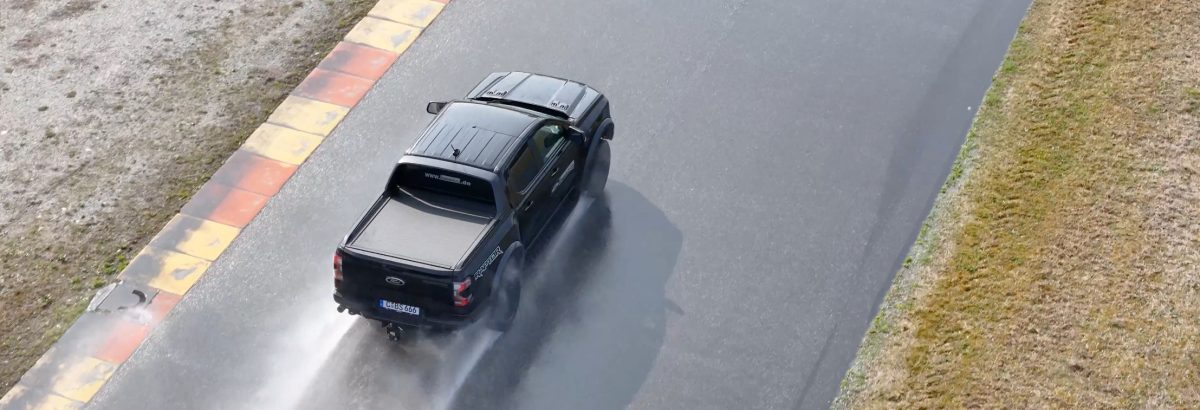
For wet I used the Ranger Raptor in rear-wheel drive, manual sport mode and with the driver aids as off as possible, because that gives a much clearer idea of tire balance. I also used the Westlake as one of my reference repeats, and I was glad I did because it was far better in the wet than I expected.
The fastest tire overall was the Pirelli Scorpion AS Plus 3 all-season reference at 117.67s. It felt softer in steering than the best all-terrain, but once it was loaded in the longer corners it just kept gripping. The best all-terrain was the Pirelli Scorpion XTM AT at 119.98s, only 2.31s behind the reference all-season, and this tire transformed the truck. It turned harder, braked better, and gave much more detail at the limit than the rest of the all-terrain group.
The Westlake was third at 124.12s, which is a very good result for the budget, milder all-terrain. Then came the close middle group: Nokian at 129.07s, BFGoodrich at 129.16s and Goodyear at 129.7s. The differences between those three were more about feel than time. The Falken was seventh at 131.17s and the Nitto was last at 133.82s. The Nitto was the one I would avoid for regular wet-road use, because it was not just slow, it was peaky and unpredictable when the rear started to slide.
Wet Handling
Spread: 16.15 s (13.7%)|Avg: 126.84 s
Wet handling time in seconds (Lower is better)
Pirelli Scorpion AS Plus 3 Ref
117.67 s
Pirelli Scorpion XTM AT
119.98 s
Westlake SL369
124.12 s
Nokian Outpost nAT
129.07 s
BFGoodrich All Terrain TA KO3
129.16 s
Goodyear Wrangler DuraTrac RT
129.70 s
Falken Wildpeak AT4W
131.17 s
Nitto Recon Grappler AT
133.82 s
Wet braking
Wet braking is one of the most important results in this whole test because this is where a tire can really save you distance on the road. The all-season reference was best at 33.53m, which is exactly why I included it. Among the all-terrains, the Pirelli Scorpion XTM AT was best at 35.77m, followed by the Westlake at 37.25m. That is a strong result from both, but it also shows the road-tire advantage the reference still has.
The BFGoodrich was fourth overall at 40.23m, ahead of the Goodyear at 41.44m, Nokian at 42.29m and Falken at 42.39m. The Nitto was last at 45.44m, 11.91m behind the best overall result, which is a lot of extra distance when you need to stop in the wet.
Wet Braking
Spread: 11.91 M (35.5%)|Avg: 39.79 M
Wet braking in meters (80 - 10 km/h) [Average Temperature 13.5c] (Lower is better)
Wet Braking: Safety Impact: Best vs Worst Tire
Straight aquaplaning
In the deeper water of straight aquaplaning, the Nokian Outpost nAT was best, the Westlake and the all-season reference were both at 102.2 km/h, the BFGoodrich was 102.1 km/h, the Pirelli Scorpion XTM AT was 101.6 km/h and the Goodyear was 101.4 km/h, so that group was tightly packed.
The Nitto was seventh and the Falken was last. The Falken being last in aquaplaning, last in the main snow tests, and down in wet handling is why I would be careful with it if winter and wet-road security are high on your list.
Straight Aqua
Spread: 10.40 Km/H (9.8%)|Avg: 100.98 Km/H
Float Speed in Km/H (Higher is better)
Nokian Outpost nAT
105.80 Km/H
Westlake SL369
102.20 Km/H
Pirelli Scorpion AS Plus 3 Ref
102.20 Km/H
BFGoodrich All Terrain TA KO3
102.10 Km/H
Pirelli Scorpion XTM AT
101.60 Km/H
Goodyear Wrangler DuraTrac RT
101.40 Km/H
Nitto Recon Grappler AT
97.10 Km/H
Falken Wildpeak AT4W
95.40 Km/H
Dry performance
Dry braking
I did not spend as much time talking about dry performance in the video because the wet, snow and dirt results are the more interesting parts of an all-terrain test, but the dry numbers still matter. The Pirelli Scorpion AS Plus 3 reference was best at 40.28m. Again, that is the road-tire advantage.
The Pirelli Scorpion XTM AT was the best all-terrain and second overall at 40.99m, only 0.71m behind the reference. After that there was a bigger step to the Falken at 44.08m, then the Westlake at 45.1m, Nitto at 45.24m and Nokian at 45.27m. The Goodyear was seventh at 46.27m and the BFGoodrich was last at 47.06m. I liked the KO3 in several areas, but last in dry braking is not ideal.
Dry Braking
Spread: 6.78 M (16.8%)|Avg: 44.29 M
Dry braking in meters (100 - 10 km/h) (Lower is better)
Dry Braking: Safety Impact: Best vs Worst Tire
Road comfort and noise
Subjective comfort
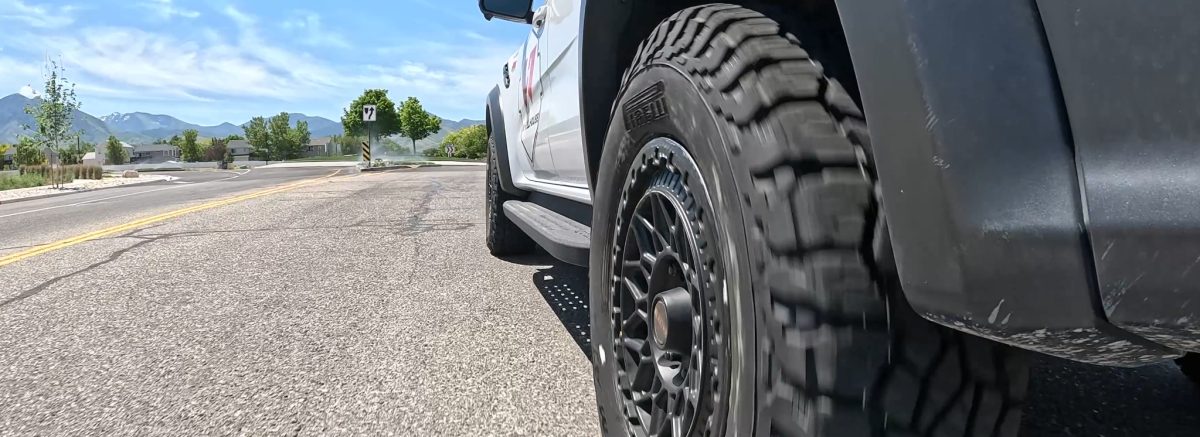
Noise and comfort matter a lot in this category, so two of us spent a full day driving the Ranger Raptor around roads in Utah. The all-season reference was the comfort benchmark at 11 Points. It felt lighter over impacts, had better steering phase and generally made the truck feel less heavy on its feet.
Among the all-terrains, the Nokian and BFGoodrich both scored 10 Points. The BFGoodrich probably had the plushest ride, rounding off impacts nicely, while the Nokian was the best overall road package because it combined comfort, steering and noise so well. The Pirelli Scorpion XTM AT was firmer, but very well damped and much nicer to steer.
Subj. Comfort
Spread: 4.00 Points (36.4%)|Avg: 9.16 Points
Subjective Comfort Score (Higher is better)
Pirelli Scorpion AS Plus 3 Ref
11.00 Points
Nokian Outpost nAT
10.00 Points
BFGoodrich All Terrain TA KO3
10.00 Points
Pirelli Scorpion XTM AT
9.50 Points
Falken Wildpeak AT4W
9.00 Points
Goodyear Wrangler DuraTrac RT
8.75 Points
Nitto Recon Grappler AT
8.00 Points
Westlake SL369
7.00 Points
Subjective noise
Subjective noise is where pitch matters as much as volume. The Nokian and the all-season reference both scored 10 Points, with the Nokian ranked first among the all-terrains. It did not have one single magic trick, it just avoided annoying you on almost every road surface.
The BFGoodrich scored 9.5 Points, which matches my road notes because on normal road surfaces it was not far from the reference tire, even if it was heavier and slower to react. The Pirelli Scorpion XTM AT scored 9 Points, the Goodyear and Falken both scored 8.5 Points, and the Nitto scored 7 Points with a more traditional all-terrain hum. The Westlake was last at 6 Points. Its measured noise was low, but the pitch was annoying, especially at speed, and that is exactly why we do both measured and subjective noise.
Subj. Noise
Spread: 4.00 Points (40%)|Avg: 8.56 Points
Subjective in car noise levels (Higher is better)
Pirelli Scorpion AS Plus 3 Ref
10.00 Points
Nokian Outpost nAT
10.00 Points
BFGoodrich All Terrain TA KO3
9.50 Points
Pirelli Scorpion XTM AT
9.00 Points
Goodyear Wrangler DuraTrac RT
8.50 Points
Falken Wildpeak AT4W
8.50 Points
Nitto Recon Grappler AT
7.00 Points
Westlake SL369
6.00 Points
Snow handling
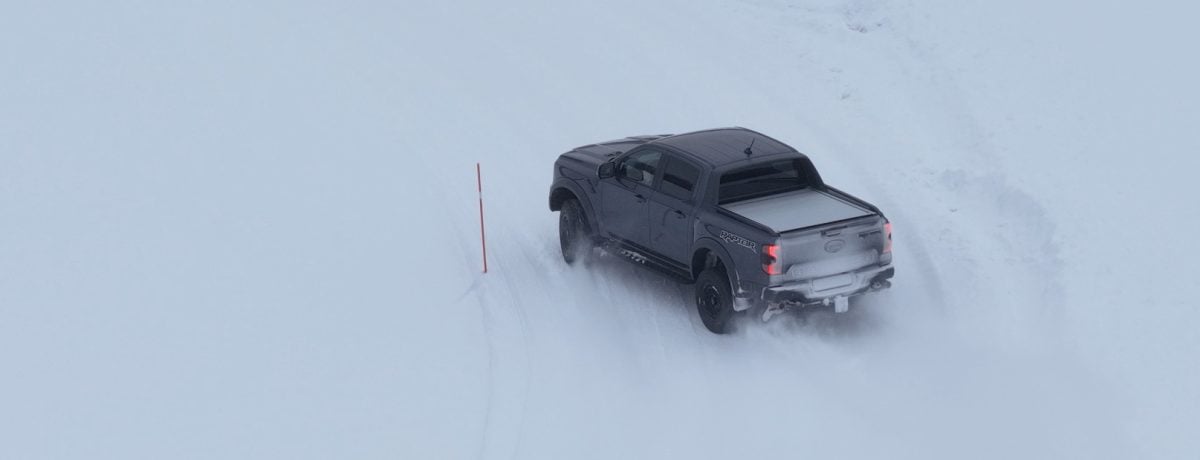
I will be doing a more detailed snow video, but here is the short version. We ran snow handling on more than one loop, including rear-wheel drive and all-wheel drive running, because the Ranger Raptor is good enough to show balance as well as grip. The tracks were icy in places and quite rutty, so it was not a perfect surface, but I was happy with the consistency and how the results lined up with the braking and traction tests.
The Goodyear Wrangler DuraTrac RT was quickest in snow handling. There is no denying its grip. The Nokian was second, the all-season reference was third and the Pirelli Scorpion XTM AT was fourth, the first four were covered by just 0.86s.
Subjectively, the Pirelli Scorpion XTM AT was my favourite in the snow. It was rounded, predictable and easy to recover once sliding. The Nokian was almost the same, and this is exactly the sort of result I expected from Nokian - good balance, good control, no drama.
The Goodyear had plenty of grip, but it was a bit of a blunt instrument in how it delivered it, with a slightly peakier breakaway than the Pirelli and Nokian.
Snow Handling
Spread: 7.87 s (9.7%)|Avg: 83.16 s
Snow handling time in seconds (Lower is better)
Goodyear Wrangler DuraTrac RT
81.05 s
Nokian Outpost nAT
81.61 s
Pirelli Scorpion AS Plus 3 Ref
81.64 s
Pirelli Scorpion XTM AT
81.91 s
BFGoodrich All Terrain TA KO3
82.69 s
Westlake SL369
83.41 s
Nitto Recon Grappler AT
84.03 s
Falken Wildpeak AT4W
88.92 s
Subj. Snow Handling
Spread: 1.00 Points (11.5%)|Avg: 8.28 Points
Subjective Snow Handling Score (Higher is better)
Pirelli Scorpion XTM AT
8.70 Points
Nokian Outpost nAT
8.60 Points
Goodyear Wrangler DuraTrac RT
8.40 Points
BFGoodrich All Terrain TA KO3
8.30 Points
Nitto Recon Grappler AT
8.30 Points
Pirelli Scorpion AS Plus 3 Ref
8.20 Points
Westlake SL369
8.00 Points
Falken Wildpeak AT4W
7.70 Points
Snow braking
Snow braking was led by the Goodyear, and this is where its snow focus really paid off. The Pirelli Scorpion XTM AT was second, the Nokian third so the main winter-capable all-terrain group was close.
The Nitto was fwas acceptable, then there was a bigger step to the Westlake at 14.54m and the all-season reference at 14.77m. The Falken was last at 16.21m, 3.13m behind the best tire. That is a big gap on snow, and it matches the weak snow traction and handling result.
Snow Braking
Spread: 3.13 M (23.9%)|Avg: 14.12 M
Snow braking in meters (30 - 10 km/h) [Average Temperature -5c] (Lower is better)
Snow Braking: Safety Impact: Best vs Worst Tire
Snow traction
Snow traction changed the order again. The Pirelli Scorpion XTM AT was best at with the all-season reference second and the Goodyear third.
The Falken was nearly 30 percent down on the best, the AT4W is not good enough in the snow if you live somewhere with proper winter conditions.
Snow Traction
Spread: 1.99 s (37.8%)|Avg: 5.91 s
Snow acceleration time (5 - 35 km/h) [Average Temperature -5c] (Lower is better)
Pirelli Scorpion XTM AT
5.26 s
Pirelli Scorpion AS Plus 3 Ref
5.37 s
Goodyear Wrangler DuraTrac RT
5.41 s
BFGoodrich All Terrain TA KO3
5.44 s
Nokian Outpost nAT
5.50 s
Nitto Recon Grappler AT
6.23 s
Westlake SL369
6.83 s
Falken Wildpeak AT4W
7.25 s
Value, wear and what I did not test
Value
The value chart uses purchase price against warranted mileage, so lower is better. It is an imperfect metric because it assumes all tires make their warranties and it tells you nothing about grip, but it is still useful. Including the reference tire, the Pirelli Scorpion AS Plus 3 was best at $3.41 Price/1000. Among the all-terrains, the Westlake was cheapest at $4 Price/1000, which is no surprise.
The Nokian looks like the best value all-terrain when you include its performance, at $4.87 Price/1000 and at the other end of the spectrum the Goodyear was last at $6.24 Price/1000. The Goodyear is good in snow, but it is not cheap on this metric.
Dollars/1000 miles based on mileage warranty (Lower is better)
Pirelli Scorpion AS Plus 3 Ref
3.41 Price/1000
Westlake SL369
4.00 Price/1000
Nokian Outpost nAT
4.87 Price/1000
Falken Wildpeak AT4W
4.95 Price/1000
Nitto Recon Grappler AT
5.33 Price/1000
Pirelli Scorpion XTM AT
5.39 Price/1000
BFGoodrich All Terrain TA KO3
5.80 Price/1000
Goodyear Wrangler DuraTrac RT
6.24 Price/1000
I have not included wear in the overall score because I do not currently have a good scientific way of deciding which of these tires will wear the best in the real world. After testing, all of them looked good. The Falken and Goodyear looked freshest by a small margin, the Nitto looked rougher because it was used as the off-road control and did more laps, and the Westlake was showing use, which also fits with it having the lowest warranted mileage. You can see closeups in the full video, linked above.
I know people will ask about rock crawling, mud and towing. Rock crawling, at least in terms of raw grip, is closer to asphalt grip than most people think, so the dry braking numbers give a rough indication of that. Testing sidewall grip and damage resistance properly is much harder, and I am working on a solution. Mud is the impossible one within a close category. You can run the same tire ten times and get ten different objective results, even in a good mud pit. The only safe assumption is that all of these all-terrain tires would be much better than the all-season reference in mud. Much better.
Finally, all of these tires balanced up fine. I had no issues with any of them.
Verdict
The Pirelli Scorpion AS Plus 3 reference tire did exactly what I wanted it to do. It showed how good a road-biased tire can be for wet braking, wet handling, dry braking, comfort, measured noise and even some snow and dirt conditions. But it is not a replacement for a proper all-terrain. It does not have the same impact resistance, puncture resistance, mud ability or subjective off-road purchase as the best all-terrain tires.
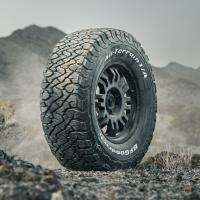
So, my short answer: buy the Pirelli Scorpion XTM AT if you want the best all-terrain in this test, buy the Nokian Outpost nAT if you want the best blend of refinement, snow ability and value, consider the BFGoodrich if you want the traditional tough-feeling option, and only look at the Westlake if your use is mostly road-biased and budget matters more than refinement and snow.
Best in dirt, best subjectively in wet and snow, and right on the pace in braking and handling.
No real weakness - just not quite at the top for aquaplaning, comfort or measured noise.
The Pirelli Scorpion XTM AT is my Test Winner. It was the strongest all-terrain tire overall, with best results in dirt handling, subjective dirt handling, snow traction, subjective snow handling and subjective wet handling. It was also right at the front in dry braking, wet braking, wet handling and snow braking, with only small gaps to the best. On the road it was not the quietest or most comfortable tire, but those results were still competitive rather than a serious issue. I'd choose it for drivers wanting a proper all-terrain tire that still feels sharp, secure and enjoyable on road, wet, snow and dirt.
Best in straight aquaplaning, excellent for noise, and very close to the leaders on snow.
Wet and dry braking were a clear step behind the leaders, with wet handling also off the front group.
The Nokian Outpost nAT earns a Highly Recommended award. I found it very well rounded, with the best straight aquaplaning result, excellent subjective noise, strong comfort and very good snow performance. Its snow handling, snow braking and subjective snow control were all close to the front, and it also felt good on dirt even if the dirt lap time itself sat near the rear of a very tight group. The main limitation was on road grip: dry braking, wet braking and wet handling were meaningfully behind the best tires. It suits drivers who value winter ability, refinement and aquaplaning resistance more than outright wet and dry stopping performance.
Snow results were close to the leading group, with good subjective comfort and solid dirt performance.
Last in dry braking and measured noise, with wet handling a clear step behind the front group.
The BFGoodrich All Terrain TA KO3 is Recommended. It was strongest where an all-terrain tire should be useful: snow performance stayed close to the leading group, dirt performance was competitive, and the subjective comfort and noise scores were good even though the measured noise result was last. I also found it progressive and safe rather than sharp. The weak points were clear: it was last in dry braking, not strong subjectively in dry handling, and wet handling was some way off the best tires. It suits drivers who want a tough-feeling all-terrain with good snow and dirt ability, but who can accept reduced road sharpness and braking performance.
Very strong in the wet, especially braking, handling and aquaplaning, with low measured noise.
Last for comfort and subjective noise, weak in snow traction, and not convincing subjectively on dirt.
The Westlake SL369 was one of the surprises of the test. I used it as a reference tire in wet handling and it performed very well, finishing near the front in wet braking, wet handling and straight aquaplaning. It also produced a low measured noise result, even though subjectively it was the noisiest and least comfortable tire in the group. The trade-off was clear away from wet tarmac: snow traction was weak, subjective snow handling was down the order, and it lacked the dirt support and purchase of the better all-terrain tires. It suits road-biased drivers wanting strong wet grip, but not those prioritising comfort or serious off-road feel.
Best in snow braking and snow handling, with snow traction also right on the pace.
Wet grip and dry braking were some way off the leaders, and measured noise was also near the rear.
The Goodyear Wrangler DuraTrac RT was the snow specialist of the all-terrain group. It was best in snow braking and snow handling, and snow traction was also right on the pace. I also found it competitive on dirt, with good objective grip and decent subjective control. The compromise came on the road: dry braking was near the rear, wet braking and wet handling were well behind the front tires, and measured noise was not strong. Comfort was also only mid-pack. It suits drivers who put snow and loose-surface grip high on the list, but it is not the best choice if wet-road braking and refinement matter most.
Best of the non-Pirelli group in dry braking, with acceptable dirt and comfort results.
Last in aquaplaning and across the main snow tests, with wet handling also well off the pace.
The Falken Wildpeak AT4W had a difficult test. Its best result was dry braking, where it was the best of the non-Pirelli group, though still well behind the leading pair. Dirt performance was acceptable rather than front-running, and comfort and noise sat around the middle of the group. The major weaknesses were in wet and snow conditions: it was last in straight aquaplaning, last in snow braking, snow traction and snow handling, and wet handling was also clearly off the leaders. I'd only look at it here if dry-road stopping and general all-terrain use mattered more than winter and wet performance.
Snow braking stayed close to the leading group, and dry braking was in the tight midfield.
Last in wet braking, wet handling and subjective wet handling, with aquaplaning and comfort also well off the pace.
The Nitto Recon Grappler AT was held back mainly by wet performance. It was last in wet braking, wet handling and subjective wet handling, and straight aquaplaning was also near the rear with a clear gap to the better tires. Dry braking sat in the tight midfield, and snow braking was close enough to the leading group to avoid being a real weakness, but snow traction and comfort were not strong. Dirt lap time was last, although the gap was small in a tightly packed result. I'd see it as a tire for drivers who prioritise toughness and dry-road use, but I would not pick it for regular wet-road driving.



Discussion