



Auto Bild have conducted mini three set all-season tire test specifically designed for electric vehicles, testing them in the 245/45 R19 size using a Hyundai Ionic 6S. The German publication put the Hankook iON FlexClimate, Michelin CrossClimate 2, and Vredestein Quatrac Pro EV through the usual testing across multiple climate zones to assess their performance in all weather conditions.
Test setup & methodology
The test setting, the conditions recorded and how the results contribute to the score.
Recorded test conditions
Recorded test conditions
- Dry Braking
- 62.1 → 0.0 mph
- Wet Braking
- 62.1 → 0.0 mph
- Snow Braking
- 31.1 → 0.0 mph
While this test was an Auto Bild 'special test' with reduced numbers, it's still an interesting datapoint, especially for the new Hankook and Vredestein EV specific tires against the well established Michelin CrossClimate 2.
Dry
The Hankook stopped shortest at 128 feet, with the Michelin close behind at 132 feet. The Vredestein needed an extra 11 feet to stop - a meaningful difference in emergency braking situations.
Dry Braking
Dry braking in feet (62 - 0 mph)
Lower is better ↓| Position / Tire | Result | Gap to best | Residual speed |
|---|---|---|---|
| 128 ft | Best | 0 mph | |
| 132 ft | +4 ft | 14 mph | |
| 139 ft | +11 ft | 22 mph |
The difference between best and worst was 8.5% (11 ft ≈ 0.7 Car Lengths). From 80 mph, the Vredestein Quatrac Pro EV would still be travelling at 22 mph when the Hankook iON FlexClimate had stopped.
Residual speed is calculated from the measured braking distances, assuming constant deceleration; it is not a separate measurement.
The Hankook led with the highest average speed of 68.4 mph through the handling course. The Vredestein and Michelin were closely matched, showing all three tires handle well in dry conditions.
Dry Handling
Dry Handling Average Speed
Higher is better ↑| Position / Tire | Result | Gap to best |
|---|---|---|
| 68.4 mph | Best | |
| 66.8 mph | -1.6 mph | |
| 66.5 mph | -1.9 mph |
All the tires in the Dry Handling test finished less than 3% apart.
Wet
Similar to dry braking, the Hankook achieved the shortest wet stopping distance at 128 feet. The 3.2-meter gap between best and worst shows important safety differences in wet conditions.
Wet Braking
Wet braking in feet (62 - 0 mph)
Lower is better ↓| Position / Tire | Result | Gap to best | Residual speed |
|---|---|---|---|
| 128 ft | Best | 0 mph | |
| 132 ft | +4 ft | 14 mph | |
| 139 ft | +11 ft | 22 mph |
The difference between best and worst was 8.2% (11 ft ≈ 0.7 Car Lengths). From 80 mph, the Vredestein Quatrac Pro EV would still be travelling at 22 mph when the Hankook iON FlexClimate had stopped.
Residual speed is calculated from the measured braking distances, assuming constant deceleration; it is not a separate measurement.
The Hankook maintained its advantage in wet handling with 46.4 mph average speed. Its 2.2 mph lead over the Michelin demonstrates better wet grip and control.
Wet Handling
Wet Handling Average Speed
Higher is better ↑| Position / Tire | Result | Gap to best |
|---|---|---|
| 46.4 mph | Best | |
| 44.4 mph | -2.0 mph | |
| 44.2 mph | -2.2 mph |
The difference between best and worst was 4.7% (2.2 mph).
The Hankook resisted aquaplaning until 53.4 mph, giving the best safety margin on standing water. This 4.4 mph advantage over the worst performer is significant for heavy rain driving.
Straight Aqua
Float Speed in mph
Higher is better ↑| Position / Tire | Result | Gap to best |
|---|---|---|
| 53.4 mph | Best | |
| 50.3 mph | -3.1 mph | |
| 49.0 mph | -4.4 mph |
The difference between best and worst was 8.3% (4.4 mph).
Curved Aquaplaning
Remaining lateral acceleration
Higher is better ↑| Position / Tire | Result | Gap to best |
|---|---|---|
| 10.0 ft/s² | Best | |
| 9.1 ft/s² | -0.9 ft/s² | |
| 8.7 ft/s² | -1.3 ft/s² |
The difference between best and worst was 13.2% (1.3 ft/s²).
Snow
The Michelin excelled in winter conditions, stopping from 31 mph in just 105 feet. Its 3.3-meter advantage shows superior snow grip compared to the other tires.
Snow Braking
Snow braking in feet (31 - 0 mph)
Lower is better ↓| Position / Tire | Result | Gap to best | Residual speed |
|---|---|---|---|
| 105 ft | Best | 0 mph | |
| 109 ft | +4 ft | 15 mph | |
| 116 ft | +11 ft | 24 mph |
The difference between best and worst was 10.3% (11 ft ≈ 0.7 Car Lengths). From 80 mph, the Vredestein Quatrac Pro EV would still be travelling at 24 mph when the Michelin CrossClimate 2 had stopped.
Residual speed is calculated from the measured braking distances, assuming constant deceleration; it is not a separate measurement.
The Michelin accelerated fastest on snow, taking only 6.2 seconds to reach 25 mph. This makes it the best choice for drivers facing regular winter conditions.
Snow Traction
Snow acceleration time
Lower is better ↓| Position / Tire | Result | Gap to best |
|---|---|---|
| 6.2 s | Best | |
| 6.5 s | +0.30 s | |
| 6.9 s | +0.70 s |
The difference between best and worst was 11.3% (0.7 s).
The Michelin completed its winter dominance with 33.9 mph average speed through the snow course, confirming its strong winter performance.
Snow Handling
Snow handling average speed
Higher is better ↑| Position / Tire | Result | Gap to best |
|---|---|---|
| 33.9 mph | Best | |
| 33.4 mph | -0.5 mph | |
| 32.5 mph | -1.4 mph |
The difference between best and worst was 4% (1.4 mph).

Value
Lower rolling resistance means better EV range. The Michelin achieved the best result at 7.03 kg/t, with the Hankook very close at 7.10 kg/t. The Vredestein's higher resistance would reduce driving range, but not by a significant amount.
Rolling Resistance
Rolling resistance in kg t
Lower is better ↓| Position / Tire | Result | Gap to best | Extra energy / year |
|---|---|---|---|
| 7.03 kg/t | Best | $0 | |
| 7.1 kg/t | +0.07 kg/t | $1 | |
| 7.45 kg/t | +0.42 kg/t | $8 |
The difference between best and worst was 6% (0.42 kg / t). Over 12,000 miles a year at $0.15/kWh, the Vredestein Quatrac Pro EV uses about 52 kWh ($8) more electricity than the Michelin CrossClimate 2.
Adjust the assumptions
Calculated estimates, not additional measurements. Use the controls to explore the assumptions.
Results
Hankook iON FlexClimate
245/45 R19 102Y XL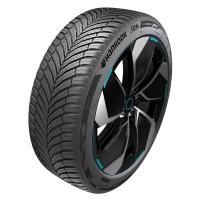
Category scores (% of best)
All discipline results (10)
Discipline positions compare the ranked tires in this test, not the whole market. These are individual measurements, not weighted overall scores.
| Test | Position in discipline | Result | Gap to best |
|---|---|---|---|
| Dry BrakingLower is better | 1st / 3 | 128 ft | Best in this discipline |
| Dry HandlingHigher is better | 1st / 3 | 68.4 mph | Best in this discipline |
| Wet BrakingLower is better | 1st / 3 | 128 ft | Best in this discipline |
| Wet HandlingHigher is better | 1st / 3 | 46.4 mph | Best in this discipline |
| Straight AquaHigher is better | 1st / 3 | 53.4 mph | Best in this discipline |
| Curved AquaplaningHigher is better | 1st / 3 | 10.0 ft/s² | Best in this discipline |
| Snow BrakingLower is better | 2nd / 3 | 109 ft | +4 ft |
| Snow TractionLower is better | 2nd / 3 | 6.5 s | +0.30 s |
| Snow HandlingHigher is better | 2nd / 3 | 33.4 mph | -0.5 mph |
| Rolling ResistanceLower is better | 2nd / 3 | 7.1 kg/t | +0.07 kg/t |
- EU Label
- B/B/70
- 3PMSF
- Yes
Michelin CrossClimate 2
245/45 R19 102Y XL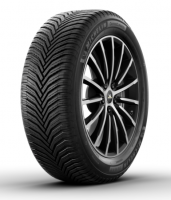
Category scores (% of best)
All discipline results (10)
Discipline positions compare the ranked tires in this test, not the whole market. These are individual measurements, not weighted overall scores.
| Test | Position in discipline | Result | Gap to best |
|---|---|---|---|
| Dry BrakingLower is better | 2nd / 3 | 132 ft | +4 ft |
| Dry HandlingHigher is better | 3rd / 3 | 66.5 mph | -1.9 mph |
| Wet BrakingLower is better | 2nd / 3 | 132 ft | +4 ft |
| Wet HandlingHigher is better | 3rd / 3 | 44.2 mph | -2.2 mph |
| Straight AquaHigher is better | 2nd / 3 | 50.3 mph | -3.1 mph |
| Curved AquaplaningHigher is better | 2nd / 3 | 9.1 ft/s² | -0.9 ft/s² |
| Snow BrakingLower is better | 1st / 3 | 105 ft | Best in this discipline |
| Snow TractionLower is better | 1st / 3 | 6.2 s | Best in this discipline |
| Snow HandlingHigher is better | 1st / 3 | 33.9 mph | Best in this discipline |
| Rolling ResistanceLower is better | 1st / 3 | 7.03 kg/t | Best in this discipline |
- EU Label
- B/B/71
- 3PMSF
- Yes
Vredestein Quatrac Pro EV
245/45 R19 102W XL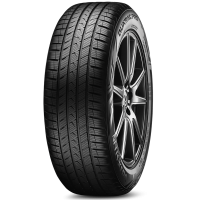
Category scores (% of best)
All discipline results (10)
Discipline positions compare the ranked tires in this test, not the whole market. These are individual measurements, not weighted overall scores.
| Test | Position in discipline | Result | Gap to best |
|---|---|---|---|
| Dry BrakingLower is better | 3rd / 3 | 139 ft | +11 ft |
| Dry HandlingHigher is better | 2nd / 3 | 66.8 mph | -1.6 mph |
| Wet BrakingLower is better | 3rd / 3 | 139 ft | +11 ft |
| Wet HandlingHigher is better | 2nd / 3 | 44.4 mph | -2.0 mph |
| Straight AquaHigher is better | 3rd / 3 | 49.0 mph | -4.4 mph |
| Curved AquaplaningHigher is better | 3rd / 3 | 8.7 ft/s² | -1.3 ft/s² |
| Snow BrakingLower is better | 3rd / 3 | 116 ft | +11 ft |
| Snow TractionLower is better | 3rd / 3 | 6.9 s | +0.70 s |
| Snow HandlingHigher is better | 3rd / 3 | 32.5 mph | -1.4 mph |
| Rolling ResistanceLower is better | 3rd / 3 | 7.45 kg/t | +0.42 kg/t |
- EU Label
- C/B/70
- 3PMSF
- Yes

The dominance of the Hankook is impressive. It don't think that even the new CC3 could compete in wet and dry because of the low difference to CC2. Why don't they replace the old K4S2 completely?
I'm sure there's an update coming. Worth keeping in mind this was tested at Hankooks proving ground, other tests might not have the iON quite as far ahead but there's no doubt it's an impressive tire.
Based in the current data, can we assume that this tire is better than continental all saison contact 2 & pirelli cinturato all season sf3?
It depends on your priority but I would not go so far as to state that.