As with this years Tire Reviews winter tire test, Auto Bild Sportscars conducted a winter tire test in the 235/35 R19 size.
While we had a slightly different test field, the good tires were still good, which is always nice. The cheap tires in this test, a Radar and Auto Green, again prove that you get what you pay for, with both tires doing well in one category (snow) but then being complete disasters in the dry and wet.
In the dry braking test, the Goodyear UltraGrip Performance 3 performed best among winter tires, stopping in 41.5 meters from 100 km/h. The worst-performing winter tire was the Autogreen Snow Chaser 2 AW08, which took 48.5 meters to stop - a difference of 7 meters or about 17% longer. Notably, the reference summer tire outperformed all winter tires, stopping in just 37.2 meters. This highlights the superior dry performance of summer tires, with even the best winter tire needing over 4 meters more to stop.
Dry Braking
Spread: 11.30 M (30.4%)|Avg: 43.04 M
Dry braking in meters (100 - 0 km/h) (Lower is better)
Reference Summer Ref
37.20 M
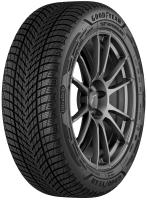
Goodyear UltraGrip Performance 3
41.50 M
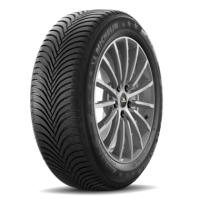
Michelin Pilot Alpin 5
41.80 M
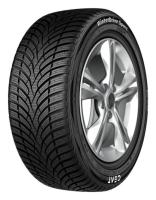
Ceat WinterDrive Sport
42.10 M
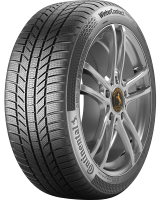
Continental WinterContact TS 870 P
43.20 M
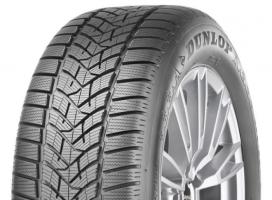
Dunlop Winter Sport 5
43.30 M
Radar Dimax Alpine
43.50 M
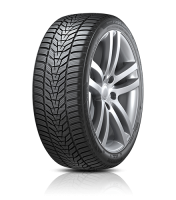
Hankook Winter i cept evo3
43.80 M
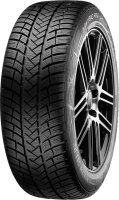
Vredestein Wintrac Pro
44.20 M
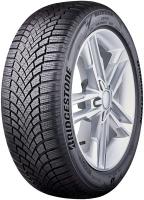
Bridgestone Blizzak LM005
44.30 M
Autogreen Snow Chaser 2 AW08
48.50 M
The Michelin Pilot Alpin 5 achieved the highest average speed of 103.1 km/h in the dry handling test among winter tires, while the Autogreen Snow Chaser 2 AW08 again performed worst at 93.5 km/h - a significant 9.6 km/h difference. The reference summer tire excelled here too, managing 105.9 km/h, demonstrating its superior dry grip and handling characteristics. The gap between summer and winter performance is less pronounced in handling than in braking, but still noticeable.
Dry Handling
Spread: 12.40 Km/H (11.7%)|Avg: 100.85 Km/H
Dry Handling Average Speed (Higher is better)
Reference Summer Ref
105.90 Km/H
Michelin Pilot Alpin 5
103.10 Km/H
Continental WinterContact TS 870 P
102.70 Km/H
Goodyear UltraGrip Performance 3
102.40 Km/H
Bridgestone Blizzak LM005
102.20 Km/H
Dunlop Winter Sport 5
101.00 Km/H
Ceat WinterDrive Sport
100.20 Km/H
Radar Dimax Alpine
99.90 Km/H
Hankook Winter i cept evo3
99.70 Km/H
Vredestein Wintrac Pro
98.80 Km/H
Autogreen Snow Chaser 2 AW08
93.50 Km/H
Wet
In wet conditions, the Bridgestone Blizzak LM005 stopped in the shortest distance of 48.2 meters among winter tires, while the Autogreen Snow Chaser 2 AW08 required a dangerous 81.1 meters - an alarming difference of 32.9 meters or about 68% longer. Interestingly, the reference summer tire's performance (49.1 meters) was very close to the best winter tires, showing that top winter tires can match or even exceed summer tires in wet braking.
Wet Braking
Spread: 32.90 M (68.3%)|Avg: 54.85 M
Wet braking in meters (100 - 0 km/h) (Lower is better)
Bridgestone Blizzak LM005
48.20 M
Dunlop Winter Sport 5
48.80 M
Reference Summer Ref
49.10 M
Goodyear UltraGrip Performance 3
49.30 M
Hankook Winter i cept evo3
50.80 M
Michelin Pilot Alpin 5
51.30 M
Continental WinterContact TS 870 P
51.50 M
Vredestein Wintrac Pro
53.40 M
Ceat WinterDrive Sport
57.80 M
Radar Dimax Alpine
62.10 M
Autogreen Snow Chaser 2 AW08
81.10 M
The Bridgestone Blizzak LM005 again led the winter tires with an average speed of 83.7 km/h in wet handling, while the Autogreen Snow Chaser 2 AW08 struggled at 71.5 km/h - a difference of 12.2 km/h. The reference summer tire achieved 81.8 km/h, falling between the best and average winter tires. This suggests that while summer tires generally excel in dry conditions, specialized winter tires can outperform them in the wet.
Wet Handling
Spread: 12.20 Km/H (14.6%)|Avg: 80.06 Km/H
Wet Handling Average Speed (Higher is better)
Bridgestone Blizzak LM005
83.70 Km/H
Goodyear UltraGrip Performance 3
83.40 Km/H
Dunlop Winter Sport 5
82.20 Km/H
Reference Summer Ref
81.80 Km/H
Continental WinterContact TS 870 P
80.70 Km/H
Michelin Pilot Alpin 5
80.60 Km/H
Hankook Winter i cept evo3
80.50 Km/H
Vredestein Wintrac Pro
80.30 Km/H
Ceat WinterDrive Sport
78.70 Km/H
Radar Dimax Alpine
77.30 Km/H
Autogreen Snow Chaser 2 AW08
71.50 Km/H
In the straight aquaplaning test, the Dunlop Winter Sport 5 performed best among winter tires, maintaining control up to 89.2 km/h. The Radar Dimax Alpine fared worst, losing control at 79.5 km/h - a 9.7 km/h difference. The reference summer tire outperformed all winter tires at 91.6 km/h, indicating superior water dispersion in straight-line aquaplaning situations.
Straight Aqua
Spread: 12.10 Km/H (13.2%)|Avg: 85.39 Km/H
Float Speed in Km/H (Higher is better)
Reference Summer Ref
91.60 Km/H
Dunlop Winter Sport 5
89.20 Km/H
Continental WinterContact TS 870 P
88.80 Km/H
Bridgestone Blizzak LM005
87.00 Km/H
Goodyear UltraGrip Performance 3
87.00 Km/H
Michelin Pilot Alpin 5
86.70 Km/H
Hankook Winter i cept evo3
85.70 Km/H
Vredestein Wintrac Pro
82.80 Km/H
Ceat WinterDrive Sport
81.40 Km/H
Autogreen Snow Chaser 2 AW08
79.60 Km/H
Radar Dimax Alpine
79.50 Km/H
Snow
In snow conditions, the Autogreen Snow Chaser 2 AW08, which struggled in dry and wet tests, excelled with the shortest braking distance of 29.7 meters. The Ceat WinterDrive Sport had the longest distance at 31.8 meters - a relatively small 2.1-meter difference among winter tires. The reference summer tire performed poorly, needing 59.9 meters to stop, more than double the distance of winter tires, highlighting the crucial need for winter tires in snowy conditions.
Snow Braking
Spread: 30.20 M (101.7%)|Avg: 33.56 M
Snow braking in meters (50 - 0 km/h) (Lower is better)
Autogreen Snow Chaser 2 AW08
29.70 M
Michelin Pilot Alpin 5
30.20 M
Radar Dimax Alpine
30.40 M
Vredestein Wintrac Pro
30.70 M
Bridgestone Blizzak LM005
30.80 M
Dunlop Winter Sport 5
31.10 M
Hankook Winter i cept evo3
31.50 M
Continental WinterContact TS 870 P
31.50 M
Goodyear UltraGrip Performance 3
31.60 M
Ceat WinterDrive Sport
31.80 M
Reference Summer Ref
59.90 M
The Michelin Pilot Alpin 5 demonstrated the best snow traction with 2260 N of pulling force, while the Hankook Winter i cept evo3 produced the least at 2037 N - a difference of 223 N or about 11%. The reference summer tire was vastly outperformed, managing only 760 N, less than a third of the best winter tire's traction. This enormous difference underscores the importance of winter tires for acceleration and hill-climbing in snowy conditions.
Snow Traction
Spread: 1500.00 N (66.4%)|Avg: 2029.00 N
Pulling Force in Newtons (Higher is better)
Michelin Pilot Alpin 5
2260.00 N
Autogreen Snow Chaser 2 AW08
2230.00 N
Vredestein Wintrac Pro
2201.00 N
Dunlop Winter Sport 5
2172.00 N
Bridgestone Blizzak LM005
2163.00 N
Ceat WinterDrive Sport
2156.00 N
Continental WinterContact TS 870 P
2144.00 N
Goodyear UltraGrip Performance 3
2130.00 N
Radar Dimax Alpine
2066.00 N
Hankook Winter i cept evo3
2037.00 N
Reference Summer Ref
760.00 N
The Autogreen Snow Chaser 2 AW08 continued its strong snow performance, achieving the highest average speed of 62.3 km/h in snow handling. The Hankook Winter i cept evo3 was slowest at 59.1 km/h - a relatively small 3.2 km/h difference. The reference summer tire's performance was not reported, but based on other snow tests, it would likely be significantly worse than all winter tires.
Snow Handling
Spread: 3.20 Km/H (5.1%)|Avg: 60.41 Km/H
Snow handling average speed (Higher is better)
Autogreen Snow Chaser 2 AW08
62.30 Km/H
Radar Dimax Alpine
62.10 Km/H
Michelin Pilot Alpin 5
60.90 Km/H
Continental WinterContact TS 870 P
60.80 Km/H
Goodyear UltraGrip Performance 3
59.90 Km/H
Dunlop Winter Sport 5
59.80 Km/H
Vredestein Wintrac Pro
59.80 Km/H
Bridgestone Blizzak LM005
59.70 Km/H
Ceat WinterDrive Sport
59.70 Km/H
Hankook Winter i cept evo3
59.10 Km/H
Comfort
The Radar Dimax Alpine was the quietest tire, producing 69.7 dB of external noise, while the Hankook Winter i cept evo3 was loudest at 73.2 dB - a 3.5 dB difference that would be noticeable to most people. The reference summer tire measured 70.9 dB, placing it in the middle of the range for winter tires, suggesting that winter tread patterns don't necessarily result in increased noise.
Noise
Spread: 3.50 dB (5%)|Avg: 71.11 dB
External noise in dB (Lower is better)
Radar Dimax Alpine
69.70 dB
Ceat WinterDrive Sport
70.30 dB
Autogreen Snow Chaser 2 AW08
70.70 dB
Continental WinterContact TS 870 P
70.80 dB
Goodyear UltraGrip Performance 3
70.80 dB
Reference Summer Ref
70.90 dB
Bridgestone Blizzak LM005
70.90 dB
Vredestein Wintrac Pro
71.20 dB
Michelin Pilot Alpin 5
71.30 dB
Dunlop Winter Sport 5
72.40 dB
Hankook Winter i cept evo3
73.20 dB
Value
The Continental WinterContact TS 870 P had the lowest rolling resistance at 8.19 kg/t, potentially offering the best fuel efficiency. The Radar Dimax Alpine had the highest at 9.92 kg/t - a significant 21% difference that could impact fuel consumption. Interestingly, the reference summer tire had a very low rolling resistance of 8.15 kg/t, slightly better than the best winter tire, indicating that the specialized winter tread compounds and patterns generally increase rolling resistance compared to summer tires.
Rolling Resistance
Spread: 1.77 kg / t (21.7%)|Avg: 8.82 kg / t
Rolling resistance in kg t (Lower is better)
Reference Summer Ref
8.15 kg / t
Continental WinterContact TS 870 P
8.19 kg / t
Hankook Winter i cept evo3
8.33 kg / t
Michelin Pilot Alpin 5
8.41 kg / t
Goodyear UltraGrip Performance 3
8.47 kg / t
Bridgestone Blizzak LM005
8.79 kg / t
Dunlop Winter Sport 5
8.89 kg / t
Vredestein Wintrac Pro
9.10 kg / t
Ceat WinterDrive Sport
9.32 kg / t
Autogreen Snow Chaser 2 AW08
9.45 kg / t
Radar Dimax Alpine
9.92 kg / t
19,000 km
£1.45/L
8.0 L/100km
--
Annual Difference
--
Lifetime Savings
--
Extra Fuel/Energy
--
Extra CO2
Estimates based on typical driving conditions. Rolling resistance accounts for approximately 20% of IC vehicle fuel consumption and 25% of EV energy consumption. Actual savings vary based on driving style, vehicle weight, road conditions, and tire age. For comparative purposes only. Lifetime savings based on a 40,000km / 25,000 mile tread life.
Winter profile with balanced performance at a high level. Always at the forefront in snow. Excellent wet and dry handling with precise steering response.
Dunlop excels particularly in wet disciplines, sometimes performing as well as summer tires here. Mid-range in snow performance. The most affordable tire in the "Exemplary" group.




Discussion