



Moving on from the 51 set braking test, the full Auto Bild winter tire test is once again, excellent. Testing 225/40 R18 using an AWD BMW M135i (but also fitted to the Audi S3, VW Golf GTI and R, Mercedes-AMG A35, and Hyundai i30 N and more) Auto Bild have once again put all the tires through snow, wet and dry testing, and tested wear, noise, comfort and rolling resistance.
Test setup & methodology
The test setting, the conditions recorded and how the results contribute to the score.
Recorded test conditions
Recorded test conditions
- Dry Braking
- 62.1 → 0.0 mph
- Wet Braking
- 62.1 → 0.0 mph
- Snow Braking
- 31.1 → 0.0 mph
Performance Trends and Surprising Results
The test revealed a clear dominance of established manufacturers and their secondary brands among top performers. Michelin secured first place with the Pilot Alpin 5, while its secondary brands BF Goodrich and Kleber achieved notable success in snow-specific disciplines, often outperforming the premium parent product in individual snow tests. Kumho emerged as a surprising success story, placing fourth overall and earning recognition as a price-performance winner.

The test identified a fundamental development challenge in winter tire design: the inherent conflict between snow performance and wet/dry capabilities. BF Goodrich and Kleber exemplified this trade-off, achieving the shortest snow braking distances in the entire test (27.1 and 90 feet respectively) but struggling with extended wet braking distances (36.0 and 119 feet). Conversely, Goodyear established itself as the rain specialist with excellent wet performance across all disciplines but slightly compromised snow capability. This pattern highlights that truly balanced winter tires require significant development resources and experience.
Unexpected Weaknesses in Premium Products
Several premium manufacturers delivered surprisingly inconsistent results. Continental's WinterContact TS 870 P, Hankook's Winter i*Cept evo3, and Vredestein's Wintrac Pro+ all showed extended wet braking distances despite their premium positioning and typically well-rounded product portfolios. Pirelli's Cinturato Winter 2 achieved strong wet performance but suffered notably imprecise dry handling, an unusual weakness for Pirelli.
Toyo's Observe Winter Sport 1 and Falken's Eurowinter HS02 Pro also performed below expectations, with extended braking distances across multiple conditions and, in Falken's case, the lowest projected mileage in the test.
Consistent Performers
Michelin's Pilot Alpin 5 demonstrated the most balanced performance profile, achieving what testers described as the "golden middle" across all road conditions. It never claimed the absolute best result in any single discipline but maintained consistently strong performance in every test, justifying its premium pricing through reliability rather than singular excellence. Bridgestone's Blizzak 6 and Goodyear's UltraGrip Performance 3 both delivered consistent competence across their respective focuses—Bridgestone leaning toward dry handling and longevity, Goodyear dominating wet performance—while achieving the highest projected mileage of 32,933 miles.
Reference Summer Tire Performance
AUTO BILD included a reference summer tire in all testing disciplines to provide performance context. The results clearly illustrated the fundamental differences between tire categories. On snow, the summer tire was essentially non-functional, requiring 168 feet to stop from 31 mph compared to 27-98 feet for winter tires, and recording such poor handling performance that it was rated "not drivable" in the snow handling test. However, the summer tire demonstrated its intended superiority in dry conditions, stopping from 62 mph in just 124 feet—nearly 16 feet shorter than the best winter tire (Michelin at 140 feet).
In wet conditions, the comparison proved more nuanced. The summer tire achieved a 47.8-meter braking distance from 62 mph, outperforming all winter tires (best winter: Goodyear at 167 feet.) The summer tire also completed the wet handling course at 52.1 mph compared to the best winter tire (Pirelli at 52.4 mph), showing minimal difference in this discipline. This data reinforces why enthusiastic drivers of compact sports cars continue to maintain seasonal tire changes despite the convenience of all-season alternatives—summer tires provide measurably better performance and precision during warmer months.
Cost Analysis and Longevity
The test conducted wear simulation to project real-world mileage, revealing significant differences in long-term value. Bridgestone and Goodyear led with 53,000-kilometer projections, while Falken managed only 21,077 miles—a difference of nearly 12,427 miles that dramatically affects cost per kilometer. When purchase price was factored against projected mileage, Ceat emerged as the value leader at €7.32 per 1,000 kilometers despite modest purchase pricing, while Falken became the most expensive at €15.04 per 1,000 kilometers due to rapid wear. This proved that premium-priced tires with high mileage can offer better value than cheap tires that wear quickly.
Safety Implications of Budget Tires
The deliberate inclusion of an anonymous budget tire provided evidence of the safety risks associated with extremely low-priced products. While achieving acceptable snow braking (94 feet), this tire became progressively dangerous in other conditions. Its 70.5-meter wet braking distance from 62 mph represented a 13.2-meter disadvantage versus the best performer—equivalent to nearly three car lengths and potentially the difference between collision avoidance and impact. The dry braking distance of 153 feet and wet handling speed of just 44.8 mph (versus 52.4 mph for Pirelli) further demonstrated comprehensive performance deficiencies. The testers concluded explicitly that "cheap no-name tires are a real danger in traffic," providing quantitative justification for this warning.
Dry
Michelin leads the dry braking results with the shortest stopping distance of 140 feet from 62 mph, though even this best performer stands 16 feet behind the reference summer tire, demonstrating the fundamental trade-off winter tires make with their softer compounds and more aggressive tread patterns optimized for cold conditions.
Dry Braking
Dry braking in feet (62 - 0 mph)
Lower is better ↓| Position / Tire | Result | Gap to best | Residual speed |
|---|---|---|---|
RefReference Summer |
124 ft | -16 ft | 0 mph |
| 140 ft | Best | 0 mph | |
| 141 ft | +1 ft | 7 mph | |
| 143 ft | +3 ft | 12 mph | |
| 143 ft | +3 ft | 13 mph | |
| 145 ft | +5 ft | 15 mph | |
| 145 ft | +5 ft | 15 mph | |
| 145 ft | +5 ft | 16 mph | |
| 146 ft | +6 ft | 17 mph | |
| 147 ft | +7 ft | 17 mph | |
| 147 ft | +7 ft | 18 mph | |
| 149 ft | +9 ft | 20 mph | |
| 150 ft | +10 ft | 21 mph | |
| 150 ft | +10 ft | 21 mph | |
| 150 ft | +10 ft | 21 mph | |
| 151 ft | +11 ft | 21 mph | |
| 151 ft | +11 ft | 22 mph | |
RefReference Budget |
153 ft | +13 ft | 23 mph |
| 154 ft | +14 ft | 24 mph | |
| 154 ft | +14 ft | 24 mph | |
| 155 ft | +15 ft | 25 mph | |
| 155 ft | +15 ft | 25 mph |
The difference between best and worst was 25.1% (31 ft ≈ 2.1 Car Lengths). From 80 mph, the Kleber Krisalp HP3 would still be travelling at 25 mph when the Michelin Pilot Alpin 5 had stopped.
Residual speed is calculated from the measured braking distances, assuming constant deceleration; it is not a separate measurement.
Bridgestone claims top honors in dry handling with the most car-like precision and highest average speed through the test course, followed closely by Michelin and Continental, while the anonymous budget tire trails significantly at 69.0 mph compared to the leader's 72.6 mph.
Dry Handling
Dry Handling Average Speed
Higher is better ↑| Position / Tire | Result | Gap to best |
|---|---|---|
RefReference Summer |
73.3 mph | +0.7 mph |
| 72.6 mph | Best | |
| 72.5 mph | -0.1 mph | |
| 72.4 mph | -0.2 mph | |
| 72.3 mph | -0.3 mph | |
| 72.0 mph | -0.6 mph | |
| 71.8 mph | -0.8 mph | |
| 71.6 mph | -1.0 mph | |
| 71.5 mph | -1.1 mph | |
| 71.4 mph | -1.2 mph | |
| 71.3 mph | -1.3 mph | |
| 71.3 mph | -1.3 mph | |
| 71.3 mph | -1.3 mph | |
| 71.1 mph | -1.5 mph | |
| 71.1 mph | -1.5 mph | |
| 71.1 mph | -1.5 mph | |
| 71.1 mph | -1.5 mph | |
| 71.0 mph | -1.6 mph | |
| 70.9 mph | -1.7 mph | |
| 70.5 mph | -2.1 mph | |
| 70.1 mph | -2.5 mph | |
RefReference Budget |
69.0 mph | -3.6 mph |
The difference between best and worst was 5.9% (4.3 mph).
Wet
Goodyear dominates wet braking with a 50.9-meter stopping distance, establishing itself as the rain specialist, while the anonymous budget tire posts a catastrophic 70.5-meter result—a 19.6-meter disadvantage that could mean the difference between accident avoidance and collision.
Wet Braking
Wet braking in feet (62 - 0 mph)
Lower is better ↓| Position / Tire | Result | Gap to best | Residual speed |
|---|---|---|---|
RefReference Summer |
157 ft | -10 ft | 0 mph |
| 167 ft | Best | 0 mph | |
| 170 ft | +3 ft | 11 mph | |
| 171 ft | +4 ft | 12 mph | |
| 171 ft | +4 ft | 12 mph | |
| 172 ft | +5 ft | 13 mph | |
| 175 ft | +8 ft | 17 mph | |
| 177 ft | +10 ft | 19 mph | |
| 178 ft | +11 ft | 20 mph | |
| 179 ft | +12 ft | 21 mph | |
| 179 ft | +12 ft | 21 mph | |
| 180 ft | +13 ft | 21 mph | |
| 182 ft | +15 ft | 23 mph | |
| 182 ft | +15 ft | 23 mph | |
| 183 ft | +16 ft | 24 mph | |
| 183 ft | +16 ft | 24 mph | |
| 185 ft | +18 ft | 25 mph | |
| 185 ft | +18 ft | 25 mph | |
| 186 ft | +19 ft | 25 mph | |
| 189 ft | +22 ft | 27 mph | |
| 189 ft | +22 ft | 27 mph | |
RefReference Budget |
231 ft | +64 ft | 42 mph |
The difference between best and worst was 47.5% (74 ft ≈ 5 Car Lengths). From 80 mph, the Fulda Kristall Control HP2 would still be travelling at 27 mph when the Goodyear UltraGrip Performance 3 had stopped.
Residual speed is calculated from the measured braking distances, assuming constant deceleration; it is not a separate measurement.
Pirelli takes the wet handling victory with the highest average speed, marginally ahead of Goodyear which continues its wet-weather dominance, while the budget tire again finishes last with handling speeds 7.6 mph slower than the leader, demonstrating comprehensively compromised wet performance.
Wet Handling
Wet Handling Average Speed
Higher is better ↑| Position / Tire | Result | Gap to best |
|---|---|---|
| 52.4 mph | Best | |
| 52.1 mph | -0.3 mph | |
RefReference Summer |
52.1 mph | -0.3 mph |
| 51.8 mph | -0.6 mph | |
| 51.3 mph | -1.1 mph | |
| 51.1 mph | -1.3 mph | |
| 51.1 mph | -1.3 mph | |
| 51.0 mph | -1.4 mph | |
| 50.7 mph | -1.7 mph | |
| 50.7 mph | -1.7 mph | |
| 50.6 mph | -1.8 mph | |
| 50.4 mph | -2.0 mph | |
| 50.3 mph | -2.1 mph | |
| 50.3 mph | -2.1 mph | |
| 50.2 mph | -2.2 mph | |
| 50.2 mph | -2.2 mph | |
| 50.0 mph | -2.4 mph | |
| 49.9 mph | -2.5 mph | |
| 49.8 mph | -2.6 mph | |
| 49.8 mph | -2.6 mph | |
| 49.6 mph | -2.8 mph | |
RefReference Budget |
44.8 mph | -7.6 mph |
The difference between best and worst was 14.6% (7.6 mph).
The reference summer tire demonstrates its superiority in lateral aquaplaning resistance, while among winter tires Hankook leads with the highest lateral acceleration before losing grip, and the budget tire again finishes last with less than half the performance of the leader.
Straight Aqua
Float Speed in mph
Higher is better ↑| Position / Tire | Result | Gap to best |
|---|---|---|
| 48.0 mph | Best | |
RefReference Summer |
47.8 mph | -0.2 mph |
| 47.8 mph | -0.2 mph | |
| 47.5 mph | -0.5 mph | |
| 47.5 mph | -0.5 mph | |
| 47.5 mph | -0.5 mph | |
| 47.4 mph | -0.6 mph | |
| 47.4 mph | -0.6 mph | |
| 47.2 mph | -0.8 mph | |
| 47.2 mph | -0.8 mph | |
| 47.2 mph | -0.8 mph | |
| 46.9 mph | -1.1 mph | |
| 46.7 mph | -1.3 mph | |
| 46.6 mph | -1.4 mph | |
| 46.6 mph | -1.4 mph | |
| 46.0 mph | -2.0 mph | |
| 44.7 mph | -3.3 mph | |
| 44.6 mph | -3.4 mph | |
| 44.5 mph | -3.5 mph | |
| 44.4 mph | -3.6 mph | |
| 44.2 mph | -3.8 mph | |
RefReference Budget |
40.1 mph | -7.9 mph |
The difference between best and worst was 16.6% (7.9 mph).
Snow
Kleber achieves the shortest snow braking distance at 89 feet, narrowly ahead of stablemate BF Goodrich at 90 feet—both Michelin secondary brands outperforming their premium parent—while the reference summer tire requires 168 feet, nearly double the distance and effectively undrivable in winter conditions.
Snow Braking
Snow braking in feet (31 - 0 mph)
Lower is better ↓| Position / Tire | Result | Gap to best | Residual speed |
|---|---|---|---|
| 89 ft | Best | 0 mph | |
| 90 ft | +1 ft | 7 mph | |
| 90 ft | +1 ft | 10 mph | |
| 91 ft | +2 ft | 13 mph | |
| 92 ft | +3 ft | 14 mph | |
| 92 ft | +3 ft | 14 mph | |
| 92 ft | +3 ft | 14 mph | |
| 92 ft | +3 ft | 15 mph | |
| 93 ft | +4 ft | 16 mph | |
| 93 ft | +4 ft | 16 mph | |
| 93 ft | +4 ft | 16 mph | |
| 93 ft | +4 ft | 16 mph | |
| 94 ft | +5 ft | 18 mph | |
| 94 ft | +5 ft | 18 mph | |
RefReference Budget |
94 ft | +5 ft | 18 mph |
| 94 ft | +5 ft | 19 mph | |
| 94 ft | +5 ft | 19 mph | |
| 94 ft | +5 ft | 19 mph | |
| 95 ft | +6 ft | 20 mph | |
| 97 ft | +8 ft | 23 mph | |
| 97 ft | +8 ft | 24 mph | |
RefReference Summer |
168 ft | +79 ft | 55 mph |
The difference between best and worst was 88.6% (79 ft ≈ 5.3 Car Lengths). From 80 mph, the Toyo Observe EWS1 would still be travelling at 24 mph when the Kleber Krisalp HP3 had stopped.
Residual speed is calculated from the measured braking distances, assuming constant deceleration; it is not a separate measurement.
Kleber continues its snow dominance in the traction test with the highest measured force, again marginally ahead of BF Goodrich, demonstrating these two Michelin secondary brands' clear optimization for maximum snow grip, while the reference summer tire produces only 248 Newtons compared to the leader's 2,619 Newtons.
Snow Traction
Pulling Force in pounds-force
Higher is better ↑| Position / Tire | Result | Gap to best |
|---|---|---|
| 589 lbf | Best | |
| 586 lbf | -3 lbf | |
| 579 lbf | -10 lbf | |
| 579 lbf | -10 lbf | |
| 576 lbf | -13 lbf | |
| 573 lbf | -16 lbf | |
| 570 lbf | -19 lbf | |
| 567 lbf | -22 lbf | |
| 562 lbf | -27 lbf | |
RefReference Budget |
562 lbf | -27 lbf |
| 560 lbf | -29 lbf | |
| 559 lbf | -30 lbf | |
| 558 lbf | -31 lbf | |
| 556 lbf | -33 lbf | |
| 548 lbf | -41 lbf | |
| 543 lbf | -46 lbf | |
| 542 lbf | -47 lbf | |
| 532 lbf | -57 lbf | |
| 529 lbf | -60 lbf | |
| 526 lbf | -63 lbf | |
| 520 lbf | -69 lbf | |
RefReference Summer |
56 lbf | -533 lbf |
The difference between best and worst was 90.5% (533 lbf).
BF Goodrich and Michelin tie for the highest average speed through the snow handling course, though notably the top snow brakers Kleber and BF Goodrich don't maintain this advantage in handling where steering precision and feedback become as important as pure grip.
Snow Handling
Snow handling average speed
Higher is better ↑| Position / Tire | Result | Gap to best |
|---|---|---|
| 36.8 mph | Best | |
| 36.8 mph | Best | |
| 36.8 mph | 0.0 mph | |
| 36.7 mph | -0.1 mph | |
| 36.7 mph | -0.1 mph | |
| 36.5 mph | -0.3 mph | |
| 36.4 mph | -0.4 mph | |
| 36.4 mph | -0.4 mph | |
| 36.4 mph | -0.4 mph | |
| 36.3 mph | -0.5 mph | |
| 36.1 mph | -0.7 mph | |
| 36.0 mph | -0.8 mph | |
| 36.0 mph | -0.8 mph | |
| 36.0 mph | -0.8 mph | |
| 35.9 mph | -0.9 mph | |
| 35.8 mph | -1.0 mph | |
| 35.8 mph | -1.0 mph | |
| 35.5 mph | -1.3 mph | |
RefReference Budget |
34.9 mph | -1.9 mph |
| 34.6 mph | -2.2 mph | |
| 34.4 mph | -2.4 mph |
The difference between best and worst was 6.7% (2.4 mph).

Comfort
Michelin receives the highest comfort rating for its combination of refined ride quality and low noise levels, while the anonymous budget tire finishes last with noticeably harsher impact absorption and less controlled damping over road irregularities.
Subj. Comfort
Subjective Comfort Score
Higher is better ↑| Position / Tire | Result | Gap to best |
|---|---|---|
| 8 Points | Best | |
| 8 Points | Best | |
| 8 Points | Best | |
| 8 Points | Best | |
| 8 Points | Best | |
| 7.3 Points | -0.70 Points | |
| 7.3 Points | -0.70 Points | |
| 7.3 Points | -0.70 Points | |
| 7.3 Points | -0.70 Points | |
| 7.3 Points | -0.70 Points | |
| 7.3 Points | -0.70 Points | |
| 7.3 Points | -0.70 Points | |
| 7.3 Points | -0.70 Points | |
| 7.3 Points | -0.70 Points | |
| 7.3 Points | -0.70 Points | |
| 6.7 Points | -1.30 Points | |
| 6.7 Points | -1.30 Points | |
| 6.7 Points | -1.30 Points | |
| 6.7 Points | -1.30 Points | |
| 6.7 Points | -1.30 Points |
The difference between best and worst was 16.3% (1.3 Points).
Barum and Michelin emerge as the quietest tires with the lowest exterior noise measurements, while Semperit records the highest noise levels—though all finalists remain within acceptable ranges, demonstrating that modern winter tire design has largely solved historical noise concerns.
Noise
External noise in dB
Lower is better ↓| Position / Tire | Result | Gap to best |
|---|---|---|
RefReference Summer |
64.9 dB | -0.10 dB |
| 65 dB | Best | |
| 65 dB | Best | |
| 65.2 dB | +0.20 dB | |
| 65.2 dB | +0.20 dB | |
| 65.5 dB | +0.50 dB | |
| 65.6 dB | +0.60 dB | |
| 65.6 dB | +0.60 dB | |
| 65.7 dB | +0.70 dB | |
| 65.9 dB | +0.90 dB | |
| 65.9 dB | +0.90 dB | |
RefReference Budget |
66.1 dB | +1.10 dB |
| 66.3 dB | +1.30 dB | |
| 66.3 dB | +1.30 dB | |
| 66.3 dB | +1.30 dB | |
| 66.5 dB | +1.50 dB | |
| 66.7 dB | +1.70 dB | |
| 66.7 dB | +1.70 dB | |
| 66.8 dB | +1.80 dB | |
| 66.9 dB | +1.90 dB | |
| 67 dB | +2.00 dB | |
| 67.6 dB | +2.60 dB |
The difference between best and worst was 4.2% (2.7 dB).
Value
Bridgestone and Goodyear project the longest service life at 32,933 miles based on wear testing, while Falken suffers the most rapid wear with only 21,077 miles expected—a nearly 20,000-kilometer difference that dramatically impacts long-term value regardless of purchase price.
Wear
Predicted tread life in KM
Higher is better ↑| Position / Tire | Result | Gap to best |
|---|---|---|
| 32,933 miles | Best | |
| 32,933 miles | Best | |
| 32,274 miles | -659 miles | |
| 32,274 miles | -659 miles | |
| 31,615 miles | -1,318 miles | |
| 30,957 miles | -1,976 miles | |
| 29,969 miles | -2,964 miles | |
| 29,639 miles | -3,294 miles | |
| 29,310 miles | -3,623 miles | |
| 28,981 miles | -3,952 miles | |
| 28,651 miles | -4,282 miles | |
| 28,322 miles | -4,611 miles | |
| 27,993 miles | -4,940 miles | |
| 27,993 miles | -4,940 miles | |
| 27,993 miles | -4,940 miles | |
| 27,663 miles | -5,270 miles | |
| 27,334 miles | -5,599 miles | |
| 27,334 miles | -5,599 miles | |
| 23,382 miles | -9,551 miles | |
| 21,077 miles | -11,856 miles |
The difference between best and worst was 36% (11,856 miles).
When purchase price is divided by projected mileage, Ceat delivers the best value at just €7.32 per 1,000 kilometers despite modest pricing, while Falken becomes the most expensive option at €15.04 per 1,000 kilometers due to its combination of mid-range pricing and rapid wear.
Value
Euros/1000km based on cost/wear
Lower is better ↓| Position / Tire | Result | Gap to best | cost per 1,000 miles |
|---|---|---|---|
| 7.32 Price/1000 | Best | €21.05 | |
| 7.81 Price/1000 | +0.49 Price/1000 | €29.22 | |
| 8.44 Price/1000 | +1.12 Price/1000 | €16.08 | |
| 9.24 Price/1000 | +1.92 Price/1000 | €23.22 | |
| 9.63 Price/1000 | +2.31 Price/1000 | €22.58 | |
| 9.64 Price/1000 | +2.32 Price/1000 | €19.63 | |
| 9.66 Price/1000 | +2.34 Price/1000 | €23.16 | |
| 9.99 Price/1000 | +2.67 Price/1000 | €22.46 | |
| 10 Price/1000 | +2.68 Price/1000 | €24.84 | |
| 10.02 Price/1000 | +2.70 Price/1000 | €22.77 | |
| 10.94 Price/1000 | +3.62 Price/1000 | €27.34 | |
| 11.1 Price/1000 | +3.78 Price/1000 | €25.56 | |
| 11.14 Price/1000 | +3.82 Price/1000 | €22.57 | |
| 11.19 Price/1000 | +3.87 Price/1000 | €25.67 | |
| 11.32 Price/1000 | +4.00 Price/1000 | €24.55 | |
| 12.86 Price/1000 | +5.54 Price/1000 | €30.02 | |
| 13.08 Price/1000 | +5.76 Price/1000 | €24.83 | |
| 13.29 Price/1000 | +5.97 Price/1000 | €32.80 | |
| 13.36 Price/1000 | +6.04 Price/1000 | €28.97 | |
| 15.04 Price/1000 | +7.72 Price/1000 | €34.41 |
The difference between best and worst was 105.5% (7.72 Price/1000). Over 25,000 miles the cheapest tire to own (Barum Polaris 6) works out €458 cheaper than the most expensive (Falken EUROWINTER HS02 Pro).
How this is calculated
Assumes a typical car doing 29 mpg (rolling resistance causing 20% of fuel use), fuel at €6.25 per gallon and €70 fitting per set of four. Purchase prices are from the time of the 2025 test; financing costs are excluded.
Barum achieves the lowest rolling resistance and highest fuel efficiency at 7.77 kg/tonne, closely followed by Continental and Uniroyal, while the budget tire posts the worst result at 10.37 kg/tonne—meaning noticeably higher fuel consumption in addition to its safety deficiencies.
Rolling Resistance
Rolling resistance in kg t
Lower is better ↓| Position / Tire | Result | Gap to best | Extra fuel / year |
|---|---|---|---|
| 7.77 kg/t | Best | $0 | |
| 8.02 kg/t | +0.25 kg/t | $9 | |
| 8.09 kg/t | +0.32 kg/t | $12 | |
| 8.15 kg/t | +0.38 kg/t | $14 | |
| 8.48 kg/t | +0.71 kg/t | $27 | |
RefReference Summer |
8.54 kg/t | +0.77 kg/t | $29 |
| 8.54 kg/t | +0.77 kg/t | $29 | |
| 8.58 kg/t | +0.81 kg/t | $31 | |
| 8.65 kg/t | +0.88 kg/t | $33 | |
| 8.7 kg/t | +0.93 kg/t | $35 | |
| 8.7 kg/t | +0.93 kg/t | $35 | |
| 8.72 kg/t | +0.95 kg/t | $36 | |
| 8.72 kg/t | +0.95 kg/t | $36 | |
| 8.9 kg/t | +1.13 kg/t | $43 | |
| 8.9 kg/t | +1.13 kg/t | $43 | |
| 9.03 kg/t | +1.26 kg/t | $48 | |
| 9.05 kg/t | +1.28 kg/t | $48 | |
| 9.07 kg/t | +1.30 kg/t | $49 | |
| 9.16 kg/t | +1.39 kg/t | $53 | |
| 9.31 kg/t | +1.54 kg/t | $58 | |
RefReference Budget |
9.9 kg/t | +2.13 kg/t | $81 |
| 10.37 kg/t | +2.60 kg/t | $98 |
The difference between best and worst was 33.5% (2.6 kg / t). Over 12,000 miles a year at $3.60/gal, the Linglong Sport Master Winter uses about 27 gal ($98) more fuel than the Barum Polaris 6.
Adjust the assumptions
Calculated estimates, not additional measurements. Use the controls to explore the assumptions.
Results
Michelin Pilot Alpin 5
225/40 R18 92V XL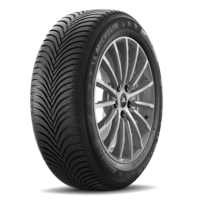
Category scores (% of best)
All discipline results (16)
Discipline positions compare the ranked tires in this test, not the whole market. These are individual measurements, not weighted overall scores.
| Test | Position in discipline | Result | Gap to best |
|---|---|---|---|
| Dry BrakingLower is better | 1st / 20 | 140 ft | Best in this discipline |
| Dry HandlingHigher is better | 2nd / 20 | 72.5 mph | -0.1 mph |
| Wet BrakingLower is better | 2nd / 20 | 170 ft | +3 ft |
| Wet HandlingHigher is better | 3rd / 20 | 51.8 mph | -0.6 mph |
| Wet CircleLower is better | 3rd / 20 | 12.12 s | +0.08 s |
| Straight AquaHigher is better | 12th / 20 | 46.7 mph | -1.3 mph |
| Curved AquaplaningHigher is better | 13th / 20 | 7.3 ft/s² | -1.6 ft/s² |
| Snow BrakingLower is better | 4th / 20 | 91 ft | +2 ft |
| Snow TractionHigher is better | 9th / 20 | 562 lbf | -27 lbf |
| Snow HandlingHigher is better | 1st / 20 | 36.8 mph | Best in this discipline |
| Snow SlalomHigher is better | 13th / 20 | 9.2 ft/s² | -0.7 ft/s² |
| Subj. ComfortHigher is better | 6th / 20 | 7.3 Points | -0.70 Points |
| NoiseLower is better | 1st / 20 | 65 dB | Best in this discipline |
| WearHigher is better | 9th / 20 | 29,310 miles | -3,623 miles |
| ValueLower is better | 19th / 20 | 13.36 Price/1000 | +6.04 Price/1000 |
| Rolling ResistanceLower is better | 9th / 20 | 8.7 kg/t | +0.93 kg/t |
- EU Label
- D/B/70
- 3PMSF
- Yes
- Price
- 630.00
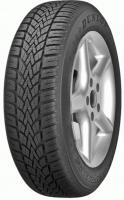
Dunlop Winter
225/40 R18 92V XL
Category scores (% of best)
All discipline results (16)
Discipline positions compare the ranked tires in this test, not the whole market. These are individual measurements, not weighted overall scores.
| Test | Position in discipline | Result | Gap to best |
|---|---|---|---|
| Dry BrakingLower is better | 11th / 20 | 149 ft | +9 ft |
| Dry HandlingHigher is better | 14th / 20 | 71.1 mph | -1.5 mph |
| Wet BrakingLower is better | 3rd / 20 | 171 ft | +4 ft |
| Wet HandlingHigher is better | 16th / 20 | 50.0 mph | -2.4 mph |
| Wet CircleLower is better | 14th / 20 | 12.56 s | +0.52 s |
| Straight AquaHigher is better | 15th / 20 | 46.0 mph | -2.0 mph |
| Curved AquaplaningHigher is better | 10th / 20 | 7.7 ft/s² | -1.2 ft/s² |
| Snow BrakingLower is better | 3rd / 20 | 90 ft | +1 ft |
| Snow TractionHigher is better | 4th / 20 | 579 lbf | -10 lbf |
| Snow HandlingHigher is better | 7th / 20 | 36.4 mph | -0.4 mph |
| Snow SlalomHigher is better | 4th / 20 | 9.8 ft/s² | -0.1 ft/s² |
| Subj. ComfortHigher is better | 1st / 20 | 8 Points | Best in this discipline |
| NoiseLower is better | 3rd / 20 | 65.2 dB | +0.20 dB |
| WearHigher is better | 5th / 20 | 31,615 miles | -1,318 miles |
| ValueLower is better | 10th / 20 | 10.02 Price/1000 | +2.70 Price/1000 |
| Rolling ResistanceLower is better | 7th / 20 | 8.58 kg/t | +0.81 kg/t |
- EU Label
- D/B/71
- 3PMSF
- Yes
- Price
- 510.00
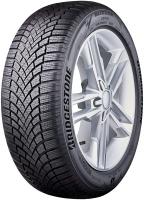
Bridgestone Blizzak 6
225/40 R18 92V XL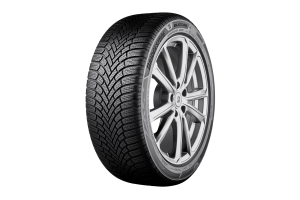
Category scores (% of best)
All discipline results (16)
Discipline positions compare the ranked tires in this test, not the whole market. These are individual measurements, not weighted overall scores.
| Test | Position in discipline | Result | Gap to best |
|---|---|---|---|
| Dry BrakingLower is better | 10th / 20 | 147 ft | +7 ft |
| Dry HandlingHigher is better | 1st / 20 | 72.6 mph | Best in this discipline |
| Wet BrakingLower is better | 10th / 20 | 179 ft | +12 ft |
| Wet HandlingHigher is better | 11th / 20 | 50.4 mph | -2.0 mph |
| Wet CircleLower is better | 10th / 20 | 12.46 s | +0.42 s |
| Straight AquaHigher is better | 4th / 20 | 47.5 mph | -0.5 mph |
| Curved AquaplaningHigher is better | 9th / 20 | 8.0 ft/s² | -0.9 ft/s² |
| Snow BrakingLower is better | 5th / 20 | 92 ft | +3 ft |
| Snow TractionHigher is better | 12th / 20 | 558 lbf | -31 lbf |
| Snow HandlingHigher is better | 7th / 20 | 36.4 mph | -0.4 mph |
| Snow SlalomHigher is better | 7th / 20 | 9.5 ft/s² | -0.4 ft/s² |
| Subj. ComfortHigher is better | 6th / 20 | 7.3 Points | -0.70 Points |
| NoiseLower is better | 17th / 20 | 66.8 dB | +1.80 dB |
| WearHigher is better | 1st / 20 | 32,933 miles | Best in this discipline |
| ValueLower is better | 15th / 20 | 11.32 Price/1000 | +4.00 Price/1000 |
| Rolling ResistanceLower is better | 6th / 20 | 8.54 kg/t | +0.77 kg/t |
- EU Label
- C/B/70
- 3PMSF
- Yes
- Price
- 600.00
Kumho WinterCraft WP52+
225/40 R18 92W XL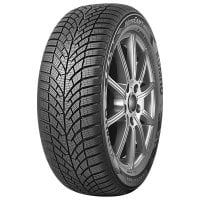
Category scores (% of best)
All discipline results (16)
Discipline positions compare the ranked tires in this test, not the whole market. These are individual measurements, not weighted overall scores.
| Test | Position in discipline | Result | Gap to best |
|---|---|---|---|
| Dry BrakingLower is better | 8th / 20 | 146 ft | +6 ft |
| Dry HandlingHigher is better | 13th / 20 | 71.1 mph | -1.5 mph |
| Wet BrakingLower is better | 5th / 20 | 172 ft | +5 ft |
| Wet HandlingHigher is better | 4th / 20 | 51.3 mph | -1.1 mph |
| Wet CircleLower is better | 8th / 20 | 12.43 s | +0.39 s |
| Straight AquaHigher is better | 8th / 20 | 47.2 mph | -0.8 mph |
| Curved AquaplaningHigher is better | 11th / 20 | 7.6 ft/s² | -1.3 ft/s² |
| Snow BrakingLower is better | 12th / 20 | 93 ft | +4 ft |
| Snow TractionHigher is better | 10th / 20 | 560 lbf | -29 lbf |
| Snow HandlingHigher is better | 4th / 20 | 36.7 mph | -0.1 mph |
| Snow SlalomHigher is better | 7th / 20 | 9.5 ft/s² | -0.4 ft/s² |
| Subj. ComfortHigher is better | 16th / 20 | 6.7 Points | -1.30 Points |
| NoiseLower is better | 8th / 20 | 65.7 dB | +0.70 dB |
| WearHigher is better | 16th / 20 | 27,663 miles | -5,270 miles |
| ValueLower is better | 7th / 20 | 9.66 Price/1000 | +2.34 Price/1000 |
| Rolling ResistanceLower is better | 9th / 20 | 8.7 kg/t | +0.93 kg/t |
- EU Label
- D/A/72
- 3PMSF
- Yes
- Price
- 430.00
Goodyear UltraGrip Performance 3
225/40 R18 92V XL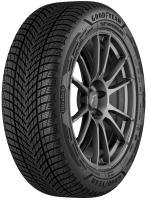
Category scores (% of best)
All discipline results (16)
Discipline positions compare the ranked tires in this test, not the whole market. These are individual measurements, not weighted overall scores.
| Test | Position in discipline | Result | Gap to best |
|---|---|---|---|
| Dry BrakingLower is better | 13th / 20 | 150 ft | +10 ft |
| Dry HandlingHigher is better | 10th / 20 | 71.3 mph | -1.3 mph |
| Wet BrakingLower is better | 1st / 20 | 167 ft | Best in this discipline |
| Wet HandlingHigher is better | 2nd / 20 | 52.1 mph | -0.3 mph |
| Wet CircleLower is better | 1st / 20 | 12.04 s | Best in this discipline |
| Straight AquaHigher is better | 4th / 20 | 47.5 mph | -0.5 mph |
| Curved AquaplaningHigher is better | 2nd / 20 | 8.7 ft/s² | -0.2 ft/s² |
| Snow BrakingLower is better | 13th / 20 | 94 ft | +5 ft |
| Snow TractionHigher is better | 16th / 20 | 542 lbf | -47 lbf |
| Snow HandlingHigher is better | 9th / 20 | 36.4 mph | -0.4 mph |
| Snow SlalomHigher is better | 11th / 20 | 9.3 ft/s² | -0.6 ft/s² |
| Subj. ComfortHigher is better | 6th / 20 | 7.3 Points | -0.70 Points |
| NoiseLower is better | 6th / 20 | 65.6 dB | +0.60 dB |
| WearHigher is better | 1st / 20 | 32,933 miles | Best in this discipline |
| ValueLower is better | 11th / 20 | 10.94 Price/1000 | +3.62 Price/1000 |
| Rolling ResistanceLower is better | 18th / 20 | 9.16 kg/t | +1.39 kg/t |
- EU Label
- D/B/71
- 3PMSF
- Yes
- Price
- 580.00
Hankook Winter i cept evo3
225/40 R18 92V XL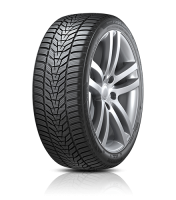
Category scores (% of best)
All discipline results (16)
Discipline positions compare the ranked tires in this test, not the whole market. These are individual measurements, not weighted overall scores.
| Test | Position in discipline | Result | Gap to best |
|---|---|---|---|
| Dry BrakingLower is better | 7th / 20 | 145 ft | +5 ft |
| Dry HandlingHigher is better | 9th / 20 | 71.4 mph | -1.2 mph |
| Wet BrakingLower is better | 12th / 20 | 182 ft | +15 ft |
| Wet HandlingHigher is better | 8th / 20 | 50.7 mph | -1.7 mph |
| Wet CircleLower is better | 16th / 20 | 12.63 s | +0.59 s |
| Straight AquaHigher is better | 3rd / 20 | 47.5 mph | -0.5 mph |
| Curved AquaplaningHigher is better | 1st / 20 | 8.9 ft/s² | Best in this discipline |
| Snow BrakingLower is better | 8th / 20 | 92 ft | +3 ft |
| Snow TractionHigher is better | 5th / 20 | 576 lbf | -13 lbf |
| Snow HandlingHigher is better | 3rd / 20 | 36.8 mph | 0.0 mph |
| Snow SlalomHigher is better | 6th / 20 | 9.6 ft/s² | -0.3 ft/s² |
| Subj. ComfortHigher is better | 6th / 20 | 7.3 Points | -0.70 Points |
| NoiseLower is better | 11th / 20 | 66.3 dB | +1.30 dB |
| WearHigher is better | 3rd / 20 | 32,274 miles | -659 miles |
| ValueLower is better | 4th / 20 | 9.24 Price/1000 | +1.92 Price/1000 |
| Rolling ResistanceLower is better | 13th / 20 | 8.9 kg/t | +1.13 kg/t |
- EU Label
- D/B/72
- 3PMSF
- Yes
- Price
- 480.00
Continental WinterContact TS 870 P
225/40 R18 92V XL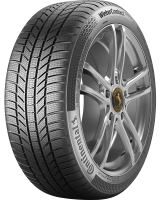
Category scores (% of best)
All discipline results (16)
Discipline positions compare the ranked tires in this test, not the whole market. These are individual measurements, not weighted overall scores.
| Test | Position in discipline | Result | Gap to best |
|---|---|---|---|
| Dry BrakingLower is better | 4th / 20 | 143 ft | +3 ft |
| Dry HandlingHigher is better | 3rd / 20 | 72.4 mph | -0.2 mph |
| Wet BrakingLower is better | 12th / 20 | 182 ft | +15 ft |
| Wet HandlingHigher is better | 14th / 20 | 50.2 mph | -2.2 mph |
| Wet CircleLower is better | 9th / 20 | 12.45 s | +0.41 s |
| Straight AquaHigher is better | 6th / 20 | 47.4 mph | -0.6 mph |
| Curved AquaplaningHigher is better | 3rd / 20 | 8.6 ft/s² | -0.3 ft/s² |
| Snow BrakingLower is better | 5th / 20 | 92 ft | +3 ft |
| Snow TractionHigher is better | 8th / 20 | 567 lbf | -22 lbf |
| Snow HandlingHigher is better | 10th / 20 | 36.3 mph | -0.5 mph |
| Snow SlalomHigher is better | 5th / 20 | 9.7 ft/s² | -0.2 ft/s² |
| Subj. ComfortHigher is better | 1st / 20 | 8 Points | Best in this discipline |
| NoiseLower is better | 9th / 20 | 65.9 dB | +0.90 dB |
| WearHigher is better | 10th / 20 | 28,981 miles | -3,952 miles |
| ValueLower is better | 17th / 20 | 13.08 Price/1000 | +5.76 Price/1000 |
| Rolling ResistanceLower is better | 2nd / 20 | 8.02 kg/t | +0.25 kg/t |
- EU Label
- C/B/71
- 3PMSF
- Yes
- Price
- 610.00
Uniroyal WinterExpert
225/40 R18 92V XL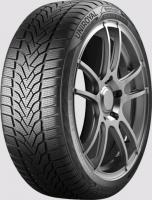
Category scores (% of best)
All discipline results (16)
Discipline positions compare the ranked tires in this test, not the whole market. These are individual measurements, not weighted overall scores.
| Test | Position in discipline | Result | Gap to best |
|---|---|---|---|
| Dry BrakingLower is better | 14th / 20 | 150 ft | +10 ft |
| Dry HandlingHigher is better | 6th / 20 | 71.8 mph | -0.8 mph |
| Wet BrakingLower is better | 6th / 20 | 175 ft | +8 ft |
| Wet HandlingHigher is better | 12th / 20 | 50.3 mph | -2.1 mph |
| Wet CircleLower is better | 7th / 20 | 12.38 s | +0.34 s |
| Straight AquaHigher is better | 13th / 20 | 46.6 mph | -1.4 mph |
| Curved AquaplaningHigher is better | 11th / 20 | 7.6 ft/s² | -1.3 ft/s² |
| Snow BrakingLower is better | 14th / 20 | 94 ft | +5 ft |
| Snow TractionHigher is better | 15th / 20 | 543 lbf | -46 lbf |
| Snow HandlingHigher is better | 15th / 20 | 35.9 mph | -0.9 mph |
| Snow SlalomHigher is better | 17th / 20 | 9.1 ft/s² | -0.8 ft/s² |
| Subj. ComfortHigher is better | 16th / 20 | 6.7 Points | -1.30 Points |
| NoiseLower is better | 15th / 20 | 66.7 dB | +1.70 dB |
| WearHigher is better | 8th / 20 | 29,639 miles | -3,294 miles |
| ValueLower is better | 6th / 20 | 9.64 Price/1000 | +2.32 Price/1000 |
| Rolling ResistanceLower is better | 3rd / 20 | 8.09 kg/t | +0.32 kg/t |
- EU Label
- D/B/72
- 3PMSF
- Yes
- Price
- 460.00
Barum Polaris 6
225/40 R18 92V XL
Category scores (% of best)
All discipline results (16)
Discipline positions compare the ranked tires in this test, not the whole market. These are individual measurements, not weighted overall scores.
| Test | Position in discipline | Result | Gap to best |
|---|---|---|---|
| Dry BrakingLower is better | 16th / 20 | 151 ft | +11 ft |
| Dry HandlingHigher is better | 8th / 20 | 71.5 mph | -1.1 mph |
| Wet BrakingLower is better | 11th / 20 | 180 ft | +13 ft |
| Wet HandlingHigher is better | 14th / 20 | 50.2 mph | -2.2 mph |
| Wet CircleLower is better | 15th / 20 | 12.62 s | +0.58 s |
| Straight AquaHigher is better | 19th / 20 | 44.4 mph | -3.6 mph |
| Curved AquaplaningHigher is better | 16th / 20 | 6.9 ft/s² | -2.0 ft/s² |
| Snow BrakingLower is better | 9th / 20 | 93 ft | +4 ft |
| Snow TractionHigher is better | 13th / 20 | 556 lbf | -33 lbf |
| Snow HandlingHigher is better | 12th / 20 | 36.0 mph | -0.8 mph |
| Snow SlalomHigher is better | 17th / 20 | 9.1 ft/s² | -0.8 ft/s² |
| Subj. ComfortHigher is better | 6th / 20 | 7.3 Points | -0.70 Points |
| NoiseLower is better | 3rd / 20 | 65.2 dB | +0.20 dB |
| WearHigher is better | 13th / 20 | 27,993 miles | -4,940 miles |
| ValueLower is better | 3rd / 20 | 8.44 Price/1000 | +1.12 Price/1000 |
| Rolling ResistanceLower is better | 1st / 20 | 7.77 kg/t | Best in this discipline |
- EU Label
- C/C/72
- 3PMSF
- Yes
- Price
- 380.00
Pirelli Cinturato Winter 2
225/40 R18 92V XL
Category scores (% of best)
All discipline results (16)
Discipline positions compare the ranked tires in this test, not the whole market. These are individual measurements, not weighted overall scores.
| Test | Position in discipline | Result | Gap to best |
|---|---|---|---|
| Dry BrakingLower is better | 5th / 20 | 145 ft | +5 ft |
| Dry HandlingHigher is better | 18th / 20 | 70.9 mph | -1.7 mph |
| Wet BrakingLower is better | 7th / 20 | 177 ft | +10 ft |
| Wet HandlingHigher is better | 1st / 20 | 52.4 mph | Best in this discipline |
| Wet CircleLower is better | 2nd / 20 | 12.11 s | +0.07 s |
| Straight AquaHigher is better | 13th / 20 | 46.6 mph | -1.4 mph |
| Curved AquaplaningHigher is better | 15th / 20 | 7.0 ft/s² | -1.9 ft/s² |
| Snow BrakingLower is better | 15th / 20 | 94 ft | +5 ft |
| Snow TractionHigher is better | 17th / 20 | 532 lbf | -57 lbf |
| Snow HandlingHigher is better | 5th / 20 | 36.7 mph | -0.1 mph |
| Snow SlalomHigher is better | 10th / 20 | 9.4 ft/s² | -0.5 ft/s² |
| Subj. ComfortHigher is better | 1st / 20 | 8 Points | Best in this discipline |
| NoiseLower is better | 6th / 20 | 65.6 dB | +0.60 dB |
| WearHigher is better | 7th / 20 | 29,969 miles | -2,964 miles |
| ValueLower is better | 16th / 20 | 12.86 Price/1000 | +5.54 Price/1000 |
| Rolling ResistanceLower is better | 16th / 20 | 9.05 kg/t | +1.28 kg/t |
- EU Label
- C/A/72
- 3PMSF
- Yes
- Price
- 620.00
Semperit Speed Grip 5
225/40 R18 92V XL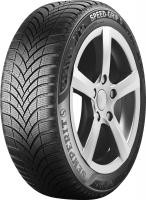
Category scores (% of best)
All discipline results (16)
Discipline positions compare the ranked tires in this test, not the whole market. These are individual measurements, not weighted overall scores.
| Test | Position in discipline | Result | Gap to best |
|---|---|---|---|
| Dry BrakingLower is better | 15th / 20 | 151 ft | +11 ft |
| Dry HandlingHigher is better | 5th / 20 | 72.0 mph | -0.6 mph |
| Wet BrakingLower is better | 9th / 20 | 179 ft | +12 ft |
| Wet HandlingHigher is better | 7th / 20 | 51.0 mph | -1.4 mph |
| Wet CircleLower is better | 11th / 20 | 12.52 s | +0.48 s |
| Straight AquaHigher is better | 6th / 20 | 47.4 mph | -0.6 mph |
| Curved AquaplaningHigher is better | 8th / 20 | 8.1 ft/s² | -0.8 ft/s² |
| Snow BrakingLower is better | 18th / 20 | 95 ft | +6 ft |
| Snow TractionHigher is better | 14th / 20 | 548 lbf | -41 lbf |
| Snow HandlingHigher is better | 18th / 20 | 35.5 mph | -1.3 mph |
| Snow SlalomHigher is better | 14th / 20 | 9.2 ft/s² | -0.7 ft/s² |
| Subj. ComfortHigher is better | 16th / 20 | 6.7 Points | -1.30 Points |
| NoiseLower is better | 20th / 20 | 67.6 dB | +2.60 dB |
| WearHigher is better | 17th / 20 | 27,334 miles | -5,599 miles |
| ValueLower is better | 13th / 20 | 11.14 Price/1000 | +3.82 Price/1000 |
| Rolling ResistanceLower is better | 4th / 20 | 8.15 kg/t | +0.38 kg/t |
- EU Label
- D/B/72
- 3PMSF
- Yes
- Price
- 490.00
BFGoodrich gForce Winter 2
225/40 R18 92V XL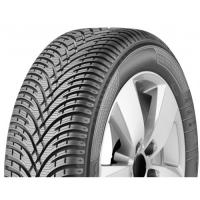
Category scores (% of best)
All discipline results (16)
Discipline positions compare the ranked tires in this test, not the whole market. These are individual measurements, not weighted overall scores.
| Test | Position in discipline | Result | Gap to best |
|---|---|---|---|
| Dry BrakingLower is better | 12th / 20 | 150 ft | +10 ft |
| Dry HandlingHigher is better | 17th / 20 | 71.0 mph | -1.6 mph |
| Wet BrakingLower is better | 16th / 20 | 185 ft | +18 ft |
| Wet HandlingHigher is better | 17th / 20 | 49.9 mph | -2.5 mph |
| Wet CircleLower is better | 18th / 20 | 12.67 s | +0.63 s |
| Straight AquaHigher is better | 1st / 20 | 48.0 mph | Best in this discipline |
| Curved AquaplaningHigher is better | 7th / 20 | 8.2 ft/s² | -0.7 ft/s² |
| Snow BrakingLower is better | 2nd / 20 | 90 ft | +1 ft |
| Snow TractionHigher is better | 2nd / 20 | 586 lbf | -3 lbf |
| Snow HandlingHigher is better | 1st / 20 | 36.8 mph | Best in this discipline |
| Snow SlalomHigher is better | 1st / 20 | 9.9 ft/s² | Best in this discipline |
| Subj. ComfortHigher is better | 6th / 20 | 7.3 Points | -0.70 Points |
| NoiseLower is better | 11th / 20 | 66.3 dB | +1.30 dB |
| WearHigher is better | 12th / 20 | 28,322 miles | -4,611 miles |
| ValueLower is better | 14th / 20 | 11.19 Price/1000 | +3.87 Price/1000 |
| Rolling ResistanceLower is better | 11th / 20 | 8.72 kg/t | +0.95 kg/t |
- EU Label
- D/B/69
- 3PMSF
- Yes
- Price
- 510.00
Vredestein Wintrac Pro+
225/40 R18 92W XL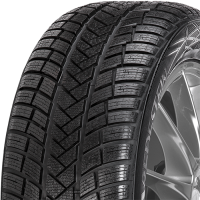
Category scores (% of best)
All discipline results (16)
Discipline positions compare the ranked tires in this test, not the whole market. These are individual measurements, not weighted overall scores.
| Test | Position in discipline | Result | Gap to best |
|---|---|---|---|
| Dry BrakingLower is better | 17th / 20 | 154 ft | +14 ft |
| Dry HandlingHigher is better | 14th / 20 | 71.1 mph | -1.5 mph |
| Wet BrakingLower is better | 16th / 20 | 185 ft | +18 ft |
| Wet HandlingHigher is better | 6th / 20 | 51.1 mph | -1.3 mph |
| Wet CircleLower is better | 5th / 20 | 12.3 s | +0.26 s |
| Straight AquaHigher is better | 17th / 20 | 44.6 mph | -3.4 mph |
| Curved AquaplaningHigher is better | 17th / 20 | 6.9 ft/s² | -2.0 ft/s² |
| Snow BrakingLower is better | 15th / 20 | 94 ft | +5 ft |
| Snow TractionHigher is better | 11th / 20 | 559 lbf | -30 lbf |
| Snow HandlingHigher is better | 16th / 20 | 35.8 mph | -1.0 mph |
| Snow SlalomHigher is better | 16th / 20 | 9.1 ft/s² | -0.8 ft/s² |
| Subj. ComfortHigher is better | 16th / 20 | 6.7 Points | -1.30 Points |
| NoiseLower is better | 18th / 20 | 66.9 dB | +1.90 dB |
| WearHigher is better | 19th / 20 | 23,382 miles | -9,551 miles |
| ValueLower is better | 18th / 20 | 13.29 Price/1000 | +5.97 Price/1000 |
| Rolling ResistanceLower is better | 19th / 20 | 9.31 kg/t | +1.54 kg/t |
- EU Label
- D/B/71
- 3PMSF
- Yes
- Price
- 500.00
Kleber Krisalp HP3
225/40 R18 92V XL
Category scores (% of best)
All discipline results (16)
Discipline positions compare the ranked tires in this test, not the whole market. These are individual measurements, not weighted overall scores.
| Test | Position in discipline | Result | Gap to best |
|---|---|---|---|
| Dry BrakingLower is better | 20th / 20 | 155 ft | +15 ft |
| Dry HandlingHigher is better | 19th / 20 | 70.5 mph | -2.1 mph |
| Wet BrakingLower is better | 18th / 20 | 186 ft | +19 ft |
| Wet HandlingHigher is better | 13th / 20 | 50.3 mph | -2.1 mph |
| Wet CircleLower is better | 11th / 20 | 12.52 s | +0.48 s |
| Straight AquaHigher is better | 2nd / 20 | 47.8 mph | -0.2 mph |
| Curved AquaplaningHigher is better | 6th / 20 | 8.3 ft/s² | -0.6 ft/s² |
| Snow BrakingLower is better | 1st / 20 | 89 ft | Best in this discipline |
| Snow TractionHigher is better | 1st / 20 | 589 lbf | Best in this discipline |
| Snow HandlingHigher is better | 6th / 20 | 36.5 mph | -0.3 mph |
| Snow SlalomHigher is better | 1st / 20 | 9.9 ft/s² | Best in this discipline |
| Subj. ComfortHigher is better | 16th / 20 | 6.7 Points | -1.30 Points |
| NoiseLower is better | 14th / 20 | 66.5 dB | +1.50 dB |
| WearHigher is better | 13th / 20 | 27,993 miles | -4,940 miles |
| ValueLower is better | 12th / 20 | 11.1 Price/1000 | +3.78 Price/1000 |
| Rolling ResistanceLower is better | 11th / 20 | 8.72 kg/t | +0.95 kg/t |
- EU Label
- D/B/69
- 3PMSF
- Yes
- Price
- 500.00
Ceat WinterDrive
225/40 R18 92V XL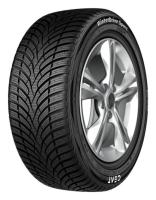
Category scores (% of best)
All discipline results (16)
Discipline positions compare the ranked tires in this test, not the whole market. These are individual measurements, not weighted overall scores.
| Test | Position in discipline | Result | Gap to best |
|---|---|---|---|
| Dry BrakingLower is better | 3rd / 20 | 143 ft | +3 ft |
| Dry HandlingHigher is better | 11th / 20 | 71.3 mph | -1.3 mph |
| Wet BrakingLower is better | 19th / 20 | 189 ft | +22 ft |
| Wet HandlingHigher is better | 20th / 20 | 49.6 mph | -2.8 mph |
| Wet CircleLower is better | 19th / 20 | 12.69 s | +0.65 s |
| Straight AquaHigher is better | 16th / 20 | 44.7 mph | -3.3 mph |
| Curved AquaplaningHigher is better | 18th / 20 | 6.8 ft/s² | -2.1 ft/s² |
| Snow BrakingLower is better | 9th / 20 | 93 ft | +4 ft |
| Snow TractionHigher is better | 6th / 20 | 573 lbf | -16 lbf |
| Snow HandlingHigher is better | 12th / 20 | 36.0 mph | -0.8 mph |
| Snow SlalomHigher is better | 11th / 20 | 9.3 ft/s² | -0.6 ft/s² |
| Subj. ComfortHigher is better | 6th / 20 | 7.3 Points | -0.70 Points |
| NoiseLower is better | 5th / 20 | 65.5 dB | +0.50 dB |
| WearHigher is better | 3rd / 20 | 32,274 miles | -659 miles |
| ValueLower is better | 1st / 20 | 7.32 Price/1000 | Best in this discipline |
| Rolling ResistanceLower is better | 17th / 20 | 9.07 kg/t | +1.30 kg/t |
- EU Label
- D/C/70
- 3PMSF
- Yes
- Price
- 380.00
Firestone Winterhawk 4
225/40 R18 92V XL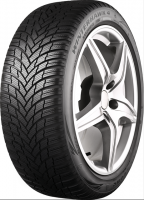
Category scores (% of best)
All discipline results (16)
Discipline positions compare the ranked tires in this test, not the whole market. These are individual measurements, not weighted overall scores.
| Test | Position in discipline | Result | Gap to best |
|---|---|---|---|
| Dry BrakingLower is better | 19th / 20 | 155 ft | +15 ft |
| Dry HandlingHigher is better | 20th / 20 | 70.1 mph | -2.5 mph |
| Wet BrakingLower is better | 8th / 20 | 178 ft | +11 ft |
| Wet HandlingHigher is better | 10th / 20 | 50.6 mph | -1.8 mph |
| Wet CircleLower is better | 13th / 20 | 12.55 s | +0.51 s |
| Straight AquaHigher is better | 10th / 20 | 47.2 mph | -0.8 mph |
| Curved AquaplaningHigher is better | 14th / 20 | 7.2 ft/s² | -1.7 ft/s² |
| Snow BrakingLower is better | 9th / 20 | 93 ft | +4 ft |
| Snow TractionHigher is better | 3rd / 20 | 579 lbf | -10 lbf |
| Snow HandlingHigher is better | 11th / 20 | 36.1 mph | -0.7 mph |
| Snow SlalomHigher is better | 9th / 20 | 9.4 ft/s² | -0.5 ft/s² |
| Subj. ComfortHigher is better | 6th / 20 | 7.3 Points | -0.70 Points |
| NoiseLower is better | 11th / 20 | 66.3 dB | +1.30 dB |
| WearHigher is better | 13th / 20 | 27,993 miles | -4,940 miles |
| ValueLower is better | 8th / 20 | 9.99 Price/1000 | +2.67 Price/1000 |
| Rolling ResistanceLower is better | 5th / 20 | 8.48 kg/t | +0.71 kg/t |
- EU Label
- D/B/71
- 3PMSF
- Yes
- Price
- 450.00
Toyo Observe EWS1
225/40 R18 92W XL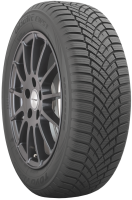
Category scores (% of best)
All discipline results (16)
Discipline positions compare the ranked tires in this test, not the whole market. These are individual measurements, not weighted overall scores.
| Test | Position in discipline | Result | Gap to best |
|---|---|---|---|
| Dry BrakingLower is better | 2nd / 20 | 141 ft | +1 ft |
| Dry HandlingHigher is better | 11th / 20 | 71.3 mph | -1.3 mph |
| Wet BrakingLower is better | 3rd / 20 | 171 ft | +4 ft |
| Wet HandlingHigher is better | 5th / 20 | 51.1 mph | -1.3 mph |
| Wet CircleLower is better | 4th / 20 | 12.17 s | +0.13 s |
| Straight AquaHigher is better | 8th / 20 | 47.2 mph | -0.8 mph |
| Curved AquaplaningHigher is better | 5th / 20 | 8.3 ft/s² | -0.6 ft/s² |
| Snow BrakingLower is better | 20th / 20 | 97 ft | +8 ft |
| Snow TractionHigher is better | 18th / 20 | 529 lbf | -60 lbf |
| Snow HandlingHigher is better | 20th / 20 | 34.4 mph | -2.4 mph |
| Snow SlalomHigher is better | 20th / 20 | 8.6 ft/s² | -1.3 ft/s² |
| Subj. ComfortHigher is better | 6th / 20 | 7.3 Points | -0.70 Points |
| NoiseLower is better | 19th / 20 | 67 dB | +2.00 dB |
| WearHigher is better | 6th / 20 | 30,957 miles | -1,976 miles |
| ValueLower is better | 5th / 20 | 9.63 Price/1000 | +2.31 Price/1000 |
| Rolling ResistanceLower is better | 8th / 20 | 8.65 kg/t | +0.88 kg/t |
- EU Label
- D/B/72
- 3PMSF
- Yes
- Price
- 480.00
Fulda Kristall Control HP2
225/40 R18 92V XL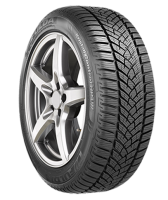
Category scores (% of best)
All discipline results (16)
Discipline positions compare the ranked tires in this test, not the whole market. These are individual measurements, not weighted overall scores.
| Test | Position in discipline | Result | Gap to best |
|---|---|---|---|
| Dry BrakingLower is better | 17th / 20 | 154 ft | +14 ft |
| Dry HandlingHigher is better | 14th / 20 | 71.1 mph | -1.5 mph |
| Wet BrakingLower is better | 19th / 20 | 189 ft | +22 ft |
| Wet HandlingHigher is better | 19th / 20 | 49.8 mph | -2.6 mph |
| Wet CircleLower is better | 20th / 20 | 12.93 s | +0.89 s |
| Straight AquaHigher is better | 11th / 20 | 46.9 mph | -1.1 mph |
| Curved AquaplaningHigher is better | 4th / 20 | 8.4 ft/s² | -0.5 ft/s² |
| Snow BrakingLower is better | 5th / 20 | 92 ft | +3 ft |
| Snow TractionHigher is better | 7th / 20 | 570 lbf | -19 lbf |
| Snow HandlingHigher is better | 14th / 20 | 36.0 mph | -0.8 mph |
| Snow SlalomHigher is better | 3rd / 20 | 9.8 ft/s² | -0.1 ft/s² |
| Subj. ComfortHigher is better | 1st / 20 | 8 Points | Best in this discipline |
| NoiseLower is better | 15th / 20 | 66.7 dB | +1.70 dB |
| WearHigher is better | 17th / 20 | 27,334 miles | -5,599 miles |
| ValueLower is better | 9th / 20 | 10 Price/1000 | +2.68 Price/1000 |
| Rolling ResistanceLower is better | 13th / 20 | 8.9 kg/t | +1.13 kg/t |
- EU Label
- D/C/72
- 3PMSF
- Yes
- Price
- 440.00
Linglong Sport Master Winter
225/40 R18 92W XL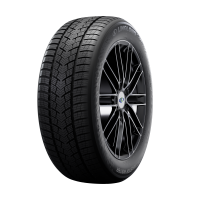
Category scores (% of best)
All discipline results (16)
Discipline positions compare the ranked tires in this test, not the whole market. These are individual measurements, not weighted overall scores.
| Test | Position in discipline | Result | Gap to best |
|---|---|---|---|
| Dry BrakingLower is better | 6th / 20 | 145 ft | +5 ft |
| Dry HandlingHigher is better | 7th / 20 | 71.6 mph | -1.0 mph |
| Wet BrakingLower is better | 14th / 20 | 183 ft | +16 ft |
| Wet HandlingHigher is better | 18th / 20 | 49.8 mph | -2.6 mph |
| Wet CircleLower is better | 17th / 20 | 12.66 s | +0.62 s |
| Straight AquaHigher is better | 18th / 20 | 44.5 mph | -3.5 mph |
| Curved AquaplaningHigher is better | 20th / 20 | 6.6 ft/s² | -2.3 ft/s² |
| Snow BrakingLower is better | 15th / 20 | 94 ft | +5 ft |
| Snow TractionHigher is better | 19th / 20 | 526 lbf | -63 lbf |
| Snow HandlingHigher is better | 16th / 20 | 35.8 mph | -1.0 mph |
| Snow SlalomHigher is better | 14th / 20 | 9.2 ft/s² | -0.7 ft/s² |
| Subj. ComfortHigher is better | 6th / 20 | 7.3 Points | -0.70 Points |
| NoiseLower is better | 9th / 20 | 65.9 dB | +0.90 dB |
| WearHigher is better | 11th / 20 | 28,651 miles | -4,282 miles |
| ValueLower is better | 2nd / 20 | 7.81 Price/1000 | +0.49 Price/1000 |
| Rolling ResistanceLower is better | 20th / 20 | 10.37 kg/t | +2.60 kg/t |
- EU Label
- D/A/72
- 3PMSF
- Yes
- Price
- 360.00
Falken EUROWINTER HS02 Pro
225/40 R18 92V XL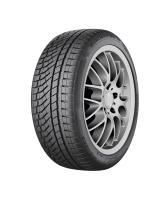
Category scores (% of best)
All discipline results (16)
Discipline positions compare the ranked tires in this test, not the whole market. These are individual measurements, not weighted overall scores.
| Test | Position in discipline | Result | Gap to best |
|---|---|---|---|
| Dry BrakingLower is better | 9th / 20 | 147 ft | +7 ft |
| Dry HandlingHigher is better | 4th / 20 | 72.3 mph | -0.3 mph |
| Wet BrakingLower is better | 15th / 20 | 183 ft | +16 ft |
| Wet HandlingHigher is better | 8th / 20 | 50.7 mph | -1.7 mph |
| Wet CircleLower is better | 6th / 20 | 12.33 s | +0.29 s |
| Straight AquaHigher is better | 20th / 20 | 44.2 mph | -3.8 mph |
| Curved AquaplaningHigher is better | 19th / 20 | 6.7 ft/s² | -2.2 ft/s² |
| Snow BrakingLower is better | 19th / 20 | 97 ft | +8 ft |
| Snow TractionHigher is better | 20th / 20 | 520 lbf | -69 lbf |
| Snow HandlingHigher is better | 19th / 20 | 34.6 mph | -2.2 mph |
| Snow SlalomHigher is better | 19th / 20 | 9.0 ft/s² | -0.9 ft/s² |
| Subj. ComfortHigher is better | 1st / 20 | 8 Points | Best in this discipline |
| NoiseLower is better | 1st / 20 | 65 dB | Best in this discipline |
| WearHigher is better | 20th / 20 | 21,077 miles | -11,856 miles |
| ValueLower is better | 20th / 20 | 15.04 Price/1000 | +7.72 Price/1000 |
| Rolling ResistanceLower is better | 15th / 20 | 9.03 kg/t | +1.26 kg/t |
- EU Label
- D/B/72
- 3PMSF
- Yes
- Price
- 510.00
Why does the Toyo get this summary "extended braking distances on both wet and dry roads, which represent safety compromises that lead to downgrades in critical disciplines." while it's the 2nd best and 3rd best in dry and wet braking?
Thanks for letting me know, I'll look into this now
Thanks, I've updated that, it should go through the cache in the next few hours. It seems its results got combined with another tire when generating the texts - not ideal!
Thank You for the quick response and update 👍 as always, excellent work 👏
Kumho again with very strong result. let's see if other tests can confirm this
Somebody seams very very scared from cheap Linglong competition. New models made in Europe are very good and almost matches performance of much more expensive premium tires.
source: trust me bro!
Btw. it's the Kumho WP52+, not the regular WP52. The link is not correct.
Thanks, I'll get that updated
There is a mistake. It’s not the Dunlop “Winter Response 2”; it’s the new “Dunlop Winter” tire. Please check the original AutoBild test.
Thank you, that should be fixed