It's the second test for the new Pirelli P Zero PZ5, and the second win! This years Auto Express summer tire test has tested nine popular summer tires in 225/40 R18, with some rather interesting results.
As always we suggest you visit the Auto Express website on the link below for the full details, but here is our summary.
Perhaps the most interesting result of this test was the Continental SportContact 7, which usually performs well in the wet, struggling in the wet conditions of the test facility. I asked Continental to comment and they are as confused as I am, I'll update this article if I hear something else in the future.
As Auto Express do not provide raw data, instead percentages to the best in test, the data below is based on estimated 'bests'. The percentage difference between the tires is accurate, but the numbers are based on guessing the best in category. As scoring is done on percentages this doesn't affect the score weighting calculator on the results tab but I thought it was important to share.
Dry
Dry Braking
Dry Braking
Spread: 4.30 M (12.6%)|Avg: 35.88 M
Dry braking in meters (Lower is better)
Yokohama Advan Sport V107
34.00 M
Bridgestone Potenza Sport
34.90 M
Continental SportContact 7
34.90 M
Pirelli P Zero PZ5
35.20 M
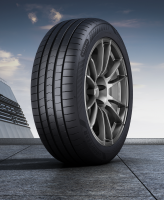
Goodyear Eagle F1 Asymmetric 6
35.60 M
Hankook Ventus Evo
36.40 M
Michelin Pilot Sport 5
36.80 M
Kumho Ecsta Sport PS72
36.80 M
Ceat SportDrive
38.30 M
Dry Handling
Dry Handling
Spread: 1.80 s (2.2%)|Avg: 82.78 s
Dry handling time in seconds (Lower is better)
Bridgestone Potenza Sport
82.00 s
Pirelli P Zero PZ5
82.00 s
Continental SportContact 7
82.50 s
Yokohama Advan Sport V107
82.80 s
Kumho Ecsta Sport PS72
82.80 s
Goodyear Eagle F1 Asymmetric 6
82.90 s
Michelin Pilot Sport 5
83.10 s
Hankook Ventus Evo
83.10 s
Ceat SportDrive
83.80 s
Wet
Wet Braking
Wet Braking
Spread: 6.80 M (22.7%)|Avg: 33.31 M
Wet braking in meters (Lower is better)
Bridgestone Potenza Sport
30.00 M
Pirelli P Zero PZ5
30.80 M
Michelin Pilot Sport 5
31.60 M
Hankook Ventus Evo
32.40 M
Yokohama Advan Sport V107
33.20 M
Goodyear Eagle F1 Asymmetric 6
34.10 M
Continental SportContact 7
35.00 M
Kumho Ecsta Sport PS72
35.90 M
Ceat SportDrive
36.80 M
Wet Handling
Wet Handling
Spread: 7.70 s (8.6%)|Avg: 91.69 s
Wet handling time in seconds (Lower is better)
Pirelli P Zero PZ5
90.00 s
Hankook Ventus Evo
90.20 s
Bridgestone Potenza Sport
90.60 s
Kumho Ecsta Sport PS72
90.90 s
Goodyear Eagle F1 Asymmetric 6
91.10 s
Michelin Pilot Sport 5
91.10 s
Yokohama Advan Sport V107
91.80 s
Continental SportContact 7
91.80 s
Ceat SportDrive
97.70 s
Wet Circle
Wet Circle
Spread: 0.70 s (2.5%)|Avg: 28.34 s
Wet Circle Lap Time in seconds (Lower is better)
Pirelli P Zero PZ5
28.00 s
Bridgestone Potenza Sport
28.10 s
Michelin Pilot Sport 5
28.20 s
Yokohama Advan Sport V107
28.30 s
Goodyear Eagle F1 Asymmetric 6
28.30 s
Continental SportContact 7
28.40 s
Hankook Ventus Evo
28.50 s
Kumho Ecsta Sport PS72
28.60 s
Ceat SportDrive
28.70 s
Straight Aqua
Straight Aqua
Spread: 6.70 Km/H (7.6%)|Avg: 84.79 Km/H
Float Speed in Km/H (Higher is better)
Michelin Pilot Sport 5
88.00 Km/H
Hankook Ventus Evo
86.50 Km/H
Goodyear Eagle F1 Asymmetric 6
85.40 Km/H
Bridgestone Potenza Sport
85.20 Km/H
Continental SportContact 7
84.80 Km/H
Pirelli P Zero PZ5
84.50 Km/H
Yokohama Advan Sport V107
83.80 Km/H
Kumho Ecsta Sport PS72
83.60 Km/H
Ceat SportDrive
81.30 Km/H
Curved Aquaplaning
Curved Aquaplaning
Spread: 0.15 m/sec2 (17.6%)|Avg: 0.78 m/sec2
Remaining lateral acceleration (Higher is better)
Michelin Pilot Sport 5
0.85 m/sec2
Hankook Ventus Evo
0.85 m/sec2
Yokohama Advan Sport V107
0.83 m/sec2
Goodyear Eagle F1 Asymmetric 6
0.79 m/sec2
Pirelli P Zero PZ5
0.78 m/sec2
Ceat SportDrive
0.77 m/sec2
Bridgestone Potenza Sport
0.75 m/sec2
Continental SportContact 7
0.70 m/sec2
Kumho Ecsta Sport PS72
0.70 m/sec2
Comfort
Subj. Noise
Subj. Noise
Spread: 1.60 Points (16%)|Avg: 9.03 Points
Subjective in car noise levels (Higher is better)
Kumho Ecsta Sport PS72
10.00 Points
Hankook Ventus Evo
9.60 Points
Pirelli P Zero PZ5
9.30 Points
Ceat SportDrive
9.00 Points
Yokohama Advan Sport V107
8.80 Points
Bridgestone Potenza Sport
8.80 Points
Continental SportContact 7
8.70 Points
Michelin Pilot Sport 5
8.70 Points
Goodyear Eagle F1 Asymmetric 6
8.40 Points
Value
Rolling Resistance
Rolling Resistance
Spread: 1.97 kg / t (28.1%)|Avg: 7.80 kg / t
Rolling resistance in kg t (Lower is better)
Ceat SportDrive
7.00 kg / t
Kumho Ecsta Sport PS72
7.36 kg / t
Michelin Pilot Sport 5
7.45 kg / t
Continental SportContact 7
7.63 kg / t
Goodyear Eagle F1 Asymmetric 6
7.63 kg / t
Hankook Ventus Evo
7.90 kg / t
Pirelli P Zero PZ5
7.99 kg / t
Bridgestone Potenza Sport
8.25 kg / t
Yokohama Advan Sport V107
8.97 kg / t
19,000 km
£1.45/L
8.0 L/100km
--
Annual Difference
--
Lifetime Savings
--
Extra Fuel/Energy
--
Extra CO2
Estimates based on typical driving conditions. Rolling resistance accounts for approximately 20% of IC vehicle fuel consumption and 25% of EV energy consumption. Actual savings vary based on driving style, vehicle weight, road conditions, and tire age. For comparative purposes only. Lifetime savings based on a 40,000km / 25,000 mile tread life.
The new Pirelli P Zero PZ5 impressed with three test wins—more than any other tire—including first place in both wet and dry handling. In the wet, it was agile, stable, and well-balanced, taking second in braking just 0.7m behind the leader, though its pace was greater than its feel suggested. Aquaplaning results were good but not class-leading. In the dry, it showed strong grip, throttle adjustability, and composure, matching the fastest lap time with Bridgestone and placing fourth in braking. Quiet and comfortable over rough asphalt, its only notable drawback was relatively high rolling resistance.
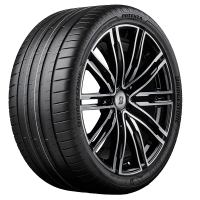
The Bridgestone, last year’s winner in this size, takes second place this time but delivers a dramatic turnaround in wet braking, topping the field at 27.5m—nearly a metre ahead of its nearest rival. It added third in wet handling and solid aquaplaning results, though felt less confident in standing water. In the dry, it matched Pirelli for the fastest lap, showing strong grip, precise transitions, and excellent traction, with joint-second braking just under a metre off the best. Quiet and consistent, its main drawback is high rolling resistance, but its balanced performance secures a strong overall result.
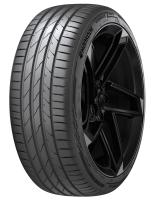
The new Hankook impressed with consistently strong wet-weather performance, earning third overall despite no outright wins. It was within a metre of the leader in wet braking and excelled on the wet handling circuit, combining grip, braking, traction, and composure for a lap just 0.2 seconds off the best. It also claimed second in both aquaplaning tests. Dry results were less competitive, with sixth in braking and seventh in handling, lacking the grip and precision of the leaders. Refinement was a highlight, with low cabin noise and good bump absorption, though rolling resistance was only average.
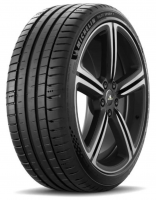
The Michelin Pilot Sport 5 repeats its fourth-place finish from last year, again showing standout aquaplaning ability with wins in both tests. It took third in wet cornering and wet braking—within a metre of the leader—but was only joint-fifth in wet handling despite feeling composed, grippy, and stable. Dry results were more modest, with seventh in both braking and handling, around 2.6m and several tenths off the best respectively, though it delivered a smooth, high-quality driving feel. While rather noisy in the cabin, it offered excellent fuel economy and a performance that felt stronger than the raw times suggested.
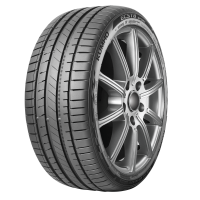
The new Kumho made an impressive debut with strong wet and dry handling performances and excellent refinement, despite weaknesses in other areas. It struggled in wet braking, aquaplaning, and wet cornering, ranking eighth in each, yet delivered the fourth-fastest wet lap thanks to great traction, stability, and precise balance. In the dry, it again paired poor braking with strong handling, finishing joint-fourth, though it needed assertive steering and was noisy under pressure. It excelled in comfort, recording the lowest noise levels and absorbing bumps well, and offered strong economy with the second-lowest rolling resistance.
The Goodyear, a previous triple test winner and close runner-up, delivered a solid but less dominant performance this time, with no outright wins. In the wet, it placed sixth in braking, fourth in cornering, and fifth in handling, showing good balance and composure when driven smoothly, and ranked third in straight-line aquaplaning. Dry results were similarly mid-pack, with average braking and sixth in handling, just 0.6 seconds off the best, offering precision and strong traction but lacking the sharpness of the top performers. High cabin noise and some harshness over ridges were drawbacks, though rolling resistance was competitive, making it a capable all-rounder in a tougher field.
The new Yokohama Advan Sport V107 delivers a competitive showing among major European rivals, excelling more in dry conditions than wet. It topped dry braking with a class-leading 32.2m stop from 60mph and ranked joint-fourth in dry handling, feeling grippy and tidy if slightly demanding to drive at the limit. Wet performance was more mixed, with fifth in straight-line braking, equal-seventh in handling due to limited traction and stability, and mid-pack aquaplaning results. It offered low cabin noise but was louder over sharp bumps, and its high rolling resistance made it the least fuel-efficient tire tested. Overall, its performance was still within 2% of the best in the group.
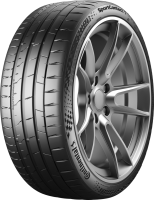
The Continental SportContact 7, last year’s third-place finisher in the 17-inch test, ranks eighth here despite being only 2% off the top performer. Its wet performance was the main weakness, placing seventh in straight-line braking—2.5m longer than the leader—eighth in wet handling, and mid-pack in aquaplaning. While traction was good, it felt unsettled over standing water and light at the rear in fast sweeps. In the dry, it excelled with joint-second braking and third in handling, showing superb grip, precision, and composure, though slightly off the fastest time. Noise levels were moderate, comfort was good, and rolling resistance was mid-range.
The Ceat SportDrive, a newcomer to testing, delivered a mixed performance, showing particular weakness in the wet. It was last in nearly all objective tests, including straight-line wet braking, where it took over 6m longer to stop than the leader, and struggled for grip and traction on the wet handling circuit. The Golf GTI felt light and tentative on them, requiring gentle inputs to maintain balance. Dry performance was also lacking, with braking more than 4m behind the best and handling two seconds off the pace, though it could be guided onto the right line. It was refined, offered the lowest rolling resistance despite an unfavourable EU label, but was surprisingly one of the most expensive tires tested.
strange results: Conti SC7 on place 8 out of 9. Kumho was tested bad in wet here, but in other test ("Die Reifentester") it was the best....also Asym6 with bad results here, but usually number 1-3 in other tests





strange results: Conti SC7 on place 8 out of 9. Kumho was tested bad in wet here, but in other test ("Die Reifentester") it was the best....also Asym6 with bad results here, but usually number 1-3 in other tests
Agreed, bit of an odd one but that sometimes happens in testing (though rarely to this degree!)