Every year Auto Zeitung perform a summer tire test, and it's always an interesting read as they are one of the few publications that purchase all of their own tires blindly from the market instead of manufacturer submissions, and they now include a wear test!
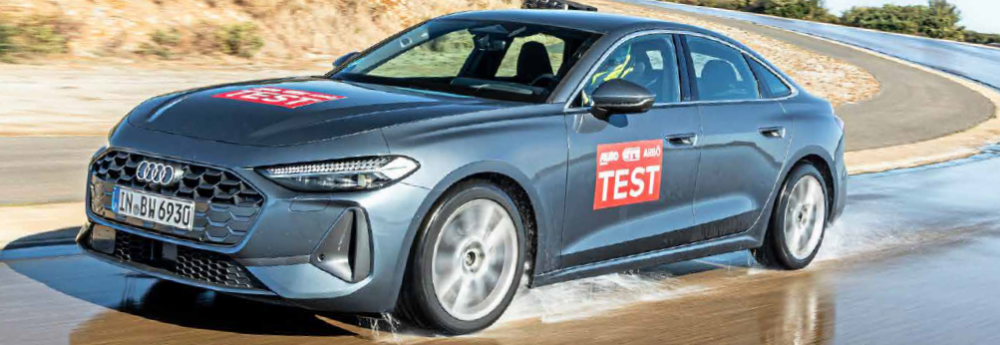
This year they have tested 10 tires in 235/45 R18 using an Audi A5 TS-FI front wheel drive vehicle and the amount of data they provide is fantastic.
The Continental Premium Contact 7 took a clear overall victory, driven primarily by a dominant wet performance. It posted the shortest wet braking distance, the fastest wet handling time, and the highest subjective wet safety score. On dry roads it was strong but not the outright leader - that distinction went to the Goodyear Eagle F1 Asymmetric 6, which topped the dry section with the fastest lap time, best dry safety rating, and a notably sporting, precise character. The gap between the two in the final standings came down to wet grip, where the Continental's advantage was decisive.
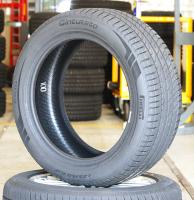
The Pirelli Cinturato C3 was one of the more interesting results, finishing just a single point behind the Goodyear in second place. It delivered a very consistent performance with no significant weak areas across wet and dry tests. Notably, it also returned good predicted tread life and low abrasion figures - an area where Pirelli products have historically been less competitive. The combination of strong wet safety, solid dry handling, and improved durability marks a genuine step forward for the brand's touring-oriented range.
Michelin VS BFGoodrich
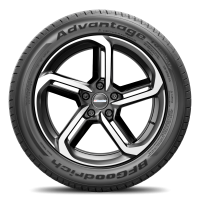
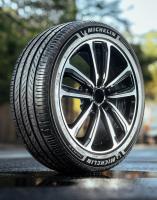
Perhaps the most surprising result in the test is that BF Goodrich, a sub-brand of Michelin, finished ahead of its parent company. The Advantage 2 placed fifth overall while the Michelin Primacy 5 came in sixth. The two tires share technical DNA, which is most visible in their similarly low rolling resistance figures, but they diverge significantly in wet grip. The Primacy 5 appears to be a tire that has been optimised very heavily toward efficiency and longevity - it recorded the lowest rolling resistance, the least abrasion, the longest predicted tread life, and the best comfort score in the entire test. However, this focus has come at the expense of wet performance, where it had longer braking distances, larger steering angles, and a less precise feel than the better tires. It is an excellent choice for drivers who prioritise fuel economy and tire life above all else, but in a test format that weights wet safety heavily, those efficiency gains are not enough to offset the grip deficit. The BF Goodrich, while not as refined in terms of ride quality, struck a slightly better balance between low rolling resistance and usable wet grip.
Dry
On dry roads the field was tightly grouped, with less than three metres separating the best and worst braking distances from 100 km/h. The Continental and Pirelli stopped shortest, while the West Lake needed the most room. Even the weakest result here is not dangerous, but the margins add up in real-world emergency situations.
Dry Braking
Spread: 2.90 M (8.8%)|Avg: 34.35 M
Dry braking in meters (100 - 0 km/h) (Lower is better)
Continental PremiumContact 7
32.80 M
Pirelli Cinturato C3
33.00 M
Goodyear Eagle F1 Asymmetric 6
33.20 M
BFGoodrich Advantage 2
34.10 M
Firestone Roadhawk 2 ENLITEN
34.40 M
Michelin Primacy 5
34.80 M
Maxxis Premitra HP6
34.90 M
Laufenn S Fit EQ Plus
35.30 M
Tercelo Sport D1
35.30 M
Westlake ZuperAce Z 007
35.70 M
Dry handling times were even closer than braking, with barely 1.3 seconds covering all ten tires over a 3.3 km circuit. The Goodyear was the fastest and felt the most precise and dynamic according to the test drivers. The budget tires were not significantly slower on the clock, but subjective assessments noted less confidence and lower safety margins at the limit, particularly from the Tercelo and West Lake.
Dry Handling
Spread: 1.30 s (2.1%)|Avg: 62.12 s
Dry handling time in seconds (Lower is better)
Goodyear Eagle F1 Asymmetric 6
61.40 s
Continental PremiumContact 7
61.70 s
Pirelli Cinturato C3
61.70 s
Firestone Roadhawk 2 ENLITEN
61.80 s
Maxxis Premitra HP6
61.80 s
Laufenn S Fit EQ Plus
62.40 s
Westlake ZuperAce Z 007
62.50 s
Michelin Primacy 5
62.50 s
BFGoodrich Advantage 2
62.70 s
Tercelo Sport D1
62.70 s
Wet
Wet braking is where the biggest and most safety-relevant differences in this test appeared. The Continental stopped in 53.2 metres from 100 km/h, while the Laufenn needed 65.3 metres - a gap of over 12 metres. The three budget tires all recorded significantly longer stopping distances, and the testers noted that where the Continental-equipped car had already stopped, the Laufenn, Tercelo and West Lake were still travelling at over 30 km/h.
Wet Braking
Spread: 12.10 M (22.7%)|Avg: 59.71 M
Wet braking in meters (100 - 0 km/h) (Lower is better)
Continental PremiumContact 7
53.20 M
Goodyear Eagle F1 Asymmetric 6
56.20 M
Pirelli Cinturato C3
56.40 M
BFGoodrich Advantage 2
56.40 M
Michelin Primacy 5
59.60 M
Firestone Roadhawk 2 ENLITEN
60.90 M
Maxxis Premitra HP6
61.90 M
Tercelo Sport D1
63.00 M
Westlake ZuperAce Z 007
64.20 M
Laufenn S Fit EQ Plus
65.30 M
The wet handling results closely mirror the braking test, with the Continental again on top and the budget tires trailing badly. The Pirelli was second fastest and earned high marks for its precise feedback and neutral balance. The Tercelo was the slowest, with the test drivers reporting early breakaway, sharp reactions to lift-off, and the need for very large steering corrections to keep the car on line.
Wet Handling
Spread: 6.30 s (9%)|Avg: 72.72 s
Wet handling time in seconds (Lower is better)
Continental PremiumContact 7
69.80 s
Pirelli Cinturato C3
70.80 s
Firestone Roadhawk 2 ENLITEN
70.90 s
Goodyear Eagle F1 Asymmetric 6
72.20 s
BFGoodrich Advantage 2
72.30 s
Michelin Primacy 5
72.40 s
Maxxis Premitra HP6
74.00 s
Westlake ZuperAce Z 007
74.20 s
Laufenn S Fit EQ Plus
74.50 s
Tercelo Sport D1
76.10 s
The wet circle test isolates lateral grip on a soaked surface. The Continental recorded the quickest time, followed by the Pirelli and Firestone. The Tercelo and West Lake were the weakest, both struggling to generate the same level of side force. The ranking here broadly follows the wet handling results, confirming that the grip differences are consistent rather than circuit-specific.
Wet Circle
Spread: 1.60 s (11.7%)|Avg: 14.57 s
Wet Circle Lap Time in seconds (Lower is better)
Continental PremiumContact 7
13.70 s
Pirelli Cinturato C3
13.90 s
Goodyear Eagle F1 Asymmetric 6
14.10 s
Firestone Roadhawk 2 ENLITEN
14.10 s
Maxxis Premitra HP6
14.60 s
Michelin Primacy 5
14.80 s
BFGoodrich Advantage 2
14.90 s
Laufenn S Fit EQ Plus
15.10 s
Westlake ZuperAce Z 007
15.20 s
Tercelo Sport D1
15.30 s
Straight-line aquaplaning resistance tells a slightly different story to the grip tests. The Firestone posted the highest speed before losing contact with the road, closely followed by the Continental and Michelin. The Tercelo had the lowest threshold. Interestingly, some of the tires that scored well for wet grip - like the Pirelli - were less competitive here, suggesting different tread pattern priorities between drainage and contact patch optimisation.
Straight Aqua
Spread: 4.20 Km/H (5.1%)|Avg: 80.90 Km/H
Float Speed in Km/H (Higher is better)
Continental PremiumContact 7
82.80 Km/H
Firestone Roadhawk 2 ENLITEN
82.60 Km/H
Michelin Primacy 5
82.20 Km/H
Westlake ZuperAce Z 007
81.60 Km/H
Goodyear Eagle F1 Asymmetric 6
80.80 Km/H
Pirelli Cinturato C3
80.70 Km/H
Maxxis Premitra HP6
80.50 Km/H
BFGoodrich Advantage 2
79.70 Km/H
Laufenn S Fit EQ Plus
79.50 Km/H
Tercelo Sport D1
78.60 Km/H
Comfort
The Michelin was rated the most comfortable tire in the test by a clear margin, followed by the Pirelli. Both absorbed road imperfections well and delivered a settled, quiet ride. At the other end, the Tercelo scored lowest for comfort, transmitting more harshness into the cabin. The Laufenn had a soft basic character but was marked down for a slightly uneven rolling quality that undermined the overall impression.
Subj. Comfort
Spread: 6.00 Points (60%)|Avg: 6.50 Points
Subjective Comfort Score (Higher is better)
Michelin Primacy 5
10.00 Points
Pirelli Cinturato C3
9.00 Points
Continental PremiumContact 7
8.00 Points
Westlake ZuperAce Z 007
7.00 Points
Goodyear Eagle F1 Asymmetric 6
6.00 Points
BFGoodrich Advantage 2
6.00 Points
Laufenn S Fit EQ Plus
5.00 Points
Firestone Roadhawk 2 ENLITEN
5.00 Points
Maxxis Premitra HP6
5.00 Points
Tercelo Sport D1
4.00 Points
The Goodyear and Laufenn tied for the lowest pass-by noise at 68 dB(A), while the Pirelli was the loudest at 72 dB(A). The spread of just 4 dB(A) across the field is relatively small in absolute terms, though it is perceptible. The Pirelli's higher noise level is its most notable weakness in an otherwise very strong overall result.
Noise
Spread: 4.00 dB (5.9%)|Avg: 69.50 dB
External noise in dB (Lower is better)
Laufenn S Fit EQ Plus
68.00 dB
Goodyear Eagle F1 Asymmetric 6
68.00 dB
Westlake ZuperAce Z 007
69.00 dB
Michelin Primacy 5
69.00 dB
BFGoodrich Advantage 2
69.00 dB
Tercelo Sport D1
69.00 dB
Continental PremiumContact 7
70.00 dB
Maxxis Premitra HP6
70.00 dB
Firestone Roadhawk 2 ENLITEN
71.00 dB
Pirelli Cinturato C3
72.00 dB
Value
Lab-measured tread life showed large differences across the field. The Michelin led with a predicted 50,000 km, closely followed by the Goodyear at 49,500 km. At the other end, the Tercelo managed just 25,250 km - roughly half the Michelin's figure. The Pirelli posted a strong 44,750 km, which is worth noting as Pirelli products have not traditionally been known for high mileage.
Wear
Spread: 24750.00 KM (49.5%)|Avg: 38700.00 KM
Predicted tread life in KM (Higher is better)
Michelin Primacy 5
50000.00 KM
Goodyear Eagle F1 Asymmetric 6
49500.00 KM
Pirelli Cinturato C3
44750.00 KM
Continental PremiumContact 7
44250.00 KM
Firestone Roadhawk 2 ENLITEN
40000.00 KM
BFGoodrich Advantage 2
39250.00 KM
Laufenn S Fit EQ Plus
36250.00 KM
Maxxis Premitra HP6
29000.00 KM
Westlake ZuperAce Z 007
28750.00 KM
Tercelo Sport D1
25250.00 KM
When purchase price is divided by predicted tread life, the value picture shifts significantly from the headline prices. The Firestone and Goodyear offer the best cost per kilometre among the recommended tires, both around €14 per 1000 km. The Tercelo, despite being the cheapest to buy, is not the cheapest to run - its short tread life pushes its per-kilometre cost above the Firestone. The Maxxis is the most expensive on this metric due to its combination of mid-range pricing and below-average longevity. Please note, I have calculated this metric. It wasn't included in the original article, but I do think it is an incredibly important metric.
Rolling resistance ranged from 6.8 kg/t for the Michelin to 8.2 kg/t for the Tercelo. The testers calculated that the difference between best and worst translates to roughly 0.1 to 0.2 litres per 100 km in additional fuel consumption, or about 0.3 kW at 100 km/h. The BF Goodrich, which shares technology with the Michelin, also scored well here at 7.0 kg/t. The four most efficient tires on this measure were all from the Michelin family or the mid-range brands.
Rolling Resistance
Spread: 1.40 kg / t (20.6%)|Avg: 7.60 kg / t
Rolling resistance in kg t (Lower is better)
Michelin Primacy 5
6.80 kg / t
BFGoodrich Advantage 2
7.00 kg / t
Firestone Roadhawk 2 ENLITEN
7.20 kg / t
Maxxis Premitra HP6
7.40 kg / t
Laufenn S Fit EQ Plus
7.70 kg / t
Pirelli Cinturato C3
7.70 kg / t
Westlake ZuperAce Z 007
7.90 kg / t
Continental PremiumContact 7
8.00 kg / t
Goodyear Eagle F1 Asymmetric 6
8.10 kg / t
Tercelo Sport D1
8.20 kg / t
19,000 km
£1.45/L
8.0 L/100km
--
Annual Difference
--
Lifetime Savings
--
Extra Fuel/Energy
--
Extra CO2
Estimates based on typical driving conditions. Rolling resistance accounts for approximately 20% of IC vehicle fuel consumption and 25% of EV energy consumption. Actual savings vary based on driving style, vehicle weight, road conditions, and tire age. For comparative purposes only. Lifetime savings based on a 40,000km / 25,000 mile tread life.
Abrasion rates, measured as millimetres of tread lost per 1000 km, closely track the tread life predictions. The Michelin and Goodyear wore the least, while the Tercelo and West Lake wore the most - roughly double the rate of the best performers. High abrasion is not just a cost issue; it also means more microplastic and particulate matter released into the environment over the tire's life.
Abrasion
Spread: 0.08 mm/1000km (100%)|Avg: 0.11 mm/1000km
Millimetre of tread lost per 1000km driven (Lower is better)
The Continental Premium Contact 7 is the clear winner of this test, and its advantage comes mainly from wet performance. It collects the highest scores in almost every wet test, including the shortest wet braking distance, the fastest wet handling lap, and the best subjective safety rating. At the grip limit on wet roads it remains predictable and balanced, with a neutral steering character that doesn't demand much from the driver to keep the car on line. If the rear does start to slide, the tire has a natural tendency to stabilise itself rather than requiring quick corrections. On dry roads the Continental isn't the most sporty-feeling tire in the group - it doesn't turn in with the same sharpness as the Goodyear - but it still delivers short braking distances and high safety margins through corners. Comfort is good, with decent noise levels and an ability to absorb road surface imperfections without transmitting harsh impacts through the steering. Predicted tread life and abrasion are both solid, sitting in the upper half of the field. There are no significant weak points anywhere in the test programme.
The Goodyear Eagle F1 Asymmetric 6 is the strongest performer on dry roads, taking the top score in that section of the test. It posts the fastest dry handling lap time and the best dry subjective safety score, and it feels the most precise and responsive of all ten tires when changing direction. Braking distances on dry tarmac are short, and the tire is also quiet, with the equal-lowest pass-by noise reading. On wet roads the Goodyear puts in good results across the board, though at the grip limit it can switch into a slide somewhat abruptly. The important thing is that once it does break away, it recovers and stabilises in a predictable manner, so the initial sharpness of the transition is manageable. The tire also scores well on longevity, with the second-highest predicted tread life in the group and the lowest abrasion rate after the Michelin. Rolling resistance is on the higher side, but overall this is a tire that combines sporting character with genuine long-term durability.
The Pirelli Cinturato C3 finishes just one point behind the Goodyear in the overall ranking, and its strength is a very even spread of results with no real weak areas. On wet roads it is the second-best tire, posting short braking distances and earning a high subjective safety score thanks to precise feedback through the steering and a neutral, progressive balance at the limit. Dry handling is similarly safe and controlled, finishing level with the Continental on lap time, though the character is more about security than outright sportiness. The main drawback is noise - the Pirelli records the highest pass-by noise figure in the test at 72 dB(A). On the positive side, predicted tread life is good and abrasion is low, which helps justify the fairly high purchase price. The tire also returns a reasonable rolling resistance figure. It does lose some ground in the lateral aquaplaning test, but this is a minor point in an otherwise well-rounded performance.
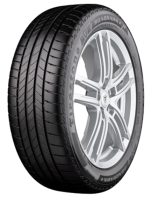
The Firestone Roadhawk 2 performs at a level that puts it in direct competition with the more expensive premium tires, making it the clear price-performance pick. Its standout result is aquaplaning resistance, where it records the best score in both longitudinal and lateral tests. On the wet handling circuit it combines solid grip with a neutral balance, translating into quick lap times. However, wet braking is a weaker point - the stopping distance is noticeably longer than the best in the group, which is worth bearing in mind. On dry roads the Firestone returns a good rolling resistance value and posts competitive lap times. The lab abrasion figure looks relatively high, but the testers note that the wear is concentrated on the inner tread blocks, meaning the legal minimum tread depth across the full width is less affected than the raw number suggests, and the overall tread life prediction remains good. Comfort is rated below average, suggesting the tire transmits more road noise and surface irregularities than the softer-riding options.
The BF Goodrich Advantage 2 is technically related to the Michelin, and this shows up most clearly in its very low rolling resistance - the second-best figure in the test. On wet roads it puts in a decent performance and is only fractionally slower than the Goodyear around the handling circuit, but the subjective feel is quite different. It doesn't respond as quickly to steering inputs, doesn't change direction as sharply, and needs the driver to apply more lock to get the same result. This makes it feel less agile and less precise in quick direction changes. On dry roads the character is similar - the tire works safely but feels somewhat sluggish and doesn't engage the driver. The ride quality is also a step behind the best, as the tire's damping characteristics don't work as well with the Audi A5's suspension setup, leading to a less settled feel over bumps and surface changes. Predicted tread life is mid-pack and abrasion is reasonable. It is a competent all-rounder that saves fuel, but it lacks the sharpness and refinement of the top-ranked tires.
The Michelin Primacy 5 is clearly designed with efficiency and longevity as its top priorities, and the test data confirms this. It records the lowest rolling resistance, the highest predicted tread life, the lowest abrasion, and the best comfort score in the group. It is also one of the quieter tires. However, this focus on durability and low energy loss comes at the expense of wet grip. On wet roads the Michelin needs larger steering angles than the best tires and lacks precision in its responses. Wet braking distances are extended compared to the leaders, which is a meaningful safety concern. On dry roads a strong understeer tendency limits the tire's ability to change direction quickly, holding back its dynamic performance even though outright lap times are reasonable. The high purchase price is the highest in the test, but the long expected life goes some way to offsetting that on a cost-per-kilometre basis. This is a tire for drivers who prioritise fuel economy, low wear, and a quiet, comfortable ride over outright wet grip and sporty handling.
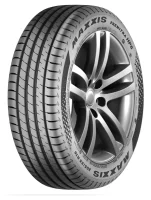
The Maxxis HP6 Premitra 6 is a new product that arrives at a competitive mid-range price, but the test results are mixed. Rolling resistance is good, sitting in the better half of the field, but this is offset by a poor predicted tread life - the second-lowest in the group - and relatively high abrasion. On wet roads the tire struggles. It initially pushes wide with understeer, and then when the front does eventually grip, the rear can lose traction quite suddenly, creating an unpredictable two-stage breakaway character that demands quick reactions from the driver. Wet braking distances are also long. On dry roads the picture is better - the Maxxis posts a quick handling lap time and changes direction well in the slalom - but test drivers noted a slight nervousness through fast corners, a background instability that doesn't inspire full confidence even though the tire remains controllable. The combination of weak wet performance and below-average durability means the tire doesn't offer enough to earn a recommendation despite its reasonable price.
The West Lake Z-007 Zuper Ace doesn't feel sporty on dry roads but manages to avoid any serious problems, keeping the car stable and controllable through the handling tests. The dry braking distance is the longest in the group but still within an acceptable range. On wet roads the tire shows reasonable stability during the handling laps but simply doesn't generate enough grip, particularly under braking, where the stopping distance falls too far behind the leading tires. On the positive side, the drainage performance is good, meaning the tire resists aquaplaning relatively well. The bigger concern is durability - abrasion is very high and the predicted tread life is the third-lowest in the test, which significantly weakens the value case for what is otherwise a budget-priced product. Pass-by noise is low, matching several of the premium tires. Overall the West Lake is let down by a combination of weak wet braking and poor longevity.
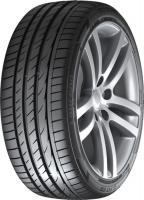
The Laufenn S Fit EQ+ LK01 is the budget offering from Hankook's sub-brand, and the results suggest it doesn't benefit enough from that connection. Its worst result is wet braking, where it records the longest stopping distance of all ten tires - a significant safety concern. On the wet handling circuit it can't hold the intended line through faster corners, running wide and requiring the driver to back off. On the positive side, it does signal its grip limits progressively rather than breaking away without warning, so there is at least some predictability. On dry roads the tire manages passable results, though braking distances are again on the long side and steering precision is mediocre. It ties for the lowest pass-by noise in the test, which is a genuine strength, but the ride is spoiled by a slightly uneven rolling quality that undermines what is otherwise a soft and comfortable basic character. Tread life prediction is below average and abrasion is high. The low purchase price is attractive, but the wet braking deficit is too large to overlook.
The Tercelo Sport D1 is the cheapest tire in the test by a wide margin, but the results show why. It finishes last overall, scoring poorly in almost every area. On wet roads it has the least grip reserve in corners of any tire tested, breaking away from the intended line early and reacting sharply to any lift-off or braking input mid-corner, with the rear stepping out aggressively and requiring large, fast steering corrections to catch. This kind of behaviour is demanding even for experienced drivers and could easily lead to a loss of control in an emergency situation. Wet braking distances are also long. On dry roads the tire manages a passable handling lap time and the braking distances, while extended, are not dangerous. However, it also records the worst rolling resistance, the highest abrasion rate, and the lowest predicted tread life of all ten tires. That last point is particularly damaging to its value proposition - the short life expectancy means the low purchase price doesn't translate into low running costs. The testers concluded that buying this tire does not represent good value despite the initial saving.



Discussion