The German publication Auto Zeitung have just published their 2017 all season tire test, and it might be the most UK relevant tire test we've seen this year.
First, they're testing in the most popular 205/55 R16 size using a FWD Audi A3, which represents a large slice of our car market. Secondly, they've managed to include ten all season patterns, which is more than most all season tire tests manage, but the icing on the cake is the winter tire included for reference is the multiple award winning Continental WinterContact TS 860.
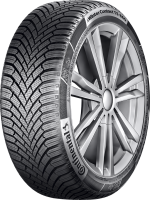
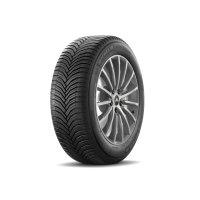
We've mentioned a number of times that the Continental WinterContact range is not only consistently the best tested winter tires on the market, but could also be considered as the best "winter-bias all season tire" available due to its remarkable ability to work well in the snow, and the wet. This test confirms that, but it faces close competition from the only summer-bias all season tire on the market, the Michelin CrossClimate
Dry
There are no surprises during the dry testing. The summer-bias Michelin CrossClimate makes good on its promise of behaving like a summer tire in dry conditions, and aces both the dry braking and dry handling tests by some margin.
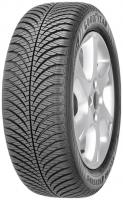
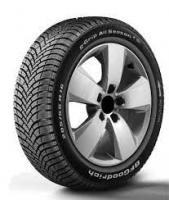
BF Goodrich have a good showing, placing second under dry braking and third in dry handling, and the Continental WinterContact TS860 and Goodyear Vector 4Season Gen 2 both finish mid pack in a closely contested group.
Dry Braking
Spread: 7.80 M (19.8%)|Avg: 44.73 M
Dry braking in meters (Lower is better)
Michelin CrossClimate
39.40 M
BFGoodrich g Grip All Season 2
42.90 M
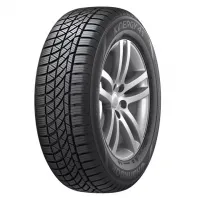
Hankook Kinergy 4S
43.80 M
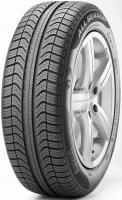
Pirelli Cinturato AllSeason
44.60 M
Vredestein Quatrac 5
45.10 M
Continental WinterContact TS 860
45.10 M
Nokian WeatherProof
45.30 M
Goodyear Vector 4 Seasons Gen 2
45.50 M
Falken EUROALL SEASON AS200
46.40 M
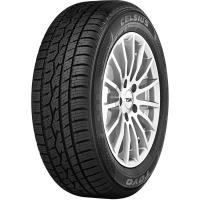
Toyo Celsius
46.70 M
Uniroyal AllSeasonExpert
47.20 M
Dry Handling
Spread: 1.20 s (2%)|Avg: 60.33 s
Dry handling time in seconds (Lower is better)
Michelin CrossClimate
59.70 s
Vredestein Quatrac 5
59.80 s
BFGoodrich g Grip All Season 2
60.00 s
Hankook Kinergy 4S
60.10 s
Toyo Celsius
60.10 s
Falken EUROALL SEASON AS200
60.40 s
Goodyear Vector 4 Seasons Gen 2
60.40 s
Continental WinterContact TS 860
60.60 s
Pirelli Cinturato AllSeason
60.70 s
Uniroyal AllSeasonExpert
60.90 s
Nokian WeatherProof
60.90 s
Wet
The wet braking confirms why the Continental WinterContact TS860 is currently unbeaten in winter tire testing, it wins the wet handling lap by over a second, and finishes joint first in wet braking. While the Michelin couldn't quite match the Continental and Goodyear during wet braking, it still finishes a respectable fourth place overall, and places second overall in wet handling.
Wet Braking
Spread: 11.20 M (20.7%)|Avg: 59.82 M
Wet braking in meters (Lower is better)
Goodyear Vector 4 Seasons Gen 2
54.10 M
Continental WinterContact TS 860
54.10 M
Pirelli Cinturato AllSeason
58.30 M
Michelin CrossClimate
58.40 M
Falken EUROALL SEASON AS200
59.10 M
BFGoodrich g Grip All Season 2
59.50 M
Uniroyal AllSeasonExpert
60.20 M
Vredestein Quatrac 5
61.10 M
Nokian WeatherProof
63.10 M
Toyo Celsius
64.80 M
Hankook Kinergy 4S
65.30 M
Wet Handling
Spread: 4.10 s (4.6%)|Avg: 91.55 s
Wet handling time in seconds (Lower is better)
Continental WinterContact TS 860
88.70 s
Michelin CrossClimate
89.80 s
BFGoodrich g Grip All Season 2
90.90 s
Falken EUROALL SEASON AS200
91.40 s
Vredestein Quatrac 5
91.50 s
Toyo Celsius
92.10 s
Hankook Kinergy 4S
92.40 s
Goodyear Vector 4 Seasons Gen 2
92.40 s
Uniroyal AllSeasonExpert
92.50 s
Pirelli Cinturato AllSeason
92.50 s
Nokian WeatherProof
92.80 s
Straight Aqua
Spread: 12.40 Km/H (16.7%)|Avg: 68.13 Km/H
Float Speed in Km/H (Higher is better)
Continental WinterContact TS 860
74.30 Km/H
Uniroyal AllSeasonExpert
71.70 Km/H
Pirelli Cinturato AllSeason
71.10 Km/H
Michelin CrossClimate
69.90 Km/H
Nokian WeatherProof
69.50 Km/H
Hankook Kinergy 4S
67.90 Km/H
BFGoodrich g Grip All Season 2
66.60 Km/H
Falken EUROALL SEASON AS200
66.20 Km/H
Goodyear Vector 4 Seasons Gen 2
66.00 Km/H
Vredestein Quatrac 5
64.30 Km/H
Toyo Celsius
61.90 Km/H
Snow
The Goodyear all season tire managed to beat the Continental winter tire during the snow braking test, and the Nokian all season tire just edges out the Continental during snow handling. The summer bias Michelin managed a respectable fifth place during the snow braking, despite its summer bias, but the lack of sipes were highlighted in the snow handling test, where the Michelin could only finish ninth overall.
Snow Braking
Spread: 3.70 M (17.5%)|Avg: 22.60 M
Snow braking in meters (Lower is better)
Goodyear Vector 4 Seasons Gen 2
21.10 M
Continental WinterContact TS 860
21.20 M
Nokian WeatherProof
21.40 M
BFGoodrich g Grip All Season 2
21.70 M
Uniroyal AllSeasonExpert
21.80 M
Michelin CrossClimate
23.00 M
Hankook Kinergy 4S
23.30 M
Vredestein Quatrac 5
23.30 M
Toyo Celsius
23.40 M
Falken EUROALL SEASON AS200
23.60 M
Pirelli Cinturato AllSeason
24.80 M
Snow Handling
Spread: 6.70 s (6.9%)|Avg: 101.18 s
Snow handling time in seconds (Lower is better)
Nokian WeatherProof
97.00 s
Continental WinterContact TS 860
97.10 s
Uniroyal AllSeasonExpert
98.40 s
Goodyear Vector 4 Seasons Gen 2
100.60 s
BFGoodrich g Grip All Season 2
101.10 s
Toyo Celsius
101.90 s
Pirelli Cinturato AllSeason
102.90 s
Falken EUROALL SEASON AS200
103.20 s
Vredestein Quatrac 5
103.50 s
Michelin CrossClimate
103.60 s
Hankook Kinergy 4S
103.70 s
Other
The Nokian proved to have the lowest fuel use on test, and all eleven tires were within 2db during the external drive by noise test.
Rolling Resistance
Spread: 2.01 kg / t (25.9%)|Avg: 8.72 kg / t
Rolling resistance in kg t (Lower is better)
Nokian WeatherProof
7.77 kg / t
Goodyear Vector 4 Seasons Gen 2
7.87 kg / t
Continental WinterContact TS 860
8.16 kg / t
BFGoodrich g Grip All Season 2
8.41 kg / t
Pirelli Cinturato AllSeason
8.63 kg / t
Michelin CrossClimate
8.67 kg / t
Vredestein Quatrac 5
8.75 kg / t
Uniroyal AllSeasonExpert
8.89 kg / t
Toyo Celsius
9.36 kg / t
Falken EUROALL SEASON AS200
9.64 kg / t
Hankook Kinergy 4S
9.78 kg / t
19,000 km
£1.45/L
8.0 L/100km
--
Annual Difference
--
Lifetime Savings
--
Extra Fuel/Energy
--
Extra CO2
Estimates based on typical driving conditions. Rolling resistance accounts for approximately 20% of IC vehicle fuel consumption and 25% of EV energy consumption. Actual savings vary based on driving style, vehicle weight, road conditions, and tire age. For comparative purposes only. Lifetime savings based on a 40,000km / 25,000 mile tread life.
I live in central Poland (flat). During last 5 years We've only experienced rather harsh winter once. Usually snow lasts less than a month. It's more like wet and cold or very cold. I have a trouble with my Mazda mx5. Obviously I can't use HP summer tires (Michelin PS4) cause this would be absolutely lethal. I use Goodyear UG 8 performace, but it has plenty of disadvantages. The tradeoff in dry performance is noticeable. The real issue is that the car is very tail happy. This might be rather amusing, but it just kills the tires way too fast. During last winter I lost 5mm of tread. For this year I bought two new tires, but this solution is an enviromental and financial disaster, and I believe it is not worth it. The other issue is size (205/45/17) which strongly cuts availability of decent winter tires. I feel like manufacturers sort of gave up this size (UG8 performance debuted sth like 8 years ago). Take all of this into account, and I started to wonder if I can use all season tires instead of winter tires? For example "quatrac 5" cost half the money of my winter tires, and probably runs much better on dry/wet roads. So the question is: What would be your recommendation for performace/fun car that even in winter gives you this "fun" factor, and which does not have to be used in winter storms? Please take into account this horrible 205/45/17.
I bought crossclimate+ for my daily car (Fiat 500). This winter will show whether it was a crazy choice or not. But since I have those PilotSport4 for Mazda, I don't care THAT much for hot summer performance. My previous tires (for 500) were quatrac 3, and I was more than happy with them. The only issue was 25+ degrees celsius performance. That's why I was thinking about Vredesteins.....but 185 bhp RWD may be different than small Fiat ;) I have to make a choice for the next winter. There's no way I'll be paying for 2 expensive winter tires every single year.
So if you were me would you stay with UG8 performance or switched to quatrac 5?
I live in Lofoten islands, Northern Norway. Wet and relatively mild artic climate locally, yet icy roads mid winter. For late winter/early spring (Mid-late March to mid May) and late automn (october to end of november), I find it hard to decide whether or not to buy a set of Michelin CrossClimate / Continental Winter Contact TS 860. Local roads are really narrow with many unobtrusive and sharp curves. To me, ice and slush is a bigger concern than snow. I usually drive with "nordic" studded tires from November 1 to May 1. As you probably know, studded tires is not the king of dry or wet roads and because of the small margins on those narrow roads, I guess Michelin CrossClimate or Continental Winter Contact could be the answer. Question is, is it safe to drive on those tires when I occasionally encounter ice or slushy (a blend of ice/water and snow) roads, typically in better parts of the road, in speed 46 to 50 mph?
Without having experienced your climates it would be difficult to answer with a high level of accuracy, but in your scenario I'd certainly be looking at the TS860 rather than the CrossClimate as it has better ice performance. As I'm sure you're aware, the ice performance of a central european winter is nowhere near a studded tire, so you would still need to be mindful when driving.
Thank you! I have now looked into Continental WinterContact TS 860 and a review in Auto Express comparing all season tires, CrossClimate and the TS 860. I have no doubt that WinterContact TS 860 is the best choice. I plan to use it from April to end of May and from September to end of October.
Thank you again for pushing me in that direction (the TS860 rather than CrossClimate) :)
I finally decided to buy a set of Continental WinterContact TS 860 S. Not so many options in wheel sizes for my Subaru Outback. I know that the TS 860 S is a little bit more tweaked for performance on dry/wet and a little less on snow/ice. My intention is still not to replace my fantastic studded tires (Nokian Hakkapeliitta 9) in winter. Just to increase security and peace of mind in spring and autumn. I plan to change to summer tires in June, when the temperatures is higher.
Shame that very few of these are Star Rated for use on BMW cars and therefore not compatible with the X-Drive system, which I suspect is a growing market.
If you discount rolling resistance, which to be fair would be offset by price difference, the Falken AS200 is also a top-end tire deserved of a higher position. Take the top 4 all season, find the results from the magazine and compare; Dry braking is its worst attribute but is below 1 meter longer compared to vector and comparable also to weatherproof, the wet braking is essentially the same as the crossclimate as is snow behaviour, whilst wet braking and handling are better than weatherproof, and wet handling better than the vector...
The only top end all season tires are the CrossClimate and the Vector. Beacause they excel in some tests and are not very bad in others. You compare the Falken's dry braking with the Vector and the wet braking with the CrossClimate. In my opinion, that it's nonsense. Do it the other way around and you will find out why the Falken it's a mediocre tire (as all the other tires for that matter). Not terrible, but it is not especially good at anything.
Yes its a jack of all trades master of none. However what i was saying is that performance-wise its right in the thick of it, and compared differing fields because ALL the tires have mixed behaviours across the spectrum. Take the higher ranking Uniroyal, its much worse in the dry and worse in the wet grip-wise, but picks up points for hydroplaning in the wet. The snow performance is better, but on the whole the Falken is a more balanced tire than the Uniroyal for central europe/uk use. I was just raising the point that, rolling resistance aside which is more than offset by the price, tge falken is worth more consideration to purchasers than its 7th place may suggest.
Note: The BFGoodrich is 100% exactly the same tire as the Kleber Quadraxer 2... I think it's the best choice given the fact it's quite a bit cheaper than the CC from Michelin and lasts as long...
The crucial point is not that it is cheaper & lasts longer than superior rivals but that it is not greatly inferior in performance. Personally, I am always willing to pay for superior performance on parameters I prioritise.



I live in central Poland (flat). During last 5 years We've only experienced rather harsh winter once. Usually snow lasts less than a month. It's more like wet and cold or very cold.
I have a trouble with my Mazda mx5. Obviously I can't use HP summer tires (Michelin PS4) cause this would be absolutely lethal. I use Goodyear UG 8 performace, but it has plenty of disadvantages. The tradeoff in dry performance is noticeable. The real issue is that the car is very tail happy. This might be rather amusing, but it just kills the tires way too fast. During last winter I lost 5mm of tread. For this year I bought two new tires, but this solution is an enviromental and financial disaster, and I believe it is not worth it. The other issue is size (205/45/17) which strongly cuts availability of decent winter tires. I feel like manufacturers sort of gave up this size (UG8 performance debuted sth like 8 years ago).
Take all of this into account, and I started to wonder if I can use all season tires instead of winter tires? For example "quatrac 5" cost half the money of my winter tires, and probably runs much better on dry/wet roads.
So the question is:
What would be your recommendation for performace/fun car that even in winter gives you this "fun" factor, and which does not have to be used in winter storms?
Please take into account this horrible 205/45/17.
In that size the only thing close to a summer tire is the CrossClimate+, but I'm not sure if that'll have the snow / ice grip you need
I bought crossclimate+ for my daily car (Fiat 500). This winter will show whether it was a crazy choice or not. But since I have those PilotSport4 for Mazda, I don't care THAT much for hot summer performance.
My previous tires (for 500) were quatrac 3, and I was more than happy with them. The only issue was 25+ degrees celsius performance. That's why I was thinking about Vredesteins.....but 185 bhp RWD may be different than small Fiat ;)
I have to make a choice for the next winter. There's no way I'll be paying for 2 expensive winter tires every single year.
So if you were me would you stay with UG8 performance or switched to quatrac 5?
Honestly, I'm not sure there will be a huge difference. There's a new Quatrac 5 replacement due next year so if you can wait, I'd wait for that
Thank you for your opinion, which I highly value. So I'll wait.
Thanks to your website and videos I chose both Michelins, and am happy with them.
PS PilotSport4 is probably the best tire mx5 can ever get.
Thank you for the kind words, I'm glad you're getting on with your tires :)
I live in Lofoten islands, Northern Norway. Wet and relatively mild artic climate locally, yet icy roads mid winter. For late winter/early spring (Mid-late March to mid May) and late automn (october to end of november), I find it hard to decide whether or not to buy a set of Michelin CrossClimate / Continental Winter Contact TS 860. Local roads are really narrow with many unobtrusive and sharp curves. To me, ice and slush is a bigger concern than snow. I usually drive with "nordic" studded tires from November 1 to May 1. As you probably know, studded tires is not the king of dry or wet roads and because of the small margins on those narrow roads, I guess Michelin CrossClimate or Continental Winter Contact could be the answer. Question is, is it safe to drive on those tires when I occasionally encounter ice or slushy (a blend of ice/water and snow) roads, typically in better parts of the road, in speed 46 to 50 mph?
Without having experienced your climates it would be difficult to answer with a high level of accuracy, but in your scenario I'd certainly be looking at the TS860 rather than the CrossClimate as it has better ice performance. As I'm sure you're aware, the ice performance of a central european winter is nowhere near a studded tire, so you would still need to be mindful when driving.
Thank you! I have now looked into Continental WinterContact TS 860 and a review in Auto Express comparing all season tires, CrossClimate and the TS 860. I have no doubt that WinterContact TS 860 is the best choice. I plan to use it from April to end of May and from September to end of October.
Thank you again for pushing me in that direction (the TS860 rather than CrossClimate) :)
No problem, glad you find the site useful :) Let me know how you find them!
I finally decided to buy a set of Continental WinterContact TS 860 S. Not so many options in wheel sizes for my Subaru Outback. I know that the TS 860 S is a little bit more tweaked for performance on dry/wet and a little less on snow/ice. My intention is still not to replace my fantastic studded tires (Nokian Hakkapeliitta 9) in winter. Just to increase security and peace of mind in spring and autumn. I plan to change to summer tires in June, when the temperatures is higher.
Let me know how you get on, you couldn't have picked a better Euro winter tire for the job :)
Shame that very few of these are Star Rated for use on BMW cars and therefore not compatible with the X-Drive system, which I suspect is a growing market.
If you discount rolling resistance, which to be fair would be offset by price difference, the Falken AS200 is also a top-end tire deserved of a higher position. Take the top 4 all season, find the results from the magazine and compare; Dry braking is its worst attribute but is below 1 meter longer compared to vector and comparable also to weatherproof, the wet braking is essentially the same as the crossclimate as is snow behaviour, whilst wet braking and handling are better than weatherproof, and wet handling better than the vector...
The only top end all season tires are the CrossClimate and the Vector. Beacause they excel in some tests and are not very bad in others.
You compare the Falken's dry braking with the Vector and the wet braking with the CrossClimate. In my opinion, that it's nonsense. Do it the other way around and you will find out why the Falken it's a mediocre tire (as all the other tires for that matter). Not terrible, but it is not especially good at anything.
Yes its a jack of all trades master of none.
However what i was saying is that performance-wise its right in the thick of it, and compared differing fields because ALL the tires have mixed behaviours across the spectrum. Take the higher ranking Uniroyal, its much worse in the dry and worse in the wet grip-wise, but picks up points for hydroplaning in the wet. The snow performance is better, but on the whole the Falken is a more balanced tire than the Uniroyal for central europe/uk use.
I was just raising the point that, rolling resistance aside which is more than offset by the price, tge falken is worth more consideration to purchasers than its 7th place may suggest.
I have always told my friends. They didn´t believe me that AllSeason is not, what is written on the sidewall.
AllSeason has to be choosed more carefully, by weighing the pros and cons of each tested tire.
Finally Continental has released their new AllSeason tire. But just one fucking year to late for me. I have bought 8 new tires.
Looking at the tests, while the new Continental AllSeasonContact is a great performing tire, it seems to have some issues with wear.
The Michelin tire is CrossClimate + i think not CrossClimate.
No, it's the CrossClimate 1st gen
http://www.autozeitung.de/g...
The Auto Bild test is CrossClimate+, though I've listed that one as CrossClimate too so I need to update that!
Note: The BFGoodrich is 100% exactly the same tire as the Kleber Quadraxer 2... I think it's the best choice given the fact it's quite a bit cheaper than the CC from Michelin and lasts as long...
The crucial point is not that it is cheaper & lasts longer than superior rivals but that it is not greatly inferior in performance. Personally, I am always willing to pay for superior performance on parameters I prioritise.