Do you want to know what all season tire is best for year round driving whatever the weather? In this test we take nine of the very best 205/55 R16 all season tires on the market, plus a well regarded summer and winter tire as references, to see exactly what tire performs best in the dry, wet, snow, comfort, noise and rolling resistance tests!
Testing Methodology
Test Driver
Jonathan Benson
Tire Size
205/55 R16
Test Location
Professional Proving Ground
Test Year
2021
Tires Tested
11
Show full testing methodologyHide methodology
Every tire is tested using calibrated instrumented measurement and structured subjective assessment. Reference tires are retested throughout each session to correct for changing conditions, ensuring fair, repeatable comparisons. Multiple reference sets are used where needed so that control tire wear does not affect accuracy.
We use professional-grade testing equipment including GPS data loggers, accelerometers, and calibrated microphones. All tires are broken in and conditioned before testing begins. For full details on our equipment, preparation process, and calibration procedures, see our complete testing methodology.
Categories Tested
Dry Braking
For dry braking, I drive the test vehicle at an entry speed of 110 km/h and apply full braking effort to a standstill with ABS active on clean, dry asphalt. I typically use an 100–5 km/h measurement window. My standard programme is five runs per tire set where possible, although the sequence can extend to as many as fifteen runs if conditions and tire category justify it. I analyse the full set of runs and discard statistical outliers before averaging. Reference tires are run repeatedly throughout the session to correct for changing conditions.
Dry Handling
For dry handling, I drive at the limit of adhesion around a dedicated handling circuit with ESC disabled where possible so I can assess the tire's natural balance, transient response, and limit behaviour without electronic intervention masking the result. I usually complete between two and five timed laps per tire set, depending on the circuit, tire type, and consistency of conditions. I exclude laps affected by clear driver error or obvious environmental inconsistency. Control runs are carried out frequently throughout the session, and I often use multiple sets of control tires so that wear on the references does not become a meaningful variable. For more track-focused products, I also do endurance testing, which is a set number of laps at race pace to determine tire wear patterns and heat resistance over longer driving.
Wet Braking
For wet braking, I drive the test vehicle at an entry speed of 88 km/h and apply full braking effort to a standstill with ABS active on an asphalt surface with a controlled water film. I typically use an 80–5 km/h measurement window to isolate tire performance from variability in the initial brake application. My standard programme is eight runs per tire set where possible, although the sequence can extend to as many as fifteen runs if conditions and tire category justify it. I analyse the full set of runs and discard statistical outliers before averaging. To correct for changing conditions, I run reference tires repeatedly throughout the session — in wet testing, typically every three candidate test sets.
Wet Braking - Cool
This test follows the same procedure as the standard wet braking test — entry speed of 88 km/h, full ABS braking, VBOX measurement over the 80–5 km/h window — but is conducted at cooler ambient temperatures, typically below 7°C. The lower temperature allows assessment of how each tire's compound performs when cold, which is particularly relevant for all-season and winter tire evaluation. Reference tires are run at the same frequency as the standard wet braking programme.
Wet Handling
For wet handling, I drive at the limit of adhesion around a dedicated handling circuit. I generally use specialist wet circuits with kerb-watering systems designed to maintain a consistent surface condition. ESC is disabled where possible so I can assess the tire's natural balance, transient response, and limit behaviour without electronic intervention masking the result. I usually complete between two and five timed laps per tire set, depending on the circuit, tire type, and consistency of conditions. I exclude laps affected by clear driver error or obvious environmental inconsistency. Control runs are carried out frequently throughout the session, and I often use multiple sets of control tires so that wear on the references does not become a meaningful variable.
Straight Aqua
To measure straight-line aquaplaning resistance, I drive one side of the vehicle through a water trough of controlled depth, typically around 7 mm, while the opposite side remains on dry pavement. I enter at a fixed speed and then accelerate progressively. I define aquaplaning onset as the point at which the wheel travelling through the water exceeds a specified slip threshold relative to the dry-side reference wheel. I usually perform four runs per tire set and average the valid results.
Curved Aquaplaning
For curved aquaplaning, I use a circular track, typically around 100 metres in diameter, with a flooded arc of controlled water depth, usually about 7 mm. The vehicle is instrumented with GPS telemetry and a tri-axial accelerometer. I drive through the flooded section at progressively increasing speed, typically in 5 km/h increments, and record the minimum sustained lateral acceleration at each step. The test continues until lateral acceleration collapses, indicating complete aquaplaning. The result is expressed as remaining lateral acceleration in m/s² as speed rises.
Snow Braking
For snow braking, I drive the test vehicle at an entry speed of 50 km/h and apply full braking effort to a standstill with ABS active on a groomed, compacted snow surface, measuring 45-5 km/h. I generally use a wide VDA (vehicle dynamic area) and progressively move across the surface between runs so that no tire ever brakes on the same piece of snow twice. My standard programme is twelve runs per tire set, although the sequence can extend further if the data justify it. I analyse the full set of runs and discard statistical outliers before averaging. The surface is regularly groomed throughout the session. To correct for changing snow surface conditions, I run reference tires repeatedly — typically every two candidate test sets.
Snow Traction
For snow traction, I accelerate the vehicle from rest on a groomed snow surface with traction control active and measure speed and time using GPS telemetry. I typically use a 5–35 km/h measurement window to reduce the influence of launch transients and powertrain irregularities. I use a wide VDA (vehicle dynamic area) and progressively move across the surface between runs so that no tire ever accelerates on the same piece of snow twice. The surface is regularly groomed throughout the session. I complete multiple runs per tire set and average the valid results. Reference tires are run typically every two candidate test sets to correct for changing snow surface conditions.
Snow Handling
For snow handling, I drive at the limit of adhesion around a dedicated snow handling circuit with ESC disabled where possible. The circuit is groomed and prepared after every run while tires are being changed, so each set runs on a consistently prepared surface. I usually complete between two and five timed laps per tire set, excluding laps affected by clear driver error or obvious environmental inconsistency. Because snow surfaces degrade more rapidly than asphalt, control runs are carried out more frequently — typically every two candidate test sets.
Snow Circle
For snow lateral grip testing, I use a circular snow track of fixed radius, broadly aligned with ISO 4138 principles. The surface is regularly groomed throughout the session. I progressively increase speed until the maximum sustainable cornering speed is reached. I normally record multiple laps in both clockwise and counterclockwise directions to reduce the influence of surface bias. Because snow surfaces degrade more rapidly, the control tire is retested at regular intervals and I often use multiple sets of control tires.
Subj. Comfort
To assess comfort, I drive on a wide range of road surfaces (often dedicated comfort tracks at test facilities) at speeds from 50 to 120 km/h, including smooth motorway, coarse surfaces, expansion joints, broken pavement, and sharp-edged obstacles. I evaluate primary ride quality, secondary ride quality, impact harshness, seat-transmitted vibration, and the tire's ability to absorb sharp inputs. Ratings are assigned on a 1–10 scale relative to the reference tire.
Noise
I measure external pass-by noise in accordance with UNECE Regulation 117 and ISO 13325 using the coast-by method on a compliant test surface. Calibrated microphones are positioned beside the test lane, and the vehicle coasts through the measurement zone under controlled conditions. I record the maximum A-weighted sound pressure level in dB(A), complete multiple runs over the relevant speed range, and normalise the result to the reference speed required by the procedure.
Rolling Resistance
Rolling resistance is measured under controlled laboratory conditions in accordance with ISO 28580 and UNECE Regulation 117 Annex 6. The tire is mounted on a test wheel and loaded against a large-diameter steel drum. After thermal stabilisation at the prescribed test speed, rolling resistance force is measured at the spindle and corrected according to the relevant procedure. The result is expressed as rolling resistance coefficient, typically in kg/tonne.
How each category is weighted in the overall score:
Dry25%
Dry Braking55%
Dry Handling40%
Subj. Dry Handling5%
Wet35%
Wet Braking25%
Wet Braking - Cool25%
Wet Handling25%
Subj. Wet Handling5%
Straight Aqua10%
Curved Aquaplaning10%
Snow25%
Snow Braking45%
Snow Traction15%
Snow Handling35%
Snow Circle5%
Comfort5%
Subj. Comfort50%
Subj. Noise50%
Value10%
Rolling Resistance100%
In last year's Tire Reviews all season tire test, the new Goodyear Vector 4Seasons Gen 3 reigned supreme, narrowly beating a very competitive pack to be best overall across dry, wet, snow, comfort and rolling resistance testing.
In the last 12 months, a lot has changed in the all season tire market! The only tires in this year's test which featured in last years are the test winning Goodyear Vector 4Seasons Gen-3 and the excellent Continental AllSeasonContact.
Alongside those tires we have the brand new Nokian SeasonProof and Vredestein Quatrac, and the updated Avon AS7 Gen 2, Bridgestone WeatherControl A005 EVO, Pirelli Cinturato All Season SF2 the first test of the Michelin CrossClimate 2!
As with last year's test, we have a reference summer and winter tire in the tests to highlight exactly where all season tires lose out to their more specific cousins!
Dry
The lap at Wachauring is short, and has only one really hard braking zone, so is a good overview of the lateral grip of the tires, and we conducted the dry and wet testing around 2-4c air temperature.
The worst tire on test, and get used to this, was the "star performer", which definitely didn't live up to its name. It didn't feel horrible to drive, and didn't give you any nasty surprises, it just lacked grip everywhere and when you pushed a little bit too hard, it seemed to slide forever.
Next up was Avon and Nokian. The Avon felt nicely summer like with a good response to the inputs you made, but it didn't quite have the grip to back up the sporty feel, and the Nokian was another tire that was really well balanced, enjoyable to drive quickly and progressive, it just couldn't quite match the best of this very competitive group.
The Bridgestone and Goodyear were next. The Bridgestone was lacking feedback and steering precision, but was actually felt grippy for the first half lap, but then the heat build up got to it and the grip fell away. I'm not sure how I feel about this as you would never track day it, but it was the tire that came off the track looking the most worn, by quite a margin.
The Goodyear felt very similar, not the greatest feedback or steering precision, and was another that didn't like the heat, but it looked great after the laps in comparison.
Pirelli and Conti were next, both having good levels of grip, with the pirelli handling ok, but the conti surprisingly sporty and dynamic feeling, I really enjoyed it.
The Vredestein in second place had impressive grip, but felt a bit like a blunt instrument as it didn't give you a whole lot of information about what it was up to, and the original king of the dry, the Michelin CrossClimate, retained it's crown with the new version, but only narrowly in terms of time. In terms of feedback, it still felt the most summer like.
The reference winter and summer tire felt as you would expect. The winter tire was a lovely friendly experience, but as with any tire intended for winter, it just didn't have the grip to do dry handling laps, and the summer tire was the fastest, and felt the fastest, making the car feel more tight and alive, but in this 16" size there wasn't a huge difference between the summer and the best feeling all season tires.
Dry Handling
Spread: 1.90 s (4.3%)|Avg: 46.05 s
Dry handling time in seconds (Lower is better)
Reference Summer
44.70 s
Michelin CrossClimate 2
45.80 s
Vredestein Quatrac
45.83 s
Continental AllSeasonContact
45.91 s
Pirelli Cinturato All Season SF2
46.00 s
Goodyear Vector 4Seasons Gen 3
46.11 s
Bridgestone Weather Control A005 E
46.21 s
Nokian SeasonProof
46.39 s
Reference Winter
46.42 s
Avon AS7 Gen 2
46.56 s
Star Performer SPTS AS
46.60 s
Dry Braking again had the summer tire in the lead, ahead of the Michelin and Pirelli.
Dry Braking
Spread: 7.20 M (20%)|Avg: 39.21 M
Dry braking in meters (100 - 5 km/h) (Lower is better)
Dry Braking: Safety Impact: Best vs Worst Tire
Wet
The slowest tire of wet handling was again the budget Star Performer. Weirdly it felt quite balanced, but balanced with no grip, meaning you were sliding everywhere, constantly, consistently. Fun, but not fast.
The next group was Nokian, Avon and Continental around 5% off, or 2.5 seconds. All three of these tires had very similar subjective notes, I enjoyed driving on them all, they all had a safe, neutral balance, but they just didn't quite have the grip of the best.
Pirelli and Michelin come in at fifth and fourth place, another half second quicker than the previous group. These tires weren't quite as enjoyable to drive on as the previous two, with neither tire giving great levels of feedback, but the grip was there and so was the time.
Goodyear and Bridgestone in third and second both around 1.5 seconds off the best and both much nicer to drive. The goodyear was extremely compliant and even tire with good cornering grip and a stable rear, giving you lots of confidence to push hard, but it gave you no surprises even when pushing on. The Bridgestone, well this felt mega under braking, and had great traction, but the cornering couldn't match. If it could, maybe it would have matched the test winning Vredestein.
The Vredestein felt like a different category of tire it had so much grip, and the grip was really rounded. It was the most sporty of the bunch, the most fun of the bunch, the easiest to drive fast of the bunch, just so much fun to drive.
The summer tire was a little closer on time, but less fun. Like in the dry the turn in was a little more positive, but not massively so in this 16" size, and the main difference was when the grip dropped away, it dropped away more quickly than the all seasons and you felt like you were fighting the car for grip. At the test temperature of 3c the tire felt nervous, like it was sitting on the surface of the road rather than keying in.
Wet Handling
Spread: 6.67 s (13.8%)|Avg: 50.86 s
Wet handling time in seconds (Lower is better)
Vredestein Quatrac
48.48 s
Reference Summer
49.96 s
Bridgestone Weather Control A005 E
49.98 s
Goodyear Vector 4Seasons Gen 3
50.18 s
Michelin CrossClimate 2
50.65 s
Pirelli Cinturato All Season SF2
50.69 s
Continental AllSeasonContact
50.88 s
Avon AS7 Gen 2
50.98 s
Nokian SeasonProof
51.11 s
Reference Winter
51.39 s
Star Performer SPTS AS
55.15 s
Wet braking was conducted at 4c at the track and at 15c at Nokians test facility in Finland. The biggest change in the order was the summer tire, which moved from being one of the worst on test at 4c to the best at 15c, showing just how much temperature affects grip!
Wet Braking - Cool
Spread: 9.65 M (32.8%)|Avg: 32.24 M
Wet braking at cooler temperature in meters (80 - 5 km/h) (Lower is better)
Wet Braking - Cool: Safety Impact: Best vs Worst Tire
Wet Braking
Spread: 7.60 M (30.5%)|Avg: 28.29 M
Wet braking in meters (80 - 5 km/h) (Lower is better)
Wet Braking: Safety Impact: Best vs Worst Tire
Straight aquaplaning data can be found below, and curved aquaplaning data can be found in the overall results at the bottom of the page.
Straight Aqua
Spread: 11.70 Km/H (12.7%)|Avg: 86.48 Km/H
Float Speed in Km/H (Higher is better)
Michelin CrossClimate 2
92.20 Km/H
Pirelli Cinturato All Season SF2
88.90 Km/H
Goodyear Vector 4Seasons Gen 3
88.50 Km/H
Vredestein Quatrac
87.90 Km/H
Continental AllSeasonContact
87.80 Km/H
Nokian SeasonProof
87.80 Km/H
Avon AS7 Gen 2
87.30 Km/H
Bridgestone Weather Control A005 E
85.70 Km/H
Star Performer SPTS AS
83.00 Km/H
Reference Winter
81.70 Km/H
Reference Summer
80.50 Km/H
Snow
Unfortunately due to travel restrictions during the winter testing window, Tire Reviews was unable to travel to finland, so instead hired a Finnish independent tire tester to perform the winter testing at Nokians impressive "white hell" facility.
The fastest tire around the snow handling lap was the Nokian, and once again the Continental and Michelin rounded out the top three. The test driver noted the nokian had really good front axle grip and I was easy to maintain the driving line, the continental had good overall grip and a friendly understeer balance, and the Michelin was easy to drive quickly.
Goodyear placed a respectable 4th, just 1% behind the best and another tire with good front end grip, and Pirelli finished 5th, with a little too much oversteer in the balance to challenge the best. As in the other snow tests, the Star Performer, Vredestein and Avon struggled, you can read the subjective testing notes on the tire reviews website, where you can see the results of the snow circle data too!
Shockingly, the summer tire was essentially undrivable in the snow, with almost no ability to get the car moving and taking nearly twice the amount of time to finish the snow handling lap.
Snow Traction
Spread: 14.51 s (266.2%)|Avg: 7.15 s
Snow acceleration time (5 - 40 km/h) (Lower is better)
Michelin CrossClimate 2
5.45 s
Goodyear Vector 4Seasons Gen 3
5.54 s
Pirelli Cinturato All Season SF2
5.74 s
Reference Winter
5.79 s
Continental AllSeasonContact
5.85 s
Vredestein Quatrac
5.88 s
Nokian SeasonProof
5.88 s
Bridgestone Weather Control A005 E
5.90 s
Star Performer SPTS AS
6.13 s
Avon AS7 Gen 2
6.58 s
Reference Summer
19.96 s
The safety critical snow braking testing was led by Continental, with Nokian in second place and Michelin in third. In both traction and braking Avon, Vredestein and the star performer tires performed poorly.
Snow Handling
Spread: 85.70 s (96.3%)|Avg: 98.45 s
Snow handling time in seconds (Lower is better)
Nokian SeasonProof
89.00 s
Continental AllSeasonContact
89.19 s
Michelin CrossClimate 2
89.29 s
Goodyear Vector 4Seasons Gen 3
89.86 s
Reference Winter
90.52 s
Pirelli Cinturato All Season SF2
90.52 s
Bridgestone Weather Control A005 E
91.05 s
Star Performer SPTS AS
92.34 s
Vredestein Quatrac
92.34 s
Avon AS7 Gen 2
94.11 s
Reference Summer
174.70 s
Michelin promised a big improvement in snow performance with the CrossClimate 2, and they certainly delivered it in the snow traction test, with the french tire leading the pack by nearly 2%. The Goodyear started coming into its own with a second place, and the new Pirelli rounded out the top three.
Snow Braking
Spread: 27.74 M (164%)|Avg: 20.01 M
Snow braking in meters (40 - 5 km/h) (Lower is better)
Snow Braking: Safety Impact: Best vs Worst Tire
Nokian rounded out an excellent run of snow results, winning the snow circle test.
Snow Circle
Spread: 15.60 S (54.3%)|Avg: 31.09 S
Snow Circle Time in Seconds (Lower is better)
Nokian SeasonProof
28.75 S
Michelin CrossClimate 2
28.98 S
Reference Winter
29.15 S
Goodyear Vector 4Seasons Gen 3
29.22 S
Continental AllSeasonContact
29.41 S
Pirelli Cinturato All Season SF2
29.44 S
Vredestein Quatrac
29.52 S
Bridgestone Weather Control A005 E
30.25 S
Star Performer SPTS AS
30.97 S
Avon AS7 Gen 2
31.99 S
Reference Summer
44.35 S
Environment
The Pirelli new Pirelli was the quietest tire on test, the only tire ahead of the summer tire.
Noise
Spread: 2.70 dB (3.9%)|Avg: 69.79 dB
External noise in dB (Lower is better)
Pirelli Cinturato All Season SF2
68.70 dB
Reference Summer
68.80 dB
Michelin CrossClimate 2
69.10 dB
Goodyear Vector 4Seasons Gen 3
69.20 dB
Avon AS7 Gen 2
69.20 dB
Nokian SeasonProof
69.80 dB
Bridgestone Weather Control A005 E
69.90 dB
Reference Winter
70.00 dB
Star Performer SPTS AS
70.70 dB
Vredestein Quatrac
70.90 dB
Continental AllSeasonContact
71.40 dB
The Pirelli, Goodyear and Nokian were also the most comfortable tire on test.
Subj. Comfort
Spread: 1.50 Points (15%)|Avg: 9.55 Points
Subjective Comfort Score (Higher is better)
Reference Winter
10.00 Points
Goodyear Vector 4Seasons Gen 3
10.00 Points
Nokian SeasonProof
10.00 Points
Pirelli Cinturato All Season SF2
10.00 Points
Star Performer SPTS AS
9.50 Points
Continental AllSeasonContact
9.50 Points
Bridgestone Weather Control A005 E
9.50 Points
Vredestein Quatrac
9.50 Points
Michelin CrossClimate 2
9.50 Points
Avon AS7 Gen 2
9.00 Points
Reference Summer
8.50 Points
Pirelli also had an impressive lead in the rolling resistance test.
Rolling Resistance
Spread: 1.96 kg / t (27.2%)|Avg: 8.11 kg / t
Rolling resistance in kg t (Lower is better)
Pirelli Cinturato All Season SF2
7.20 kg / t
Goodyear Vector 4Seasons Gen 3
7.62 kg / t
Michelin CrossClimate 2
7.66 kg / t
Reference Winter
7.68 kg / t
Continental AllSeasonContact
7.82 kg / t
Nokian SeasonProof
7.92 kg / t
Bridgestone Weather Control A005 E
8.11 kg / t
Vredestein Quatrac
8.28 kg / t
Reference Summer
8.69 kg / t
Star Performer SPTS AS
9.12 kg / t
Avon AS7 Gen 2
9.16 kg / t
19,000 km
£1.45/L
8.0 L/100km
--
Annual Difference
--
Lifetime Savings
--
Extra Fuel/Energy
--
Extra CO2
Estimates based on typical driving conditions. Rolling resistance accounts for approximately 20% of IC vehicle fuel consumption and 25% of EV energy consumption. Actual savings vary based on driving style, vehicle weight, road conditions, and tire age. For comparative purposes only. Lifetime savings based on a 40,000km / 25,000 mile tread life.
Clear leader in the dry, good wet handling, shortest wet braking at warmer temperatures, best aquaplaning resistance in both tests, one of the best tires overall in the snow, low levels of noise, low rolling resistance.
Average wet braking at cooler temperatures, expensive.
The new Michelin CrossClimate 2 had a near flawless test, with the only weakness coming in the wet at cooler temperatures where it couldn't quite match the best. It was the most summer-like tire in the dry, led both deep water tests, was one of the best in the snow, and had low noise and low rolling resistance. A really impressive performance from the new tire, and a worthy upgrade to the CrossClimate+.
Excellent new tire, very balanced across most tests, particularly strong in the dry, good snow traction, lowest noise levels on test, excellent levels of comfort, by far the lowest rolling resistance on test.
Average performance in the snow with long snow braking distances.
The Pirelli Cinturato All Season SF2 is in a clear second place, which is a big improvement when compared to the previous tire. The new Pirelli is a rounded tire, with very strong dry braking, a good wet performance and a quiet comfortable ride with the lowest rolling resistance on test.
Very short wet braking distances at both temperatures, excellent dry handling, good aquaplaning resistance, excellent grip in all snow tests, low rolling resistance.
Long dry braking, average wet handling.
The Continental AllSeasonContact performed well in nearly all conditions, and was particularly strong in the snow. A well balanced all season tire, excellent for climates which see regular snow across the winter months.
Excellent wet and dry handling with short braking distances whatever the temperature, good aquaplaning resistance.
Poor performance in the snow with long snow braking distances, high levels of external noise, high rolling resistance.
The Vredestein Quatrac is the wet and dry specialist, performing extremely well in all the grip tests. Unfortunately, the snow performance of the tire was lacking compared to the best, but this is still a very good all season tire for the milder climate.
Good handling in all conditions, excellent snow traction, good aquaplaning resistance, low noise, high levels of comfort, low rolling resistance.
Long braking distances in the dry and wet.
The Goodyear Vector 4Seasons Gen-3 was a tire with mixed fortunes. It performed well in nearly all tests, however an unusually long dry and wet braking result meant the tire could only finish in fifth place overall.
Shortest wet braking in cooler temperatures, quick wet handling lap, good snow braking, good dry braking.
Longer braking distances in the wet at warmer temperatures, increased rolling resistance, poor aquaplaning resistance in both tests, poor snow traction.
The Bridgestone WeatherControl A005 Evo continues Bridgestone dominance in the the shallow water tests, and it had good braking in nearly all conditions, but the tire had a high rolling resistance and performed poorly in aquaplaning testing, which is important for an all season tire.
Excellent in the snow, high levels of comfort, reasonable aquaplaning resistance.
Long braking distances in the dry and wet.
The Nokian Seasonproof was excellent in the snow and had good levels of comfort, but the poor braking performance of the tire in the wet and dry makes it a poor choice for a mild climate.
Good wet braking, especially at warmer temperatures, good subjective handling in the dry and wet, low external noise.
Poor performance in snow, highest rolling resistance on test.
The Avon AS7 Gen-2 is a significant step ahead of the budget tire, and has good grip in the wet, but it had poor performance in every snow test making this a tire more suited to the milder winter climate.
Very low grip in all tests, extremely long dry and wet braking, long snow braking with poor traction, high levels of noise, high rolling resistance.
The Star Performer SPTS AS might be a cheap tire to purchase, but it has very low levels of grip in all conditions and cannot be recommended for any type of driving.
I'd like to know exact model of the reference summer and winter tire. What is theirs overall score in season tests? Are the reference tires a mid level choice? In my opinion it's quite important for the overall test result interpretation.
I checked and it was published in April, so too late for this years all season tests unless someone got an early version of it. We'll know in the next few weeks I'm sure :)
thanks for the awsome review! I am looking for my frist set of all season tires. Living in central europe with mild winters, so I put more improtance to wet and dry handling then to snow handling. Furthermore, I only got a small car with 175/70 R14 84T tires, for which some of the tires in your review are only available in an earlier generation (i.e. the Goodyear Vector 4 Season).
Do you have an assumtion how the 'Hankook Kinergy 4S' would have landed in your review? I am most likely deciding between them and the 'Vredestein Quatrac 5' but still not sure what to take.
hello can these tires be better than eco summer tires in summer? i have bridgestone ecopia ep150 tires. i was planning to get all season tires for winter and after learning that eco tires are lacking grip i thought of using the new all season tires also in the summer if they give more grip than eco summer tires
That's a good question. I've not seen them directly compared but comparing across tests (which is always a little tricky) it would seem a good all season tire will be better than a very eco eco tire in the wet, however the eco tire will still be better in the dry.
A big thank you for your tests and all the effort you put in! I’m considering one of these in 245/45 r18 for my A4 Allroad.
Living in Sweden I already have a set of dedicated summer tires (asymetric5) and studded winter tires (pirelli ice zero 2).
But I guess that all seasons would be more suitable in the late autumn and early spring. About nov-dec and march-april, temperatures between 0-10 degrees celsius with often wet conditions. An occasional snowfall should be managable as well but if degrees below 0 are expected I would switch to the studded ones.
Does it sound like a plan and would you favor any other than the test winner for my intended use?
It does sound like a plan, if you're willing to do all that swapping!
Given they won't be used in all seasons, I would probably fit a tire with the balance towards wet and snow rather than dry. Also a european winter tire like the Continental WinterContact TS870 could be an option, depending on when you'll be using them.
Hi, for 2022 are you aware of any significant new all Season tire improvements coming to the market? Driving in the UK and covering from Scot land down into Wales looking at replacing the Conti tires fitted from new on my Kuga PHEV. Based upon the Milder Climate review at the end of your Video tempted by the Vredestien TBH.
Hi, firstly, thanks for the great work on these reviews - definitely the 'go to' site for tire info. I am probably missing something here, but on your videos, near the end when you show the info for each individual tire, you show a price (eg, Pirelli Cinturato all season SF2 - £65). What does that refer to, because when I look online, they are significantly more than that.
At the time of editing, which was a long time ago now for this video, the price is the cheapest price on this site. Things are more expensive now sadly
Hi and many thanks for the great reviews and your many efforts. One suggestion: Could you please also compare the braking and handling performance of the all-season tires in very warm conditions (25°C+)? That would be really interesting. Because I absolutely believe that they can replace winter tires in many cases, but the comparison in the upper reference range of summer tires would be really exciting. Or do you perhaps already have some data?
Hi, great test. I wonder what is the best all season choice for warmer climate? I want travel in winter around europe, mostly italy and spain. I also probbaly will try to avoid snow. So what can you recommend even for higher temperatures?
If it's mostly warm and you'll be avoiding snow, I'd fit a summer tire ;) But the good tires in this test should also be good tires for your requirements, all season tires are designed to work in a vast temperature range!
You are right, but some countries like Italy do not accept summer tire in winter sesson :( I asked because it is was not clear for me if all season tires tolerates higher temperatures well.
What would you recommend between Michelin Crossclimate 2, Pirelli Cinturato SF2 and Conti Allseason Contact for a Hyundai Tucson? Need the 215/65 R17 ones. Weather where I am (Balkans) is hot in the summer with plenty of rain in spring and autumn. Winters are milder lately, less snow than 10-15 years ago, but we do get some snow a few times per winter, although not more than 10-15cm. I was thinking about all season tires because temps change wildly especially between Oct and March when you can get 10-12C or 1-2C, with a combination of sun and dry or wet/snow from one week to another. I am leaning towards the Michelins, but I'd love your input if possible. Or maybe other maker/model given our weather conditions? Thanks a lot!
PS I know you've said you already finished the new test but won't publish yet. I don't think I'd like to wait until fall when everyone will look for new tires. I'd like to change them now as I'm getting the car in a few days.
Don't ignore the Goodyear, it had a weird time braking in this test but is usually very very good and has some of the lowest wear of all the all season tires.
From your list I'd be Conti or Michelin for now, possibly the Conti if you don't see a huge amount of snow.
Hi, Any info if Michelin CC2 will make it to Australia? All Season for GLC series, helps with tire judder/crabbing when cold/wet. Currently success with Goodyear All Season, M&S Eagle Sport. 255/45/20 ??
Hi, Thank you for all the excellent info you have provided. I am leaning toward the Michelin CC2. I want a tire that is comfortable and quiet, and does well on the highway in all weather, but especially in the rain. However, I am still missing some information that is important to me. Very few of the reviews I have read describe the toughness of a tire. A few times a year, I spend a week in an off the grid wooded area with many gravel/dirt roads which are rough on tires. I worry about punctures. I read a review on a different site that said the Michelin CC2 "picks up a ton of stones" in its treads. Ideally, I want a tire that has all the great attributes of the Michelin on the 350 miles of highway I have to drive on to get to the woods, but is tough enough once I get there. I have also considered the Michelin LTX M/S, which seems like it might be better on those roads. My vehicle is a 2016 Subaru Outback.
I would side towards a traditional truck all season like the LTX rather than an all weather tire like the Crossclimate 2 as all weather tires generally aren't built to do heavy offroading.
Hi I am looking for advice for choosing a combination of winter, allseason and summer tires from one brand for the next 4(5) years. This winter was the last for my winter set because they are as hard as rock already (4 years old TS860 MY2018). The summer set (Primacy 4) is been better with ageing.... Both sets with plenty of tread left.
For financial reasons I am planning to use Allseasons on the rear of my FWD Car and switch Sumer/Winter on the front axle. I am living by the sea and barely have any snow. Maybe 1 or 2 weeks every year. The car is low mileage (~ 5K miles/year) So for the next winter (2022/2023) I will need a pair of winters for the front and a pair of ALS for the rear. And then for summer 2023 a pair of summer tires.
The size is 215/55/16 and I would like the 3 pairs to be the same brand. Currently I have narrowed my picks to 1. Bridgestone (LM005; A005; T005) 2. Vredestein (Wintrac; Quatrac; Ultrac) since these have good reviews and are the cheapest from the TOP brands. I am considering also 3. Goodyear (UGP+;V4S G3; EFG P2) (~15% more expensive than the above 2) 4. Michelin (Alpin 6; CC2; Primacy 4+) (~25% more expensive)
I am skipping Hankook as in my experience they seem to age very quickly. Conti doesn't have new models in this size.
I really can't recommend fitting all seasons on the rear then a summer or winter on the front, you'll be at risk of sudden oversteer in certain conditions which could be quite dangerous.
You'd be better off running something like the CC2 year round. They out perform plenty of winter tires in the snow.
Yep, I am aware of the basic 2 rules of automotive tire manufacturers: 1. don't use different Front/Rear tires 2. put your better tires on the rear axle And the second rule is explained exactly with the risk of sudden oversteer.
I have to say that I have real experience as I had been using this combination S/W + ALS on my previous car (Ford Focus MY2009) for 4 consecutive years (2014 - 2018) and I haven't had any complaints except aluminum rim glued to the rear hub after 4 years without detaching.
You have done numerous comparisons between ALS, Winter and Summer tires. Perhaps next time you will be able to find some time for testing this uncommon tire combination and confirm the general recommendation or my personal experience that this is not so dangerous.
I guess the counter argument is that in the 4 years you've been using them, you've not had to do any at limit handling as that's when it's notiable! I will note to test odd combinations more in the future, I have done summer and winter tires mixed on snow, and I'm sure you can imagine that was ... difficult. I've also mixed all season and summer in the wet but not for an official test and the limit handlnig was also difficult
Well maybe this (mixing W and S tires) is one of the small amount of your videos that I haven't watched. I've corrected my self :) When I was young I did the same experiment and I came to conclusion that summer tires are worthless on snow. However the modern European allseason tires are much more advanced.
I truly regret that I haven't bring up this conversation prior to your test "Is FWD and Winter Tires Better Than AWD and All Weather Tires?" because It had the ideal conditions for ending this discussion.
Hmm, why XL in case of CC2? Golf surely isn't a car that needs XL tires. Could it impact the handling results thanks to e.g. different sidewalls or anything like that? Just wondering if XL in CC2 can bring any advantages for a normal, C-segment car that doesn't need extra load tires. Especially when it comes to test winner :)
There's actually a good chance the non-xl and xl tires are exactly the same, you'd have to check. Either way it would be quite a small difference in this segment.
Hi Jonathan, I am looking for an advice regarding the load index. I would like to buy the Nokian Seasonproof given the snow and ice performance but it is not available in 205/60 R16 92 nor 225/55 R16 95 recommended for my F31 xdrive, only 96 for 205 and 99 for 225. Would this negatively affect snow and ice handling or ride comfort in any recognizable way? I also would like to know if a wider tire would hold up better when cornering and stopping on ice? Thank you for the thorough test and your advice!
There's a video on youtube covering winter tire sizes. As for the load rating, without testing I wouldn't know for sure but I would be surprised if there was a big difference.
But if you want good snow and ice performance, you should be thinking about a winter tire, particularly on ice!
"The Toyota Yaris Cross will wear the Goodyear EfficientGrip Performance 2 in size 215/50R18 with a load/speed rating of 92V." If All Season than also Michelin CrossClimate 2 or new Dunlop Sport All Seasons, if the size allows. Otherwise Toyota should also recommend...One of the best tested summer tire was Bridgestone T005 (higher use), Conti Premium Contact 6 and Goodyear Efficientgrip Performance 2.
Jonathan contextually said in his article Top 14 Summer Tires for 2021 - Tire Reviews and Tests: ... However, if you have smaller wheels you might feel hard changed. The Pilot Sport 4S is only available in ONE 18" fitment in Europe, and that's 225/40 R18 thanks to the new Toyota Yaris GR, thank you Toyota. The Goodyear Eagle F1 SuperSport is available in a handful of 18" sizes, and Continental only makes the Sportcontact 6 in a couple of obtuse 18" sizes, which I'm assuming are an OE fitment for a Mercedes or something. None of these tires are available in 17". ...
The issue you'll find is unless you fit a track tire, which defeats the low grip, you'll struggle to find a "sporty feeling" tire in those small sizes.
Hi. I have a 2018 Volvo XC60 with the original OEM Pirellis.235/55/19 I live in Western North Carolina so we get a bit of snow. I'm looking for a really quiet smooth tire. I'm retired so I don't need to drive if the weather turns bad. The Pirelli Cinturato All Season SF2 looks like a good option although it doesn't appear to be available in the US. Any suggestions? Thanks
If I could ask a follow-up. A local dealer has made me a really nice offer on a set of Bridgestone Alenza AS Ultra. Are they in the same quality league as the CC2 or the others you mentioned? Thanks for any input
Great one as always. I am living in south Europe, in my area rains a lot during winter like a lot ( temps of 5-15c) and summer above 30+c from may to Sept easily, during winter I am going for trips to mountains and for skiing now and then. Usually roads are not the best maintained and cleaned and I am considering a second tire for Dec to March. Shall I go for a winter one or all’s season ? I would prefer to use a dedicated summer one during summer. How they will be compared in wet conditions, a good winter such as cont ts870 p vs all season Michelin cross2 ?
Thanks a lot, you are right winters are not really harsh just if during my ski trip I get bad weather, apart from that in my hometown I will barely see snow, maybe a day or two and then will melt
Hi Jonathan, Many thanks for the amazing reviews. Would you know if and when would Michelin launch PS4AS here in the UK. It seems a bit odd that the land of the hot hatches does not get a sporty AS tire and only gets the GT AS tire.
Thank you for the great work you do. Can you please specify the models of the reference tires used in this test? When I look at your 2021 ranking of winter tires I see no tire with results matching your "reference winter" tire. Specifically, the "reference winter" seems like an average/poor winter tire compared to the 2021 winter tire benchmark.
For Peugeot 307 3D HB 1.6 16v 109HP all-season tires which brand to choose :) ?? Annually, I do around 12,000 km in Poland because I come from this country. Will someone recommend all-season tires to me so that these 3 years will serve a minimum
Thank you for your thorough and enjoyable reviews. Based on your review, I think the Cross Climate 2 would be a good choice for our 2015 Subaru Legacy 2.5 Premium, which is primarily driven by my wife, who drives conservatively. We also have a 2018 Golf GTI, which is primarily driven by me. I enjoy the performance and handling of the GTI, but I am sure that I rarely drive at the limit. I had been thinking about putting the Michelin Pilot Sport All Season 4 on the GTI, but since you did the review of the Cross Climate 2 in a Golf, I was wondering if the Cross Climate 2 would be a better choice for the GTI, also. What are your comments and recommendations for an all season tire for both cars?
I live in Lincoln, Nebraska, USA. Our average weather is as follows: Summer High: the July high is around 89 degrees Winter Low: the January low is 14 Rain: averages 31 inches of rain a year Snow: averages 26 inches of snow a year
I have Vredestein Quatrac, tested in snow, wet, autobahn etc... at least for 7000 km, and I am satisfied, bonus: much more cheaper than the "bigger ones".
Hi, many thanks for a great review. I’m thinking of mounting all-season tires on my 7-seater (205/55/17), and at the moment I prefer the new Pirelli and Goodyear. I’d like to say that I live at the cost of Adriatic Sea in a mild climate. However, there can be quite a bit of rain in the winter and in the summer the temperature easily hits 35 - 40 C. Also, occasionally I make short trips to middle Europe where I could encounter some snow. From the looks of it, almost all new all-season tires should be able to cope with these demands. However, to my best effort, I haven’t find any reviews (not just on your website) dealing with performance and wear and tear of all-season tires in very hot weather that I mention we have at Adriatic in the summer. Could I expect to be using the same set for 2.5 - 3 years (I do 15 -20 000 km per year), or will they lose their characteristics after one summer season? Based on all described would you recommend Pirelli or Goodyear or some third brand. The decision is mine to make but I always appreciate another opinion. Once again, many thanks for the great job.
P.S. Sorry if you see 2 similar posts. I’m posting this one as I can’t see my (very similar) post from last night.
I bought Michelin CC2 about month ago and during weekend I was driving on the highway. It was heavy rain and I was doing about 120km/h / 75 miles per hour. Few times I just didn't feel safe so I was just wondering what speed limit did you have when you were doing Aquaplaning on these tires and what is probably the max speed limit on this tires on heavy rain? Thank you. David
There's no speed limit for straight aquaplaning, we keep speeding up until float in 8mm of water (which is very deep.) You can see from this test the CC2 is the best in SAQ floating at nearly 100km/h
Hey Jon, re-reading all the recent tests. About this one, which one did you find the most enjoyable in dry and wet? From what I read, it's kind of a mixed bag, but it seems that the Quatrac is slightly ahead.
Hey John, why the Michelin CC2 is not listed on the website? I wanted to leave a first impression review, but it's not listed. 205 55 16 is the dimension I wanted to report on. Love this website btw. :) Thanks!
Thanks for trying to leave a review! It is listed, just click "read reviews" or click the name on the result from this test and you'll get to the page, then you can just click "write review" and it will take you to here:
Weird, when I do the search in from the top, it's not listing. Here, for example: https://www.tyrereviews.com... Haha, you really live on this website, thanks for the quick reply! I'll leave my initial impressions as per your instructions. Cheers ;)
I am about to get new tires for my wife's Opel Astra (225/45 R17 91V). Currently I swap between summer Michelin Primacy 3 (being not as good as I thougth they should) and winter Fulda Kristall Control HP2 (fair and comfy). I'm looking for balance and comfort rather than performance (the car is 150 hp, but driving style is relaxed, mostly urban and suburban, rather mild central-european weather). Pls help me choose between Goodyear Vector 4S gen 3 and Pirelli Cinturato AS PF2 as they seem to be most suitable for the needs. Third option wolud be Bridgestone Weather Control a005 EVO. Other views most welcome.
There's plenty of test data on the site, I'd suggest reviewing as many tests as possible then seeing which suits your driving needs, I can't decide that for you! Just keep an eye on high wear for the Bridgestone and possibly the Pirelli
Thanks, Jonathan. I think I went through most of your tests and found them just best in business. Will look more closer on the wear as you pointed out.
Was about to buy the CrossClimate 2 for my Volvo XC60 but unfortunately they are not available in 255/45/R20… So I’m back to square one. I now hesitate between the CrossClimate SUV and the Conti AllSeasonContact. Comfort is very important for me and I’ve heard that the Conti are less comfortable and quite noisy. Anyone has any feedback on the Conti compared to the CrossClimate SUV in terms of comfort and noise levels but also overall performance?
Again, consider alternative (smaller and better priced) tire sizes (starting from 17'), according to the Homologation list of your car or see it directly on Volvo page: https://www.volvocars.com/m...
Which tire do you recommend for a 2016 Toyota Aygo 165/60/15? I want a tire that performs good in the dry and wet and it needs low levels of noise and good comfort. Is the Vredestein Quatrac a good choice?
For my Tire Reviews University PhD thesis I would propose that for all non-extreme north American winter climates an all weather tire ( eg CC2 ) is better than the older performance winter tires we get ( PS3, Sotto3, Wintrac Pro ). While even the best all weather tires will not outperform new winter tires in the snow, the difference is not large. But since we do not get the newest winter tires in the states ( eg PA5 ) the best all Weather's are a better choice then the older winter tires in winter performance.
In other words if you live in a North American climate that does not warrant an extreme winter tire, the newer all weather tires will out perform older performance winters in the snow ( and dry/wet too! ). CC2 > PA4 in all conditions
You think so? In the video above, CC2 beat the reference winter's in compacted snow. Not sure what the reference was but I don't imagine it was an old winter tire. In autobild the all weather beat winter in a few snow test, and when it lost it was a small margin. And that was against LM002, you don't think it will be an older winter tire?
We test on graded snow, it is compacted but it's also combed before every run to give it a bit of depth. By compacted snow I mean the stuff that's been on the road for a few days and has been through a few thaw and freeze cycles overnight so it's closer to ice than snow.
Great channel, great site, glad to recommend to anyone interested!
Maybe I have missed something, but I haven`t found one specific aspect covered: tire performance change related to change of load or speed index of a tire.
I am posting here on all-season reviews, since I believe these "slight changes" have more impact on all-season/all-weather tires, then when tested on a dedicated summer or winter tire.
For example, I was looking for 91H all-season tires, but dealer offered me 91W or 94H. It would be good to know how these differences affect general performance - switching from H to W, or from 91 to 94. Of course, we all know what these means regarding specification, but would like to know how this impact testing results.
Under the test, one cannot test all tire in all indexes, that would be too much to expect, but once you narrow down recommendation to one (of few) tires, it would be good to have your comments on let say changing speed index from H to W, or load index from 91 to 94.
So - not from 91H to 94W, because in that case you are not sure what actually introduced difference, but maybe from 91H (or 91V) to 91W, or from 91x to 94x, x, being the same speed index. Any of these tests would be appreciated since performing both (speed index change, than load index change) would require quite some effort if performed at once.
On the other hand, these are general tests and could be performed only once. Or once in a while, when tire technology introduce significant changes, and would be definitelly valid for few years.
Would very much appreciate your comment on this, even if you decide not to perform such tests.
Changes in speed rating are minimal if any, and now Michelin and maybe some others are often producing the same tire and and printing different load ratings on the size as it's easier to manufacturer less different items.
Practically a higher load rating should reduce comfort slightly and increase steering response, I would like to test that sometime though!
Last week I have bought a new set of tires - Michelin CrossClimate2 205/55R16 91H.
While loading these to the trunk, I`ve felt that not all are the same - just feel and touch was different on two tires in the set. This made me check it in more detail and (at first) I`ve noticed that two were "Made in Spain" and two "Made in Italy" (which was not the reason for "being different", just keep reading :-).
I was a bit surprised by this and only then I checked other markings: two actually were 91H, but other two were 91W (seller made a mistake). So, speed index was higher "by two" - not from H to V, but to W. For me it was interesting that I first noticed difference by simply touching tires and only later become aware of actual speed index difference.
Finally, it might have been that these tires have been somehow stored differently and experienced different conditions, so that difference was not due to a speed index, but something else. BTW, two had DOT 3321 and other two 4021, so no prolonged storage effect there.
This experience made me wonder about possible performance difference.
Once you have a possibility to have two Hs side-by-side with Ws, if there is no obvious difference, then this whole experience might have been just a coincidence.
Otherwise, if there is a difference, it should be good to know in which perfomrance segment it might have actual impact. If this is the case, this might be even more important because it could imply that only tires of the same load/speed index should be compared within one testing event/sesson. Not easy to arrange, though :-)
That depends what you mean by work. Would they have much better performance than a summer tire? Yes. Would they be outside of their ideal operating temperature? Yes? Would a winter tire be better? Yes.
Though by -20c you're into nordic winter tire temperatures!
Thank you for your response. I live in climate where summer temperature could be over +30 and in a winter temperature would be below -20 for extended period of time (summer and winter)... but I'm too lazy to switch between summer and winter tire. After reading your article I was hopping that CC2 could be a good compromise... What would be your opinion or what would you do in my place?
I really appreciate all your tests and the scientific approach and videos.
I have a question as I need all season tires for casual mountain trips during the winter. I Own a bmw 3 series which is unfortunately equipped with 225/50/16...
My main focus is Warm dry performance and legal 3psmf.
There are 2 options for my size, maxxis premitra as ap3 or crossclimate 2. But the Michelin cost twice the price.
I see little differences in the autobild test. Have you tested this tire? And advice for me?
I've not tested the Maxxis. One thing to keep in mind is performance over the tire life, generally with michelin you get better tread life and better performance as the tire wears, so the extra purchase cost can be somewhat offset. doubly so if you're a costco member as they often have mega deals.
Hi Jonathan, thanks for all the reviews. They are invaluable. Quick question if I may? I fitted Crossclimate 2 205/45/17 88V XL to my Fiesta in mid October, the first time I've used all seasons. It gets used up and down some A & B roads, Motorway and a bit of city driving for my commute, 70 miles per day. I drive normally in Eco mode and don't tend to experience heavy braking or cornering.
I have done 1300 miles so far, but the fronts are already at 6.4mm and the rears 6.6mm. Pressures are all fine, do you think the warm autumn we've had so far has accounted for the higher wear, and presumably if/when temperatures drop the wear might decrease? Or would you expect to see wear stabilise as the tread depth decreases?
Did you measure the starting tread depths? The testing I've seen say the CC2 should last around 40,000km and they usually start around 7mm so that seems a little high, but wear does usually start slowing down as the tire wears.
Appreciate the reply, thank you. I measured them on the day of fitting and they were 7mm. I am a little surprised at the wear also. I’ll keep an eye on the wear over winter and log it. I’ll post some more figures once I’ve out more miles on them. Cheers!
You can slightly increase the recommended tire pressure, especially in winter, when temperature goes down and is de facto decreasing the pressure set as well. That should keep the ideal tire pressure and improve the expected mileage. P.S. Avoiding many hits of potholes will also help, besides the eco driving :-)
Hi! Figured I'd give a quick update after my initial concerns. I'm now around 10,000 miles into the CC2s on my Fiesta. I rotated them once around 6000 miles and the rears are now around 6mm and the fronts are around 5.7
We had several days of snow up here in the Pennines over the winter and they were really good in slush/snow on A/B/Motorway.
Yeh. I read that. But the difference to me is like absurd. From Zero to Hero. I hope you understand my mental confusion. I mean like the Vector 4S Gen3 oder Conti Allseason Contact are always up top. But the SF2 on pair with chinese tires.
Jonathan and the TireReviews team - thank you for an outstanding review! You did a stellar job in simplifying and keeping sense of an awful lot of information and making it logical and accessible. That's a special skill.
I have today had a set of Michelin Cross Climate 2 fitted to my FWD Hyundai Tucson and am looking forward to seeing how they perform as we move into winter. I live in the UK (Midlands) so will not be giving these tires a severe cold-weather workout, but if they give extra security and confidence on cold and wet roads (without giving up comfort and quietness), I'll take it.
To me 'all weather' tires should be the only logical choice for mainstream cars and vans in the UK - but instead 'summer' tires seem universal. I cannot understand the sense of it and would appreciate any enlightenment!
Buying four Cross Climate 2 tires has been quite an investment, so longevity is important to me. It would be good if more metrics were available to compare tread life of different tires - in the US and Canada tires have UTQG ratings which allows some comparison, but I cannot find a similar European rating. I did read that the Cross Climate 2 tires carry a 60,000 mile warranty in the US which seems to be a good omen, and helped me rationalize the decision to spend the extra.
Look forward to posting a review of the Cross Climate 2 tires when I have put some miles on them.
UTQG ratings do exist on EU tires, but they're largely useless, even in the US when comparing between brands.
Auto Bild did wear tests this year in their all season test, check it out!
The US version of the CC2 is tuned for a little higher mileage.
More cars are starting to be fitted with all weather tires from factory, however remember until very recently you were giving up a lot of dry and wet performance with an all season tire. They still give up a fair bit of performance in the dry and wet over the warmer months, so I'm not sure there's a right answer for the UK.
The MCC family do seem to have the performance in the dry and wet in the summer months sorted now though. I always eschewed AS tires until the original MCC came along for the reasons you give. Now I don't think that applies any longer but what's your view Jonathan as you are way more knowledgeable than the rest of us on this. The Michelin, Bridgestone, Vredestein and latest Pirelli all seem to be highly competent in the dry/wet summer conditions.
I live in Vancouver BC (Canada), lots of rain in winter months here and snow mostly in mountains (ski trips), though can see lower level accumulations in January-mid February...Jonathan did mention the Verderstein was likely a friendlier choice for wet and dry conditions with only a bit of winter sparkles...I hesitated between MCC and Vredestein which have similar prices, but went for MCC due to noise performance and longevity over Vredestein. I will report on the MCC went I get them rolled for a bit. The third choice was Pirelli SF2 (though AllTirestests.com only places it 7th in the all-weather category: https://alltiretests.com/go... but in any event, not easily available here in Canada which only has the CINTURATO P7 ALL SEASON PLUS II, which I understand is a previous version (very different Tire tread).
Can you tell us what the reference winter was? Slightly disappointing snow performance. Would you expect it to be much better than the all seasons in ice?
Hello! Thank you very much for this test (and for all of your excellent work, too) !
I need to change tires on a Ford Fiesta which mounts 175/65 R14 82T. I checked the availability of the five bests of this test, but it seems that only Continental and Goodyear are available in this size...
Which one would you suggest me to buy?
Here where I live the winter is not super rainy and temperatures (usually...) doesn't go lower than -5° C and doesn't go higher than 15°C. Snow could happen, but only occasionally. Icy roads could occur, not very often neither rarely. In summer temperatures could reach up to 40°C (thanks, climate changes...).
This is a bit of a geeky question but could you present/convert the noise/dB relative percentages to linear values in future tests? The linear percentage values you've given aren't entirely accurate as dB is a logarithmic scale.
For example Pirelli SF2 (68.7dB) vs Michelin CC2 (69.1dB) comes out as 100% vs 99.42% as you calculated. However the perceived "loudness" is more like 2.8% difference i.e. 100% vs 97.2%
Hello Jonathan, great test especially interested in the wet braking at different temperatures as this is very similar to what we can get in the UK from one week to the next it seems...! I switched to all season tires years ago on my daily commuter car, mainly so I could still get to work for the one week a year (sometimes less) that it snows in Essex. I have a new commuter car now (a 15 year old Citroen) and it needs tires. In the past I've generally always used Cross Climates and been very happy with them. But this car has 215/55/16 tires, which seem to be quite uncommon and therefore expensive. The Michelins are horribly expensive therefore and with a deal on currently, a set of four Avon AS7's would be a very significant > £160 less in total. My commute is 50 miles of A roads mainly in a straight line, I don't drive the car hard and my priorities are wet performance and comfort, with enough snow performance to handle southern UK snow (if and when it turns up). In your opinion would the Avon cope, or would I wish I'd spent the extra money? Many thanks
I would spend the extra money. Costco usually have big sales on Michelin tires, and if not the Goodyear is usually much cheaper and performed well in all tests this year apart from wet braking in mine which seems to be the outlier.
I have a Tesla M3 LR AWD with standard summer tires (Michelin Pilot Sport 4 235/45 ZR18 98Y XL Acoustic, T0), and think about replacing them with the CC2 tires. Will I lose a lot of grip and traction (I usally drive my car quite hard and often on the edge) with a change to CC2 all year, including summer?
Is it better to use the CC2 just for winter (I live in south of Sweden, with very mild winters and very seldom below freezing point/0 degrees C), and change back to original tires for summer (PS4)?
Will the CC2 tires be updated with special tires for pure EVs like my M3?
If so, will those CC2 EV tires probably have less rolling resistance and lower acoustic noise than "standard" CC2?
Yes you will lose performance so I wouldn't recommend them for year round driving if you like to drive on the edge. If you're switching for winter I'd probably suggest looking into the tesla approved winter option which should deal with the car better
I would recommend staying with the Michelin Pilot performance family. So Michelin Pilot alpin winter tires on a second set of wheels. They are great for mild winter climates including the occasional snowstorm and have very sporty handling. I've used them for autocross in cold weather.
It's a personal choice depending on requirements but the comment you make about Nokian, Jonathan, presumably can also be made about Goodyear. Both their warm weather wet and their dry braking results are even worse than Nokian which as you say just aren't good enough for a mild climate. On the other hand for milder temps Bridgestone look second only to Michelin as the Japanese concern's weakness in cool wet braking and snow is less relevant. Plus they are the cheapest of the premium manufacturers.
If you look at other tests of the Goodyear it seems mine was the outlier in wet braking, probably due to the very high grip surfaced used. I would say the Goodyear is more rounded than the Nokian
Fair enough. This and the AB test has helped enormously make my mind up in favour of the CC2. So many thanks for the very useful test info. Where do I subscribe?
Really interesting to see the difference in warm and cool wet weather braking. More tire tests should do this as it changes the results quite considerably e.g. the summer tire looks great in warm conditions but poor in cool ones. I knew AS tires were better than summer tires in cooler conditions say lower than 7C but didn't realise it was as stark as this. Would this be the same in dry braking as well? Very helpful!!!
I am leaning towards CC2 for my Lexus RX which has the 235/55 R 20. I live in the US Mid Atlantic, so extreme summers can reach 35 C, and winter can go as low as -20. The OEM tires are Michelin Premier LTX, and I have run them for ~39K miles with periodic rotations.
What is your recommendation for the CC2 on bigger wheels - 20 inches, or should I stick with the tried and tested OEM tires, which have been good. Any other recommendation?
Similar question for me! I also have Lexus RX (heavy beast with relaxing drive) and wondering whether Michelin CC2 would be a good choice for me or possibly Michelin PS4 SUV? Note that the size is 235/55/r19 and that I live in the UK (i.e. good combination of dry/wet grip with little to no snow at all). Price differential may play a factor here (up to £30 difference per tire). Thanks for your thoughts guys and really enjoying all your tests. You guys are the go-to place for tires!
The question is whether you want snow performance as the 4 SUV will not and the CC2 does. The PS4 SUV will beat the CC2 in most other conditions, apart from wet very cold driving.
On top Costco is running a promotion on CC2, $150 off the set of 4. Price for Michelin CC2 is the most, followed by Bridgestone and Michelin Primer LTX, but the promotion levels things off.
There is a major price variance between retailers for the installation, and hence the total cost price / value for getting the CC2 at Costco, vs a cheaper brand is more or less the same.
Other retailers are also recommending the H rated tires for me, however the stock one was V rated, and I would want the V rated tires only.
Hi, really enjoying your tests. I have currently a nice summer set and available rims for a winter one, but def thinking about switching to A/S for the next years. There is one question only, why the snow braking distance is so different compared to last year? What was the stopping speed back then? Here is 40-5 km/h, how about last year?
I'd be grateful if you could help me out in a topic of large temperature differences during the year. Living in Hungary gives us hot summers (37 Celsius) and cold winters (-10-15C) with insignificant snow. As the cold weather in the test was at 4C and the warm was at 15C, I'd be curious of your opinion regarding which tire is the best for the Hungarian conditions I mentioned above. I don't drive much (10k km/year), the size is 205/50 R17 on a lovely Volvo C30. I am considering the new Michelin CC2 or the Vredestein Quatrac (Pro maybe?) as snow is not significant here, but there is a notable price difference.
The CC2 is still the go-to recommendation due to the heritage of the brand, but the Quatrac (not the pro) would be a good option too. If you can only get the pro in your sizes, I'd probably skip that one.
No, they're an all season tire and while they'll be much better than a summer tire, you need a winter tire to have any meaningful ice performance, preferably a nordic winter tire
Hi, is there a possibility to change/individualize the weighting of the different tests? This way everyone will be able to find the best tire for their own/preferred conditions.
What it needs is just a table with the tests, the points earned for each test and a weighting (100 % in total). In this case, in regions with less snow but a lot of rain the weighting of the snow tests can be lowered and the wet ones will become more relevant.
That is a great plan and I was myself thinking of suggesting climate-sensitive ratings, perhaps three differents ones, e.g. here in America: North East coast ( e.g New York and Boston: hot and dry summer with occasional downpour rainstorms, moderate winters with occasional snow storms, -10 +30 range) ; Midwest (Harsh and cold winters, warm and dry summers, -25- +30 C range) and North West Pacific coast (dry and moderate summers, super wet (at times torrential) and moderate winters with occasional snow periods (definitely more so if going up the mountains), -1 +25 range, but all still needing A/W tires.
Re aquaplaning, because of the large spread of results, a lower weighting still has a reasonable impact. Also, there have been various studies around Europe that show aquaplaning is the cause of less than 1% of accidents (though these accidents are typically more serious than average.) Things like wet braking are far more important overa..
I was looking for a good substitute in Polish climate (mostly suburban routes), 235/45 R18 to my wagon and I was considering Conti, Michelin and Goodyear. However since Michelin doesn't offer FR tires and they are slightly worse on snow in comparison to Conti I tend to pick Conti as my first choice.
I've noticed that test results are way different depending on tire sizes compared, thus Michelin loose with 17" and probably 18" tires. Whereas Conti was quite even on different tire sizes in various tests since few years. What is more - the huge advantage of Michelin was that they are much more quiet, which is not an advantage with 17" and 18" rims (we do not compare 69 vs 72, but sth. around 71 vs 72). Another huge advantage is that Conti are way better when snow melts and you get cold weather + wet tarmac (4C, not 15C), which is mostly common in Poland (probably in most places where road are cleared of snow after a while). Can you please advice if my point of view is reasonable?
And last but least - just a side remark / question - we have a tires that weight 8kgs (Conti) vs 9kgs (Pirelli) - how the results can be almost equal?! I know that they have different tread and tread height, but - tires give 13% difference on weight of a wheel.
Sounds like a reasonable summary, my only point would be that the noise level is external noise so not ALWAYS a good reflection of what you get internally.
It was rather a theoretical question - I meant unsprung mass - which has an impact on how the car handles and how it feels.
I was wondering if we have 40kg of unsprung weight in a car and 4kgs of it goes into tires as such (8 vs 9 kgs) that gives 10% of unsprung mass which is quite a lot, especially if we are discussing results that differs like 2% one from another ;) So I was thinking how this reflect overall tire results.
It's rotational unsprung mass too, which is even worse! In reality, I don't think it will make a huge difference, but I do plan on testing it properly in the future by using the same tire and different wheel weights!
That'd be great! However it may be quite difficult to make - some tires are run flats, others are XL, yet others got SealInside. So you get a least 3D matrix. ?
What surprised me is that Pirelli were more comfortable than others, despite being the heaviest ones in the test. Cheers from PL!
Hello! Love your channel and the way you do reviews. I need your advice. I'm currently in the process of buying new Octavia A8 1.4TSI with 17" wheels. I live in Ukraine, so climate can be compared to Germany or Poland. I think about changing OEM tires almost right away after I get a car with good all seasons. I mostly drive in city with good roads, but at weekends I go to countryside with occasional bad roads. Snow is not much of concern, coz I'll just use public transport to get to work after heavy snowfall till it's cleared. I'd love to buy CC2, but they're expensive right now and Pirellis are currently unavailable. So what would you suggest? Thanks in advance!
The Hankook all season is doing well in tests this year and is usually pretty well priced, as is the Goodyear which might have had some braking issues on the high mu track here but is still doing well in other tests.
Were the Pirellis run flats? I’m looking to change the rubber on my Mini Cooper S Clubman ALL4 soon and the Cinturato seems to *only* be available in run flat but it does say on the site “only certain sizes”so yours may not have been. If the ones in the test weren’t run flats, do you think there’ll be a huge difference in the performance side? Should I give up on runflats and run to the Michelins?
I'm from north Italy (Hot Summer, Cold Winter, 5 days of snow) Toyota Auris TS Hybrid (1400kg) commuting 50km a day during the week and long trip (200km) in the weekend for sport. Actually i'm on Bridgestone Weathercontrol 2019 (good in the summer and the cold, not so good in the snow during 2° winter) and after 42k in years are done. I was looking for a 4 season and XL and 94W (during weekend i have 4 bike, tents and lots of gear). I found a good deal: Goodyear Vector 4s Gen 3, dissapointed for the test result but will see.
I,m come from central Europe sow we hawe here ewrything: sun, rain, snow and ice. I hawea toyota avensis (215 55 r17 tires). Which tires (all sesons) will the best for my. I.m looking for the best tires for my and my car.
ok j,m to check the data and I,m interesting between pirelli cinturato all sesons SF2 and GY gen 3. The
difference is slight. GYgen3 is tested many times and always looks good. Pirreli is new tire, but won a high second placet. Pirelli SF2 is really that good ? Which tire would you choose for yourself pirelli SF2 or GY gen 3? I, m using avensis 215/55/R17 but tires were tested in size 16" whether it may have an effect on the test result?piree
I've seen the autobild all season data, the goodyear performed as I would have expected it to in this test, though I am surprised by the Pirelli in that test.
Given the fact you're using a 17" wheel I would use the Auto Bild data as primacy, so in this case I would use the Goodyear.
The problem with the auto bild test is the missing transparency. The weighting of the single disciplines/tests is unknown.
In your test, at least in the video, the weighting is clear and at the end of the video you even made a little swap between 3rd and 4rd place by just mentioning a small change in the weighting. However, best will be the possibility of individual weighting, see my comment on this at the top.
In this test the the CC2 beat the summer reference in most categories and where it didn't it was in the same ball park. I'd love to see a test of the CC2 against the best of breed summer tires to see how it performs. We know the all season will be better in the colder seasons, but what do we actually give up in the summer if we run them all year around.
Can you please create a comparison between the ALS tires and the tires form the 2021 winter tire test. Since both tests took place at the same time on the same track and probably on the same car the results are comparable.
This will answer the questions about the reference tires.
You've already covered the 16 vs 17 vs 18" winter tire comparison 3 years ago. So the size difference between the ALS tires and the winter tires could be taken into account.
The difference in performance between sizes isn't always the same, so it would be really difficult to do it accurately. Sadly this means I won't do anything official, but you have all the data so you can work it out for yourself :)
OK here is my homework. I've combined the snow and wet braking and handling tests from the 2 comparisons. So if you have Golf 8 and you are wondering what tires to use for the cold period here is all the data except the budget tires. Blue = winter and Orange = All Season. Couple of mistakes: on the first graph Hankook on 5th place should be Blue on the last graph Bridgestone on 13th place should be Blue https://uploads.disquscdn.c...https://uploads.disquscdn.c...https://uploads.disquscdn.c...https://uploads.disquscdn.c...
The result is: NEVER buy a 16" reference winter tire!!! :D
Great video, as always. I'm looking for info about rim protection in 18" size. It seems the CC2 has none, so next on my wish list would be the Pirelli SF2. Any word on this?
I contacted Pirelli and had a very swift reply from Donna, though unfortunately in my 225/40 18 size there is no rim protection on the standard SF2 tire, but there is on the run flat. Go figure! The search continues....
Just discovered your website and am finding it invaluable. I’d really appreciate some help choosing all-season or winter tires.
I live on the Welsh border but also spend quite a bit of time in the Scottish Highlands (half a mile up a forest track). So I certainly need good cold & wet performance, but also some snow & ice capability. I have a Land Cruiser with 265/55 R19 Dunlop Grandtrek AT23s, which I intend replacing for the winter.
This seems an uncommon tire size. I could get Bridgestone Blizzak LM005 or Conti WinterContact TS850P SUV but, if I want all-seasons, I think I would need to buy 18” wheels - 265/60 R18 Michelin CrossClimate SUVs would then be an option. Either way, I will probably get Michelin Pilot Sport 4 SUVs next spring.
However, I’m a little concerned by the fact that both the TS850P SUV and the CrossClimate SUV have been superseded (in non-SUV versions, at least). Getting replacements in a few years’ time may prove difficult? If there was a CrossClimate 2 in 265/55 R19, I’d probably go for that. So, two questions:
1. Do you think there is any prospect of Michelin releasing the CrossClimate 2 in either of these sizes (ideally 265/55 R19, otherwise 265/60 R18)? 2. In terms of what is available today, do you think the CrossClimate SUV (bearing in mind I would need to buy 18” wheels) would have any significant advantages over either the Conti or Bridgestone winter tires, for what I have described?
Any other thoughts or advice you can offer would be greatly appreciated.
There's more CC2 sizes coming next year, but I don't have access to the list I'm afraid. Given how far north you are, maybe the LM005 would be the best option, especially if you're happy going to a summer tire in the spring!
It may defeat purpose of all season tires of getting home in a rare snow fall, but I am curious of how reference summer tire would score under mild climate weighting. I live in west of Ireland were it almost never snows (once in 10 years) but has wet roads all winter. Did you calculate this? Thanks for your work. Michael
We didn't. If you ignore snow, it would be likely the summer tire would be by far the best option until very cold wet conditions, so a lot would depend on the test temperature. See the two wet braking results as an example.
What would be your choice for 225/60/r18, 4wd Subaru? CC2 not available in this size. Any price. Middle Europe, some highlands, no mountains. 30 degrees summer, -5 winter. Thanks.
I am currently trying to solve similar problem - Subaru Outback with 225/60 R18 tires, Middle Europe (during the winter usually just few days with the highest daily temperature below zero, but snow is quite common). There are 2 more tires in this size which I consider - Pirelli SF2 and also Goodyear Vector Gen 3 (this was my favorite till I saw this test :-D). What would be your choice from these 4 tires? I have never seen some test of the Pirellis bigger than R16, so I am wondering if there can be a big difference in performance comparing to the size I need for my car. Thanks
I've just seen an all season test in 17" using a bmw and the Goodyear won and the Pirelli didn't do so well, so in that size I'd be aiming at the Goodyear!
Yes, same car for me. I am almost decided for Continental, but not much happy from noise measured here. Pirelly seems better, but snow braking not so good... also i can try to search for 17" test mentioned below.
As ever, a great video, full of all the information one could need. Thank you. I live in the UK, but will be heading to the Alps for a ski trip in December/January, and trying to decide what would be best to fit to my Jaguar XF 3.0D with 245/40/19. Thinking of the CrossClimate 2, but wondering if a winter tire might be a better bet, even if they were only fitted for a shorted period of time.(Just watched that great video too!)
If you're happy to run two sets, a winter tire would be the safer bet for sure as we can't predict the weather, and big wheel sizes tend to lean more towards dedicated summer and winter tires, however i've visited the alps many times on all season tires!
Thank you so much for making this extensive and most likely world first 2021 All Season/All Weather tires comparison. I would really apricate some ice performance test in the future review if all possible.
After watching the High Performance Snow Tires review video I am even more impressed on how good the CC2 is since they were all tested on the same tracks at the same time with some temperature differences.
I have been enjoying the CC2 in North American since March 2021 on a Niro Hybrid which makes this 5 seat compact crossover (really is a compact wagon since no AWD is available) feels more like a mid size luxury sedan compared to the OE Micheline Energy Saver A/S. Better fuel millage, corning, stability and comfort in all weather conditions. Driving through heavy rain or puddles no long feel the car been slowing down caused by water resistance and ends with decreasing of millage. I liked so much I exchanged a set of two weeks old Continental True Contact Touring on my 80 years old mother in law's CX-3 and got her the CC2 and she has been loving them and glade that she would never need to spend the time or money to swap or store winter tires again.
Again, Thank you for a well done video to benefit everyone's safety, pedestrians and drivers alike on the road. I really apricate the effort you have put into the review.
Thank you for the kind words and I'm glad you're enjoying your tires. If you get the time please leave a site review at https://www.tyrereviews.com... :)
The variance of the snow braking tests was much more pronounced in 2020, with differences of up to around 3 metres. Have the differences (now only up to approx. 1 metre) between the tires been significantly reduced or have they been tested differently?
Many thanks for clarifying this. So would you still consider the snow-braking result of the overall second-placed Pirelli SF2 as safe-to-drive, even though it performs worse than the budget tire? After all, it is still 93.89% of the best-performing tire. I'm asking, because the Michelin CC2 is not available in my size (235/35R19). Thank you for all your helpful tests and your comments!
Apologies if already been answered, but is there any data or recommendations yet for all season options for EVs? I saw your EV vs regular video and I note the EV-specific tires have less sipes and harder compounds for less block movement to cope with the heavier weight of the vehicles (plus the sound deadening additions) so it seems like a hefty engineering conundrum to incorporate essentially the opposite of those features to allow for better performance in the cold, as well as on snow/ice??
Or is it a case at the moment of going for the "xl" or suv varients of existing all seasons as a 'least worst option'/compromise?
It depends what EV. The CrossClimate 2 and SF2 are both getting OE fitments for pure electric drive vehicles, so if you're not driving something massive like a E-Tron these could be a good option due to low RR
I was about to buy the Nokian due to its comfort score, but the final words "...poor choice for a mild climate" seems to rule it out for the English midlands.
Thanks, and for a superb video. ; a fortnight later I am about to order the tires, in mid October. Vredestein v Pirelii I think, so now for some quotes.
Are any of theses tires particularly wide, my winter wheels are 16x8 and I had to run 215,45,16r last year but I really want to be running 50section tires and they only seem to be available in 205,50,16r so was wondering if any were on the wide side?
There's a screenshot a few comments below showing all the tires. Obviously they're all within legal tolerances but it would seem that the Michelin is the narrowest and the Goodyear looks fairly wide
The minimum tire width required for an 8 inch wide rim is 215 mm. To me it sounds like a very bad idea to try to fit a narrower tire on such a rim, should it be on the "wider side".
For what reason do you want to run 50 section tires in the first place ?
If you're looking to protect your rims, then the Vredestein Quatrac offers rim protection in the 215/45/R16 size.
In any case, keep in mind that the tire section is expressed as a percentage of the tire width, so on a 205/50/R16 tire, the sidewalls will be less than 6 mm higher than on a 215/45/R16 tire.
great test, I've really been waiting for this *thumbs up*
Compared to your test from last year (2020), I am very surprised by the rolling resistance results. Is there a mistake in the graphics or is the summer reference tire really that bad?
Normally, like last year, the Reference Summer should easily achieve the best rolling resistance, right? i'm really surprised that the Reference Winter have such a clear better rolling resistance than the Reference Summer.
I know you love geeky info... Can you please add some information about the overall diameter or circumference of the tires just like the weight info? Or any difference in the ride height of the vehicle with each set?
The tires seem to have significant height difference on the sum-up footage.
Top geeking! A lot of the height difference in that shot will be down to how the tire sits with no load, some tires have rounder tread profiles which is what you can see with the Michelin in the middle.
There are rules about allowed variances in each size, which some manufacturers use to their advantage, but these are very small and naturally much less than changing tire size to a different size.
I'm not sure I'll get the time to measure this on a test, but I'll add it to the list.
If I may suggest, the most effortless way would be to use a flexible sewing meter to measure the circumference. For the given size it should be 1985mm.
Hi there. I wanted to order CC2 today and to my suprise Michelin does not provide any information about rim protection. Is it even possible for a tire 205/45/17 not to have rim protection? I can't imagine that a premium manufacturer would do such a thing. Furthermore I haven't found any information about rim protection in any size :O
I would be surprised if there was rim protection in that size, however only Michelin will be able to answer that, sorry! Let me know if you get the answer!
Thank you for your answer. I have the car for 7 years now, and every single tire I bought had rim protection. I wrote Michelin, let's see what will they say.
I've got reply from Michelin. They say that CC2 are not provided with a rim protection. That's ridiculous for such a premium brand. I think I have to switch to qatracs pro. I need a tire best in dry/wet performace.
That's a pity! I can't change the rim size. I wrote to at least another 10 Michelin suppliers. Maybe it's just a confusion with a brand new product. I'll let you know if I'll manage to buy myself a set. Thank you for your help, I appreciate.
As I said in another comment, strangely it's not that normal to name the reference tires in testing, and the company that kindly provided them for this test requested that courtesy so I'm respecting that!
I'll be making sure I have an agreement in advance in the future to name all reference tires as I believe it's important too.
Wow! Such mean comments I wouldn't expect to find them here. I always thought my fellow countrymen are mean and hateful but it seems it's a spreaded "disease".
People actually don't realize how much work and resources are put in these tests. Yes, it would be nice to know the reference tires. That way we would know what to refer to. But that doesn't make these all season (more close to all-wheather) tires less impressive in both winter and summer conditions and unbeatable in mixed conditions, regardless what the reference tires are. And I doubt these are crappy budget tires. Even if Michelin sponsored this test, their budget tire brands are superior to the mid/high end tires of cheaper brand.
So, with that being said, I can't understand the mean and hateful comments people are throwing here. Only explanation is these are people with a bad character, which internet is full of.
This test would be amazing if we would have summer and winter tire model. This might be some very low range tires so thats why all season tires looks so good. We just do not know that. So still you dont know if the all season tires are good. I just do not understand how can you ruin amazing test with something like this. That's my point here.
If you scroll through this very comment section you might find something about that. Obviously there's no official confirmation as Jonathan isn't allowed to do that, but let's say he was kind enough to give subtle hints.
I don't understand either why does a manufacturer provide reference tires to a test in which they don't want to be mentioned (with the reference products as their all season is there), but sadly as long as we don't supply him any reference tires it's not our call.
I guess providing reference tires and facilities to a test is a way to get some comparison data for R&D on the budget, and is considered as a win-win situation for both tester and supplier.
Hello everyone! I have a 205 / 55r16 dimension on my car So far I have used on the same vehicle: crossclimate(the first generation ) GY 4S gen-2 conti allseason contact
I am most satisfied with the conti!
Now I hesitate, between pirelli sf2 and Hankook 4s2. P.S. In my homeland for the last 6-7 winters there is almost no snow but I don't want to take any risks ... if I was sure there would be no snow I would take vredestein my favorite brand.
Because of the experience with the first generation CC. the feeling of the second and third winters in the snow was like riding a summer tire. Fear and expectation of sudden drift. P.S. the tires had about 20,000 kilometers the following winter and the depth of the rip was great .... It is possible that the tire has now been improved but the price has gone high
Yes, finally :) Thanks! The CC2 gets me more and more to consider whether to get the new winter tires for my Focus, since it's a second car in the family and has <10k km annually. I already considered V4S gen2 earlier but it's still a 'matter of' the second set of rims. Since I have 2 sets, I keep using summer and winter tires, even though in this car (usage conditions / scenarios considered), decent all season tires would be more than enough. Maybe I should get another Ford without decent rims to sort that out ;P
Bought the Bridgestone A005 EVO last year, after the good mild climate rating of the regular A005 in the 2020 test. Do you think the EVO is worse or better the previous A005 version? Since I didn't try the old one I can't say if EVO is worse or other manufacturers improved by a lot during the last year.
The only other all season tire I have experience with is CrossClimate+, and my personal impression is that CC+ handled better in the dry than Bridgestone.
Strangely, it's not that normal to name the reference tires in testing, and the company that kindly provided them for this test requested that courtesy so I'm respecting that!
I'm aware that it's not normal but am bewildered as to why a company would request such anonymity. Still, I understand that you have to comply with such a demand.
The reference winter tire had so poor performance it couldn't keep up even in the snow testing.... Reading only the numbers on the diagrams one could decide to buy CC2 as dedicated winter tire because it was better than the reference winter in 3 of 4 tests...
Even more, 5 of the tested tires were better than the dedicated winter in at least 2 of 4 tests.
I agree, the winter tire didn't perform as it should have, perhaps added by the relatively warm temperatures for snow testing, but also it's not unusual for the odd all season tire to get very close, or to beat a winter tire in certain categories:
I am following the all season testing for some years now. There hasn't been any occasion where the reference winter was beaten so bad and it hadn't have at least one 1st place in a snow test. As I remember once the reference winter was TS860 and it qualified 2nd as an all season tire.
It is really misleading not to point out the reference tires! I am sure that they are some "big" brand and not a Chinese one, but even big brands have shitty models (speaking from personal experience). I leave in a country snowy winter and I have to say - no one manages to get away with all season tires!
Hi! Thank you very much for this test :). I've waited for it since spring when I decided to replace my Goodyear Vector 4seasons gen-2. After reading your test I ordered Pirelli SF2 which should be sufficient for me. I live in western Poland (far away from the mountains). The most important benefits of the tire for me are: wet and dry braking, lowest noise level and good, safe and predictible behavior on the snow (which is not so regular in Poland last years). Thanks for this website which is the best and objective place with tire tests and information for me. Great job :)
This is my first impression after two days of using Pirelli All Season SF2. Tires from Pirelli are more comfortable than summer tires Nokian Wetproof and little bit quietest than Goodyear Vector 4seasons gen2 which I used last few years. I confirm that Pirelli SF2 are very quiet tires.
Hello, great test! I've waited for it. You mainly used the XL tires in the test. I know that they are a bit harder, but do they differ much in grip with a standard load tire?
Great test and a clear winner for the CC2. Even more so considering Michelin's performance when worn credentials.
There is some interesting data hidden away in the small print of Michelin's CC2 page about some worn testing carried out in wet and snow. It shows the CC2 has excellent worn performance in both. ASC, V4SG3 and CC+ have pretty good performance. The A005 evo great when worn in the wet but not great worn the snow, and the old Pirelli AS+ not being great when worn.
Do you have any advice on the best way to replace all season tires on a FWD?
A) Replace all 4 at same time, rotate front/rear when half worn to ensure both axles wear out at same time.
B) Replace in pairs, placing newest tires at the rear so that fronts always wear out first.
Thanks again for the great test. Would be really useful to see some worn data in the future and great to see the inclusion of tests at different temperatures!
There's also interesting mileage data which I'll write up in a few days :)
Regarding the swap, it's difficult to advise anything other than replacing all four tires. If you put the new all seasons on the front with worn summers on the back, if you ever encounter very cold / snow / ice, the car will be dangerous, and with the new all seasons on the back, the car could also have oversteer in the dry.
Wondering if its best to wear out the fronts first then put new pair of CC2 on the back, or to try rotate current CC+ so all 4 wear out at the same time and replace with 4 new CC2?
Congratulations, good work! Considering the big price gap between the Pirelli and the Michelin, the italian does not seam a bad deal… I was somehow surprised not finding the Dunlop Sport Allseason as part of the group. I would like to see the differences with its brother from Goodyear, but with a very different pattern.
Although I am inclined to try an all season tire I am afraid I will regret it compared to a typical summer one. The question that is never addressed is how do all season tires compare to premium touring summer tires in terms of driving sastisfaction? Also living is a country with really hot summer, from late May to late September the peak daily temp is over 30c are these tires able to cope with that? To be more specific I have the impression that all season tires are for people who want a safe tire that conveniently can be used to almost every scenario but excell nowhere, is that the case?
Jack of all trades, master of none could be used to describe them. It depends what you're comparing them to though. Will they feel worse than a PS4S during dry handling, yes. What about a Primacy 4, yes, but less so.
Thank you for the hard work, time and money you are putting in these tire tests. This is the type of information that is really valuable for most motorists.
I have to admit, I didn't have the patience to wait for this tire test so I purchased a set of CrossClimate2 this morning. Exactly the specification used in this test, 205/55 R16 94V respectively. I was nervously waiting for the results of this test, as I was oscillating between CC2, SF2 and Quatrac. I almost bought the Quatrac but I changed my mind in the last moment. I am not disappointed. At least I know that I have to be a bit more careful when braking on a wet and cold surface.
The reference tires were Nokian's Wetproof and WR Snowproof, right?
While the summer tire delivered the expected results, the winter tire got beaten (or at least very close) in all the snow tests even by their own all season tire. On their own playground. So from this dataset it looks like buying the WR Snowproof is pointless (especially in this size in which all season and winter tires are around the same price point).
It's also interesting that despite the Seasonproof is seemingly a step towards the Crossclimate from the Weatherproof, the Seasonproof is still the snow king amongst all season tires while being not that good in dry and wet.
It is true the winter reference tire did not perform as expected. Other all seasons tests do often have one of the all season tires beating the reference set though, so this isn't unheard of as technology improves, and we were testing at relatively warm winter conditions (-2c), much colder and the winter tire would have started to improve.
Interesting, that wasn't my understanding at the end of last year when we were speaking about tires but it does make sense. I'll double check!
Either way, due to the limited number of spaces and number of new tires, I didn't want to repeat any from the 2020 test, but had to have at least the winner! The Continental might be named the same but did have a small update
Just last week I bought a set of 4S2 H750 since it scored so well last year, and was hoping to see it in this test as well. Shame it couldn't make it. Can you give any subjective comparison to this years winners?
Driving over a year apart in a different car and a difference size makes that impossible to do accurately. It's still a good tire and is doing well in tests this year
I drove the Conti for four years and almost 60.000 km. It was a very pleasing tire which impressed me. Since last year I'm driving the Falken AS210, which is quite popular here in Germany. I was wondering a bit, that it didn't appear in this years tirereviews-All Season test. Apart from that - keep up the good work !







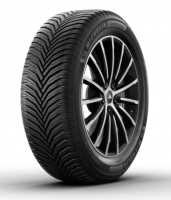
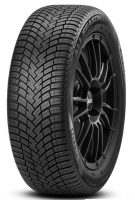
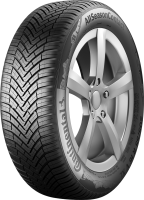
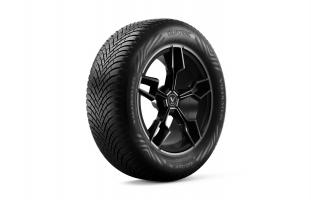
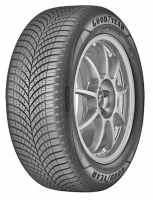
I'd like to know exact model of the reference summer and winter tire. What is theirs overall score in season tests? Are the reference tires a mid level choice? In my opinion it's quite important for the overall test result interpretation.
I'd like to see test of new Kleber Quadraxer 3 tire. As quadraxer 2 user i'd love to see if it is better or worse.
Looking for quiet 195/55/R16 All Season tires for new Dacia Sandero.
Pirelli Cinturato All Season SF2 are pretty damn expensive.
Sadly I only have the 2 in this years test. In fact I don't even have the 3 on the site, it must be very new!
This might be true.
Cheers!
I checked and it was published in April, so too late for this years all season tests unless someone got an early version of it. We'll know in the next few weeks I'm sure :)
Hey,
thanks for the awsome review! I am looking for my frist set of all season tires. Living in central europe with mild winters, so I put more improtance to wet and dry handling then to snow handling. Furthermore, I only got a small car with 175/70 R14 84T tires, for which some of the tires in your review are only available in an earlier generation (i.e. the Goodyear Vector 4 Season).
Do you have an assumtion how the 'Hankook Kinergy 4S' would have landed in your review? I am most likely deciding between them and the 'Vredestein Quatrac 5' but still not sure what to take.
4S or 4S2?
4S2 (h750)
Here's the Tire Reviews 2022 All Season Tire Test including that tire
https://www.youtube.com/wat...
Thanks! Great, again a really great video in which I feel all my questions are answered.
hello can these tires be better than eco summer tires in summer? i have bridgestone ecopia ep150 tires. i was planning to get all season tires for winter and after learning that eco tires are lacking grip i thought of using the new all season tires also in the summer if they give more grip than eco summer tires
That's a good question. I've not seen them directly compared but comparing across tests (which is always a little tricky) it would seem a good all season tire will be better than a very eco eco tire in the wet, however the eco tire will still be better in the dry.
Hello, very test, you must add some information about traction, temperature and treadwear that we find on the tiré. Thanks.
Hi, these tires are mostly european only where UTQG is largely ignored. I'll try and find out the details though.
A big thank you for your tests and all the effort you put in! I’m considering one of these in 245/45 r18 for my A4 Allroad.
Living in Sweden I already have a set of dedicated summer tires (asymetric5) and studded winter tires (pirelli ice zero 2).
But I guess that all seasons would be more suitable in the late autumn and early spring. About nov-dec and march-april, temperatures between 0-10 degrees celsius with often wet conditions. An occasional snowfall should be managable as well but if degrees below 0 are expected I would switch to the studded ones.
Does it sound like a plan and would you favor any other than the test winner for my intended use?
Best regards/Mikael
It does sound like a plan, if you're willing to do all that swapping!
Given they won't be used in all seasons, I would probably fit a tire with the balance towards wet and snow rather than dry. Also a european winter tire like the Continental WinterContact TS870 could be an option, depending on when you'll be using them.
Hi, for 2022 are you aware of any significant new all Season tire improvements coming to the market?
Driving in the UK and covering from Scot land down into Wales looking at replacing the Conti tires fitted from new on my Kuga PHEV.
Based upon the Milder Climate review at the end of your Video tempted by the Vredestien TBH.
Cheers
Nothing majorly new and exciting, the usual suspects are the good tires, including the goodyear.
Is the new Vredestein Quatrac in your test?
It's in this test but it's the quatrac pro for the 2022 test
Hi, firstly, thanks for the great work on these reviews - definitely the 'go to' site for tire info.
I am probably missing something here, but on your videos, near the end when you show the info for each individual tire, you show a price (eg, Pirelli Cinturato all season SF2 - £65). What does that refer to, because when I look online, they are significantly more than that.
Many thanks
At the time of editing, which was a long time ago now for this video, the price is the cheapest price on this site. Things are more expensive now sadly
Hi and many thanks for the great reviews and your many efforts. One suggestion: Could you please also compare the braking and handling performance of the all-season tires in very warm conditions (25°C+)? That would be really interesting. Because I absolutely believe that they can replace winter tires in many cases, but the comparison in the upper reference range of summer tires would be really exciting. Or do you perhaps already have some data?
Actually most of these tests are done in warm conditions, the years before this was tested in over 30c!
Hi, great test. I wonder what is the best all season choice for warmer climate? I want travel in winter around europe, mostly italy and spain. I also probbaly will try to avoid snow. So what can you recommend even for higher temperatures?
If it's mostly warm and you'll be avoiding snow, I'd fit a summer tire ;) But the good tires in this test should also be good tires for your requirements, all season tires are designed to work in a vast temperature range!
You are right, but some countries like Italy do not accept summer tire in winter sesson :(
I asked because it is was not clear for me if all season tires tolerates higher temperatures well.
What would you recommend between Michelin Crossclimate 2, Pirelli Cinturato SF2 and Conti Allseason Contact for a Hyundai Tucson? Need the 215/65 R17 ones. Weather where I am (Balkans) is hot in the summer with plenty of rain in spring and autumn. Winters are milder lately, less snow than 10-15 years ago, but we do get some snow a few
times per winter, although not more than 10-15cm. I was thinking about all season tires because temps change wildly especially between Oct and March when you can get 10-12C or 1-2C, with a combination of sun and dry
or wet/snow from one week to another. I am leaning towards the Michelins, but I'd love your input if possible. Or maybe other maker/model given our weather conditions? Thanks a lot!
PS I know you've said you already finished the new test but won't publish yet. I don't think I'd like to wait until fall when everyone will look for new tires. I'd like to change them now as I'm getting the car in a few days.
Don't ignore the Goodyear, it had a weird time braking in this test but is usually very very good and has some of the lowest wear of all the all season tires.
From your list I'd be Conti or Michelin for now, possibly the Conti if you don't see a huge amount of snow.
I wish if there is a filter to filter tires for comfort from top to lower by the year. Anyway thank you so much foe the reviews
Filter by the years? You can go to this page and up the weighting placed on comfort to see different results
https://www.tyrereviews.com...
Hi,
Any info if Michelin CC2 will make it to Australia? All Season for GLC series, helps with tire judder/crabbing when cold/wet. Currently success with Goodyear All Season, M&S Eagle Sport.
255/45/20 ??
I don't, sorry. You should be able to contact Michelin AUS through their website!
Hi,
Thank you for all the excellent info you have provided. I am leaning toward the Michelin CC2. I want a tire that is comfortable and quiet, and does well on the highway in all weather, but especially in the rain. However, I am still missing some information that is important to me. Very few of the reviews I have read describe the toughness of a tire. A few times a year, I spend a week in an off the grid wooded area with many gravel/dirt roads which are rough on tires. I worry about punctures. I read a review on a different site that said the Michelin CC2 "picks up a ton of stones" in its treads. Ideally, I want a tire that has all the great attributes of the Michelin on the 350 miles of highway I have to drive on to get to the woods, but is tough enough once I get there. I have also considered the Michelin LTX M/S, which seems like it might be better on those roads. My vehicle is a 2016 Subaru Outback.
I would side towards a traditional truck all season like the LTX rather than an all weather tire like the Crossclimate 2 as all weather tires generally aren't built to do heavy offroading.
Also maybe check out the new Nokian Outpost APT!
Hi I am looking for advice for choosing a combination of winter, allseason and summer tires from one brand for the next 4(5) years.
This winter was the last for my winter set because they are as hard as rock already (4 years old TS860 MY2018). The summer set (Primacy 4) is been better with ageing.... Both sets with plenty of tread left.
For financial reasons I am planning to use Allseasons on the rear of my FWD Car and switch Sumer/Winter on the front axle. I am living by the sea and barely have any snow. Maybe 1 or 2 weeks every year. The car is low mileage (~ 5K miles/year)
So for the next winter (2022/2023) I will need a pair of winters for the front and a pair of ALS for the rear. And then for summer 2023 a pair of summer tires.
The size is 215/55/16 and I would like the 3 pairs to be the same brand. Currently I have narrowed my picks to
1. Bridgestone (LM005; A005; T005)
2. Vredestein (Wintrac; Quatrac; Ultrac)
since these have good reviews and are the cheapest from the TOP brands.
I am considering also
3. Goodyear (UGP+;V4S G3; EFG P2) (~15% more expensive than the above 2)
4. Michelin (Alpin 6; CC2; Primacy 4+) (~25% more expensive)
I am skipping Hankook as in my experience they seem to age very quickly.
Conti doesn't have new models in this size.
What would be your suggestion?
I really can't recommend fitting all seasons on the rear then a summer or winter on the front, you'll be at risk of sudden oversteer in certain conditions which could be quite dangerous.
You'd be better off running something like the CC2 year round. They out perform plenty of winter tires in the snow.
Yep, I am aware of the basic 2 rules of automotive tire manufacturers:
1. don't use different Front/Rear tires
2. put your better tires on the rear axle
And the second rule is explained exactly with the risk of sudden oversteer.
I have to say that I have real experience as I had been using this combination S/W + ALS on my previous car (Ford Focus MY2009) for 4 consecutive years (2014 - 2018) and I haven't had any complaints except aluminum rim glued to the rear hub after 4 years without detaching.
You have done numerous comparisons between ALS, Winter and Summer tires. Perhaps next time you will be able to find some time for testing this uncommon tire combination and confirm the general recommendation or my personal experience that this is not so dangerous.
I guess the counter argument is that in the 4 years you've been using them, you've not had to do any at limit handling as that's when it's notiable! I will note to test odd combinations more in the future, I have done summer and winter tires mixed on snow, and I'm sure you can imagine that was ... difficult. I've also mixed all season and summer in the wet but not for an official test and the limit handlnig was also difficult
Well maybe this (mixing W and S tires) is one of the small amount of your videos that I haven't watched. I've corrected my self :)
When I was young I did the same experiment and I came to conclusion that summer tires are worthless on snow. However the modern European allseason tires are much more advanced.
I truly regret that I haven't bring up this conversation prior to your test "Is FWD and Winter Tires Better Than AWD and All Weather Tires?" because It had the ideal conditions for ending this discussion.
Hmm, why XL in case of CC2? Golf surely isn't a car that needs XL tires. Could it impact the handling results thanks to e.g. different sidewalls or anything like that? Just wondering if XL in CC2 can bring any advantages for a normal, C-segment car that doesn't need extra load tires. Especially when it comes to test winner :)
There's actually a good chance the non-xl and xl tires are exactly the same, you'd have to check. Either way it would be quite a small difference in this segment.
Hi Jonathan,
I am looking for an advice regarding the load index. I would like to buy the Nokian Seasonproof given the snow and ice performance but it is not available in 205/60 R16 92 nor 225/55 R16 95 recommended for my F31 xdrive, only 96 for 205 and 99 for 225. Would this negatively affect snow and ice handling or ride comfort in any recognizable way? I also would like to know if a wider tire would hold up better when cornering and stopping on ice?
Thank you for the thorough test and your advice!
There's a video on youtube covering winter tire sizes. As for the load rating, without testing I wouldn't know for sure but I would be surprised if there was a big difference.
But if you want good snow and ice performance, you should be thinking about a winter tire, particularly on ice!
"The Toyota Yaris Cross will wear the Goodyear EfficientGrip Performance 2 in size 215/50R18 with a load/speed rating of 92V."
If All Season than also Michelin CrossClimate 2 or new Dunlop Sport All Seasons, if the size allows. Otherwise Toyota should also recommend...One of the best tested summer tire was Bridgestone T005 (higher use), Conti Premium Contact 6 and Goodyear Efficientgrip Performance 2.
On TireReviews last year for Toyota Yaris
Jonathan contextually said in his article Top 14 Summer Tires for 2021 - Tire Reviews and Tests:
...
However, if you have smaller wheels you might feel hard changed. The Pilot Sport 4S is only available in ONE 18" fitment in Europe, and that's 225/40 R18 thanks to the new Toyota Yaris GR, thank you Toyota. The Goodyear Eagle F1 SuperSport is available in a handful of 18" sizes, and Continental only makes the Sportcontact 6 in a couple of obtuse 18" sizes, which I'm assuming are an OE fitment for a Mercedes or something. None of these tires are available in 17".
...
P.S. The newest 17' summer tire test was just partially published by Autobild here: https://www.autobild.de/art...
The issue you'll find is unless you fit a track tire, which defeats the low grip, you'll struggle to find a "sporty feeling" tire in those small sizes.
But, if you want to have a lot of fun sliding around, check out the Nankang AS2+ - https://www.tyrereviews.com...
Test going live monday will explain why.
Hi.
I have a 2018 Volvo XC60 with the original OEM Pirellis.235/55/19 I live in Western North Carolina so we get a bit of snow. I'm looking for a really quiet smooth tire. I'm retired so I don't need to drive if the weather turns bad. The Pirelli Cinturato All Season SF2 looks like a good option although it doesn't appear to be available in the US.
Any suggestions?
Thanks
CC2 is available in North America and very highly regarded. IF you don't have too much snow, maybe consider a UHP all season like the PSAS4 or DWS06+
If I could ask a follow-up. A local dealer has made me a really nice offer on a set of Bridgestone Alenza AS Ultra. Are they in the same quality league as the CC2 or the others you mentioned? Thanks for any input
As far as I'm aware that's a different type of tire, a US "all season", these would be all weather tires in the US so much better in snow
Thanks.
Great one as always. I am living in south Europe, in my area rains a lot during winter like a lot ( temps of 5-15c) and summer above 30+c from may to Sept easily, during winter I am going for trips to mountains and for skiing now and then. Usually roads are not the best maintained and cleaned and I am considering a second tire for Dec to March. Shall I go for a winter one or all’s season ? I would prefer to use a dedicated summer one during summer. How they will be compared in wet conditions, a good winter such as cont ts870 p vs all season Michelin cross2 ?
I would use an all season tire as a winter tire, it doesn't seem like you have particularly harsh winters!
Thanks a lot, you are right winters are not really harsh just if during my ski trip I get bad weather, apart from that in my hometown I will barely see snow, maybe a day or two and then will melt
Hi Jonathan,
Many thanks for the amazing reviews. Would you know if and when would Michelin launch PS4AS here in the UK. It seems a bit odd that the land of the hot hatches does not get a sporty AS tire and only gets the GT AS tire.
There's sadly no plans to release it in the UK
Thank you for the great work you do.
Can you please specify the models of the reference tires used in this test? When I look at your 2021 ranking of winter tires I see no tire with results matching your "reference winter" tire.
Specifically, the "reference winter" seems like an average/poor winter tire compared to the 2021 winter tire benchmark.
Unfortunately I can't for this test, sorry
For Peugeot 307 3D HB 1.6 16v 109HP all-season tires which brand to choose :) ?? Annually, I do around 12,000 km in Poland because I come from this country. Will someone recommend all-season tires to me so that these 3 years will serve a minimum
If you look at the latest Auto Bild tests, Goodyear and Conti are wearing the best and performing well in other categories.
Hi there,
I wondered how the Hankook Kinergy 4S2 would come out of your test. It has been tested nr1 in AutoExpress.
Any thoughts on that?
Check last years test, I think it will do very well!
Thank you for your thorough and enjoyable reviews. Based on your review, I think the Cross Climate 2 would be a good choice for our 2015 Subaru Legacy 2.5 Premium, which is primarily driven by my wife, who drives conservatively. We also have a 2018 Golf GTI, which is primarily driven by me. I enjoy the performance and handling of the GTI, but I am sure that I rarely drive at the limit. I had been thinking about putting the Michelin Pilot Sport All Season 4 on the GTI, but since you did the review of the Cross Climate 2 in a Golf, I was wondering if the Cross Climate 2 would be a better choice for the GTI, also. What are your comments and recommendations for an all season tire for both cars?
I live in Lincoln, Nebraska, USA. Our average weather is as follows:
Summer High: the July high is around 89 degrees
Winter Low: the January low is 14
Rain: averages 31 inches of rain a year
Snow: averages 26 inches of snow a year
Thank you!
CC2 is designed to be a touring tire so handles like one, which means if you love a spirited drive the PSAS4 would be the better choice.
Thank you!
I have Vredestein Quatrac, tested in snow, wet, autobahn etc... at least for 7000 km, and I am satisfied, bonus: much more cheaper than the "bigger ones".
:D
Hi, many thanks for a great review. I’m thinking of mounting all-season tires on my 7-seater (205/55/17), and at the moment I prefer the new Pirelli and Goodyear. I’d like to say that I live at the cost of Adriatic Sea in a mild climate. However, there can be quite a bit of rain in the winter and in the summer the temperature easily hits 35 - 40 C. Also, occasionally I make short trips to middle Europe where I could encounter some snow. From the looks of it, almost all new all-season tires should be able to cope with these demands. However, to my best effort, I haven’t find any reviews (not just on your website) dealing with performance and wear and tear of all-season tires in very hot weather that I mention we have at Adriatic in the summer. Could I expect to be using the same set for 2.5 - 3 years (I do 15 -20 000 km per year), or will they lose their characteristics after one summer season? Based on all described would you recommend Pirelli or Goodyear or some third brand. The decision is mine to make but I always appreciate another opinion. Once again, many thanks for the great job.
P.S. Sorry if you see 2 similar posts. I’m posting this one as I can’t see my (very similar) post from last night.
Did I reply to this somewhere else?
Hi Jonathan,
I bought Michelin CC2 about month ago and during weekend I was driving on the highway. It was heavy rain and I was doing about 120km/h / 75 miles per hour. Few times I just didn't feel safe so I was just wondering what speed limit did you have when you were doing Aquaplaning on these tires and what is probably the max speed limit on this tires on heavy rain? Thank you. David
There's no speed limit for straight aquaplaning, we keep speeding up until float in 8mm of water (which is very deep.) You can see from this test the CC2 is the best in SAQ floating at nearly 100km/h
Hey Jon, re-reading all the recent tests.
About this one, which one did you find the most enjoyable in dry and wet? From what I read, it's kind of a mixed bag, but it seems that the Quatrac is slightly ahead.
That sounds about right
245/40/19 CC2 going on my Alltrack this Friday, bring on the snow!
Let us know how you find them! :)
Hey John, why the Michelin CC2 is not listed on the website? I wanted to leave a first impression review, but it's not listed. 205 55 16 is the dimension I wanted to report on. Love this website btw. :) Thanks!
Thanks for trying to leave a review! It is listed, just click "read reviews" or click the name on the result from this test and you'll get to the page, then you can just click "write review" and it will take you to here:
https://www.tyrereviews.com...
:)
Weird, when I do the search in from the top, it's not listing. Here, for example:
https://www.tyrereviews.com...
Haha, you really live on this website, thanks for the quick reply! I'll leave my initial impressions as per your instructions. Cheers ;)
That's very interesting, I've no idea why it's not there. I'll get on that ASAP, thanks for sharing! :)
I am about to get new tires for my wife's Opel Astra (225/45 R17 91V). Currently I swap between summer Michelin Primacy 3 (being not as good as I thougth they should) and winter Fulda Kristall Control HP2 (fair and comfy). I'm looking for balance and comfort rather than performance (the car is 150 hp, but driving style is relaxed, mostly urban and suburban, rather mild central-european weather). Pls help me choose between Goodyear Vector 4S gen 3 and Pirelli Cinturato AS PF2 as they seem to be most suitable for the needs. Third option wolud be Bridgestone Weather Control a005 EVO. Other views most welcome.
There's plenty of test data on the site, I'd suggest reviewing as many tests as possible then seeing which suits your driving needs, I can't decide that for you! Just keep an eye on high wear for the Bridgestone and possibly the Pirelli
Thanks, Jonathan. I think I went through most of your tests and found them just best in business.
Will look more closer on the wear as you pointed out.
Was about to buy the CrossClimate 2 for my Volvo XC60 but unfortunately they are not available in 255/45/R20… So I’m back to square one. I now hesitate between the CrossClimate SUV and the Conti AllSeasonContact. Comfort is very important for me and I’ve heard that the Conti are less comfortable and quite noisy. Anyone has any feedback on the Conti compared to the CrossClimate SUV in terms of comfort and noise levels but also overall performance?
There's a few tests you might find interesting linked on this page https://www.tyrereviews.com...
Again, consider alternative (smaller and better priced) tire sizes (starting from 17'), according to the Homologation list of your car or see it directly on Volvo page: https://www.volvocars.com/m...
P.S. BTW Google shows that the CrossClimate 2 for your size exists: https://www.google.com/sear...
Thanks a lot! I saw it on Google too but it seems to be only in Maserati OE spec (MGT) so not sure it’s suitable for my car
Excellent and ask your garage as well.
Hello, nice article and very informative!
I live in the Netherlands.
Which tire do you recommend for a 2016 Toyota Aygo 165/60/15? I want a tire that performs good in the dry and wet and it needs low levels of noise and good comfort. Is the Vredestein Quatrac a good choice?
Thanks a lot.
Yes that would be, along with the A005 EVO!
Thanks a lot for the quick reply!
For my Tire Reviews University PhD thesis I would propose that for all non-extreme north American winter climates an all weather tire ( eg CC2 ) is better than the older performance winter tires we get ( PS3, Sotto3, Wintrac Pro ). While even the best all weather tires will not outperform new winter tires in the snow, the difference is not large. But since we do not get the newest winter tires in the states ( eg PA5 ) the best all Weather's are a better choice then the older winter tires in winter performance.
In other words if you live in a North American climate that does not warrant an extreme winter tire, the newer all weather tires will out perform older performance winters in the snow ( and dry/wet too! ). CC2 > PA4 in all conditions
The PA4 will still have the advantage on compacted snow or ice, but the CC2 is very good!
You think so? In the video above, CC2 beat the reference winter's in compacted snow. Not sure what the reference was but I don't imagine it was an old winter tire. In autobild the all weather beat winter in a few snow test, and when it lost it was a small margin. And that was against LM002, you don't think it will be an older winter tire?
We test on graded snow, it is compacted but it's also combed before every run to give it a bit of depth. By compacted snow I mean the stuff that's been on the road for a few days and has been through a few thaw and freeze cycles overnight so it's closer to ice than snow.
Ah, I see, Fair enough, thanks for the geek talk!
Great channel, great site, glad to recommend to anyone interested!
Maybe I have missed something, but I haven`t found one specific aspect covered: tire performance change related to change of load or speed index of a tire.
I am posting here on all-season reviews, since I believe these "slight changes" have more impact on all-season/all-weather tires, then when tested on a dedicated summer or winter tire.
For example, I was looking for 91H all-season tires, but dealer offered me 91W or 94H. It would be good to know how these differences affect general performance - switching from H to W, or from 91 to 94. Of course, we all know what these means regarding specification, but would like to know how this impact testing results.
Under the test, one cannot test all tire in all indexes, that would be too much to expect, but once you narrow down recommendation to one (of few) tires, it would be good to have your comments on let say changing speed index from H to W, or load index from 91 to 94.
So - not from 91H to 94W, because in that case you are not sure what actually introduced difference, but maybe from 91H (or 91V) to 91W, or from 91x to 94x, x, being the same speed index. Any of these tests would be appreciated since performing both (speed index change, than load index change) would require quite some effort if performed at once.
On the other hand, these are general tests and could be performed only once. Or once in a while, when tire technology introduce significant changes, and would be definitelly valid for few years.
Would very much appreciate your comment on this, even if you decide not to perform such tests.
Changes in speed rating are minimal if any, and now Michelin and maybe some others are often producing the same tire and and printing different load ratings on the size as it's easier to manufacturer less different items.
Practically a higher load rating should reduce comfort slightly and increase steering response, I would like to test that sometime though!
Thanks!
Last week I have bought a new set of tires - Michelin CrossClimate2 205/55R16 91H.
While loading these to the trunk, I`ve felt that not all are the same - just feel and touch was different on two tires in the set. This made me check it in more detail and (at first) I`ve noticed that two were "Made in Spain" and two "Made in Italy" (which was not the reason for "being different", just keep reading :-).
I was a bit surprised by this and only then I checked other markings: two actually were 91H, but other two were 91W (seller made a mistake). So, speed index was higher "by two" - not from H to V, but to W. For me it was interesting that I first noticed difference by simply touching tires and only later become aware of actual speed index difference.
Finally, it might have been that these tires have been somehow stored differently and experienced different conditions, so that difference was not due to a speed index, but something else. BTW, two had DOT 3321 and other two 4021, so no prolonged storage effect there.
This experience made me wonder about possible performance difference.
Once you have a possibility to have two Hs side-by-side with Ws, if there is no obvious difference, then this whole experience might have been just a coincidence.
Otherwise, if there is a difference, it should be good to know in which perfomrance segment it might have actual impact. If this is the case, this might be even more important because it could imply that only tires of the same load/speed index should be compared within one testing event/sesson. Not easy to arrange, though :-)
Hello, first of all thanks for the great article.
I'm wondering about CC2 tires... Would they work in temperature blow -20C. If not what would be the reasonable min.?
Thanks,
That depends what you mean by work. Would they have much better performance than a summer tire? Yes. Would they be outside of their ideal operating temperature? Yes? Would a winter tire be better? Yes.
Though by -20c you're into nordic winter tire temperatures!
Thank you for your response. I live in climate where summer temperature could be over +30 and in a winter temperature would be below -20 for extended period of time (summer and winter)... but I'm too lazy to switch between summer and winter tire. After reading your article I was hopping that CC2 could be a good compromise... What would be your opinion or what would you do in my place?
I'd be swapping tires, they're some harsh conditions!
and one more question. what is ideal operating temperature? thank so much for taking time to answer my questions.
Hello,
I really appreciate all your tests and the scientific approach and videos.
I have a question as I need all season tires for casual mountain trips during the winter.
I Own a bmw 3 series which is unfortunately equipped with 225/50/16...
My main focus is Warm dry performance and legal 3psmf.
There are 2 options for my size, maxxis premitra as ap3 or crossclimate 2. But the Michelin cost twice the price.
I see little differences in the autobild test. Have you tested this tire? And advice for me?
Thanks a lot.
I've not tested the Maxxis. One thing to keep in mind is performance over the tire life, generally with michelin you get better tread life and better performance as the tire wears, so the extra purchase cost can be somewhat offset. doubly so if you're a costco member as they often have mega deals.
?
Hi Jonathan, thanks for all the reviews. They are invaluable. Quick question if I may? I fitted Crossclimate 2 205/45/17 88V XL to my Fiesta in mid October, the first time I've used all seasons. It gets used up and down some A & B roads, Motorway and a bit of city driving for my commute, 70 miles per day. I drive normally in Eco mode and don't tend to experience heavy braking or cornering.
I have done 1300 miles so far, but the fronts are already at 6.4mm and the rears 6.6mm. Pressures are all fine, do you think the warm autumn we've had so far has accounted for the higher wear, and presumably if/when temperatures drop the wear might decrease? Or would you expect to see wear stabilise as the tread depth decreases?
Many thanks!
Did you measure the starting tread depths? The testing I've seen say the CC2 should last around 40,000km and they usually start around 7mm so that seems a little high, but wear does usually start slowing down as the tire wears.
Appreciate the reply, thank you. I measured them on the day of fitting and they were 7mm. I am a little surprised at the wear also. I’ll keep an eye on the wear over winter and log it. I’ll post some more figures once I’ve out more miles on them. Cheers!
Slow down on those B roads ;)
You can slightly increase the recommended tire pressure, especially in winter, when temperature goes down and is de facto decreasing the pressure set as well. That should keep the ideal tire pressure and improve the expected mileage.
P.S. Avoiding many hits of potholes will also help, besides the eco driving :-)
Hi! Figured I'd give a quick update after my initial concerns. I'm now around 10,000 miles into the CC2s on my Fiesta. I rotated them once around 6000 miles and the rears are now around 6mm and the fronts are around 5.7
We had several days of snow up here in the Pennines over the winter and they were really good in slush/snow on A/B/Motorway.
So wear seems to be doing fine!
Thanks for the update and I'm glad you're enjoying them :)
Jonathan thank you very much for this specific series of tests.
Could you explain why the Pirelli Tire is so good in your tests and so „crappy“ in Autobild?
I try and cover that the best I can in the introduction write up to the auto bild test article on the site :)
Yeh. I read that. But the difference to me is like absurd. From Zero to Hero. I hope you understand my mental confusion. I mean like the Vector 4S Gen3 oder Conti Allseason Contact are always up top. But the SF2 on pair with chinese tires.
At a guess I would say Pirelli aren't quite as consistent with the performance between sizes
Hi Jonathan,
what the reference winter was?
Thx so much!
Andrew
Jonathan and the TireReviews team - thank you for an outstanding review! You did a stellar job in simplifying and keeping sense of an awful lot of information and making it logical and accessible. That's a special skill.
I have today had a set of Michelin Cross Climate 2 fitted to my FWD Hyundai Tucson and am looking forward to seeing how they perform as we move into winter. I live in the UK (Midlands) so will not be giving these tires a severe cold-weather workout, but if they give extra security and confidence on cold and wet roads (without giving up comfort and quietness), I'll take it.
To me 'all weather' tires should be the only logical choice for mainstream cars and vans in the UK - but instead 'summer' tires seem universal. I cannot understand the sense of it and would appreciate any enlightenment!
Buying four Cross Climate 2 tires has been quite an investment, so longevity is important to me. It would be good if more metrics were available to compare tread life of different tires - in the US and Canada tires have UTQG ratings which allows some comparison, but I cannot find a similar European rating. I did read that the Cross Climate 2 tires carry a 60,000 mile warranty in the US which seems to be a good omen, and helped me rationalize the decision to spend the extra.
Look forward to posting a review of the Cross Climate 2 tires when I have put some miles on them.
I look forward to your review :)
UTQG ratings do exist on EU tires, but they're largely useless, even in the US when comparing between brands.
Auto Bild did wear tests this year in their all season test, check it out!
The US version of the CC2 is tuned for a little higher mileage.
More cars are starting to be fitted with all weather tires from factory, however remember until very recently you were giving up a lot of dry and wet performance with an all season tire. They still give up a fair bit of performance in the dry and wet over the warmer months, so I'm not sure there's a right answer for the UK.
The MCC family do seem to have the performance in the dry and wet in the summer months sorted now though. I always eschewed AS tires until the original MCC came along for the reasons you give. Now I don't think that applies any longer but what's your view Jonathan as you are way more knowledgeable than the rest of us on this. The Michelin, Bridgestone, Vredestein and latest Pirelli all seem to be highly competent in the dry/wet summer conditions.
I live in Vancouver BC (Canada), lots of rain in winter months here and snow mostly in mountains (ski trips), though can see lower level accumulations in January-mid February...Jonathan did mention the Verderstein was likely a friendlier choice for wet and dry conditions with only a bit of winter sparkles...I hesitated between MCC and Vredestein which have similar prices, but went for MCC due to noise performance and longevity over Vredestein. I will report on the MCC went I get them rolled for a bit. The third choice was Pirelli SF2 (though AllTirestests.com only places it 7th in the all-weather category: https://alltiretests.com/go... but in any event, not easily available here in Canada which only has the CINTURATO P7 ALL SEASON PLUS II, which I understand is a previous version (very different Tire tread).
You can't really go wrong with the CC2 :) I'm not sure how that site generates their lists, I guess by looking at other tests?
Can you tell us what the reference winter was? Slightly disappointing snow performance. Would you expect it to be much better than the all seasons in ice?
Hello!
Thank you very much for this test (and for all of your excellent work, too) !
I need to change tires on a Ford Fiesta which mounts 175/65 R14 82T.
I checked the availability of the five bests of this test, but it seems that only Continental and Goodyear are available in this size...
Which one would you suggest me to buy?
Here where I live the winter is not super rainy and temperatures (usually...) doesn't go lower than -5° C and doesn't go higher than 15°C.
Snow could happen, but only occasionally. Icy roads could occur, not very often neither rarely.
In summer temperatures could reach up to 40°C (thanks, climate changes...).
Thanks again, you are doing a great job :)
https://www.tyrereviews.com... there seems to be quite a lot of option.
With your summer temps I'd probably aim for the Michelin.
This is a bit of a geeky question but could you present/convert the noise/dB relative percentages to linear values in future tests? The linear percentage values you've given aren't entirely accurate as dB is a logarithmic scale.
For example Pirelli SF2 (68.7dB) vs Michelin CC2 (69.1dB) comes out as 100% vs 99.42% as you calculated. However the perceived "loudness" is more like 2.8% difference i.e. 100% vs 97.2%
See: http://www.sengpielaudio.co...
Calculation is z = 2 ^ (ΔL / 10)
Where z is loudness ratio, and ΔL is change in dB as measured (i.e. 69.1dB - 68.7dB)
z = 2 ^ ([69.1-68.7] / 10)
z = 1.028 (i.e. CC2 is 2.8% louder than SF2)
Nice geeking. Giving the values in dB is the industry standard, but I do try and remind people dB is logarithmic when I remember to :)
Hello Jonathan, great test especially interested in the wet braking at different temperatures as this is very similar to what we can get in the UK from one week to the next it seems...!
I switched to all season tires years ago on my daily commuter car, mainly so I could still get to work for the one week a year (sometimes less) that it snows in Essex.
I have a new commuter car now (a 15 year old Citroen) and it needs tires. In the past I've generally always used Cross Climates and been very happy with them. But this car has 215/55/16 tires, which seem to be quite uncommon and therefore expensive.
The Michelins are horribly expensive therefore and with a deal on currently, a set of four Avon AS7's would be a very significant > £160 less in total.
My commute is 50 miles of A roads mainly in a straight line, I don't drive the car hard and my priorities are wet performance and comfort, with enough snow performance to handle southern UK snow (if and when it turns up).
In your opinion would the Avon cope, or would I wish I'd spent the extra money?
Many thanks
I would spend the extra money. Costco usually have big sales on Michelin tires, and if not the Goodyear is usually much cheaper and performed well in all tests this year apart from wet braking in mine which seems to be the outlier.
I have a Tesla M3 LR AWD with standard summer tires (Michelin Pilot Sport 4 235/45 ZR18 98Y XL Acoustic, T0), and think about replacing them with the CC2 tires. Will I lose a lot of grip and traction (I usally drive my car quite hard and often on the edge) with a change to CC2 all year, including summer?
Is it better to use the CC2 just for winter (I live in south of Sweden, with very mild winters and very seldom below freezing point/0 degrees C), and change back to original tires for summer (PS4)?
Will the CC2 tires be updated with special tires for pure EVs like my M3?
If so, will those CC2 EV tires probably have less rolling resistance and lower acoustic noise than "standard" CC2?
Yes you will lose performance so I wouldn't recommend them for year round driving if you like to drive on the edge. If you're switching for winter I'd probably suggest looking into the tesla approved winter option which should deal with the car better
I would recommend staying with the Michelin Pilot performance family. So Michelin Pilot alpin winter tires on a second set of wheels. They are great for mild winter climates including the occasional snowstorm and have very sporty handling. I've used them for autocross in cold weather.
It's a personal choice depending on
requirements but the comment you make about Nokian, Jonathan, presumably can also be made about Goodyear. Both their warm weather wet and their dry braking results are even worse than Nokian which as you say just aren't good enough for a mild climate. On the other hand for milder temps Bridgestone look second only to Michelin as the Japanese concern's weakness in cool wet braking and snow is less relevant. Plus they are the cheapest of the premium manufacturers.
If you look at other tests of the Goodyear it seems mine was the outlier in wet braking, probably due to the very high grip surfaced used. I would say the Goodyear is more rounded than the Nokian
Fair enough. This and the AB test has helped enormously make my mind up in favour of the CC2. So many thanks for the very useful test info. Where do I subscribe?
Youtube is probably best :) www.youtube.com/tirereviews
Thanks - will do.
Really interesting to see the difference in warm and cool wet weather braking. More tire tests should do this as it changes the results quite considerably e.g. the summer tire looks great in warm conditions but poor in cool ones. I knew AS tires were better than summer tires in cooler conditions say lower than 7C but didn't realise it was as stark as this. Would this be the same in dry braking as well? Very helpful!!!
Generally there's very little difference in the dry, the summer won at the cool temperatures and would certainly win again at warmer temps.
Great comparison.
I am leaning towards CC2 for my Lexus RX which has the 235/55 R 20. I live in the US Mid Atlantic, so extreme summers can reach 35 C, and winter can go as low as -20. The OEM tires are Michelin Premier LTX, and I have run them for ~39K miles with periodic rotations.
What is your recommendation for the CC2 on bigger wheels - 20 inches, or should I stick with the tried and tested OEM tires, which have been good. Any other recommendation?
Is there a CC2 available in your size? If you don't want to swap between summers and winters it seems like there's a strong argument for the CC2!
Similar question for me! I also have Lexus RX (heavy beast with relaxing drive) and wondering whether Michelin CC2 would be a good choice for me or possibly Michelin PS4 SUV? Note that the size is 235/55/r19 and that I live in the UK (i.e. good combination of dry/wet grip with little to no snow at all). Price differential may play a factor here (up to £30 difference per tire). Thanks for your thoughts guys and really enjoying all your tests. You guys are the go-to place for tires!
The question is whether you want snow performance as the 4 SUV will not and the CC2 does. The PS4 SUV will beat the CC2 in most other conditions, apart from wet very cold driving.
Yes.
On top Costco is running a promotion on CC2, $150 off the set of 4. Price for Michelin CC2 is the most, followed by Bridgestone and Michelin Primer LTX, but the promotion levels things off.
There is a major price variance between retailers for the installation, and hence the total cost price / value for getting the CC2 at Costco, vs a cheaper brand is more or less the same.
Other retailers are also recommending the H rated tires for me, however the stock one was V rated, and I would want the V rated tires only.
Hi, really enjoying your tests. I have currently a nice summer set and available rims for a winter one, but def thinking about switching to A/S for the next years. There is one question only, why the snow braking distance is so different compared to last year? What was the stopping speed back then? Here is 40-5 km/h, how about last year?
WIthout the time to dig through my notes I can't be 100% but I believe we ran 45-5 or most likely 50-5.
I didn't run the snow tests this year, hence the different criteria.
Jonathan, great test and awesome work as always!
I'd be grateful if you could help me out in a topic of large temperature differences during the year.
Living in Hungary gives us hot summers (37 Celsius) and cold winters (-10-15C) with insignificant snow. As the cold weather in the test was at 4C and the warm was at 15C, I'd be curious of your opinion regarding which tire is the best for the Hungarian conditions I mentioned above. I don't drive much (10k km/year), the size is 205/50 R17 on a lovely Volvo C30. I am considering the new Michelin CC2 or the Vredestein Quatrac (Pro maybe?) as snow is not significant here, but there is a notable price difference.
The CC2 is still the go-to recommendation due to the heritage of the brand, but the Quatrac (not the pro) would be a good option too. If you can only get the pro in your sizes, I'd probably skip that one.
Thanks for the quick and valuable response! :)
Are the Michelin CC2 tires good when driving in ice please?
No, they're an all season tire and while they'll be much better than a summer tire, you need a winter tire to have any meaningful ice performance, preferably a nordic winter tire
Thanks, I meant the kind of ice we get in Britain in winter on an icy day. Not Arctic ice! But good to know.
Hi, is there a possibility to change/individualize the weighting of the different tests? This way everyone will be able to find the best tire for their own/preferred conditions.
What it needs is just a table with the tests, the points earned for each test and a weighting (100 % in total). In this case, in regions with less snow but a lot of rain the weighting of the snow tests can be lowered and the wet ones will become more relevant.
Yes it's on the development list for the site, I'm just a little behind with the dev work :)
That is a great plan and I was myself thinking of suggesting climate-sensitive ratings, perhaps three differents ones, e.g. here in America: North East coast ( e.g New York and Boston: hot and dry summer with occasional downpour rainstorms, moderate winters with occasional snow storms, -10 +30 range) ; Midwest (Harsh and cold winters, warm and dry summers, -25- +30 C range) and North West Pacific coast (dry and moderate summers, super wet (at times torrential) and moderate winters with occasional snow periods (definitely more so if going up the mountains), -1 +25 range, but all still needing A/W tires.
Genius having some presets :) I'll add that to the list!
Hi, can you tell which tires where used as reference tire?
Sadly I can't this time, sorry, it's explained elsewhere in the comments :/
Never mind, question answered elsewhere. Didn't read all comments properly.
Re aquaplaning, because of the large spread of results, a lower weighting still has a reasonable impact. Also, there have been various studies around Europe that show aquaplaning is the cause of less than 1% of accidents (though these accidents are typically more serious than average.) Things like wet braking are far more important overa..
I was looking for a good substitute in Polish climate (mostly suburban routes), 235/45 R18 to my wagon and I was considering Conti, Michelin and Goodyear. However since Michelin doesn't offer FR tires and they are slightly worse on snow in comparison to Conti I tend to pick Conti as my first choice.
I've noticed that test results are way different depending on tire sizes compared, thus Michelin loose with 17" and probably 18" tires. Whereas Conti was quite even on different tire sizes in various tests since few years. What is more - the huge advantage of Michelin was that they are much more quiet, which is not an advantage with 17" and 18" rims (we do not compare 69 vs 72, but sth. around 71 vs 72).
Another huge advantage is that Conti are way better when snow melts and you get cold weather + wet tarmac (4C, not 15C), which is mostly common in Poland (probably in most places where road are cleared of snow after a while).
Can you please advice if my point of view is reasonable?
And last but least - just a side remark / question - we have a tires that weight 8kgs (Conti) vs 9kgs (Pirelli) - how the results can be almost equal?! I know that they have different tread and tread height, but - tires give 13% difference on weight of a wheel.
Sounds like a reasonable summary, my only point would be that the noise level is external noise so not ALWAYS a good reflection of what you get internally.
I don't understand the weight question, sorry
First of - Thanks for reply!
It was rather a theoretical question - I meant unsprung mass - which has an impact on how the car handles and how it feels.
I was wondering if we have 40kg of unsprung weight in a car and 4kgs of it goes into tires as such (8 vs 9 kgs) that gives 10% of unsprung mass which is quite a lot, especially if we are discussing results that differs like 2% one from another ;) So I was thinking how this reflect overall tire results.
It's rotational unsprung mass too, which is even worse! In reality, I don't think it will make a huge difference, but I do plan on testing it properly in the future by using the same tire and different wheel weights!
That'd be great! However it may be quite difficult to make - some tires are run flats, others are XL, yet others got SealInside. So you get a least 3D matrix. ?
What surprised me is that Pirelli were more comfortable than others, despite being the heaviest ones in the test.
Cheers from PL!
Hello! Love your channel and the way you do reviews. I need your advice. I'm currently in the process of buying new Octavia A8 1.4TSI with 17" wheels. I live in Ukraine, so climate can be compared to Germany or Poland. I think about changing OEM tires almost right away after I get a car with good all seasons. I mostly drive in city with good roads, but at weekends I go to countryside with occasional bad roads. Snow is not much of concern, coz I'll just use public transport to get to work after heavy snowfall till it's cleared. I'd love to buy CC2, but they're expensive right now and Pirellis are currently unavailable. So what would you suggest? Thanks in advance!
The Hankook all season is doing well in tests this year and is usually pretty well priced, as is the Goodyear which might have had some braking issues on the high mu track here but is still doing well in other tests.
Really detailed and informative test.
Was any wear testing performed?
I did not but you can check out the auto bild article on site and I'll be writing up something about wear in the near future
With regard to the Vredestein, is the model the Quatrac Pro, 5, or new 6 variant please?
There isn't a 6, it's just called the "Quatrac" which is the tire on test here :)
Were the Pirellis run flats? I’m looking to change the rubber on my Mini Cooper S Clubman ALL4 soon and the Cinturato seems to *only* be available in run flat but it does say on the site “only certain sizes”so yours may not have been. If the ones in the test weren’t run flats, do you think there’ll be a huge difference in the performance side? Should I give up on runflats and run to the Michelins?
No, they were traditional tires. I've never tested runflat all seasons so I'm not sure exactly what you're giving up by adding runflat technology.
I'm from north Italy (Hot Summer, Cold Winter, 5 days of snow) Toyota Auris TS Hybrid (1400kg) commuting 50km a day during the week and long trip (200km) in the weekend for sport. Actually i'm on Bridgestone Weathercontrol 2019 (good in the summer and the cold, not so good in the snow during 2° winter) and after 42k in years are done. I was looking for a 4 season and XL and 94W (during weekend i have 4 bike, tents and lots of gear). I found a good deal: Goodyear Vector 4s Gen 3, dissapointed for the test result but will see.
That's amazing wear for the Bridgestone!
The Goodyear is still a great tire, it was just a strange braking result in this test. Other tests this year it's performed as expected.
I,m come from central Europe sow we hawe here ewrything: sun, rain, snow and ice. I hawea toyota avensis (215 55 r17 tires). Which tires (all sesons) will the best for my. I.m looking for the best tires for my and my car.
All the data is here to allow you to decide yourself :)
ok j,m to check the data and I,m interesting between pirelli cinturato all sesons SF2 and GY gen 3. The
difference is slight. GYgen3 is tested many times and always looks good. Pirreli is new tire, but won a high
second placet. Pirelli SF2 is really that good ?
Which tire would you choose for yourself pirelli SF2 or GY gen 3?
I, m using avensis 215/55/R17 but tires were tested in size 16" whether it may have an effect on the test result?piree
I ask because in Auto Bild all sesons tire test 2021
Pirelli cinturato all sesons SF2 (215/65/R17), it took only sixth place, GY Gen 3 was third ?
I've seen the autobild all season data, the goodyear performed as I would have expected it to in this test, though I am surprised by the Pirelli in that test.
Given the fact you're using a 17" wheel I would use the Auto Bild data as primacy, so in this case I would use the Goodyear.
Thank you for the your opinion
The problem with the auto bild test is the missing transparency. The weighting of the single disciplines/tests is unknown.
In your test, at least in the video, the weighting is clear and at the end of the video you even made a little swap between 3rd and 4rd place by just mentioning a small change in the weighting. However, best will be the possibility of individual weighting, see my comment on this at the top.
Agreed, however at least Auto Bild give us the data so we can score ourselves, unlike ADAC etc!
In this test the the CC2 beat the summer reference in most categories and where it didn't it was in the same ball park. I'd love to see a test of the CC2 against the best of breed summer tires to see how it performs. We know the all season will be better in the colder seasons, but what do we actually give up in the summer if we run them all year around.
One for another test :)
I would also like to see that test of all season tires - how do they break in a warm summerday at the german autbahn at 130 km/h
Can you please create a comparison between the ALS tires and the tires form the 2021 winter tire test. Since both tests took place at the same time on the same track and probably on the same car the results are comparable.
This will answer the questions about the reference tires.
You've already covered the 16 vs 17 vs 18" winter tire comparison 3 years ago. So the size difference between the ALS tires and the winter tires could be taken into account.
The difference in performance between sizes isn't always the same, so it would be really difficult to do it accurately. Sadly this means I won't do anything official, but you have all the data so you can work it out for yourself :)
OK here is my homework. I've combined the snow and wet braking and handling tests from the 2 comparisons.
So if you have Golf 8 and you are wondering what tires to use for the cold period here is all the data except the budget tires. Blue = winter and Orange = All Season. Couple of mistakes:
on the first graph Hankook on 5th place should be Blue
on the last graph Bridgestone on 13th place should be Blue https://uploads.disquscdn.c... https://uploads.disquscdn.c... https://uploads.disquscdn.c... https://uploads.disquscdn.c...
The result is: NEVER buy a 16" reference winter tire!!! :D
A* for your homework :)
Next year I might try and test all season and winter in the same size so we can do this properly :)
Great video, as always.
I'm looking for info about rim protection in 18" size. It seems the CC2 has none, so next on my wish list would be the Pirelli SF2. Any word on this?
Sorry, none of them had it in the size I tested and I've not seen any of these in larger sizes yet!
I contacted Pirelli and had a very swift reply from Donna, though unfortunately in my 225/40 18 size there is no rim protection on the standard SF2 tire, but there is on the run flat. Go figure!
The search continues....
Thanks for sharing. I guess the runflat is a BMW spec tire so maybe they requested it!
Just discovered your website and am finding it invaluable. I’d really appreciate some help choosing all-season or winter tires.
I live on the Welsh border but also spend quite a bit of time in the Scottish Highlands (half a mile up a forest track). So I certainly need good cold & wet performance, but also some snow & ice capability. I have a Land Cruiser with 265/55 R19 Dunlop Grandtrek AT23s, which I intend replacing for the winter.
This seems an uncommon tire size. I could get Bridgestone Blizzak LM005 or Conti WinterContact TS850P SUV but, if I want all-seasons, I think I would need to buy 18” wheels - 265/60 R18 Michelin CrossClimate SUVs would then be an option. Either way, I will probably get Michelin Pilot Sport 4 SUVs next spring.
However, I’m a little concerned by the fact that both the TS850P SUV and the CrossClimate SUV have been superseded (in non-SUV versions, at least). Getting replacements in a few years’ time may prove difficult? If there was a CrossClimate 2 in 265/55 R19, I’d probably go for that. So, two questions:
1. Do you think there is any prospect of Michelin releasing the CrossClimate 2 in either of these sizes (ideally 265/55 R19, otherwise 265/60 R18)?
2. In terms of what is available today, do you think the CrossClimate SUV (bearing in mind I would need to buy 18” wheels) would have any significant advantages over either the Conti or Bridgestone winter tires, for what I have described?
Any other thoughts or advice you can offer would be greatly appreciated.
Thanks …. Andrew
There's more CC2 sizes coming next year, but I don't have access to the list I'm afraid. Given how far north you are, maybe the LM005 would be the best option, especially if you're happy going to a summer tire in the spring!
It may defeat purpose of all season tires of getting home in a rare snow fall, but I am curious of how reference summer tire would score under mild climate weighting. I live in west of Ireland were it almost never snows (once in 10 years) but has wet roads all winter. Did you calculate this? Thanks for your work. Michael
We didn't. If you ignore snow, it would be likely the summer tire would be by far the best option until very cold wet conditions, so a lot would depend on the test temperature. See the two wet braking results as an example.
What would be your choice for 225/60/r18, 4wd Subaru? CC2 not available in this size. Any price. Middle Europe, some highlands, no mountains. 30 degrees summer, -5 winter. Thanks.
You seem to have some good choices - https://www.tyrereviews.com...
Depending on how much snow you get, Bridgestone or Conti, or if you can find it, the Hankook.
I am currently trying to solve similar problem - Subaru Outback with 225/60 R18 tires, Middle Europe (during the winter usually just few days with the highest daily temperature below zero, but snow is quite common). There are 2 more tires in this size which I consider - Pirelli SF2 and also Goodyear Vector Gen 3 (this was my favorite till I saw this test :-D). What would be your choice from these 4 tires? I have never seen some test of the Pirellis bigger than R16, so I am wondering if there can be a big difference in performance comparing to the size I need for my car. Thanks
I've just seen an all season test in 17" using a bmw and the Goodyear won and the Pirelli didn't do so well, so in that size I'd be aiming at the Goodyear!
Thanks a lot for your answer
Yes, same car for me. I am almost decided for Continental, but not much happy from noise measured here. Pirelly seems better, but snow braking not so good... also i can try to search for 17" test mentioned below.
Oh, Continental do not have XL version. Hankooks not it this size. May be, there is choice only between GoodYear and Bridgestone for 225/60 R18 SUV.
The Goodyear have much better wear than Bridgestone so that would be the tire I would purchase.
As ever, a great video, full of all the information one could need. Thank you.
I live in the UK, but will be heading to the Alps for a ski trip in December/January, and trying to decide what would be best to fit to my Jaguar XF 3.0D with 245/40/19. Thinking of the CrossClimate 2, but wondering if a winter tire might be a better bet, even if they were only fitted for a shorted period of time.(Just watched that great video too!)
If you're happy to run two sets, a winter tire would be the safer bet for sure as we can't predict the weather, and big wheel sizes tend to lean more towards dedicated summer and winter tires, however i've visited the alps many times on all season tires!
Thank you.
Thank you so much for making this extensive and most likely world first 2021 All Season/All Weather tires comparison. I would really apricate some ice performance test in the future review if all possible.
After watching the High Performance Snow Tires review video I am even more impressed on how good the CC2 is since they were all tested on the same tracks at the same time with some temperature differences.
I have been enjoying the CC2 in North American since March 2021 on a Niro Hybrid which makes this 5 seat compact crossover (really is a compact wagon since no AWD is available) feels more like a mid size luxury sedan compared to the OE Micheline Energy Saver A/S. Better fuel millage, corning, stability and comfort in all weather conditions. Driving through heavy rain or puddles no long feel the car been slowing down caused by water resistance and ends with decreasing of millage. I liked so much I exchanged a set of two weeks old Continental True Contact Touring on my 80 years old mother in law's CX-3 and got her the CC2 and she has been loving them and glade that she would never need to spend the time or money to swap or store winter tires again.
Again, Thank you for a well done video to benefit everyone's safety, pedestrians and drivers alike on the road. I really apricate the effort you have put into the review.
Thank you for the kind words and I'm glad you're enjoying your tires. If you get the time please leave a site review at https://www.tyrereviews.com... :)
The variance of the snow braking tests was much more pronounced in 2020, with differences of up to around 3 metres. Have the differences (now only up to approx. 1 metre) between the tires been significantly reduced or have they been tested differently?
It looks like we used a higher initial speed in 2020, so longer braking distances and a larger spread.
Many thanks for clarifying this. So would you still consider the snow-braking result of the overall second-placed Pirelli SF2 as safe-to-drive, even though it performs worse than the budget tire? After all, it is still 93.89% of the best-performing tire. I'm asking, because the Michelin CC2 is not available in my size (235/35R19). Thank you for all your helpful tests and your comments!
Apologies if already been answered, but is there any data or recommendations yet for all season options for EVs? I saw your EV vs regular video and I note the EV-specific tires have less sipes and harder compounds for less block movement to cope with the heavier weight of the vehicles (plus the sound deadening additions) so it seems like a hefty engineering conundrum to incorporate essentially the opposite of those features to allow for better performance in the cold, as well as on snow/ice??
Or is it a case at the moment of going for the "xl" or suv varients of existing all seasons as a 'least worst option'/compromise?
Thanks
It depends what EV. The CrossClimate 2 and SF2 are both getting OE fitments for pure electric drive vehicles, so if you're not driving something massive like a E-Tron these could be a good option due to low RR
Are you planning to use a heavier/larger car for the next all-weather tire test? So, for example an EV or an Audi A6 or so?
Not for 2022 as I'm planning something to help sync all weather and winter, but I hope to do some separate content on EVs across the year
I was about to buy the Nokian due to its comfort score, but the final words "...poor choice for a mild climate" seems to rule it out for the English midlands.
It's definitely tuned more towards snow than dry and wet which is why I said that. I'm not sure when i last saw any actual snow in North London.
Thanks, and for a superb video. ; a fortnight later I am about to order the tires, in mid October. Vredestein v Pirelii I think, so now for some quotes.
Are any of theses tires particularly wide, my winter wheels are 16x8 and I had to run 215,45,16r last year but I really want to be running 50section tires and they only seem to be available in 205,50,16r so was wondering if any were on the wide side?
There's a screenshot a few comments below showing all the tires. Obviously they're all within legal tolerances but it would seem that the Michelin is the narrowest and the Goodyear looks fairly wide
The minimum tire width required for an 8 inch wide rim is 215 mm. To me it sounds like a very bad idea to try to fit a narrower tire on such a rim, should it be on the "wider side".
For what reason do you want to run 50 section tires in the first place ?
If you're looking to protect your rims, then the Vredestein Quatrac offers rim protection in the 215/45/R16 size.
In any case, keep in mind that the tire section is expressed as a percentage of the tire width, so on a 205/50/R16 tire, the sidewalls will be less than 6 mm higher than on a 215/45/R16 tire.
great test, I've really been waiting for this *thumbs up*
Compared to your test from last year (2020), I am very surprised by the rolling resistance results.
Is there a mistake in the graphics or is the summer reference tire really that bad?
Normally, like last year, the Reference Summer should easily achieve the best rolling resistance, right?
i'm really surprised that the Reference Winter have such a clear better rolling resistance than the Reference Summer.
It is curious so I double checked the data, and that is what i've been provided!
I know you love geeky info...
Can you please add some information about the overall diameter or circumference of the tires just like the weight info? Or any difference in the ride height of the vehicle with each set?
The tires seem to have significant height difference on the sum-up footage.
https://uploads.disquscdn.c...
Top geeking! A lot of the height difference in that shot will be down to how the tire sits with no load, some tires have rounder tread profiles which is what you can see with the Michelin in the middle.
There are rules about allowed variances in each size, which some manufacturers use to their advantage, but these are very small and naturally much less than changing tire size to a different size.
I'm not sure I'll get the time to measure this on a test, but I'll add it to the list.
Super!
If I may suggest, the most effortless way would be to use a flexible sewing meter to measure the circumference. For the given size it should be 1985mm.
I'll have to put one in the kit bag!
Hi there. I wanted to order CC2 today and to my suprise Michelin does not provide any information about rim protection. Is it even possible for a tire 205/45/17 not to have rim protection? I can't imagine that a premium manufacturer would do such a thing. Furthermore I haven't found any information about rim protection in any size :O
I would be surprised if there was rim protection in that size, however only Michelin will be able to answer that, sorry! Let me know if you get the answer!
Thank you for your answer. I have the car for 7 years now, and every single tire I bought had rim protection. I wrote Michelin, let's see what will they say.
It's not a size I've worked with before, I look forward to their answer!
I've got reply from Michelin. They say that CC2 are not provided with a rim protection. That's ridiculous for such a premium brand. I think I have to switch to qatracs pro. I need a tire best in dry/wet performace.
I would avoid the quatrac pro as it's not performing so well in the wet anymore sadly! The Quatrac is much better
That's a pity! I can't change the rim size. I wrote to at least another 10 Michelin suppliers. Maybe it's just a confusion with a brand new product. I'll let you know if I'll manage to buy myself a set. Thank you for your help, I appreciate.
Hi there, Jonathan. Would you mind specifying which is the 'reference summer tire'?
Thanks and congratulations for such professional work.
I would like to know that too about summer na winter tire.
As I said in another comment, strangely it's not that normal to name the reference tires in testing, and the company that kindly provided them for this test requested that courtesy so I'm respecting that!
I'll be making sure I have an agreement in advance in the future to name all reference tires as I believe it's important too.
In the future... Then sorry, but I have to say, this test is a crap because of this.
Wow! Such mean comments I wouldn't expect to find them here. I always thought my fellow countrymen are mean and hateful but it seems it's a spreaded "disease".
People actually don't realize how much work and resources are put in these tests. Yes, it would be nice to know the reference tires. That way we would know what to refer to. But that doesn't make these all season (more close to all-wheather) tires less impressive in both winter and summer conditions and unbeatable in mixed conditions, regardless what the reference tires are. And I doubt these are crappy budget tires. Even if Michelin sponsored this test, their budget tire brands are superior to the mid/high end tires of cheaper brand.
So, with that being said, I can't understand the mean and hateful comments people are throwing here. Only explanation is these are people with a bad character, which internet is full of.
This test would be amazing if we would have summer and winter tire model. This might be some very low range tires so thats why all season tires looks so good. We just do not know that. So still you dont know if the all season tires are good. I just do not understand how can you ruin amazing test with something like this. That's my point here.
If you scroll through this very comment section you might find something about that. Obviously there's no official confirmation as Jonathan isn't allowed to do that, but let's say he was kind enough to give subtle hints.
I don't understand either why does a manufacturer provide reference tires to a test in which they don't want to be mentioned (with the reference products as their all season is there), but sadly as long as we don't supply him any reference tires it's not our call.
I guess providing reference tires and facilities to a test is a way to get some comparison data for R&D on the budget, and is considered as a win-win situation for both tester and supplier.
no need to name them at all. Are they the same reference tires in you 2020 All Season Tires review?
No they're not. If you pick through the comments you might find clues though!
Hello everyone!
I have a 205 / 55r16 dimension on my car
So far I have used on the same vehicle:
crossclimate(the first generation )
GY 4S gen-2
conti allseason contact
I am most satisfied with the conti!
Now I hesitate, between pirelli sf2 and Hankook 4s2.
P.S.
In my homeland for the last 6-7 winters there is almost no snow but I don't want to take any risks ... if I was sure there would be no snow I would take vredestein my favorite brand.
Two good options, though I'm not sure why you're ignoring the CC2?!
Because of the experience with the first generation CC.
the feeling of the second and third winters in the snow was like riding a summer tire.
Fear and expectation of sudden drift.
P.S.
the tires had about 20,000 kilometers the following winter and the depth of the rip was great ....
It is possible that the tire has now been improved but the price has gone high
Yes, finally :) Thanks!
The CC2 gets me more and more to consider whether to get the new winter tires for my Focus, since it's a second car in the family and has <10k km annually. I already considered V4S gen2 earlier but it's still a 'matter of' the second set of rims. Since I have 2 sets, I keep using summer and winter tires, even though in this car (usage conditions / scenarios considered), decent all season tires would be more than enough. Maybe I should get another Ford without decent rims to sort that out ;P
You're making a strong argument for the CC2 there :)
Bought the Bridgestone A005 EVO last year, after the good mild climate rating of the regular A005 in the 2020 test.
Do you think the EVO is worse or better the previous A005 version? Since I didn't try the old one I can't say if EVO is worse or other manufacturers improved by a lot during the last year.
The only other all season tire I have experience with is CrossClimate+, and my personal impression is that CC+ handled better in the dry than Bridgestone.
The EVO is an improved version, so in theory should be better but Bridgestone haven't communicated the differences to me.
Unfortunately most of these brands do not do 205/45-16 sizes - only the Quattrac covers this.
That's not the worse situation to be in!
Not necessarily the worst, but to be able to have a choice often helps.
I think that it would be useful to know what the reference summer & winter tires are. Is there some good reason why this is a secret?
Strangely, it's not that normal to name the reference tires in testing, and the company that kindly provided them for this test requested that courtesy so I'm respecting that!
I'm aware that it's not normal but am bewildered as to why a company would request such anonymity. Still, I understand that you have to comply with such a demand.
The reference winter tire had so poor performance it couldn't keep up even in the snow testing....
Reading only the numbers on the diagrams one could decide to buy CC2 as dedicated winter tire because it was better than the reference winter in 3 of 4 tests...
Even more, 5 of the tested tires were better than the dedicated winter in at least 2 of 4 tests.
It seems very strange....
I agree, the winter tire didn't perform as it should have, perhaps added by the relatively warm temperatures for snow testing, but also it's not unusual for the odd all season tire to get very close, or to beat a winter tire in certain categories:
https://www.tyrereviews.com...
https://www.tyrereviews.com...
https://www.tyrereviews.com...
https://www.tyrereviews.com...
I am following the all season testing for some years now. There hasn't been any occasion where the reference winter was beaten so bad and it hadn't have at least one 1st place in a snow test.
As I remember once the reference winter was TS860 and it qualified 2nd as an all season tire.
It is really misleading not to point out the reference tires! I am sure that they are some "big" brand and not a Chinese one, but even big brands have shitty models (speaking from personal experience). I leave in a country snowy winter and I have to say - no one manages to get away with all season tires!
We should know what summer and winter tires are. Is this premium tires? Medium? Budget? Without it this test seems to be... well you know.
Hi! Thank you very much for this test :). I've waited for it since spring when I decided to replace my Goodyear Vector 4seasons gen-2. After reading your test I ordered Pirelli SF2 which should be sufficient for me. I live in western Poland (far away from the mountains). The most important benefits of the tire for me are: wet and dry braking, lowest noise level and good, safe and predictible behavior on the snow (which is not so regular in Poland last years). Thanks for this website which is the best and objective place with tire tests and information for me. Great job :)
Awesome, be sure to leave a review once you've got some experience with them :D
This is my first impression after two days of using Pirelli All Season SF2. Tires from Pirelli are more comfortable than summer tires Nokian Wetproof and little bit quietest than Goodyear Vector 4seasons gen2 which I used last few years. I confirm that Pirelli SF2 are very quiet tires.
Glad you're enjoying them :D
Hello, great test! I've waited for it.
You mainly used the XL tires in the test. I know that they are a bit harder, but do they differ much in grip with a standard load tire?
Yes, it should be very close between the two load ratings
Great test and a clear winner for the CC2. Even more so considering Michelin's performance when worn credentials.
There is some interesting data hidden away in the small print of Michelin's CC2 page about some worn testing carried out in wet and snow. It shows the CC2 has excellent worn performance in both. ASC, V4SG3 and CC+ have pretty good performance. The A005 evo great when worn in the wet but not great worn the snow, and the old Pirelli AS+ not being great when worn.
Do you have any advice on the best way to replace all season tires on a FWD?
A) Replace all 4 at same time, rotate front/rear when half worn to ensure both axles wear out at same time.
B) Replace in pairs, placing newest tires at the rear so that fronts always wear out first.
Thanks again for the great test. Would be really useful to see some worn data in the future and great to see the inclusion of tests at different temperatures!
There's also interesting mileage data which I'll write up in a few days :)
Regarding the swap, it's difficult to advise anything other than replacing all four tires. If you put the new all seasons on the front with worn summers on the back, if you ever encounter very cold / snow / ice, the car will be dangerous, and with the new all seasons on the back, the car could also have oversteer in the dry.
I'd be swapping from 4x CC+ tires, not summers.
Wondering if its best to wear out the fronts first then put new pair of CC2 on the back, or to try rotate current CC+ so all 4 wear out at the same time and replace with 4 new CC2?
Looking forward to the wear data!
Ah, that does make it easier! Ideally I'd rotate to get even wear, but in the real world I probably wouldn't, so I'd put the new CC2 on the rear :)
I am really interested in a comparison between the Michelin CC2 and AS4. Is that coming at any point?
I've made the request to Michelin and we're working on it :)
Congratulations, good work!
Considering the big price gap between the Pirelli and the Michelin, the italian does not seam a bad deal…
I was somehow surprised not finding the Dunlop Sport Allseason as part of the group. I would like to see the differences with its brother from Goodyear, but with a very different pattern.
Let’s wait for another car magazine test!
I spoke to Dunlop about testing the tire but they did not want it included in the test sadly.
Although I am inclined to try an all season tire I am afraid I will regret it compared to a typical summer one. The question that is never addressed is how do all season tires compare to premium touring summer tires in terms of driving sastisfaction? Also living is a country with really hot summer, from late May to late September the peak daily temp is over 30c are these tires able to cope with that? To be more specific I have the impression that all season tires are for people who want a safe tire that conveniently can be used to almost every scenario but excell nowhere, is that the case?
I believe your questions were answered in the 2020 Tire Reviews All Season Tire Test, check the data and video in that.
I ve decided to try them on to my wife's car which has 185/65/15 tires.
Jack of all trades, master of none could be used to describe them. It depends what you're comparing them to though. Will they feel worse than a PS4S during dry handling, yes. What about a Primacy 4, yes, but less so.
I clarified that I am interested in how they stack up against premium touting hence primacy 4. So they will feel worse but how tangible is that?
I've not actually done the test, hopefully someone has some experience. At a guess, I would say not much.
Thank you for the hard work, time and money you are putting in these tire tests. This is the type of information that is really valuable for most motorists.
I have to admit, I didn't have the patience to wait for this tire test so I purchased a set of CrossClimate2 this morning. Exactly the specification used in this test, 205/55 R16 94V respectively. I was nervously waiting for the results of this test, as I was oscillating between CC2, SF2 and Quatrac. I almost bought the Quatrac but I changed my mind in the last moment. I am not disappointed. At least I know that I have to be a bit more careful when braking on a wet and cold surface.
Great choice, I'm sure you'll be mega impressed once the snow hits!
Shouldn't your graphics start from zero?
If the graphics would start from zero, you wouldn't be able to see the differences. Hence the higher starting point.
Generally what George said, if you look at the snow data you get a bit of an insight into that!
The reference tires were Nokian's Wetproof and WR Snowproof, right?
While the summer tire delivered the expected results, the winter tire got beaten (or at least very close) in all the snow tests even by their own all season tire. On their own playground. So from this dataset it looks like buying the WR Snowproof is pointless (especially in this size in which all season and winter tires are around the same price point).
It's also interesting that despite the Seasonproof is seemingly a step towards the Crossclimate from the Weatherproof, the Seasonproof is still the snow king amongst all season tires while being not that good in dry and wet.
It is true the winter reference tire did not perform as expected. Other all seasons tests do often have one of the all season tires beating the reference set though, so this isn't unheard of as technology improves, and we were testing at relatively warm winter conditions (-2c), much colder and the winter tire would have started to improve.
Where's the Hankook Kinergy 4S2. The tire came second in last years test, yet we don't see it in this years test.
The 4S2 was in last years test, the 4SX wasn't ready in time for this test sadly.
The 4S2 X is the SUV variant of the 4S2.
Interesting, that wasn't my understanding at the end of last year when we were speaking about tires but it does make sense. I'll double check!
Either way, due to the limited number of spaces and number of new tires, I didn't want to repeat any from the 2020 test, but had to have at least the winner! The Continental might be named the same but did have a small update
What update?
I don't have exact details, I Believe it was to improve the wet performance
Just last week I bought a set of 4S2 H750 since it scored so well last year, and was hoping to see it in this test as well. Shame it couldn't make it. Can you give any subjective comparison to this years winners?
Driving over a year apart in a different car and a difference size makes that impossible to do accurately. It's still a good tire and is doing well in tests this year
Alright, makes sense. Thank you anyways.
Nice that the review clearly differentiates between cold and warm conditions.
I drove the Conti for four years and almost 60.000 km. It was a very pleasing tire which impressed me. Since last year I'm driving the Falken AS210, which is quite popular here in Germany. I was wondering a bit, that it didn't appear in this years tirereviews-All Season test. Apart from that - keep up the good work !
Falken have a new product coming which isn't available in time for this test, hopefully next years :)
That's interesting, thanx for the info !