Every tire is tested using calibrated instrumented measurement and structured subjective assessment. Reference tires are retested throughout each session to correct for changing conditions, ensuring fair, repeatable comparisons. Multiple reference sets are used where needed so that control tire wear does not affect accuracy.
We use professional-grade testing equipment including GPS data loggers, accelerometers, and calibrated microphones. All tires are broken in and conditioned before testing begins. For full details on our equipment, preparation process, and calibration procedures, see our complete testing methodology.
Categories Tested
Dry Braking
For dry braking, I drive the test vehicle at an entry speed of 110 km/h and apply full braking effort to a standstill with ABS active on clean, dry asphalt. I typically use an 100–5 km/h measurement window. My standard programme is five runs per tire set where possible, although the sequence can extend to as many as fifteen runs if conditions and tire category justify it. I analyse the full set of runs and discard statistical outliers before averaging. Reference tires are run repeatedly throughout the session to correct for changing conditions.
Dry Handling
For dry handling, I drive at the limit of adhesion around a dedicated handling circuit with ESC disabled where possible so I can assess the tire's natural balance, transient response, and limit behaviour without electronic intervention masking the result. I usually complete between two and five timed laps per tire set, depending on the circuit, tire type, and consistency of conditions. I exclude laps affected by clear driver error or obvious environmental inconsistency. Control runs are carried out frequently throughout the session, and I often use multiple sets of control tires so that wear on the references does not become a meaningful variable. For more track-focused products, I also do endurance testing, which is a set number of laps at race pace to determine tire wear patterns and heat resistance over longer driving.
Subj. Dry Handling
Objective data is only part of the picture, so I also carry out a structured subjective handling assessment at the limit of adhesion on a dedicated dry handling circuit. I score steering precision, steering response, turn-in behaviour, mid-corner balance, corner-exit traction, breakaway characteristics, and overall confidence using a standardised 1–10 scale used consistently across my testing. The final assessment combines numeric scoring with written technical commentary. I complete familiarisation laps on the control tire before evaluating each candidate.
Wet Braking
For wet braking, I drive the test vehicle at an entry speed of 88 km/h and apply full braking effort to a standstill with ABS active on an asphalt surface with a controlled water film. I typically use an 80–5 km/h measurement window to isolate tire performance from variability in the initial brake application. My standard programme is eight runs per tire set where possible, although the sequence can extend to as many as fifteen runs if conditions and tire category justify it. I analyse the full set of runs and discard statistical outliers before averaging. To correct for changing conditions, I run reference tires repeatedly throughout the session — in wet testing, typically every three candidate test sets.
Wet Handling
For wet handling, I drive at the limit of adhesion around a dedicated handling circuit. I generally use specialist wet circuits with kerb-watering systems designed to maintain a consistent surface condition. ESC is disabled where possible so I can assess the tire's natural balance, transient response, and limit behaviour without electronic intervention masking the result. I usually complete between two and five timed laps per tire set, depending on the circuit, tire type, and consistency of conditions. I exclude laps affected by clear driver error or obvious environmental inconsistency. Control runs are carried out frequently throughout the session, and I often use multiple sets of control tires so that wear on the references does not become a meaningful variable.
Subj. Wet Handling
Objective data is only part of the picture, so I also carry out a structured subjective handling assessment at the limit of adhesion on a dedicated wet handling circuit. I score steering precision, steering response, turn-in behaviour, mid-corner balance, aquaplaning resistance, breakaway characteristics, and overall confidence using a standardised 1–10 scale used consistently across my testing. The final assessment combines numeric scoring with written technical commentary. I complete familiarisation laps on the control tire before evaluating each candidate.
Straight Aqua
To measure straight-line aquaplaning resistance, I drive one side of the vehicle through a water trough of controlled depth, typically around 7 mm, while the opposite side remains on dry pavement. I enter at a fixed speed and then accelerate progressively. I define aquaplaning onset as the point at which the wheel travelling through the water exceeds a specified slip threshold relative to the dry-side reference wheel. I usually perform four runs per tire set and average the valid results.
Curved Aquaplaning
For curved aquaplaning, I use a circular track, typically around 100 metres in diameter, with a flooded arc of controlled water depth, usually about 7 mm. The vehicle is instrumented with GPS telemetry and a tri-axial accelerometer. I drive through the flooded section at progressively increasing speed, typically in 5 km/h increments, and record the minimum sustained lateral acceleration at each step. The test continues until lateral acceleration collapses, indicating complete aquaplaning. The result is expressed as remaining lateral acceleration in m/s² as speed rises.
Snow Braking
For snow braking, I drive the test vehicle at an entry speed of 50 km/h and apply full braking effort to a standstill with ABS active on a groomed, compacted snow surface, measuring 45-5 km/h. I generally use a wide VDA (vehicle dynamic area) and progressively move across the surface between runs so that no tire ever brakes on the same piece of snow twice. My standard programme is twelve runs per tire set, although the sequence can extend further if the data justify it. I analyse the full set of runs and discard statistical outliers before averaging. The surface is regularly groomed throughout the session. To correct for changing snow surface conditions, I run reference tires repeatedly — typically every two candidate test sets.
Snow Traction
For snow traction, I accelerate the vehicle from rest on a groomed snow surface with traction control active and measure speed and time using GPS telemetry. I typically use a 5–35 km/h measurement window to reduce the influence of launch transients and powertrain irregularities. I use a wide VDA (vehicle dynamic area) and progressively move across the surface between runs so that no tire ever accelerates on the same piece of snow twice. The surface is regularly groomed throughout the session. I complete multiple runs per tire set and average the valid results. Reference tires are run typically every two candidate test sets to correct for changing snow surface conditions.
Snow Handling
For snow handling, I drive at the limit of adhesion around a dedicated snow handling circuit with ESC disabled where possible. The circuit is groomed and prepared after every run while tires are being changed, so each set runs on a consistently prepared surface. I usually complete between two and five timed laps per tire set, excluding laps affected by clear driver error or obvious environmental inconsistency. Because snow surfaces degrade more rapidly than asphalt, control runs are carried out more frequently — typically every two candidate test sets.
Subj. Snow Handling
Objective data is only part of the picture, so I also carry out a structured subjective handling assessment at the limit of adhesion on a dedicated snow handling circuit. The circuit is groomed and prepared after every run while tires are being changed, so each set runs on a consistently prepared surface. I score steering precision, turn-in behaviour, mid-corner balance, corner-exit traction, breakaway characteristics, and overall confidence on snow using a standardised 1–10 scale used consistently across my testing. The final assessment combines numeric scoring with written technical commentary. I complete familiarisation laps on the control tire before evaluating each candidate.
Subj. Comfort
To assess comfort, I drive on a wide range of road surfaces (often dedicated comfort tracks at test facilities) at speeds from 50 to 120 km/h, including smooth motorway, coarse surfaces, expansion joints, broken pavement, and sharp-edged obstacles. I evaluate primary ride quality, secondary ride quality, impact harshness, seat-transmitted vibration, and the tire's ability to absorb sharp inputs. Ratings are assigned on a 1–10 scale relative to the reference tire.
Noise
For cabin noise assessment, I drive at controlled speeds, typically 50, 80, 100, and 120 km/h, on NVH test surfaces with defined texture characteristics. Calibrated microphones are positioned at ear height within the cabin. Measurements are taken using A-weighting, with one-third octave analysis where required to identify tonal features such as cavity resonance. Windows remain closed, ventilation is off, and ambient conditions are controlled so the data reflects the tire rather than external interference.
Rough Noise
For rough-surface cabin noise, I drive at controlled speeds over coarse aggregate and heavily textured surfaces with calibrated microphones positioned at ear height inside the cabin. Measurements are taken using A-weighting, with one-third octave analysis where required. This test specifically captures the tire's noise characteristics on surfaces that amplify tire cavity resonance and pattern noise, which can differ significantly from smooth-surface noise behaviour.
Rolling Resistance
Rolling resistance is measured under controlled laboratory conditions in accordance with ISO 28580 and UNECE Regulation 117 Annex 6. The tire is mounted on a test wheel and loaded against a large-diameter steel drum. After thermal stabilisation at the prescribed test speed, rolling resistance force is measured at the spindle and corrected according to the relevant procedure. The result is expressed as rolling resistance coefficient, typically in kg/tonne.
How each category is weighted in the overall score:
Dry26%
Dry Braking45%
Dry Handling45%
Subj. Dry Handling9%
Wet37%
Wet Braking36%
Wet Handling36%
Subj. Wet Handling9%
Straight Aqua9%
Curved Aquaplaning9%
Snow21%
Snow Braking32%
Snow Traction27%
Snow Handling32%
Subj. Snow Handling9%
Comfort5%
Subj. Comfort33%
Noise33%
Rough Noise33%
Value11%
Price33%
Rolling Resistance67%
With the promise of one tire to work in all conditions, all season tires are a rapidly growing market segment.
To find out which of these all season tires is best, and whether they can match a summer and winter tire, the 2020 Tire Reviews all season tire test has tested nine of the best 225/45 R17 all season tires on the market, and included a summer and winter tire as reference.
Each set of tires will be tested for their levels of grip in the dry, wet and snow, have their noise and comfort levels assessed, and their rolling resistance measured, meaning this test should be a complete overview of a tires performance.
Unfortunately we were unable to conduct wear testing for this test, but it's something we will be working on for next years testing.
The overall score weighting was based on 30% wet, 25% dry, 25% snow, 10% noise and comfort, and 10% rolling resistance. Further details of the breakdown can be found in the video.
Dry
The biggest negative quality of any all season tire is usually the dry performance, as a softer compound combined with more blocks and sipes means less grip, and this has proven to be the case again.
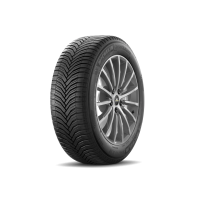
The "summer optimised" Michelin CrossClimate+ delivered on its promise and proved to be the best of the all season tires in the dry, both objectively and subjectively, but still stopped the VW Golf 1.2 meters behind the summer tire during dry braking testing.
Another 1.4 meters back was the next best all season tire, totalling 2.6 meters behind the summer tire.
Dry Braking
Spread: 6.10 M (17.4%)|Avg: 38.54 M
Dry braking in meters (100 - 1 km/h) (Lower is better)
Dry Braking: Safety Impact: Best vs Worst Tire
The summer tire also had a significant lead during dry handling, being the only tire to break the 100 second mark. The rest of the all season tires were extremely close to each other, with just 1.4 seconds separating the group.
Dry Handling
Spread: 3.63 s (3.6%)|Avg: 101.77 s
Dry handling time in seconds (Lower is better)
Reference Summer
99.92 s
Michelin CrossClimate Plus
101.04 s
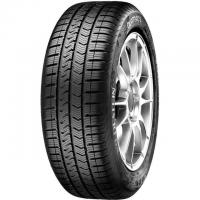
Vredestein Quatrac Pro
101.04 s
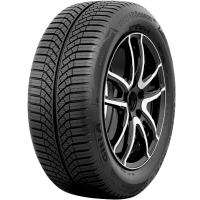
Goodyear Vector 4Seasons Gen 3
101.22 s
Bridgestone Weather Control A005
101.35 s
Hankook Kinergy 4S2
101.36 s
Continental AllSeasonContact
101.59 s
Giti GitiAllSeason AS1
102.20 s
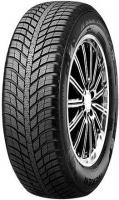
Nexen N Blue 4 Season
102.72 s
Cooper Discoverer All Season
103.43 s
Reference Winter
103.55 s
Subjectively, the summer tire felt the best during dry handling.
Subj. Dry Handling
Spread: 2.50 Points (25%)|Avg: 8.85 Points
Subjective Dry Handling Score (Higher is better)
Reference Summer
10.00 Points
Michelin CrossClimate Plus
9.50 Points
Vredestein Quatrac Pro
9.20 Points
Goodyear Vector 4Seasons Gen 3
9.00 Points
Continental AllSeasonContact
8.80 Points
Hankook Kinergy 4S2
8.80 Points
Bridgestone Weather Control A005
8.80 Points
Cooper Discoverer All Season
8.80 Points
Nexen N Blue 4 Season
8.50 Points
Giti GitiAllSeason AS1
8.50 Points
Reference Winter
7.50 Points
Wet
Wet braking is a key safety quality for an all season tire, and three of them proved to be more effective than the summer tire, even at the high test temperatures.
The Bridgestone, Hankook and Goodyear all stopped the car within 0.4 meters of each other, with the next best all season tire 1.4 meters further on.
Wet Braking
Spread: 4.70 M (12.9%)|Avg: 38.43 M
Wet braking in meters (80 - 1 km/h) (Lower is better)
Wet Braking: Safety Impact: Best vs Worst Tire
Wet handling returned the advantage to the summer tire, but the margin was small, with the Bridgestone, Hankook and Goodyear trio staying in the top three places.
Wet Handling
Spread: 3.22 s (4.6%)|Avg: 71.87 s
Wet handling time in seconds (Lower is better)
Reference Summer
70.69 s
Bridgestone Weather Control A005
70.72 s
Goodyear Vector 4Seasons Gen 3
70.83 s
Hankook Kinergy 4S2
71.08 s
Continental AllSeasonContact
71.62 s
Vredestein Quatrac Pro
71.75 s
Michelin CrossClimate Plus
72.12 s
Reference Winter
72.31 s
Nexen N Blue 4 Season
72.60 s
Giti GitiAllSeason AS1
72.94 s
Cooper Discoverer All Season
73.91 s
While the Michelin couldn't match the grip of the best all season tires, it did feel excellent subjectively.
Subj. Wet Handling
Spread: 3.00 Points (30%)|Avg: 8.96 Points
Subjective Wet Handling Score (Higher is better)
Reference Summer
10.00 Points
Michelin CrossClimate Plus
9.50 Points
Hankook Kinergy 4S2
9.50 Points
Bridgestone Weather Control A005
9.20 Points
Goodyear Vector 4Seasons Gen 3
9.20 Points
Giti GitiAllSeason AS1
9.20 Points
Nexen N Blue 4 Season
9.00 Points
Continental AllSeasonContact
9.00 Points
Reference Winter
8.50 Points
Vredestein Quatrac Pro
8.50 Points
Cooper Discoverer All Season
7.00 Points
Continental, Hankook and Cooper all performed well in the deep water aquaplaning testing.
Straight Aqua
Spread: 12.30 Km/H (14.6%)|Avg: 78.15 Km/H
Float Speed in Km/H (Higher is better)
Continental AllSeasonContact
84.28 Km/H
Hankook Kinergy 4S2
82.91 Km/H
Cooper Discoverer All Season
81.96 Km/H
Reference Winter
81.31 Km/H
Giti GitiAllSeason AS1
79.68 Km/H
Goodyear Vector 4Seasons Gen 3
79.03 Km/H
Reference Summer
75.97 Km/H
Michelin CrossClimate Plus
75.66 Km/H
Bridgestone Weather Control A005
73.99 Km/H
Vredestein Quatrac Pro
72.91 Km/H
Nexen N Blue 4 Season
71.98 Km/H
Curved Aquaplaning
Spread: 0.53 m/sec2 (22.8%)|Avg: 2.02 m/sec2
Remaining lateral acceleration (Higher is better)
Cooper Discoverer All Season
2.32 m/sec2
Reference Summer
2.17 m/sec2
Hankook Kinergy 4S2
2.15 m/sec2
Reference Winter
2.12 m/sec2
Continental AllSeasonContact
2.06 m/sec2
Giti GitiAllSeason AS1
2.01 m/sec2
Goodyear Vector 4Seasons Gen 3
1.99 m/sec2
Bridgestone Weather Control A005
1.96 m/sec2
Vredestein Quatrac Pro
1.82 m/sec2
Michelin CrossClimate Plus
1.80 m/sec2
Nexen N Blue 4 Season
1.79 m/sec2
Snow
The snow testing really highlighted just how poor a summer tire is in adverse weather, with the summer tire performing dangerously in all three tests.
While none of the all season tires could match the winter tire on snow, the Giti, Continental and Goodyear all performed extremely well during snow braking.
Snow Braking
Spread: 17.72 M (76.3%)|Avg: 26.32 M
Snow braking in meters (Lower is better)
Reference Winter
23.22 M
Giti GitiAllSeason AS1
23.75 M
Continental AllSeasonContact
23.84 M
Goodyear Vector 4Seasons Gen 3
23.87 M
Hankook Kinergy 4S2
24.73 M
Nexen N Blue 4 Season
24.91 M
Michelin CrossClimate Plus
25.15 M
Bridgestone Weather Control A005
25.75 M
Vredestein Quatrac Pro
26.64 M
Cooper Discoverer All Season
26.70 M
Reference Summer
40.94 M
Goodyear, Continental and Giti confirmed their straight grip advantage by also claiming the top three for snow traction.
Snow Traction
Spread: 47.34 s (222%)|Avg: 27.78 s
Snow acceleration time (Lower is better)
Reference Winter
21.32 s
Goodyear Vector 4Seasons Gen 3
21.56 s
Continental AllSeasonContact
21.95 s
Giti GitiAllSeason AS1
22.48 s
Nexen N Blue 4 Season
22.62 s
Michelin CrossClimate Plus
22.74 s
Hankook Kinergy 4S2
24.17 s
Bridgestone Weather Control A005
24.98 s
Vredestein Quatrac Pro
27.05 s
Cooper Discoverer All Season
28.03 s
Reference Summer
68.66 s
Pleasingly, the snow handling test kept the Giti, Goodyear and Continental in the top three, but the winter tire could really show its design advantage, offering much more grip when cornering and beating the all season tires by a significant margin.
Snow Handling
Spread: 51.49 s (70.7%)|Avg: 86.98 s
Snow handling time in seconds (Lower is better)
Reference Winter
72.81 s
Giti GitiAllSeason AS1
80.21 s
Goodyear Vector 4Seasons Gen 3
81.35 s
Continental AllSeasonContact
81.43 s
Hankook Kinergy 4S2
81.92 s
Michelin CrossClimate Plus
83.22 s
Nexen N Blue 4 Season
83.87 s
Vredestein Quatrac Pro
86.15 s
Bridgestone Weather Control A005
88.51 s
Cooper Discoverer All Season
92.98 s
Reference Summer
124.30 s
Subj. Snow Handling
Spread: 9.00 Points (90%)|Avg: 6.30 Points
Subjective Snow Handling Score (Higher is better)
Reference Winter
10.00 Points
Giti GitiAllSeason AS1
8.00 Points
Continental AllSeasonContact
7.50 Points
Hankook Kinergy 4S2
7.00 Points
Goodyear Vector 4Seasons Gen 3
7.00 Points
Michelin CrossClimate Plus
6.80 Points
Nexen N Blue 4 Season
6.00 Points
Cooper Discoverer All Season
6.00 Points
Bridgestone Weather Control A005
5.00 Points
Vredestein Quatrac Pro
5.00 Points
Reference Summer
1.00 Points
Comfort
The subjective comfort of all the tires on test was extremely close, with only Bridgestone having a small advantage over the group.
All the all season tires proved to have higher comfort levels than the summer tire, which is well regarded as a comfortable summer tire.
Subj. Comfort
Spread: 1.00 Points (10%)|Avg: 9.48 Points
Subjective Comfort Score (Higher is better)
Bridgestone Weather Control A005
10.00 Points
Nexen N Blue 4 Season
9.80 Points
Hankook Kinergy 4S2
9.80 Points
Reference Winter
9.50 Points
Vredestein Quatrac Pro
9.50 Points
Cooper Discoverer All Season
9.50 Points
Goodyear Vector 4Seasons Gen 3
9.50 Points
Giti GitiAllSeason AS1
9.50 Points
Continental AllSeasonContact
9.20 Points
Michelin CrossClimate Plus
9.00 Points
Reference Summer
9.00 Points
Noise testing was conducted on two surfaces, at different speeds, with the dB curves averaged out.
Noise
Spread: 1.80 dB (3.1%)|Avg: 58.13 dB
Internal noise in dB (Lower is better)
Vredestein Quatrac Pro
57.30 dB
Nexen N Blue 4 Season
57.50 dB
Bridgestone Weather Control A005
57.60 dB
Goodyear Vector 4Seasons Gen 3
57.60 dB
Reference Winter
57.70 dB
Reference Summer
57.80 dB
Continental AllSeasonContact
58.40 dB
Hankook Kinergy 4S2
58.40 dB
Michelin CrossClimate Plus
58.90 dB
Cooper Discoverer All Season
59.10 dB
Giti GitiAllSeason AS1
59.10 dB
Rough Noise
Spread: 1.90 dB (2.9%)|Avg: 67.31 dB
Internal rough surface noise in dB (Lower is better)
Nexen N Blue 4 Season
66.50 dB
Reference Winter
66.90 dB
Bridgestone Weather Control A005
66.90 dB
Cooper Discoverer All Season
66.90 dB
Goodyear Vector 4Seasons Gen 3
67.00 dB
Hankook Kinergy 4S2
67.10 dB
Vredestein Quatrac Pro
67.20 dB
Giti GitiAllSeason AS1
67.70 dB
Continental AllSeasonContact
67.90 dB
Reference Summer
67.90 dB
Michelin CrossClimate Plus
68.40 dB
Cost
The new Goodyear narrowly beat the Bridgestone for the lowest rolling resistance of the all season tires, however if rolling resistance is your priority, the summer tire has a significant advantage.
Rolling Resistance
Spread: 2.72 kg / t (38.9%)|Avg: 8.63 kg / t
Rolling resistance in kg t (Lower is better)
Reference Summer
7.00 kg / t
Goodyear Vector 4Seasons Gen 3
7.96 kg / t
Bridgestone Weather Control A005
8.01 kg / t
Continental AllSeasonContact
8.48 kg / t
Giti GitiAllSeason AS1
8.54 kg / t
Hankook Kinergy 4S2
8.57 kg / t
Michelin CrossClimate Plus
8.77 kg / t
Vredestein Quatrac Pro
9.26 kg / t
Reference Winter
9.30 kg / t
Nexen N Blue 4 Season
9.32 kg / t
Cooper Discoverer All Season
9.72 kg / t
19,000 km
£1.45/L
8.0 L/100km
--
Annual Difference
--
Lifetime Savings
--
Extra Fuel/Energy
--
Extra CO2
Estimates based on typical driving conditions. Rolling resistance accounts for approximately 20% of IC vehicle fuel consumption and 25% of EV energy consumption. Actual savings vary based on driving style, vehicle weight, road conditions, and tire age. For comparative purposes only. Lifetime savings based on a 40,000km / 25,000 mile tread life.
The premium summer tire was cheaper than the cheapest all season tire, with the Michelin proving to be the most expensive.
Good in the dry, best on test in the wet, very low rolling resistance, highest levels of comfort, low noise.
Low grip in the snow for an all season tire, average aquaplaning resistance.
The WeatherControl A005 excels in the dry and wet, and has the highest levels of comfort. It is the all season tire to pick if you live in a climate which sees very little snow.
Best on test in the dry with good handling and short dry braking.
Average wet braking, most expensive tire on test, higher levels of noise.
The CrossClimate+ excels in the dry and is fine in the snow, but couldn't match the latest generation of all season tires in the wet. The CrossClimate 2 will be coming to market in 2021.
I live in the middle of Europe (not in the mountains) and in the last 365 days it has snowed about 4 days, but due to the winter service there was never really snow on the street, only on some parking lots. There were also significantly more hot days (hotter than 30 degrees Celsius) than cold days (colder than 0 degrees Celsius), That's why I found your distinction between all-weather and summer-oriented all-weather tires very interesting and I ask you to keep this or expand it.
Since I spend by far the most kilometers on the motorway, I wish that you assign the interior noise and fuel consumption a priority and perhaps make them more comparable. So tire A has an additional fuel consumption of 0.2 liters per 100 kilometers compared to tire B and this are additional costs of x € while driving 10 000 km per year, or are the differences much smaller? Because then it would be almost irrelevant, I cannot really deduce how strong this additional consumption is from the Rolling Resistance +1.3 kg / t, just like I guess many other readers.
Additionally it would be great if you, for example, buy 4-6 year old used test winner summer/winter/all-weather tires with a good profile so that you can compare these results with the new all-weather tires. Many readers are probably wondering whether it is besser to drive the old summer/winter tires for another season or immediately switching to a new all-weather tire.
I am also interested in how much profile the tires have when buying, maybe you can include this information.
If it is possible, you could reduce/scrape the profile of all tires to 4 millimeter and test how the results then change. Since, for example, Michelin advertises particularly aggressively that they still have very good driving characteristics even with little profile left.
Lots of suggestions, all good :) I'm working on doing worn testing, but it's extremely expensive so difficult!
There's lots of data for the Michelin CrossClimate on the site, and the CrossClimate 2 will be released in Europe September 2nd so hopefully you'll find the videos on that useful :)
Thanks for the test, excellent in every aspect, the usual top quality you always share I live in Greece (Athens) and I recently got a 4drive Ateca. I plan to drive for the winter weekends in partly snowy cold roads, around 15 - 20 days yearly. My daily drive will be at 3c - 5c for 25 days per year, for about 6 to 7 months temps ranging from 10c to 25c and for about 3 to 4 months, we have temps ranging from 25c to 40+. I'm not sure if an all-season tire is the right choice for me and if it can handle such high temperatures, even a summer biased one like the Bridgestone A005 Evo. I drive about 17k miles a year with normal driving Any advice? It's not very easy to have 2 sets of tires
I have a mazda CX-3 with 215/50/18 tires. In all season tires, there are very few options in this size (unless I can get another size with my rims). I noted Goodyear, Conti and Michelin. I live in France and my priority is a comfortable tire not too noisy and which has some ecological qualities (correct consumption, long life...) Not obvious between the three.
I live in the Paris area. This year we had some melting snow and between 10 and 20 days with negative temperatures in the morning. The original tire on the CX-3 is a Toyo Proxes R40.
Thanks for the Comparison. I am purchasing a new 2021 Toyota sienna. in Canada Vancouver. I wanted a good all season tire so I dont have to keep changing the tires each season. Cost and storage. I read good reviews about Michelline climate 2 , but there seems to better options when I see your test results. I have a problem. If I change to all season tires the factory tires will be wasted. I am not sure whether to change it to all season tire when I purchase the car or use the factory tires as summer tires and purchase another set of winter tires in the winter. can you suggest. Thanks.
I've not tested the CC2 so I'm not sure why you say there are better options?
I'd probably run the factory tires in the summer and then switch to a good all weather or winter in the winter, but it's hard to say without knowing your driving pattern and weather
Thanks for the reply. Decided as you have suggested to run the factor tire during summer, went through your reviews chose Michelin x Ice snow did not want to compromise on family safety. Chose it as it was reported more comfort and longevity. I have one more question. Is there an advantage in getting 4 new wheels/rims for the winter tires.
The advantages are the obvious ones, you get to down size wheels, you protect your "good" summer wheels and you don't have to pay for tire changes twice a year!
Shame there's no wear projection category on this test (yes I know I've mentioned it before and that it's hard to test effectively) - however I wonder if the Bridgestone A005 would have fared quite so well if there was - Go to the A005's user review page and you'll find a bunch of people complaining of poor wear, with 2mm of tread being left at 12,000 miles or so - and hence poor value for money.
In my case, my car is a VW Touran and takes 215/55/17 94 V - The A005 is only about 15% cheaper than the Michelin CrossClimate+, yet I know I can easily expect 25,000 miles from the Michelins - See what I mean?
I fully agree, and I'm always looking to do wear testing. Fortunately there are other tests on the site which do test wear, and it seems the A005 doesn't wear the best.
I'm a little confused and wonder whether you can help...? I've looked at this test with great interest as I'm looking to change to get the best comfort tire. I drive a Kia Venga and am finding the ride too firm. When I had a road test, the car was on Continental Premium Contact 2's, and I thought they gave a reasonably good ride. Well, I didn't buy that particular car - I eventually went for a lower-mileage example but it's shod with Michelin Energy savers. I think the ride is much firmer with these. Anyway...to my point: When I look at your winner in the 'subjective comfort' test, it's the Bridgestone Weather Control A005. However, when I click on the link to the individual test page (not part of the group test), the comfort is rated at 74%. As an example, this is 13% lower than the Michelin CrossClimate+ rated on its own test page at 87%, but finishes in 9th position in this group test. Should I take this recent group test as the best guide?
Hey- wondering if you can give some advice, I'm slightly undecided as whats best. We live half way up the country. Our daily drive is a mix of dual carriageway and proper rural roads, which are always untreated and often muddy because of farm traffic. Currently on proper winters but super fed up with swapping. Snow is the odd day per year but cold/icy wet and mud is my concern. What would you buy? :)
While I'd love to give you some extra info, I'm not sure what I can tell you this test can't? Sounds like a summer bias all season tire is a good compromise for you.
Hi, thank you for the review. Really helpful. I have a Golf Gti mk7.5 with Michelin PS4 tires 225/40/18 which i find very noisy on anything but smooth surfaces. (I've dynamat'ed the boot and under rear seats that helps.) I'm now looking for the quietest tires and someone told me to go for all season as they are the quietest and then saw this video where you have comparisons to summer and winter tires, and v helpfully had cabin noise on smooth and course surfaces. It interesting you used a Golf as your test car on 17" wheels. I live in south England. Do you think Bridgestone Weather control or Goodyear 4 seasons would be the best for the quietest tires on my GTi with 18" wheels? Or a summer tire. Thanks
Can I ask whether all the tires in this test have the same speed and load ratings, I know from reading your other tests that you don't believe load ratings make much or any difference to the tires, but do manufacturers change the compounds slightly for higher speed ratings?
It is interesting to see that the industry seems to have decided that symmetrical directional tread patterns are the way forward for now. Costly tire rotations with tire dismounting and tire mounting? "The customers are wealthy enough to pay for those additional costs. Afterall, they can afford breathing air and drinking water, so they obviously have plenty of disposable income and time." Tire dealers ended up disliking tire rotations when the first symmetrical directional Goodyear Gatorbacks were installed on cars. I have noticed that the heavy trucking industry has largely rejected the directional tread trends, demanding that the engineering be used to develop better symmetrical non-directional tread tires. Super Single wide directional tire failures produce spectacularly huge amounts of wheel damage.
It seems to be in the same class with Vredestein Quatrac Pro : sport/UHP orientated, assymetrical design. One of Vredestein's directors said that assymetrical tread design is better for larger, wider sizes. They might know things, they have a long history with All Seasons and 3 models on sale right now, for different sizes. The article might be worth reading:
As far as I know, Dunlop are to pushing it in testing this year so sadly we might not get to see how it is. I'm still hopeful another tester will get their hands on it!
What about Nokian ? up until last year was on top 5 but it appears this year Gitti-Gitti, Nexen or Cooper are better or far superior.. hmmm weird.. or should i say interesting ?!..
Tank you for the quick response and for the information.. Didn't knew about new SeasonProof.. i'm a big fan of Nokian products since i first fit them (a full set) on my Wife Sharan after that experience i got a full set for all 8 cars we own.. (6 cars our own and 2 are inherited one from my grand-father and one from my wife parents).. i got tires directly from official Nokian brand and got a very good deal for such good balanced products.. ;0)
Awesome test with a lot of detailed information, well done! You mentioned 2 different score weightings in your video, which got me thinking... Would it be possible to implement a score weighting tool (for example with sliders) on the website? That would result in a different ranking of the tires based on the individual needs of each one of us. I think that would be very helpful to make a decision which one of these tires to buy :)
the tire industry advocates a crossover temperature of approx +7C to swap from summer tires to all season/winter tires. is there any low guide temperature that all season tires will perform down to? is there an equivalent crossover temperature between all season and winter tires?
There's not any official guidance on that. All season tires work fine into really cold conditions in the dry, wet and snow, but where a full winter tire is an advantage is if you drive on a lot of compacted snow or ice.
For the majority of the UK this isn't a problem, and an all season tire will work well through the average winter.
Thank you for this review. I am considering to have my car's tires replaced with all season tires and this website is plenty of helpful information.
I've seen that Dunlop has recently launched a new summer oriented all season tire with asymmetric pattern, the Dunlop Sport All Season.
Have you got any insight on this tire's performance ? I'm looking forward to see it included in one of your upcoming reviews, as well as the Vredestein Quatrac, which is the replacement for the Quatrac 5 and has scored remarkably well so far in Auto Bild's reviews, unlike the Quatrac pro you tested.
Thanks for the reply. I think I'll go with the Quatrac for this winter as I find the OE tires that came with my new car don't feel quite reassuring in the wet under cold temperatures.
Great review as always! It makes me thinking The results make me wonder if Goodyear (I guess this is the best all season tire you can get) will be good enough for the BMW G21 not to think about changing tires. The only things that make me think are dry braking and snow handling cause I live in Munich and regularly drive 160-180 on motorways, as well as driving 10-20 times in the winter to the Alps in Austria.
Great comparison, as always. Thank you so much for this, it’s really helpful. I have a BMW 120i that runs on 245/35R18 at the rear. Only the Conti AllSeason Contact and Michelin CrossClimate + are available in this size. I wish I could wait for the new CrossClimate 2 to be released but I’m already halfway through my leasing contract so I don’t want to wait too long. I’m mainly driving in the UK, on the motorway (usually under the rain) so I want some comfort and low noise level (Can’t stand run flats anymore). But I’m planning to go to ski next year so I want to make sure I have the right tire for that too. Which one between the Conti and the Michelin would you recommend?
Otherwise Goodyear Vector 4Seasons Gen-3 (or 2). They should be able to offer BMW sizes. Even the Hankook Kinergy 4S2 or Vredestein Quatrac Pro are also not bad and cheaper.
BMW recommends 225 40 r18 all round for winters and doing this would give you significantly more choice. Son runs this set up on his M140i without issues ?
Cracking review Jon, many thanks for putting this together. One real-world review: I have Nexen N Blue 4-Seasons on both our cars and they have been excellent in the Frankfurt winters (wet, huge temperature variations, occasional snow). Very happy.
What was the ground and /or air temperature these tests were conducted at?
Whilst it was of course a very informative test / video, it would have been useful to have tested these tires at multiple temperatures Jonathan. We know that different all-seasons behaviour varies at different rates depending on this. Currently you’re only telling half the story - and we don’t know which half.
Until you show us data that proves otherwise, I’ll stick with my Michelins as per your video on this.
Yes that's the article I was referring to - the problem is you've now spoilt us!
We want to see every all-season from this video tested in this way, otherwise how do we know whether the number 1 tire is still the best no matter whether the temperature it's operating in is 25 or -5 degrees?
I really appreciate the quality and extensiveness of your tests and explanations. One suggestion: For your international viewers/ readers, it would be very helpful either to have separate tests based on market availability or at least to have market availability mentioned in the tests/ reviews. In particular, it is quite difficult to find objective, comparable, worthwhile reviews of tires that are available in the U.S. market.
I spent quite a bit of time selecting my preferred tire (based largely on your great reviews) only to find out that it's not available in the U.S. (Goodyear dealers in the U.S. have no idea what the Vector 4Seasons is.) The same was true for my second choice (Bridgestone Weather Control A005). I contacted Goodyear and Bridgestone; both replied with completely useless marketing garbage directing me to other models (all of which are described in ways that fail to differentiate anything). I settled on Michelin CrossClimates (3rd choice), which have taken 3 months to acquire. They've been available for several years for the UK and Europe, but are evidently very difficult to get here. (Even the dealers that could get it on special order all incorrectly thought they were dedicated snow tires.)
I suspect it will be several years before I will make use of your reviews again, but perhaps other viewers would benefit from reviews of tires available in the U.S. market or, at least, an indication in the tests of which tires are available in which markets. (I also imagine viewers elsewhere in the world might appreciate similar info if it's not too onerous for you to include.)
Again, thanks for your great reviews. (For what it's worth, I'm always amazed that you can casually talk through technical reviews while whipping around race tracks driving better than I ever would with total focus.)
Ironically you have the CrossClimate 2 before we do!
Thanks for the kind words, I am working on America specific content and I hope to have more useful content in the future. The latest winter tire video featured US specific recommendations so it's a start :)
Thank you for the test. I'm about to place order for the Good Year Vector G3.
Based on your test, the Vector G3 performs just behind the Good Year winter reference tire, the Performance plus, in snow braking and traction. When I look at the other test for winter tires this year, I see many other well-regarded winter tires, including the Michelin Alpin 6 and the Continental WinterContact TS 860, also perform behind the Good Year Performance plus in snow braking and traction.
My question is: Does that mean the Good Year Vector G3 performs very close to these winter tires in snow? In my region, the temperature never drops below -1 -2c. I understand it's difficult to say without testing them directly but that's just my guess. What do you think in your professional opinion? Thank you.
Thanks! Just want to make sure. The guys at the vendors gave us a hard time about 4 seasons and snow tires ( but they care for customers, good for them). I trust my researches, but I have to convince my wife. The guys are stuck with the characters of 4 seasons tires 10 -15 years ago and how far tire technology has improved. I will show my wife your comment! Thanks again.
Hi, I have seen your all weather tires review and it’s really informative. I can do with some help please- I have a Jaguar XF saloon and now looking for 4 new tires due to existing Goodyear F1 didn’t last as long as it should have as between groves, the cords started showing irrespective of the tread being more then 4mm on al tires. i am after size 245/45 r18 100Y. I don’t drive the car much so it’s for going to work on 30 mile round trip once a week and some weekend driving. Don’t want to spend a lot of money so was wondering if you can suggest any decent tire like please? I liked Hankook Kinergy 4S based on your all season tire review but it’s £110/tire so thought of going with IMPERIAL ALL SEASON DRIVER 245/45 R18 100Y as it’s around £70/tire.
Would you suggest this or another all season tire give a causal low mileage driving (max 2500 miles a year).
I've not seen any tests of the Imperial but I would assume its performance, especially in the wet would match its price point. The Maxxis AP3 is about as cheap as I'd want to go, but ideally you be looking at some of the top tires from this test
Hi, thanks for replying- so between Maxxis AP3 and Hankook Kinergy 4S, which one would you suggest if price diff is around £35/tire? You wouldn’t suggest Imperial given you haven’t seen any test then? Thanks for your help.
Hello. I am French and I found your video test and summary article very interesting. My English being very basic, I was able to understand your graphics in your video and a bit of your comments, but it would be excellent to be able to offer your video report in French translation. I did not find such a complete test on the French net. Thank you. Pascal
Hello. Is this Goodyear Vector tire an XL (extra load / reinforced) one? I checked in specification and 225/45 R17 size (which was tested) in Poland is sold only as XL. If you confirm, I wonder what a difference would be in test between standard and reinforced tire of the same size. Greetings Artur
Thank you for quick reply. Could you advice me one thing? I want to buy Goodyear Vector 205/60 R16 96V XL to my vw t-cross which has homologated 92H index. I suppose that because of high profile (60) XL tire will be more predictable (safer) in handling and corners and more durable against road holes, curbs etc. On the other hand I wonder if such tire isn't too stiff / hard and uncomfortable to ride such city-type car, especially that there is quite big difference between 92H and 96V indexes. What do you think as an expert? Greetings Artur
Without testing it would be impossible to know outside of Goodyear, however I think you've got the right idea.
I think if you're coming from a summer tire, a 96V Vector should still feel quiet and comfortable while offering a little more durability which is important in winter.
Am stuck between 3 of the tires in the tests I need to buy 8 tires in total All 225 40 r18 in size. And am torn between the vredestein at £76 Cooper at £66 and nexen at £70. The vredestein tested very high in auto blud but the coopers where not recommended. In your tests both where the lowest scoring with the nexen being marginly better. I can find no other reviews on the coopers other than being the best rated tires out of the 3 with a c for fuel and b for wet grip rating. Can anyone recommend which to pick or something totally different or should I chance the coopers and write my own review?
Go for the best tires (newest Vredestein is called only "Quatrac" without the "Pro" but anyway), the price difference you mentioned 6-10 £ per tire in R18 is anyway very small, especially comparing to the value of your 2 cars (insurance) and your and your family life...Vredestein's also have usually a good long lasting km resistance and a good fuel economy, returning you back much more than the originally paid slightly higher price...Don't forget to let here your review please.
Enjoyed the video and the way you play a totally straight bat in doing so. I've been an all season convert for a few years now, having previously run winter and summer sets. The advent of TPMS made it too expensive to have separate rims, though I used to love my old Nokian WRs for snow driving. All seasons are by definition a compromise, but it's one I'll cheerfully take when you get a winter snap which makes driving on summer rubber a truly terrifying experience.
Hi thank you so much for your great review on all season tires!!! The best review by far I found! I just have one question for you: Do you know if any of these tires you tested, have rim protection? I think that is interesting for all people, who tend to hit the curb like me :D
I don't recall seeing any with particularly great protection, and as the tires are scrapped I'd have to go back through the footage, sorry! The intro to all the tires at the start of the video might give you a slight idea if any have a raised flange
Dominic, if it helps, the standard size of tire on my 2016 VW Touran means that the alloy wheels are adequately protected by the tire wall anyway. I run Michelin CC+ on that.
If you think your tires currently expose your wheel rims then try going up a width profile size when you replace.
HI! I watched your review again and it made me think: what was the depth of the water on wet testing? Water seems to be literally flowing down the test track on handling test. In wet braking test, standing water is deep enough for waves to occur when stopping (25:28). In real life, that would mean rain pouring down so hard, that drainage of the streets would be overwhelmed. Wouldn't under such conditions (due to heavily reduced visibility alone) everybody drive too slow (if at all) for "hydroplaning" even to matter? Aa far I could see, aquaplaning tests are mostly made in 8 mm deep water. When does that happen? Extremely rarely: perhaps in some underpass after summer thunderstorm. But definitely not while driving fast on highways. Besides, there are always speed limits on the public roads. So, considering "float speed" measured, how could aquaplaning (as tested) even happen, at least within the legal speed limits? So, I made a bit of research and found this: https://www.researchgate.ne... Apparently, in less than 1% percent of wet road conditions water on the streets is deeper than 1mm. That's less than 0,3% of overall road conditions. And even when that happens, it's practically always at low speeds, mostly in urban areas. How relevant is than testing like this: https://www.tirestesting.co... All that has some serious implications for safety. Tires are compromises, results of solving cooptimisation problems between ensuring grip on one side and avoiding hydroplaning on the other. Just looking at the Bridgestone tire we can see, that by increasing grooves and sipes it is very good at preventing hydroplaning, but is sacrificing grip and durability with less rubber on the street. The question of course is, how relevant is this and for how long. After 10.000km it might be worse even where is now best. But as already mentioned, we simply don't drive fast enough (at least legally) in standing water deep enough for hydroplaning to matter as much as officially tested. People can so buy a tire with "A" rating for unrealistic wet conditions that will never happen at expense of safety under conditions experiencing every day! So, shouldn't be tires tested not only on wet, but also on damp roads, and come with some legally required graphs explaining changing performance during lifetime.
"So, shouldn't be tires tested not only on wet, but also on damp roads, and come with some legally required graphs explaining changing performance during lifetime." - in an ideal world, but what you're asking for is an unrealistic amount of testing.
We wet test around 0.8-1mm of water depth which is representative of a fair bit of rain and the same as the EU label, but remember we also test at brand new. A tires ability to evacuate water drops significantly with tread wear.
Also damp testing is nearly impossible to do repeatably. On a test like this with 11 sets of tires, it takes a good 3-4 hours to do all the wet handling tests. As you need the conditions to be exactly the same for every run, you have to use a little more water to make sure it's consistent.
One last thing, a number of premium manufacturers are reducing the aquaplaning resistance on purpose as studies have shown less than 1% of accidents are caused by aquaplaning. But these are often the most serious, so again it's a balance. Aquaplaning is most common in puddles or very very hard rain, so can easily be over 8mm.
Tnx, your answer does clarify quite a bit. For the record, I do really appreciate your effort and transparency, which is exemplary. And off course there's a limit of what's possible there. But I also think, manufacturers and legislators should be more transparent. Sure, there are always variables and cooptimisation problems to be solved. But it is highly frustrating for a costumers not to know what is relevant and what to expect. Imagine this. I do approx. 1500+km/month. I can buy Bridgestone now due to superior wet performance and take into account slightly worse dry and snow performance, only to be worse off in Spring across the board (including wet) due to increased wear. And there's no information, how temperature, weight or power of my car effects all this. So I don't even know, if I was better off during the winter. To my knowledge, only Michelin has to some extend addressed the problems of consistency and relevance: Sure, 1% of accidents might be caused by aquaplaning, but how many of them were speeding or had worn out tires? Chances are, all of them. As for 8mm deep puddles, I have seen them so far only in combination with quite low speed limits, certainly not on highway at 130km/h. But I don't know, that my differ from country to country...
There has been a push to get worn testing on the label, but as it's technically very difficult (drum wear is different from real world wear) it's still in planning.
thank you for the great test. May I ask you to comment on this year's ADAC test results (https://www.adac.de/rund-um... They seem to still be quite against all season tires. Do you think that their poorer results are only due to using a heavier car and higher dry temperatures? I have some doubts whether all season tires would be ok for the summer (we have temperatures up to 34°C and a similarly heavy car).
I chose not to comment on all season suitability in this test. ADAC have a point, as you can see from this test, dry braking is in bias of the summer tire by a significant advantage. In the UK I like to recommend a summer tire in the summer, and an all season tire in the winter
I guess I'll continue with two new W and S sets to be the safest, even though we don't do a lot of mileage. I hope that there will be a test in the next few years to tell me when to change these sets due to old age ;). Thank you again, your site is my new favourite tire info source.
It's still a bit suspect that ADAC has such high Dry braking distances for the all season tires, almost 7m higher distance for the same tire model compared to what you measured.
Does using a slightly different size and a larger/heavier car really make such a difference in braking distance? If yes, I cannot understand ADAC's recommendation against all season tires, in this case they actually should make a recommendation against large and heavy cars instead.
It might be the case that adac chose to use a low grip surface to extend the difference between tire models, where as I prefer to use a surface comparable to the average road.
Hello, The bridgestone A005 weather control have obtained a result that's 10km/h inferior to the Continental Allseason Contact. In this test (2019 Auto Bild All Season Tire Test)that has been published last year, instead they result superior by 3 km/h. How is such a different result between the two tests possible ?
I undestand little variations, but a difference like this is substancial.
Amazing website and thanks for your detailed reviews. I have problems to find the two set of results, I can only see one above these comments. Also, I am intrigued by how the Quatrac Pro was put so low in the test, as in a previous test by Auto Build it was second just to the Crossclimate+ (you mention just down here that it was a different tire, but I as far as I can see they are exactly the same, or at least they have the exact same name). So how come a same tire, compared to the same tires it previously beat, now its suddenly inferior after dealing with comparable objective tests? Its numbers are better than other tires. Anyway, I guess is impossible to get rid of subjectivity. I am in between these two and the Vector 4Seasons Gen 3, and it is a very difficult choice.
BTW I just found their latest publication, and it is indeed just Quatrac, I was referring to their previous one where the Quatrac Pro was second place.
So again, I am basically looking again for the table of results for when you are giving more and less weight to the snow performance. I am not liking the Weather Control A005 because its longevity issues. Waiting for the EVO... Sadly I do not think you will review it anytime soon?
Yes sorry it was the new tire in this year's auto build test.
Without knowing all the data from the 2019 auto build test it's impossible to say. Due to covid we tested unusually warm which might have been an issue for the Vredestein more than other tires
Well... The data is there. So if it suffers a bit in warmer weather I will consider the Bridgestone you suggested... I'm still not happy that it last less than the others. I have a fast car, and a heavy foot. And I don't have space to keep dedicated summer tires... So it might be my only choice. Just like you conclude on your video!
Well... Not the only, I just remembered their new EVO is out. But I was looking for reviews and there are none... Guess... They can't ruin it... Right? Apparently they only wanted to improve on snow performance... But... At the compromise of warmer dry and wet performance??? Impossible to know until you test it!
The Quatrac Pro also came second in tire rack's review also. I wonder if they test was just more weighted towards UK driving style. I would love to get the crossclimate + or the newer cross climate 2 but unfortunately they don't make them in my specific size.
The tire rack test was against American all season tires which are pretty different from ours so can't really be compared. I don't know if its the same tire as ours also
I'm at a complete loss here between the disparity of your test, and the auto bilt test regarding the Vredestein Quatrac Pro. It came second in the auto bilt test but came eight on your test. It also came second in the north American Tire rack test. Do you know if they have recently changed thier tire formula? I'm only asking because it's one of the few tires in my size that's available the US. I know it's still on the list of top tires but there are a few other tires I'm considering. They Hankook Kinergy 4S2 scored higher in this test but scores lower in the auto bilt test.
Ah thanks for clearing that up. So will the new version simply be called quatrac or will they both be called quatrac pro. If they will both be call quatrac pro is there any visible diffrences between the two or was it simply be just a formula change? Thanks for the fast response by the way.
I'm wondering if the CC+ would score much higher on the cost metric if, rather than the purchase cost, either the purchase cost over its lifespan (as has been in the past on other reviews), or an entire lifetime cost (including the metric on rolling resistance) were used?
The CC+ is always near the top on purchase price, but also out in front in terms of both lifespan, in terms of useful life (years), wear rate (miles or km) and performance when worn.
As someone whose car runs on CC+s (15in), I found that they are quite price competitive compared to their main rivals (GY / BS / CTis) on the most common tire sizes like mine - only about 5-10% more before any discounts (195/65 R15) and others (like the 205/55 R16 and a few others), but considerably more expensive on less popular and larger tire sizes.
My CC+s are doing very well after 2.5 years. Still no snow to test them on during that time (I live in East Anglia)...yet.
I didn't include price into the overall weighting as no wear, this should be something we do next year.
That said, Auto Bild did test wear and put it against cost, and Michelin were mid-bottom of the group, which is usually the case as some people have caught up, and they're expensive purchase price.
What no on tests is performance though treadlife, but putting a value against that would be hard.
Odd that score from Auto Bild, as I recall more than one test you've published (not sure which magazine they were from) showing that the CC+ scored very highly on wear, offsetting the (mostly) high purchase price.
Perhaps the variance is larger as most tests are conducted on tires that are 16, 17 and 18in, rather than ones like my car's 195/65 R15, where the purchase price is normally only about £3 - £7 more than, say, the GY-gen2 or Contis (which themselves are normally expensive). The Bridgestones I found were always a bit cheaper, perhaps because they are trying to regain market share they lost a few years ago (my figures from BlackCircles from today).
I suppose a lot of this is subjective as regards life costs for actual drivers, as usage patterns and mileage vary quite a bit. I was attracted to the Michelins because of the lower performance degridation when worn and the longer expected lifespan of the tire (not including wear), given I do relatively low milegaes per year.
Oddly enough, the CC+'s (my car's tire size) official EU noise rating is 69dB as opposed to the Bridgestone A005 EVO at 71dB (same as the previous version), but that admitedly is the external noise, I think. Shows how different things can be on the interior and, perhaps, from one tire size to another.
I was pleasantly surprised about the Hankooks, which I will keep an eye on as well as the 'usual suspects' from the premium brands for next time, especially as they are about the same again cheaper than the Bridgestones than mine from looking at summer tires last time out.
Once again an excellent review. I bought a set of continental all season contacts the day before the review. I suppose they will do for the cumbrian winter
My mother has them on her 2004 Ford Fiesta and they are excellent for the pootling around that she does - They improved the car’s horrendous thirst (30 - 35mpg for a 1.6 auto) too!
She is based in Berkshire - I think they will more than “do” for a colder climate like yours, they only really struggle when they get warm as the test video of their performance at 15/7/2 degrees shows
Not sure if I'm missing something - but where are the second set of results mentioned in the video whereby the weighting of each section is adjusted for the southern UK climate (or similar)?
Other than this, once again a fantastic test - with only the wear vs. effectiveness testing being missing.
Thanks Jonathan, I’m running a set of Michelin CC+ on my Touran based on your recommendations for year-round performance, but it would be interesting to see how the other choices stack up against these with a more relevant weighting of criteria - although I must say, given your own observation that the southern UK roads are dry ~65% of the time, personally I would swap your 40/30% wet/dry weighting around the other way. I would also put greater weighting on rolling resistance, since this factor effects the total life cost of the tire.
Any plans to build an app where we can customise your test results based on our own preferences?!
Thanks so much again for this test, really appreciate the effort you’ve gone through! Maybe you want to include the ‘mild winter’/London scoring as a results list here as well, as you have done in the video? Think that is really useful as here in the Netherlands we only get snow sometimes and for the one-time a year drive to the Alps, a summer biased all-season tire would be perfect. I’m surprised by the somewhat lower scores for the Michelins in the wet and wonder how the Bridgestone Weathercontrol A005 holds up when you test for wear as well.
The wear question is one on my mind, though there are a few user reviews who have got great mileage. Not Michelin level, but not awful.
Regarding the "london" ratings, I never intended to give more than the top few, it was just to highlight that the Bridgestone and Michelin tires are better suited to warmer wet climates, however I will try and edit something into this in the next few days :)


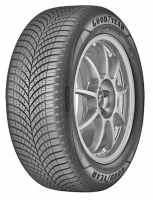
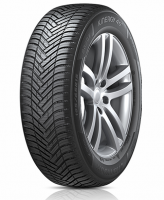
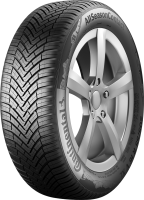
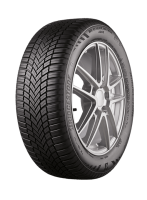
Thinking about A/S tires... But worry about wet and dry surface. What was the temperature for braking on dry and wet asphalt?
This was hot, but the new test out Monday tests at 4c and 15c
Michelin CrossClimate 2 or Pirelli Cinturato All Season SF2 will be better to the city for snow and rain? or maybe some other?
Thnx
These are both top choices, personally I'd have the Michelin
I live in the middle of Europe (not in the mountains) and in the last 365 days it has snowed about 4 days, but due to the winter service there was never really snow on the street, only on some parking lots. There were also significantly more hot days (hotter than 30 degrees Celsius) than cold days (colder than 0 degrees Celsius),
That's why I found your distinction between all-weather and summer-oriented all-weather tires very interesting and I ask you to keep this or expand it.
Since I spend by far the most kilometers on the motorway, I wish that you assign the interior noise and fuel consumption a priority and perhaps make them more comparable.
So tire A has an additional fuel consumption of 0.2 liters per 100 kilometers compared to tire B and this are additional costs of x € while driving 10 000 km per year, or are the differences much smaller? Because then it would be almost irrelevant, I cannot really deduce how strong this additional consumption is from the Rolling Resistance +1.3 kg / t, just like I guess many other readers.
Additionally it would be great if you, for example, buy 4-6 year old used test winner summer/winter/all-weather tires with a good profile so that you can compare these results with the new all-weather tires.
Many readers are probably wondering whether it is besser to drive the old summer/winter tires for another season or immediately switching to a new all-weather tire.
Keep up your great work
I am also interested in how much profile the tires have when buying, maybe you can include this information.
If it is possible, you could reduce/scrape the profile of all tires to 4 millimeter and test how the results then change. Since, for example, Michelin advertises particularly aggressively that they still have very good driving characteristics even with little profile left.
Lots of suggestions, all good :) I'm working on doing worn testing, but it's extremely expensive so difficult!
There's lots of data for the Michelin CrossClimate on the site, and the CrossClimate 2 will be released in Europe September 2nd so hopefully you'll find the videos on that useful :)
Thanks for the test, excellent in every aspect, the usual top quality you always share
I live in Greece (Athens) and I recently got a 4drive Ateca.
I plan to drive for the winter weekends in partly snowy cold roads, around 15 - 20 days yearly.
My daily drive will be at 3c - 5c for 25 days per year, for about 6 to 7 months temps ranging from 10c to 25c and for about 3 to 4 months, we have temps ranging from 25c to 40+.
I'm not sure if an all-season tire is the right choice for me and if it can handle such high temperatures, even a summer biased one like the Bridgestone A005 Evo.
I drive about 17k miles a year with normal driving
Any advice? It's not very easy to have 2 sets of tires
Thank you and apologies for such a long post.
If you want snow performance and only one set of tires the CrossClimate 2 would be my choice :)
I have a mazda CX-3 with 215/50/18 tires.
In all season tires, there are very few options in this size (unless I can get another size with my rims).
I noted Goodyear, Conti and Michelin.
I live in France and my priority is a comfortable tire not too noisy and which has some ecological qualities (correct consumption, long life...)
Not obvious between the three.
Any advice?
Thanks in advance
Goodyear might have the edge in comfort, but if you live in a part of France that sees a mild winter my choice would be Michelin for the dry.
I live in the Paris area. This year we had some melting snow and between 10 and 20 days with negative temperatures in the morning.
The original tire on the CX-3 is a Toyo Proxes R40.
Thanks for the Comparison. I am purchasing a new 2021 Toyota sienna. in Canada Vancouver. I wanted a good all season tire so I dont have to keep changing the tires each season. Cost and storage. I read good reviews about Michelline climate 2 , but there seems to better options when I see your test results. I have a problem. If I change to all season tires the factory tires will be wasted. I am not sure whether to change it to all season tire when I purchase the car or use the factory tires as summer tires and purchase another set of winter tires in the winter. can you suggest. Thanks.
I've not tested the CC2 so I'm not sure why you say there are better options?
I'd probably run the factory tires in the summer and then switch to a good all weather or winter in the winter, but it's hard to say without knowing your driving pattern and weather
Thanks for the reply. Decided as you have suggested to run the factor tire during summer, went through your reviews chose Michelin x Ice snow did not want to compromise on family safety. Chose it as it was reported more comfort and longevity. I have one more question. Is there an advantage in getting 4 new wheels/rims for the winter tires.
The advantages are the obvious ones, you get to down size wheels, you protect your "good" summer wheels and you don't have to pay for tire changes twice a year!
Shame there's no wear projection category on this test (yes I know I've mentioned it before and that it's hard to test effectively) - however I wonder if the Bridgestone A005 would have fared quite so well if there was - Go to the A005's user review page and you'll find a bunch of people complaining of poor wear, with 2mm of tread being left at 12,000 miles or so - and hence poor value for money.
In my case, my car is a VW Touran and takes 215/55/17 94 V - The A005 is only about 15% cheaper than the Michelin CrossClimate+, yet I know I can easily expect 25,000 miles from the Michelins - See what I mean?
I fully agree, and I'm always looking to do wear testing. Fortunately there are other tests on the site which do test wear, and it seems the A005 doesn't wear the best.
I'm a little confused and wonder whether you can help...? I've looked at this test with great interest as I'm looking to change to get the best comfort tire. I drive a Kia Venga and am finding the ride too firm. When I had a road test, the car was on Continental Premium Contact 2's, and I thought they gave a reasonably good ride. Well, I didn't buy that particular car - I eventually went for a lower-mileage example but it's shod with Michelin Energy savers. I think the ride is much firmer with these. Anyway...to my point: When I look at your winner in the 'subjective comfort' test, it's the Bridgestone Weather Control A005. However, when I click on the link to the individual test page (not part of the group test), the comfort is rated at 74%. As an example, this is 13% lower than the Michelin CrossClimate+ rated on its own test page at 87%, but finishes in 9th position in this group test. Should I take this recent group test as the best guide?
I would use both, but put extra weight on comparative tests over user reviews.
Great. Thanks for the speedy response!
Hey- wondering if you can give some advice, I'm slightly undecided as whats best. We live half way up the country. Our daily drive is a mix of dual carriageway and proper rural roads, which are always untreated and often muddy because of farm traffic. Currently on proper winters but super fed up with swapping. Snow is the odd day per year but cold/icy wet and mud is my concern. What would you buy? :)
While I'd love to give you some extra info, I'm not sure what I can tell you this test can't? Sounds like a summer bias all season tire is a good compromise for you.
Hi, thank you for the review. Really helpful. I have a Golf Gti mk7.5 with Michelin PS4 tires 225/40/18 which i find very noisy on anything but smooth surfaces. (I've dynamat'ed the boot and under rear seats that helps.) I'm now looking for the quietest tires and someone told me to go for all season as they are the quietest and then saw this video where you have comparisons to summer and winter tires, and v helpfully had cabin noise on smooth and course surfaces. It interesting you used a Golf as your test car on 17" wheels. I live in south England. Do you think Bridgestone Weather control or Goodyear 4 seasons would be the best for the quietest tires on my GTi with 18" wheels? Or a summer tire. Thanks
Can I ask whether all the tires in this test have the same speed and load ratings, I know from reading your other tests that you don't believe load ratings make much or any difference to the tires, but do manufacturers change the compounds slightly for higher speed ratings?
I'm mainly interested in the hankook kinergy 4s2
The load ratings are under the image in the results section :)
It is interesting to see that the industry seems to have decided that symmetrical directional tread patterns are the way forward for now. Costly tire rotations with tire dismounting and tire mounting? "The customers are wealthy enough to pay for those additional costs. Afterall, they can afford breathing air and drinking water, so they obviously have plenty of disposable income and time." Tire dealers ended up disliking tire rotations when the first symmetrical directional Goodyear Gatorbacks were installed on cars. I have noticed that the heavy trucking industry has largely rejected the directional tread trends, demanding that the engineering be used to develop better symmetrical non-directional tread tires. Super Single wide directional tire failures produce spectacularly huge amounts of wheel damage.
I think it was driven by OE rather than aftermarket!
Dunlop sport all season.....???
No one has tested it yet :/
It seems to be in the same class with Vredestein Quatrac Pro : sport/UHP orientated, assymetrical design.
One of Vredestein's directors said that assymetrical tread design is better for larger, wider sizes. They might know things, they have a long history with All Seasons and 3 models on sale right now, for different sizes.
The article might be worth reading:
https://www.tirepress.com/2019/03/quatrac-pro-fully-focused-on-uhp-segment/
As far as I know, Dunlop are to pushing it in testing this year so sadly we might not get to see how it is. I'm still hopeful another tester will get their hands on it!
What about Nokian ? up until last year was on top 5 but it appears this year Gitti-Gitti, Nexen or Cooper are better or far superior.. hmmm weird.. or should i say interesting ?!..
Nokian have the new SeasonProof which wasn't available for this test, but is in this years test :)
Tank you for the quick response and for the information.. Didn't knew about new SeasonProof.. i'm a big fan of Nokian products since i first fit them (a full set) on my Wife Sharan after that experience i got a full set for all 8 cars we own.. (6 cars our own and 2 are inherited one from my grand-father and one from my wife parents).. i got tires directly from official Nokian brand and got a very good deal for such good balanced products.. ;0)
Awesome test with a lot of detailed information, well done! You mentioned 2 different score weightings in your video, which got me thinking... Would it be possible to implement a score weighting tool (for example with sliders) on the website? That would result in a different ranking of the tires based on the individual needs of each one of us. I think that would be very helpful to make a decision which one of these tires to buy :)
I've definitely considered that a lot, and would love to do it, but it turns out I'm not a good enough developer.
Maybe it's time to pay someone to update the site (I developed this site from scratch, but it's old now)
the tire industry advocates a crossover temperature of approx +7C to swap from summer tires to all season/winter tires. is there any low guide temperature that all season tires will perform down to? is there an equivalent crossover temperature between all season and winter tires?
There's not any official guidance on that. All season tires work fine into really cold conditions in the dry, wet and snow, but where a full winter tire is an advantage is if you drive on a lot of compacted snow or ice.
For the majority of the UK this isn't a problem, and an all season tire will work well through the average winter.
Thank you for this review. I am considering to have my car's tires replaced with all season tires and this website is plenty of helpful information.
I've seen that Dunlop has recently launched a new summer oriented all season tire with asymmetric pattern, the Dunlop Sport All Season.
Have you got any insight on this tire's performance ? I'm looking forward to see it included in one of your upcoming reviews, as well as the Vredestein Quatrac, which is the replacement for the Quatrac 5 and has scored remarkably well so far in Auto Bild's reviews, unlike the Quatrac pro you tested.
Greetings !
I've not tested it yet, but plan to next year along with the Quatrac.
Thanks for the reply. I think I'll go with the Quatrac for this winter as I find the OE tires that came with my new car don't feel quite reassuring in the wet under cold temperatures.
Great review as always! It makes me thinking
The results make me wonder if Goodyear (I guess this is the best all season tire you can get) will be good enough for the BMW G21 not to think about changing tires. The only things that make me think are dry braking and snow handling cause I live in Munich and regularly drive 160-180 on motorways, as well as driving 10-20 times in the winter to the Alps in Austria.
I would still aim for two sets :)
EDIT: for those interested its in the video:
Summer Reference: goodyear efficientgrip performance 2
Winter Reference: goodyear ultragrip performance+
Hey, cool review, thank you!
But - what are the reference Winter and Summer tires?
If for whatever reasons you can't say the exact model - can you at least say if it is high-end high-mid ... low end?
Cheers!
They're listed at the start of the video :) EGP2 and UGP+
Great comparison, as always. Thank you so much for this, it’s really helpful.
I have a BMW 120i that runs on 245/35R18 at the rear. Only the Conti AllSeason Contact and Michelin CrossClimate + are available in this size. I wish I could wait for the new CrossClimate 2 to be released but I’m already halfway through my leasing contract so I don’t want to wait too long. I’m mainly driving in the UK, on the motorway (usually under the rain) so I want some comfort and low noise level (Can’t stand run flats anymore). But I’m planning to go to ski next year so I want to make sure I have the right tire for that too. Which one between the Conti and the Michelin would you recommend?
I think in this case, the Conti, especially if you're heading out to the alps!
Otherwise Goodyear Vector 4Seasons Gen-3 (or 2). They should be able to offer BMW sizes.
Even the Hankook Kinergy 4S2 or Vredestein
Quatrac Pro are also not bad and cheaper.
BMW recommends 225 40 r18 all round for winters and doing this would give you significantly more choice. Son runs this set up on his M140i without issues ?
Cracking review Jon, many thanks for putting this together.
One real-world review: I have Nexen N Blue 4-Seasons on both our cars and they have been excellent in the Frankfurt winters (wet, huge temperature variations, occasional snow).
Very happy.
Glad you're enjoying them :D
What was the ground and /or air temperature these tests were conducted at?
Whilst it was of course a very informative test / video, it would have been useful to have tested these tires at multiple temperatures Jonathan. We know that different all-seasons behaviour varies at different rates depending on this. Currently you’re only telling half the story - and we don’t know which half.
Until you show us data that proves otherwise, I’ll stick with my Michelins as per your video on this.
https://www.tirereviews.co....
Yes that's the article I was referring to - the problem is you've now spoilt us!
We want to see every all-season from this video tested in this way, otherwise how do we know whether the number 1 tire is still the best no matter whether the temperature it's operating in is 25 or -5 degrees?
Ahhhhh! I wish I could do that sort of test, sadly the costs involved are insane!
I really appreciate the quality and extensiveness of your tests and explanations. One suggestion: For your international viewers/ readers, it would be very helpful either to have separate tests based on market availability or at least to have market availability mentioned in the tests/ reviews. In particular, it is quite difficult to find objective, comparable, worthwhile reviews of tires that are available in the U.S. market.
I spent quite a bit of time selecting my preferred tire (based largely on your great reviews) only to find out that it's not available in the U.S. (Goodyear dealers in the U.S. have no idea what the Vector 4Seasons is.) The same was true for my second choice (Bridgestone Weather Control A005). I contacted Goodyear and Bridgestone; both replied with completely useless marketing garbage directing me to other models (all of which are described in ways that fail to differentiate anything). I settled on Michelin CrossClimates (3rd choice), which have taken 3 months to acquire. They've been available for several years for the UK and Europe, but are evidently very difficult to get here. (Even the dealers that could get it on special order all incorrectly thought they were dedicated snow tires.)
I suspect it will be several years before I will make use of your reviews again, but perhaps other viewers would benefit from reviews of tires available in the U.S. market or, at least, an indication in the tests of which tires are available in which markets. (I also imagine viewers elsewhere in the world might appreciate similar info if it's not too onerous for you to include.)
Again, thanks for your great reviews. (For what it's worth, I'm always amazed that you can casually talk through technical reviews while whipping around race tracks driving better than I ever would with total focus.)
Ironically you have the CrossClimate 2 before we do!
Thanks for the kind words, I am working on America specific content and I hope to have more useful content in the future. The latest winter tire video featured US specific recommendations so it's a start :)
Thank you for the test. I'm about to place order for the Good Year Vector G3.
Based on your test, the Vector G3 performs just behind the Good Year winter reference tire, the Performance plus, in snow braking and traction. When I look at the other test for winter tires this year, I see many other well-regarded winter tires, including the Michelin Alpin 6 and the Continental WinterContact TS 860, also perform behind the Good Year Performance plus in snow braking and traction.
My question is: Does that mean the Good Year Vector G3 performs very close to these winter tires in snow? In my region, the temperature never drops below -1 -2c. I understand it's difficult to say without testing them directly but that's just my guess. What do you think in your professional opinion?
Thank you.
Your logic is good :) There's certainly some blurred lines between all season and winter performances between brands
Thanks! Just want to make sure. The guys at the vendors gave us a hard time about 4 seasons and snow tires ( but they care for customers, good for them). I trust my researches, but I have to convince my wife. The guys are stuck with the characters of 4 seasons tires 10 -15 years ago and how far tire technology has improved.
I will show my wife your comment! Thanks again.
Hi, I have seen your all weather tires review and it’s really informative. I can do with some help please- I have a Jaguar XF saloon and now looking for 4 new tires due to existing Goodyear F1 didn’t last as long as it should have as between groves, the cords started showing irrespective of the tread being more then 4mm on al tires. i am after size 245/45 r18 100Y. I don’t drive the car much so it’s for going to work on 30 mile round trip once a week and some weekend driving. Don’t want to spend a lot of money so was wondering if you can suggest any decent tire like please? I liked Hankook Kinergy 4S based on your all season tire review but it’s £110/tire so thought of going with IMPERIAL ALL SEASON DRIVER 245/45 R18 100Y as it’s around £70/tire.
Would you suggest this or another all season tire give a causal low mileage driving (max 2500 miles a year).
Thanks,
PG
I've not seen any tests of the Imperial but I would assume its performance, especially in the wet would match its price point. The Maxxis AP3 is about as cheap as I'd want to go, but ideally you be looking at some of the top tires from this test
Hi, thanks for replying- so between Maxxis AP3 and Hankook Kinergy 4S, which one would you suggest if price diff is around £35/tire? You wouldn’t suggest Imperial given you haven’t seen any test then? Thanks for your help.
Hello.
I am French and I found your video test and summary article very interesting. My English being very basic, I was able to understand your graphics in your video and a bit of your comments, but it would be excellent to be able to offer your video report in French translation. I did not find such a complete test on the French net.
Thank you.
Pascal
Have you tried using google translate for this page, or the automatic youtube translated captions to french? They're not perfect but can help!
Hello.
Is this Goodyear Vector tire an XL (extra load / reinforced) one?
I checked in specification and 225/45 R17 size (which was tested) in Poland is sold only as XL.
If you confirm, I wonder what a difference would be in test between standard and reinforced tire of the same size.
Greetings
Artur
Yes, it was the XL tire. Usually there are minimal differences between XL and non-XL, sometimes even none!
Thank you for quick reply.
Could you advice me one thing?
I want to buy Goodyear Vector 205/60 R16 96V XL to my vw t-cross which has homologated 92H index.
I suppose that because of high profile (60) XL tire will be more predictable (safer) in handling and corners and more durable against road holes, curbs etc.
On the other hand I wonder if such tire isn't too stiff / hard and uncomfortable to ride such city-type car, especially that there is quite big difference between 92H and 96V indexes.
What do you think as an expert?
Greetings
Artur
Without testing it would be impossible to know outside of Goodyear, however I think you've got the right idea.
I think if you're coming from a summer tire, a 96V Vector should still feel quiet and comfortable while offering a little more durability which is important in winter.
Am stuck between 3 of the tires in the tests I need to buy 8 tires in total All 225 40 r18 in size. And am torn between the vredestein at £76 Cooper at £66 and nexen at £70. The vredestein tested very high in auto blud but the coopers where not recommended. In your tests both where the lowest scoring with the nexen being marginly better. I can find no other reviews on the coopers other than being the best rated tires out of the 3 with a c for fuel and b for wet grip rating. Can anyone recommend which to pick or something totally different or should I chance the coopers and write my own review?
Go for the best tires (newest Vredestein is called only "Quatrac" without the "Pro" but anyway), the price difference you mentioned 6-10 £ per tire in R18 is anyway very small, especially comparing to the value of your 2 cars (insurance) and your and your family life...Vredestein's also have usually a good long lasting km resistance and a good fuel economy, returning you back much more than the originally paid slightly higher price...Don't forget to let here your review please.
There's another problem it would be the older quatrac pros I would be getting as they don't have the newest ones available in my size.
Quatrac and Quatrac pro are both new, with quatrac in smaller sizes and pro serving 17" and up
The Pro has been on the market for over a year now, the Quatrac is new for 2020 :)
In 18" the Vred seems to test better, so that would be my choice of the three.
Hi Jonathan
Enjoyed the video and the way you play a totally straight bat in doing so. I've been an all season convert for a few years now, having previously run winter and summer sets. The advent of TPMS made it too expensive to have separate rims, though I used to love my old Nokian WRs for snow driving. All seasons are by definition a compromise, but it's one I'll cheerfully take when you get a winter snap which makes driving on summer rubber a truly terrifying experience.
Thank you, glad you enjoyed it :)
Hi thank you so much for your great review on all season tires!!! The best review by far I found!
I just have one question for you: Do you know if any of these tires you tested, have rim protection?
I think that is interesting for all people, who tend to hit the curb like me :D
I don't recall seeing any with particularly great protection, and as the tires are scrapped I'd have to go back through the footage, sorry! The intro to all the tires at the start of the video might give you a slight idea if any have a raised flange
Dominic, if it helps, the standard size of tire on my 2016 VW Touran means that the alloy wheels are adequately protected by the tire wall anyway. I run Michelin CC+ on that.
If you think your tires currently expose your wheel rims then try going up a width profile size when you replace.
HI!
I watched your review again and it made me think: what was the depth of the water on wet testing? Water seems to be literally flowing down the test track on handling test. In wet braking test, standing water is deep enough for waves to occur when stopping (25:28). In real life, that would mean rain pouring down so hard, that drainage of the streets would be overwhelmed. Wouldn't under such conditions (due to heavily reduced visibility alone) everybody drive too slow (if at all) for "hydroplaning" even to matter?
Aa far I could see, aquaplaning tests are mostly made in 8 mm deep water. When does that happen?
Extremely rarely: perhaps in some underpass after summer thunderstorm. But definitely not while driving fast on highways. Besides, there are always speed limits on the public roads. So, considering "float speed" measured, how could aquaplaning (as tested) even happen, at least within the legal speed limits?
So, I made a bit of research and found this: https://www.researchgate.ne...
Apparently, in less than 1% percent of wet road conditions water on the streets is deeper than 1mm. That's less than 0,3% of overall road conditions. And even when that happens, it's practically always at low speeds, mostly in urban areas. How relevant is than testing like this: https://www.tirestesting.co...
All that has some serious implications for safety. Tires are compromises, results of solving cooptimisation problems between ensuring grip on one side and avoiding hydroplaning on the other. Just looking at the Bridgestone tire we can see, that by increasing grooves and sipes it is very good at preventing hydroplaning, but is sacrificing grip and durability with less rubber on the street. The question of course is, how relevant is this and for how long. After 10.000km it might be worse even where is now best.
But as already mentioned, we simply don't drive fast enough (at least legally) in standing water deep enough for hydroplaning to matter as much as officially tested. People can so buy a tire with "A" rating for unrealistic wet conditions that will never happen at expense of safety under conditions experiencing every day!
So, shouldn't be tires tested not only on wet, but also on damp roads, and come with some legally required graphs explaining changing performance during lifetime.
"So, shouldn't be tires tested not only on wet, but also on damp roads, and come with some legally required graphs explaining changing performance during lifetime." - in an ideal world, but what you're asking for is an unrealistic amount of testing.
We wet test around 0.8-1mm of water depth which is representative of a fair bit of rain and the same as the EU label, but remember we also test at brand new. A tires ability to evacuate water drops significantly with tread wear.
Also damp testing is nearly impossible to do repeatably. On a test like this with 11 sets of tires, it takes a good 3-4 hours to do all the wet handling tests. As you need the conditions to be exactly the same for every run, you have to use a little more water to make sure it's consistent.
One last thing, a number of premium manufacturers are reducing the aquaplaning resistance on purpose as studies have shown less than 1% of accidents are caused by aquaplaning. But these are often the most serious, so again it's a balance. Aquaplaning is most common in puddles or very very hard rain, so can easily be over 8mm.
Tnx, your answer does clarify quite a bit. For the record, I do really appreciate your effort and transparency, which is exemplary. And off course there's a limit of what's possible there. But I also think, manufacturers and legislators should be more transparent. Sure, there are always variables and cooptimisation problems to be solved. But it is highly frustrating for a costumers not to know what is relevant and what to expect.
Imagine this. I do approx. 1500+km/month. I can buy Bridgestone now due to superior wet performance and take into account slightly worse dry and snow performance, only to be worse off in Spring across the board (including wet) due to increased wear. And there's no information, how temperature, weight or power of my car effects all this. So I don't even know, if I was better off during the winter. To my knowledge, only Michelin has to some extend addressed the problems of consistency and relevance:
Sure, 1% of accidents might be caused by aquaplaning, but how many of them were speeding or had worn out tires? Chances are, all of them.
As for 8mm deep puddles, I have seen them so far only in combination with quite low speed limits, certainly not on highway at 130km/h. But I don't know, that my differ from country to country...
There has been a push to get worn testing on the label, but as it's technically very difficult (drum wear is different from real world wear) it's still in planning.
Hello,
thank you for the great test. May I ask you to comment on this year's ADAC test results (https://www.adac.de/rund-um... They seem to still be quite against all season tires. Do you think that their poorer results are only due to using a heavier car and higher dry temperatures? I have some doubts whether all season tires would be ok for the summer (we have temperatures up to 34°C and a similarly heavy car).
I chose not to comment on all season suitability in this test. ADAC have a point, as you can see from this test, dry braking is in bias of the summer tire by a significant advantage. In the UK I like to recommend a summer tire in the summer, and an all season tire in the winter
I guess I'll continue with two new W and S sets to be the safest, even though we don't do a lot of mileage. I hope that there will be a test in the next few years to tell me when to change these sets due to old age ;). Thank you again, your site is my new favourite tire info source.
It's still a bit suspect that ADAC has such high Dry braking distances for the all season tires, almost 7m higher distance for the same tire model compared to what you measured.
Does using a slightly different size and a larger/heavier car really make such a difference in braking distance? If yes, I cannot understand ADAC's recommendation against all season tires, in this case they actually should make a recommendation against large and heavy cars instead.
It might be the case that adac chose to use a low grip surface to extend the difference between tire models, where as I prefer to use a surface comparable to the average road.
Hello,
The bridgestone A005 weather control have obtained a result that's 10km/h inferior to the Continental Allseason Contact.
In this test (2019 Auto Bild All Season Tire Test)that has been published last year, instead they result superior by 3 km/h.
How is such a different result between the two tests possible ?
I undestand little variations, but a difference like this is substancial.
If you mean straight aquaplaning, water depth and tire size can make big changes. The 2020 AB AS test matches mine.
Hello,
Amazing website and thanks for your detailed reviews. I have problems to find the two set of results, I can only see one above these comments. Also, I am intrigued by how the Quatrac Pro was put so low in the test, as in a previous test by Auto Build it was second just to the Crossclimate+ (you mention just down here that it was a different tire, but I as far as I can see they are exactly the same, or at least they have the exact same name). So how come a same tire, compared to the same tires it previously beat, now its suddenly inferior after dealing with comparable objective tests? Its numbers are better than other tires. Anyway, I guess is impossible to get rid of subjectivity. I am in between these two and the Vector 4Seasons Gen 3, and it is a very difficult choice.
BTW I just found their latest publication, and it is indeed just Quatrac, I was referring to their previous one where the Quatrac Pro was second place.
So again, I am basically looking again for the table of results for when you are giving more and less weight to the snow performance. I am not liking the Weather Control A005 because its longevity issues. Waiting for the EVO... Sadly I do not think you will review it anytime soon?
Thank you!!!
Yes sorry it was the new tire in this year's auto build test.
Without knowing all the data from the 2019 auto build test it's impossible to say. Due to covid we tested unusually warm which might have been an issue for the Vredestein more than other tires
Well... The data is there. So if it suffers a bit in warmer weather I will consider the Bridgestone you suggested... I'm still not happy that it last less than the others. I have a fast car, and a heavy foot. And I don't have space to keep dedicated summer tires... So it might be my only choice. Just like you conclude on your video!
Well... Not the only, I just remembered their new EVO is out. But I was looking for reviews and there are none... Guess... They can't ruin it... Right? Apparently they only wanted to improve on snow performance... But... At the compromise of warmer dry and wet performance??? Impossible to know until you test it!
The Quatrac Pro also came second in tire rack's review also. I wonder if they test was just more weighted towards UK driving style. I would love to get the crossclimate + or the newer cross climate 2 but unfortunately they don't make them in my specific size.
The tire rack test was against American all season tires which are pretty different from ours so can't really be compared. I don't know if its the same tire as ours also
The winter is named at the start of the video, and sadly I won't be doing a gen 2 vs gen 3 but there's info on the Goodyear site
I'm at a complete loss here between the disparity of your test, and the auto bilt test regarding the Vredestein Quatrac Pro. It came second in the auto bilt test but came eight on your test. It also came second in the north American Tire rack test. Do you know if they have recently changed thier tire formula? I'm only asking because it's one of the few tires in my size that's available the US. I know it's still on the list of top tires but there are a few other tires I'm considering. They Hankook Kinergy 4S2 scored higher in this test but scores lower in the auto bilt test.
Auto build tested the new quatrac, we tested the old quatrac pro
Ah thanks for clearing that up. So will the new version simply be called quatrac or will they both be called quatrac pro. If they will both be call quatrac pro is there any visible diffrences between the two or was it simply be just a formula change? Thanks for the fast response by the way.
They tested the new Quatrac, and it was the 2nd best 4seasons tire.
There are pro, quatrac 3, quatrac 5 and the new (best now) quatrac.
I'm wondering if the CC+ would score much higher on the cost metric if, rather than the purchase cost, either the purchase cost over its lifespan (as has been in the past on other reviews), or an entire lifetime cost (including the metric on rolling resistance) were used?
The CC+ is always near the top on purchase price, but also out in front in terms of both lifespan, in terms of useful life (years), wear rate (miles or km) and performance when worn.
As someone whose car runs on CC+s (15in), I found that they are quite price competitive compared to their main rivals (GY / BS / CTis) on the most common tire sizes like mine - only about 5-10% more before any discounts (195/65 R15) and others (like the 205/55 R16 and a few others), but considerably more expensive on less popular and larger tire sizes.
My CC+s are doing very well after 2.5 years. Still no snow to test them on during that time (I live in East Anglia)...yet.
I didn't include price into the overall weighting as no wear, this should be something we do next year.
That said, Auto Bild did test wear and put it against cost, and Michelin were mid-bottom of the group, which is usually the case as some people have caught up, and they're expensive purchase price.
What no on tests is performance though treadlife, but putting a value against that would be hard.
Odd that score from Auto Bild, as I recall more than one test you've published (not sure which magazine they were from) showing that the CC+ scored very highly on wear, offsetting the (mostly) high purchase price.
Perhaps the variance is larger as most tests are conducted on tires that are 16, 17 and 18in, rather than ones like my car's 195/65 R15, where the purchase price is normally only about £3 - £7 more than, say, the GY-gen2 or Contis (which themselves are normally expensive). The Bridgestones I found were always a bit cheaper, perhaps because they are trying to regain market share they lost a few years ago (my figures from BlackCircles from today).
I suppose a lot of this is subjective as regards life costs for actual drivers, as usage patterns and mileage vary quite a bit. I was attracted to the Michelins because of the lower performance degridation when worn and the longer expected lifespan of the tire (not including wear), given I do relatively low milegaes per year.
Oddly enough, the CC+'s (my car's tire size) official EU noise rating is 69dB as opposed to the Bridgestone A005 EVO at 71dB (same as the previous version), but that admitedly is the external noise, I think. Shows how different things can be on the interior and, perhaps, from one tire size to another.
I was pleasantly surprised about the Hankooks, which I will keep an eye on as well as the 'usual suspects' from the premium brands for next time, especially as they are about the same again cheaper than the Bridgestones than mine from looking at summer tires last time out.
Excellent video as usual Jon.
https://www.tirereviews.co.... towards mid pack last year too!
Once again an excellent review. I bought a set of continental all season contacts the day before the review. I suppose they will do for the cumbrian winter
You'll be super impressed if you get some snow!
My mother has them on her 2004 Ford Fiesta and they are excellent for the pootling around that she does - They improved the car’s horrendous thirst (30 - 35mpg for a 1.6 auto) too!
She is based in Berkshire - I think they will more than “do” for a colder climate like yours, they only really struggle when they get warm as the test video of their performance at 15/7/2 degrees shows
Not sure if I'm missing something - but where are the second set of results mentioned in the video whereby the weighting of each section is adjusted for the southern UK climate (or similar)?
Other than this, once again a fantastic test - with only the wear vs. effectiveness testing being missing.
We should get on top of wear next year :) As for the second set of results, see below :)
Thanks Jonathan, I’m running a set of Michelin CC+ on my Touran based on your recommendations for year-round performance, but it would be interesting to see how the other choices stack up against these with a more relevant weighting of criteria - although I must say, given your own observation that the southern UK roads are dry ~65% of the time, personally I would swap your 40/30% wet/dry weighting around the other way. I would also put greater weighting on rolling resistance, since this factor effects the total life cost of the tire.
Any plans to build an app where we can customise your test results based on our own preferences?!
So many ideas for that, I'm a web programmer in a previous life. Just time is the issue!
Thanks so much again for this test, really appreciate the effort you’ve gone through!
Maybe you want to include the ‘mild winter’/London scoring as a results list here as well, as you have done in the video? Think that is really useful as here in the Netherlands we only get snow sometimes and for the one-time a year drive to the Alps, a summer biased all-season tire would be perfect.
I’m surprised by the somewhat lower scores for the Michelins in the wet and wonder how the Bridgestone Weathercontrol A005 holds up when you test for wear as well.
The wear question is one on my mind, though there are a few user reviews who have got great mileage. Not Michelin level, but not awful.
Regarding the "london" ratings, I never intended to give more than the top few, it was just to highlight that the Bridgestone and Michelin tires are better suited to warmer wet climates, however I will try and edit something into this in the next few days :)