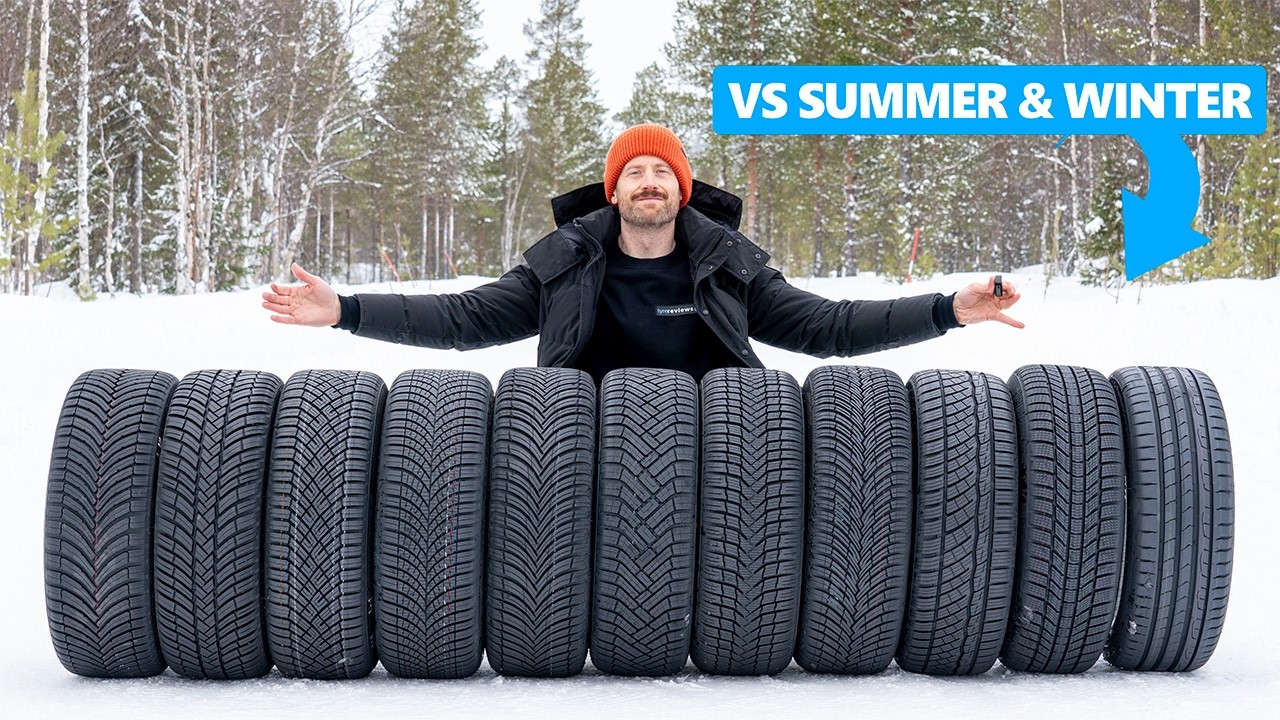
This years Tire Reviews all season tire test has 9 of the most popular all season tires, and one of the best summer tires, the Continental PremiumContact 7 and one of the best winter tires, the Continental WinterContact TS870 P as reference tires.
I'm also using a RWD Mazda MX-5 to find out whether rear wheel drive makes any difference to the established results!
Testing Methodology
Test Driver
Jonathan Benson
Tire Size
205/45 R17
Test Vehicle
MAzda MX5
Test Location
Professional Proving Ground
Tire Pressures
Stock
Test Year
2025
Tires Tested
9
Show full testing methodologyHide methodology
Every tire is tested using calibrated instrumented measurement and structured subjective assessment. Reference tires are retested throughout each session to correct for changing conditions, ensuring fair, repeatable comparisons. Multiple reference sets are used where needed so that control tire wear does not affect accuracy.
We use professional-grade testing equipment including GPS data loggers, accelerometers, and calibrated microphones. All tires are broken in and conditioned before testing begins. For full details on our equipment, preparation process, and calibration procedures, see our complete testing methodology.
Categories Tested
Dry Braking
For dry braking, I drive the test vehicle at an entry speed of 110 km/h and apply full braking effort to a standstill with ABS active on clean, dry asphalt. I typically use an 100–5 km/h measurement window. My standard programme is five runs per tire set where possible, although the sequence can extend to as many as fifteen runs if conditions and tire category justify it. I analyse the full set of runs and discard statistical outliers before averaging. Reference tires are run repeatedly throughout the session to correct for changing conditions.
Dry Handling
For dry handling, I drive at the limit of adhesion around a dedicated handling circuit with ESC disabled where possible so I can assess the tire's natural balance, transient response, and limit behaviour without electronic intervention masking the result. I usually complete between two and five timed laps per tire set, depending on the circuit, tire type, and consistency of conditions. I exclude laps affected by clear driver error or obvious environmental inconsistency. Control runs are carried out frequently throughout the session, and I often use multiple sets of control tires so that wear on the references does not become a meaningful variable. For more track-focused products, I also do endurance testing, which is a set number of laps at race pace to determine tire wear patterns and heat resistance over longer driving.
Subj. Dry Handling
Objective data is only part of the picture, so I also carry out a structured subjective handling assessment at the limit of adhesion on a dedicated dry handling circuit. I score steering precision, steering response, turn-in behaviour, mid-corner balance, corner-exit traction, breakaway characteristics, and overall confidence using a standardised 1–10 scale used consistently across my testing. The final assessment combines numeric scoring with written technical commentary. I complete familiarisation laps on the control tire before evaluating each candidate.
Wet Braking
For wet braking, I drive the test vehicle at an entry speed of 88 km/h and apply full braking effort to a standstill with ABS active on an asphalt surface with a controlled water film. I typically use an 80–5 km/h measurement window to isolate tire performance from variability in the initial brake application. My standard programme is eight runs per tire set where possible, although the sequence can extend to as many as fifteen runs if conditions and tire category justify it. I analyse the full set of runs and discard statistical outliers before averaging. To correct for changing conditions, I run reference tires repeatedly throughout the session — in wet testing, typically every three candidate test sets.
Wet Handling
For wet handling, I drive at the limit of adhesion around a dedicated handling circuit. I generally use specialist wet circuits with kerb-watering systems designed to maintain a consistent surface condition. ESC is disabled where possible so I can assess the tire's natural balance, transient response, and limit behaviour without electronic intervention masking the result. I usually complete between two and five timed laps per tire set, depending on the circuit, tire type, and consistency of conditions. I exclude laps affected by clear driver error or obvious environmental inconsistency. Control runs are carried out frequently throughout the session, and I often use multiple sets of control tires so that wear on the references does not become a meaningful variable.
Subj. Wet Handling
Objective data is only part of the picture, so I also carry out a structured subjective handling assessment at the limit of adhesion on a dedicated wet handling circuit. I score steering precision, steering response, turn-in behaviour, mid-corner balance, aquaplaning resistance, breakaway characteristics, and overall confidence using a standardised 1–10 scale used consistently across my testing. The final assessment combines numeric scoring with written technical commentary. I complete familiarisation laps on the control tire before evaluating each candidate.
Straight Aqua
To measure straight-line aquaplaning resistance, I drive one side of the vehicle through a water trough of controlled depth, typically around 7 mm, while the opposite side remains on dry pavement. I enter at a fixed speed and then accelerate progressively. I define aquaplaning onset as the point at which the wheel travelling through the water exceeds a specified slip threshold relative to the dry-side reference wheel. I usually perform four runs per tire set and average the valid results.
Curved Aquaplaning
For curved aquaplaning, I use a circular track, typically around 100 metres in diameter, with a flooded arc of controlled water depth, usually about 7 mm. The vehicle is instrumented with GPS telemetry and a tri-axial accelerometer. I drive through the flooded section at progressively increasing speed, typically in 5 km/h increments, and record the minimum sustained lateral acceleration at each step. The test continues until lateral acceleration collapses, indicating complete aquaplaning. The result is expressed as remaining lateral acceleration in m/s² as speed rises.
Snow Braking
For snow braking, I drive the test vehicle at an entry speed of 50 km/h and apply full braking effort to a standstill with ABS active on a groomed, compacted snow surface, measuring 45-5 km/h. I generally use a wide VDA (vehicle dynamic area) and progressively move across the surface between runs so that no tire ever brakes on the same piece of snow twice. My standard programme is twelve runs per tire set, although the sequence can extend further if the data justify it. I analyse the full set of runs and discard statistical outliers before averaging. The surface is regularly groomed throughout the session. To correct for changing snow surface conditions, I run reference tires repeatedly — typically every two candidate test sets.
Snow Traction
For snow traction, I accelerate the vehicle from rest on a groomed snow surface with traction control active and measure speed and time using GPS telemetry. I typically use a 5–35 km/h measurement window to reduce the influence of launch transients and powertrain irregularities. I use a wide VDA (vehicle dynamic area) and progressively move across the surface between runs so that no tire ever accelerates on the same piece of snow twice. The surface is regularly groomed throughout the session. I complete multiple runs per tire set and average the valid results. Reference tires are run typically every two candidate test sets to correct for changing snow surface conditions.
Snow Handling
For snow handling, I drive at the limit of adhesion around a dedicated snow handling circuit with ESC disabled where possible. The circuit is groomed and prepared after every run while tires are being changed, so each set runs on a consistently prepared surface. I usually complete between two and five timed laps per tire set, excluding laps affected by clear driver error or obvious environmental inconsistency. Because snow surfaces degrade more rapidly than asphalt, control runs are carried out more frequently — typically every two candidate test sets.
Subj. Snow Handling
Objective data is only part of the picture, so I also carry out a structured subjective handling assessment at the limit of adhesion on a dedicated snow handling circuit. The circuit is groomed and prepared after every run while tires are being changed, so each set runs on a consistently prepared surface. I score steering precision, turn-in behaviour, mid-corner balance, corner-exit traction, breakaway characteristics, and overall confidence on snow using a standardised 1–10 scale used consistently across my testing. The final assessment combines numeric scoring with written technical commentary. I complete familiarisation laps on the control tire before evaluating each candidate.
Subj. Comfort
To assess comfort, I drive on a wide range of road surfaces (often dedicated comfort tracks at test facilities) at speeds from 50 to 120 km/h, including smooth motorway, coarse surfaces, expansion joints, broken pavement, and sharp-edged obstacles. I evaluate primary ride quality, secondary ride quality, impact harshness, seat-transmitted vibration, and the tire's ability to absorb sharp inputs. Ratings are assigned on a 1–10 scale relative to the reference tire.
Noise
I measure external pass-by noise in accordance with UNECE Regulation 117 and ISO 13325 using the coast-by method on a compliant test surface. Calibrated microphones are positioned beside the test lane, and the vehicle coasts through the measurement zone under controlled conditions. I record the maximum A-weighted sound pressure level in dB(A), complete multiple runs over the relevant speed range, and normalise the result to the reference speed required by the procedure.
Rolling Resistance
Rolling resistance is measured under controlled laboratory conditions in accordance with ISO 28580 and UNECE Regulation 117 Annex 6. The tire is mounted on a test wheel and loaded against a large-diameter steel drum. After thermal stabilisation at the prescribed test speed, rolling resistance force is measured at the spindle and corrected according to the relevant procedure. The result is expressed as rolling resistance coefficient, typically in kg/tonne.
How each category is weighted in the overall score:
Dry25%
Dry Braking50%
Dry Handling40%
Subj. Dry Handling10%
Wet35%
Wet Braking45%
Wet Handling30%
Subj. Wet Handling10%
Straight Aqua10%
Curved Aquaplaning5%
Snow20%
Snow Braking30%
Snow Traction30%
Snow Handling30%
Subj. Snow Handling10%
Comfort10%
Subj. Comfort50%
Noise50%
Value10%
Rolling Resistance100%
Note, due to the timing of testing, sadly the Michelin CrossClimate 3 and 3 Sport were not able to be included in this test, if you'd like to know where they'd approximately place you can jump to the end of the video (using the YouTube link above) to see the data-led predictions.
Snow
As I've said many times now, an all-season tire can't be the best tire in every condition, and if you want amazing snow performance from your all-season tire it reduces the wet and dry performance, and as I don't think the snow performance of an all-season tire is the most important thing, I don't mind a slower tire around the lap as they're still all way better than a summer tire but as always, you can go to the link in the description to the final results table and change the score weighting to get you the best tire for your own driving needs.
All that said, compared to the best all-season tires, the Tomket and Cooper really were down on grip. The Tomket was particularly down on lateral grip, and I found myself reaching for the handbrake more than once on the tight corners, as even going in at seemingly walking pace I couldn't get the front to turn.
I tested blind and I wrote for the Cooper "felt a lot like set 8 just a little better. Pretty tricky to get around. rear would snap out pretty fast", and no prizes to work out who set 8 was. Yes, the Tomket.
The Linglong was a step up subjectively, and borderline good. It was a little peaky on the rear axle, but had fine grip.
Then we had a group of good tires, the Bridgestone, Goodyear and Continental. All these tires were great, much more rounded grip circle than previous tires, and the panic of trying to get around really disappeared. I marked the Bridgestone down slightly compared to the other two as the tire slid out a little more quickly, but really they were all very good and I can recommend any of them for snow.
But, there were some tires that were even better. Firstly, the Milever, the cheapest tire in the test, was fast and well balanced. Does this mean cheap tires are finally here? It beat Continental, Goodyear and Bridgestone. Maybe. Does it mean this is a winter tire compound with an all-season name and will be bad in the wet? Also maybe. Only time will tell.
Then we had the Kleber, once again excellent in the snow. Perhaps a little more grip in traction and braking than turning, but very good.
And finally was the new Pirelli, well balanced, felt racey, and had good grip.
As promised in the intro, I really did drive a summer tire around the snow lap and it was almost twice as slow and not a fun experience. There's also a small hill on the lap and without a lot of momentum I'd have never made it up there. And the winter tire was the fastest, but perhaps not by the margin you'd expect as the best all-season tires are now very close.
Snow Handling
Spread: 60.60 s (71%)|Avg: 93.85 s
Snow handling time in seconds [Average Temperature -2.5c] (Lower is better)
Continental WinterContact TS 870 P Ref
85.40 s
Pirelli Cinturato All Season SF3
86.30 s
Kleber Quadraxer 3
86.60 s
Milever All Season Versat mc545
86.70 s
Continental AllSeasonContact 2
87.50 s
Goodyear Vector 4Seasons Gen 3
88.70 s
Bridgestone Turanza All Season 6
88.80 s
Linglong Sport Master 4S
90.80 s
Cooper Discoverer All Season
92.30 s
Tomket Allyear 3
93.20 s
Continental PremiumContact 7 Ref
146.00 s
Snow traction was also led by the winter tire, with the Continental AllSeasonContact 2 the best of the all-season tires. The Milever continued its worryingly good run as the second best all-season tire in traction and best all-season tire in braking. Kleber, Goodyear and Bridgestone were also strong.
Snow Traction
Spread: 1.14 s (24.2%)|Avg: 5.19 s
Snow acceleration time (5 - 35 km/h) (Lower is better)
Continental WinterContact TS 870 P Ref
4.72 s
Continental AllSeasonContact 2
4.72 s
Milever All Season Versat mc545
4.93 s
Goodyear Vector 4Seasons Gen 3
5.10 s
Pirelli Cinturato All Season SF3
5.12 s
Bridgestone Turanza All Season 6
5.21 s
Kleber Quadraxer 3
5.23 s
Linglong Sport Master 4S
5.47 s
Tomket Allyear 3
5.52 s
Cooper Discoverer All Season
5.86 s
Snow Braking
Spread: 16.42 M (85.2%)|Avg: 21.61 M
Snow braking in meters (40 - 5 km/h) (Lower is better)
Snow Braking: Safety Impact: Best vs Worst Tire
Wet
The slowest tire around the wet lap was the Tomket. It was buckets of fun, if you're ever doing a wet drift day in an MX-5 this is the tire for you, other than that I would say it does not have enough wet grip to be a good tire. Similarly, the Milever was a little bit faster, but it was not as predictable as the Tomket giving the car a difficult balance to predict. Definitely one to avoid, even on a wet drift day.
Quite a bit ahead we had the Cooper which was really snappy when cold, but after a lap it felt a little better, which is an odd quality for an all-season tire, and then the Linglong and Kleber.
Both these tires had acceptable levels of grip, and of the two the Kleber was the safer more stable tire, but given Linglong is the butt of all jokes, it was an impressive performance for the once bottom-of-the-barrel brand.
And then we had the 4 premium tires, all significantly ahead of the others, in a group of their own.
Bridgestone, Continental and Pirelli were all within 1% of each other, and all felt great. Of the three you could tell the Pirelli had the most grip, but the limit wasn't communicated quite as well as some of the other tires. Not that it would matter on the road, but that was the negative there. The Bridgestone was good, and the Continental was very nicely balanced front and rear, in fact on a light little car like this it worked really well.
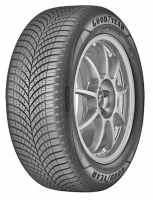
But, there was one tire that was even better, 1.7% ahead of the second placed Pirelli, and that was the Goodyear Vector 4Seasons Gen-3. I think this is the oldest tire in the test, but it still proves to be excellent. It wasn't quite as stable as the Continental, or as reactive as the Pirelli, but it was a fabulous tire to drive.
As for the reference tires, well, the winter tire was lovely. Really well balanced and not that far off the best of the all-season tires. This is aided by the fact we're testing at 4°C air, but the Continental WinterContact TS870 is always very good in the wet, and handling is a lot easier for a more heavily siped tire than braking, which we'll see in a minute.
And the summer tire, well, I thought the all-season tires were good, but this was excellent. Loads of grip, predictable, sporty, BUT not that far ahead of the best all-seasons. Again, that's down to the temperature and the fact this is a relatively light car.
Wet Handling
Spread: 15.40 s (18.6%)|Avg: 88.85 s
Wet handling time in seconds [Average Temperature 4c] (Lower is better)
Continental PremiumContact 7 Ref
82.70 s
Goodyear Vector 4Seasons Gen 3
85.10 s
Continental WinterContact TS 870 P Ref
85.80 s
Pirelli Cinturato All Season SF3
86.50 s
Continental AllSeasonContact 2
86.90 s
Bridgestone Turanza All Season 6
87.50 s
Kleber Quadraxer 3
89.40 s
Linglong Sport Master 4S
90.50 s
Cooper Discoverer All Season
91.10 s
Milever All Season Versat mc545
93.70 s
Tomket Allyear 3
98.10 s
Wet braking was another impressive display for the Bridgestone, with The Pirelli in a very close second. Both lagged behind the summer tire and the heavily siped winter tire struggled to slow the car, but still beat 3 of the all-season tires.
Wet Braking
Spread: 9.30 M (32.3%)|Avg: 33.17 M
Wet braking in meters (80 - 5 km/h) (Lower is better)
Wet Braking: Safety Impact: Best vs Worst Tire
The impressive Pirelli led both aquaplaning tests with Bridgestone taking second place in both.
Straight Aqua
Spread: 14.10 Km/H (16.8%)|Avg: 78.70 Km/H
Float Speed in Km/H (Higher is better)
Pirelli Cinturato All Season SF3
83.90 Km/H
Continental PremiumContact 7 Ref
82.80 Km/H
Bridgestone Turanza All Season 6
82.70 Km/H
Continental WinterContact TS 870 P Ref
81.50 Km/H
Goodyear Vector 4Seasons Gen 3
81.20 Km/H
Kleber Quadraxer 3
79.70 Km/H
Cooper Discoverer All Season
79.20 Km/H
Linglong Sport Master 4S
77.30 Km/H
Continental AllSeasonContact 2
76.80 Km/H
Tomket Allyear 3
70.80 Km/H
Milever All Season Versat mc545
69.80 Km/H
Curved Aquaplaning
Spread: 1.28 m/sec2 (40.6%)|Avg: 2.75 m/sec2
Remaining lateral acceleration (Higher is better)
Pirelli Cinturato All Season SF3
3.15 m/sec2
Continental WinterContact TS 870 P Ref
3.11 m/sec2
Bridgestone Turanza All Season 6
3.03 m/sec2
Cooper Discoverer All Season
2.95 m/sec2
Linglong Sport Master 4S
2.91 m/sec2
Goodyear Vector 4Seasons Gen 3
2.85 m/sec2
Kleber Quadraxer 3
2.76 m/sec2
Continental PremiumContact 7 Ref
2.68 m/sec2
Continental AllSeasonContact 2
2.68 m/sec2
Tomket Allyear 3
2.22 m/sec2
Milever All Season Versat mc545
1.87 m/sec2
Dry
As usual I did a lot of sub-limit handling, lane changes etc, and also a lap time which is somewhat less relevant on these tires but still fun to do.
For steering response and lane change stability there were basically three groups. The Cooper's steering was not ideal, it had nonlinear ramp-up of steering force and was vague on the lap with oversteer balance. I'd also categorize the Kleber in this bottom group, but for different reasons. Its steering was nice sub-limit, but when pushed really hard during a lane change or on the lap the grip ran out quickly.
Then there was the Pirelli. Its steering was fine, but on the lane change the rear came into play a little more than ideal, but the grip was amazing, and then the Goodyear and Milever, both feeling great on lane changes, but just a little imprecise. Then there was the Tomket, Linglong, Continental and Bridgestone, and in terms of steering feel, all of these were great, however the Bridgestone and Continental were better around the lap.
If I was to pick one tire as the most summer-like, it would once again be the Bridgestone Turanza All Season 6. But obviously the most summer-like was the summer tire, 1.5 seconds ahead of the Pirelli and feeling quite lovely. Interestingly the winter tire was faster than a bunch of the all-season tires in the dry too, though we do know the TS870 is a strong winter tire in the dry.
Dry Handling
Spread: 3.08 s (5.9%)|Avg: 54.18 s
Dry handling time in seconds (Lower is better)
Continental PremiumContact 7 Ref
52.30 s
Goodyear Vector 4Seasons Gen 3
53.65 s
Pirelli Cinturato All Season SF3
53.65 s
Continental AllSeasonContact 2
53.93 s
Bridgestone Turanza All Season 6
54.04 s
Linglong Sport Master 4S
54.15 s
Continental WinterContact TS 870 P Ref
54.22 s
Kleber Quadraxer 3
54.55 s
Tomket Allyear 3
55.03 s
Milever All Season Versat mc545
55.10 s
Cooper Discoverer All Season
55.38 s
Dry braking had the Pirelli back at the front, with the Linglong and Bridgestone close behind. None of the all-season tires could match the summer tire though, and the extra siping of the winter tire once again hindered braking performance showing the careful balance a tire manufacturer has to make when developing all-season tires.
Dry Braking
Spread: 9.00 M (25.3%)|Avg: 41.59 M
Dry braking in meters (100 - 5 km/h) (Lower is better)
Dry Braking: Safety Impact: Best vs Worst Tire
Comfort
Noise and comfort testing was led by Kleber and Cooper, but the Continental was very comfortable too and the Pirelli very quiet. As always it was a close group overall, apart from the cheapest tires in the test really showing a lack of refinement in comfort, even if the noise levels were good.
Subj. Comfort
Spread: 1.50 Points (15%)|Avg: 9.61 Points
Subjective Comfort Score (Higher is better)
Cooper Discoverer All Season
10.00 Points
Continental WinterContact TS 870 P Ref
10.00 Points
Continental PremiumContact 7 Ref
10.00 Points
Kleber Quadraxer 3
10.00 Points
Continental AllSeasonContact 2
10.00 Points
Linglong Sport Master 4S
9.75 Points
Goodyear Vector 4Seasons Gen 3
9.50 Points
Bridgestone Turanza All Season 6
9.50 Points
Pirelli Cinturato All Season SF3
9.50 Points
Tomket Allyear 3
9.00 Points
Milever All Season Versat mc545
8.50 Points
Noise
Spread: 2.90 dB (4.2%)|Avg: 70.63 dB
External noise in dB (Lower is better)
Cooper Discoverer All Season
69.70 dB
Kleber Quadraxer 3
69.70 dB
Tomket Allyear 3
69.80 dB
Continental WinterContact TS 870 P Ref
70.20 dB
Pirelli Cinturato All Season SF3
70.30 dB
Milever All Season Versat mc545
70.30 dB
Linglong Sport Master 4S
70.60 dB
Goodyear Vector 4Seasons Gen 3
70.70 dB
Bridgestone Turanza All Season 6
71.00 dB
Continental PremiumContact 7 Ref
72.00 dB
Continental AllSeasonContact 2
72.60 dB
Value
Impressively the Continental was the lowest in the rolling resistance testing, with Kleber the next best. The Pirelli was 10% worse than the Continental, which in the real world would be about 2% more fuel use when the tires are new, but that gap would shrink as the tires wear.
Rolling Resistance
Spread: 1.53 kg / t (19.8%)|Avg: 8.64 kg / t
Rolling resistance in kg t (Lower is better)
Continental AllSeasonContact 2
7.73 kg / t
Kleber Quadraxer 3
8.07 kg / t
Tomket Allyear 3
8.33 kg / t
Milever All Season Versat mc545
8.33 kg / t
Continental WinterContact TS 870 P Ref
8.40 kg / t
Pirelli Cinturato All Season SF3
8.65 kg / t
Linglong Sport Master 4S
8.93 kg / t
Bridgestone Turanza All Season 6
9.00 kg / t
Continental PremiumContact 7 Ref
9.11 kg / t
Goodyear Vector 4Seasons Gen 3
9.24 kg / t
Cooper Discoverer All Season
9.26 kg / t
19,000 km
£1.45/L
8.0 L/100km
--
Annual Difference
--
Lifetime Savings
--
Extra Fuel/Energy
--
Extra CO2
Estimates based on typical driving conditions. Rolling resistance accounts for approximately 20% of IC vehicle fuel consumption and 25% of EV energy consumption. Actual savings vary based on driving style, vehicle weight, road conditions, and tire age. For comparative purposes only. Lifetime savings based on a 40,000km / 25,000 mile tread life.
Best in dry braking, quickest dry handling lap, almost best in wet braking, very good wet handling lap, best in both aquaplaning tests, best in snow handling, low noise.
Slightly peaky on the rear axle during high speed lane changes, average snow traction, average rolling resistance.
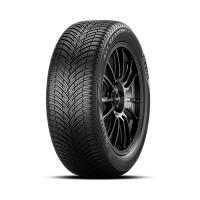
The Pirelli Cinturato All Season SF3 wins another test. There's not much this tire can't do. It had the best grip in the dry with the shortest dry braking and quickest dry handling lap, it was essentially tied best in wet braking and very close in wet handling, it had the best aquaplaning resistance in both straight and curved, it had the best snow handling, one of the lowest noise levels and good comfort. I guess to answer my own question, it can't be best in rolling resistance as it was 5th overall, 10% off the conti, and it was 8% off the conti in snow traction but everything else was excellent.
Balanced performance across all tests, excellent subjective handling, strong in the dry, wet and snow with the best snow traction, excellent comfort, lowest rolling resistance on test.
Dry braking not class-leading, below average aquaplaning performance, increased noise levels.
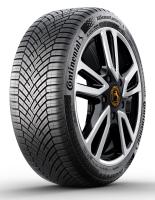
In second place was the Continental AllSeasonContact 2. As always this tire is super consistent across all tests. Its only 'wins' were snow traction, rolling resistance and comfort tests, and as we've previously found its aquaplaning performance was weaker than the best, but in terms of dry, wet and snow grip, it was excellent. All season tires should be consistent in all categories and the Continental does that really well. Super impressive tire.
Excellent dry handling, very good in all wet tests, stronger than usual in the snow.
Slightly reduced comfort, higher than average noise, high rolling resistance.
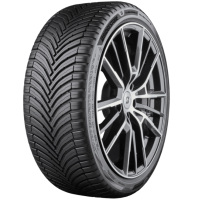
In third place overall was another really strong result for the Bridgestone Turanza All Season 6. This tire tied for the best in the dry, feeling the most summer like, had the best wet braking, a good lap time and good aquaplaning resistance and it was better than usual in the snow! Its comfort was not the best but it wasn't bad, but its rolling resistance was pretty high. Given that was its only weakness, I'm again highly recommending this tire.
Excellent dry handling, good wet braking with best wet handling, good snow performance, well balanced tire.
Long dry braking, high rolling resistance.
Next up was the Goodyear Vector 4Season Gen-3, so you know we're in the REALLY good section of tires already. As usual, the goodyear was not the best in dry braking, but worked well in dry handling, it was great in the wet, it was solid in the snow, and had good comfort, if I'm honest I'm shocked it was only 4th. Its overall placement was impacted by its rolling resistance, where it was 8th and 16.3% behind the lowest, but it's still a great tire.
Very strong snow performance, excellent comfort, low noise, low rolling resistance.
Below average dry and wet performance.
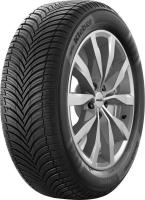
The Kleber Quadraxer 3 finished in fifth, and as we always find with the Kleber it was a powerhouse in the snow, it had excellent comfort, and a very low rolling resistance. I personally would like more dry and wet grip from an all season tire, but I know there are lots of people who love this snow heavy balance, and if that's your thing, this is a great option.
Excellent in the dry, reasonable wet braking, good comfort, low noise.
A little peaky in wet handling, below average snow performance, higher rolling resistance.
A fairly significant step ahead was the Linglong Sportmaster 4S, which is the new name for the GripMaster 4S. Linglong were one of the original budget manufacturers, but they have been making a huge investment in development and it's paying off with a sixth place finish overall, significantly ahead of the cheap tires and almost matching the premiums. Linglong has chosen a dry / wet bias for this tire, which I'm all for in an all season tire as it was the best in the dry overall. In the wet it was still a 6% back in wet braking and a little peaky in wet handling, and it definitely was not the best in the snow, but it was way better than a summer tire. It rounded out the test with good comfort levels, average noise but a pretty high rolling resistance. If you're tight on cash, you could do a lot worse than this tire.
Good aquaplaning resistance, excellent comfort, lowest noise on test.
Below average dry, wet and snow performance, high rolling resistance.
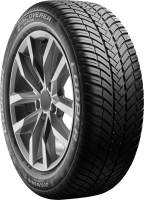
The Cooper is a brand most of us have heard of, however in this test the Discoverer All Season did not really perform like that. It was a little better in the dry and wet compared to the previous two tires, but still 10% off in wet braking which is less than ideal. It also had the highest rolling resistance and the worst snow performance of all the all season tires, it was a difficult test for the Cooper. Though it was comfortable.
Excellent all round snow performance, ok rolling resistance, low noise.
Long dry and wet braking distances, lower grip in dry and wet handling, worst comfort of the test.
The Milever All Season Versat MC545 was also weak in the dry and wet, but did have winter tire levels of grip in the snow. You can tell this is basically a winter tire with an all season sidewall, so if for some strange reason you really want an all season tire just to run in the snow, this might be the pick. But if you do want that, erm, buy a winter tire?.
Good dry balance, but lacking grip, ok rolling resistance, low noise.
Generally too weak all round, very long wet braking, poor snow grip, low comfort.
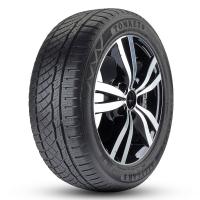
The Tomket Allyear 3 finishing in last place was a little disappointing to me as while it is classified as a budget tire, it isn't an ultra cheap chinese budget. Its dry performance was nice subjectively however it did not have the grip to match, over 10% down in dry braking, nearly 20% in wet braking and also not that great in snow, though a lot better than a summer tire. Its rolling resistance was ok.
Hello! I am wondering if a set of Continental All Season Contact 2 which is 112 Euro here would outperform two separate sets specifically for winter and summer respectively, from LAUFENN, at 76 Euro each.
Sorry, i forgot to mention: Laufenn G Fit for summer and Laufenn I Fit for winter. All of them, including the CAC2 would have 215/65/R16 dimensions. Thank you!
I think in winter conditions the Continental would outperform, or at least match, Laufenn, given it will have better wet performance. In summer conditions the summer tire will have the natural advantage. I'm sure this hasn't been helpful, sorry
I used to run Nokias winter tires on powerful fwd modified mini 280hp from about 2010 to 2015 Banbury, so think south midlands edge of Cotswold climate with ad08r as full on summer tire and Goodyear Asy for spring and autumn ( yes 3 sets of wheels and 20k + pa it sort of made sense) Now in a even more powerful f56 330hp fwd I’m looking for what would call a 1.5 season tire to compliment the current asy 6 for the 3- 4 months of the year when I am driving at 7.00 am or earlier and country B roads will be predominantly cold and damp, only doing 10-12 k pa but still space for 2 sets of wheels, yet in my mind I think full winters are too compromised for the majority of my cold weather driving.
So should I be looking at the CC3 sport or one of these or have I got this fundamentally all wrong and should run a full winter for those December to March conditions, and then the summers. And by foregoing the main benefit of not swapping rubber, means a targeted mild winter tire is a better option in my circumstances?
Looks like the braking tests just got less useful.. xxx to 5 km/h? Personally I care about how long it will take to STOP, not to hit something with 5 km/h...
Firstly, no tester measures to 0, abs becomes too much of a factor. They just extrapolate and don't tell you.
Secondly, what does the full braking distance matter to you unless you need to make an emergency stop in that very location. Distances is HUGELY dependent on surface, the thing that's important is the % differences between the tires.
As always great testing and presentation! It's time to change vector 4 season gen2 on my Mazda cx-30 in Greece after 53k km. I think about continental but i worry about their noise they are the "loudest" and I want a comfort tire. Otherwise I would go for the Bridgestone. Mostly I drive on road and once or twice a year on dirt roads. When it snow I try to find time and go on forrests and relax. I mostly consider comfort, noise and reliability on all weather. If it can be combined with high mileage, perfect What would you suggest? I find both tires in almost same price (+-15euro).
Well since cross climate 3 in not availiable in 215/55/18, I fitted Bridgestone Turanza 6 all season since it is more summer like tire, in realy good price (10% cheapers than continental) and in Greece there is a 12month guarantee. From your test I assume that they will fit great in our weather -even for those 4-5 times a year I drive on snow. They replaced the decent Goodyear Vecror4season GEN-2 SUV after 52000km, with only disadvantage not great in dry braking. Bridgestone feel so smooth and comfort, but of course they are brand new. I'll follow with them they same rule of rotation every 10000km. In the photos the old goodyear and the new bridgestone https://uploads.disquscdn.c...https://uploads.disquscdn.c...
Hi, a key info is missing - what was the temperature during dry tests? (mostly dry braking). Thanks.
P.S. Next time maybe use a BYD vehicle - it shows the temperature of the tire. Today outside is 18 and after 20km of highway driving it showed 34 degrees tire temperature. It would be also some amazing thing to see - probably you will be the only one who does something like this ... to make a test after f.e. 50km of highway driving with "hot tires" - f.e. while 7 degrees outside, after 50km of highway driving the tire gets 18-20 degrees.
Imagine also how amazing it would be if you gave the info ... about the temperature of the tire :)
Yes, I know. I'm running the Bridgestone myself in 235/35 R19. But I like to be informed, I need new tires every two years because of leasing plus tires for my wife's car.
Great review, as always! Due to size limitations, I can only get conti as2 in my sizes? My only alternative, in order to be able to have the best tires, is cc3s on rear (255/40/18) and Pirelli sf3 on the front (225/45/18) - would this mix work and be safe? Is the increase in potential instability worth it for the gains in performance over the continental as2? My main concern on the as2 is the poor aquaplaning.
Is the aquaplaning something to be concerned about?
No, it's not a major concern for tire selection - it is major for your driving style. A few things to consider.
(TLDR: slow the hell down in heavy rain and pay attention to the road surface; replace your tires at 4mm).
One is that the test is conducted on a road surface with standing water for all 4 wheels, at a depth of of around 8mm. Real-world aquaplaning risks will differ from that, it can be 1mm standing water, or it can be 10 cm standing water on the road if it's flooded. Also, the car weight, distribution of weight, tire size, and trajectory of the car will have just as much a significance if not more than the tire make and model.
The second is that there is actually not a great amount of difference between already good tires. Note that it's typically 5km/h, 10km/h at most. Also, note that they all converge around the 80 km/h mark. It's geometry and physics. That is holding true across tests, with minor variation.
The most important consideration in aquaplaning is your driving. Managing aquaplaning risk is really down to the driver, no amount of technology will save you from it. The key is selecting lower speeds, and moderating steering, throttle and braking inputs.
Pick your speed wisely, I'd say putting your speedo on 80km/h (50mph) nominal is a good reference point, real speed will be around 75km/h which (47 mph) should give you good protection against aquaplaning, and low enough to shed speed quickly just with engine braking, so should conditions be really adverse. Remember, kinetic energy is quadratic with speed, doing 110km/h / 70 mph instead carries about 2x the kinetic energy in the car as a moving object compared to 80km/h / 50mph.
If the car slips, don't brake, but always steer in the direction of travel, point the front wheels where you want to go, let them start rotating again. I do recommend taking your car with your new tires to a driver training session with a skidpad to get a feel for it all.
Finally, don't run your tires bald like all those cheap ignoramuses. They are a minor expense per mile compared to all the other expenses, fuel, insurance, and they keep you on the road - and alive.
so, the Pirelli confirms to be probably the best choice for all seanson tires.
I have to buy a new set for next winter and I'm not yet quite surwe about the choice.
I use summer tires for summer and AllSeasons or winter as even if I live in a region of north Italy where rarely snows is mandatory to have winter tires 6 months a year.
Needed size is 235/40 18.
I have had winter tires in the past but never be happy about wet grip specially starting from 2nd year of use (have had Yokohama, Michelin and Continental, all with same behaviour), so even if the tire was not worn I always had to change every 2 years (that it correspond to about 20K kilometers)
Last time I used Michelin CC2 hoping for best wet grip, but also in this case it was quite good the 1st year, so so on 2nd but very bad on the 3rd, it was very slippery on the roundabouts with all possible bad behaviours, sliding sometime on the front, on the rear or on both axes simultaneously.
During the warmer months they are stored inside the garage so never under direct sunlight, no humidity and with max 25/33 °C on hottest periods.
My choices are within Turanza AllSeasons , Conti AS2 and now also Pirelli SF3.
Most important things for me are wet performance and that the grip on wet remains good for at least 3 winter seasons, low noise is important too.
One thing to look into with Pirellis is rim protection. I had a set of SF2 and it had no rim protector at all, which exposed my wheels to curbing, and boy I took the offer to scratch and dent my wheels.
It's interesting what you write about CC2 losing performance by year 3, I wouldn't think it's wear with 20-30k kms...Because I run 30k a year, I change every 2 years, so cannot comment on it, but do recommend the Bridgestone, I'm running them currently in 225/45 R17 94V, and very pleased with them. About 20 months and 55k km in.
It's seems like an above average summer compound to begin with. Personally, I think what matters is what happens to grip under 2C in wet, because it's not so much about where the crossover exactly is, but where is the cliff-edge for summers. It's just sudden, an because it happens so rarely in the UK, most people will not expect it. It's quite concerning to watch cars dart down the road at 60-70+ mph when near low dew point temperatures, like 0-2C. Jon speaks to this in the video under your second link.







Hello! I am wondering if a set of Continental All Season Contact 2 which is 112 Euro here would outperform two separate sets specifically for winter and summer respectively, from LAUFENN, at 76 Euro each.
I used to run Nokias winter tires on powerful fwd modified mini 280hp from about 2010 to 2015
Banbury, so think south midlands edge of Cotswold climate with ad08r as full on summer tire and Goodyear Asy for spring and autumn ( yes 3 sets of wheels and 20k + pa it sort of made sense)
Now in a even more powerful f56 330hp fwd I’m looking for what would call a 1.5 season tire to compliment the current asy 6 for the 3- 4 months of the year when I am driving at 7.00 am or earlier and country B roads will be predominantly cold and damp, only doing 10-12 k pa but still space for 2 sets of wheels, yet in my mind I think full winters are too compromised for the majority of my cold weather driving.
So should I be looking at the CC3 sport or one of these or have I got this fundamentally all wrong and should run a full winter for those December to March conditions, and then the summers.
And by foregoing the main benefit of not swapping rubber, means a targeted mild winter tire is a better option in my circumstances?
Looks like the braking tests just got less useful.. xxx to 5 km/h? Personally I care about how long it will take to STOP, not to hit something with 5 km/h...
There's a lot wrong with this statement.
Firstly, no tester measures to 0, abs becomes too much of a factor. They just extrapolate and don't tell you.
Secondly, what does the full braking distance matter to you unless you need to make an emergency stop in that very location. Distances is HUGELY dependent on surface, the thing that's important is the % differences between the tires.
Any plans to test the new Pirelli Ice Friction? it is said to rival other brands like Michelin and Nokian in winter weathers
Not from me this year sorry, maybe next!
What about the Michelin CrossClimate 2 SUV, have you ever tested this?
What am I missing, no Michein All Seasons?
Explained at the start of the video, sadly bad timing with the release of cc3
As always great testing and presentation! It's time to change vector 4 season gen2 on my Mazda cx-30 in Greece after 53k km. I think about continental but i worry about their noise they are the "loudest" and I want a comfort tire. Otherwise I would go for the Bridgestone. Mostly I drive on road and once or twice a year on dirt roads. When it snow I try to find time and go on forrests and relax. I mostly consider comfort, noise and reliability on all weather. If it can be combined with high mileage, perfect What would you suggest? I find both tires in almost same price (+-15euro).
Keep on testing!
Michelin CrossClimate 3 might be a good option for comfort.
Well since cross climate 3 in not availiable in 215/55/18, I fitted Bridgestone Turanza 6 all season since it is more summer like tire, in realy good price (10% cheapers than continental) and in Greece there is a 12month guarantee. From your test I assume that they will fit great in our weather -even for those 4-5 times a year I drive on snow. They replaced the decent Goodyear Vecror4season GEN-2 SUV after 52000km, with only disadvantage not great in dry braking. Bridgestone feel so smooth and comfort, but of course they are brand new. I'll follow with them they same rule of rotation every 10000km. In the photos the old goodyear and the new bridgestone https://uploads.disquscdn.c... https://uploads.disquscdn.c...
I think you'll be very happy, get a review on the site sometime with pictures :)
Hi, a key info is missing - what was the temperature during dry tests? (mostly dry braking). Thanks.
P.S. Next time maybe use a BYD vehicle - it shows the temperature of the tire. Today outside is 18 and after 20km of highway driving it showed 34 degrees tire temperature. It would be also some amazing thing to see - probably you will be the only one who does something like this ... to make a test after f.e. 50km of highway driving with "hot tires" - f.e. while 7 degrees outside, after 50km of highway driving the tire gets 18-20 degrees.
Imagine also how amazing it would be if you gave the info ... about the temperature of the tire :)
Sadly, there is no notice of rim protection again.
I'm running the Bridgestone in 225/45 R17, those have protection.
Yes, I know. I'm running the Bridgestone myself in 235/35 R19. But I like to be informed, I need new tires every two years because of leasing plus tires for my wife's car.
Great review, as always! Due to size limitations, I can only get conti as2 in my sizes? My only alternative, in order to be able to have the best tires, is cc3s on rear (255/40/18) and Pirelli sf3 on the front (225/45/18) - would this mix work and be safe? Is the increase in potential instability worth it for the gains in performance over the continental as2? My main concern on the as2 is the poor aquaplaning.
Is the aquaplaning something to be concerned about?
No, it's not a major concern for tire selection - it is major for your driving style. A few things to consider.
(TLDR: slow the hell down in heavy rain and pay attention to the road surface; replace your tires at 4mm).
One is that the test is conducted on a road surface with standing water for all 4 wheels, at a depth of of around 8mm. Real-world aquaplaning risks will differ from that, it can be 1mm standing water, or it can be 10 cm standing water on the road if it's flooded. Also, the car weight, distribution of weight, tire size, and trajectory of the car will have just as much a significance if not more than the tire make and model.
The second is that there is actually not a great amount of difference between already good tires. Note that it's typically 5km/h, 10km/h at most. Also, note that they all converge around the 80 km/h mark. It's geometry and physics. That is holding true across tests, with minor variation.
The most important consideration in aquaplaning is your driving. Managing aquaplaning risk is really down to the driver, no amount of technology will save you from it. The key is selecting lower speeds, and moderating steering, throttle and braking inputs.
Pick your speed wisely, I'd say putting your speedo on 80km/h (50mph) nominal is a good reference point, real speed will be around 75km/h which (47 mph) should give you good protection against aquaplaning, and low enough to shed speed quickly just with engine braking, so should conditions be really adverse. Remember, kinetic energy is quadratic with speed, doing 110km/h / 70 mph instead carries about 2x the kinetic energy in the car as a moving object compared to 80km/h / 50mph.
If the car slips, don't brake, but always steer in the direction of travel, point the front wheels where you want to go, let them start rotating again. I do recommend taking your car with your new tires to a driver training session with a skidpad to get a feel for it all.
Finally, don't run your tires bald like all those cheap ignoramuses. They are a minor expense per mile compared to all the other expenses, fuel, insurance, and they keep you on the road - and alive.
so, the Pirelli confirms to be probably the best choice for all seanson tires.
I have to buy a new set for next winter and I'm not yet quite surwe about the choice.
I use summer tires for summer and AllSeasons or winter as even if I live in a region of north Italy where rarely snows is mandatory to have winter tires 6 months a year.
Needed size is 235/40 18.
I have had winter tires in the past but never be happy about wet grip specially starting from 2nd year of use (have had Yokohama, Michelin and Continental, all with same behaviour), so even if the tire was not worn I always had to change every 2 years (that it correspond to about 20K kilometers)
Last time I used Michelin CC2 hoping for best wet grip, but also in this case it was quite good the 1st year, so so on 2nd but very bad on the 3rd, it was very slippery on the roundabouts with all possible bad behaviours, sliding sometime on the front, on the rear or on both axes simultaneously.
During the warmer months they are stored inside the garage so never under direct sunlight, no humidity and with max 25/33 °C on hottest periods.
My choices are within Turanza AllSeasons , Conti AS2 and now also Pirelli SF3.
Most important things for me are wet performance and that the grip on wet remains good for at least 3 winter seasons, low noise is important too.
So could be the SF3 the good choice?
One thing to look into with Pirellis is rim protection. I had a set of SF2 and it had no rim protector at all, which exposed my wheels to curbing, and boy I took the offer to scratch and dent my wheels.
It's interesting what you write about CC2 losing performance by year 3, I wouldn't think it's wear with 20-30k kms...Because I run 30k a year, I change every 2 years, so cannot comment on it, but do recommend the Bridgestone, I'm running them currently in 225/45 R17 94V, and very pleased with them. About 20 months and 55k km in.
One of the more interesting points in the test is how good the PC7 is in the wet at 4C, beating all the other all season tires.
This test said the crossover temperature was about 12C for wet:
https://www.tyrereviews.com/Tyre-Tests/2025-Summer-and-All-Season-Combined-Tyre-Test.htm
Your old test had it about 11-12C in the wet:
https://www.tyrereviews.com/Article/Summer-All-Season-and-Winter-Tyres-Tested-at-0c-15c.htm
Any thoughts?
It's seems like an above average summer compound to begin with. Personally, I think what matters is what happens to grip under 2C in wet, because it's not so much about where the crossover exactly is, but where is the cliff-edge for summers. It's just sudden, an because it happens so rarely in the UK, most people will not expect it. It's quite concerning to watch cars dart down the road at 60-70+ mph when near low dew point temperatures, like 0-2C. Jon speaks to this in the video under your second link.