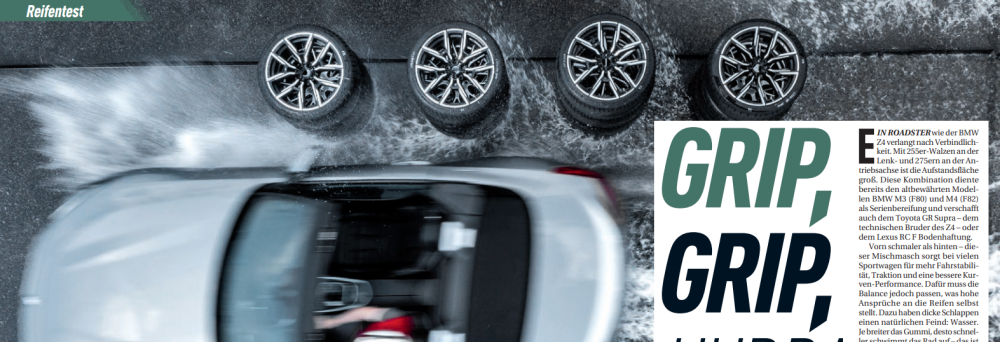
Auto Bild Sportscars tested eight summer tires in 255/35 R19 and 275/35 R19 - a staggered fitment used on cars like the BMW Z4, BMW Supra, and F series BMW M3/M4 models. Testing took place at the Wachauring circuit in Austria, covering wet and dry handling, braking, aquaplaning, skidpad grip, noise, and rolling resistance. The BMW Z4 served as the test car. The field includes Continental, Bridgestone, Pirelli, Vredestein, Kumho, Michelin, Hankook, and Goodyear.
Aquaplaning balance with staggered fitments
The aquaplaning results highlight a challenge specific to staggered tire setups. Wider rear tires act more like surfboards in standing water, so they tend to lose contact with the road before the narrower fronts. The Michelin is the most extreme example: its front tire holds grip up to 90.2 km/h - the best in the test - but the rear floats at just 83.4 km/h, the worst. That means there's a window where the front axle is still steering normally but the rear has already lost grip, which can cause sudden oversteer in heavy rain. The Hankook is the opposite case, with both axles floating at exactly 87.9 km/h. Auto Bild Sportscars' advice is simple: back off the throttle in heavy rain, regardless of which tire you're running.
The Goodyear result
The Goodyear Eagle F1 SuperSport's last-place finish is worth some context. It lost over 15 km/h to the Continental on the wet handling course and needed 51.5 m to stop from 100 km/h in the wet - over 9 m more than the best. The testers attribute this not to the tire being fundamentally poor, but to a mismatch with the BMW Z4 in this specific staggered size combination.
I tested it myself a number of years ago using a Supra, and found it was tricky; yet in a more recent test with a VW Golf the Supra Sport was excellent in the wet. Sometimes there are just difficult sizes.
Dry Braking
The Continental stops shortest at 34.2 m, with the Bridgestone just 20 cm behind. The midfield is tightly packed, but Michelin, Goodyear, and Pirelli all exceed 36 m - notably, these are three established premium brands occupying the bottom three positions.
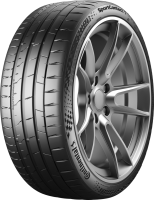
- Continental SportContact 7
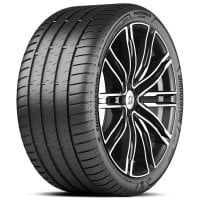
- Bridgestone Potenza Sport Evo
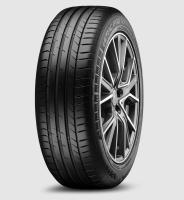
- Vredestein Ultrac Pro
- Hankook Ventus S1 Evo Z K129
- Kumho Ecsta Sport S PS72
- Pirelli P Zero PZ5
- Goodyear Eagle F1 SuperSport
- Michelin Pilot Sport 4 S
Dry Handling
The Continental leads again at 108.4 km/h average, with Michelin second - both work well as a mixed-size setup with the Z4's chassis, turning in sharply and staying controllable at the limit. Vredestein, Bridgestone, and Hankook form a tight group in the middle. The Goodyear is a clear outlier at 103.1 km/h, over 5 km/h off the pace and described as unbalanced in its driving feel.
- Continental SportContact 7
- Michelin Pilot Sport 4 S
- Vredestein Ultrac Pro
- Bridgestone Potenza Sport Evo
- Hankook Ventus S1 Evo Z K129
- Kumho Ecsta Sport S PS72
- Pirelli P Zero PZ5
- Goodyear Eagle F1 SuperSport
Wet
Wet Braking
The Continental leads the wet braking test as well, stopping from 100 km/h in 42.4 m. The Goodyear needs 51.5 m - at the point where the Continental has already stopped, a car on Goodyears would still be travelling at nearly 40 km/h. The gap between first and last is far larger here than in the dry test, where the field was much closer together.
- Continental SportContact 7
- Bridgestone Potenza Sport Evo
- Hankook Ventus S1 Evo Z K129
- Vredestein Ultrac Pro
- Pirelli P Zero PZ5
- Kumho Ecsta Sport S PS72
- Michelin Pilot Sport 4 S
- Goodyear Eagle F1 SuperSport
Wet Handling
The Continental dominates the wet handling course at nearly 79 km/h average, offering precise turn-in and sharp feedback. Pirelli and Bridgestone follow with a clear gap. The Goodyear loses over 15 km/h to the leader - a very large deficit that matches its poor wet braking result and confirms it struggles in all wet-grip tests on this car.
- Continental SportContact 7
- Pirelli P Zero PZ5
- Bridgestone Potenza Sport Evo
- Vredestein Ultrac Pro
- Kumho Ecsta Sport S PS72
- Michelin Pilot Sport 4 S
- Hankook Ventus S1 Evo Z K129
- Goodyear Eagle F1 SuperSport
Wet Circle
Bridgestone and Continental build the highest lateral forces and keep the Z4 neutral longest. Pirelli is close behind. From Vredestein downwards the gaps grow, with Kumho and Hankook producing identical results. The Michelin - the most expensive tire in the test - lands second to last, while the Goodyear is again at the bottom.
- Bridgestone Potenza Sport Evo
- Continental SportContact 7
- Pirelli P Zero PZ5
- Vredestein Ultrac Pro
- Hankook Ventus S1 Evo Z K129
- Kumho Ecsta Sport S PS72
- Michelin Pilot Sport 4 S
- Goodyear Eagle F1 SuperSport
Straight Aquaplaning
The Michelin front tire resists aquaplaning longest, holding contact to 90.2 km/h - but the rear floats at just 83.4 km/h, giving it the largest front-to-rear imbalance in the field. The Hankook is the most balanced, with both axles floating at exactly 87.9 km/h. This test highlights how difficult mixed-size fitments are to get right: if the rear loses grip before the front, the car can oversteer without warning in heavy rain.
- Michelin Pilot Sport 4 S
- Pirelli P Zero PZ5
- Vredestein Ultrac Pro
- Goodyear Eagle F1 SuperSport
- Kumho Ecsta Sport S PS72
- Hankook Ventus S1 Evo Z K129
- Continental SportContact 7
- Bridgestone Potenza Sport Evo
Comfort
Subjective Comfort
- Continental SportContact 7
- Bridgestone Potenza Sport Evo
- Hankook Ventus S1 Evo Z K129
- Vredestein Ultrac Pro
- Kumho Ecsta Sport S PS72
- Michelin Pilot Sport 4 S
- Goodyear Eagle F1 SuperSport
- Pirelli P Zero PZ5
Noise
The Vredestein is the quietest tire at 70.9 dB - worth noting in an open roadster where road noise is always present. Continental and Hankook share second place at 72.0 dB. The Goodyear and Bridgestone are the loudest at over 74 dB, more than 3 dB above the Vredestein, which is a clearly audible difference.
- Vredestein Ultrac Pro
- Hankook Ventus S1 Evo Z K129
- Continental SportContact 7
- Michelin Pilot Sport 4 S
- Pirelli P Zero PZ5
- Kumho Ecsta Sport S PS72
- Bridgestone Potenza Sport Evo
- Goodyear Eagle F1 SuperSport
Value
Rolling Resistance
Hankook and Vredestein achieve the best average rolling resistance across both axle sizes. All eight tires are relatively close in this test - there are no major outliers. Interestingly, the narrower front tires do not automatically roll more easily for every brand; the ranking changes between the 255 and 275 sizes depending on the manufacturer.
Results
The Continental SportContact 7 wins the test with strong leads in braking and handling on both wet and dry surfaces. The Bridgestone Potenza Sport Evo is a close second. Seven of eight tires score "good" or better, which is a strong overall field. Budget options from Vredestein, Kumho, and Hankook perform well for the money.
The Continental SportContact 7 is the clear test winner and dominates across nearly every category. On the wet handling course it sets the benchmark with precise turn-in and sharp feedback from the steering. Dry handling is equally strong - the tire works well as a mixed-size setup with the Z4's chassis, turning in crisply and remaining controllable at the limit. Braking performance leads the field in both wet and dry conditions. The only downside is a slightly higher rolling resistance.
| Test |
# |
Result |
Best |
Diff |
% |
| Dry Braking |
1st |
34.2 M |
|
|
100% |
| Dry Handling |
1st |
108.4 Km/H |
|
|
100% |
| Test |
# |
Result |
Best |
Diff |
% |
| Wet Braking |
1st |
42.4 M |
|
|
100% |
| Wet Handling |
1st |
78.9 Km/H |
|
|
100% |
| Wet Circle |
2nd |
12.6 s |
12.5 s |
+0.1 s |
99.21% |
| Straight Aqua |
7th |
87.5 Km/H |
90.2 Km/H |
-2.7 Km/H |
97.01% |
| Test |
# |
Result |
Best |
Diff |
% |
| Subj. Comfort |
1st |
8.7 Points |
|
|
100% |
| Noise |
2nd |
72 dB |
70.9 dB |
+1.1 dB |
98.47% |
| Test |
# |
Result |
Best |
Diff |
% |
| Rolling Resistance |
5th |
9.59 kg / t |
8.29 kg / t |
+1.3 kg / t |
86.44% |
The Bridgestone Potenza Sport Evo takes second place overall and is a strong performer in the wet, building high lateral forces on the skidpad and keeping the Z4 neutral on course. Steering feel is precise and the dry handling character is sporty, sitting in a tight midfield group. Dry braking is excellent, just 20 cm behind the Continental. On the negative side, pass-by noise and rolling resistance are both slightly elevated.
| Test |
# |
Result |
Best |
Diff |
% |
| Dry Braking |
2nd |
34.4 M |
34.2 M |
+0.2 M |
99.42% |
| Dry Handling |
4th |
107 Km/H |
108.4 Km/H |
-1.4 Km/H |
98.71% |
| Test |
# |
Result |
Best |
Diff |
% |
| Wet Braking |
2nd |
43.9 M |
42.4 M |
+1.5 M |
96.58% |
| Wet Handling |
3rd |
75.1 Km/H |
78.9 Km/H |
-3.8 Km/H |
95.18% |
| Wet Circle |
1st |
12.5 s |
|
|
100% |
| Straight Aqua |
8th |
87.4 Km/H |
90.2 Km/H |
-2.8 Km/H |
96.9% |
| Test |
# |
Result |
Best |
Diff |
% |
| Subj. Comfort |
1st |
8.7 Points |
|
|
100% |
| Noise |
7th |
74 dB |
70.9 dB |
+3.1 dB |
95.81% |
| Test |
# |
Result |
Best |
Diff |
% |
| Rolling Resistance |
4th |
9.21 kg / t |
8.29 kg / t |
+0.92 kg / t |
90.01% |
The Pirelli P Zero PZ5 is a wet-weather specialist with good aquaplaning resistance on both axles. Wet handling is dynamic and it generates strong lateral grip on the skidpad. However, braking distances are somewhat longer in both wet and dry conditions, and dry handling is a weaker area - it sits toward the back of the pack on the dry circuit. Overall a solid safety-oriented choice but not the sharpest tool on a dry road.
| Test |
# |
Result |
Best |
Diff |
% |
| Dry Braking |
6th |
36 M |
34.2 M |
+1.8 M |
95% |
| Dry Handling |
7th |
106 Km/H |
108.4 Km/H |
-2.4 Km/H |
97.79% |
| Test |
# |
Result |
Best |
Diff |
% |
| Wet Braking |
5th |
46.7 M |
42.4 M |
+4.3 M |
90.79% |
| Wet Handling |
2nd |
76.5 Km/H |
78.9 Km/H |
-2.4 Km/H |
96.96% |
| Wet Circle |
3rd |
12.7 s |
12.5 s |
+0.2 s |
98.43% |
| Straight Aqua |
2nd |
88.9 Km/H |
90.2 Km/H |
-1.3 Km/H |
98.56% |
| Test |
# |
Result |
Best |
Diff |
% |
| Subj. Comfort |
6th |
7.3 Points |
8.7 Points |
-1.4 Points |
83.91% |
| Noise |
4th |
72.6 dB |
70.9 dB |
+1.7 dB |
97.66% |
| Test |
# |
Result |
Best |
Diff |
% |
| Rolling Resistance |
7th |
9.73 kg / t |
8.29 kg / t |
+1.44 kg / t |
85.2% |
The Vredestein Ultrac Pro is a dry-road expert with a balanced, predictable driving character. It sits in the tight midfield group for dry handling and posts a short dry braking distance. It is the quietest tire in the test at 70.9 dB and also delivers good fuel-saving potential through low rolling resistance. The trade-off is that it doesn't stand out in any single area - a consistent all-rounder rather than a class leader. At around 740 euros per set it also offers good value.
| Test |
# |
Result |
Best |
Diff |
% |
| Dry Braking |
3rd |
35 M |
34.2 M |
+0.8 M |
97.71% |
| Dry Handling |
3rd |
107.1 Km/H |
108.4 Km/H |
-1.3 Km/H |
98.8% |
| Test |
# |
Result |
Best |
Diff |
% |
| Wet Braking |
4th |
46.2 M |
42.4 M |
+3.8 M |
91.77% |
| Wet Handling |
4th |
73.3 Km/H |
78.9 Km/H |
-5.6 Km/H |
92.9% |
| Wet Circle |
4th |
13.3 s |
12.5 s |
+0.8 s |
93.98% |
| Straight Aqua |
3rd |
88.5 Km/H |
90.2 Km/H |
-1.7 Km/H |
98.12% |
| Test |
# |
Result |
Best |
Diff |
% |
| Subj. Comfort |
3rd |
8 Points |
8.7 Points |
-0.7 Points |
91.95% |
| Noise |
1st |
70.9 dB |
|
|
100% |
| Test |
# |
Result |
Best |
Diff |
% |
| Rolling Resistance |
3rd |
8.69 kg / t |
8.29 kg / t |
+0.4 kg / t |
95.4% |
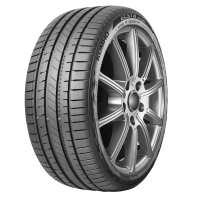
The Kumho Ecsta Sport S PS72 is the cheapest tire in the test and delivers decent overall performance without any serious weaknesses. Wet skidpad grip matches the Hankook exactly, and dry braking is solid at 35.4 m. Dry handling is a step behind the leaders, and wet braking distances are slightly longer. For the price, it represents a sensible budget option that doesn't compromise safety in a meaningful way.
| Test |
# |
Result |
Best |
Diff |
% |
| Dry Braking |
4th |
35.4 M |
34.2 M |
+1.2 M |
96.61% |
| Dry Handling |
6th |
106.1 Km/H |
108.4 Km/H |
-2.3 Km/H |
97.88% |
| Test |
# |
Result |
Best |
Diff |
% |
| Wet Braking |
6th |
47 M |
42.4 M |
+4.6 M |
90.21% |
| Wet Handling |
5th |
72 Km/H |
78.9 Km/H |
-6.9 Km/H |
91.25% |
| Wet Circle |
5th |
14 s |
12.5 s |
+1.5 s |
89.29% |
| Straight Aqua |
4th |
88.3 Km/H |
90.2 Km/H |
-1.9 Km/H |
97.89% |
| Test |
# |
Result |
Best |
Diff |
% |
| Subj. Comfort |
3rd |
8 Points |
8.7 Points |
-0.7 Points |
91.95% |
| Noise |
6th |
73.4 dB |
70.9 dB |
+2.5 dB |
96.59% |
| Test |
# |
Result |
Best |
Diff |
% |
| Rolling Resistance |
6th |
9.65 kg / t |
8.29 kg / t |
+1.36 kg / t |
85.91% |
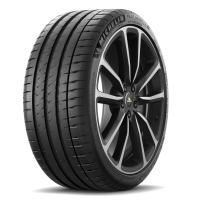
The Michelin Pilot Sport 4S is strong on dry roads, posting the second-fastest dry handling lap with good turn-in and controllability at the limit. It also leads the aquaplaning test on the front axle at 90.2 km/h, but the rear floats much earlier at 83.4 km/h - the largest front-to-rear imbalance in the test. Wet handling and wet braking are below average for this field. At roughly 1020 euros per set it is by far the most expensive tire tested, and the price-to-performance ratio doesn't add up.
| Test |
# |
Result |
Best |
Diff |
% |
| Dry Braking |
8th |
36.3 M |
34.2 M |
+2.1 M |
94.21% |
| Dry Handling |
2nd |
107.9 Km/H |
108.4 Km/H |
-0.5 Km/H |
99.54% |
| Test |
# |
Result |
Best |
Diff |
% |
| Wet Braking |
7th |
47.3 M |
42.4 M |
+4.9 M |
89.64% |
| Wet Handling |
6th |
71.2 Km/H |
78.9 Km/H |
-7.7 Km/H |
90.24% |
| Wet Circle |
7th |
14.3 s |
12.5 s |
+1.8 s |
87.41% |
| Straight Aqua |
1st |
90.2 Km/H |
|
|
100% |
| Test |
# |
Result |
Best |
Diff |
% |
| Subj. Comfort |
6th |
7.3 Points |
8.7 Points |
-1.4 Points |
83.91% |
| Noise |
4th |
72.6 dB |
70.9 dB |
+1.7 dB |
97.66% |
| Test |
# |
Result |
Best |
Diff |
% |
| Rolling Resistance |
2nd |
8.5 kg / t |
8.29 kg / t |
+0.21 kg / t |
97.53% |
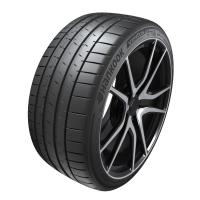
The Hankook Ventus S1 Evo Z has the most balanced aquaplaning behaviour, with both axles floating at exactly 87.9 km/h. Dry braking is short and rolling resistance is among the lowest in the test. Wet handling is where it loses ground - it has noticeably less reserve on the wet circuit. It sits mid-pack in most other areas. At around 730 euros per set, it's a reasonably priced option with good efficiency credentials.
| Test |
# |
Result |
Best |
Diff |
% |
| Dry Braking |
4th |
35.4 M |
34.2 M |
+1.2 M |
96.61% |
| Dry Handling |
5th |
106.9 Km/H |
108.4 Km/H |
-1.5 Km/H |
98.62% |
| Test |
# |
Result |
Best |
Diff |
% |
| Wet Braking |
3rd |
46 M |
42.4 M |
+3.6 M |
92.17% |
| Wet Handling |
7th |
70.4 Km/H |
78.9 Km/H |
-8.5 Km/H |
89.23% |
| Wet Circle |
5th |
14 s |
12.5 s |
+1.5 s |
89.29% |
| Straight Aqua |
6th |
87.9 Km/H |
90.2 Km/H |
-2.3 Km/H |
97.45% |
| Test |
# |
Result |
Best |
Diff |
% |
| Subj. Comfort |
3rd |
8 Points |
8.7 Points |
-0.7 Points |
91.95% |
| Noise |
2nd |
72 dB |
70.9 dB |
+1.1 dB |
98.47% |
| Test |
# |
Result |
Best |
Diff |
% |
| Rolling Resistance |
1st |
8.29 kg / t |
|
|
100% |
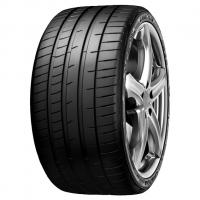
The Goodyear Eagle F1 SuperSport finishes last and is clearly out of its depth in this mixed-size fitment on the Z4. It loses over 15 km/h to the Continental on the wet handling course and is also slowest in the dry, where the driving feel is described as unbalanced. Wet braking from 100 km/h takes 51.5 m - meaning it is still travelling at nearly 40 km/h when the Continental has already stopped. Aquaplaning resistance is its only relative strength. The poor results appear to be a fitment mismatch rather than a fundamental tire deficiency.
| Test |
# |
Result |
Best |
Diff |
% |
| Dry Braking |
7th |
36.2 M |
34.2 M |
+2 M |
94.48% |
| Dry Handling |
8th |
103.1 Km/H |
108.4 Km/H |
-5.3 Km/H |
95.11% |
| Test |
# |
Result |
Best |
Diff |
% |
| Wet Braking |
8th |
51.5 M |
42.4 M |
+9.1 M |
82.33% |
| Wet Handling |
8th |
63.5 Km/H |
78.9 Km/H |
-15.4 Km/H |
80.48% |
| Wet Circle |
8th |
14.9 s |
12.5 s |
+2.4 s |
83.89% |
| Straight Aqua |
4th |
88.3 Km/H |
90.2 Km/H |
-1.9 Km/H |
97.89% |
| Test |
# |
Result |
Best |
Diff |
% |
| Subj. Comfort |
6th |
7.3 Points |
8.7 Points |
-1.4 Points |
83.91% |
| Noise |
8th |
74.2 dB |
70.9 dB |
+3.3 dB |
95.55% |
| Test |
# |
Result |
Best |
Diff |
% |
| Rolling Resistance |
8th |
10.31 kg / t |
8.29 kg / t |
+2.02 kg / t |
80.41% |


Discussion