Menu

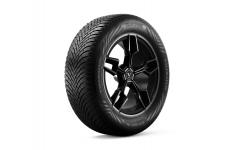
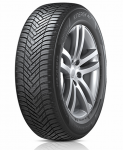
Yokohama BluEarth 4S AW21

The Yokohama BluEarth 4S AW21 is an all-season touring tire that prioritises cold-weather reassurance, with drivers commonly praising its wet grip and light-snow confidence. In independent testing it can deliver strong snow/ice stopping power, but it struggles to match class leaders in key summer metrics. Overall, it feels like a winter-leaning all-season option rather than a balanced year-round benchmark.

7.0
Tire Reviews Score Based on Professional Tests & User Reviews
High Confidence View Breakdown
Dry Grip
87%
Wet Grip
86%
Road Feedback
80%
Handling
70%
Wear
55%
Comfort
73%
Buy again
67%
Snow Grip
82%
Ice Grip
78%
8 Reviews
75% Average
6,524 miles driven
6 Tests (avg: 14th)
Yokohama BluEarth 4S AW21

Yokohama BluEarth 4S AW21

All Season Mid-Range
BETA
7 / 10
Based on Professional Tests & User Reviews · High Confidence · Updated 23 Feb 2026

The Tire Reviews Score is the most comprehensive tire scoring system available. It aggregates professional test data from multiple independent publications, user reviews, and consistency analysis using Bayesian statistical methods, weighted normalisation, and recency-adjusted scoring to produce a single, reliable performance rating.

Learn more about our methodology
Wet
75.3
1.93x / 16 tests
Snow
70.5
1.38x / 10 tests
Ice
66.6
0.84x / 3 tests
Dry
55.9
1.5x / 9 tests
Value
52
0.42x / 8 tests
Comfort
41
0.32x / 4 tests

Cross-category scores are derived metrics that combine data from multiple test disciplines to evaluate real-world performance characteristics.

Handling
71.8
9 tests
Braking
69.2
18 tests
Traction
63.4
4 tests
Score Components
Professional Tests
Weight: 80%
Tests: 6
Publications: 4
Period: 2019 - 2025
User Reviews
Weight: 15%
Reviews: 8
Avg Rating: 75.2%
Min Required: 5
Consistency
Weight: 5%
Score Std Dev: 0.45
History Points: 10
Methodology & Configuration
Scoring Process
  1. Collect Test Data: Gather results from professional tire tests across multiple publications. Minimum 1 test(s) required.
  2. Normalize Positions: Convert test positions to percentile scores using exponential weighting (factor: 1.2).
  3. Apply Recency Weighting: More recent tests are weighted higher with a decay rate of 0.95.
  4. Incorporate User Reviews: Factor in user review data (minimum 5 reviews). Weight: 15%.
  5. Bayesian Smoothing: Apply Bayesian prior (score: 7, weight: 1.5) to prevent extreme scores with limited data.
  6. Calculate Final Score: Combine all components using normalization factor of 1.1. Max score with limited data: 9.5.
Component Weights
Test Data
80%
User Reviews
15%
Consistency
5%
All Configuration Parameters
ParameterValueDescription
safety_weight 0.7 Weight multiplier for safety-related metrics
performance_weight 0.55 Weight multiplier for performance metrics
comfort_weight 0.4 Weight multiplier for comfort metrics
value_weight 0.45 Weight multiplier for value-for-money metrics
user_reviews_weight 0.15 How much user reviews contribute to the final score
test_data_weight 0.8 How much professional test data contributes to the final score
consistency_weight 0.05 How much score consistency contributes to the final score
recency_decay_rate 0.95 Rate at which older test results lose influence (higher = slower decay)
min_test_count 1 Minimum number of professional tests required
min_review_count 5 Minimum number of user reviews required
score_version 1.9 Current version of the scoring algorithm
score_normalization_factor 1.1 Factor used to normalize raw scores to the 0-10 scale
confidence_factor_weight 0.2 How much data confidence affects the final score
position_penalty_weight 0.2 Penalty applied for poor test positions
gap_penalty_threshold 12 Score gap (%) that triggers additional penalties
min_metrics_count 2 Minimum number of test metrics needed per test
limited_data_threshold 2 Number of tests below which data is considered limited
single_test_penalty 0.75 Score multiplier when only one test is available
critical_metric_penalty 0.7 Penalty for poor performance on critical safety metrics
critical_metric_threshold 70 Score below which a critical metric penalty applies
position_exponential_factor 1.2 Exponent used to amplify position-based scoring
position_exponential_threshold 0.9 Position percentile below which exponential scoring applies
gap_multiplier_critical 3 Multiplier for critical gap penalties
max_category_weight 2 Maximum weight any single category can have
max_score_limited_data 9.5 Score cap when data is limited
bayesian_prior_weight 1.5 Weight of the Bayesian prior in smoothing
bayesian_prior_score 7 Prior score used for Bayesian smoothing
evidence_test_multiplier 1.9 Multiplier for test evidence in confidence calculation
evidence_metric_divisor 3 Divisor for metric count in evidence calculation
evidence_review_divisor 10 Divisor for review count in evidence calculation
combined_penalty_floor 0.2
Data Sources
TestPublicationDateSizePositionMetrics
2025 Motor All Season Tire Test Motor 2025 215/55 R17 6/7 10 metrics
2024 ADAC All Season Tire Test ADAC 2024 205/55 R16 14/16 13 metrics
The Best All Season Tires for 2024 Tire Reviews 2024 205/55 R16 6/7 21 metrics
2023 All Season Tire 35 Set Shootout Auto Bild 2023 225/45 R17 21/35 2 metrics
2020 All Season Tire Market Overview - 32 Tire Braking Test Auto Bild 2020 205/55 R16 23/33 2 metrics
2019 All Season Tire Performance Overview Auto Bild 2019 225/45 R17 15/31 2 metrics

Videos

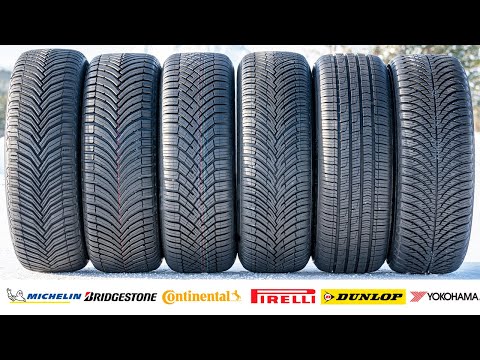
Best All Season Tire for 2024? Michelin vs Bridgestone vs Continental vs Pirelli vs Dunlop vs Yoko

Best All Season Tire for 2024? Michelin vs Bridgestone vs Continental vs Pirelli vs Dunlop vs Yoko

6
Tests
14th
Average
6th
Best
23rd
Worst
Latest Tire Test Results
6th/7
The Yokohama BluEarth-4S AW21 performs below expectations in this test. The tire only manages competitive results in wet conditions, while taking last or near-last positions in most other categories. Disappointingly, it loses the overall competition to the budget-focused Dębica despite being more expensive. The BluEarth-4S AW21 also records the highest noise levels and the worst rolling resistance of all tested tires, negatively impacting both comfort and fuel efficiency. Manufactured in the Philippines, this mid-segment tire struggles to justify its price point given its underwhelming overall performance.
6th/7
Very high levels of grip in snow, best ice braking, lower purchase price.
Low levels of grip in the wet, long dry braking, very high rolling resistance.
The Yokohama BluEarth 4S AW21 is another tire that is better in the snow and ice than the dry and wet. It's not a bad product, and it was very good in the snow, but perhaps a bit too good for an all season tire as it was firmly outclassed when not in winter conditions.
14th/16

The Yokohama BluEarth-4S tire receives an overall adequate rating for driving safety. It shows significant weaknesses on dry roads at high temperatures and misses good ratings on both wet and winter surfaces.

On dry surfaces, the tire offers barely adequate steering feedback and lacks precision. The driver must make frequent corrections due to delayed steering response and inconsistent cornering. The test vehicle tends to oversteer early in dynamic maneuvers, resulting in an adequate rating for limit behavior. Braking distance is rated as satisfactory.

On wet roads, the BluEarth-4S performs satisfactorily. It narrowly misses a good rating in braking tests, while its aquaplaning resistance and handling are clearly rated as satisfactory. The tire struggles to effectively combine longitudinal and lateral forces and tends to under- or oversteer relatively early.

In winter conditions, the Yokohama achieves a satisfactory result. It scores well in snow braking but only satisfactory in traction and snow handling. The test vehicle offers satisfactory steering precision, but with a narrow and low performance limit. Ice braking performance is also rated as satisfactory.

Environmentally, the Japanese-made Yokohama BluEarth-4S receives a satisfactory rating. It achieves only satisfactory scores in projected mileage, wear, and efficiency. The tire is criticized for production residues on new tires, which unnecessarily impact the environment during initial use.

.
Size Fuel Wet Noise
14 inch
175/65R14 82 T D C 70
185/60R14 82 H D C 70
15 inch
195/65R15 91 H D B 70
185/65R15 88 H D C 70
195/55R15 89 V D B 72
185/65R15 92 V D C 70
16 inch
205/55R16 91 V D B 72
215/60R16 99 H C B 72
205/60R16 96 H D B 72
205/60R16 96 V D B 72
205/55R16 94 V D B 72
215/60R16 99 V C B 72
215/70R16 100 H D B 72
17 inch
225/45R17 94 V D B 72
225/50R17 98 V C B 72
235/65R17 108 W C B 72
225/45R17 94 W D B 72
225/60R17 103 V C B 72
215/55R17 98 W C B 72
205/50R17 93 V D B 72
215/45R17 91 W D B 72
18 inch
225/40R18 92 W D B 72
235/60R18 107 W C B 72
245/45R18 100 Y C B 72
245/40R18 97 Y D B 72
19 inch
235/35R19 91 Y XL D B 71
20 inch
255/45R20 105 W XL C B 73
245/35R20 95 Y XL D B 71
View All Sizes and EU Label Scores for the Yokohama BluEarth 4S AW21 >>

Questions and Answers for the Yokohama BluEarth 4S AW21

Ask a question
December 11, 2018

New XC60 4x4 (235/55/R19 V) comes with Latitude road tires that are no use to me. I live on Dartmoor hence mud and stones plus some ice and snow. I need a sturdy all season tire capable of a bit of off road but also capable of dealing with poor road conditions with gravel potholes and stones. Strong sidewalls. Currently using Yokohama Geolandars which last for ever but probably aren't the best in snow or in the wet. Looking at Scorpion Verde all season FSL with rim protector band. But the Verde is runflat M&S which seems like a good idea but how good on stones off road? Any suggestions - most other makes only have an H speed rating - I should have V though I'm not likely to exceed 130!

I'm afraid I'm currently out of my depth when it comes to SUV. <a href="http://www.tirereviews.co.uk/Article/2018-Auto-Bild-SUV-All-Season-Tire-Test.htm">This test</a> includes both all season and AT tires which are legal winter tires and will give you an idea regarding the balance of performance.
December 27, 2023

Despite its mid-low ratings in all the tests, do you know something more about the Yokohama BluEarth 4S AW21 thanks

I'm afraid not, all the data I know is on the site.
Ask a question

We will never publish or share your email address

captcha

To verify you are human please type the word you see in the box below.

Review Summary

Based on 7 user reviews

Drivers of the Yokohama BluEarth 4S AW21 report strong wet- and winter-weather confidence with solid dry performance, especially in the first two years. Several note rising noise and harsher ride as the tire ages, with some mentioning surface hardening by year three. A minority report durability issues, while steering feel at low speeds is occasionally odd. Overall sentiment is moderately positive with clear strengths in wet and light-snow grip.

Strengths
  • Wet grip
  • Winter/light-snow traction
  • Overall handling stability
  • Initial comfort/low noise (early life)
Areas for Improvement
  • Increasing road noise and harsher ride with age
  • Durability/aging concerns (surface hardening
  • Cracking)

Top 3 Yokohama BluEarth 4S AW21 Reviews

Given 69% while driving a Fiat Bravo (225/45 R17) on mostly town for 500 average miles
Previously I drove on Firestone Multiseason 2, which are my point of reference. Unfortunately they have dry rotted prematurely so I have opted to go for a different brand (on a side note the car was stored in harsh conditions so I can understand that that was the main issue).

The Yokohamas seem more winter oriented and they are overall decent, I have not noticed anything unusual, except for the road noise which is a bit of a killer. They legitimately howl like banshees :D I am not going to buy these again mainly because of that.
February 28, 2025
Given 70% while driving a Suzuki vitara s 1,4 boosterjet (215/55 R17) on mostly town for 10 easy going miles
The first 2 years with these tires was brilliant! Smooth drive quiet with very little road noise noticed. Summer months the tires were fine not very sporty, noticed as the temperatures got up to 30°c they felt very soft going around corners.
Autumn into winter is were these tires are great! The wet grip is excellent and feels like a normal summer tire. When the snow arrived I was really impressed how much grip they gave going up hills even braking on snow was very good. Into the 3rd year of ownership and cracks started to appear on the tread blocks where it contacts the road, also noticed that road noise has increased with the ride feeling harsher than before. Seems like most all season tires suffer from this hardening of the tire surface into the 3rd year of use. I doubt I would buy these again due to this.
November 14, 2023
Given 95% while driving a BMW 435d (225/45 R17) on a combination of roads for 2,000 easy going miles
They have been excellent over the winter months, they feel very solid on seriously wet roads and motorways and when it has been icy there hasn’t been any slip or loss of traction when accelerating or braking. No use in snowy conditions or warm hot weather as yet. Very glad I swapped my Primacy 3’s, nice in the dry but to me they didn’t feel solid particularly on wet motorways, these are a vast improvement in the wet.
March 12, 2022

How would you rate the Yokohama BluEarth 4S AW21?

Click a star to start your review

Latest Yokohama BluEarth 4S AW21 Reviews

Given 81% while driving a Subaru XV 2.0 D (225/45 R17) on a combination of roads for 1,000 average miles
OE tires G95A by Yokohama, M+S designed with not that good performance on wet. Tires are somewhat designed for "all terrain" use, Geolandar series, so it was not a surprise. Then I switched to G055 M+S tires over again, good tread wear, good in the wet and in the dry, sufficient in the snow as the G95A was -the AWD proved axcellent and overtaking winter tires equipped cars-. Last I put on weather control A005 from Bridgestone, very good in dry and et, but too winter oriented and soft compound, tread wear not an asset at all -blistering noted on the edges after 30,000 km, trew them away. I drove 80,000 miles with the liste tires, then I put on the 4S AW21, giving credit to Yokohama first real all season tire. They are developed from a summer tire as far as I know, I hope this is true as the tread depth is not excessive. So far so good, wet and dry performance is very good, cornering in the wet is excellent wiht my car. Only lihgt snow tested, but I do not pretend that much as I rely on the AWD and even a fair performance becomes a good performance thanks to the symmetrical AWD with the viscous centre diff and limited slip, so the snow and ice ratings are not a reason of choice for me. First impression was they are a bit better than the Bridgestone A005, but performance may dramatically change according to tire size and vehicle, on my car this tire by far outperforms the bridgestone A005, althouhg my expectation was not to that direction.

December 15, 2020
Given 51% while driving a Skoda (205/60 R19 H) on a combination of roads for 14 average miles
I fitted 2 YOKOHAMA "BLUE EARTH" tires to the front of my car May 2017.After only 14,632 miles one had a crack running the full circumference of the outer tread next to the outer wall. I found it very difficult to contact YOKOHAMA and l still had no reply after 3 weeks. AVON ZV5 same size fitted to the same position on the same vehicle reached 21,145 .Fitted to the rear 28,000, performance wet and dry roads was very similar to that of the YOKOHAMA.
November 11, 2020
Volkswagen (225/45 R17) on mostly country roads for 1,000 spirited miles
I can't comment on snow and ice grip as yet but dry and wet grip perfectly acceptable (Golf MK 6 1.2 TSI) through some spirited driving. Only downside is steering feel when manoeuvring - tires give very odd sensation but nothing so bad that would stop me buying again
October 31, 2020
Given 87% while driving a Honda CRV (225/45 R17) on mostly country roads for 1,000 easy going miles
Great looking tire with plenty of all round uniform tread.
November 6, 2018
Rate the Yokohama BluEarth 4S AW21