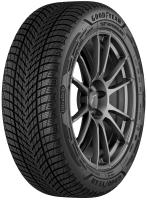
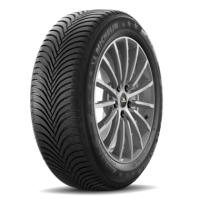
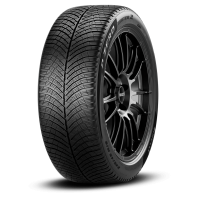
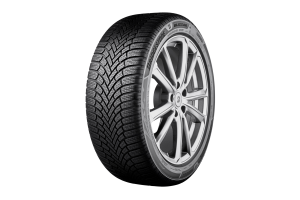
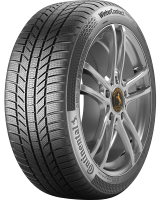
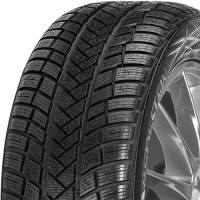
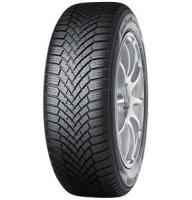
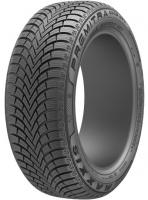
Auto Zeitung has conducted a comprehensive winter tire test in size 245/45 R19, evaluating ten current winter tires across snow, wet, and dry conditions, with additional laboratory analysis for durability and environmental impact. The test field includes five premium tires (Bridgestone Blizzak 6 Enliten, Continental WinterContact TS 870P, Goodyear UltraGrip Performance 3, Michelin Pilot Alpin 5, and Pirelli P Zero Winter 2), two mid range segment tires (Vredestein Wintrac Pro+ and Yokohama BluEarth Winter V906), and three budget options from Chinese manufacturers (Linglong Sport Master Winter, Maxxis Premitra Snow WP6, and Triangle EffeXWinter TW421). Testing was conducted at Goodyear's facilities for winter conditions and Continental's proving grounds for wet and dry tests, with laboratory durability analysis performed at both Pirelli and Continental facilities. The test vehicle was a BMW 520d Touring.
The Goodyear UltraGrip Performance 3 secured the test victory with 414 points out of 450, demonstrating the most consistent performance across all conditions. The testers noted its ability to deliver very good to excellent results in every single discipline without significant weaknesses - a rare achievement in winter tire testing. Second place went to the Michelin Pilot Alpin 5 with 397 points, which earned the environmental recommendation due to its outstanding projected mileage of 46,750 km and lowest wear rate in the test. The Pirelli P Zero Winter 2 claimed third with 393 points, distinguished by the shortest wet braking distance in the entire test and its construction from at least 55% recycled or bio-based materials.
The Bridgestone Blizzak 6 Enliten finished fourth with 390 points and received the fuel efficiency recommendation, achieving the best rolling resistance result at just 7.6 kg/t thanks to its Enliten technology. The Continental WinterContact TS 870P rounded out the top five with 376 points, delivering the best aquaplaning protection in longitudinal testing at 91.0 km/h. These five premium tires all received "sehr empfehlenswert" (highly recommended) ratings from Auto Zeitung.
Premium vs Budget Analysis
The test clearly demonstrates that winter tire performance cannot be separated from price considerations. The premium tires from Bridgestone, Continental, Goodyear, Michelin, and Pirelli all delivered consistent, balanced performance across all conditions with only minor weaknesses in specific areas. Their prices ranged from 975 to 1090 euros per set.
In stark contrast, the three Chinese budget tires (Linglong at 385 euros, Triangle at 350 euros, and Maxxis at 585 euros) all showed significant deficiencies. The Linglong Sport Master Winter, despite being manufactured in Serbia specifically for European customers, recorded the longest snow braking distance at 27.6 meters and generated the highest exterior noise at 76.2 dB(A). Its high wear rate of 0.215 mm per 1000 km and rolling resistance of 9.6 kg/t resulted in the worst environmental profile in the test.
The testers calculated cost per kilometer driven based on purchase price and laboratory-measured wear rates. While the Triangle offers the lowest absolute cost per kilometer at 3.18 euros per 1000 km, this calculation doesn't account for its safety compromises, particularly the instability during load changes and poor projected mileage of just 27,500 km. In contrast, the Michelin - despite being the most expensive tire at 1090 euros per set - delivered a cost per kilometer of 5.83 euros while providing the longest projected life and best overall environmental characteristics.
Environmental and Efficiency Considerations
Auto Zeitung conducted extensive laboratory testing to measure wear rates, rolling resistance, and noise emissions - factors increasingly important to environmentally conscious consumers. The Michelin Pilot Alpin 5 emerged as the clear environmental champion with the lowest wear rate (0.124 mm per 1000 km), longest projected mileage (46,750 km), low rolling resistance (7.9 kg/t), and moderate noise (71.2 dB(A)).
The Bridgestone Blizzak 6 Enliten demonstrated that efficiency technology works, achieving the absolute best rolling resistance at 7.6 kg/t - significantly better than any competitor. However, its projected mileage of 39,750 km fell short of the Michelin's longevity, preventing it from claiming the overall environmental crown.
The budget tires performed poorly in environmental metrics. The Triangle, Linglong, and Maxxis all showed wear rates between 0.205 and 0.223 mm per 1000 km - up to 80% higher than the Michelin. Their projected mileages ranged from just 27,500 to 30,500 km, meaning they would need replacing almost twice as often as the premium alternatives. The Linglong's combination of highest rolling resistance (9.6 kg/t) and loudest operation (76.2 dB(A)) represents the worst environmental impact in this test.
Dry
The Michelin Pilot Alpin 5 achieves the shortest dry braking distance at 42.4 meters, with the budget Triangle surprisingly claiming second place just 0.4 meters behind, while the Maxxis trails the field by 3.8 meters
Dry Braking
Spread: 3.80 M (9%)|Avg: 43.99 M
Dry braking in meters (100 - 0 km/h) (Lower is better)
Michelin Pilot Alpin 5
42.40 M
Triangle Effexwinter
42.80 M
Yokohama BluEarth Winter V906
43.30 M
Linglong Sport Master Winter
43.40 M
Goodyear UltraGrip Performance 3
43.60 M
Pirelli P Zero Winter 2
43.60 M
Vredestein Wintrac Pro plus
44.60 M
Continental WinterContact TS 870 P
44.80 M
Bridgestone Blizzak 6
45.20 M
Maxxis Premitra Snow WP6
46.20 M
The Linglong records the fastest lap time despite its budget positioning, completing the 2.4 km circuit in 75.2 seconds, while the testers note this speed came at the cost of stability with a nervous rear axle requiring constant driver attention, and the Triangle falls 2.1 seconds behind in last place.
Dry Handling
Spread: 2.10 s (2.8%)|Avg: 76.16 s
Dry handling time in seconds (Lower is better)
Linglong Sport Master Winter
75.20 s
Pirelli P Zero Winter 2
75.60 s
Goodyear UltraGrip Performance 3
75.80 s
Michelin Pilot Alpin 5
75.90 s
Continental WinterContact TS 870 P
75.90 s
Yokohama BluEarth Winter V906
76.30 s
Bridgestone Blizzak 6
76.30 s
Maxxis Premitra Snow WP6
76.60 s
Vredestein Wintrac Pro plus
76.70 s
Triangle Effexwinter
77.30 s
Wet
The Pirelli P Zero Winter 2 establishes dominance in wet conditions with the shortest stopping distance of 48.6 meters from 100 km/h, while the Maxxis requires a dangerous 8.2 meters more to stop - meaning where the Pirelli-equipped BMW has already halted, the Maxxis would still be traveling at nearly 40 km/h.
Wet Braking
Spread: 8.20 M (16.9%)|Avg: 51.98 M
Wet braking in meters (Lower is better)
Pirelli P Zero Winter 2
48.60 M
Goodyear UltraGrip Performance 3
49.30 M
Michelin Pilot Alpin 5
50.60 M
Bridgestone Blizzak 6
51.30 M
Yokohama BluEarth Winter V906
51.40 M
Continental WinterContact TS 870 P
52.40 M
Triangle Effexwinter
52.70 M
Vredestein Wintrac Pro plus
53.30 M
Linglong Sport Master Winter
53.40 M
Maxxis Premitra Snow WP6
56.80 M
The Pirelli continues its wet weather superiority with the fastest lap time of 84.9 seconds on the 1.8 km circuit, demonstrating the consistency of its wet performance, while the struggling Maxxis again finishes last at 91.5 seconds - 6.6 seconds slower and confirming its fundamental weakness in wet conditions.
Wet Handling
Spread: 6.60 s (7.8%)|Avg: 87.37 s
Wet handling time in seconds (Lower is better)
Pirelli P Zero Winter 2
84.90 s
Goodyear UltraGrip Performance 3
85.30 s
Continental WinterContact TS 870 P
86.30 s
Michelin Pilot Alpin 5
86.40 s
Vredestein Wintrac Pro plus
86.50 s
Yokohama BluEarth Winter V906
87.20 s
Bridgestone Blizzak 6
88.10 s
Triangle Effexwinter
88.40 s
Linglong Sport Master Winter
89.10 s
Maxxis Premitra Snow WP6
91.50 s
Lateral grip measured on the 58-meter diameter wet circle shows the Pirelli maintaining its wet performance advantage with the quickest time of 12.26 seconds, while the Maxxis once again trails at 13.16 seconds, a gap of 0.9 seconds that reinforces the tire's inadequate wet weather capabilities.
Wet Circle
Spread: 0.90 s (7.3%)|Avg: 12.61 s
Wet Circle Lap Time in seconds (Lower is better)
Pirelli P Zero Winter 2
12.26 s
Goodyear UltraGrip Performance 3
12.35 s
Continental WinterContact TS 870 P
12.43 s
Michelin Pilot Alpin 5
12.52 s
Vredestein Wintrac Pro plus
12.63 s
Bridgestone Blizzak 6
12.67 s
Linglong Sport Master Winter
12.67 s
Yokohama BluEarth Winter V906
12.68 s
Triangle Effexwinter
12.72 s
Maxxis Premitra Snow WP6
13.16 s
The Continental WinterContact TS 870P leads aquaplaning resistance at 91.0 km/h, providing the best protection against straight-line hydroplaning, while the Yokohama offers the least resistance at 85.4 km/h - a significant 5.6 km/h difference that could mean the difference between control and losing grip in heavy rain.
Straight Aqua
Spread: 5.60 Km/H (6.2%)|Avg: 88.02 Km/H
Float Speed in Km/H (Higher is better)
Continental WinterContact TS 870 P
91.00 Km/H
Bridgestone Blizzak 6
90.30 Km/H
Michelin Pilot Alpin 5
88.20 Km/H
Vredestein Wintrac Pro plus
88.20 Km/H
Goodyear UltraGrip Performance 3
88.10 Km/H
Maxxis Premitra Snow WP6
88.00 Km/H
Linglong Sport Master Winter
87.90 Km/H
Triangle Effexwinter
86.70 Km/H
Pirelli P Zero Winter 2
86.40 Km/H
Yokohama BluEarth Winter V906
85.40 Km/H
Snow
The Michelin achieves the shortest snow braking distance at 25.9 meters from 50 km/h, closely followed by the Bridgestone at 25.7 meters, while the budget Linglong requires 1.7 meters more distance to stop - a concerning margin when winter conditions deteriorate.
Snow Braking
Spread: 1.90 M (7.4%)|Avg: 26.38 M
Snow braking in meters (50 - 0 km/h) (Lower is better)
Bridgestone Blizzak 6
25.70 M
Michelin Pilot Alpin 5
25.90 M
Goodyear UltraGrip Performance 3
26.00 M
Pirelli P Zero Winter 2
26.10 M
Vredestein Wintrac Pro plus
26.30 M
Triangle Effexwinter
26.30 M
Continental WinterContact TS 870 P
26.40 M
Maxxis Premitra Snow WP6
26.40 M
Yokohama BluEarth Winter V906
27.10 M
Linglong Sport Master Winter
27.60 M
The Michelin generates the highest traction force at 3575 Newtons during repeated acceleration tests, enabling confident forward motion in deep snow, while the Yokohama musters only 3030 Newtons - a deficit of 545 Newtons that translates to noticeably reduced ability to climb snowy gradients or accelerate away from standstill.
Snow Traction
Spread: 545.00 N (15.2%)|Avg: 3296.50 N
Pulling Force in Newtons (Higher is better)
Michelin Pilot Alpin 5
3575.00 N
Goodyear UltraGrip Performance 3
3480.00 N
Pirelli P Zero Winter 2
3440.00 N
Bridgestone Blizzak 6
3420.00 N
Maxxis Premitra Snow WP6
3355.00 N
Triangle Effexwinter
3255.00 N
Continental WinterContact TS 870 P
3210.00 N
Vredestein Wintrac Pro plus
3110.00 N
Linglong Sport Master Winter
3090.00 N
Yokohama BluEarth Winter V906
3030.00 N
The Michelin records the fastest snow lap at 68.0 seconds on the 1.1 km circuit, with the Bridgestone just 0.1 seconds behind, demonstrating the premium tires' winter capabilities, while the Triangle struggles to 73.7 seconds - 5.7 seconds slower and exposing significant performance compromises.
Snow Handling
Spread: 5.70 s (8.4%)|Avg: 70.59 s
Snow handling time in seconds (Lower is better)
Michelin Pilot Alpin 5
68.00 s
Bridgestone Blizzak 6
68.10 s
Goodyear UltraGrip Performance 3
68.30 s
Continental WinterContact TS 870 P
70.70 s
Pirelli P Zero Winter 2
70.80 s
Vredestein Wintrac Pro plus
71.10 s
Maxxis Premitra Snow WP6
71.20 s
Linglong Sport Master Winter
71.60 s
Yokohama BluEarth Winter V906
72.40 s
Triangle Effexwinter
73.70 s
Comfort
Subjective comfort ratings show most tires scoring 7 or 8 out of 10 points with relatively little separation between premium and mid-range options, though the Maxxis falls to just 6 out of 10, reflecting its harsher ride quality that compounds its performance deficiencies in other areas.
Subj. Comfort
Spread: 2.00 Points (25%)|Avg: 7.60 Points
Subjective Comfort Score (Higher is better)
Michelin Pilot Alpin 5
8.00 Points
Linglong Sport Master Winter
8.00 Points
Vredestein Wintrac Pro plus
8.00 Points
Bridgestone Blizzak 6
8.00 Points
Pirelli P Zero Winter 2
8.00 Points
Yokohama BluEarth Winter V906
8.00 Points
Triangle Effexwinter
8.00 Points
Goodyear UltraGrip Performance 3
7.00 Points
Continental WinterContact TS 870 P
7.00 Points
Maxxis Premitra Snow WP6
6.00 Points
The Triangle produces the quietest exterior noise at 70.3 dB(A) when passing at 80 km/h, one of its few positive results, while the Linglong generates 76.2 dB(A) - a 5.9 dB(A) increase that represents a near-doubling of perceived noise intensity and contributes to environmental noise pollution.
Noise
Spread: 5.90 dB (8.4%)|Avg: 72.15 dB
External noise in dB (Lower is better)
Triangle Effexwinter
70.30 dB
Pirelli P Zero Winter 2
70.50 dB
Goodyear UltraGrip Performance 3
71.10 dB
Michelin Pilot Alpin 5
71.20 dB
Continental WinterContact TS 870 P
71.80 dB
Maxxis Premitra Snow WP6
72.00 dB
Vredestein Wintrac Pro plus
72.40 dB
Bridgestone Blizzak 6
72.70 dB
Yokohama BluEarth Winter V906
73.30 dB
Linglong Sport Master Winter
76.20 dB
Value
The Michelin's superior wear resistance translates to a projected lifespan of 46,750 km before reaching legal minimum tread depth, while the Triangle is expected to last only 27,500 km - meaning drivers would need to purchase 1.7 sets of Triangle tires to match the distance covered by a single set of Michelins, fundamentally altering the value equation.
Wear
Spread: 19250.00 KM (41.2%)|Avg: 35975.00 KM
Predicted tread life in KM (Higher is better)
Michelin Pilot Alpin 5
46750.00 KM
Goodyear UltraGrip Performance 3
43750.00 KM
Continental WinterContact TS 870 P
40750.00 KM
Pirelli P Zero Winter 2
40000.00 KM
Bridgestone Blizzak 6
39750.00 KM
Vredestein Wintrac Pro plus
31250.00 KM
Yokohama BluEarth Winter V906
31000.00 KM
Maxxis Premitra Snow WP6
30500.00 KM
Linglong Sport Master Winter
28500.00 KM
Triangle Effexwinter
27500.00 KM
When purchase price is divided by projected mileage, the Triangle offers the lowest cost per 1000 km at 3.18 euros, but this calculation doesn't account for its safety compromises, while the Michelin at 5.83 euros per 1000 km proves that premium pricing can deliver competitive running costs when combined with exceptional durability and the highest levels of performance and safety.
The Bridgestone's Enliten technology delivers the lowest rolling resistance at just 7.6 kg/t, maximizing fuel efficiency and earning the economy recommendation, while the Linglong's 9.6 kg/t represents 26% higher resistance - translating directly to increased fuel consumption and CO2 emissions over the tire's lifetime.
Rolling Resistance
Spread: 2.00 kg / t (26.3%)|Avg: 8.48 kg / t
Rolling resistance in kg t (Lower is better)
Bridgestone Blizzak 6
7.60 kg / t
Michelin Pilot Alpin 5
7.90 kg / t
Pirelli P Zero Winter 2
8.20 kg / t
Maxxis Premitra Snow WP6
8.20 kg / t
Triangle Effexwinter
8.20 kg / t
Continental WinterContact TS 870 P
8.40 kg / t
Goodyear UltraGrip Performance 3
8.70 kg / t
Vredestein Wintrac Pro plus
8.70 kg / t
Yokohama BluEarth Winter V906
9.30 kg / t
Linglong Sport Master Winter
9.60 kg / t
Laboratory testing reveals the Michelin wears at just 0.124 mm per 1000 km, the lowest rate in the test, while the Triangle sheds rubber at 0.223 mm per 1000 km - an 80% higher wear rate that means the budget tire will need replacing almost twice as often, negating much of its initial cost advantage.
The Goodyear UltraGrip Performance 3 delivers a masterclass in balanced winter tire performance, earning the test victory with consistently excellent results across all conditions. On snow, it demonstrates short braking distances, strong traction, and exceptional lateral grip of 3.88 m/s², while its driving safety scores of 23/30 make it both sporty-responsive and stoically stable. The tire transitions seamlessly to wet conditions where it leads the field alongside Pirelli, offering very good grip reserves and superb handling characteristics that inspire confidence. In dry conditions, the Goodyear continues to impress with neutral, predictable behavior and strong stability, though comfort is rated slightly lower at 7/10. Its environmental credentials are strong as the second-best tire for sustainability factors including wear, longevity, rolling resistance and noise. The tire's ability to maintain composure and precision regardless of weather conditions makes it the most complete package in this test.
The Michelin Pilot Alpin 5 secures second place overall and earns the environmental recommendation as the most sustainable tire in the test. On snow, it achieves the shortest braking distance at 25.9 meters and delivers the highest traction force of 3575 Newtons, though testers note it lacks some feedback and precision at the limit, scoring 25/30 for driving safety. In wet conditions, the Michelin provides solid and reliable grip with good handling, though it struggles slightly with feedback during dynamic maneuvers, earning 33/45 for safety. The tire truly excels in dry performance with the absolute shortest braking distance of 42.4 meters and clear, precise responses scoring 20/30 for handling character. With an outstanding projected mileage of 46,750 km, the lowest wear rate of 0.124 mm per 1000 km, very low rolling resistance, and quiet operation at 71.2 dB(A), it represents the best long-term value proposition. The tire's efficiency and longevity mean that despite its premium price, it offers excellent cost per kilometer.
The Pirelli P Zero Winter 2 claims third place with particularly impressive wet weather capabilities and a sustainability focus, being manufactured from at least 55% recycled or bio-based materials. On snow, it delivers good performance with strong braking and traction, though handling reveals an uncharacteristically clear understeer tendency for Pirelli, scoring 21/30 for driving safety. Where this tire truly shines is on wet surfaces, achieving the absolute shortest braking distance at 48.6 meters with near-exemplary grip and handling that earns a perfect 45/45 safety score - no other winter tire in this test stops as safely in the wet. Its only weakness appears in lateral aquaplaning resistance. In dry conditions, the Pirelli maintains its flawless performance with balanced characteristics between longevity, comfort (8/10), efficiency, safety (26/30) and driving enjoyment. The tire's well-rounded nature and environmental credentials make it a strong choice for those seeking both performance and sustainability, though buyers should be aware of its slightly reduced aquaplaning protection in curves.
The Bridgestone Blizzak 6 Enliten takes fourth place and earns the fuel efficiency recommendation thanks to its class-leading Enliten technology. On snow, this tire achieves the highest performance rating in the test with the joint-shortest braking distance, excellent traction, outstanding lateral grip of 3.86 m/s², and a very high driving safety score of 29/30 - its balanced nature and strong grip inspire confidence through winter conditions. In wet weather, the Bridgestone offers very high aquaplaning reserves and stable driving characteristics with willing turn-in response, scoring 34/45 for safety, though braking distances are somewhat longer than the best. The tire delivers best-in-class results for rolling resistance at just 7.6 kg/t and excels in slalom testing at 59.0 km/h, though it shows lively responses to load changes and scores 23/30 for dry safety. With small steering angles and stable support characteristics, it provides an engaging driving experience. The Enliten technology makes it exceptionally efficient, though its mileage of 39,750 km doesn't quite match the longevity leaders, preventing it from claiming the top environmental spot.
The Continental WinterContact TS 870P rounds out the top five recommendations with consistently reliable performance and the best aquaplaning protection in the test. On snow, the tire handles the winter disciplines capably without setting any particular highlights, offering medium traction and a good-natured character that scores 27/30 for driving safety, though it doesn't quite match the grip levels of the leading snow specialists. Where the Continental excels is in wet conditions, providing the absolute best protection against aquaplaning at 91.0 km/h longitudinally, combined with fine feedback and precise handling that earns 38/45 for safety - drivers will appreciate its clear communication and predictable behavior. In the dry, it delivers consistently dependable grip and handling with crystal-clear feedback scoring 28/30 for safety, though comfort is rated slightly lower at 7/10, and gentle load change reactions make it easy to control. The tire offers solid all-around capabilities with good longevity of 40,750 km and reasonable efficiency. While it may not lead in any single category, its balanced nature and particularly strong aquaplaning resistance make it a sensible choice for drivers prioritizing safety in heavy rain.
The Vredestein Wintrac Pro+ finishes in sixth place, showing solid competence across conditions but lacking the standout qualities of the premium leaders. On snow, it achieves respectable braking performance and handles predictably with an understeer-biased setup scoring 19/30 for driving safety, though it can't match the grip levels of the top performers. In wet conditions, the tire's main weakness emerges with extended braking distances and only moderate grip levels scoring 35/45 for safety, though its handling remains stable and controllable. The dry performance continues this theme of adequacy rather than excellence - mediocre steering precision and a handling characteristic that tends toward oversteer at the limit earn just 15/30 for safety, though comfort is rated at a respectable 8/10. The tire's high wear rate of 0.201 mm per 1000 km and modest projected mileage of just 31,250 km hurt its value proposition. For drivers who can accept compromises in wet braking performance and somewhat vague steering response in exchange for a lower price point than the premium options, the Vredestein remains a viable choice, though it requires driver adaptation to its characteristics.
The Triangle EffeXWinter TW421 represents the cheapest option in this test at just 87.50 euros per tire, but significant performance compromises accompany that low price. On snow, the tire manages acceptable grip levels though it becomes unstable in borderline conditions and exhibits sensitive responses to load changes that score only 12/30 for driving safety - not confidence-inspiring when conditions deteriorate. In wet weather, it delivers the second-best braking result surprisingly, and drives with pleasingly stable characteristics scoring 30/45 for safety, showing that budget tires can perform respectably in some areas. Dry performance reveals the best exterior noise result at 70.3 dB(A) and strong braking, though the handling suffers from instability during load changes scoring 13/30 for safety. The tire's environmental credentials are poor with high wear of 0.223 mm per 1000 km, short projected life of only 27,500 km, and the shortest actual lifespan in the test. While it offers the lowest cost per kilometer at 3.18 euros, this calculation doesn't account for the safety compromises. The Triangle might suit extremely budget-conscious buyers in regions with minimal winter conditions, but its unpredictable handling and poor durability make it difficult to recommend.
The Yokohama BluEarth Winter V906 finishes in eighth place, showing a clear weakness on snow that undermines its otherwise acceptable performance. The tire's winter credentials are immediately questioned by its poor snow performance - it achieves the worst results for traction and lateral grip with just 3.19 m/s², exhibits restricted driving stability, and delivers an inadequate 13/30 safety score that places it at the back of the field. For anyone prioritizing snow capability, this tire simply cannot be recommended. In wet conditions, the Yokohama recovers somewhat with predictable, controllable handling and average grip levels scoring 31/45 for safety, though it still trails the leaders. Dry performance is similarly middle-of-the-road with good braking at 43.3 meters, orderly grip, and decent precision earning 22/30 for safety, while comfort rates a respectable 8/10. The tire's high rolling resistance of 9.3 kg/t, loud operation at 73.3 dB(A), and poor wear characteristics with only 31,000 km projected mileage further damage its case. The Yokohama might work for drivers in mild climates who rarely encounter snow and simply need to satisfy legal winter tire requirements, but it fails to deliver the winter performance most buyers expect.
The Linglong Sport Master Winter, manufactured in Serbia specifically for European customers, finishes ninth overall and represents a tire that hasn't yet met expectations despite its regional focus. On snow, the tire provides only marginal grip resulting in the longest braking distance at 27.6 meters and the lowest driving safety rating of 15/30 - when winter conditions arrive, this tire struggles to provide adequate security. Interestingly, in wet conditions the Linglong proves less problematic, though extended braking distances of 53.4 meters still concern, and lateral aquaplaning protection in curves needs improvement, scoring 25/45 for safety. The tire surprises in dry handling by posting the fastest lap time at 75.2 seconds and demonstrating respectable grip at 43.4 meters braking, though its nervous rear axle behavior demands driver attention and scores 25/30 for safety. Environmental performance is deeply disappointing with the highest wear rate of 0.215 mm per 1000 km after Triangle, shortest projected life of 28,500 km, highest rolling resistance at 9.6 kg/t, and loudest operation at 76.2 dB(A). While it offers low cost per kilometer at 3.38 euros, the Linglong's poor snow performance, high environmental impact, and demanding handling characteristics make it a questionable choice even at its budget price point.
The Maxxis Premitra Snow WP6 brings up the rear in tenth place, requiring a general overhaul according to the testers due to significant weaknesses across multiple conditions. On snow, the tire still manages to hold its own with acceptable grip and scores 18/30 for driving safety - this is actually one of its better showings among the budget profiles. However, the wheels fall off in wet conditions where the Maxxis records by far the longest braking distance at 56.8 meters - nearly 8 meters more than the winning Pirelli - combined with hectic load change reactions and severely compromised safety scoring just 19/45. At 100 km/h on wet roads, where the BMW stops with other tires, the Maxxis would still be traveling at nearly 40 km/h - an unacceptable safety margin. Dry performance continues the disappointment with the longest braking distance at 46.2 meters, struggles with rear axle stability, and inadequate driving safety at 18/30, while comfort suffers at just 6/10. The tire also disappoints in durability with high wear and a projected life of only 30,500 km. Despite costing less than premium options, the Maxxis cannot be recommended due to its dangerous wet braking performance and overall lack of refinement across conditions.