TireRack, America's leading direct tire retailer and most trusted source of tire testing data, has completed their latest Ultra High Performance All-Season test. Using their impressive test facility and a 2024 BMW 330i xDrive, TireRack's expert test team evaluated nine leading tires across road comfort, noise, and wet and dry track performance.
The summary of the test is below, but readers are encouraged to visit TireRack.com for the complete, detailed test report including in-depth data and their video of the test.
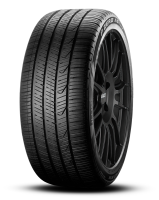
The Pirelli P Zero AS Plus 3 provided a very positive road ride experience, absorbing most impacts, smoothing over bumps, and keeping the cabin exceptionally quiet with no strong tread noise. The steering was natural and responsive—quick but not over-eager. This intuitive nature carried over to the wet track, where the steering was effortlessly natural to use, even at the limit, and was well-matched to the tire's grip level. The tire felt balanced, with the front and rear axles working in union, making it the most pleasant to drive in the wet. On the dry track, these traits remained, and it added top objective lap times to its accomplishments. In winter conditions, the P Zero AS Plus 3 was not quite as confidence-inspiring. While the steering remained responsive, the tire felt like it wanted to be driven with the rear axle, and its ceiling for functional traction was lower than other tires in the test.
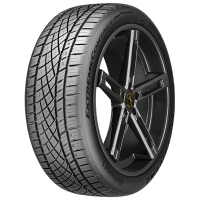
The Continental ExtremeContact DWS 06 Plus offered a generally comfortable road ride, softening larger hits and absorbing smaller imperfections with poise, though with a touch of residual motion. Noise was well-mitigated, and the steering feel was subdued and responsive but not particularly eager or lively. On the wet track, the steering continued to be unexciting and flat, but this was paired with strong traction and compliant, well-balanced behavior, resulting in a neutral and capable performance. The dry track experience was more refreshing, where the tire felt intuitive and athletic, held back only by its somewhat flat steering. During winter testing, it showcased admirable performance, accelerating well and being easy to drive, but it was somewhat unbalanced, as its braking didn't feel matched to its acceleration, and cornering required managing both front and rear grip.
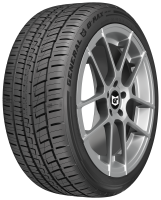
The General G-MAX AS-07 delivered a slightly firm ride on the road, communicating most imperfections to the driver but rounding them off to avoid a rough feeling. Noise was a deftly blended mix of muted tones, and the steering built effort nicely, feeling responsive but just shy of immediate. On the wet track, the tire performed well with lively, pointed steering that worked in concert with a balanced, planted feeling, though it could find oversteer quicker than desired when pushed to the limit. It truly shined on the dry track, where it felt composed and agile, and any traction issues disappeared, delivering the best braking distances in the test and competitive lap times. In the snow, it was a decent performer, able to put power down well with predictable handling, making it a good overall package, though it lacked the outright traction to compete with the very best in winter conditions.
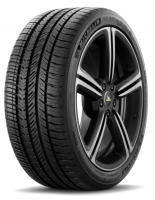
The Michelin Pilot Sport All Season 4 exhibited some minor harshness and jiggle on the road, with moderate levels of multi-tonal noise feedback. The steering was fast, responsive, and particularly eager off-center, feeling sporty but a little light on feedback. On the wet track, the reactive steering provided good control, and the tire had more than enough grip to handle the conditions, recovering quickly from mistakes and proving to be a rock-solid performer. That feeling persisted on the dry track, where it was consistent and balanced, though it could be a little sensitive to mid-turn loading. In the snow, the steering was effective only in the initial degrees of travel, becoming less so further into a turn, which revealed a lack of lateral traction. While its longitudinal traction was strong, actually driving it in the snow was a less comforting experience, leading to slow and considered laps.
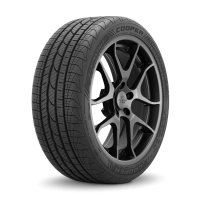
The Cooper Cobra Instinct is unmistakably firm on the road, handling small impacts with some movement but transmitting larger bumps and potholes harshly. The noise level was average, with noticeable tones on smooth roads. The steering felt firm but somewhat vague on-center and not quite urgent enough. On the wet track, the Cobra Instinct felt at home, offering strong traction and performing impressively through slaloms with weighty, responsive steering, though it had some mid-corner limits. In the dry, it remained a top option, feeling athletic, alert, and well-balanced. However, in winter testing, the tire struggled in nearly every respect, with very poor longitudinal traction for both acceleration and braking. The steering offered little to no feedback, making it nearly impossible to judge grip levels, leading to either understeer or abrupt oversteer.
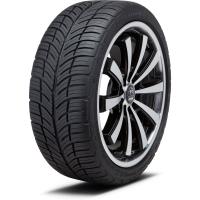
The BFGoodrich g-Force COMP-2 A/S PLUS provided a firm ride on the road that rounded over impacts well, though it didn't completely mask them. It produced a consistent tone over most surfaces, with some minor tread growl. Its steering was a standout feature, feeling nicely weighted, deliberate, and planted, communicating its performance DNA. On the wet track, it was reliable and balanced, though the steering felt slightly slower than preferred, and the front end tended to push in tighter turns. The dry track experience was similar, with hefty, assured steering being a highlight, but a lack of absolute traction held it back to the middle of the pack. In winter testing, the tire was noticeably lacking in traction, with weak rear axle grip that made the car eager to rotate and forced slower cornering speeds.
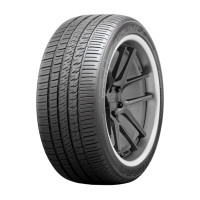
The Falken Azenis FK460 A/S provided a promising ride on the road, balancing comfort and compliance without being too stiff and keeping road noise to a low volume. The steering feel was direct and natural but lacked a certain spark, needing a bit more heft and precision to be truly satisfying. On the wet track, the steering remained light and lively, but the tire lacked lateral traction, requiring earlier braking to manage mid-corner speed and prevent sliding. This was reflected in its slower lap times. The dry track performance was not much of an improvement, with the same smeary, excessive movement and a tendency to push when driven hard. Winter conditions were not kind to the tire; its traction was among the weakest in the test, and it required driving within a very narrow window to maintain control, as any misstep resulted in either understeer or abrupt rotation.
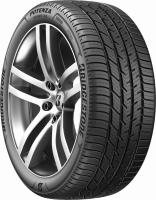
The Bridgestone Potenza Sport AS delivered a pleasant on-road experience with taut ride quality and some mild post-impact jiggle that was never disruptive. Its sound management was quite good and well-blended. The steering was responsive and pointy at lower speeds but felt somewhat lifeless as speed increased, lacking the natural heft typical of performance tires. On the wet track, the tire struggled with a lack of traction, creating a delay between steering input and action which led to a loose experience. The dry track performance was similar, with steering that felt slower and less precise, requiring a more deliberate driving approach. Conversely, in the snow, the tire was refreshingly adept, with noticeably improved steering response, useable lateral grip, and precise directional changes, making it predictable and forgiving at the limit.
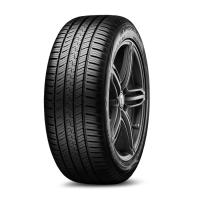
The Vredestein Hypertrac All Season offered a pleasant and compliant on-road experience, handling imperfections with a genteel professionalism that was a little stiff but smooth. Noise levels were low, though a singular tone was noticeable on asphalt. The steering was weighty and responded nicely off-center, but a tiny delay made it feel slightly sluggish. This positive feeling was tempered on the wet track, where the tire lacked the traction to match its responsive steering. The balance was off, feeling loose, twitchy, and less controllable at the limit. Dry performance was similar, with mushy steering and a back end that would break out during slalom maneuvers. On the other hand, in snowy conditions, the tire was subjectively quite good, feeling balanced and greater than the sum of its parts. The steering felt authoritative, making it easy to command, and it remained stable and controllable even past its limits.




Discussion