



Sadly Tire Reviews won't be conducting a studded tire test this year, but thankfully the excellent testers at the Swedish magazine Vi Bilagare have, and as they're some of the best Nordic drivers in the world, you can be assured this is the best studded tire test you'll see this year.
As always for a studded tire test, the tires were all tested in the dry, wet, snow and importantly ice, which is where studs really make a difference. To add another element to the testing this year Vi Bilagare bought a "joker" tire, a lightly used Nokian Hakkapeliitta 8 (the current version is the Hakkapeliitta 10) which was manufactured in 2015, making the tire both old technology AND 8 years old. The testers noted that the tire still had around 7mm of tread depth (compared to 9.1mm of the new Hakka 10) and that some studs had fallen out, and those which hadn't were somewhat blunted compared to new.
The inclusion of the old tire is really interesting, as they've also included a cheap Chinese, so we can answer whether an old premium studded to tire is better than a new budget!
In our coverage below we'll concentrate on how the old vs new perform, but overall this is an excellent in depth test and well worth checking out the full version on the ViB website.
Test setup & methodology
The test setting, the conditions recorded and how the results contribute to the score.
Recorded test conditions
Recorded test conditions
- Wet Braking
- 49.7 → 3.1 mph
- Snow Braking
- 21.7 → 3.1 mph
- Snow Traction
- 3.1 → 21.7 mph
- Ice Braking
- 15.5 → 3.1 mph
- Ice Traction
- 3.1 → 15.5 mph
Dry
Dry braking started off with a win for the used tire! If you understand tires and braking tests, this won't be a huge surprise as lower tread depth really helps improve dry braking results, especially on siped tires like these.
Dry Braking
Dry braking in feet (80 - 5 )
Lower is better ↓| Position / Tire | Result | Gap to best | Residual speed |
|---|---|---|---|
| 103 ft | Best | 0 mph | |
| 105 ft | +2 ft | 12 mph | |
| 106 ft | +3 ft | 14 mph | |
| 106 ft | +3 ft | 14 mph | |
| 107 ft | +4 ft | 16 mph | |
| 108 ft | +5 ft | 16 mph | |
| 108 ft | +5 ft | 17 mph | |
| 109 ft | +6 ft | 19 mph |
The difference between best and worst was 6.1% (6 ft ≈ 0.4 Car Lengths). From 80 mph, the Falken Winterpeak F Ice 1 would still be travelling at 19 mph when the Nokian Hakkapeliitta 8 had stopped.
Residual speed is calculated from the measured braking distances, assuming constant deceleration; it is not a separate measurement.
The testers don't report lap time for this category of tire, but they do report subjective handling scores of which the Michelin X-Ice North 4 and Continental IceContact 3 lead the way.
Subj. Dry Handling
Subjective Dry Handling Score
Higher is better ↑| Position / Tire | Result | Gap to best |
|---|---|---|
| 5 Points | Best | |
| 5 Points | Best | |
| 4 Points | -1.00 Points | |
| 4 Points | -1.00 Points | |
| 3 Points | -2.00 Points | |
| 2 Points | -3.00 Points | |
| 2 Points | -3.00 Points | |
| 2 Points | -3.00 Points |
The difference between best and worst was 60% (3 Points).
Wet
The Hankook Winter i*Pike RS2 had the best braking in the wet, closely followed by the new Goodyear UltraGrip Arctic 2. Surprisingly, the worn old tire finished fourth in wet braking, ahead of its new and "better" brother, the Hakkapeliitta 10. This is harder to explain, as the 8 year old rubber should have hardened up, however it's likely the lower tread depth was once again a factor on these very soft and highly siped tires.
Wet Braking
Wet braking in feet (50 - 3 mph)
Lower is better ↓| Position / Tire | Result | Gap to best | Residual speed |
|---|---|---|---|
| 118 ft | Best | 0 mph | |
| 118 ft | 0 ft | 4 mph | |
| 121 ft | +3 ft | 14 mph | |
| 121 ft | +3 ft | 14 mph | |
| 123 ft | +5 ft | 17 mph | |
| 124 ft | +6 ft | 18 mph | |
| 127 ft | +9 ft | 21 mph | |
| 129 ft | +11 ft | 23 mph |
The difference between best and worst was 9.3% (11 ft ≈ 0.7 Car Lengths). From 80 mph, the Goodride IceMaster Spike Z 506 would still be travelling at 23 mph when the Hankook Winter i pike RS2 had stopped.
Residual speed is calculated from the measured braking distances, assuming constant deceleration; it is not a separate measurement.
Highlighting the tread depth vs tread compound factor, wet handling had the old tire second to last, only beating the budget tire which had disastrous wet braking. The Continental was back at the front.
Wet Handling
Wet handling time in seconds
Lower is better ↓| Position / Tire | Result | Gap to best |
|---|---|---|
| 41.1 s | Best | |
| 41.2 s | +0.10 s | |
| 41.4 s | +0.30 s | |
| 41.4 s | +0.30 s | |
| 41.5 s | +0.40 s | |
| 41.8 s | +0.70 s | |
| 41.9 s | +0.80 s | |
| 42.6 s | +1.50 s |
The difference between best and worst was 3.6% (1.5 s).
The Falken Winterpeak F-Ice 1 had the best aquaplaning resistance, and surprisingly the worn older tire out performed a number of the newer patterns, which was unexpected due to the lower tread depth. This is likely due to the newer tires prioritising more rubber on the road for improved grip, at the expense of aquaplaning performance.
Straight Aqua
Float Speed in mph
Higher is better ↑| Position / Tire | Result | Gap to best |
|---|---|---|
| 36.7 mph | Best | |
| 35.6 mph | -1.1 mph | |
| 35.3 mph | -1.4 mph | |
| 35.1 mph | -1.6 mph | |
| 35.0 mph | -1.7 mph | |
| 34.7 mph | -2.0 mph | |
| 34.3 mph | -2.4 mph | |
| 34.2 mph | -2.5 mph |
The difference between best and worst was 6.8% (2.5 mph).
Snow
The budget Goodride IceMaster Spike was the best in snow braking with the Hankook a close second. The older tire was once again near the back of the back, though confusingly it still managed to beat the Michelin.
Snow Braking
Snow braking in feet (22 - 3 mph)
Lower is better ↓| Position / Tire | Result | Gap to best | Residual speed |
|---|---|---|---|
| 42 ft | Best | 0 mph | |
| 42 ft | 0 ft | 3 mph | |
| 42 ft | 0 ft | 5 mph | |
| 43 ft | +1 ft | 9 mph | |
| 43 ft | +1 ft | 9 mph | |
| 43 ft | +1 ft | 9 mph | |
| 43 ft | +1 ft | 11 mph | |
| 43 ft | +1 ft | 15 mph |
The difference between best and worst was 3.4% (1 ft). From 80 mph, the Michelin X Ice North 4 would still be travelling at 15 mph when the Goodride IceMaster Spike Z 506 had stopped.
Residual speed is calculated from the measured braking distances, assuming constant deceleration; it is not a separate measurement.
Fortunately Michelin jumped back to the front of the group for snow traction, beaten only by the Goodyear. The older Nokian again beat the newer Nokian in what was a very close table.
Snow Traction
Snow acceleration time (3 - 22 mph)
Lower is better ↓| Position / Tire | Result | Gap to best |
|---|---|---|
| 4.79 s | Best | |
| 4.83 s | +0.04 s | |
| 4.84 s | +0.05 s | |
| 4.84 s | +0.05 s | |
| 4.85 s | +0.06 s | |
| 4.86 s | +0.07 s | |
| 4.87 s | +0.08 s | |
| 4.9 s | +0.11 s |
All the tires in the Snow Traction test finished less than 3% apart.
Thankfully the (new) Nokian was back at the front for snow handling, with the old right at the back.
Snow Handling
Snow handling time in seconds
Lower is better ↓| Position / Tire | Result | Gap to best |
|---|---|---|
| 74.8 s | Best | |
| 75.1 s | +0.30 s | |
| 75.3 s | +0.50 s | |
| 75.5 s | +0.70 s | |
| 76.1 s | +1.30 s | |
| 76.7 s | +1.90 s | |
| 78.7 s | +3.90 s | |
| 79 s | +4.20 s |
The difference between best and worst was 5.6% (4.2 s).

Ice
Ice is key for studded tires, and really shows where the older tire loses out. The new Nokian was best in the ice braking tests, and the old Nokian by far the worst.
Ice Braking
Ice braking in feet (16 - 3 mph)
Lower is better ↓| Position / Tire | Result | Gap to best | Residual speed |
|---|---|---|---|
| 42 ft | Best | 0 mph | |
| 42 ft | 0 ft | 9 mph | |
| 43 ft | +1 ft | 10 mph | |
| 48 ft | +6 ft | 28 mph | |
| 52 ft | +10 ft | 35 mph | |
| 56 ft | +14 ft | 40 mph | |
| 56 ft | +14 ft | 40 mph | |
| 62 ft | +20 ft | 46 mph |
The difference between best and worst was 49% (20 ft ≈ 1.4 Car Lengths). From 80 mph, the Nokian Hakkapeliitta 8 would still be travelling at 46 mph when the Nokian Hakkapeliitta 10 had stopped.
Residual speed is calculated from the measured braking distances, assuming constant deceleration; it is not a separate measurement.
Michelin snuck ahead of the new Nokian during ice traction testing but the old Nokian remained at the back.
Ice Traction
Ice acceleration time (3 - 16 mph)
Lower is better ↓| Position / Tire | Result | Gap to best |
|---|---|---|
| 5.55 s | Best | |
| 5.74 s | +0.19 s | |
| 6.09 s | +0.54 s | |
| 6.41 s | +0.86 s | |
| 6.51 s | +0.96 s | |
| 7.53 s | +1.98 s | |
| 7.88 s | +2.33 s | |
| 8.66 s | +3.11 s |
The difference between best and worst was 56% (3.11 s).
Ice handling had the new Nokian back at the front, but this time the budget Goodride was the slowest by quite the margin.
Ice Handling
Ice handling time in seconds
Lower is better ↓| Position / Tire | Result | Gap to best |
|---|---|---|
| 39.3 s | Best | |
| 39.6 s | +0.30 s | |
| 39.6 s | +0.30 s | |
| 40.8 s | +1.50 s | |
| 41 s | +1.70 s | |
| 42.2 s | +2.90 s | |
| 42.6 s | +3.30 s | |
| 44.1 s | +4.80 s |
The difference between best and worst was 12.2% (4.8 s).
Comfort
The Continental proved to have the highest level of subjective comfort.
Subj. Comfort
Subjective Comfort Score
Higher is better ↑| Position / Tire | Result | Gap to best |
|---|---|---|
| 5 Points | Best | |
| 4 Points | -1.00 Points | |
| 3 Points | -2.00 Points | |
| 3 Points | -2.00 Points | |
| 3 Points | -2.00 Points | |
| 3 Points | -2.00 Points | |
| 2 Points | -3.00 Points | |
| 2 Points | -3.00 Points |
The difference between best and worst was 60% (3 Points).
The Continental was also the quietest.
Noise
External noise in dB
Lower is better ↓| Position / Tire | Result | Gap to best |
|---|---|---|
| 75 dB | Best | |
| 75.4 dB | +0.40 dB | |
| 75.4 dB | +0.40 dB | |
| 75.4 dB | +0.40 dB | |
| 75.5 dB | +0.50 dB | |
| 75.6 dB | +0.60 dB | |
| 75.8 dB | +0.80 dB | |
| 76 dB | +1.00 dB |
All the tires in the Noise test finished less than 3% apart.
Value
Lower tread depth favors rolling resistance results which meant the older tire was the best, with the Hankook the best of the new tires.
Rolling Resistance
Rolling resistance in kg t
Lower is better ↓| Position / Tire | Result | Gap to best | Extra fuel / year |
|---|---|---|---|
| 5.05 kg/t | Best | $0 | |
| 5.15 kg/t | +0.10 kg/t | $6 | |
| 5.3 kg/t | +0.25 kg/t | $15 | |
| 5.35 kg/t | +0.30 kg/t | $17 | |
| 5.4 kg/t | +0.35 kg/t | $20 | |
| 5.4 kg/t | +0.35 kg/t | $20 | |
| 5.5 kg/t | +0.45 kg/t | $26 | |
| 5.7 kg/t | +0.65 kg/t | $38 |
The difference between best and worst was 12.9% (0.65 kg / t). Over 12,000 miles a year at $3.60/gal, the Goodyear UltraGrip Arctic 2 uses about 11 gal ($38) more fuel than the Nokian Hakkapeliitta 8.
Adjust the assumptions
Calculated estimates, not additional measurements. Use the controls to explore the assumptions.
Results
Nokian Hakkapeliitta 10
225/45 R17 94T XL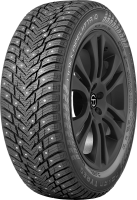
Its willingness to turn continues on asphalt rounds. However, its wet grip lags behind the best, and the steering feel on dry roads is nonlinear in character.
Nokian is suitable for those looking for the best possible winter grip on snow and ice and who appreciate the joy of driving on curvy roads.
A high baseline performance with peak winter features results in an overall test victory.
Category scores (% of best)
All discipline results (14)
Discipline positions compare the ranked tires in this test, not the whole market. These are individual measurements, not weighted overall scores.
| Test | Position in discipline | Result | Gap to best |
|---|---|---|---|
| Dry BrakingLower is better | 5th / 8 | 107 ft | +4 ft |
| Subj. Dry HandlingHigher is better | 5th / 8 | 3 Points | -2.00 Points |
| Wet BrakingLower is better | 7th / 8 | 127 ft | +9 ft |
| Wet HandlingLower is better | 3rd / 8 | 41.4 s | +0.30 s |
| Straight AquaHigher is better | 8th / 8 | 34.2 mph | -2.5 mph |
| Snow BrakingLower is better | 4th / 8 | 43 ft | +1 ft |
| Snow TractionLower is better | 5th / 8 | 4.85 s | +0.06 s |
| Snow HandlingLower is better | 1st / 8 | 74.8 s | Best in this discipline |
| Ice BrakingLower is better | 1st / 8 | 42 ft | Best in this discipline |
| Ice TractionLower is better | 2nd / 8 | 5.74 s | +0.19 s |
| Ice HandlingLower is better | 1st / 8 | 39.3 s | Best in this discipline |
| Subj. ComfortHigher is better | 3rd / 8 | 3 Points | -2.00 Points |
| NoiseLower is better | 6th / 8 | 75.6 dB | +0.60 dB |
| Rolling ResistanceLower is better | 4th / 8 | 5.35 kg/t | +0.30 kg/t |
- 3PMSF
- Yes
- Tread
- 9.1 mm
- Price
- 2513.00
Michelin X Ice North 4
225/45 R17 94T XL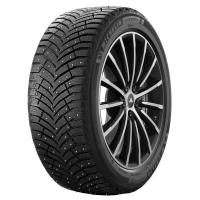
On dry ground, Michelin impresses with a natural steering feel. A shallower tread depth than others and many small studs have previously resulted in low noise, but this time the road noise is on par with competitors.
A good mix of high winter grip and fine asphalt characteristics brings Michelin close to winning a gold medal. This tire is suitable for those looking for a calm and safe option with good everyday comfort.
Category scores (% of best)
All discipline results (14)
Discipline positions compare the ranked tires in this test, not the whole market. These are individual measurements, not weighted overall scores.
| Test | Position in discipline | Result | Gap to best |
|---|---|---|---|
| Dry BrakingLower is better | 4th / 8 | 106 ft | +3 ft |
| Subj. Dry HandlingHigher is better | 1st / 8 | 5 Points | Best in this discipline |
| Wet BrakingLower is better | 5th / 8 | 123 ft | +5 ft |
| Wet HandlingLower is better | 6th / 8 | 41.8 s | +0.70 s |
| Straight AquaHigher is better | 6th / 8 | 34.7 mph | -2.0 mph |
| Snow BrakingLower is better | 8th / 8 | 43 ft | +1 ft |
| Snow TractionLower is better | 2nd / 8 | 4.83 s | +0.04 s |
| Snow HandlingLower is better | 4th / 8 | 75.5 s | +0.70 s |
| Ice BrakingLower is better | 2nd / 8 | 42 ft | 0 ft |
| Ice TractionLower is better | 1st / 8 | 5.55 s | Best in this discipline |
| Ice HandlingLower is better | 2nd / 8 | 39.6 s | +0.30 s |
| Subj. ComfortHigher is better | 3rd / 8 | 3 Points | -2.00 Points |
| NoiseLower is better | 7th / 8 | 75.8 dB | +0.80 dB |
| Rolling ResistanceLower is better | 7th / 8 | 5.5 kg/t | +0.45 kg/t |
- 3PMSF
- Yes
- Tread
- 8.1 mm
- Price
- 2435.00
Goodyear UltraGrip Arctic 2
225/45 R17 94T XL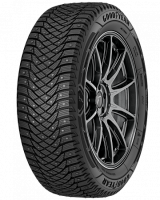
Despite having class-leading wet grip and the shortest braking distances on dry roads, Goodyear manages to match Nokian and Michelin when it comes to stopping on ice and snow. The initial grip on winter roads is also impressive.
However, the lateral grip is not quite on par with the very best, and the tire also has vague steering precision, making it somewhat difficult to place under pressure. This applies to both winter and dry roads. Nevertheless, it doesnt cause any trouble and never puts the driver in a tight spot.
Goodyear is suitable for those who often drive on dry roads but want studs for the treacherous black ice that lurks in the shadows.
Category scores (% of best)
All discipline results (14)
Discipline positions compare the ranked tires in this test, not the whole market. These are individual measurements, not weighted overall scores.
| Test | Position in discipline | Result | Gap to best |
|---|---|---|---|
| Dry BrakingLower is better | 2nd / 8 | 105 ft | +2 ft |
| Subj. Dry HandlingHigher is better | 6th / 8 | 2 Points | -3.00 Points |
| Wet BrakingLower is better | 2nd / 8 | 118 ft | 0 ft |
| Wet HandlingLower is better | 2nd / 8 | 41.2 s | +0.10 s |
| Straight AquaHigher is better | 2nd / 8 | 35.6 mph | -1.1 mph |
| Snow BrakingLower is better | 4th / 8 | 43 ft | +1 ft |
| Snow TractionLower is better | 1st / 8 | 4.79 s | Best in this discipline |
| Snow HandlingLower is better | 3rd / 8 | 75.3 s | +0.50 s |
| Ice BrakingLower is better | 3rd / 8 | 43 ft | +1 ft |
| Ice TractionLower is better | 3rd / 8 | 6.09 s | +0.54 s |
| Ice HandlingLower is better | 2nd / 8 | 39.6 s | +0.30 s |
| Subj. ComfortHigher is better | 7th / 8 | 2 Points | -3.00 Points |
| NoiseLower is better | 2nd / 8 | 75.4 dB | +0.40 dB |
| Rolling ResistanceLower is better | 8th / 8 | 5.7 kg/t | +0.65 kg/t |
- 3PMSF
- Yes
- Tread
- 10 mm
- Price
- 2277.00
Falken Winterpeak F Ice 1
225/45 R17 94T XL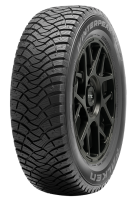
Upon testing Falken's latest studded tire, we find that the studs are securely in place. The Japanese tire has the best winter grip, second only to the more expensive brands. It also has good grip on wet asphalt and resists hydroplaning better than any other.
The downside is a vague steering feel on dry roads and elevated noise levels.
Falken offers a slightly more affordable option with a good mix of wet grip and winter traction.
Category scores (% of best)
All discipline results (14)
Discipline positions compare the ranked tires in this test, not the whole market. These are individual measurements, not weighted overall scores.
| Test | Position in discipline | Result | Gap to best |
|---|---|---|---|
| Dry BrakingLower is better | 8th / 8 | 109 ft | +6 ft |
| Subj. Dry HandlingHigher is better | 6th / 8 | 2 Points | -3.00 Points |
| Wet BrakingLower is better | 3rd / 8 | 121 ft | +3 ft |
| Wet HandlingLower is better | 3rd / 8 | 41.4 s | +0.30 s |
| Straight AquaHigher is better | 1st / 8 | 36.7 mph | Best in this discipline |
| Snow BrakingLower is better | 3rd / 8 | 42 ft | 0 ft |
| Snow TractionLower is better | 6th / 8 | 4.86 s | +0.07 s |
| Snow HandlingLower is better | 5th / 8 | 76.1 s | +1.30 s |
| Ice BrakingLower is better | 4th / 8 | 48 ft | +6 ft |
| Ice TractionLower is better | 5th / 8 | 6.51 s | +0.96 s |
| Ice HandlingLower is better | 5th / 8 | 41 s | +1.70 s |
| Subj. ComfortHigher is better | 7th / 8 | 2 Points | -3.00 Points |
| NoiseLower is better | 8th / 8 | 76 dB | +1.00 dB |
| Rolling ResistanceLower is better | 5th / 8 | 5.4 kg/t | +0.35 kg/t |
- 3PMSF
- Yes
- Tread
- 9.1 mm
- Price
- 2124.00
Continental IceContact 3
225/45 R17 94T XL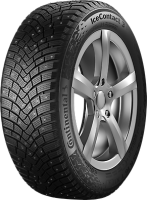
However, the IceContact 3 communicates well with the driver about where the grip limit is and remains controllable when traction is about to be lost. This safe and easy-to-control behavior is consistent across all surfaces.
Continental scores the most points in the asphalt categories with a nice driving feel, good stability during evasive maneuvers, and low noise. But with a high price and poor ice grip, it's difficult to recommend the tire to anyone, regardless of driving type.
Category scores (% of best)
All discipline results (14)
Discipline positions compare the ranked tires in this test, not the whole market. These are individual measurements, not weighted overall scores.
| Test | Position in discipline | Result | Gap to best |
|---|---|---|---|
| Dry BrakingLower is better | 6th / 8 | 108 ft | +5 ft |
| Subj. Dry HandlingHigher is better | 1st / 8 | 5 Points | Best in this discipline |
| Wet BrakingLower is better | 6th / 8 | 124 ft | +6 ft |
| Wet HandlingLower is better | 1st / 8 | 41.1 s | Best in this discipline |
| Straight AquaHigher is better | 7th / 8 | 34.3 mph | -2.4 mph |
| Snow BrakingLower is better | 6th / 8 | 43 ft | +1 ft |
| Snow TractionLower is better | 3rd / 8 | 4.84 s | +0.05 s |
| Snow HandlingLower is better | 2nd / 8 | 75.1 s | +0.30 s |
| Ice BrakingLower is better | 6th / 8 | 56 ft | +14 ft |
| Ice TractionLower is better | 7th / 8 | 7.88 s | +2.33 s |
| Ice HandlingLower is better | 4th / 8 | 40.8 s | +1.50 s |
| Subj. ComfortHigher is better | 1st / 8 | 5 Points | Best in this discipline |
| NoiseLower is better | 1st / 8 | 75 dB | Best in this discipline |
| Rolling ResistanceLower is better | 5th / 8 | 5.4 kg/t | +0.35 kg/t |
- 3PMSF
- Yes
- Tread
- 8.4 mm
- Price
- 2669.00
Hankook Winter i pike RS2
225/45 R17 94T XL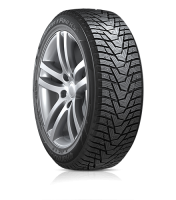
Under pressure, Hankook easily breaks into a skid with an erratic behavior that is consistent across all surfaces.
On dry roads, the steering feel is vague and also lacks straight-line stability. However, it rolls more easily than the new tires and has an acceptable noise level.
At the right price, this is a reasonable option for those who prioritize economy.
Category scores (% of best)
All discipline results (14)
Discipline positions compare the ranked tires in this test, not the whole market. These are individual measurements, not weighted overall scores.
| Test | Position in discipline | Result | Gap to best |
|---|---|---|---|
| Dry BrakingLower is better | 7th / 8 | 108 ft | +5 ft |
| Subj. Dry HandlingHigher is better | 6th / 8 | 2 Points | -3.00 Points |
| Wet BrakingLower is better | 1st / 8 | 118 ft | Best in this discipline |
| Wet HandlingLower is better | 5th / 8 | 41.5 s | +0.40 s |
| Straight AquaHigher is better | 3rd / 8 | 35.3 mph | -1.4 mph |
| Snow BrakingLower is better | 2nd / 8 | 42 ft | 0 ft |
| Snow TractionLower is better | 8th / 8 | 4.9 s | +0.11 s |
| Snow HandlingLower is better | 6th / 8 | 76.7 s | +1.90 s |
| Ice BrakingLower is better | 5th / 8 | 52 ft | +10 ft |
| Ice TractionLower is better | 4th / 8 | 6.41 s | +0.86 s |
| Ice HandlingLower is better | 6th / 8 | 42.2 s | +2.90 s |
| Subj. ComfortHigher is better | 2nd / 8 | 4 Points | -1.00 Points |
| NoiseLower is better | 2nd / 8 | 75.4 dB | +0.40 dB |
| Rolling ResistanceLower is better | 2nd / 8 | 5.15 kg/t | +0.10 kg/t |
- 3PMSF
- Yes
- Tread
- 9.2 mm
- Price
- 1878.00
Goodride IceMaster Spike Z 506
225/45 R17 94T XL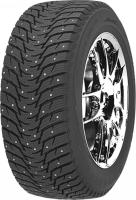
However, Goodride performs worst of all the new tires on ice and is worse than the used tire in corners. One explanation is that the rubber compound is the hardest in the group. It is also the only tire with a speed rating of H for higher speeds.
On snow, it performs better, where the tread pattern provides good braking grip, but the cornering grip remains low.
From a harder winter tire, we would expect good performance on dry roads, but unfortunately, Goodride shows the worst wet grip in the test. This results in a modest overall point score, on par with the used tire.
Category scores (% of best)
All discipline results (14)
Discipline positions compare the ranked tires in this test, not the whole market. These are individual measurements, not weighted overall scores.
| Test | Position in discipline | Result | Gap to best |
|---|---|---|---|
| Dry BrakingLower is better | 3rd / 8 | 106 ft | +3 ft |
| Subj. Dry HandlingHigher is better | 3rd / 8 | 4 Points | -1.00 Points |
| Wet BrakingLower is better | 8th / 8 | 129 ft | +11 ft |
| Wet HandlingLower is better | 8th / 8 | 42.6 s | +1.50 s |
| Straight AquaHigher is better | 5th / 8 | 35.0 mph | -1.7 mph |
| Snow BrakingLower is better | 1st / 8 | 42 ft | Best in this discipline |
| Snow TractionLower is better | 7th / 8 | 4.87 s | +0.08 s |
| Snow HandlingLower is better | 7th / 8 | 78.7 s | +3.90 s |
| Ice BrakingLower is better | 7th / 8 | 56 ft | +14 ft |
| Ice TractionLower is better | 6th / 8 | 7.53 s | +1.98 s |
| Ice HandlingLower is better | 8th / 8 | 44.1 s | +4.80 s |
| Subj. ComfortHigher is better | 3rd / 8 | 3 Points | -2.00 Points |
| NoiseLower is better | 5th / 8 | 75.5 dB | +0.50 dB |
| Rolling ResistanceLower is better | 3rd / 8 | 5.3 kg/t | +0.25 kg/t |
- 3PMSF
- Yes
- Tread
- 9.2 mm
- Price
- 1499.00
Nokian Hakkapeliitta 8
225/45 R17 94T XL
Snow grip is also not far off from the new tires.
The major downside is a clear deterioration in ice grip. However, in icy corners, it communicates well with the driver about where the grip limit is and remains easy to handle under pressure. In fact, it holds up well compared to the budget tire even on ice.
Investing in quality pays off for many years to come.
Category scores (% of best)
All discipline results (14)
Discipline positions compare the ranked tires in this test, not the whole market. These are individual measurements, not weighted overall scores.
| Test | Position in discipline | Result | Gap to best |
|---|---|---|---|
| Dry BrakingLower is better | 1st / 8 | 103 ft | Best in this discipline |
| Subj. Dry HandlingHigher is better | 3rd / 8 | 4 Points | -1.00 Points |
| Wet BrakingLower is better | 4th / 8 | 121 ft | +3 ft |
| Wet HandlingLower is better | 7th / 8 | 41.9 s | +0.80 s |
| Straight AquaHigher is better | 4th / 8 | 35.1 mph | -1.6 mph |
| Snow BrakingLower is better | 7th / 8 | 43 ft | +1 ft |
| Snow TractionLower is better | 3rd / 8 | 4.84 s | +0.05 s |
| Snow HandlingLower is better | 8th / 8 | 79 s | +4.20 s |
| Ice BrakingLower is better | 8th / 8 | 62 ft | +20 ft |
| Ice TractionLower is better | 8th / 8 | 8.66 s | +3.11 s |
| Ice HandlingLower is better | 7th / 8 | 42.6 s | +3.30 s |
| Subj. ComfortHigher is better | 3rd / 8 | 3 Points | -2.00 Points |
| NoiseLower is better | 2nd / 8 | 75.4 dB | +0.40 dB |
| Rolling ResistanceLower is better | 1st / 8 | 5.05 kg/t | Best in this discipline |
- 3PMSF
- Yes
- Tread
- 7.3 mm
To the poster, there's an error in terms of the aquaplaning results.
It's said that the older worn tire performed the worst in the aquaplaning resistance due to the lower tread depth, but in the graph and in the end results, the newer Nokian 10's are listed as last (8th place).
https://uploads.disquscdn.c... https://uploads.disquscdn.c...
Good spot, that's my bad assuming the older tire was worst from glancing at the data! I'll update it now