Every tire is tested using calibrated instrumented measurement and structured subjective assessment. Reference tires are retested throughout each session to correct for changing conditions, ensuring fair, repeatable comparisons. Multiple reference sets are used where needed so that control tire wear does not affect accuracy.
We use professional-grade testing equipment including GPS data loggers, accelerometers, and calibrated microphones. All tires are broken in and conditioned before testing begins. For full details on our equipment, preparation process, and calibration procedures, see our complete testing methodology.
Categories Tested
Dry Braking
For dry braking, I drive the test vehicle at an entry speed of 110 km/h and apply full braking effort to a standstill with ABS active on clean, dry asphalt. I typically use an 100–5 km/h measurement window. My standard programme is five runs per tire set where possible, although the sequence can extend to as many as fifteen runs if conditions and tire category justify it. I analyse the full set of runs and discard statistical outliers before averaging. Reference tires are run repeatedly throughout the session to correct for changing conditions.
Dry Handling
For dry handling, I drive at the limit of adhesion around a dedicated handling circuit with ESC disabled where possible so I can assess the tire's natural balance, transient response, and limit behaviour without electronic intervention masking the result. I usually complete between two and five timed laps per tire set, depending on the circuit, tire type, and consistency of conditions. I exclude laps affected by clear driver error or obvious environmental inconsistency. Control runs are carried out frequently throughout the session, and I often use multiple sets of control tires so that wear on the references does not become a meaningful variable. For more track-focused products, I also do endurance testing, which is a set number of laps at race pace to determine tire wear patterns and heat resistance over longer driving.
Subj. Dry Handling
Objective data is only part of the picture, so I also carry out a structured subjective handling assessment at the limit of adhesion on a dedicated dry handling circuit. I score steering precision, steering response, turn-in behaviour, mid-corner balance, corner-exit traction, breakaway characteristics, and overall confidence using a standardised 1–10 scale used consistently across my testing. The final assessment combines numeric scoring with written technical commentary. I complete familiarisation laps on the control tire before evaluating each candidate.
Wet Braking
For wet braking, I drive the test vehicle at an entry speed of 88 km/h and apply full braking effort to a standstill with ABS active on an asphalt surface with a controlled water film. I typically use an 80–5 km/h measurement window to isolate tire performance from variability in the initial brake application. My standard programme is eight runs per tire set where possible, although the sequence can extend to as many as fifteen runs if conditions and tire category justify it. I analyse the full set of runs and discard statistical outliers before averaging. To correct for changing conditions, I run reference tires repeatedly throughout the session — in wet testing, typically every three candidate test sets.
Wet Handling
For wet handling, I drive at the limit of adhesion around a dedicated handling circuit. I generally use specialist wet circuits with kerb-watering systems designed to maintain a consistent surface condition. ESC is disabled where possible so I can assess the tire's natural balance, transient response, and limit behaviour without electronic intervention masking the result. I usually complete between two and five timed laps per tire set, depending on the circuit, tire type, and consistency of conditions. I exclude laps affected by clear driver error or obvious environmental inconsistency. Control runs are carried out frequently throughout the session, and I often use multiple sets of control tires so that wear on the references does not become a meaningful variable.
Subj. Wet Handling
Objective data is only part of the picture, so I also carry out a structured subjective handling assessment at the limit of adhesion on a dedicated wet handling circuit. I score steering precision, steering response, turn-in behaviour, mid-corner balance, aquaplaning resistance, breakaway characteristics, and overall confidence using a standardised 1–10 scale used consistently across my testing. The final assessment combines numeric scoring with written technical commentary. I complete familiarisation laps on the control tire before evaluating each candidate.
Straight Aqua
To measure straight-line aquaplaning resistance, I drive one side of the vehicle through a water trough of controlled depth, typically around 7 mm, while the opposite side remains on dry pavement. I enter at a fixed speed and then accelerate progressively. I define aquaplaning onset as the point at which the wheel travelling through the water exceeds a specified slip threshold relative to the dry-side reference wheel. I usually perform four runs per tire set and average the valid results.
Curved Aquaplaning
For curved aquaplaning, I use a circular track, typically around 100 metres in diameter, with a flooded arc of controlled water depth, usually about 7 mm. The vehicle is instrumented with GPS telemetry and a tri-axial accelerometer. I drive through the flooded section at progressively increasing speed, typically in 5 km/h increments, and record the minimum sustained lateral acceleration at each step. The test continues until lateral acceleration collapses, indicating complete aquaplaning. The result is expressed as remaining lateral acceleration in m/s² as speed rises.
Gravel Traction
For gravel traction, I accelerate the vehicle from rest on a prepared gravel surface with traction control active and measure speed and distance using GPS telemetry. Because natural surfaces are inherently variable, I place particular emphasis on repeat runs, careful reference tracking, and averaged results. Results are normalised against the control tire.
Grass Traction
For grass traction, I accelerate the vehicle from rest on a prepared grass surface with traction control active and measure speed and distance using GPS telemetry. Because natural surfaces are inherently variable, I place particular emphasis on repeat runs, careful reference tracking, and averaged results. The surface is prepared to a defined and repeatable condition as far as practical before testing begins.
Subj. Comfort
To assess comfort, I drive on a wide range of road surfaces (often dedicated comfort tracks at test facilities) at speeds from 50 to 120 km/h, including smooth motorway, coarse surfaces, expansion joints, broken pavement, and sharp-edged obstacles. I evaluate primary ride quality, secondary ride quality, impact harshness, seat-transmitted vibration, and the tire's ability to absorb sharp inputs. Ratings are assigned on a 1–10 scale relative to the reference tire.
Noise
I measure external pass-by noise in accordance with UNECE Regulation 117 and ISO 13325 using the coast-by method on a compliant test surface. Calibrated microphones are positioned beside the test lane, and the vehicle coasts through the measurement zone under controlled conditions. I record the maximum A-weighted sound pressure level in dB(A), complete multiple runs over the relevant speed range, and normalise the result to the reference speed required by the procedure.
Rolling Resistance
Rolling resistance is measured under controlled laboratory conditions in accordance with ISO 28580 and UNECE Regulation 117 Annex 6. The tire is mounted on a test wheel and loaded against a large-diameter steel drum. After thermal stabilisation at the prescribed test speed, rolling resistance force is measured at the spindle and corrected according to the relevant procedure. The result is expressed as rolling resistance coefficient, typically in kg/tonne.
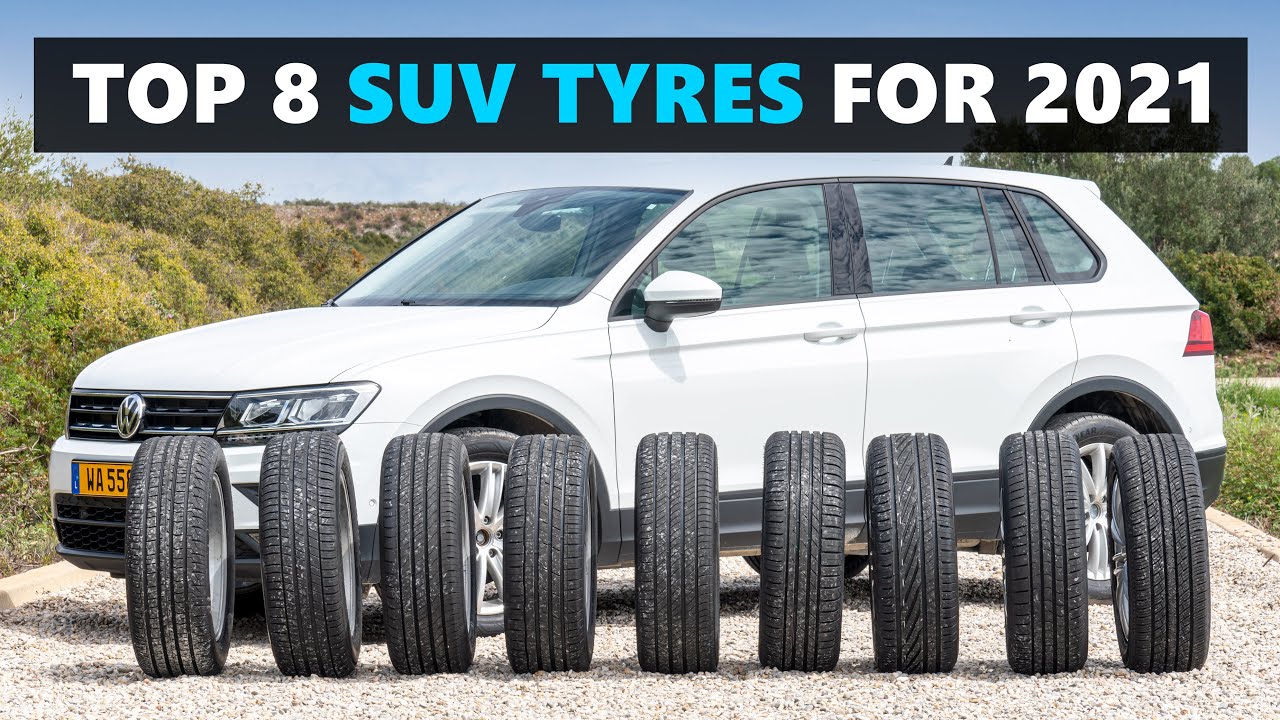
It's the first Tire Reviews SUV tire test, and as usual, we're trying to do things as properly as possible!
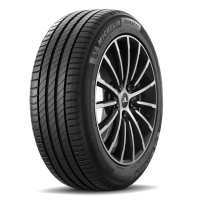
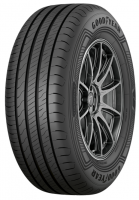
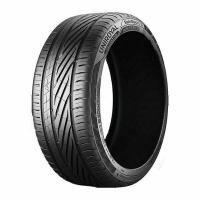
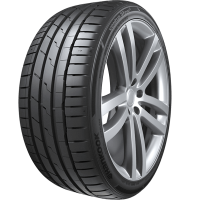
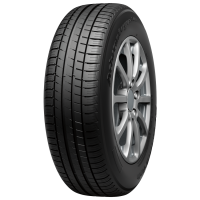
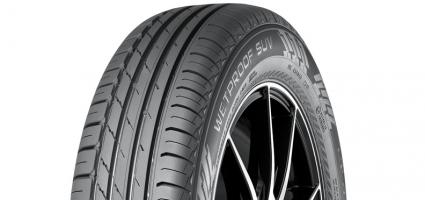
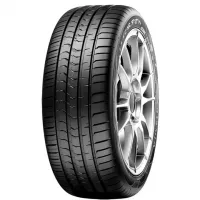
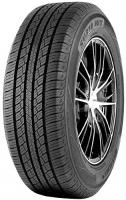
We have 8 of the most popular SUV tires in 235/55 R18, including the Michelin Primacy 4, the brand new Goodyear EfficientGrip 2 SUV, the extremely popular Uniroyal RainSport 5, the new Hankook Ventus S1 Evo3 SUV, the Nokian WetProof SUV, the Vredestein Ultrac Satin, the Avon ZX7, the BFGoodrich Advantage SUV, and a budget tire represented by Westlake.
As tires like these aren't intended for serious off-road use, we'll be using a VW Tiguan and focusing on the dry, wet and comfort characteristics of the tires, AND thanks to Goodyear allowing us to use their awesome off-road test facility in Texas, we'll also look at some of the basic off-road performances such as damp grass and gravel, meaning you'll have a complete picture of what SUV tire is best at what, allowing you to make the ideal purchase choice for your own particular needs.
Vehicles which this size applies to are SUV and Crossover SUVs such as the BMW X3, BMW X5, Audi Q3, Volvo XC40 / XC60, Audi A8, Citroen C4 Aircross, VW Tiguan, Jeep Compass, Kia Sportage, Mercedes Benz EQA, GLA, S Class, Nissan Qashqai and many more.
Let's start with the dry and wet performance of the nine sets of SUV tires.
Dry
Dry braking was led by the Michelin Primacy 4, having an impressive lead over the rest of the group. BFGoodrich, Goodyear and Hankook were also good performers, while the budget Westlake had a big deficit to the rest of the group.
Dry Braking
Spread: 5.77 M (17.1%)|Avg: 35.56 M
Dry braking in meters (100 - 1 km/h) (Lower is better)
Michelin Primacy 4
33.73 M
BFGoodrich Advantage SUV
34.81 M
Goodyear EfficientGrip 2 SUV
34.84 M
Hankook Ventus S1 evo 3 SUV
34.98 M
Uniroyal RainSport 5
35.30 M
Nokian Wetproof SUV
35.30 M
Avon ZX7
35.55 M
Vredestein Ultrac Satin
36.03 M
Westlake SU318 HT
39.50 M
Handling tests might not be the most important criteria for an SUV, but they do still show us the peak lateral grip of the tires, how safe they will be in emergency maneuvers, and if you're really keen, just how quickly you can get your child to school on a wet or dry morning.
The VW Tiguan is set up for understeer, and in the dry, that's what we got from all the tires, just to different degrees, with the slowest tires also being those with the most understeer.
Avon, Hankook and Goodyear were the nicest tires to drive quickly, having relatively good steering response and balance. Again, the budget tire was the slowest, and the BFGoodrich and Uniroyal had a slow steering reaction and a heavy understeer balance.
Dry Handling
Spread: 2.17 s (2.1%)|Avg: 104.63 s
Dry handling time in seconds (Lower is better)
Avon ZX7
103.54 s
Hankook Ventus S1 evo 3 SUV
103.54 s
Goodyear EfficientGrip 2 SUV
104.06 s
Nokian Wetproof SUV
104.37 s
Michelin Primacy 4
104.80 s
Vredestein Ultrac Satin
104.96 s
BFGoodrich Advantage SUV
105.33 s
Uniroyal RainSport 5
105.39 s
Westlake SU318 HT
105.71 s
Wet
The wet braking testing had the Uniroyal Rainsport 5 move to the front, narrowly beating the Michelin Primacy 4. Like in the dry, the Goodyear and Hankook were the best of the rest, with the budget tire performing extremely poorly, with the Tiguan still travelling around 40 km/h at the point the Uniroyal had stopped the SUV.
Wet Braking
Spread: 12.03 M (34%)|Avg: 38.68 M
Wet braking in meters (80 - 1 km/h) (Lower is better)
Uniroyal RainSport 5
35.40 M
Michelin Primacy 4
35.57 M
Hankook Ventus S1 evo 3 SUV
36.94 M
Goodyear EfficientGrip 2 SUV
37.42 M
Nokian Wetproof SUV
37.46 M
BFGoodrich Advantage SUV
38.82 M
Vredestein Ultrac Satin
39.47 M
Avon ZX7
39.64 M
Westlake SU318 HT
47.43 M
The Uniroyal continued its impressive run in the wet by being the fastest over the wet handling, beating the Goodyear and Hankook.
The Michelin Primacy 4 had trouble with the deeper parts of the wet handling lap, costing the tire important time.
Wet Handling
Spread: 3.11 s (4.5%)|Avg: 69.92 s
Wet handling time in seconds (Lower is better)
Uniroyal RainSport 5
68.98 s
Goodyear EfficientGrip 2 SUV
69.22 s
Hankook Ventus S1 evo 3 SUV
69.36 s
Avon ZX7
69.39 s
Vredestein Ultrac Satin
69.71 s
Nokian Wetproof SUV
69.75 s
Michelin Primacy 4
69.82 s
BFGoodrich Advantage SUV
70.98 s
Westlake SU318 HT
72.09 s
The aquaplaning tests highlighted both the Uniroyal's excellent ability in standing water, and the difficulties the Michelin had on the wet handling lap.
Straight Aqua
Spread: 13.66 Km/H (15.4%)|Avg: 81.66 Km/H
Float Speed in Km/H (Higher is better)
Uniroyal RainSport 5
88.97 Km/H
Vredestein Ultrac Satin
85.97 Km/H
BFGoodrich Advantage SUV
84.04 Km/H
Goodyear EfficientGrip 2 SUV
83.70 Km/H
Nokian Wetproof SUV
81.60 Km/H
Hankook Ventus S1 evo 3 SUV
81.47 Km/H
Avon ZX7
78.33 Km/H
Westlake SU318 HT
75.57 Km/H
Michelin Primacy 4
75.31 Km/H
The Vredestein Ultrac Satin also performed well in aquaplaning, winning the curved aquaplaning test.
Curved Aquaplaning
Spread: 0.68 m/sec2 (28%)|Avg: 2.12 m/sec2
Remaining lateral acceleration (Higher is better)
Vredestein Ultrac Satin
2.43 m/sec2
Uniroyal RainSport 5
2.35 m/sec2
BFGoodrich Advantage SUV
2.29 m/sec2
Hankook Ventus S1 evo 3 SUV
2.29 m/sec2
Goodyear EfficientGrip 2 SUV
2.16 m/sec2
Nokian Wetproof SUV
2.13 m/sec2
Avon ZX7
1.89 m/sec2
Westlake SU318 HT
1.83 m/sec2
Michelin Primacy 4
1.75 m/sec2
Off Road
On the slightly moist grass, there was semi correlation with wet braking, with Hankook, Michelin and Goodyear being the best of the best and Avon, Nokian and Westlake struggling a little more. There was over 10% between the best and the worst, which could be the difference of sliding around or getting moving.
Grass Traction
Spread: 0.58 M (12.8%)|Avg: 4.77 M
Grass Acceleration Distance in Meters (5 - 15 km/h) (Lower is better)
Hankook Ventus S1 evo 3 SUV
4.52 M
Michelin Primacy 4
4.54 M
Goodyear EfficientGrip 2 SUV
4.64 M
BFGoodrich Advantage SUV
4.65 M
Uniroyal RainSport 5
4.72 M
Vredestein Ultrac Satin
4.89 M
Avon ZX7
4.91 M
Nokian Wetproof SUV
4.94 M
Westlake SU318 HT
5.10 M
On gravel Goodyear narrowly beat Uniroyal, which is interesting as the Uniroyal was the most "off-road" looking tire, but the Goodyear had the highest starting tread depth which might have helped. Vredestein and Nokian were also good on gravel. Sadly a storm broke just as we were getting to the last set, which is why the data is missing for Westlake.
Gravel Traction
Spread: 2.25 M (10.8%)|Avg: 21.61 M
Gravel Acceleration Distance in Meters (5 - 40 km/h) (Lower is better)
Goodyear EfficientGrip 2 SUV
20.86 M
Uniroyal RainSport 5
20.90 M
Vredestein Ultrac Satin
21.03 M
Nokian Wetproof SUV
21.19 M
BFGoodrich Advantage SUV
21.59 M
Michelin Primacy 4
21.88 M
Hankook Ventus S1 evo 3 SUV
22.31 M
Avon ZX7
23.11 M
Environment
Comfort is an important quality for an SUV tire, and the BFGoodrich and Uniroyal led the group, narrowly ahead of the Goodyear EfficientGrip 2 SUV
Subj. Comfort
Spread: 2.00 Points (20%)|Avg: 8.94 Points
Subjective Comfort Score (Higher is better)
BFGoodrich Advantage SUV
10.00 Points
Uniroyal RainSport 5
9.80 Points
Goodyear EfficientGrip 2 SUV
9.50 Points
Michelin Primacy 4
9.20 Points
Hankook Ventus S1 evo 3 SUV
8.80 Points
Avon ZX7
8.50 Points
Nokian Wetproof SUV
8.50 Points
Vredestein Ultrac Satin
8.20 Points
Westlake SU318 HT
8.00 Points
Conversely, the BFGoodrich had the highest external drive-by noise.
Noise
Spread: 2.60 dB (3.8%)|Avg: 70.80 dB
External noise in dB (Lower is better)
Goodyear EfficientGrip 2 SUV
69.30 dB
Hankook Ventus S1 evo 3 SUV
70.30 dB
Vredestein Ultrac Satin
70.50 dB
Westlake SU318 HT
70.80 dB
Michelin Primacy 4
71.00 dB
Uniroyal RainSport 5
71.10 dB
Nokian Wetproof SUV
71.10 dB
Avon ZX7
71.20 dB
BFGoodrich Advantage SUV
71.90 dB
The Michelin Primacy 4 had another impressive lead, this time in fuel use, having 7% lower rolling resistance than the second placed Goodyear.
Shortest dry braking by a margin, very short wet braking, good on damp grass, lowest rolling resistance by some margin.
Lowest aquaplaning resistance on test, which also cost the tire time on the wet handling lap, average gravel traction.
The Michelin Primacy 4 is an excellent tire with very low fuel use and an excellent braking ability. Unfortunately the tire has the shallowest tread depth on test, and while that's unlikely to be a wear issue for the French tire, it did mean the tire scored poorly in aquaplaning test, and struggled in the deeper parts of water on the wet handling lap.
Very well balanced tire, no real weakness in any of the tests, good in the dry and wet with good steering response, short braking distances, good levels of comfort, highest traction on gravel and very good on grass, low rolling resistance, lowest noise on test.
Slightly weaker curved aquaplaning resistance compared to the best.
Once again Goodyear is proving they can develop tires with seemingly no weaknesses. While the new EfficientGrip 2 SUV only won a single test, it was rarely out of the top three in every other test making it an EXCELLENT all round tire.
Excellent wet performance with the shortest wet braking distances, fastest wet handling, high levels of comfort, good grip on gravel, and best aquaplaning resistance overall.
Relatively poor performance in the dry with extended dry braking and heavy understeer in dry handling.
The Uniroyal RainSport 5 is living up to its name by having a class leading performance in the wet, regardless of water depth, and as always, very good levels of comfort. Unfortunately, as we've found previously with the RainSport range, that comes at the expense of performance in the dry where the tire has lower levels of grip and a heavy understeer handling balance.
Fastest dry handling lap, very good in wet handling, short braking distances in the dry and wet, low noise, good traction on damp grass.
Average straight aquaplaning resistance, high rolling resistance, low traction on gravel.
The Hankook Ventus S1 Evo 3 SUV is another well balanced tire from the Korean manufacturer, performing well in all the grip tests. The tires only major weakness was rolling resistance, where it was 20% off the leading tire.
Short braking in the dry, good aquaplaning resistance, good off road performance, very good levels of comfort, low rolling resistance.
Extended braking distances in the wet, slow handling in the dry and wet with high levels of understeer, highest external pass by noise.
The BF Goodrich Advantage SUV is a tire with good levels of comfort, short dry braking distances, and good aquaplaning resistance in deeper water. The tire struggles a little more in shallow water, with longer wet braking distances and understeer handling.
Very good aquaplaning resistance, relatively low rolling resistance, good grip on gravel.
Long braking distances in the dry and wet, lower levels of comfort.
The Vredestein Ultrac Satin is a tire we'd like to see trade some of its aquaplaning performance for some more rubber on the ground for improvements in the grip tests, as subjectively the tire was nice to drive on, it just lacked grip.
Excellent handling in the dry, with sporty direct steering, good in wet handling.
Longer braking distances in the dry and wet, poor aquaplaning resistance, low grip on gravel and grass, highest rolling resistance on test.
The Avon ZX7 was an enjoyable tire to drive in the dry and wet, feeling even sporty at times, however the braking and aquaplaning performance of the tire couldn't match the best on test.
Low grip in all tests, extremely long wet braking distances, poor aquaplaning resistance, low levels of comfort, high rolling resistance.
Once again the cheapest tire on test, performed the worst, however it's worth noting, while this tire was sold as a summer tire when shopping for the test, it is marketed as an all season tire in north america, meaning it's likely to have a higher level of snow performance than the other eight tires which could explain some of the offset in the dry and wet.