| Test Summary | |
| Wet Braking |
Continental Premium Contact 5 |
| Dry Braking |
Continental WinterContact TS 860 |
| Wet Handling |
Continental WinterContact TS 860 |
| Wear |
Continental AllSeasonContact Continental WinterContact TS 860 |
| Rolling Resistance |
Continental AllSeasonContact Continental WinterContact TS 860 |
| Noise |
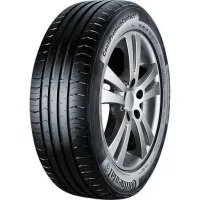
Continental Premium Contact 5 |
| Snow Handling |
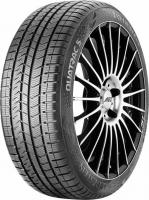
Vredestein Quatrac 5 Continental Premium Contact 5 |
| Snow Handling |
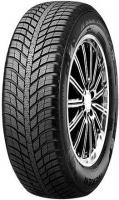
Continental WinterContact TS 860 Nexen N Blue 4 Season |
| Ice Handling |
Continental WinterContact TS 860 Goodyear Vector 4 Seasons Gen 2 Michelin CrossClimate Plus Continental Premium Contact 5 |
The unique twist this year? For some reason, the summer and winter reference tires are in the popular 205/55 R16 size, while the seven tested all season tires are in 225/45 R17. Strange. In theory, the narrower tires will have a harder time during the dry testing, but should have a small advantage during snow running.
In spite of the curious size choices, it's a really interesting test, and highlights the different qualities in the various all season tire offerings. It's also fortunate that the final data and conclusions are very close to our own All Season Tire Video, so be sure to check that out too.
Dry
It won't come as any surprise that in the dry, the summer tire dominated the braking test, with the Michelin CrossClimate dividing the gap between the summer tire, and the rest of the all season tires. Interestingly, even the narrower winter tire could hold its own amongst the wider all season tires, once again proving the brilliance of the Continental WinterContact TS860.
Dry handling mixed the order up a little with the Vredestein Quatrac 5 posting the fastest average speed across the 1900m circuit, beating the narrower summer tire. The rest of the order was as you would expect.
Wet
We're unsure why the Continental winter tire had such an advantage during wet braking, but it led the pack of all season tires by a huge margin. The summer tire finished in fifth place overall, behind the Goodyear, Michelin and Nexen all season tires. This isn't something we've seen in other all season tests, with the summer tire normally matching the best all season tires on test.
Wet handling once again changed the order. The narrower summer and winter tires seemed to struggle during the 1823m wet handling course, leaving the Michelin with a modest advantage over the second placed Goodyear and third placed Nexen.
The narrower tires naturally had a big advantage during aquaplaning tests, where getting water out of the tread is the key criteria to scoring well.
Snow
The narrower Continental winter tire just beat the impressive Continental all season tire during the snow braking and snow handling testing.
Environment
The three Continental tires on test all proved to have an excellent low rolling resistance.
Interestingly the narrower Continental summer tire was almost the noisiest tire on test, once again proving that all season and winter tires are often quieter than their summer counterparts.
The Nexen was significantly cheaper than the rest of the all season tires, and even cheaper than the smaller summer and winter tires. The new Nexen all season tire is proving to be incredible value.
Results
Magazine score weighting - 20% dry, 40% wet, 20% snow, 20% environment