



For this year's all-season tire test I brought together ten of the most important tires in the category, all in the popular 225/40 R18 size. The headline additions are the Goodyear Vector All Season 4 and Michelin CrossClimate 3 Sport, joined by the regular CrossClimate 3, the latest premium benchmarks from Bridgestone, Continental, Pirelli, Vredestein and Nokian, the established Hankook Kinergy 4S2, and the budget Royal Black Royal AS II.
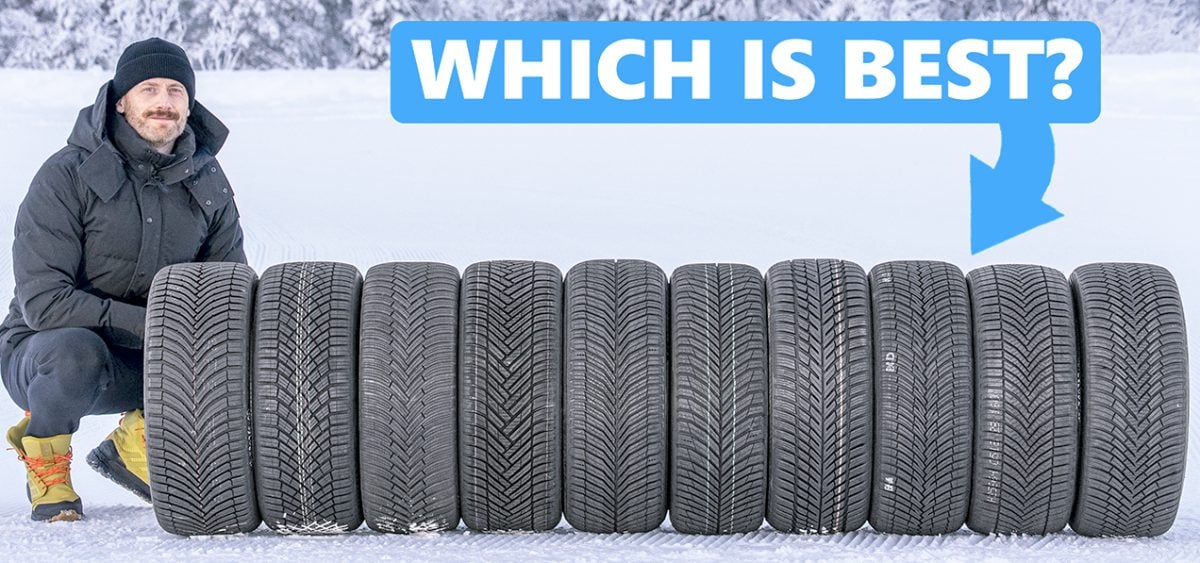
I used a VW Golf GTI Clubsport throughout. The snow work was completed at Goodyear's Ivalo facility in Finland, while the dry, wet and road testing took place at Mireval in France. The programme covers dry and wet braking, objective and subjective handling, wet circle, straight and curved aquaplaning, snow braking, traction and handling, comfort, noise and rolling resistance. As always, you can change the score weighting in the results table to match the conditions that matter to you.
Test setup & methodology
The test setting, the conditions recorded and how the results contribute to the score.
Show full testing methodology
Recorded test conditions
- Dry Braking
- 62.1 → 3.1 mph
- Dry Handling
- 59–64 °F
- Wet Braking
- 49.7 → 3.1 mph
- Wet Handling
- 54–59 °F
- Snow Braking
- 31.1 → 3.1 mph · 10 °F
- Snow Traction
- 5.0 → 18.6 mph · 10 °F
- Snow Handling
- 9–10 °F
Score Weighting
Weights express the scoring priorities, not how much each discipline actually changed the finishing order. The size of the performance gaps matters too. Category weights contribute to the overall score. Within each category, discipline weights divide that category’s share. Published finishing positions also need to be read alongside the editorial verdict.
| Test | Within category | Share of overall score |
|---|---|---|
| Dry · 25% | ||
| Dry Braking | 50% | 12.5% |
| Dry Handling | 40% | 10% |
| Subj. Dry Handling | 10% | 2.5% |
| Wet · 40% | ||
| Wet Braking | 40% | 16% |
| Wet Handling | 30% | 12% |
| Subj. Wet Handling | 10% | 4% |
| Wet Circle | 5% | 2% |
| Straight Aqua | 10% | 4% |
| Curved Aquaplaning | 5% | 2% |
| Snow · 20% | ||
| Snow Braking | 30% | 6% |
| Snow Traction | 30% | 6% |
| Snow Handling | 30% | 6% |
| Subj. Snow Handling | 10% | 2% |
| Comfort · 10% | ||
| Subj. Comfort | 50% | 5% |
| Noise | 50% | 5% |
| Value · 5% | ||
| Rolling Resistance | 100% | 5% |
Our standard methods
The conditions above are recorded for this test. The descriptions below explain our standard procedures; measurement windows and run counts can vary by test.
Dry Braking
For dry braking, I drive the test vehicle at an entry speed of 110 km/h and apply full braking effort to a standstill with ABS active on clean, dry asphalt. I typically use an 100–5 km/h measurement window. My standard programme is five runs per tire set where possible, although the sequence can extend to as many as fifteen runs if conditions and tire category justify it. I analyze the full set of runs and discard statistical outliers before averaging. Reference tires are run repeatedly throughout the session to correct for changing conditions.
Dry Handling
For dry handling, I drive at the limit of adhesion around a dedicated handling circuit with ESC disabled where possible so I can assess the tire's natural balance, transient response, and limit behavior without electronic intervention masking the result. I usually complete between two and five timed laps per tire set, depending on the circuit, tire type, and consistency of conditions. I exclude laps affected by clear driver error or obvious environmental inconsistency. Control runs are carried out frequently throughout the session, and I often use multiple sets of control tires so that wear on the references does not become a meaningful variable. For more track-focused products, I also do endurance testing, which is a set number of laps at race pace to determine tire wear patterns and heat resistance over longer driving.
Subj. Dry Handling
I also carry out a structured subjective handling assessment at the limit of adhesion on a dedicated dry handling circuit. I score steering precision, steering response, turn-in behavior, mid-corner balance, corner-exit traction, breakaway characteristics, and overall confidence using a standardised 1–10 scale used consistently across my testing. The final assessment combines numeric scoring with written technical commentary. I complete familiarisation laps on the control tire before evaluating each candidate.
Wet Braking
For wet braking, I drive the test vehicle at an entry speed of 88 km/h and apply full braking effort to a standstill with ABS active on an asphalt surface with a controlled water film. I typically use an 80–5 km/h measurement window to isolate tire performance from variability in the initial brake application. My standard programme is eight runs per tire set where possible, although the sequence can extend to as many as fifteen runs if conditions and tire category justify it. I analyze the full set of runs and discard statistical outliers before averaging. To correct for changing conditions, I run reference tires repeatedly throughout the session — in wet testing, typically every three candidate test sets.
Wet Handling
For wet handling, I drive at the limit of adhesion around a dedicated handling circuit. I generally use specialist wet circuits with kerb-watering systems designed to maintain a consistent surface condition. ESC is disabled where possible so I can assess the tire's natural balance, transient response, and limit behavior without electronic intervention masking the result. I usually complete between two and five timed laps per tire set, depending on the circuit, tire type, and consistency of conditions. I exclude laps affected by clear driver error or obvious environmental inconsistency. Control runs are carried out frequently throughout the session, and I often use multiple sets of control tires so that wear on the references does not become a meaningful variable.
Subj. Wet Handling
I also carry out a structured subjective handling assessment at the limit of adhesion on a dedicated wet handling circuit. I score steering precision, steering response, turn-in behavior, mid-corner balance, aquaplaning resistance, breakaway characteristics, and overall confidence using a standardised 1–10 scale used consistently across my testing. The final assessment combines numeric scoring with written technical commentary. I complete familiarisation laps on the control tire before evaluating each candidate.
Wet Circle
For wet lateral grip testing, I use a circular track of fixed radius, typically between 30 and 50 meters, broadly aligned with ISO 4138 principles. The surface is wetted in a controlled and repeatable manner. I progressively increase speed until the maximum sustainable cornering speed is reached. I normally record multiple laps in both clockwise and counterclockwise directions to reduce the influence of camber, banking, or directional track bias. I then calculate average lateral acceleration and compare the result with the reference tire.
Straight Aqua
To measure straight-line aquaplaning resistance, I drive one side of the vehicle through a water trough of controlled depth, typically around 7 mm, while the opposite side remains on dry pavement. I enter at a fixed speed and then accelerate progressively. I define aquaplaning onset as the point at which the wheel travelling through the water exceeds a specified slip threshold relative to the dry-side reference wheel. I usually perform four runs per tire set and average the valid results.
Curved Aquaplaning
For curved aquaplaning, I use a circular track, typically around 100 meters in diameter, with a flooded arc of controlled water depth, usually about 7 mm. The vehicle is instrumented with GPS telemetry and a tri-axial accelerometer. I drive through the flooded section at progressively increasing speed, typically in 5 km/h increments, and record the minimum sustained lateral acceleration at each step. The test continues until lateral acceleration collapses, indicating complete aquaplaning. The result is expressed as remaining lateral acceleration in m/s² as speed rises.
Snow Braking
For snow braking, I drive the test vehicle at an entry speed of 50 km/h and apply full braking effort to a standstill with ABS active on a groomed, compacted snow surface, measuring 45-5 km/h. I generally use a wide VDA (vehicle dynamic area) and progressively move across the surface between runs so that no tire ever brakes on the same piece of snow twice. My standard programme is twelve runs per tire set, although the sequence can extend further if the data justify it. I analyze the full set of runs and discard statistical outliers before averaging. The surface is regularly groomed throughout the session. To correct for changing snow surface conditions, I run reference tires repeatedly — typically every two candidate test sets.
Snow Traction
For snow traction, I accelerate the vehicle from rest on a groomed snow surface with traction control active and measure speed and time using GPS telemetry. I typically use a 5–35 km/h measurement window to reduce the influence of launch transients and powertrain irregularities. I use a wide VDA (vehicle dynamic area) and progressively move across the surface between runs so that no tire ever accelerates on the same piece of snow twice. The surface is regularly groomed throughout the session. I complete multiple runs per tire set and average the valid results. Reference tires are run typically every two candidate test sets to correct for changing snow surface conditions.
Snow Handling
For snow handling, I drive at the limit of adhesion around a dedicated snow handling circuit with ESC disabled where possible. The circuit is groomed and prepared after every run while tires are being changed, so each set runs on a consistently prepared surface. I usually complete between two and five timed laps per tire set, excluding laps affected by clear driver error or obvious environmental inconsistency. Because snow surfaces degrade more rapidly than asphalt, control runs are carried out more frequently — typically every two candidate test sets.
Subj. Snow Handling
I also carry out a structured subjective handling assessment at the limit of adhesion on a dedicated snow handling circuit. The circuit is groomed and prepared after every run while tires are being changed, so each set runs on a consistently prepared surface. I score steering precision, turn-in behavior, mid-corner balance, corner-exit traction, breakaway characteristics, and overall confidence on snow using a standardised 1–10 scale used consistently across my testing. The final assessment combines numeric scoring with written technical commentary. I complete familiarisation laps on the control tire before evaluating each candidate.
Subj. Comfort
To assess comfort, I drive on a wide range of road surfaces (often dedicated comfort tracks at test facilities) at speeds from 50 to 120 km/h, including smooth motorway, coarse surfaces, expansion joints, broken pavement, and sharp-edged obstacles. I evaluate primary ride quality, secondary ride quality, impact harshness, seat-transmitted vibration, and the tire's ability to absorb sharp inputs. Ratings are assigned on a 1–10 scale relative to the reference tire.
Noise
I measure external pass-by noise in accordance with UNECE Regulation 117 and ISO 13325 using the coast-by method on a compliant test surface. Calibrated microphones are positioned beside the test lane, and the vehicle coasts through the measurement zone under controlled conditions. I record the maximum A-weighted sound pressure level in dB(A), complete multiple runs over the relevant speed range, and normalise the result to the reference speed required by the procedure.
Rolling Resistance
Rolling resistance is measured under controlled laboratory conditions in accordance with ISO 28580 and UNECE Regulation 117 Annex 6. The tire is mounted on a test wheel and loaded against a large-diameter steel drum. After thermal stabilisation at the prescribed test speed, rolling resistance force is measured at the spindle and corrected according to the relevant procedure. The result is expressed as rolling resistance coefficient, typically in kg/tonne.
Dry Braking
The Pirelli Cinturato All Season SF3 produced the shortest dry stop at 35.5 meters. The Bridgestone Turanza All Season 6 was second at 36.1 meters, with the Michelin CrossClimate 3 Sport third on 36.4 meters and the Goodyear Vector All Season 4 fourth on 36.9 meters.
The field then stayed fairly close until the Vredestein Quatrac at 38.6 meters and the Royal Black Royal AS II at 39.3 meters. Best to worst was 3.8 meters, so the Royal Black was nearly 11% behind the Pirelli at the point where stopping distance matters most.
Dry Braking
Dry braking in feet (62 - 3 mph)
Lower is better ↓| Position / Tire | Result | Gap to best | Residual speed |
|---|---|---|---|
| 116 ft | Best | 0 mph | |
| 118 ft | +2 ft | 10 mph | |
| 119 ft | +3 ft | 13 mph | |
| 121 ft | +5 ft | 16 mph | |
| 123 ft | +7 ft | 18 mph | |
| 123 ft | +7 ft | 18 mph | |
| 124 ft | +8 ft | 20 mph | |
| 124 ft | +8 ft | 20 mph | |
| 127 ft | +11 ft | 23 mph | |
| 129 ft | +13 ft | 25 mph |
The difference between best and worst was 10.7% (13 ft ≈ 0.8 Car Lengths). From 80 mph, the Royal Black Royal AS II would still be travelling at 25 mph when the Pirelli Cinturato All Season SF3 had stopped.
Residual speed is calculated from the measured braking distances, assuming constant deceleration; it is not a separate measurement.
Dry Handling
The Continental AllSeasonContact 2 set the fastest dry lap at 92.54 seconds, with the Hankook Kinergy 4S2 only 0.08 seconds behind. The Goodyear Vector All Season 4 was third on 93.35 and the Bridgestone fourth on 93.49 seconds.
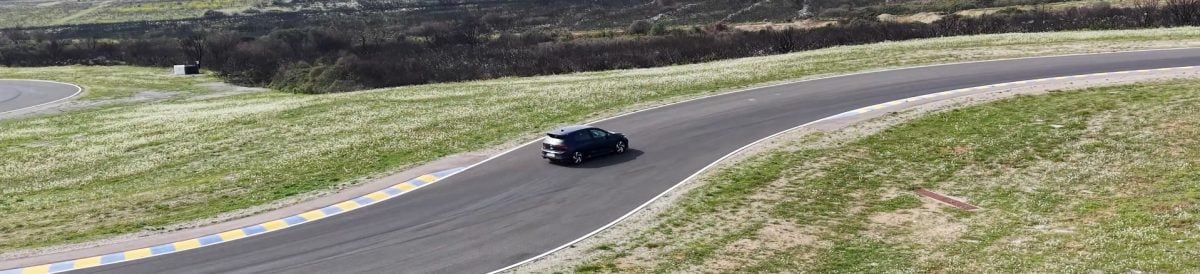
Most tires had only one timed dry lap, so I would not pretend the tiny gaps in the middle are more precise than they are. The Royal Black was ninth at 95.6 seconds and the Nokian Seasonproof 2 was last at 96.11 seconds.
Lap time was only half the dry story. The Continental and Hankook had excellent grip but both allowed a little more rear movement in the high-speed lane change. The CrossClimate 3 Sport was only sixth on time, yet it had the most direct steering and one of the most settled rear axles. That is a useful reminder that the quickest track tire is not automatically the nicest road tire.
Dry Handling
Dry handling time in seconds [Average Temperature 62°F]
Lower is better ↓| Position / Tire | Result | Gap to best |
|---|---|---|
| 92.54 s | Best | |
| 92.62 s | +0.08 s | |
| 93.35 s | +0.81 s | |
| 93.49 s | +0.95 s | |
| 93.77 s | +1.23 s | |
| 94.15 s | +1.61 s | |
| 94.26 s | +1.72 s | |
| 94.65 s | +2.11 s | |
| 95.6 s | +3.06 s | |
| 96.11 s | +3.57 s |
The difference between best and worst was 3.9% (3.57 s).
Subjective Dry Handling
I based the subjective score on the lap, repeated 130 km/h lane changes and the way each tire behaved below the limit. The CrossClimate 3 Sport led on 8.8 points. Goodyear, Bridgestone and Pirelli were effectively tied just behind it on 8.7, all giving the Golf a convincing, more summer-like balance.
The Vredestein felt softer and more obviously like an all-season tire, while the regular CrossClimate 3 was safe but understeer-led and short of front-axle bite. The two clear outliers were the Royal Black and Nokian. The Royal Black needed more steering angle and moved around at the rear, but recovered progressively. The Nokian had enough grip, yet its delayed front-to-rear response, slow steering and repeated rear bounce made an emergency lane change unpleasant. That behavior was also obvious on the road route, not just on track.
Subj. Dry Handling
Subjective Dry Handling Score
Higher is better ↑| Position / Tire | Result | Gap to best |
|---|---|---|
| 8.8 Points | Best | |
| 8.7 Points | -0.10 Points | |
| 8.7 Points | -0.10 Points | |
| 8.7 Points | -0.10 Points | |
| 8.5 Points | -0.30 Points | |
| 8.3 Points | -0.50 Points | |
| 8.2 Points | -0.60 Points | |
| 8.1 Points | -0.70 Points | |
| 7.5 Points | -1.30 Points | |
| 6.6 Points | -2.20 Points |
The difference between best and worst was 25% (2.2 Points).
Wet Braking
The Michelin CrossClimate 3 Sport was best in wet braking at 31.82 meters, just 0.12 meters ahead of the Goodyear. Vredestein and Nokian tied for third at 32.36 meters, followed by Hankook on 32.84 and Bridgestone on 32.92 meters. Six tires within 1.1 meters of the winner is a strong leading group.
The Pirelli needed 33.74 meters and the regular CrossClimate 3 was ninth of ten at 34.31 meters. Then there was the Royal Black. It stopped in 43.79 meters, almost 12 meters and 38% longer than the CrossClimate 3 Sport. That is not a small budget-tire compromise; it is the largest safety gap in this test.
Wet Braking
Wet braking in feet (50 - 3 mph)
Lower is better ↓| Position / Tire | Result | Gap to best | Residual speed |
|---|---|---|---|
| 104 ft | Best | 0 mph | |
| 105 ft | +1 ft | 5 mph | |
| 106 ft | +2 ft | 10 mph | |
| 106 ft | +2 ft | 10 mph | |
| 108 ft | +4 ft | 14 mph | |
| 108 ft | +4 ft | 15 mph | |
| 108 ft | +4 ft | 15 mph | |
| 111 ft | +7 ft | 19 mph | |
| 113 ft | +9 ft | 22 mph | |
| 144 ft | +40 ft | 42 mph |
The difference between best and worst was 37.6% (40 ft ≈ 2.7 Car Lengths). From 80 mph, the Royal Black Royal AS II would still be travelling at 42 mph when the Michelin CrossClimate 3 Sport had stopped.
Residual speed is calculated from the measured braking distances, assuming constant deceleration; it is not a separate measurement.
Wet Handling
I ran wet handling in two sessions and the main conclusions repeated. The Nokian Seasonproof 2 was quickest on the combined result at 66.84 seconds, with the Goodyear second on 67.19, Vredestein third on 67.40 and Hankook fourth on 67.44 seconds.
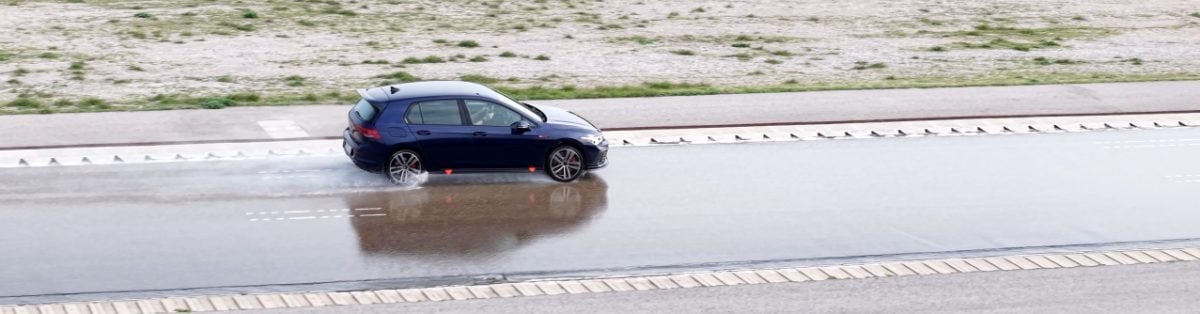
The stopwatch did not tell the whole story. The Nokian had huge lateral grip, but the car moved around on the soft tire and never felt as precise as its lap time. The Goodyear was the best blend for me: stable, communicative and unusually easy to drive consistently, with a rounded grip circle and very little drama on the slippery parts of the circuit. The Vredestein had softer initial response but excellent grip and very little micro-aquaplaning, while the Hankook was stable and close to the leaders.
Bridgestone led the next group at 67.97 seconds. Pirelli and Continental were separated by one hundredth at 68.47 and 68.48, and the CrossClimate 3 Sport followed on 68.76. All four were good tires, but none had the ultimate lateral grip of the leading group. The regular CrossClimate 3 was a clear step back at 70.73 seconds: safe and progressive, but too understeer-led and lacking wet bite.
The Royal Black was last at 74.57 seconds. Its grip window was narrow, braking bite was inconsistent and once either axle started sliding it took far too long to recover. Unlike the close differences among the premium tires, this was obvious from behind the wheel.
Wet Handling
Wet handling time in seconds [Average Temperature 56°F]
Lower is better ↓| Position / Tire | Result | Gap to best |
|---|---|---|
| 66.84 s | Best | |
| 67.19 s | +0.35 s | |
| 67.4 s | +0.56 s | |
| 67.44 s | +0.60 s | |
| 67.97 s | +1.13 s | |
| 68.47 s | +1.63 s | |
| 68.48 s | +1.64 s | |
| 68.76 s | +1.92 s | |
| 70.73 s | +3.89 s | |
| 74.57 s | +7.73 s |
The difference between best and worst was 11.6% (7.73 s).
Wet Circle
The Goodyear also had the quickest wet-circle time at 13.87 seconds. Bridgestone and Continental tied on 13.97, with the CrossClimate 3 Sport on 14.01. Most of the field was covered by 0.34 seconds; the Royal Black was the exception at 14.92 seconds, more than a second behind the Goodyear.
Wet Circle
Wet Circle Lap Time in seconds
Lower is better ↓| Position / Tire | Result | Gap to best |
|---|---|---|
| 13.87 s | Best | |
| 13.97 s | +0.10 s | |
| 13.97 s | +0.10 s | |
| 14.01 s | +0.14 s | |
| 14.03 s | +0.16 s | |
| 14.05 s | +0.18 s | |
| 14.16 s | +0.29 s | |
| 14.18 s | +0.31 s | |
| 14.21 s | +0.34 s | |
| 14.92 s | +1.05 s |
The difference between best and worst was 7.6% (1.05 s).
Straight Aquaplaning
The Vredestein Quatrac and Pirelli Cinturato All Season SF3 were effectively tied at the top, floating at 90.77 and 90.74 km/h. The Bridgestone was third at 88.29 km/h and the Nokian fourth at 87.14 km/h.
The Goodyear's 85.18 km/h put it in the lower half rather than at the front, though it remained in the tightly packed premium group. Continental was second last on 82.9 km/h, and the Royal Black was detached again at 74.93 km/h.
Straight Aqua
Float Speed in mph
Higher is better ↑| Position / Tire | Result | Gap to best |
|---|---|---|
| 56.4 mph | Best | |
| 56.4 mph | 0.0 mph | |
| 54.9 mph | -1.5 mph | |
| 54.1 mph | -2.3 mph | |
| 53.4 mph | -3.0 mph | |
| 53.1 mph | -3.3 mph | |
| 52.9 mph | -3.5 mph | |
| 52.6 mph | -3.8 mph | |
| 51.5 mph | -4.9 mph | |
| 46.6 mph | -9.8 mph |
The difference between best and worst was 17.5% (9.8 mph).

Curved Aquaplaning
Pirelli was the clear curved-aquaplaning winner, retaining 2.94 m/s² of lateral acceleration. Goodyear and Bridgestone followed on 2.66 and 2.65 m/s², with Vredestein on 2.60. Continental was ninth of ten at 2.45 and the Royal Black was last on 2.36 m/s².
Curved Aquaplaning
Remaining lateral acceleration
Higher is better ↑| Position / Tire | Result | Gap to best |
|---|---|---|
| 9.6 ft/s² | Best | |
| 8.7 ft/s² | -0.9 ft/s² | |
| 8.7 ft/s² | -0.9 ft/s² | |
| 8.5 ft/s² | -1.1 ft/s² | |
| 8.4 ft/s² | -1.2 ft/s² | |
| 8.3 ft/s² | -1.3 ft/s² | |
| 8.2 ft/s² | -1.4 ft/s² | |
| 8.2 ft/s² | -1.4 ft/s² | |
| 8.0 ft/s² | -1.6 ft/s² | |
| 7.7 ft/s² | -1.9 ft/s² |
The difference between best and worst was 19.7% (1.9 ft/s²).
Snow Braking
The regular Michelin CrossClimate 3 was best in snow braking at 26.49 meters, just ahead of the Vredestein at 26.67. The CrossClimate 3 Sport was third on 26.99 meters and the Goodyear fourth on 27.16.
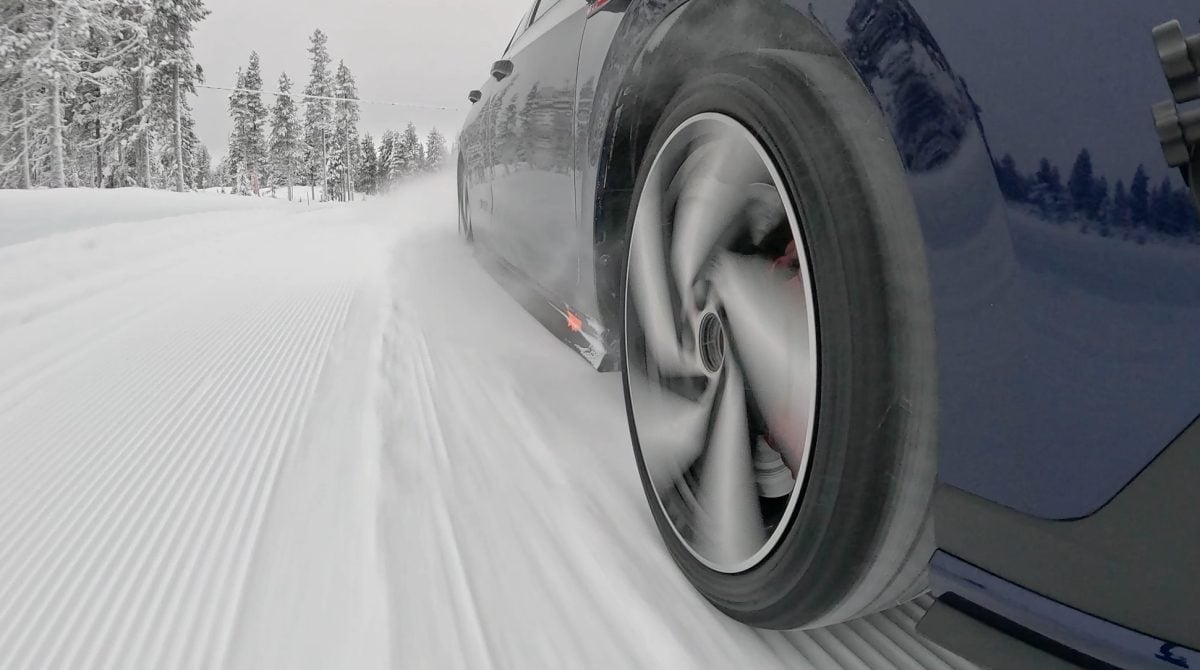
The Royal Black's fifth-place 27.26 meters was a useful result and much more competitive than its wet braking. Hankook, Continental, Bridgestone and Nokian filled the lower half, and the Pirelli was last at 28.22 meters. Even then, the full premium field was covered by 1.73 meters.
Snow Braking
Snow braking in feet (31 - 3 mph) [Average Temperature 10°F]
Lower is better ↓| Position / Tire | Result | Gap to best | Residual speed |
|---|---|---|---|
| 87 ft | Best | 0 mph | |
| 87 ft | 0 ft | 7 mph | |
| 89 ft | +2 ft | 11 mph | |
| 89 ft | +2 ft | 13 mph | |
| 89 ft | +2 ft | 13 mph | |
| 90 ft | +3 ft | 14 mph | |
| 90 ft | +3 ft | 15 mph | |
| 91 ft | +4 ft | 17 mph | |
| 91 ft | +4 ft | 18 mph | |
| 93 ft | +6 ft | 20 mph |
The difference between best and worst was 6.5% (6 ft ≈ 0.4 Car Lengths). From 80 mph, the Pirelli Cinturato All Season SF3 would still be travelling at 20 mph when the Michelin CrossClimate 3 had stopped.
Residual speed is calculated from the measured braking distances, assuming constant deceleration; it is not a separate measurement.
Snow Traction
The CrossClimate 3 led again, accelerating through the measured range in 3.90 seconds. Goodyear was second at 3.96, the CrossClimate 3 Sport third at 4.00 and Pirelli fourth at 4.06 seconds.
Vredestein and Continental occupied the middle, followed by Hankook and Bridgestone. Royal Black was ninth at 4.32 seconds and the Nokian was last at 4.46. The 0.56-second gap from Michelin to Nokian is significant in such a short acceleration test.
Snow Traction
Snow acceleration time (5 - 19 mph) [Average Temperature 10°F]
Lower is better ↓| Position / Tire | Result | Gap to best |
|---|---|---|
| 3.9 s | Best | |
| 3.96 s | +0.06 s | |
| 4 s | +0.10 s | |
| 4.06 s | +0.16 s | |
| 4.08 s | +0.18 s | |
| 4.18 s | +0.28 s | |
| 4.23 s | +0.33 s | |
| 4.27 s | +0.37 s | |
| 4.32 s | +0.42 s | |
| 4.46 s | +0.56 s |
The difference between best and worst was 14.4% (0.56 s).
Snow Handling
The CrossClimate 3 completed its clean sweep of the objective snow tests with a 65.11-second lap. Its longitudinal grip was the best feature, close to the feel of a winter tire under traction and braking, while the balance stayed safe and predictable. Goodyear was second on 65.63 seconds and Vredestein third on 65.77.
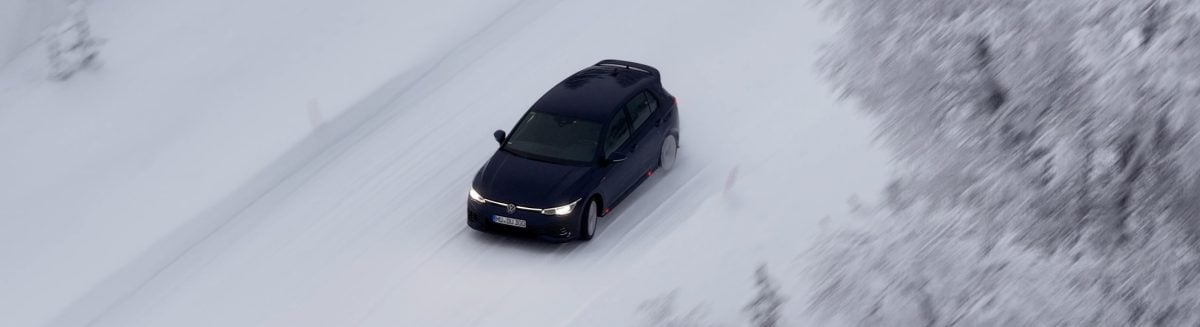
The Continental's 66.12-second lap put it fourth, but subjectively it was one of the best. It had a rounded grip circle, good front-to-rear balance and clean recovery once it started sliding. The Goodyear had more outright pace but moved around a little more at the rear, while the Vredestein was quick and well balanced but had one unusually fast first lap before slowing slightly.
Pirelli and the CrossClimate 3 Sport were separated by 0.02 seconds in fifth and sixth. The Pirelli felt looser and slower to recover than I expected, while the Sport could break away abruptly once the tread loaded with loose snow. Hankook, Nokian and Bridgestone followed; the Nokian and Bridgestone were easier and friendlier to drive than their lap positions suggest. Royal Black was last at 68.14 seconds but remained usable and predictable for an all-season tire on snow, which is more than can be said for its wet behavior.
Snow Handling
Snow handling time in seconds [Average Temperature 10°F]
Lower is better ↓| Position / Tire | Result | Gap to best |
|---|---|---|
| 65.11 s | Best | |
| 65.63 s | +0.52 s | |
| 65.77 s | +0.66 s | |
| 66.12 s | +1.01 s | |
| 66.73 s | +1.62 s | |
| 66.75 s | +1.64 s | |
| 66.88 s | +1.77 s | |
| 66.98 s | +1.87 s | |
| 67.3 s | +2.19 s | |
| 68.14 s | +3.03 s |
The difference between best and worst was 4.7% (3.03 s).
Comfort
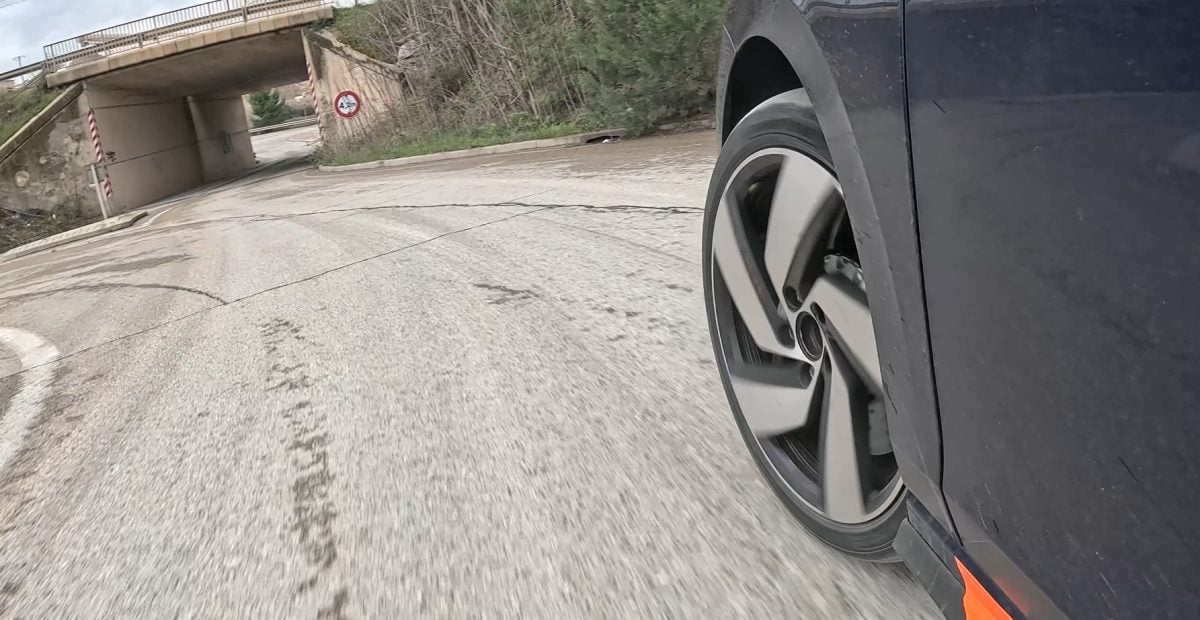
On the mixed public-road route, the differences were more about control and noise character than a harsh versus comfortable split. Bridgestone felt solid and well damped, Vredestein was calm and quiet, and Pirelli combined its comfort with some of the best steering. Goodyear was a little less polished over sharp impacts and the CrossClimate 3 Sport was firm, but well controlled.
Subj. Comfort
Subjective Comfort Score
Higher is better ↑| Position / Tire | Result | Gap to best |
|---|---|---|
| 10 Points | Best | |
| 9.5 Points | -0.50 Points | |
| 9.5 Points | -0.50 Points | |
| 9.25 Points | -0.75 Points | |
| 9 Points | -1.00 Points | |
| 9 Points | -1.00 Points | |
| 9 Points | -1.00 Points | |
| 9 Points | -1.00 Points | |
| 9 Points | -1.00 Points | |
| 8.75 Points | -1.25 Points |
The difference between best and worst was 12.5% (1.25 Points).
Noise
The Vredestein was the quietest measured tire at 69.25 dB, and it was also my subjective noise pick because its cabin sound stayed muted on most surfaces. Goodyear was second on 70.69 dB and Continental third at 70.97.
The middle was tightly grouped from Bridgestone's 71.12 to the regular CrossClimate 3's 71.53 dB. Nokian, Royal Black and the CrossClimate 3 Sport completed the order, with the Sport loudest at 72.13 dB. A 2.88 dB spread is measurable, but none of these tires turned the Golf into an unpleasant place to be.
Noise
External noise in dB
Lower is better ↓| Position / Tire | Result | Gap to best |
|---|---|---|
| 69.25 dB | Best | |
| 70.69 dB | +1.44 dB | |
| 70.97 dB | +1.72 dB | |
| 71.12 dB | +1.87 dB | |
| 71.13 dB | +1.88 dB | |
| 71.27 dB | +2.02 dB | |
| 71.53 dB | +2.28 dB | |
| 71.58 dB | +2.33 dB | |
| 71.73 dB | +2.48 dB | |
| 72.13 dB | +2.88 dB |
The difference between best and worst was 4.2% (2.88 dB).
Rolling Resistance
The Michelin CrossClimate 3 Sport had the lowest rolling resistance at 7.56 kg/t. Royal Black was an excellent second at 7.76, with Goodyear third on 7.83 and Pirelli fourth at 8.15 kg/t.
The regular CrossClimate 3, Nokian and Continental formed the middle. Vredestein, Bridgestone and Hankook were the three least efficient, with the Hankook last at 9.11 kg/t, around 20% higher than the CrossClimate 3 Sport. Over the life of a tire that difference will show up in fuel or energy use.
Rolling Resistance
Rolling resistance in kg t
Lower is better ↓| Position / Tire | Result | Gap to best | Extra fuel / year |
|---|---|---|---|
| 7.56 kg/t | Best | $0 | |
| 7.76 kg/t | +0.20 kg/t | $8 | |
| 7.83 kg/t | +0.27 kg/t | $10 | |
| 8.15 kg/t | +0.59 kg/t | $23 | |
| 8.18 kg/t | +0.62 kg/t | $24 | |
| 8.29 kg/t | +0.73 kg/t | $28 | |
| 8.32 kg/t | +0.76 kg/t | $30 | |
| 8.87 kg/t | +1.31 kg/t | $51 | |
| 8.99 kg/t | +1.43 kg/t | $56 | |
| 9.11 kg/t | +1.55 kg/t | $60 |
The difference between best and worst was 20.5% (1.55 kg / t). Over 12,000 miles a year at $3.60/gal, the Hankook Kinergy 4S2 uses about 17 gal ($60) more fuel than the Michelin CrossClimate 3 Sport.
Adjust the assumptions
Calculated estimates, not additional measurements. Use the controls to explore the assumptions.
Results
The Goodyear Vector All Season 4 wins this test because it never asks for a major compromise. It was second in wet braking and handling, best on the wet circle, second in curved aquaplaning, strong across all three snow tests, quiet and efficient. It did not win dry braking or straight aquaplaning, but neither result was weak. More importantly, it repeatedly felt stable, predictable and easy to drive on the limit and on the road.
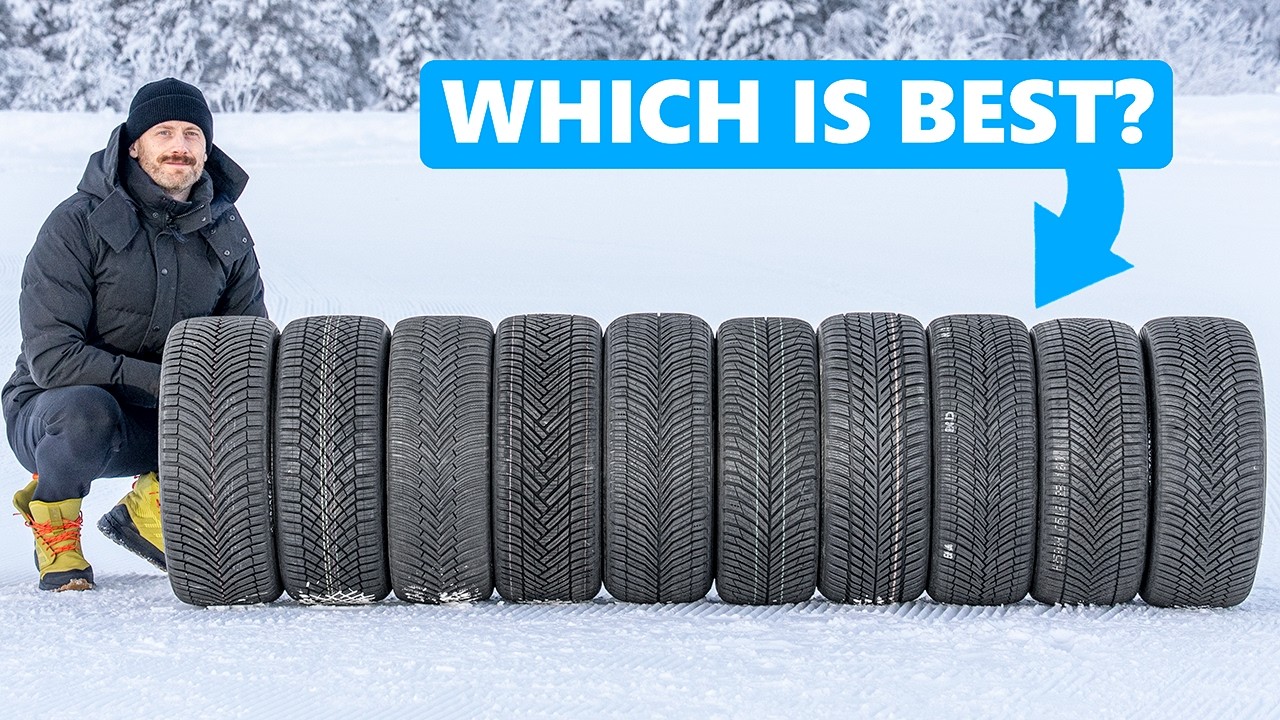 The BEST All Season Tires For 2026/27Watch the full video of this test on YouTube Watch on YouTube
Goodyear Vector All Season 4
225/40 R18 92Y XL
Category scores (% of best)
All discipline results (16)
Discipline positions compare the ranked tires in this test, not the whole market. These are individual measurements, not weighted overall scores.
| Test | Position in discipline | Result | Gap to best |
|---|---|---|---|
| Dry BrakingLower is better | 4th / 10 | 121 ft | +5 ft |
| Dry HandlingLower is better | 3rd / 10 | 93.35 s | +0.81 s |
| Subj. Dry HandlingHigher is better | 2nd / 10 | 8.7 Points | -0.10 Points |
| Wet BrakingLower is better | 2nd / 10 | 105 ft | +1 ft |
| Wet HandlingLower is better | 2nd / 10 | 67.19 s | +0.35 s |
| Subj. Wet HandlingHigher is better | 1st / 10 | 8.9 Points | Best in this discipline |
| Wet CircleLower is better | 1st / 10 | 13.87 s | Best in this discipline |
| Straight AquaHigher is better | 7th / 10 | 52.9 mph | -3.5 mph |
| Curved AquaplaningHigher is better | 2nd / 10 | 8.7 ft/s² | -0.9 ft/s² |
| Snow BrakingLower is better | 4th / 10 | 89 ft | +2 ft |
| Snow TractionLower is better | 2nd / 10 | 3.96 s | +0.06 s |
| Snow HandlingLower is better | 2nd / 10 | 65.63 s | +0.52 s |
| Subj. Snow HandlingHigher is better | 3rd / 10 | 8.6 Points | -0.50 Points |
| Subj. ComfortHigher is better | 5th / 10 | 9 Points | -1.00 Points |
| NoiseLower is better | 2nd / 10 | 70.69 dB | +1.44 dB |
| Rolling ResistanceLower is better | 3rd / 10 | 7.83 kg/t | +0.27 kg/t |
- EU Label
- C/B/72
- Production
- 3825
- Origin
- Poland
- Rim Protection
- Medium
- 3PMSF
- Yes
- Weight
- 8.18 kgs
- Tread
- 7 mm
- Price
- 116.65
Michelin CrossClimate 3 Sport
225/40 R18 92Y XL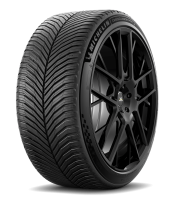
Category scores (% of best)
All discipline results (16)
Discipline positions compare the ranked tires in this test, not the whole market. These are individual measurements, not weighted overall scores.
| Test | Position in discipline | Result | Gap to best |
|---|---|---|---|
| Dry BrakingLower is better | 3rd / 10 | 119 ft | +3 ft |
| Dry HandlingLower is better | 6th / 10 | 94.15 s | +1.61 s |
| Subj. Dry HandlingHigher is better | 1st / 10 | 8.8 Points | Best in this discipline |
| Wet BrakingLower is better | 1st / 10 | 104 ft | Best in this discipline |
| Wet HandlingLower is better | 8th / 10 | 68.76 s | +1.92 s |
| Subj. Wet HandlingHigher is better | 3rd / 10 | 8.6 Points | -0.30 Points |
| Wet CircleLower is better | 4th / 10 | 14.01 s | +0.14 s |
| Straight AquaHigher is better | 6th / 10 | 53.1 mph | -3.3 mph |
| Curved AquaplaningHigher is better | 5th / 10 | 8.4 ft/s² | -1.2 ft/s² |
| Snow BrakingLower is better | 3rd / 10 | 89 ft | +2 ft |
| Snow TractionLower is better | 3rd / 10 | 4 s | +0.10 s |
| Snow HandlingLower is better | 6th / 10 | 66.75 s | +1.64 s |
| Subj. Snow HandlingHigher is better | 9th / 10 | 8 Points | -1.10 Points |
| Subj. ComfortHigher is better | 5th / 10 | 9 Points | -1.00 Points |
| NoiseLower is better | 10th / 10 | 72.13 dB | +2.88 dB |
| Rolling ResistanceLower is better | 1st / 10 | 7.56 kg/t | Best in this discipline |
- EU Label
- C/B/72
- Production
- 4525
- Origin
- Germany
- Rim Protection
- Medium
- 3PMSF
- Yes
- Weight
- 8.78 kgs
- Tread
- 6.6 mm
- Price
- 134.99
Pirelli Cinturato All Season SF3
225/40 R18 92Y XL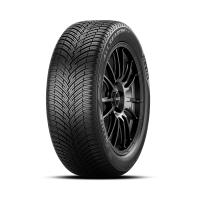
Category scores (% of best)
All discipline results (16)
Discipline positions compare the ranked tires in this test, not the whole market. These are individual measurements, not weighted overall scores.
| Test | Position in discipline | Result | Gap to best |
|---|---|---|---|
| Dry BrakingLower is better | 1st / 10 | 116 ft | Best in this discipline |
| Dry HandlingLower is better | 5th / 10 | 93.77 s | +1.23 s |
| Subj. Dry HandlingHigher is better | 2nd / 10 | 8.7 Points | -0.10 Points |
| Wet BrakingLower is better | 8th / 10 | 111 ft | +7 ft |
| Wet HandlingLower is better | 6th / 10 | 68.47 s | +1.63 s |
| Subj. Wet HandlingHigher is better | 3rd / 10 | 8.6 Points | -0.30 Points |
| Wet CircleLower is better | 8th / 10 | 14.18 s | +0.31 s |
| Straight AquaHigher is better | 2nd / 10 | 56.4 mph | 0.0 mph |
| Curved AquaplaningHigher is better | 1st / 10 | 9.6 ft/s² | Best in this discipline |
| Snow BrakingLower is better | 10th / 10 | 93 ft | +6 ft |
| Snow TractionLower is better | 4th / 10 | 4.06 s | +0.16 s |
| Snow HandlingLower is better | 5th / 10 | 66.73 s | +1.62 s |
| Subj. Snow HandlingHigher is better | 7th / 10 | 8.1 Points | -1.00 Points |
| Subj. ComfortHigher is better | 1st / 10 | 10 Points | Best in this discipline |
| NoiseLower is better | 6th / 10 | 71.27 dB | +2.02 dB |
| Rolling ResistanceLower is better | 4th / 10 | 8.15 kg/t | +0.59 kg/t |
- EU Label
- C/A/71
- Production
- 3025
- Origin
- Romania
- Rim Protection
- Large
- 3PMSF
- Yes
- Weight
- 8.68 kgs
- Tread
- 6.9 mm
- Price
- 124.99
Vredestein Quatrac
225/40 R18 92W XL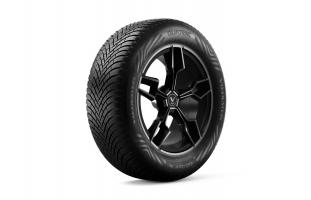
Category scores (% of best)
All discipline results (16)
Discipline positions compare the ranked tires in this test, not the whole market. These are individual measurements, not weighted overall scores.
| Test | Position in discipline | Result | Gap to best |
|---|---|---|---|
| Dry BrakingLower is better | 9th / 10 | 127 ft | +11 ft |
| Dry HandlingLower is better | 7th / 10 | 94.26 s | +1.72 s |
| Subj. Dry HandlingHigher is better | 8th / 10 | 8.1 Points | -0.70 Points |
| Wet BrakingLower is better | 3rd / 10 | 106 ft | +2 ft |
| Wet HandlingLower is better | 3rd / 10 | 67.4 s | +0.56 s |
| Subj. Wet HandlingHigher is better | 6th / 10 | 8.5 Points | -0.40 Points |
| Wet CircleLower is better | 5th / 10 | 14.03 s | +0.16 s |
| Straight AquaHigher is better | 1st / 10 | 56.4 mph | Best in this discipline |
| Curved AquaplaningHigher is better | 4th / 10 | 8.5 ft/s² | -1.1 ft/s² |
| Snow BrakingLower is better | 2nd / 10 | 87 ft | 0 ft |
| Snow TractionLower is better | 5th / 10 | 4.08 s | +0.18 s |
| Snow HandlingLower is better | 3rd / 10 | 65.77 s | +0.66 s |
| Subj. Snow HandlingHigher is better | 3rd / 10 | 8.6 Points | -0.50 Points |
| Subj. ComfortHigher is better | 2nd / 10 | 9.5 Points | -0.50 Points |
| NoiseLower is better | 1st / 10 | 69.25 dB | Best in this discipline |
| Rolling ResistanceLower is better | 8th / 10 | 8.87 kg/t | +1.31 kg/t |
- EU Label
- D/B/72
- Production
- 4325
- Origin
- Hungary
- Rim Protection
- Large
- 3PMSF
- Yes
- Weight
- 10.02 kgs
- Tread
- 7.7 mm
- Price
- 112.04
Bridgestone Turanza All Season 6
225/40 R18 92Y XL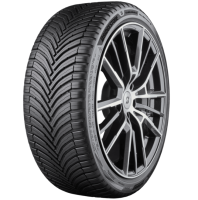
Category scores (% of best)
All discipline results (16)
Discipline positions compare the ranked tires in this test, not the whole market. These are individual measurements, not weighted overall scores.
| Test | Position in discipline | Result | Gap to best |
|---|---|---|---|
| Dry BrakingLower is better | 2nd / 10 | 118 ft | +2 ft |
| Dry HandlingLower is better | 4th / 10 | 93.49 s | +0.95 s |
| Subj. Dry HandlingHigher is better | 2nd / 10 | 8.7 Points | -0.10 Points |
| Wet BrakingLower is better | 6th / 10 | 108 ft | +4 ft |
| Wet HandlingLower is better | 5th / 10 | 67.97 s | +1.13 s |
| Subj. Wet HandlingHigher is better | 3rd / 10 | 8.6 Points | -0.30 Points |
| Wet CircleLower is better | 2nd / 10 | 13.97 s | +0.10 s |
| Straight AquaHigher is better | 3rd / 10 | 54.9 mph | -1.5 mph |
| Curved AquaplaningHigher is better | 3rd / 10 | 8.7 ft/s² | -0.9 ft/s² |
| Snow BrakingLower is better | 8th / 10 | 91 ft | +4 ft |
| Snow TractionLower is better | 8th / 10 | 4.27 s | +0.37 s |
| Snow HandlingLower is better | 9th / 10 | 67.3 s | +2.19 s |
| Subj. Snow HandlingHigher is better | 7th / 10 | 8.1 Points | -1.00 Points |
| Subj. ComfortHigher is better | 2nd / 10 | 9.5 Points | -0.50 Points |
| NoiseLower is better | 4th / 10 | 71.12 dB | +1.87 dB |
| Rolling ResistanceLower is better | 9th / 10 | 8.99 kg/t | +1.43 kg/t |
- EU Label
- C/B/70
- Production
- 3925
- Origin
- Italy
- Rim Protection
- Large
- 3PMSF
- Yes
- Weight
- 9.56 kgs
- Tread
- 7.1 mm
- Price
- 119.99
Continental AllSeasonContact 2
225/40 R18 92Y XL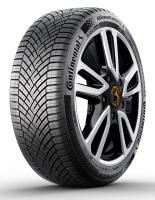
Category scores (% of best)
All discipline results (16)
Discipline positions compare the ranked tires in this test, not the whole market. These are individual measurements, not weighted overall scores.
| Test | Position in discipline | Result | Gap to best |
|---|---|---|---|
| Dry BrakingLower is better | 5th / 10 | 123 ft | +7 ft |
| Dry HandlingLower is better | 1st / 10 | 92.54 s | Best in this discipline |
| Subj. Dry HandlingHigher is better | 5th / 10 | 8.5 Points | -0.30 Points |
| Wet BrakingLower is better | 7th / 10 | 108 ft | +4 ft |
| Wet HandlingLower is better | 7th / 10 | 68.48 s | +1.64 s |
| Subj. Wet HandlingHigher is better | 7th / 10 | 8.3 Points | -0.60 Points |
| Wet CircleLower is better | 2nd / 10 | 13.97 s | +0.10 s |
| Straight AquaHigher is better | 9th / 10 | 51.5 mph | -4.9 mph |
| Curved AquaplaningHigher is better | 9th / 10 | 8.0 ft/s² | -1.6 ft/s² |
| Snow BrakingLower is better | 7th / 10 | 90 ft | +3 ft |
| Snow TractionLower is better | 6th / 10 | 4.18 s | +0.28 s |
| Snow HandlingLower is better | 4th / 10 | 66.12 s | +1.01 s |
| Subj. Snow HandlingHigher is better | 2nd / 10 | 8.8 Points | -0.30 Points |
| Subj. ComfortHigher is better | 5th / 10 | 9 Points | -1.00 Points |
| NoiseLower is better | 3rd / 10 | 70.97 dB | +1.72 dB |
| Rolling ResistanceLower is better | 7th / 10 | 8.32 kg/t | +0.76 kg/t |
- EU Label
- C/B/71
- Production
- 3325
- Origin
- Slovakia
- Rim Protection
- Small
- 3PMSF
- Yes
- Weight
- 9.28 kgs
- Tread
- 7.7 mm
- Price
- 129.99
Hankook Kinergy 4S2
225/40 R18 92Y XL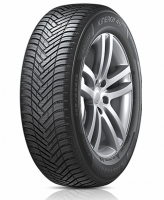
Category scores (% of best)
All discipline results (16)
Discipline positions compare the ranked tires in this test, not the whole market. These are individual measurements, not weighted overall scores.
| Test | Position in discipline | Result | Gap to best |
|---|---|---|---|
| Dry BrakingLower is better | 7th / 10 | 124 ft | +8 ft |
| Dry HandlingLower is better | 2nd / 10 | 92.62 s | +0.08 s |
| Subj. Dry HandlingHigher is better | 6th / 10 | 8.3 Points | -0.50 Points |
| Wet BrakingLower is better | 5th / 10 | 108 ft | +4 ft |
| Wet HandlingLower is better | 4th / 10 | 67.44 s | +0.60 s |
| Subj. Wet HandlingHigher is better | 2nd / 10 | 8.8 Points | -0.10 Points |
| Wet CircleLower is better | 6th / 10 | 14.05 s | +0.18 s |
| Straight AquaHigher is better | 5th / 10 | 53.4 mph | -3.0 mph |
| Curved AquaplaningHigher is better | 7th / 10 | 8.2 ft/s² | -1.4 ft/s² |
| Snow BrakingLower is better | 6th / 10 | 90 ft | +3 ft |
| Snow TractionLower is better | 7th / 10 | 4.23 s | +0.33 s |
| Snow HandlingLower is better | 7th / 10 | 66.88 s | +1.77 s |
| Subj. Snow HandlingHigher is better | 5th / 10 | 8.3 Points | -0.80 Points |
| Subj. ComfortHigher is better | 5th / 10 | 9 Points | -1.00 Points |
| NoiseLower is better | 5th / 10 | 71.13 dB | +1.88 dB |
| Rolling ResistanceLower is better | 10th / 10 | 9.11 kg/t | +1.55 kg/t |
- EU Label
- C/B/72
- Production
- 4325
- Origin
- Korea
- Rim Protection
- None
- 3PMSF
- Yes
- Weight
- 9.48 kgs
- Tread
- 7.8 mm
- Price
- 119.99
Michelin CrossClimate 3
225/40 R18 92W XL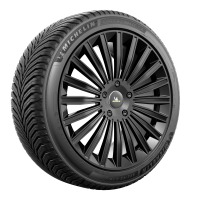
Category scores (% of best)
All discipline results (16)
Discipline positions compare the ranked tires in this test, not the whole market. These are individual measurements, not weighted overall scores.
| Test | Position in discipline | Result | Gap to best |
|---|---|---|---|
| Dry BrakingLower is better | 5th / 10 | 123 ft | +7 ft |
| Dry HandlingLower is better | 8th / 10 | 94.65 s | +2.11 s |
| Subj. Dry HandlingHigher is better | 7th / 10 | 8.2 Points | -0.60 Points |
| Wet BrakingLower is better | 9th / 10 | 113 ft | +9 ft |
| Wet HandlingLower is better | 9th / 10 | 70.73 s | +3.89 s |
| Subj. Wet HandlingHigher is better | 8th / 10 | 8.1 Points | -0.80 Points |
| Wet CircleLower is better | 9th / 10 | 14.21 s | +0.34 s |
| Straight AquaHigher is better | 8th / 10 | 52.6 mph | -3.8 mph |
| Curved AquaplaningHigher is better | 7th / 10 | 8.2 ft/s² | -1.4 ft/s² |
| Snow BrakingLower is better | 1st / 10 | 87 ft | Best in this discipline |
| Snow TractionLower is better | 1st / 10 | 3.9 s | Best in this discipline |
| Snow HandlingLower is better | 1st / 10 | 65.11 s | Best in this discipline |
| Subj. Snow HandlingHigher is better | 1st / 10 | 9.1 Points | Best in this discipline |
| Subj. ComfortHigher is better | 4th / 10 | 9.25 Points | -0.75 Points |
| NoiseLower is better | 7th / 10 | 71.53 dB | +2.28 dB |
| Rolling ResistanceLower is better | 5th / 10 | 8.18 kg/t | +0.62 kg/t |
- EU Label
- C/B/72
- Production
- 4225
- Origin
- Serbia
- Rim Protection
- None
- 3PMSF
- Yes
- Weight
- 9.02 kgs
- Tread
- 7.5 mm
- Price
- 140.99
Nokian Seasonproof 2
225/40 R18 92Y XL
Category scores (% of best)
All discipline results (16)
Discipline positions compare the ranked tires in this test, not the whole market. These are individual measurements, not weighted overall scores.
| Test | Position in discipline | Result | Gap to best |
|---|---|---|---|
| Dry BrakingLower is better | 8th / 10 | 124 ft | +8 ft |
| Dry HandlingLower is better | 10th / 10 | 96.11 s | +3.57 s |
| Subj. Dry HandlingHigher is better | 10th / 10 | 6.6 Points | -2.20 Points |
| Wet BrakingLower is better | 3rd / 10 | 106 ft | +2 ft |
| Wet HandlingLower is better | 1st / 10 | 66.84 s | Best in this discipline |
| Subj. Wet HandlingHigher is better | 9th / 10 | 7.6 Points | -1.30 Points |
| Wet CircleLower is better | 7th / 10 | 14.16 s | +0.29 s |
| Straight AquaHigher is better | 4th / 10 | 54.1 mph | -2.3 mph |
| Curved AquaplaningHigher is better | 6th / 10 | 8.3 ft/s² | -1.3 ft/s² |
| Snow BrakingLower is better | 9th / 10 | 91 ft | +4 ft |
| Snow TractionLower is better | 10th / 10 | 4.46 s | +0.56 s |
| Snow HandlingLower is better | 8th / 10 | 66.98 s | +1.87 s |
| Subj. Snow HandlingHigher is better | 5th / 10 | 8.3 Points | -0.80 Points |
| Subj. ComfortHigher is better | 10th / 10 | 8.75 Points | -1.25 Points |
| NoiseLower is better | 8th / 10 | 71.58 dB | +2.33 dB |
| Rolling ResistanceLower is better | 6th / 10 | 8.29 kg/t | +0.73 kg/t |
- EU Label
- C/A/70
- Production
- 4425
- Origin
- Finland
- Rim Protection
- Small
- 3PMSF
- Yes
- Weight
- 9.46 kgs
- Tread
- 8.5 mm
- Price
- 114.99
Royal Black Royal AS II
225/40 R18 92W XL
Category scores (% of best)
All discipline results (16)
Discipline positions compare the ranked tires in this test, not the whole market. These are individual measurements, not weighted overall scores.
| Test | Position in discipline | Result | Gap to best |
|---|---|---|---|
| Dry BrakingLower is better | 10th / 10 | 129 ft | +13 ft |
| Dry HandlingLower is better | 9th / 10 | 95.6 s | +3.06 s |
| Subj. Dry HandlingHigher is better | 9th / 10 | 7.5 Points | -1.30 Points |
| Wet BrakingLower is better | 10th / 10 | 144 ft | +40 ft |
| Wet HandlingLower is better | 10th / 10 | 74.57 s | +7.73 s |
| Subj. Wet HandlingHigher is better | 10th / 10 | 5.7 Points | -3.20 Points |
| Wet CircleLower is better | 10th / 10 | 14.92 s | +1.05 s |
| Straight AquaHigher is better | 10th / 10 | 46.6 mph | -9.8 mph |
| Curved AquaplaningHigher is better | 10th / 10 | 7.7 ft/s² | -1.9 ft/s² |
| Snow BrakingLower is better | 5th / 10 | 89 ft | +2 ft |
| Snow TractionLower is better | 9th / 10 | 4.32 s | +0.42 s |
| Snow HandlingLower is better | 10th / 10 | 68.14 s | +3.03 s |
| Subj. Snow HandlingHigher is better | 10th / 10 | 7.5 Points | -1.60 Points |
| Subj. ComfortHigher is better | 5th / 10 | 9 Points | -1.00 Points |
| NoiseLower is better | 9th / 10 | 71.73 dB | +2.48 dB |
| Rolling ResistanceLower is better | 2nd / 10 | 7.76 kg/t | +0.20 kg/t |
- EU Label
- C/C/71
- Production
- 2125
- Origin
- China
- Rim Protection
- Small
- 3PMSF
- Yes
- Weight
- 9.62 kgs
- Tread
- 7.1 mm
- Price
- 83.51
I am living in Hungary. I used it with the CC3 Sport tires 40.000 km.
I'm enjoy every kms whit these tires. Because your test I'm thinking to change to Goodyear.
Do you have any advice to help my decision?
The results show Hankook scores 95.5% on the wet as compared to Nokian which receives 94% overall, but wet braking, wet, handling, straight and curved aquaplaning show better results for Nokian, except form a single category- wet circle, which Hankook won by 0.11sec.
An error?
Obviously, this and the test of "Die Reifentster" were the same setup but different journalists.
And on both, the usual suspects for good results like Conti ASC2, Micheln CC were rated worse then on every other test before. Even in tests from 2026 where they get always top 3 positions.
Should be something to be discussed internally why this happened. Can't believe this is just because the are "bad" in this specific dimension.
The Michelin is where I would expect it in my test and over delivered in die reifen tester.
Most of us are testing the 225/40 R18 size this year to get the CC3 and CC3 Sport.
Now I have a new car (4x4) with 245/45/18 or 245/40/19 (I have 2 wheel sets). I am planning to keep the 19" for summer and to use the 18" set for extended (October to April) winter set.
GY G4 is not available in neither sizes but all other contenders are available.
I live by the sea shore and we have long mild winters with little snow but a lot of rain and temperatures arount 2 - 7 deg.
If I have to travel to somewhere I usually try to pick I nice shiny day for this.
Basically I need a tire prepared for wet and dry cold-ish weather and capable of moving me in occasional snow.
Price wise Pirelli SF3, Bridgestone and the old GY Gen3 are all the same and Hankook is about 10% cheaper. Conti is about 12% more than the bunch and CC3 sport is 30% more which is a dealbreaker although it looks like the best choise.
I kind of lean towards Pireli or Bridgestone...
Any advice?
Going trough old tests it was never this bad at braking especially in wet.
Even in your test from 2025 in the same size on Golf GTI, it was right on par with CC3 Sport in wet and winner in snow braking... what changed for 1 year?
By the way, I have been hand mounting and balancing for some of my vehicles, including sports cars, trucks, tractors and motorcycles sine the ‘60s and find you reviews to be the best match for my tastes.
My only concern is the lifespan having a lower starting tread. I'm hoping a 2.2t EV with 751bhp doesn't go through them too quickly.
A modern sport all-season will be more sporty than a sporty winter tire though UHP winter tires are close
Great test.
Do you know if Goodyear be producing the Gen 4 in 195/55 size?
Best
Mark
A friend drive the SF3 since last year, no problems so far but I can´t say where it´s manufactured
8.18kg and by a mile the lightest tire of them all or do we see a typing error here?
Also for mention the rim protection :)
I´m still unsure if I will go on all season or winter tires, hope soon for the winter tire test :)