Winter tire buying can be a confusing challenge, as there are now six types of tire you can realistically fit to your car. But which is best? To find out, I test summer, all season, all weather, winter, extreme winter and studded tires in dry, wet, snow and ice testing, covering handling, braking and grip.
To find out which is best for your own situation, watch the video for the full details, and the data can be found further down the page.
Dry
Dry Braking
Spread: 7.59 M (29.6%)|Avg: 29.93 M
Dry braking in meters (Lower is better)
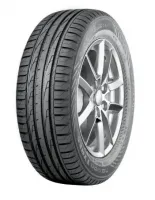
Nokian Hakka Blue 2
25.62 M
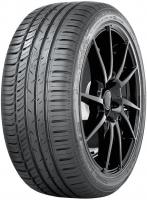
Nokian zLine AS
29.19 M
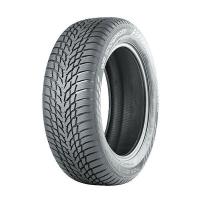
Nokian WR Snowproof
29.74 M
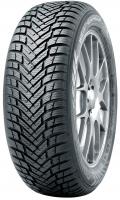
Nokian WeatherProof
30.22 M
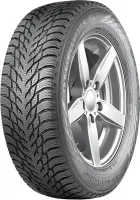
Nokian Hakkapeliitta R3
31.58 M
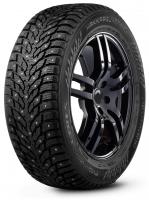
Nokian Hakkapeliitta 9
33.21 M
Dry Handling
Spread: 2.97 s (5.8%)|Avg: 52.66 s
Dry handling time in seconds (Lower is better)
Nokian Hakka Blue 2
51.40 s
Nokian zLine AS
51.57 s
Nokian WR Snowproof
51.83 s
Nokian WeatherProof
52.80 s
Nokian Hakkapeliitta R3
53.97 s
Nokian Hakkapeliitta 9
54.37 s
Wet
Wet Braking
Spread: 11.88 M (43.9%)|Avg: 33.51 M
Wet braking in meters (Lower is better)
Nokian Hakka Blue 2
27.07 M
Nokian WR Snowproof
30.96 M
Nokian WeatherProof
31.92 M
Nokian zLine AS
33.97 M
Nokian Hakkapeliitta 9
38.18 M
Nokian Hakkapeliitta R3
38.95 M
Wet Handling
Spread: 4.20 s (11.1%)|Avg: 39.75 s
Wet handling time in seconds (Lower is better)
Nokian Hakka Blue 2
37.80 s
Nokian WeatherProof
38.60 s
Nokian WR Snowproof
38.90 s
Nokian zLine AS
39.30 s
Nokian Hakkapeliitta R3
41.90 s
Nokian Hakkapeliitta 9
42.00 s
Snow
Snow Braking
Spread: 65.79 M (200.4%)|Avg: 49.33 M
Snow braking in meters (Lower is better)
Nokian Hakkapeliitta 9
32.83 M
Nokian Hakkapeliitta R3
33.87 M
Nokian WeatherProof
35.19 M
Nokian WR Snowproof
35.23 M
Nokian zLine AS
60.24 M
Nokian Hakka Blue 2
98.62 M
Snow Handling
Spread: 110.40 s (119.7%)|Avg: 117.83 s
Snow handling time in seconds (Lower is better)
Nokian Hakkapeliitta R3
92.20 s
Nokian Hakkapeliitta 9
92.90 s
Nokian WR Snowproof
94.40 s
Nokian WeatherProof
96.80 s
Nokian zLine AS
128.10 s
Nokian Hakka Blue 2
202.60 s
Ice
Ice Braking
Spread: 33.67 M (139%)|Avg: 40.12 M
Ice braking in meters (Lower is better)
Nokian Hakkapeliitta 9
24.23 M
Nokian Hakkapeliitta R3
26.78 M
Nokian WR Snowproof
43.25 M
Nokian WeatherProof
48.45 M
Nokian zLine AS
57.90 M
Results
Note: There's no "winner" in this test, the final order below is simply to keep them in the summer tire to studded tire order as presented in the video. You need to decide which type of tire is best for you, based on your own driving patterns.
I have RWD old corolla i was thinking about purchasing nokian weatherproof or new nokian wr snowproof (shame that there are not more tests to decide clearly on them) what do you think will be more suitable for this car in winter with snow and ice on the road? My other option for tires was Continental WinterContact TS 860 but they are out of my budget range. Shame we can't get nokian WR D3 anymore as it is discontinued here in Slovakia. I found nokian weatherproof interesting but there is not clear how RWD car will handle turning on icy road so i don't slide to much in traffic. That why i would like your opinion in this matter.
My point is i am worried about nokian weatherproof handling icy roads. There is not clear how will the tire grip when driving in corners on such road or driving up the hill with ice and snow on the road or in deep snow. I find other properties of weatherproof great but this part with ice and snow was never clearly explained. With new wr snowproof is not clear if it will have the same quality properties of weatherproof but i bet will be better in snow and ice beacause of compound. Yes with weather changing so quickly in winter time there is no winner i think.
In addition: My tire shop contacted me that they can provide as well Continental WinterContact TS 860 for some more reasonable price so now I am considering wich of the two tires the nokian wr snowproof and Continental WinterContact TS 860 can handle driving up some icy road better with rwd car. I read some confusing ratings regarding ice for continental.
Nice test. To bad though that speed and temperature are not mentioned.
Moreover, there is a difference in wet ice (around freezing) and dry ice (far below freezing).
The data would become of more practical use, if all tests would be done with the same speed (e.g. 50 or 80 km/hr), and at different temperatures (e.g. 10 degr.C, 5 degr.C, 0 degr. C, -5 degr. etc.).
With respect to safety, it is my view that performance on ice is the most critical one. Ice will cause crashes even when driving carefully with poor tires. Reduced wet or dry performance, only matter in case of emergencies.
Great test, indeed. I would like to point one thing. In fact, on the dry/wet those Nordic tires do not lose to their summer rivals as much as the latter lose to winter tires on ice/snow. That said, the ideal solution is the studded Hakkapeliitta. At least, you will not have to fear black ice or other nasty things. If it is not possible, like in my case (kind of sporty Astra OPC), then something Nordic should do the job. From my experience with previous cars, two or three-year-old studded tires are still better on ice than studless ones. Nokian makes good studs with a long operation life.
Great test. Ice test was done at what temperature? I wonder if 'used' studs would put the studded tire second.
The ice test also shows that all winter tires should be compared on ice, big differences there! Even studded tires are tested on the dry, why aren't AS/AW/Winters tested on ice as standard? (talking to the magazines/test institutes testing).
Now people who want don't want a nordic winter tire for various reasons are left guessing what would happen on ice, when there will be quite large differences ....
Ice was around -15c. We shot another video comparing nordic winters to studded winters just on ice, the nordics were really impressive. It'll be out before the year is out :)
Maybe I am in a minority, but I would love a sporty nordic winter tire, with much improved dry behaviour like a 'european' winter, yet without best in class wet performance but instead decent ice performance (somewhere midst of the huge gap between the nordic and the other studless siped tires)....
And if it exists already, I wouldn't know because ice is barely tested... Now I 'prefer' european winters that do worse in the wet, in the faint hope they just aren't worse overall, but perhaps a bit better on ice....
Conti TS860 S is probably the best you'll do in sporty european winter, but I need to test this for myself next year!
From my understanding as the compound gets more nordic to work on ice without studs, you lessen the dry performance so finding a tire that does both is going to be really tricky.
860S very sceptical on ice and doesn't come in 235/40R18. That's another issue, the nordic Goodyear Ultragrip Ice 2 is among the best in the dry among the Nordics, but not available in the above sporty size (no 225/40 either) ..
Thanks, but the point with tire test is that I don't want to try all tires first ;) 850P is like the 850P a performance european winter tire, quite far removed from the Nordic ones and with afaik zero published numbers on ice performance...
Maybe different in the actual publications, but in the replications of the tests here on tirereviews, there is no ice performance even mentioned in the SportAuto tests...
Looking for a winter set and I’ve narrowed things down to the Conti 850p and Michelin Pilot alpin PA4. Live in the city and don’t use the car for commuting. But mainly long distance drives to southwest UK and a bit of skiing in Switzerland/Austria. Car is an Audi A4 Quattro (252hp).
Thanks for the quick reply! I've just realised there is a "Pilot Alpin 5" (without the additional 'PA' in the name). Is this a direct replacement for the Pilot Alpin PA4? Doesn't seem like there is a lot of data on the new model. I've always been a fan of Michelin
I have read about Michelin and a technologi that they are calling "Evergrip". Michelin are claming that a worn premium tire is as good or better than a new budget tire. I think i would be interesting to see how a worn Michelin at 1,6 - 2 mm tread debth would compare to a Continental with 3 mm tread depth or 4 mm if the test is about wintertires.
Fantastic - as you may have noticed, Michelin are refering to budget tires in their marketing material, but as I wrote I think it could be interesting to see how they measure up til a Continental which is another premium brand. And Continental are one of the brands who still recommends 3 / 4 mm. on summer / wintertires.
Sorry, I'll make a note. There's no "winner" in this test, the final order was simply to keep them in the summer->studs order. Each person needs to decide for themselves what works for their own driving patterns.

I have RWD old corolla i was thinking about purchasing nokian weatherproof or new nokian wr snowproof (shame that there are not more tests to decide clearly on them) what do you think will be more suitable for this car in winter with snow and ice on the road? My other option for tires was Continental WinterContact TS 860 but they are out of my budget range. Shame we can't get nokian WR D3 anymore as it is discontinued here in Slovakia. I found nokian weatherproof interesting but there is not clear how RWD car will handle turning on icy road so i don't slide to much in traffic. That why i would like your opinion in this matter.
As you can see the weatherproof and snowproof were very close in this test. If you see a lot of ice you should go for a more nordic optimised pattern.
My point is i am worried about nokian weatherproof handling icy roads. There is not clear how will the tire grip when driving in corners on such road or driving up the hill with ice and snow on the road or in deep snow. I find other properties of weatherproof great but this part with ice and snow was never clearly explained. With new wr snowproof is not clear if it will have the same quality properties of weatherproof but i bet will be better in snow and ice beacause of compound. Yes with weather changing so quickly in winter time there is no winner i think.
In addition:
My tire shop contacted me that they can provide as well Continental WinterContact TS 860 for some more reasonable price so now I am considering wich of the two tires the nokian wr snowproof and Continental WinterContact TS 860 can handle driving up some icy road better with rwd car. I read some confusing ratings regarding ice for continental.
Why is the ice braking for the Hakka Blue not on the graph?
We couldn't get it to the ice braking lake due to lack of grip!
Nice test. To bad though that speed and temperature are not mentioned.
Moreover, there is a difference in wet ice (around freezing) and dry ice (far below freezing).
The data would become of more practical use, if all tests would be done with the same speed (e.g. 50 or 80 km/hr), and at different temperatures (e.g. 10 degr.C, 5 degr.C, 0 degr. C, -5 degr. etc.).
With respect to safety, it is my view that performance on ice is the most critical one. Ice will cause crashes even when driving carefully with poor tires. Reduced wet or dry performance, only matter in case of emergencies.
Around -15c for snow and ice, and +15 for dry and wet. We were aiming for much lower, but it was a warm spring in Finland sadly.
Great test, indeed.
I would like to point one thing. In fact, on the dry/wet those Nordic tires do not lose to their summer rivals as much as the latter lose to winter tires on ice/snow. That said, the ideal solution is the studded Hakkapeliitta. At least, you will not have to fear black ice or other nasty things. If it is not possible, like in my case (kind of sporty Astra OPC), then something Nordic should do the job. From my experience with previous cars, two or three-year-old studded tires are still better on ice than studless ones. Nokian makes good studs with a long operation life.
Cheers,
Great test.
Ice test was done at what temperature?
I wonder if 'used' studs would put the studded tire second.
The ice test also shows that all winter tires should be compared on ice, big differences there!
Even studded tires are tested on the dry, why aren't AS/AW/Winters tested on ice as standard? (talking to the magazines/test institutes testing).
Now people who want don't want a nordic winter tire for various reasons are left guessing what would happen on ice, when there will be quite large differences ....
Ice was around -15c. We shot another video comparing nordic winters to studded winters just on ice, the nordics were really impressive. It'll be out before the year is out :)
Great.
Maybe I am in a minority, but I would love a sporty nordic winter tire, with much improved dry behaviour like a 'european' winter, yet without best in class wet performance but instead decent ice performance (somewhere midst of the huge gap between the nordic and the other studless siped tires)....
And if it exists already, I wouldn't know because ice is barely tested... Now I 'prefer' european winters that do worse in the wet, in the faint hope they just aren't worse overall, but perhaps a bit better on ice....
Conti TS860 S is probably the best you'll do in sporty european winter, but I need to test this for myself next year!
From my understanding as the compound gets more nordic to work on ice without studs, you lessen the dry performance so finding a tire that does both is going to be really tricky.
860S very sceptical on ice and doesn't come in 235/40R18. That's another issue, the nordic Goodyear Ultragrip Ice 2 is among the best in the dry among the Nordics, but not available in the above sporty size (no 225/40 either) ..
Try 850P.
Thanks, but the point with tire test is that I don't want to try all tires first ;)
850P is like the 850P a performance european winter tire, quite far removed from the Nordic ones and with afaik zero published numbers on ice performance...
There are plenty of winter tests (inclusive ice perf.) of TS 850P for both sizes you have mentioned.
1) For 235/40 R18 see https://reifenpresse.de/rei...
2) 225/40 R18 see https://reifenpresse.de/rei...
Maybe different in the actual publications, but in the replications of the tests here on tirereviews, there is no ice performance even mentioned in the SportAuto tests...
Looking for a winter set and I’ve narrowed things down to the Conti 850p and Michelin Pilot alpin PA4. Live in the city and don’t use the car for commuting. But mainly long distance drives to southwest UK and a bit of skiing in Switzerland/Austria. Car is an Audi A4 Quattro (252hp).
Both excellent tires, the Conti generally has the edge in testing
Thanks for the quick reply! I've just realised there is a "Pilot Alpin 5" (without the additional 'PA' in the name). Is this a direct replacement for the Pilot Alpin PA4? Doesn't seem like there is a lot of data on the new model. I've always been a fan of Michelin
It is a direct replacement, not much test data, but as you say, it's a Michelin so will be up there with the best. I should be trying them next month.
It exists already Michelin Pilot Alpin 5 (even in SUV version).
I have read about Michelin and a technologi that they are calling "Evergrip".
Michelin are claming that a worn premium tire is as good or better than a new budget tire.
I think i would be interesting to see how a worn Michelin at 1,6 - 2 mm tread debth would compare to a Continental with 3 mm tread depth or 4 mm if the test is about wintertires.
I agree, something I'd love to do! It's very difficult and expensive to do, but I am working on it!
Fantastic - as you may have noticed, Michelin are refering to budget tires in their marketing material, but as I wrote I think it could be interesting to see how they measure up til a Continental which is another premium brand. And Continental are one of the brands who still recommends 3 / 4 mm. on summer / wintertires.
Sorry, I'll make a note. There's no "winner" in this test, the final order was simply to keep them in the summer->studs order. Each person needs to decide for themselves what works for their own driving patterns.