



Auto Express ran its 2025 all-season tire test in 225/45 R17, with six tires bought on the open market. The snow tests took place at Goodyear's Arctic Center at Saariselkä in northern Finland, and the wet and dry tests at Continental's Contidrom near Hannover, using a Volkswagen Golf and a Skoda Octavia. A Continental WinterContact TS 870 winter tire and a Vredestein Ultrac+ summer tire ran alongside the field as references.
The Pirelli Cinturato All Season SF3 won again, having also won the 2024 Auto Express all-season test. It won four tests outright, including dry braking, and was never lower than joint fourth. The Continental AllSeasonContact 2 and Bridgestone Turanza All Season 6 were almost inseparable behind it, second and third by a tenth of a point, and the Vredestein Quatrac edged the Dunlop All Season 2 for fourth by the same margin. The budget Sailun Atrezzo 4 Seasons was last.
Test setup & methodology
The test setting, the conditions recorded and how the results contribute to the score.
Recorded test conditions
Recorded test conditions
- Dry Braking
- 62.1 → 0.0 mph
- Wet Braking
- 49.7 → 0.0 mph
- Snow Braking
- 29.8 → 3.1 mph
The results show how differently the leading tires are set up. The Continental won snow braking and the wet handling lap but was last in both aquaplaning tests, which matches its form elsewhere: in our own 2026/27 all-season test it was ninth of ten in both aquaplaning tests. The Bridgestone led wet braking, the wet circle and straight-line aquaplaning but was only fifth in snow traction and on both handling laps in the snow and wet. The Vredestein still leans towards snow, third in all three snow tests, and the Dunlop was the most economical tire here. The surprise is the Sailun, the cheapest tire in the test, which set the fastest dry handling lap of the all-season tires and was also the quietest of them, although Auto Express point out that less than a second covered all six tires in dry handling.
The references make the case for all-season tires. The WinterContact TS 870, winner of the 2025 Auto Express winter test, was the best tire in all three snow tests, but the best all-season tires were close behind. In the wet it led straight-line aquaplaning and lapped the handling circuit faster than any all-season tire, yet the three best all-season tires out-braked it, and in dry braking only the Dunlop and Sailun stopped longer. The Ultrac+ summer tire was the best in the test in wet and dry braking and on both handling circuits, even in these cold conditions, and by far the quietest, but on snow it needed nearly twice the best all-season tire's braking distance. Neither reference is included in the ranking.
A note on the numbers below. Auto Express publish only each tire's result as a percentage of the best in that test, so the figures in these charts are built from estimated bests. The percentage gaps between the tires are exact; what is estimated is the absolute value the scale starts from. This test is well anchored in places: Auto Express quote the Pirelli's dry braking distance outright, their quoted gaps pin wet braking to within half a meter, and further gaps set snow braking and the snow and wet handling laps. Wet cornering, both aquaplaning tests, cabin noise and rolling resistance have no anchor at all, so their scale is an average of what the four tires that also ran in Auto Express's 2026 all-season test imply; treat those absolute figures as indicative. Because our scoring works on percentages, none of this affects the score weighting calculator on the results tab.
Auto Express have since replaced this test on their website with their 2026 edition, so the original article, including their driving impressions of every tire, is now available through the Internet Archive.
Snow
Snow braking was measured from 30 mph to 3 mph, with track temperatures between 19°F and 25°F. The Continental stopped shortest of the all-season tires, with the Bridgestone, Pirelli, Vredestein and Dunlop all within half a meter of it. The Sailun was a long way behind, more than 15 feet further than the best. The winter reference stopped about a meter shorter than the best all-season tire, and the summer tire needed nearly twice the distance.
Snow Braking
Snow braking in feet (30 - 3 mph)
Lower is better ↓| Position / Tire | Result | Gap to best | Residual speed |
|---|---|---|---|
RefContinental WinterContact TS 870 |
94 ft | -3 ft | 0 mph |
| 97 ft | Best | 0 mph | |
| 98 ft | +1 ft | 8 mph | |
| 99 ft | +2 ft | 8 mph | |
| 99 ft | +2 ft | 8 mph | |
| 99 ft | +2 ft | 9 mph | |
| 113 ft | +16 ft | 30 mph | |
RefVredestein Ultrac+ |
178 ft | +81 ft | 54 mph |
The difference between best and worst was 88.9% (84 ft ≈ 5.7 Car Lengths). From 80 mph, the Sailun Atrezzo 4 Seasons would still be travelling at 30 mph when the Continental AllSeasonContact 2 had stopped.
Residual speed is calculated from the measured braking distances, assuming constant deceleration; it is not a separate measurement.
Derived data. Auto Express publish percentages, not measurements. The gaps between these tires are exact. Four statements in the Auto Express text, that the Pirelli, Bridgestone and Dunlop each stopped within half a meter of the best and that the Sailun was more than 15 feet behind it, limit the scale to a window of about three meters, and we have used the middle of it.
Snow traction measured how quickly each tire could accelerate from 5 mph to 20 mph. The Pirelli was quickest of the all-season tires, with the Dunlop and Vredestein next, and the Sailun was a long way behind. Only the winter reference beat the Pirelli, and the summer tire took more than twice as long.
Snow Traction
Snow acceleration time
Lower is better ↓| Position / Tire | Result | Gap to best |
|---|---|---|
RefContinental WinterContact TS 870 |
4.06 s | -0.05 s |
| 4.11 s | Best | |
| 4.24 s | +0.13 s | |
| 4.25 s | +0.14 s | |
| 4.33 s | +0.22 s | |
| 4.34 s | +0.23 s | |
| 5.01 s | +0.90 s | |
RefVredestein Ultrac+ |
8.97 s | +4.86 s |
The difference between best and worst was 120.9% (4.91 s).
Derived data. Auto Express measured the distance each tire needed to accelerate from 5 to 20 mph, not the time. Over a fixed speed range at constant acceleration the time is directly proportional to the distance, so we show the equivalent time, which keeps their percentages exactly. The scale comes from the Sailun needing about five meters more than the best, so treat the absolute times as indicative.
The snow handling track is a short but demanding lap of 0 miles, with a significant drop and rise, quick transitions and tight corners. The Pirelli was fastest of the all-season tires, with the Continental, Vredestein and Dunlop close behind, while the Bridgestone and Sailun were two seconds or more off the pace. The winter reference was quicker still, and the summer tire was around half a minute a lap slower.
Snow Handling
Snow handling time in seconds
Lower is better ↓| Position / Tire | Result | Gap to best |
|---|---|---|
RefContinental WinterContact TS 870 |
52.77 s | -0.53 s |
| 53.3 s | Best | |
| 53.41 s | +0.11 s | |
| 53.62 s | +0.32 s | |
| 53.68 s | +0.38 s | |
| 55.18 s | +1.88 s | |
| 55.75 s | +2.45 s | |
RefVredestein Ultrac+ |
83.41 s | +30.11 s |
The difference between best and worst was 58.1% (30.64 s).
Derived data. Auto Express publish percentages, not measurements. The gaps between these tires are exact; the scale is set by two gaps Auto Express quote, the Vredestein 0.3 seconds and the Bridgestone a couple of seconds behind the Pirelli, so treat the absolute times as indicative.
Wet
The wet and dry tests ran in cold conditions, with early-morning temperatures of 39°F. Wet braking from 50 mph, which Auto Express treat as the crucial test, went to the Bridgestone, with the Pirelli and Continental less than half a meter behind. The Vredestein and Dunlop were two meters further back than the Bridgestone, and the Sailun needed almost 16 feet more than the Bridgestone and three meters more than the next tire. The summer reference stopped shortest of all, and the winter tire stopped behind the three best all-season tires.
Wet Braking
Wet braking in feet (50 - 0 mph)
Lower is better ↓| Position / Tire | Result | Gap to best | Residual speed |
|---|---|---|---|
RefVredestein Ultrac+ |
96 ft | 0 ft | 0 mph |
| 96 ft | Best | 0 mph | |
| 97 ft | +1 ft | 7 mph | |
| 98 ft | +2 ft | 9 mph | |
RefContinental WinterContact TS 870 |
101 ft | +5 ft | 17 mph |
| 103 ft | +7 ft | 20 mph | |
| 103 ft | +7 ft | 20 mph | |
| 113 ft | +17 ft | 30 mph |
The difference between best and worst was 17.8% (17 ft ≈ 1.2 Car Lengths). From 80 mph, the Sailun Atrezzo 4 Seasons would still be travelling at 30 mph when the Bridgestone Turanza All Season 6 had stopped.
Residual speed is calculated from the measured braking distances, assuming constant deceleration; it is not a separate measurement.
Derived data. Auto Express publish percentages, not measurements. The gaps between these tires are exact, and the scale is pinned by the gaps Auto Express quote: the Vredestein and Dunlop two meters behind the best, and the Sailun almost five meters behind it and three meters behind them. Together these fix the best stop to within half a meter.
The 1 mile wet handling circuit shows up grip, traction, balance and breakaway. The Continental was fastest of the all-season tires, blending low-speed agility with composure, with the Vredestein second and the Pirelli third, just over half a second behind. The Bridgestone was fifth and the Sailun last, feeling skittish at higher speeds. Both references lapped faster than every all-season tire.
Wet Handling
Wet handling time in seconds
Lower is better ↓| Position / Tire | Result | Gap to best |
|---|---|---|
RefVredestein Ultrac+ |
83.64 s | -2.76 s |
RefContinental WinterContact TS 870 |
85.38 s | -1.02 s |
| 86.4 s | Best | |
| 86.92 s | +0.52 s | |
| 87.01 s | +0.61 s | |
| 87.89 s | +1.49 s | |
| 87.98 s | +1.58 s | |
| 88.8 s | +2.40 s |
The difference between best and worst was 6.2% (5.16 s).
Derived data. Auto Express publish percentages, not measurements. The gaps between these tires are exact; the scale comes from three lap-time gaps Auto Express quote for the Pirelli, the Dunlop and the Bridgestone, so treat the absolute times as indicative.
Wet cornering was timed on a 189 feet diameter circle. The Bridgestone was quickest of the all-season tires, with the Dunlop and Continental next, and the Vredestein was last. The summer reference was quicker than all of them, while the winter tire was slower than all but the Vredestein.
Wet Circle
Wet Circle Lap Time in seconds
Lower is better ↓| Position / Tire | Result | Gap to best |
|---|---|---|
RefVredestein Ultrac+ |
11.89 s | -0.13 s |
| 12.02 s | Best | |
| 12.19 s | +0.17 s | |
| 12.31 s | +0.29 s | |
| 12.32 s | +0.30 s | |
| 12.32 s | +0.30 s | |
RefContinental WinterContact TS 870 |
12.5 s | +0.48 s |
| 12.75 s | +0.73 s |
The difference between best and worst was 7.2% (0.86 s).
Derived data. Auto Express publish percentages, not measurements. The gaps between these tires are exact, but no figure in the Auto Express text fixes the scale, so it is an average of what the Pirelli, Continental, Bridgestone and WinterContact TS 870 imply from their results in Auto Express's 2026 all-season test. Treat the absolute times as indicative.
Straight-line aquaplaning measures how well each tire resists aquaplaning in deep standing water. The Bridgestone was best of the all-season tires and the Pirelli second, while the Continental was last. Only the winter reference did better than the Bridgestone.
Straight Aqua
Float Speed in mph
Higher is better ↑| Position / Tire | Result | Gap to best |
|---|---|---|
RefContinental WinterContact TS 870 |
50.8 mph | +0.2 mph |
| 50.6 mph | Best | |
| 49.8 mph | -0.8 mph | |
RefVredestein Ultrac+ |
48.8 mph | -1.8 mph |
| 48.3 mph | -2.3 mph | |
| 47.8 mph | -2.8 mph | |
| 47.7 mph | -2.9 mph | |
| 47.4 mph | -3.2 mph |
The difference between best and worst was 6.7% (3.4 mph).
Derived data. Auto Express publish percentages, not measurements. The gaps between these tires are exact, but no figure in the Auto Express text fixes the scale, so it is an average of what the four tires that also ran in Auto Express's 2026 all-season test imply. Treat the absolute figures as indicative.
Curved aquaplaning measures how much sideways grip each tire keeps through a flooded bend. The Pirelli was best of the all-season tires, with the Bridgestone and Sailun joint second, and the Continental was last again. Both references did better than every all-season tire here.
Curved Aquaplaning
Remaining lateral acceleration
Higher is better ↑| Position / Tire | Result | Gap to best |
|---|---|---|
RefVredestein Ultrac+ |
11.9 ft/s² | +1.0 ft/s² |
RefContinental WinterContact TS 870 |
11.4 ft/s² | +0.5 ft/s² |
| 10.9 ft/s² | Best | |
| 10.4 ft/s² | -0.5 ft/s² | |
| 10.4 ft/s² | -0.5 ft/s² | |
| 10.1 ft/s² | -0.8 ft/s² | |
| 9.7 ft/s² | -1.2 ft/s² | |
| 9.1 ft/s² | -1.8 ft/s² |
The difference between best and worst was 23.2% (2.8 ft/s²).
Derived data. Auto Express publish percentages, not measurements. The gaps between these tires are exact, but no figure in the Auto Express text fixes the scale, so it is an average of what the four tires that also ran in Auto Express's 2026 all-season test imply. Treat the absolute figures as indicative.

Dry
Dry braking was measured from 62 mph to a standstill. The Pirelli stopped in 121 feet, 4 feet shorter than the Bridgestone and almost 10 feet shorter than the Continental, while the Dunlop and Sailun needed more than 16 feet further than the Pirelli. The Pirelli's win is typical of it, as it has stopped shortest in the dry in most of the tests it has appeared in on our site. The summer tire stopped shortest of all, and the winter tire was beaten by four of the six all-season tires.
Dry Braking
Dry braking in feet (62 - 0 mph)
Lower is better ↓| Position / Tire | Result | Gap to best | Residual speed |
|---|---|---|---|
RefVredestein Ultrac+ |
118 ft | -3 ft | 0 mph |
| 121 ft | Best | 0 mph | |
| 125 ft | +4 ft | 15 mph | |
| 131 ft | +10 ft | 22 mph | |
| 133 ft | +12 ft | 24 mph | |
RefContinental WinterContact TS 870 |
138 ft | +17 ft | 28 mph |
| 139 ft | +18 ft | 29 mph | |
| 139 ft | +18 ft | 29 mph |
The difference between best and worst was 18.1% (21 ft ≈ 1.4 Car Lengths). From 80 mph, the Sailun Atrezzo 4 Seasons would still be travelling at 29 mph when the Pirelli Cinturato All Season SF3 had stopped.
Residual speed is calculated from the measured braking distances, assuming constant deceleration; it is not a separate measurement.
Derived data. Auto Express publish percentages, not measurements. The gaps between these tires are exact, and the scale is anchored on the 121 feet Auto Express quote for the Pirelli. The other gaps they quote agree with it.
Lap times were taken on a 1 mile section of the dry handling circuit. The budget Sailun was fastest of the all-season tires, with the Pirelli second and the Continental and Dunlop joint third, but Auto Express point out that less than a second covered all six tires, so this test separates them very little. The Vredestein was the slowest all-season tire and felt scrubby. The summer tire was fastest overall and the winter tire slowest.
Dry Handling
Dry handling time in seconds
Lower is better ↓| Position / Tire | Result | Gap to best |
|---|---|---|
RefVredestein Ultrac+ |
49.5 s | -0.50 s |
| 50 s | Best | |
| 50.1 s | +0.10 s | |
| 50.15 s | +0.15 s | |
| 50.15 s | +0.15 s | |
| 50.3 s | +0.30 s | |
| 50.97 s | +0.97 s | |
RefContinental WinterContact TS 870 |
51.12 s | +1.12 s |
The difference between best and worst was 3.3% (1.62 s).
Derived data. Auto Express publish percentages, not measurements. The gaps between these tires are exact. The only figure in the Auto Express text is that less than a second covered the six tires, which caps the scale, so treat the absolute times as indicative.
Comfort
Auto Express measured the noise inside the car on three different surfaces and took the average. The Sailun was the quietest all-season tire and the Bridgestone the noisiest, and the summer reference was much quieter than all of them.
Noise
Internal noise in dB
Lower is better ↓| Position / Tire | Result | Gap to best |
|---|---|---|
RefVredestein Ultrac+ |
63.1 dB | -4.10 dB |
| 67.2 dB | Best | |
| 67.8 dB | +0.60 dB | |
RefContinental WinterContact TS 870 |
67.9 dB | +0.70 dB |
| 67.9 dB | +0.70 dB | |
| 68.2 dB | +1.00 dB | |
| 68.2 dB | +1.00 dB | |
| 68.5 dB | +1.30 dB |
The difference between best and worst was 8.6% (5.4 dB).
Derived data. Auto Express publish percentages, not measurements. The gaps between these tires are exact, but no figure in the Auto Express text fixes the scale, so it is an average of what the four tires that also ran in Auto Express's 2026 all-season test imply. Treat the absolute figures as indicative.
Value
Rolling resistance was measured to industry standards. The Dunlop had the lowest, with the Continental second, while the Sailun had the highest by a clear margin. Auto Express note that a four to five per cent change in rolling resistance is worth about one per cent in fuel consumption.
Rolling Resistance
Rolling resistance in kg t
Lower is better ↓| Position / Tire | Result | Gap to best | Extra fuel / year |
|---|---|---|---|
| 7.56 kg/t | Best | $0 | |
RefVredestein Ultrac+ |
7.93 kg/t | +0.37 kg/t | $14 |
| 8.14 kg/t | +0.58 kg/t | $23 | |
RefContinental WinterContact TS 870 |
8.23 kg/t | +0.67 kg/t | $26 |
| 8.38 kg/t | +0.82 kg/t | $32 | |
| 8.43 kg/t | +0.87 kg/t | $34 | |
| 9.04 kg/t | +1.48 kg/t | $58 | |
| 10 kg/t | +2.44 kg/t | $95 |
The difference between best and worst was 32.3% (2.44 kg / t). Over 12,000 miles a year at $3.60/gal, the Sailun Atrezzo 4 Seasons uses about 26 gal ($95) more fuel than the Dunlop All Season 2.
Adjust the assumptions
Calculated estimates, not additional measurements. Use the controls to explore the assumptions.
Derived data. Auto Express publish percentages, not measurements. The gaps between these tires are exact, but no figure in the Auto Express text fixes the scale, so it is an average of what the four tires that also ran in Auto Express's 2026 all-season test imply. Treat the absolute figures as indicative.
Results
Auto Express weight half of the overall score on wet performance, 35 per cent on dry and 10 per cent on snow, with the emphasis on handling and braking in the wet and snow tests, and share the final five per cent between the other tests. The Pirelli was never far from the front in any test and won dry braking, snow traction, the snow lap and curved aquaplaning. The Continental and Bridgestone finished almost level behind it, the Continental winning the wet handling lap and the Bridgestone wet braking, and the Vredestein and Dunlop were just as close for fourth. The Sailun shows once again that a low price does not buy good braking, on any surface.
Pirelli Cinturato All Season SF3
225/45 R17 94W XL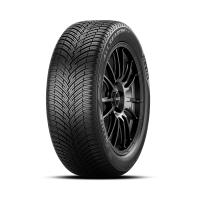
Category scores (% of best)
All discipline results (12)
Discipline positions compare the ranked tires in this test, not the whole market. These are individual measurements, not weighted overall scores.
| Test | Position in discipline | Result | Gap to best |
|---|---|---|---|
| Dry BrakingLower is better | 1st / 6 | 121 ft | Best in this discipline |
| Dry HandlingLower is better | 2nd / 6 | 50.1 s | +0.10 s |
| Wet BrakingLower is better | 2nd / 6 | 97 ft | +1 ft |
| Wet HandlingLower is better | 3rd / 6 | 87.01 s | +0.61 s |
| Wet CircleLower is better | 4th / 6 | 12.32 s | +0.30 s |
| Straight AquaHigher is better | 2nd / 6 | 49.8 mph | -0.8 mph |
| Curved AquaplaningHigher is better | 1st / 6 | 10.9 ft/s² | Best in this discipline |
| Snow BrakingLower is better | 3rd / 6 | 99 ft | +2 ft |
| Snow TractionLower is better | 1st / 6 | 4.11 s | Best in this discipline |
| Snow HandlingLower is better | 1st / 6 | 53.3 s | Best in this discipline |
| NoiseLower is better | 2nd / 6 | 67.8 dB | +0.60 dB |
| Rolling ResistanceLower is better | 3rd / 6 | 8.38 kg/t | +0.82 kg/t |
- EU Label
- C/A/71
- Price
- 127.00
Continental AllSeasonContact 2
225/45 R17 94V XL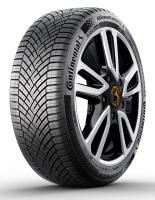
Category scores (% of best)
All discipline results (12)
Discipline positions compare the ranked tires in this test, not the whole market. These are individual measurements, not weighted overall scores.
| Test | Position in discipline | Result | Gap to best |
|---|---|---|---|
| Dry BrakingLower is better | 3rd / 6 | 131 ft | +10 ft |
| Dry HandlingLower is better | 3rd / 6 | 50.15 s | +0.15 s |
| Wet BrakingLower is better | 3rd / 6 | 98 ft | +2 ft |
| Wet HandlingLower is better | 1st / 6 | 86.4 s | Best in this discipline |
| Wet CircleLower is better | 3rd / 6 | 12.31 s | +0.29 s |
| Straight AquaHigher is better | 6th / 6 | 47.4 mph | -3.2 mph |
| Curved AquaplaningHigher is better | 6th / 6 | 9.1 ft/s² | -1.8 ft/s² |
| Snow BrakingLower is better | 1st / 6 | 97 ft | Best in this discipline |
| Snow TractionLower is better | 4th / 6 | 4.33 s | +0.22 s |
| Snow HandlingLower is better | 2nd / 6 | 53.41 s | +0.11 s |
| NoiseLower is better | 4th / 6 | 68.2 dB | +1.00 dB |
| Rolling ResistanceLower is better | 2nd / 6 | 8.14 kg/t | +0.58 kg/t |
- EU Label
- C/B/72
- Price
- 117.00
Bridgestone Turanza All Season 6
225/45 R17 94V XL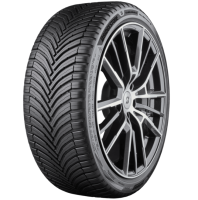
Category scores (% of best)
All discipline results (12)
Discipline positions compare the ranked tires in this test, not the whole market. These are individual measurements, not weighted overall scores.
| Test | Position in discipline | Result | Gap to best |
|---|---|---|---|
| Dry BrakingLower is better | 2nd / 6 | 125 ft | +4 ft |
| Dry HandlingLower is better | 5th / 6 | 50.3 s | +0.30 s |
| Wet BrakingLower is better | 1st / 6 | 96 ft | Best in this discipline |
| Wet HandlingLower is better | 5th / 6 | 87.98 s | +1.58 s |
| Wet CircleLower is better | 1st / 6 | 12.02 s | Best in this discipline |
| Straight AquaHigher is better | 1st / 6 | 50.6 mph | Best in this discipline |
| Curved AquaplaningHigher is better | 2nd / 6 | 10.4 ft/s² | -0.5 ft/s² |
| Snow BrakingLower is better | 2nd / 6 | 98 ft | +1 ft |
| Snow TractionLower is better | 5th / 6 | 4.34 s | +0.23 s |
| Snow HandlingLower is better | 5th / 6 | 55.18 s | +1.88 s |
| NoiseLower is better | 6th / 6 | 68.5 dB | +1.30 dB |
| Rolling ResistanceLower is better | 5th / 6 | 9.04 kg/t | +1.48 kg/t |
- EU Label
- C/B/70
- Price
- 123.00
Vredestein Quatrac
225/45 R17 94V XL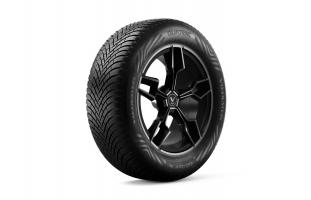
Category scores (% of best)
All discipline results (12)
Discipline positions compare the ranked tires in this test, not the whole market. These are individual measurements, not weighted overall scores.
| Test | Position in discipline | Result | Gap to best |
|---|---|---|---|
| Dry BrakingLower is better | 4th / 6 | 133 ft | +12 ft |
| Dry HandlingLower is better | 6th / 6 | 50.97 s | +0.97 s |
| Wet BrakingLower is better | 4th / 6 | 103 ft | +7 ft |
| Wet HandlingLower is better | 2nd / 6 | 86.92 s | +0.52 s |
| Wet CircleLower is better | 6th / 6 | 12.75 s | +0.73 s |
| Straight AquaHigher is better | 3rd / 6 | 48.3 mph | -2.3 mph |
| Curved AquaplaningHigher is better | 4th / 6 | 10.1 ft/s² | -0.8 ft/s² |
| Snow BrakingLower is better | 3rd / 6 | 99 ft | +2 ft |
| Snow TractionLower is better | 3rd / 6 | 4.25 s | +0.14 s |
| Snow HandlingLower is better | 3rd / 6 | 53.62 s | +0.32 s |
| NoiseLower is better | 4th / 6 | 68.2 dB | +1.00 dB |
| Rolling ResistanceLower is better | 4th / 6 | 8.43 kg/t | +0.87 kg/t |
- EU Label
- C/B/71
- Price
- 104.00
Dunlop All Season 2
225/45 R17 94W XL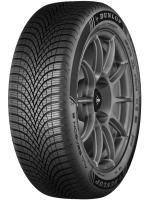
Category scores (% of best)
All discipline results (12)
Discipline positions compare the ranked tires in this test, not the whole market. These are individual measurements, not weighted overall scores.
| Test | Position in discipline | Result | Gap to best |
|---|---|---|---|
| Dry BrakingLower is better | 5th / 6 | 139 ft | +18 ft |
| Dry HandlingLower is better | 3rd / 6 | 50.15 s | +0.15 s |
| Wet BrakingLower is better | 4th / 6 | 103 ft | +7 ft |
| Wet HandlingLower is better | 4th / 6 | 87.89 s | +1.49 s |
| Wet CircleLower is better | 2nd / 6 | 12.19 s | +0.17 s |
| Straight AquaHigher is better | 4th / 6 | 47.8 mph | -2.8 mph |
| Curved AquaplaningHigher is better | 5th / 6 | 9.7 ft/s² | -1.2 ft/s² |
| Snow BrakingLower is better | 5th / 6 | 99 ft | +2 ft |
| Snow TractionLower is better | 2nd / 6 | 4.24 s | +0.13 s |
| Snow HandlingLower is better | 4th / 6 | 53.68 s | +0.38 s |
| NoiseLower is better | 3rd / 6 | 67.9 dB | +0.70 dB |
| Rolling ResistanceLower is better | 1st / 6 | 7.56 kg/t | Best in this discipline |
- EU Label
- C/B/72
- Price
- 130.00
Sailun Atrezzo 4 Seasons
225/45 R17 94Y XL
Category scores (% of best)
All discipline results (12)
Discipline positions compare the ranked tires in this test, not the whole market. These are individual measurements, not weighted overall scores.
| Test | Position in discipline | Result | Gap to best |
|---|---|---|---|
| Dry BrakingLower is better | 6th / 6 | 139 ft | +18 ft |
| Dry HandlingLower is better | 1st / 6 | 50 s | Best in this discipline |
| Wet BrakingLower is better | 6th / 6 | 113 ft | +17 ft |
| Wet HandlingLower is better | 6th / 6 | 88.8 s | +2.40 s |
| Wet CircleLower is better | 4th / 6 | 12.32 s | +0.30 s |
| Straight AquaHigher is better | 5th / 6 | 47.7 mph | -2.9 mph |
| Curved AquaplaningHigher is better | 2nd / 6 | 10.4 ft/s² | -0.5 ft/s² |
| Snow BrakingLower is better | 6th / 6 | 113 ft | +16 ft |
| Snow TractionLower is better | 6th / 6 | 5.01 s | +0.90 s |
| Snow HandlingLower is better | 6th / 6 | 55.75 s | +2.45 s |
| NoiseLower is better | 1st / 6 | 67.2 dB | Best in this discipline |
| Rolling ResistanceLower is better | 6th / 6 | 10 kg/t | +2.44 kg/t |
- EU Label
- D/C/72
- Price
- 98.00
Continental WinterContact TS 870
225/45 R17 91H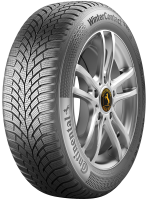
All discipline results (12)
Discipline positions compare the ranked tires in this test, not the whole market. These are individual measurements, not weighted overall scores.
| Test | Result |
|---|---|
| Dry BrakingLower is better | 138 ft |
| Dry HandlingLower is better | 51.12 s |
| Wet BrakingLower is better | 101 ft |
| Wet HandlingLower is better | 85.38 s |
| Wet CircleLower is better | 12.5 s |
| Straight AquaHigher is better | 50.8 mph |
| Curved AquaplaningHigher is better | 11.4 ft/s² |
| Snow BrakingLower is better | 94 ft |
| Snow TractionLower is better | 4.06 s |
| Snow HandlingLower is better | 52.77 s |
| NoiseLower is better | 67.9 dB |
| Rolling ResistanceLower is better | 8.23 kg/t |
- EU Label
- C/B/70
- Price
- 154.00
Vredestein Ultrac+
225/45 R17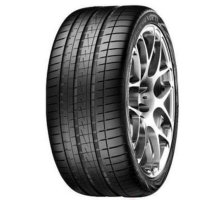
All discipline results (12)
Discipline positions compare the ranked tires in this test, not the whole market. These are individual measurements, not weighted overall scores.
| Test | Result |
|---|---|
| Dry BrakingLower is better | 118 ft |
| Dry HandlingLower is better | 49.5 s |
| Wet BrakingLower is better | 96 ft |
| Wet HandlingLower is better | 83.64 s |
| Wet CircleLower is better | 11.89 s |
| Straight AquaHigher is better | 48.8 mph |
| Curved AquaplaningHigher is better | 11.9 ft/s² |
| Snow BrakingLower is better | 178 ft |
| Snow TractionLower is better | 8.97 s |
| Snow HandlingLower is better | 83.41 s |
| NoiseLower is better | 63.1 dB |
| Rolling ResistanceLower is better | 7.93 kg/t |
- EU Label
- C/A/69
- Price
- 100.00
Discussion