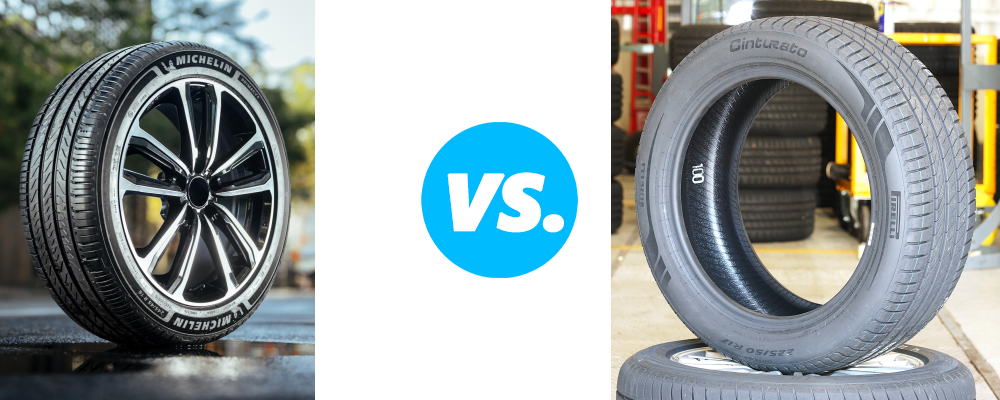
Goodyear Eagle F1 Asymmetric 6 vs Michelin Primacy 5
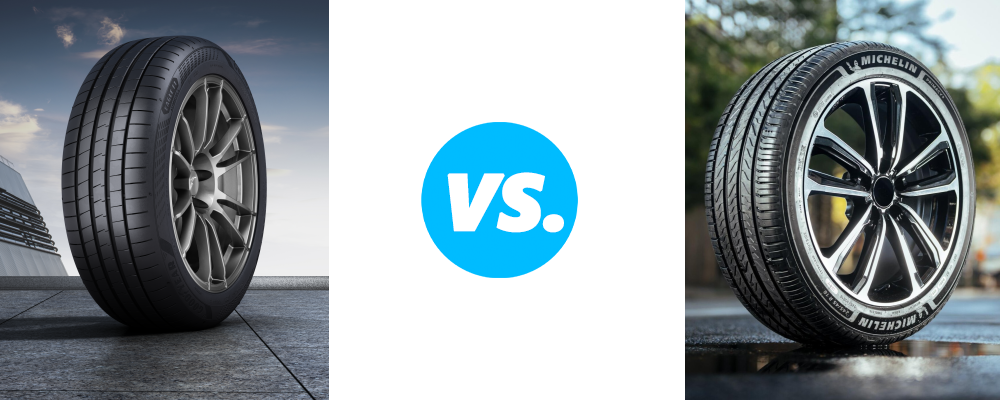
Across three shared professional tests (235/45 R18, 225/55 R18 and 225/45 R17), the Goodyear most consistently leads on dry braking and driver-facing dynamics, often placing higher overall (2nd vs 6th in Auto Zeitung 2026; 2nd vs 4th in Al Volante 2025). However, the Michelin shows a stronger “daily driver” case with class-leading rolling resistance in every shared test, plus comfort/noise strengths-and it also demonstrates that, in the right conditions and scoring systems, it can be the outright winner (1st overall in the combined summer/all-season test).
Test Results
Independent comparison tire tests are the best source of data to get tire information from, and the good news is there have been three tests which compare both tires directly!
| Tire | Test Wins | Performance |
|---|---|---|
| Goodyear Eagle F1 Asymmetric 6 | two | |
| Michelin Primacy 5 | one |
While it might look like the Goodyear Eagle F1 Asymmetric 6 is better than the Michelin Primacy 5 purely based on the higher number of test wins, tires are very complicated objects which means where one tire is better than the other can be more important in real world use.
Let's look at how the two tires compare across multiple tire test categories.
Key Strengths
- Stronger dry braking across all shared tests (wins 3/3; e.g., 33.2 m vs 34.8 m in Auto Zeitung 2026)
- More precise, sporty handling with higher subjective dry/wet handling scores (e.g., 30 vs 22 dry; 35 vs 27 wet in Auto Zeitung)
- Very strong wet performance in two tests, including aquaplaning and wet lap times (wins curved aquaplaning and straight aquaplaning in Al Volante; wet braking win in Auto Zeitung and Al Volante)
- Better value metric in Auto Zeitung (14.14 vs 15.3 price/1000) while still delivering near-top overall results
- Consistently lower rolling resistance in all shared tests (wins 3/3; up to ~19.5% better in Al Volante: 7.0 vs 8.7 kg/t)
- Comfort and refinement edge (best comfort score in Auto Zeitung: 10 vs 6; strong subjective noise result in the combined test)
- Very strong longevity signals (best predicted wear and lowest abrasion in Auto Zeitung: 50,000 km and 0.076 mm/1000 km)
- Can be the better wet-weather choice depending on conditions/scoring (wins wet braking/handling and overall in the combined test; strong straight aquaplaning results)
Dry Braking
Looking at data from three tire tests, the Goodyear Eagle F1 Asymmetric 6 was better during three dry braking tests. On average the Goodyear Eagle F1 Asymmetric 6 stopped the vehicle in 3.47% less distance than the Michelin Primacy 5.
Best In Dry Braking: Goodyear Eagle F1 Asymmetric 6
See how the Dry Braking winner was calculated >>
Dry Handling [s]
Looking at data from one tire tests, the Goodyear Eagle F1 Asymmetric 6 was better during one dry handling [s] tests. On average the Goodyear Eagle F1 Asymmetric 6 was 1.76% faster around a lap than the Michelin Primacy 5.
Best In Dry Handling [s]: Goodyear Eagle F1 Asymmetric 6
See how the Dry Handling winner was calculated >>
Subj. Dry Handling
Looking at data from two tire tests, the Goodyear Eagle F1 Asymmetric 6 was better during one subj. dry handling tests. On average the Goodyear Eagle F1 Asymmetric 6 scored 20.51% more points than the Michelin Primacy 5.
Best In Subj. Dry Handling: Goodyear Eagle F1 Asymmetric 6
See how the Subj. Dry Handling winner was calculated >>
Wet Braking
Looking at data from three tire tests, the Goodyear Eagle F1 Asymmetric 6 was better during two wet braking tests. On average the Goodyear Eagle F1 Asymmetric 6 stopped the vehicle in 1.13% less distance than the Michelin Primacy 5.
Best In Wet Braking: Goodyear Eagle F1 Asymmetric 6
See how the Wet Braking winner was calculated >>
Wet Handling [s]
Looking at data from three tire tests, the Goodyear Eagle F1 Asymmetric 6 was better during two wet handling [s] tests. On average the Goodyear Eagle F1 Asymmetric 6 was 0.49% faster around a wet lap than the Michelin Primacy 5.
Best In Wet Handling [s]: Goodyear Eagle F1 Asymmetric 6
See how the Wet Handling winner was calculated >>
Subj. Wet Handling
Looking at data from two tire tests, the Goodyear Eagle F1 Asymmetric 6 was better during one subj. wet handling tests. On average the Goodyear Eagle F1 Asymmetric 6 scored 11.9% more points than the Michelin Primacy 5.
Best In Subj. Wet Handling: Goodyear Eagle F1 Asymmetric 6
See how the Subj. Wet Handling winner was calculated >>
Wet Circle
Looking at data from one tire tests, the Goodyear Eagle F1 Asymmetric 6 was better during one wet circle tests. On average the Goodyear Eagle F1 Asymmetric 6 was 4.73% faster around a wet circle than the Michelin Primacy 5.
Best In Wet Circle: Goodyear Eagle F1 Asymmetric 6
See how the Wet Circle winner was calculated >>
Straight Aqua
Looking at data from three tire tests, the Michelin Primacy 5 was better during two straight aqua tests. On average the Michelin Primacy 5 floated at a 0.9% higher speed than the Goodyear Eagle F1 Asymmetric 6.
Best In Straight Aqua: Michelin Primacy 5
See how the Straight Aqua winner was calculated >>
Curved Aquaplaning
Looking at data from one tire tests, the Goodyear Eagle F1 Asymmetric 6 was better during one curved aquaplaning tests. On average the Goodyear Eagle F1 Asymmetric 6 slipped out at a 3.7% higher speed than the Michelin Primacy 5.
Best In Curved Aquaplaning: Goodyear Eagle F1 Asymmetric 6
See how the Curved Aquaplaning winner was calculated >>
Subj. Comfort
Looking at data from one tire tests, the Michelin Primacy 5 was better during one subj. comfort tests. On average the Michelin Primacy 5 scored 40% more points than the Goodyear Eagle F1 Asymmetric 6.
Best In Subj. Comfort: Michelin Primacy 5
See how the Subj. Comfort winner was calculated >>
Subj. Noise
Looking at data from one tire tests, the Michelin Primacy 5 was better during one subj. noise tests. On average the Michelin Primacy 5 scored 20% more points than the Goodyear Eagle F1 Asymmetric 6.
Best In Subj. Noise: Michelin Primacy 5
See how the Subj. Noise winner was calculated >>
Noise
Looking at data from two tire tests, the Goodyear Eagle F1 Asymmetric 6 was better during one noise tests. On average the Goodyear Eagle F1 Asymmetric 6 measured 0.57% quieter than the Michelin Primacy 5.
Best In Noise: Goodyear Eagle F1 Asymmetric 6
See how the Noise winner was calculated >>
Wear
Looking at data from one tire tests, the Michelin Primacy 5 was better during one wear tests. On average the Michelin Primacy 5 is predicted to cover 1% miles before reaching 1.6mm than the Goodyear Eagle F1 Asymmetric 6.
Best In Wear: Michelin Primacy 5
See how the Wear winner was calculated >>
Value
Looking at data from one tire tests, the Goodyear Eagle F1 Asymmetric 6 was better during one value tests. On average the Goodyear Eagle F1 Asymmetric 6 proved to have a 7.58% better value based on price/1000km than the Michelin Primacy 5.
Best In Value: Goodyear Eagle F1 Asymmetric 6
See how the Value winner was calculated >>
Rolling Resistance
Looking at data from three tire tests, the Michelin Primacy 5 was better during three rolling resistance tests. On average the Michelin Primacy 5 had a 13.29% lower rolling resistance than the Goodyear Eagle F1 Asymmetric 6.
Best In Rolling Resistance: Michelin Primacy 5
See how the Rolling Resistance winner was calculated >>
Abrasion
Looking at data from one tire tests, the Goodyear Eagle F1 Asymmetric 6 and Michelin Primacy 5 performed equally well in abrasion tests.
Best In Abrasion: Both tires performed equally well
See how the Abrasion winner was calculated >>
Real World Driver Reviews
Goodyear Eagle F1 Asymmetric 6 Driver Reviews
Across reviews, the Goodyear Eagle F1 Asymmetric 6 is most often described as an exceptionally confident UHP tire with very strong dry and especially wet grip, high braking performance, and predictable/progressive handling near the limit. Many drivers also report a noticeably more comfortable ride and lower noise than the tires they replaced, making it feel unusually "daily-friendly" for this category. The most repeated downsides are quicker-than-expected wear for some users and pronounced rumble/roar on rough asphalt, with a smaller but recurring theme of softer sidewalls or slightly duller turn-in compared with sharper rivals.
Based on 183 reviews with an average rating of 86%
Michelin Primacy 5 Driver Reviews
Across 31 reviews, the Michelin Primacy 5 is most often described as a very quiet, premium-feeling touring tire with standout ride comfort and strong wet-weather confidence, including impressive aquaplaning resistance. Many drivers also report low rolling resistance/fuel-economy benefits and early signs of good wear. The most consistent downside is a softer, more isolated steering feel with less sharp response for sporty driving; a small minority also report vibrations or unexpectedly weak grip on their specific vehicles/conditions (sometimes early in the tire's life).
Based on 33 reviews with an average rating of 85%
I have now had the Eagle F1 Asymmetric 5's, Goodyear Eagle F1 Supersports, Michelin PS4 and even some Avon's (for a brief period) on my current car - a Golf GTI Clubsport 40.
I mix up my driving a lot - lots of motorway driving but also lots of hard street driving and B road blasts, I find it massively important to have the best tires possible to allow me to push my car as hard as I can in a safe manner.
I was massively impressed with the Asymmetric 5's, the sheer grip... Continue reading this review using the link below
Conclusion
If your priority is efficiency, comfort and long-distance ownership costs, the Michelin Primacy 5 makes the stronger case. It has decisively lower rolling resistance every time (e.g., 6.8 vs 8.1 kg/t in Auto Zeitung; 7.0 vs 8.7 kg/t in Al Volante), strong predicted wear (50,000 km vs 49,500 km in Auto Zeitung) and tends to score higher for comfort and subjective refinement. Crucially, the Michelin also shows a higher ceiling in cooler/wet-leaning evaluation: in the combined test it beats Goodyear on wet braking (33.0 m vs 35.2 m) and wins overall, while the Goodyear is criticised for abrupt loss of grip on cool wet surfaces.
Practical takeaway: pick the Goodyear if you want a more engaging, confidence-inspiring tire for brisk driving and strong dry performance; pick the Michelin if your day-to-day reality is motorway mileage, fuel economy, comfort-and especially if you want a calmer, more predictable tire in variable/cooler wet conditions.
Key Differences
- Dry stopping power: Goodyear is consistently shorter in dry braking (wins 3/3), typically by ~2.5-4.6% in the shared results
- Driving feel and agility: Goodyear is repeatedly rated more precise and responsive (Auto Zeitung subjective dry 30 vs 22; wet 35 vs 27), while Michelin is described as slower/understeery at turn-in
- Efficiency: Michelin is the clear fuel-economy pick with markedly lower rolling resistance in every shared test (e.g., 6.8 vs 8.1 kg/t; 7.0 vs 8.7 kg/t)
- Comfort bias: Michelin leads comfort scoring strongly where measured (Auto Zeitung comfort 10 vs 6), aligning with its touring brief
- Wet performance can flip with conditions: Goodyear leads wet braking/handling in Auto Zeitung and Al Volante, but Michelin wins wet braking/handling and subjective wet control in the combined test (33.0 m vs 35.2 m; 10 vs 7 points)
- Cost/value framing: Michelin may cost more up front (highest purchase price noted in Auto Zeitung context) but offsets with wear/efficiency; Goodyear offers stronger performance-per-price in the value metric where provided
Overall Winner: Goodyear Eagle F1 Asymmetric 6
Based on the tire test data and user reviews we have in our database, the Goodyear Eagle F1 Asymmetric 6 has demonstrated better overall performance in this comparison. However, as you can see from the spider diagram above, each tire has its own strengths which should be considered in your final tire buying choice.Similar Comparisons
Looking for more tire comparisons? Here are other direct comparisons involving these tires:




Footnote
This page has been developed using tire industry testing best practices. This means we are only comparing tests which have had both tires in the same test.
Why is this important? Tire testing is heavily affected by things like surface grip levels and surface temperature, which means you can only compare values from the same day. During a tire test external condition changes are calculated into the overall results, but it is not possible to calculate this between tire tests performed on different days or at different locations.
As a result you will see other tests on Tire Reviews which feature both the %s and %s, but as they weren't conducted on the same day, the results are not comparable.
Lots of other websites do this sort of tire comparison, Tire Reviews doesn't.
Discussion
- No comments yet — be the first.