

Michelin vs Yokohama
104 shared professional tests: Michelin finished ahead in 92, Yokohama in 11 and 1 were drawn. Owners rate Michelin 8.1 and Yokohama 7.5 out of 10 across 5,374 reviews.
The quick answer
 Michelin
Premium · 171 tires on sale · Michelin Group
 Yokohama
Mid-Range · 112 tires on sale · Yokohama Group
Michelin leads in more of the categories we measure. Built from every professional test both brands entered and every vetted owner review we hold for their tires - the evidence is all further down the page. Data updated October 30, 2026.

Michelin vs Yokohama at a glance
Michelin is a premium French brand with a long reputation for engineering-led tires, while Yokohama is a mid-range Japanese manufacturer best known for dependable, performance-leaning road tires.
Across a large set of professional tests where both brands competed, Michelin comes out ahead far more often and tends to pair that with stronger long-life results - but Yokohama can still make sense if you are prioritising purchase price and you like a slightly sportier feel in some dry-handling scenarios.
| Category | Michelin | Yokohama | Winner |
|---|---|---|---|
| Overall test record | 92 wins | 11 wins | Michelin |
| Wet Braking | 124 ft | 133 ft | Michelin |
| Dry Braking | 124 ft | 128 ft | Michelin |
| Snow Braking | 76 ft | 78 ft | Michelin |
| Rolling Resistance | 8.05 kg/t | 9.01 kg/t | Michelin |
| Noise | 71.35 dB | 71.52 dB | Michelin |
| Tread life (wear tests) | 30,319 miles | 22,081 miles | Michelin |
| Price | cheaper in 0 of 25 tests | cheaper in 25 of 25 tests | Yokohama |
| Overall owner score | 8.1 / 10 | 7.5 / 10 | Michelin |
Head-to-head test record
Across 104 professional tests where both brands fielded a tire, Michelin finished ahead in 92 and Yokohama in 11 (1 drew).
By season
| Category | shared tests | Michelin | Yokohama | draws |
|---|---|---|---|---|
| Summer | 59 | 50 | 8 | 1 |
| Winter | 35 | 32 | 3 | 0 |
| All Season | 10 | 10 | 0 | 0 |
The cleanest signal is the shared-test record - 103 tests where both brands appeared and each brand is judged by its best-placed tire: Michelin wins 91 to Yokohama's 11 with 1 draw, alongside a much higher average finish percentile (77.3 vs 40.3). That advantage is not just historical either: over the last 5 years (34 shared tests) Michelin still leads 30-3 with 1 draw, suggesting the gap reflects current product performance rather than older, legacy lines.
How we count: only tests entered by both brands are used, and each brand is represented by its best-placed tire in that test. Owner-review and label figures cover the brands' full current ranges.
Performance by metric
Averaged across shared tests, which brand leads each measured discipline and by how much.
Michelin won 49 of 54 tests · 6.6% typical margin
Michelin won 32 of 47 tests · 4.4% typical margin
Michelin won 28 of 33 tests · 4.4% typical margin
Michelin won 14 of 27 tests · 1.6% typical margin
Michelin won 23 of 27 tests · 11.8% typical margin
Michelin won 20 of 25 tests · 4.1% typical margin
Michelin won 18 of 19 tests · 39.1% typical margin
Yokohama won 9 of 16 tests · 0.7% typical margin
Michelin won 10 of 16 tests · 1% typical margin
Michelin won 12 of 16 tests · 2.8% typical margin
Michelin won 13 of 16 tests · 6.2% typical margin
Michelin won 9 of 16 tests · 14.3% typical margin
Michelin won 8 of 9 tests · 10.2% typical margin
Michelin won 8 of 9 tests · 6.9% typical margin
Michelin won 4 of 6 tests · 4.4% typical margin
each won 3 of 6 tests
Michelin won 5 of 5 tests · 5.7% typical margin
Michelin won 4 of 4 tests · 22.2% typical margin
Yokohama won 2 of 3 tests · 0.2% typical margin
Michelin won 2 of 3 tests · 2.9% typical margin
Michelin won 3 of 3 tests · 13.2% typical margin
Michelin won 2 of 3 tests · 14% typical margin
Michelin won 3 of 3 tests · 3.8% typical margin
Michelin won 3 of 3 tests
Michelin won 19 of 26 tests · 3.3% typical margin
Michelin won 23 of 26 tests · 7.7% typical margin
Michelin won 13 of 17 tests · 3.4% typical margin
Michelin won 12 of 14 tests · 12% typical margin
Yokohama won 7 of 12 tests · 1.3% typical margin
Yokohama won 6 of 10 tests · 0.9% typical margin
Michelin won 7 of 10 tests · 2.7% typical margin
Michelin won 7 of 9 tests
Michelin won 9 of 9 tests · 42.6% typical margin
Michelin won 6 of 8 tests · 1.1% typical margin
Michelin won 5 of 8 tests
Michelin won 6 of 8 tests · 2.1% typical margin
Michelin won 18 of 19 tests · 5% typical margin
Michelin won 16 of 19 tests · 4% typical margin
Yokohama won 6 of 12 tests · 2.3% typical margin
Michelin won 10 of 11 tests · 5.2% typical margin
Michelin won 7 of 9 tests · 1.6% typical margin
Michelin won 7 of 9 tests · 6.8% typical margin
Michelin won 7 of 8 tests · 41% typical margin
each won 4 of 8 tests
Michelin won 6 of 7 tests · 10.3% typical margin
Yokohama won 4 of 6 tests · 0.4% typical margin
Michelin won 6 of 6 tests · 1.7% typical margin
Michelin won 6 of 6 tests · 1.4% typical margin
By metric, Michelin is the more consistent leader in measured safety and efficiency outcomes: wet braking averages 37.93 m vs 40.52 m (49 wins to 5, 6.6% average gap), straight-line aquaplaning resistance averages 82.02 km/h vs 79.08 km/h (28-5, 4.4% gap), and rolling resistance averages 8.05 vs 9.01 kg/t (23-4, 11.8% gap). Longevity is the standout - wear testing averages 48,793.42 km for Michelin vs 35,535.74 km for Yokohama (18 wins to 1, 39.1% gap). Yokohama's main metric win is dry handling when expressed as lap time in seconds, edging Michelin 75.81 s vs 75.91 s with an 8-6 win count, while Michelin still leads dry handling in speed-based tests (108.03 km/h vs 107.44 km/h). Noise is relatively close overall (71.35 dB vs 71.52 dB, 14 wins to 11), so the quietest choice can depend on the specific pattern and size.
Typical margin is the average gap between the two brands within a single test. Test conditions vary, so it can be larger than the difference between the overall averages shown. Judged scores use a different scale in each test, so only the win record is comparable.
Which brand wins each season
Head-to-head test wins by season.
Michelin leads 10 to 0 here
- Michelin strongest at
- Rolling Resistance
- Yokohama strongest at
- Dry Handling
Michelin leads 50 to 8 here
- Michelin strongest at
- Wear
- Yokohama strongest at
- Noise
Michelin leads 32 to 3 here
- Michelin strongest at
- Subj. Snow Handling
- Yokohama strongest at
- Subj. Dry Handling
Season by season, Michelin controls the head-to-head record: in Summer shared tests it leads 50-7-1 (58 tests), in Winter it leads 32-3 (35 tests), and in All Season it leads 9-1 (10 tests). The interesting nuance is where Yokohama's strengths tend to sit - in Summer, Yokohama leads the noise metric (7 wins to 4) and also leads dry handling (5 wins to 3), while Michelin leads summer braking, aquaplaning and rolling resistance (for example wet braking wins 23-3 and rolling resistance wins 12-2). In Winter, Michelin leads most metrics including wet braking (18-1), snow braking (16-3), wear (7-1) and rolling resistance (7-2), but Yokohama does take winter dry braking leadership (6 wins to 5). In All Season testing, Michelin is the clear all-rounder, leading dry braking (8-1), wet braking (8-1), straight aquaplaning (5-0) and rolling resistance (4-0), with noise effectively even (3-3).
What owners say
Owner reviews, vetted by hand before publication and weighted by how many reviews each tire has. Ownership is not verified.
Owners broadly mirror the test picture, with Michelin scoring 8.05 out of 10 from 3,961 reviews versus Yokohama's 7.54 from 1,269. Michelin's ownership advantages are most obvious in the big-ticket day-to-day categories - wet grip (8.18 vs 7.22), comfort (8.13 vs 7.32) and reported wear (7.97 vs 7.17) - while buy-again is also higher for Michelin (7.7 vs 7.18). Yokohama remains well-regarded for dry grip (8.47) and handling (7.76), but Michelin still leads those too on average (dry grip 8.72, handling 7.94), making Michelin the more consistently liked brand across a wider base of drivers.
Price & value
How long each brand lasts, and how they compare on price.
Tread life (wear tests)
Michelin lasted longer in wear testing, winning 18 of 19 tests by an average of 39.1%.
Price
Yokohama was the cheaper of the two in 25 of 25 shared tests.
On average Michelin cost about 32.8% more than Yokohama.
Value splits into two different stories - running costs versus upfront cost. On longevity, Michelin is materially stronger: across 19 wear tests it averages 48,793.42 km versus 35,535.74 km for Yokohama, winning 18 of 19 wear comparisons, which can offset a higher purchase price if you keep tires for their full life. Upfront, Yokohama is consistently cheaper in like-for-like shared tests: across 25 tests Michelin costs 32.8% more on average, and Yokohama is cheaper in all 25 (Michelin cheaper in 0). If you change cars often or do low annual mileage, Yokohama's lower entry price may matter more - if you do higher mileage, Michelin's wear advantage becomes a strong part of the value equation.
Fuel economy & EU labels
Current range
How broad each brand's current line-up is.
Michelin
| Passenger Car | SUV / 4x4 | Motorcycle | Van | |
|---|---|---|---|---|
| Summer | 47 | 9 | 39 | 2 |
| All Season | 23 | 15 | 9 | 2 |
| Winter | 17 | 6 | 1 | - |
| All Weather | 1 | - | - | - |
Yokohama
| Passenger Car | SUV / 4x4 | Motorcycle | Van | |
|---|---|---|---|---|
| Summer | 50 | 15 | - | - |
| All Season | 14 | 13 | - | - |
| Winter | 16 | 3 | - | - |
| All Weather | - | 1 | - | - |
Michelin offers the broader line-up with 169 active tires across 3,012 sizes, compared with Yokohama's 110 tires across 2,454 sizes - which increases the chances Michelin has a well-matched option for your exact car, load rating and use case. Michelin also lists more all-season patterns (48 vs 26) and more EV-specific tires (3 vs 1), while Yokohama slightly favors all-terrain choice (8 vs 6). If your priority is finding a very specific fitment, niche size, or a particular seasonal category, Michelin's larger catalogue is a practical advantage; if you are shopping all-terrain in particular, Yokohama's range breadth is competitive.
Recommended picks per category
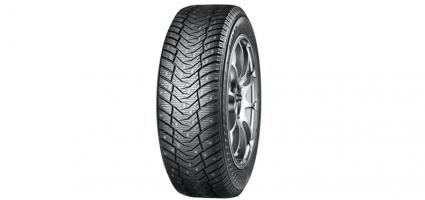
The top-rated current tires from each brand, by season.
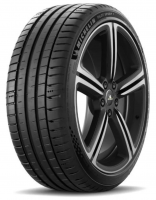
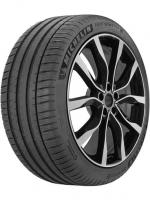
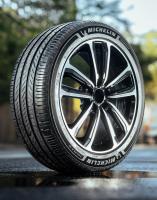
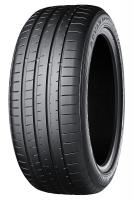


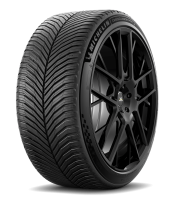
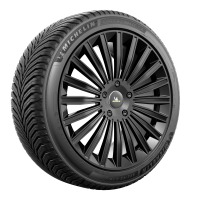
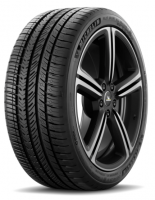
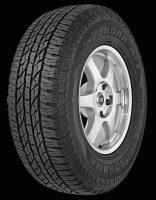

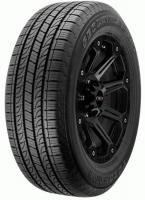

Popular Michelin vs Yokohama tire matchups
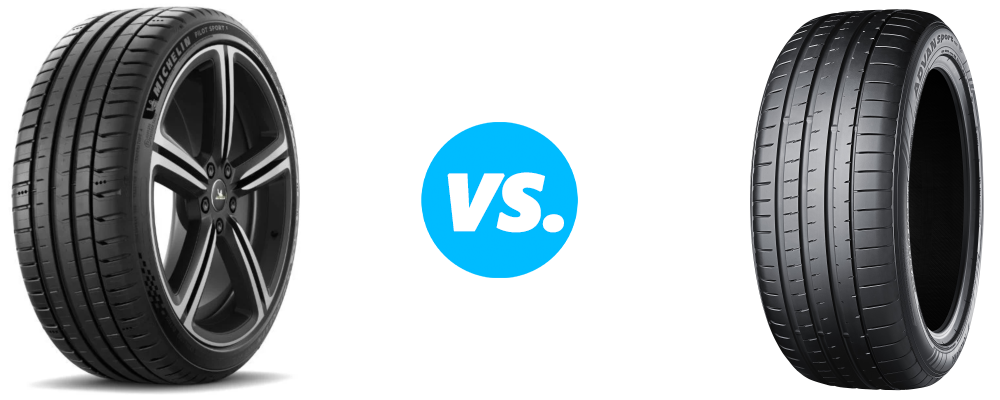
Head-to-head comparisons between specific tires from these brands.
Frequently asked questions
Is Michelin better than Yokohama?
Across 104 shared professional tests, Michelin finished ahead of Yokohama in 92 (1 drew), and holds a higher owner-review score of 8.1 vs 7.5 out of 10. Yokohama leads on value.
Which is better in the wet, Michelin or Yokohama?
In Wet Braking, Michelin averaged 124 ft versus 133 ft, winning 49 of 54 shared tests. In Wet Handling, Michelin averaged 81.42 s versus 82.57 s, winning 12 of 16 shared tests.
Which lasts longer, Michelin or Yokohama?
In independent tire wear testing across 19 shared tests, Michelin lasted longer, averaging 30,319 miles versus 22,081 miles (about 39.1% further) and winning 18 of them. Owner-rated tread life agrees, at 8 vs 7.2 out of 10.
Which is cheaper, Michelin or Yokohama?
Yokohama is usually the cheaper choice, coming in lower in 25 of 25 shared tests, on average about 32.8% less than Michelin.
Which is better in winter, Michelin or Yokohama?
Across 35 shared winter tests, Michelin finished ahead in 32. 43% of its current range is 3PMSF winter-certified, versus 44% for Yokohama. In Snow Braking, Michelin averaged 76 ft versus 78 ft, winning 20 of 25 shared tests.
Which brand is more fuel efficient, Michelin or Yokohama?
Fuel economy and EV range come down to rolling resistance. In Rolling Resistance, Michelin averaged 8.05 kg/t versus 9.01 kg/t, winning 23 of 27 shared tests. 38% of Michelin's current range earns an A or B EU fuel-efficiency grade, versus 6% for Yokohama.
Which is better for electric cars, Michelin or Yokohama?
For an EV the priorities are low rolling resistance for range and low noise for a quiet cabin. In rolling-resistance testing, which directly drives EV range, Michelin led 23 of 27 shared tests. Michelin also currently lists 3 EV-specific tires versus 1 for Yokohama.
Which brand is quieter and more comfortable, Michelin or Yokohama?
Owners rate Michelin higher for comfort, at 8.1 vs 7.3 out of 10. In Noise, Michelin averaged 71.35 dB versus 71.52 dB, winning 14 of 27 shared tests.
Would owners buy Michelin or Yokohama again?
Michelin owners are more likely to buy the same brand again, scoring 7.7 vs 7.2 out of 10 on would-buy-again across 5,374 combined reviews.
Final verdict
Category verdicts are clear-cut in some areas: Michelin leads the head-to-head shared test record, leads most objective safety and efficiency metrics (wet braking, aquaplaning resistance, rolling resistance), and is markedly stronger on wear. Yokohama's wins are narrower but real - it is consistently cheaper in comparable tests, and it shows specific strengths in summer noise and some dry-handling formats.
Overall lean: Michelin leads in more areas and does so by larger margins, especially for wet safety and longevity - making it the better fit for high-mileage drivers, year-round use, and anyone prioritising braking and long-life value over purchase price. Yokohama is the better buy for drivers who want to spend less upfront, are happy with slightly less test-dominant wet performance, and value a quieter or sharper-feeling summer set-up in the right tire line and size.