



Three of the biggest names in winter tires, the Michelin Alpin 7, the Pirelli Cinturato Winter 3 and the Nokian Snowproof 3P, are tires I get asked about all the time and had never tested. I have put them up against Continental, Goodyear and Bridgestone tires that have won tests before, plus a Hankook, a Vredestein and a Triangle budget tire, in 205/55 R17 on a Golf, to find out where the new tires sit and which one is best for your own driving.
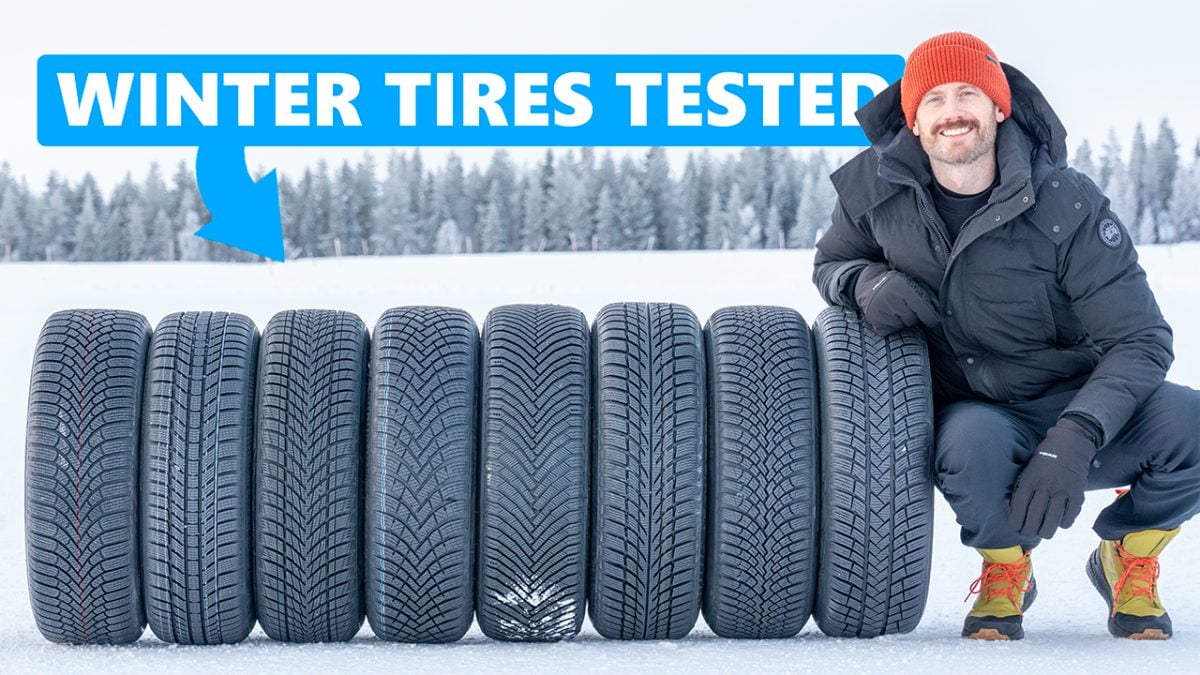
All nine tires ran in 205/55 R17 on a Golf Mk 8.5. I measured snow braking, snow traction and snow handling, wet braking, wet handling and straight aquaplaning, dry braking, internal cabin noise and rolling resistance, and added subjective scores for snow handling, dry handling, comfort and noise alongside the numbers. The Triangle WinterX TW401 is the budget tire in the group, and the other eight are all established premium brands.
Test setup & methodology
The test setting, the conditions recorded and how the results contribute to the score.
Show full testing methodology
Recorded test conditions
- Dry Braking
- 62.1 → 6.2 mph
- Wet Braking
- 49.7 → 6.2 mph
- Wet Handling
- 50–55 °F
- Snow Braking
- 21.7 → 6.2 mph
- Snow Traction
- 6.2 → 18.6 mph
- Snow Handling
- 25–27 °F
Score Weighting
Weights express the scoring priorities, not how much each discipline actually changed the finishing order. The size of the performance gaps matters too. Category weights contribute to the overall score. Within each category, discipline weights divide that category’s share. Published finishing positions also need to be read alongside the editorial verdict.
| Test | Within category | Share of overall score |
|---|---|---|
| Dry · 10% | ||
| Dry Braking | 80% | 8% |
| Subj. Dry Handling | 20% | 2% |
| Wet · 40% | ||
| Wet Braking | 50% | 20% |
| Wet Handling | 40% | 16% |
| Straight Aqua | 10% | 4% |
| Snow · 37.5% | ||
| Snow Braking | 40% | 15% |
| Snow Traction | 30% | 11.25% |
| Snow Handling | 20% | 7.5% |
| Subj. Snow Handling | 10% | 3.75% |
| Comfort · 10% | ||
| Subj. Comfort | 40% | 4% |
| Subj. Noise | 20% | 2% |
| Noise | 40% | 4% |
| Value · 2.5% | ||
| Rolling Resistance | 100% | 2.5% |
Our standard methods
The conditions above are recorded for this test. The descriptions below explain our standard procedures; measurement windows and run counts can vary by test.
Dry Braking
For dry braking, I drive the test vehicle at an entry speed of 110 km/h and apply full braking effort to a standstill with ABS active on clean, dry asphalt. I typically use an 100–5 km/h measurement window. My standard programme is five runs per tire set where possible, although the sequence can extend to as many as fifteen runs if conditions and tire category justify it. I analyze the full set of runs and discard statistical outliers before averaging. Reference tires are run repeatedly throughout the session to correct for changing conditions.
Subj. Dry Handling
I also carry out a structured subjective handling assessment at the limit of adhesion on a dedicated dry handling circuit. I score steering precision, steering response, turn-in behavior, mid-corner balance, corner-exit traction, breakaway characteristics, and overall confidence using a standardised 1–10 scale used consistently across my testing. The final assessment combines numeric scoring with written technical commentary. I complete familiarisation laps on the control tire before evaluating each candidate.
Wet Braking
For wet braking, I drive the test vehicle at an entry speed of 88 km/h and apply full braking effort to a standstill with ABS active on an asphalt surface with a controlled water film. I typically use an 80–5 km/h measurement window to isolate tire performance from variability in the initial brake application. My standard programme is eight runs per tire set where possible, although the sequence can extend to as many as fifteen runs if conditions and tire category justify it. I analyze the full set of runs and discard statistical outliers before averaging. To correct for changing conditions, I run reference tires repeatedly throughout the session — in wet testing, typically every three candidate test sets.
Wet Handling
For wet handling, I drive at the limit of adhesion around a dedicated handling circuit. I generally use specialist wet circuits with kerb-watering systems designed to maintain a consistent surface condition. ESC is disabled where possible so I can assess the tire's natural balance, transient response, and limit behavior without electronic intervention masking the result. I usually complete between two and five timed laps per tire set, depending on the circuit, tire type, and consistency of conditions. I exclude laps affected by clear driver error or obvious environmental inconsistency. Control runs are carried out frequently throughout the session, and I often use multiple sets of control tires so that wear on the references does not become a meaningful variable.
Straight Aqua
To measure straight-line aquaplaning resistance, I drive one side of the vehicle through a water trough of controlled depth, typically around 7 mm, while the opposite side remains on dry pavement. I enter at a fixed speed and then accelerate progressively. I define aquaplaning onset as the point at which the wheel travelling through the water exceeds a specified slip threshold relative to the dry-side reference wheel. I usually perform four runs per tire set and average the valid results.
Snow Braking
For snow braking, I drive the test vehicle at an entry speed of 50 km/h and apply full braking effort to a standstill with ABS active on a groomed, compacted snow surface, measuring 45-5 km/h. I generally use a wide VDA (vehicle dynamic area) and progressively move across the surface between runs so that no tire ever brakes on the same piece of snow twice. My standard programme is twelve runs per tire set, although the sequence can extend further if the data justify it. I analyze the full set of runs and discard statistical outliers before averaging. The surface is regularly groomed throughout the session. To correct for changing snow surface conditions, I run reference tires repeatedly — typically every two candidate test sets.
Snow Traction
For snow traction, I accelerate the vehicle from rest on a groomed snow surface with traction control active and measure speed and time using GPS telemetry. I typically use a 5–35 km/h measurement window to reduce the influence of launch transients and powertrain irregularities. I use a wide VDA (vehicle dynamic area) and progressively move across the surface between runs so that no tire ever accelerates on the same piece of snow twice. The surface is regularly groomed throughout the session. I complete multiple runs per tire set and average the valid results. Reference tires are run typically every two candidate test sets to correct for changing snow surface conditions.
Snow Handling
For snow handling, I drive at the limit of adhesion around a dedicated snow handling circuit with ESC disabled where possible. The circuit is groomed and prepared after every run while tires are being changed, so each set runs on a consistently prepared surface. I usually complete between two and five timed laps per tire set, excluding laps affected by clear driver error or obvious environmental inconsistency. Because snow surfaces degrade more rapidly than asphalt, control runs are carried out more frequently — typically every two candidate test sets.
Subj. Snow Handling
I also carry out a structured subjective handling assessment at the limit of adhesion on a dedicated snow handling circuit. The circuit is groomed and prepared after every run while tires are being changed, so each set runs on a consistently prepared surface. I score steering precision, turn-in behavior, mid-corner balance, corner-exit traction, breakaway characteristics, and overall confidence on snow using a standardised 1–10 scale used consistently across my testing. The final assessment combines numeric scoring with written technical commentary. I complete familiarisation laps on the control tire before evaluating each candidate.
Subj. Comfort
To assess comfort, I drive on a wide range of road surfaces (often dedicated comfort tracks at test facilities) at speeds from 50 to 120 km/h, including smooth motorway, coarse surfaces, expansion joints, broken pavement, and sharp-edged obstacles. I evaluate primary ride quality, secondary ride quality, impact harshness, seat-transmitted vibration, and the tire's ability to absorb sharp inputs. Ratings are assigned on a 1–10 scale relative to the reference tire.
Subj. Noise
For subjective noise assessment, I drive at constant speeds across multiple surface types with the windows closed, ventilation off, and audio system off. I assess overall noise level, tonal quality, cavity boom, pattern noise, broadband roar, and sensitivity to both speed and road texture. Each tire is rated on a 1–10 scale and supported by written observations on noise character and annoyance.
Noise
For cabin noise assessment, I drive at controlled speeds, typically 50, 80, 100, and 120 km/h, on NVH test surfaces with defined texture characteristics. Calibrated microphones are positioned at ear height within the cabin. Measurements are taken using A-weighting, with one-third octave analysis where required to identify tonal features such as cavity resonance. Windows remain closed, ventilation is off, and ambient conditions are controlled so the data reflects the tire rather than external interference.
Rolling Resistance
Rolling resistance is measured under controlled laboratory conditions in accordance with ISO 28580 and UNECE Regulation 117 Annex 6. The tire is mounted on a test wheel and loaded against a large-diameter steel drum. After thermal stabilisation at the prescribed test speed, rolling resistance force is measured at the spindle and corrected according to the relevant procedure. The result is expressed as rolling resistance coefficient, typically in kg/tonne.
Before the results, a few things about how this test went. The snow testing means travelling halfway around the world and committing to a week or two of it, so I cannot move it when the weather turns. The week before I arrived it was -31°F, and while I was testing it was above freezing for a good part of the time. The track was icy on the racing line, soft and fluffy off it, and grooved, so I could not get my usual detailed subjective impressions in the snow and the snow handling gaps deserve a little more caution than usual. There is also no dry handling lap in this test, only subjective scores from a road drive. I cannot control the weather and I cannot go back later in the season, so this is the data I have.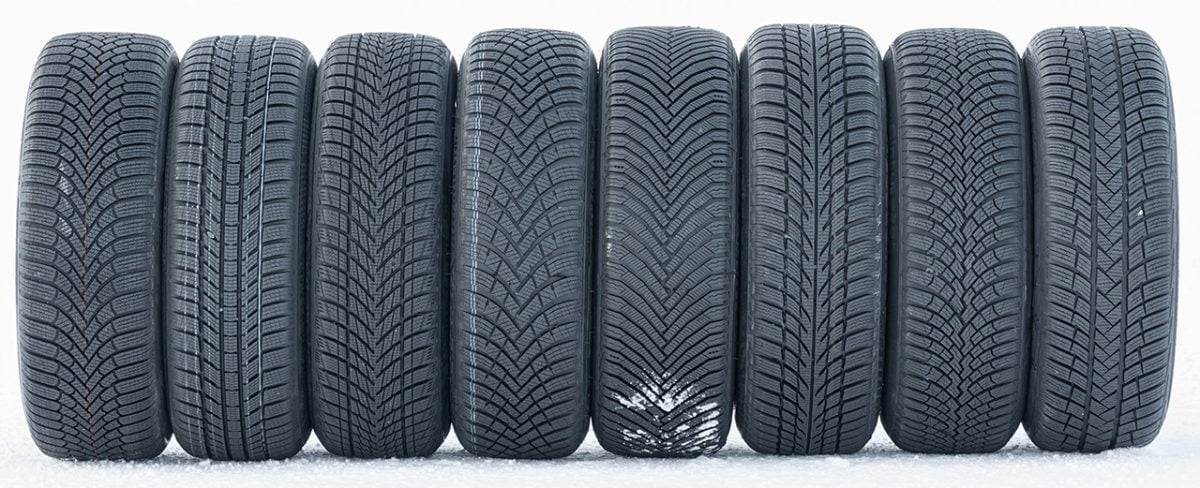 For the final order I have used a winter weighting, because these are winter tires: wet and snow performance together make up just over three quarters of the score, dry performance and comfort carry ten percent each, and rolling resistance, the only measurement in the value category, carries 2.5%. You can change the weighting on the website to match your own driving and get the best tire for you, which is what I always try to do.
Dry Braking
Dry braking was won by the Nokian Snowproof 3P, which needed 130 feet to slow from 62 mph to 6 mph, with the Pirelli Cinturato Winter 3 only 1 foot behind it and the Goodyear UltraGrip Performance 3 third. The Continental and Michelin followed, and the Hankook and Bridgestone were a little further back. The Vredestein Wintrac Pro plus was last, needing 138 feet, which is 8 feet more than the Nokian, with the Triangle just ahead of it in eighth. The Bridgestone, so nice to steer in the dry, was only seventh here.
Dry Braking
Dry braking in feet (62 - 6 mph)
Lower is better ↓| Position / Tire | Result | Gap to best | Residual speed |
|---|---|---|---|
| 130 ft | Best | 0 mph | |
| 131 ft | +1 ft | 5 mph | |
| 132 ft | +2 ft | 10 mph | |
| 133 ft | +3 ft | 11 mph | |
| 134 ft | +4 ft | 14 mph | |
| 136 ft | +6 ft | 17 mph | |
| 137 ft | +7 ft | 18 mph | |
| 138 ft | +8 ft | 19 mph | |
| 138 ft | +8 ft | 19 mph |
The difference between best and worst was 6.3% (8 ft ≈ 0.6 Car Lengths). From 80 mph, the Vredestein Wintrac Pro+ would still be travelling at 19 mph when the Nokian Snowproof 3P had stopped.
Residual speed is calculated from the measured braking distances, assuming constant deceleration; it is not a separate measurement.
Dry Handling
In another failure of my scheduling I did not get to run a proper dry handling lap, so there is no lap time to show. What I have is the subjective score from the road drive, covering on-center response, steering weight, linearity at low and high speed and a lane change. The Michelin Alpin 7 scored highest. It is a wonderful tire to drive, with the best linearity at speed and an excellent lane change that only the Bridgestone matched, and the Bridgestone Blizzak 6 was right behind it with the same sharp on-center feel. The Pirelli and Goodyear were once again up near the top in third and fourth. The Continental and Vredestein came next, then the Hankook, and the Nokian was a little vaguer than the rest of the premium group, with only a medium to good response around the straight ahead. The Triangle was last, with a medium on-center response and the least precise steering at speed.
Subj. Dry Handling
Subjective Dry Handling Score
Higher is better ↑| Position / Tire | Result | Gap to best |
|---|---|---|
| 9.2 Points | Best | |
| 9 Points | -0.20 Points | |
| 8.8 Points | -0.40 Points | |
| 8.5 Points | -0.70 Points | |
| 8.2 Points | -1.00 Points | |
| 8.2 Points | -1.00 Points | |
| 8.1 Points | -1.10 Points | |
| 7.8 Points | -1.40 Points | |
| 7.3 Points | -1.90 Points |
The difference between best and worst was 20.7% (1.9 Points).
Wet Braking
Wet performance matters. Most people spend most of their winter on winter tires in the wet, not on snow, which is why wet carries slightly more weight than snow in the score, and it is where I usually find winter tires spread out the most. The Continental WinterContact TS 870 P needed the shortest distance to slow from 50 mph to 6 mph, at 95 feet, with the Nokian and Pirelli both within 1 foot of it. Eight of the nine tires finished within 4 feet of each other, which is very close for wet braking. The Triangle was the exception, needing 110 feet, which is 15 feet further than the Continental and around 16% longer. The Goodyear was fifth, about 2% off the best.
Wet Braking
Wet braking in feet (50 - 6 mph)
Lower is better ↓| Position / Tire | Result | Gap to best | Residual speed |
|---|---|---|---|
| 95 ft | Best | 0 mph | |
| 95 ft | 0 ft | 4 mph | |
| 96 ft | +1 ft | 6 mph | |
| 96 ft | +1 ft | 9 mph | |
| 97 ft | +2 ft | 11 mph | |
| 97 ft | +2 ft | 12 mph | |
| 98 ft | +3 ft | 13 mph | |
| 99 ft | +4 ft | 15 mph | |
| 110 ft | +15 ft | 29 mph |
The difference between best and worst was 15.7% (15 ft ≈ 1 Car Lengths). From 80 mph, the Triangle WinterX TW401 would still be travelling at 29 mph when the Continental WinterContact TS 870 P had stopped.
Residual speed is calculated from the measured braking distances, assuming constant deceleration; it is not a separate measurement.
Wet Handling
Wet handling was very close at the front. The Continental set the fastest lap, with the Pirelli 0.31 seconds behind, the Goodyear third and the Bridgestone fourth. Apart from the Triangle, the whole field was covered by 2.59 seconds, about 2.4%, and if you also leave out the Hankook the best and worst of the rest are under 2% apart. The Triangle was 9.34 seconds slower than the Continental, just under 9% off the pace.
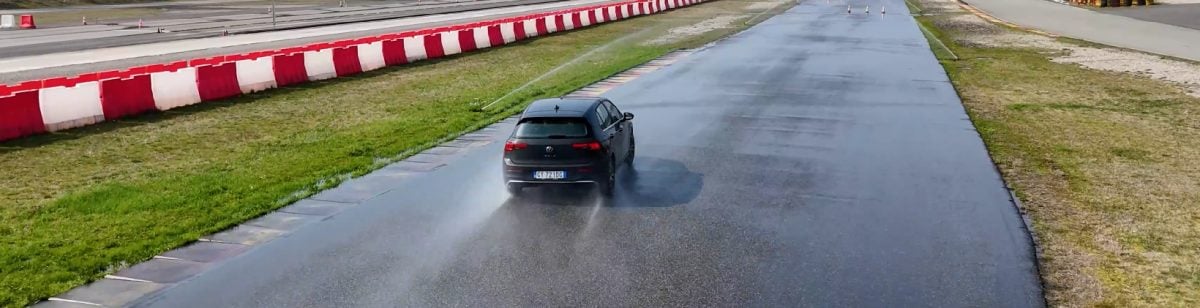
Subjectively the differences were small. The Continental, Pirelli and Goodyear had a little extra bite and a little extra stability at the rear axle, and the Continental and Pirelli in particular felt assured and planted even in the very fast slalom maneuvers, which gave me the confidence to push on. The Pirelli combined the sharpest turn-in of the group with a rear that never got unsettled in the lane changes, and the Continental had only a slight front to rear phase in the slalom. The Goodyear was stable with good lateral grip. The Michelin Alpin 7 was very Michelin: good on the brakes and easy to drive, which means understeer. This track has a lot of long corners, and that is where the Michelin loses time. The Hankook Winter I cept RS3 was the one that seemed a little down on grip. I like it, but you had to wait a moment for the front end to bite, it did not tuck in on a lift of the throttle the way the Pirelli did, and it did not quite have the lateral grip or braking of the others, though these are tiny differences, and on the lap it was only 0.45 seconds behind the next tire. The Nokian was a touch understeery but tucked in better than the Hankook, and the Bridgestone and Vredestein were solid and stable without anything to complain about.
The Triangle was clearly down on grip, with some understeer and a rear that became unstable through the slalom. It was the only tire to oversteer there, which is quite an achievement on a Golf Mk 8.5 that normally feels so planted. It stayed controllable, and I have driven worse, but it is the only tire in the test I would have an issue fitting.
Wet Handling
Wet handling time in seconds [Average Temperature 53°F]
Lower is better ↓| Position / Tire | Result | Gap to best |
|---|---|---|
| 107.44 s | Best | |
| 107.75 s | +0.31 s | |
| 108.38 s | +0.94 s | |
| 108.73 s | +1.29 s | |
| 109.02 s | +1.58 s | |
| 109.15 s | +1.71 s | |
| 109.58 s | +2.14 s | |
| 110.03 s | +2.59 s | |
| 116.78 s | +9.34 s |
The difference between best and worst was 8.7% (9.34 s).
Straight Aquaplaning
The Hankook Winter I cept RS3 was excellent in the deeper water and the clear winner here, holding on until 56.4 mph, 2 mph faster than the Pirelli in second, with the Goodyear third. The Michelin floated earlier than all but the Vredestein and the Triangle, and the Triangle was last at 47.1 mph, 9 mph below the Hankook.
Straight Aqua
Float Speed in mph
Higher is better ↑| Position / Tire | Result | Gap to best |
|---|---|---|
| 56.4 mph | Best | |
| 54.6 mph | -1.8 mph | |
| 53.8 mph | -2.6 mph | |
| 53.3 mph | -3.1 mph | |
| 52.6 mph | -3.8 mph | |
| 52.4 mph | -4.0 mph | |
| 51.6 mph | -4.8 mph | |
| 50.1 mph | -6.3 mph | |
| 47.1 mph | -9.3 mph |
The difference between best and worst was 16.5% (9.3 mph).
Snow Braking
Snow braking was extremely close, with just 3.1% between the best and the worst. The Goodyear needed the shortest distance, 45 feet, with the Michelin, Bridgestone and Pirelli all within 0 feet of it, which put those four right at the front. The Nokian was sixth, a surprise for Nokian, though it was less than a third of a meter behind the Goodyear. The Triangle was last, but only 1 foot behind the winner, a far smaller gap than it showed in the wet.
Snow Braking
Snow braking in feet (22 - 6 mph)
Lower is better ↓| Position / Tire | Result | Gap to best | Residual speed |
|---|---|---|---|
| 45 ft | Best | 0 mph | |
| 45 ft | 0 ft | 6 mph | |
| 45 ft | 0 ft | 6 mph | |
| 45 ft | 0 ft | 7 mph | |
| 46 ft | +1 ft | 9 mph | |
| 46 ft | +1 ft | 12 mph | |
| 46 ft | +1 ft | 12 mph | |
| 46 ft | +1 ft | 13 mph | |
| 46 ft | +1 ft | 14 mph |
The difference between best and worst was 3.1% (1 ft). From 80 mph, the Triangle WinterX TW401 would still be travelling at 14 mph when the Goodyear UltraGrip Performance 3 had stopped.
Residual speed is calculated from the measured braking distances, assuming constant deceleration; it is not a separate measurement.
Snow Traction
Snow traction continued the theme of every tire being very close. The top five finished in the same order as in snow braking, with the Goodyear fastest and the Michelin and Bridgestone best of the rest, then the Pirelli and Continental, all within a tenth of a second of the Goodyear. The Hankook was a hair behind, with the Nokian and Vredestein a little further back, and the Triangle rounded out the field, 0.29 seconds behind the Goodyear.
Snow Traction
Snow acceleration time (6 - 19 mph)
Lower is better ↓| Position / Tire | Result | Gap to best |
|---|---|---|
| 5.15 s | Best | |
| 5.17 s | +0.02 s | |
| 5.19 s | +0.04 s | |
| 5.21 s | +0.06 s | |
| 5.24 s | +0.09 s | |
| 5.25 s | +0.10 s | |
| 5.31 s | +0.16 s | |
| 5.32 s | +0.17 s | |
| 5.44 s | +0.29 s |
The difference between best and worst was 5.6% (0.29 s).

Snow Handling
This was the hardest part of the test. I ran it on two days, and on both the track was icy on the racing line, soft and fluffy off it, grooved, and too warm, so I would not read too much into the small gaps.
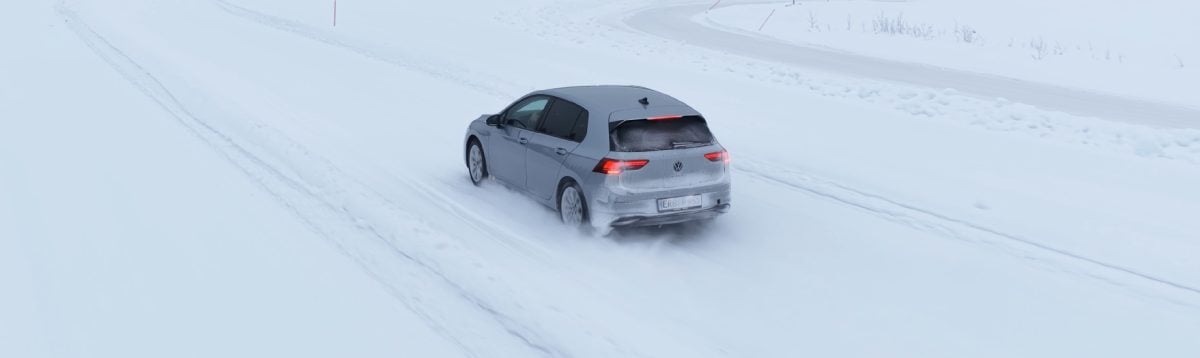 Two things were very clear. The first is that the budget tire was not awful. It was the slowest, but it got around the lap and gave me no surprises, with only a little less bite in traction and braking and a rear that stepped out a little sooner in the transitions. At 2.54 seconds, about 3.3% off the best lap, it was far closer to the others here than it was in the wet. The second is that the Goodyear was the best on both days by quite a margin, 0.78 seconds on the lap from the Continental. It gave me the confidence that the car would go exactly where I wanted it to go, with rounded, predictable grip, even if it was slightly upset by the icier parts of the track.
The Continental was second on the lap. The 870 P is a very random tire that sometimes does really well in tests and sometimes just average, but in this size it did well. The Nokian was third with very good grip when it was in its happy place, although it was a little peaky once past the limit. The Pirelli was fourth, and it and the Michelin felt more geared towards traction and braking, without quite the turn-in that the Continental and Goodyear had. The Vredestein and Hankook were fifth and sixth, with the Hankook easy to drive. The Bridgestone was seventh on the lap, a very friendly tire with a stable rear and a lovely progressive slide, but it lacked the ultimate grip of the best. The Michelin was eighth, despite being second in snow braking and traction.
Snow Handling
Snow handling time in seconds [Average Temperature 26°F]
Lower is better ↓| Position / Tire | Result | Gap to best |
|---|---|---|
| 76.15 s | Best | |
| 76.93 s | +0.78 s | |
| 77.3 s | +1.15 s | |
| 77.79 s | +1.64 s | |
| 77.99 s | +1.84 s | |
| 78.1 s | +1.95 s | |
| 78.17 s | +2.02 s | |
| 78.2 s | +2.05 s | |
| 78.69 s | +2.54 s |
The difference between best and worst was 3.3% (2.54 s).
The subjective snow handling scores follow the same shape, though the whole group is covered by a small margin. The Goodyear scored highest with the Continental a tenth behind, the Hankook was third, the Bridgestone, Michelin and Nokian were level behind it, the Vredestein and Pirelli sat a little further back, and the Triangle was last.
Subj. Snow Handling
Subjective Snow Handling Score
Higher is better ↑| Position / Tire | Result | Gap to best |
|---|---|---|
| 8.6 Points | Best | |
| 8.5 Points | -0.10 Points | |
| 8.4 Points | -0.20 Points | |
| 8.3 Points | -0.30 Points | |
| 8.3 Points | -0.30 Points | |
| 8.3 Points | -0.30 Points | |
| 8.2 Points | -0.40 Points | |
| 8.2 Points | -0.40 Points | |
| 7.9 Points | -0.70 Points |
The difference between best and worst was 8.1% (0.7 Points).
Subjective Comfort
If you want a tire that is plush and absorbs impacts, the Vredestein Wintrac Pro plus is your tire. It had the best ride in the test, absorbing impacts beautifully and well damped, and it was predictable to drive. The Triangle was second, soft over impacts even if it was not as well damped. Six tires shared the same score in the middle, and the Michelin Alpin 7 was last, a little firmer than the rest of the pack. I did not expect that, but there were two of us doing the comfort testing and we both agreed.
Subj. Comfort
Subjective Comfort Score
Higher is better ↑| Position / Tire | Result | Gap to best |
|---|---|---|
| 8.6 Points | Best | |
| 8.3 Points | -0.30 Points | |
| 8.1 Points | -0.50 Points | |
| 8.1 Points | -0.50 Points | |
| 8.1 Points | -0.50 Points | |
| 8.1 Points | -0.50 Points | |
| 8.1 Points | -0.50 Points | |
| 8.1 Points | -0.50 Points | |
| 7.9 Points | -0.70 Points |
The difference between best and worst was 8.1% (0.7 Points).
Subjective Noise
We had a little rain while I was doing the subjective noise test, and every tire sounded very similar, which is why the scores are all exactly the same. I could not separate them by ear in the wet, so I measured the cabin noise as well.
Subj. Noise
Subjective in car noise levels
Higher is better ↑| Position / Tire | Result | Gap to best |
|---|---|---|
| 8.5 Points | Best | |
| 8.5 Points | Best | |
| 8.5 Points | Best | |
| 8.5 Points | Best | |
| 8.5 Points | Best | |
| 8.5 Points | Best | |
| 8.5 Points | Best | |
| 8.5 Points | Best | |
| 8.5 Points | Best |
All the tires in the Subj. Noise test finished less than 3% apart.
Noise
The internal cabin noise measurement was done on a day that was not raining. The Continental was quietest at 54.21 dB, with the Goodyear a tenth of a decibel behind and the Bridgestone third, although it was relatively close. The Hankook was the loudest at 58.48 dB, more than four decibels above the Continental, which might put some people off, with the Vredestein the next loudest.
Noise
Internal noise in dB
Lower is better ↓| Position / Tire | Result | Gap to best |
|---|---|---|
| 54.21 dB | Best | |
| 54.3 dB | +0.09 dB | |
| 55.39 dB | +1.18 dB | |
| 55.6 dB | +1.39 dB | |
| 55.78 dB | +1.57 dB | |
| 56.35 dB | +2.14 dB | |
| 56.84 dB | +2.63 dB | |
| 57.7 dB | +3.49 dB | |
| 58.48 dB | +4.27 dB |
The difference between best and worst was 7.9% (4.27 dB).
Rolling Resistance
The Bridgestone Blizzak 6 and Michelin Alpin 7 had the lowest rolling resistance, at 7.4 and 7.6 kg/t, with the Continental close to the front in third. The Nokian was fourth and the Goodyear fifth. At the back the Pirelli Cinturato Winter 3 had the highest rolling resistance of the premium tires at 8.3 kg/t, and the Triangle was well adrift at 9.0 kg/t, more than a fifth higher than the Bridgestone. Rolling resistance carries only a small share of the score in my weighting, but fuel use matters more and more these days and the field is close enough for it to count. Taking it out of the weighting changes one place, with the Nokian moving ahead of the Bridgestone, and the Pirelli would still be third but only a whisker behind the Continental. If you cover a lot of miles, give it more weight.
Rolling Resistance
Rolling resistance in kg t
Lower is better ↓| Position / Tire | Result | Gap to best | Extra fuel / year |
|---|---|---|---|
| 7.4 kg/t | Best | $0 | |
| 7.6 kg/t | +0.20 kg/t | $8 | |
| 7.7 kg/t | +0.30 kg/t | $12 | |
| 7.8 kg/t | +0.40 kg/t | $16 | |
| 7.9 kg/t | +0.50 kg/t | $20 | |
| 8 kg/t | +0.60 kg/t | $24 | |
| 8.1 kg/t | +0.70 kg/t | $28 | |
| 8.3 kg/t | +0.90 kg/t | $36 | |
| 9 kg/t | +1.60 kg/t | $64 |
The difference between best and worst was 21.6% (1.6 kg / t). Over 12,000 miles a year at $3.60/gal, the Triangle WinterX TW401 uses about 18 gal ($64) more fuel than the Bridgestone Blizzak 6.
Adjust the assumptions
Calculated estimates, not additional measurements. Use the controls to explore the assumptions.
Results
This is one of the closest sets of results I have had. Eight of the nine tires finish within about two and a quarter points of each other, and the top three are separated by roughly a quarter of a point, so you could argue all three deserve to be called winners. All of these tires are good apart from the Triangle, and some of them are great.
The Goodyear UltraGrip Performance 3 wins. It dominated the snow, which is a great quality in a winter tire, winning snow braking, snow traction and the snow handling lap and scoring highest subjectively on snow, and it did that without any major sacrifices. It was third in dry braking, wet handling and aquaplaning and second quietest in the cabin, with mid-field rolling resistance. If I am going to grumble, fifth in wet braking could be improved, but that was only about 2% off the best. The Continental runs it closest, and if you move five points of weighting from snow to wet the Continental goes ahead.
The Continental WinterContact TS 870 P takes a very close second. In traditional Continental fashion it was the best in the wet, winning both wet braking and the wet handling lap, which I like. It was also great in the snow, second on the snow handling lap and second subjectively, the quietest in the cabin, and third for rolling resistance. It just does everything well. The 870 P can be a little inconsistent in tests, but this time it was in near-perfect form. Its dry results were the only thing holding it back, with fourth in dry braking and a mid-table subjective dry handling score. I highly recommend it.
The Pirelli Cinturato Winter 3 is third, and on grip alone it was the most consistent tire in the test. It was never lower than fourth in any measured grip or braking test, second in dry braking, wet handling and aquaplaning, with the highest dry score of the nine, and fourth in all three snow tests. Fuel use is becoming more and more important, though, and its rolling resistance was the highest of the premium tires, which widens the gap to the Continental. It is third with or without rolling resistance in the weighting, and I highly recommend it.
The Michelin Alpin 7 is fourth, ever so slightly ahead of the Bridgestone thanks to better dry braking, though it was very close. It had the highest subjective dry handling score, a low rolling resistance and a good snow performance with second place in snow braking and traction, and it was lovely to drive. It needs a little more dry and wet grip to be right at the front of this group, as the wet and snow handling laps were seventh and eighth, and it had the firmest ride of the nine, but it is a great product and I recommend it.
The Bridgestone Blizzak 6 is fifth, in part thanks to the lowest rolling resistance in the test, which lifts it above the Nokian. It was also good in the snow, third in snow braking and snow traction, and it was a really nice, easy tire to drive, second for subjective dry handling and third quietest in the cabin. It was a little behind the very best in the dry and the wet, with seventh in dry braking and sixth in wet braking, but it is still a good product. I recommend it, and I enjoy driving it.
The Nokian Snowproof 3P is sixth, and it is a solid performer. It took the shortest dry stop of the test, essentially tied for the best in wet braking, and had good rolling resistance. Surprisingly for Nokian it was not at the very front in the snow, with sixth in snow braking and seventh in snow traction, although it was third on the snow handling lap, and it was a little less precise in the dry than the best. I still recommend it on the strength of its safety.
The Hankook Winter I cept RS3 is seventh, with a similar overall level of performance to the Vredestein but with some of the harsher edges rounded off. It was easy to drive in the snow and excellent in the deeper water of the aquaplaning test, but it needs a little more dry and wet braking to get right at the front of this group, and it was the loudest tire in the cabin, which might put some people off.
The Vredestein Wintrac Pro plus is eighth. It was the best riding tire, absorbing impacts beautifully, and it was predictable to drive with a tidy fifth on the snow handling lap, but it could not match the top group in the dry and wet, with last place in dry braking, eighth in wet braking and the second loudest cabin. It is certainly a group of giants, which is a factor, but I would like some more dry and wet grip from this tire.
The Triangle WinterX TW401 is last. It is not the worst tire I have ever tested, but next to the best it uses a lot more fuel and struggles to get you stopped in almost every condition: eighth of nine in dry braking, a long way behind the other eight in wet braking and wet handling, and last in every snow test, even though the snow testing was close. The second best ride comfort does not make up for that, and it is the only tire in this test I would have an issue fitting.
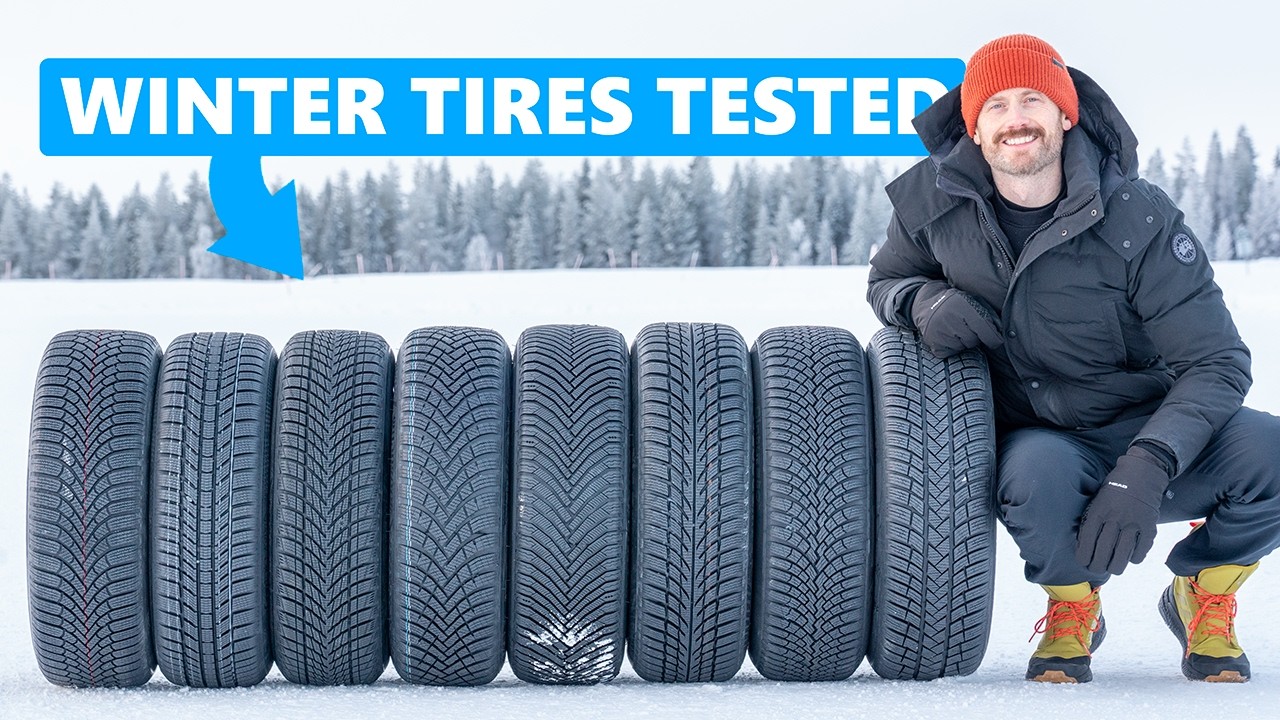 The BEST Winter Tires for 2026/27Watch the full video of this test on YouTube Watch on YouTube
Goodyear UltraGrip Performance 3
205/55 R17 95V XL
Category scores (% of best)
All discipline results (13)
Discipline positions compare the ranked tires in this test, not the whole market. These are individual measurements, not weighted overall scores.
| Test | Position in discipline | Result | Gap to best |
|---|---|---|---|
| Dry BrakingLower is better | 3rd / 9 | 132 ft | +2 ft |
| Subj. Dry HandlingHigher is better | 4th / 9 | 8.5 Points | -0.70 Points |
| Wet BrakingLower is better | 5th / 9 | 97 ft | +2 ft |
| Wet HandlingLower is better | 3rd / 9 | 108.38 s | +0.94 s |
| Straight AquaHigher is better | 3rd / 9 | 53.8 mph | -2.6 mph |
| Snow BrakingLower is better | 1st / 9 | 45 ft | Best in this discipline |
| Snow TractionLower is better | 1st / 9 | 5.15 s | Best in this discipline |
| Snow HandlingLower is better | 1st / 9 | 76.15 s | Best in this discipline |
| Subj. Snow HandlingHigher is better | 1st / 9 | 8.6 Points | Best in this discipline |
| Subj. ComfortHigher is better | 3rd / 9 | 8.1 Points | -0.50 Points |
| Subj. NoiseHigher is better | 1st / 9 | 8.5 Points | Best in this discipline |
| NoiseLower is better | 2nd / 9 | 54.3 dB | +0.09 dB |
| Rolling ResistanceLower is better | 5th / 9 | 7.9 kg/t | +0.50 kg/t |
- EU Label
- C/B/70
- Production
- 4325
- 3PMSF
- Yes
- Weight
- 8.47 kgs
- Price
- 146.27
Continental WinterContact TS 870 P
205/55 R17 95V XL
Category scores (% of best)
All discipline results (13)
Discipline positions compare the ranked tires in this test, not the whole market. These are individual measurements, not weighted overall scores.
| Test | Position in discipline | Result | Gap to best |
|---|---|---|---|
| Dry BrakingLower is better | 4th / 9 | 133 ft | +3 ft |
| Subj. Dry HandlingHigher is better | 5th / 9 | 8.2 Points | -1.00 Points |
| Wet BrakingLower is better | 1st / 9 | 95 ft | Best in this discipline |
| Wet HandlingLower is better | 1st / 9 | 107.44 s | Best in this discipline |
| Straight AquaHigher is better | 4th / 9 | 53.3 mph | -3.1 mph |
| Snow BrakingLower is better | 5th / 9 | 46 ft | +1 ft |
| Snow TractionLower is better | 5th / 9 | 5.24 s | +0.09 s |
| Snow HandlingLower is better | 2nd / 9 | 76.93 s | +0.78 s |
| Subj. Snow HandlingHigher is better | 2nd / 9 | 8.5 Points | -0.10 Points |
| Subj. ComfortHigher is better | 3rd / 9 | 8.1 Points | -0.50 Points |
| Subj. NoiseHigher is better | 1st / 9 | 8.5 Points | Best in this discipline |
| NoiseLower is better | 1st / 9 | 54.21 dB | Best in this discipline |
| Rolling ResistanceLower is better | 3rd / 9 | 7.7 kg/t | +0.30 kg/t |
- EU Label
- C/B/71
- Production
- 4525
- 3PMSF
- Yes
- Weight
- 8.71 kgs
- Price
- 150.39
Pirelli Cinturato Winter 3
205/55 R17 95H XL
Category scores (% of best)
All discipline results (13)
Discipline positions compare the ranked tires in this test, not the whole market. These are individual measurements, not weighted overall scores.
| Test | Position in discipline | Result | Gap to best |
|---|---|---|---|
| Dry BrakingLower is better | 2nd / 9 | 131 ft | +1 ft |
| Subj. Dry HandlingHigher is better | 3rd / 9 | 8.8 Points | -0.40 Points |
| Wet BrakingLower is better | 3rd / 9 | 96 ft | +1 ft |
| Wet HandlingLower is better | 2nd / 9 | 107.75 s | +0.31 s |
| Straight AquaHigher is better | 2nd / 9 | 54.6 mph | -1.8 mph |
| Snow BrakingLower is better | 4th / 9 | 45 ft | 0 ft |
| Snow TractionLower is better | 4th / 9 | 5.21 s | +0.06 s |
| Snow HandlingLower is better | 4th / 9 | 77.79 s | +1.64 s |
| Subj. Snow HandlingHigher is better | 7th / 9 | 8.2 Points | -0.40 Points |
| Subj. ComfortHigher is better | 3rd / 9 | 8.1 Points | -0.50 Points |
| Subj. NoiseHigher is better | 1st / 9 | 8.5 Points | Best in this discipline |
| NoiseLower is better | 6th / 9 | 56.35 dB | +2.14 dB |
| Rolling ResistanceLower is better | 8th / 9 | 8.3 kg/t | +0.90 kg/t |
- EU Label
- C/B/72
- Production
- 4025
- 3PMSF
- Yes
- Weight
- 9.12 kgs
- Price
- 152.55
Michelin Alpin 7
205/55 R17 95V XL
Category scores (% of best)
All discipline results (13)
Discipline positions compare the ranked tires in this test, not the whole market. These are individual measurements, not weighted overall scores.
| Test | Position in discipline | Result | Gap to best |
|---|---|---|---|
| Dry BrakingLower is better | 5th / 9 | 134 ft | +4 ft |
| Subj. Dry HandlingHigher is better | 1st / 9 | 9.2 Points | Best in this discipline |
| Wet BrakingLower is better | 4th / 9 | 96 ft | +1 ft |
| Wet HandlingLower is better | 7th / 9 | 109.58 s | +2.14 s |
| Straight AquaHigher is better | 7th / 9 | 51.6 mph | -4.8 mph |
| Snow BrakingLower is better | 2nd / 9 | 45 ft | 0 ft |
| Snow TractionLower is better | 2nd / 9 | 5.17 s | +0.02 s |
| Snow HandlingLower is better | 8th / 9 | 78.2 s | +2.05 s |
| Subj. Snow HandlingHigher is better | 4th / 9 | 8.3 Points | -0.30 Points |
| Subj. ComfortHigher is better | 9th / 9 | 7.9 Points | -0.70 Points |
| Subj. NoiseHigher is better | 1st / 9 | 8.5 Points | Best in this discipline |
| NoiseLower is better | 4th / 9 | 55.6 dB | +1.39 dB |
| Rolling ResistanceLower is better | 2nd / 9 | 7.6 kg/t | +0.20 kg/t |
- EU Label
- C/B/71
- Production
- 4525
- 3PMSF
- Yes
- Weight
- 8.89 kgs
- Price
- 158.69
Bridgestone Blizzak 6
205/55 R17 95V XL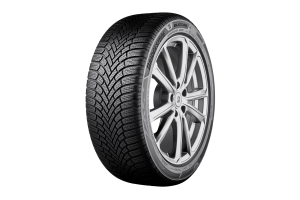
Category scores (% of best)
All discipline results (13)
Discipline positions compare the ranked tires in this test, not the whole market. These are individual measurements, not weighted overall scores.
| Test | Position in discipline | Result | Gap to best |
|---|---|---|---|
| Dry BrakingLower is better | 7th / 9 | 137 ft | +7 ft |
| Subj. Dry HandlingHigher is better | 2nd / 9 | 9 Points | -0.20 Points |
| Wet BrakingLower is better | 6th / 9 | 97 ft | +2 ft |
| Wet HandlingLower is better | 4th / 9 | 108.73 s | +1.29 s |
| Straight AquaHigher is better | 5th / 9 | 52.6 mph | -3.8 mph |
| Snow BrakingLower is better | 3rd / 9 | 45 ft | 0 ft |
| Snow TractionLower is better | 3rd / 9 | 5.19 s | +0.04 s |
| Snow HandlingLower is better | 7th / 9 | 78.17 s | +2.02 s |
| Subj. Snow HandlingHigher is better | 4th / 9 | 8.3 Points | -0.30 Points |
| Subj. ComfortHigher is better | 3rd / 9 | 8.1 Points | -0.50 Points |
| Subj. NoiseHigher is better | 1st / 9 | 8.5 Points | Best in this discipline |
| NoiseLower is better | 3rd / 9 | 55.39 dB | +1.18 dB |
| Rolling ResistanceLower is better | 1st / 9 | 7.4 kg/t | Best in this discipline |
- EU Label
- C/B/70
- Production
- 1525
- 3PMSF
- Yes
- Weight
- 8.81 kgs
- Price
- 128.16
Nokian Snowproof 3P
205/55 R17 95V XL
Category scores (% of best)
All discipline results (13)
Discipline positions compare the ranked tires in this test, not the whole market. These are individual measurements, not weighted overall scores.
| Test | Position in discipline | Result | Gap to best |
|---|---|---|---|
| Dry BrakingLower is better | 1st / 9 | 130 ft | Best in this discipline |
| Subj. Dry HandlingHigher is better | 8th / 9 | 7.8 Points | -1.40 Points |
| Wet BrakingLower is better | 2nd / 9 | 95 ft | 0 ft |
| Wet HandlingLower is better | 5th / 9 | 109.02 s | +1.58 s |
| Straight AquaHigher is better | 6th / 9 | 52.4 mph | -4.0 mph |
| Snow BrakingLower is better | 6th / 9 | 46 ft | +1 ft |
| Snow TractionLower is better | 7th / 9 | 5.31 s | +0.16 s |
| Snow HandlingLower is better | 3rd / 9 | 77.3 s | +1.15 s |
| Subj. Snow HandlingHigher is better | 4th / 9 | 8.3 Points | -0.30 Points |
| Subj. ComfortHigher is better | 3rd / 9 | 8.1 Points | -0.50 Points |
| Subj. NoiseHigher is better | 1st / 9 | 8.5 Points | Best in this discipline |
| NoiseLower is better | 5th / 9 | 55.78 dB | +1.57 dB |
| Rolling ResistanceLower is better | 4th / 9 | 7.8 kg/t | +0.40 kg/t |
- EU Label
- B/A/72
- Production
- 4425
- 3PMSF
- Yes
- Weight
- 9.06 kgs
- Price
- 124.14
Hankook Winter I cept RS3
205/55 R17 95V XL
Category scores (% of best)
All discipline results (13)
Discipline positions compare the ranked tires in this test, not the whole market. These are individual measurements, not weighted overall scores.
| Test | Position in discipline | Result | Gap to best |
|---|---|---|---|
| Dry BrakingLower is better | 6th / 9 | 136 ft | +6 ft |
| Subj. Dry HandlingHigher is better | 7th / 9 | 8.1 Points | -1.10 Points |
| Wet BrakingLower is better | 7th / 9 | 98 ft | +3 ft |
| Wet HandlingLower is better | 8th / 9 | 110.03 s | +2.59 s |
| Straight AquaHigher is better | 1st / 9 | 56.4 mph | Best in this discipline |
| Snow BrakingLower is better | 8th / 9 | 46 ft | +1 ft |
| Snow TractionLower is better | 6th / 9 | 5.25 s | +0.10 s |
| Snow HandlingLower is better | 6th / 9 | 78.1 s | +1.95 s |
| Subj. Snow HandlingHigher is better | 3rd / 9 | 8.4 Points | -0.20 Points |
| Subj. ComfortHigher is better | 3rd / 9 | 8.1 Points | -0.50 Points |
| Subj. NoiseHigher is better | 1st / 9 | 8.5 Points | Best in this discipline |
| NoiseLower is better | 9th / 9 | 58.48 dB | +4.27 dB |
| Rolling ResistanceLower is better | 6th / 9 | 8 kg/t | +0.60 kg/t |
- EU Label
- C/B/72
- Production
- 4325
- 3PMSF
- Yes
- Weight
- 9.31 kgs
- Price
- 110.24
Vredestein Wintrac Pro+
205/55 R17 95V XL
Category scores (% of best)
All discipline results (13)
Discipline positions compare the ranked tires in this test, not the whole market. These are individual measurements, not weighted overall scores.
| Test | Position in discipline | Result | Gap to best |
|---|---|---|---|
| Dry BrakingLower is better | 9th / 9 | 138 ft | +8 ft |
| Subj. Dry HandlingHigher is better | 5th / 9 | 8.2 Points | -1.00 Points |
| Wet BrakingLower is better | 8th / 9 | 99 ft | +4 ft |
| Wet HandlingLower is better | 6th / 9 | 109.15 s | +1.71 s |
| Straight AquaHigher is better | 8th / 9 | 50.1 mph | -6.3 mph |
| Snow BrakingLower is better | 7th / 9 | 46 ft | +1 ft |
| Snow TractionLower is better | 8th / 9 | 5.32 s | +0.17 s |
| Snow HandlingLower is better | 5th / 9 | 77.99 s | +1.84 s |
| Subj. Snow HandlingHigher is better | 7th / 9 | 8.2 Points | -0.40 Points |
| Subj. ComfortHigher is better | 1st / 9 | 8.6 Points | Best in this discipline |
| Subj. NoiseHigher is better | 1st / 9 | 8.5 Points | Best in this discipline |
| NoiseLower is better | 8th / 9 | 57.7 dB | +3.49 dB |
| Rolling ResistanceLower is better | 7th / 9 | 8.1 kg/t | +0.70 kg/t |
- EU Label
- C/B/71
- Production
- 4325
- 3PMSF
- Yes
- Weight
- 9.19 kgs
- Price
- 130.64
Triangle WinterX TW401
205/55 R17 95V XL
Category scores (% of best)
All discipline results (13)
Discipline positions compare the ranked tires in this test, not the whole market. These are individual measurements, not weighted overall scores.
| Test | Position in discipline | Result | Gap to best |
|---|---|---|---|
| Dry BrakingLower is better | 8th / 9 | 138 ft | +8 ft |
| Subj. Dry HandlingHigher is better | 9th / 9 | 7.3 Points | -1.90 Points |
| Wet BrakingLower is better | 9th / 9 | 110 ft | +15 ft |
| Wet HandlingLower is better | 9th / 9 | 116.78 s | +9.34 s |
| Straight AquaHigher is better | 9th / 9 | 47.1 mph | -9.3 mph |
| Snow BrakingLower is better | 9th / 9 | 46 ft | +1 ft |
| Snow TractionLower is better | 9th / 9 | 5.44 s | +0.29 s |
| Snow HandlingLower is better | 9th / 9 | 78.69 s | +2.54 s |
| Subj. Snow HandlingHigher is better | 9th / 9 | 7.9 Points | -0.70 Points |
| Subj. ComfortHigher is better | 2nd / 9 | 8.3 Points | -0.30 Points |
| Subj. NoiseHigher is better | 1st / 9 | 8.5 Points | Best in this discipline |
| NoiseLower is better | 7th / 9 | 56.84 dB | +2.63 dB |
| Rolling ResistanceLower is better | 9th / 9 | 9 kg/t | +1.60 kg/t |
- EU Label
- D/C/72
- Production
- 2025
- 3PMSF
- Yes
- Weight
- 9.98 kgs
- Price
- 61.71
Discussion