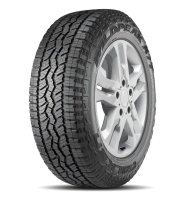
Falken Wildpeak A/T3W
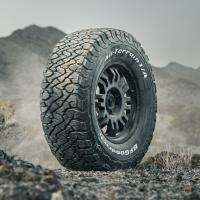
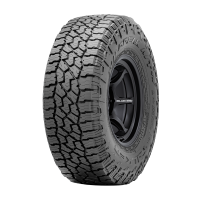
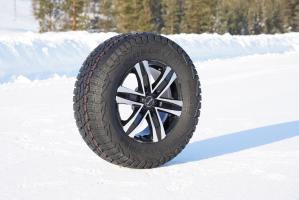
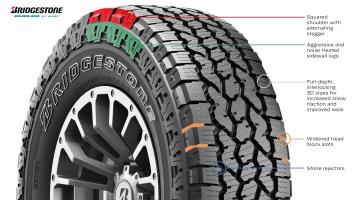
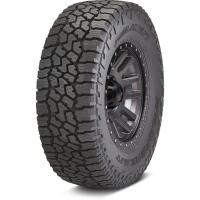
WatchThe Falken Wildpeak AT3W is a All Terrain and Off Road All Season tire designed to be fitted to SUV and 4x4s.
19
Reviews
76%
Average
310,501
miles driven
1
Tests (avg: 1st)
All Tests
View Test Results1
Tests
1st
Average
1st
Best
1st
Worst
Latest Tire Test Results
Best All Terrain Tires Tested On Road, Off Road and Snow [2024]
1st/7
255/55 R18 • 2024
Falken Wildpeak A/T AT3 WA was one of the most well-rounded tires in the test. Dry road performance showed good handling characteristics and steering response, though braking distances were slightly longer than the best. Where it really impressed was in wet conditions - it proved to be the safest AT tire in the wet with good braking, strong aquaplaning resistance and predictable handling. Snow performance was good across the board with strong grip levels in all disciplines. Offroad capability was excellent, particularly standing out in mud and on gravel surfaces where it showed class-leading grip. Rolling resistance was reasonable for an AT tire at 9.0 kg/t. While noise levels were on the higher side at 73.4 dB, comfort levels were good with effective bump absorption. This tire ultimately won the offroad category and proved to be one of the most versatile options tested.
Alternative Tires
9.1/10
9.0/10
8.2/10
8.1/10
Questions and Answers for the Falken Wildpeak AT3W
Ask a question
Sorry, we don't currently have any questions and answers for the Falken Wildpeak AT3W. Why not submit a question to our tire experts using the form below!
Ask a question
We will never publish or share your email address
Review Summary
Based on 18 user reviews
Most drivers report the Falken Wildpeak AT3W delivers strong on/off-road performance with a quiet, comfortable ride and reassuring durability for an all-terrain. High-scoring reviews frequently praise grip on mud, gravel, and wet/dry roads, and several note good winter capability depending on conditions. However, a notable minority found the tire less confidence-inspiring on ice and in packed/deeper snow. Overall sentiment is solidly positive, with winter ice performance being the main caveat.
Strengths
- Quiet for an all-terrain
- Strong off-road traction (mud
- Gravel
- Rocks)
- Good dry and wet on-road grip
- Comfortable ride
- Durable tread/long wear
Areas for Improvement
- Weak traction on ice and packed/deeper snow
Top 3 Falken Wildpeak AT3W Reviews
Given 93%
while driving a
Mitsubishi Pajero/Montero Sport
(245/70 R16)
on track
for 1 spirited miles
Given 49%
while driving a
Ford F350 6.7L
(275/65 R20)
on a combination of roads
for 500 average miles
My F350 was wandering so bad I took the Wildpeak AT3 off (spent $350 trying to find out what was wrong) after 3 months. The truck stopped wandering once I put the Michelin LTX on.
Given 66%
while driving a
Land Rover Discovery 3
(255/60 R18)
on a combination of roads
for 10,000 easy going miles
We drive on all sorts of roads including gravel and use the Land Rover for day-to-day, some longer trips and a bit of towing (such as boat trailers); I like the feel and balance of the tire, with good comfort and low noise (even compared to earlier more road-biased tires), and our fuel consumption has not worsened. I was slightly concerned that an all-terrain would feel clumsy and loud, but there are no downsides, and hopefully these Falkens will last longer and will be tougher (more puncture proof). Lastly, I'd add that these were very cost effective compared to the competition.
Latest Falken Wildpeak AT3W Reviews
Given 68%
while driving a
Chevrolet silverado 1500
(275/65 R18)
on mostly town
for 40,000 average miles
I chose the P-Metric option for my vehicle because I don't do enough heavy towing or experience many sharp objects for my region with the off-roading conditions I experience to warrant the added weight and stiffness. Brand new these tires gripped dry road and gravel amazingly with minimal road noise. It existed, but it was a fairly quiet low hum/whistle that slowly increased with age and miles. Even when new, wet grip left a slight desire for improvement, same with snow, and especially with ice. I discovered this within the first 3 months/3,000mi of installing.
To be expected with going from a highway tire to an all-terrain, and increasing from 265/65/18 to 275/65/18 (an optional stock size), I found I lost about 3~4mpg on average between city and highway. These tires are significantly heavier than the previous tires and have a strong rolling resistance. My transmission temperature also on average began running 5~10º warmer.
As they have aged, dry grip has stayed fairly consistent, wet grip has decreased somewhat as expected, but snow/ice traction towards the end-of-life has fallen off significantly. I live in the northern Midwest where we frequently get heavy wet lake effect snow, it's a difficult substance to drive in no matter what but these tires struggled in it frequently enough that even additional weight over the drive axle did not do much to help and I utilize 4WD often. On average we end up with snow for roughly 4-5 months, starting as early as October and staying as long as March/April With the occasional exception even in May. Over the course of winter we will often receive daily daytime snow followed by nighttime sub-zero temperatures, as low as -25º. Anyone familiar with these conditions will tell you that salt no longer functions to melt the snow and ice, and that the heat from vehicles will bring the road just to the point of starting to melt, then after they drive off it will refreeze, repeatedly until it's an almost glass-smooth surface. Nothing is going to handle this well except the best snow tires, but these Wildpeaks were significantly worse than a highway biased tired at the same wear mileage.
What I have really noticed with these tires they do not like to be cold. I have seen as much as a 5psi swing from morning startup to mid-day driving. When cold at factory specified PSI I noticed for the first portion of driving that the tires have very noticeable flat spots, so much so my entire truck bounces driving down the road to a rhythm until they can be worked out. I also found over-inflating by 1-2lbs helps this as well as fuel consumption.
Overall I'm pretty disappointed in their performance compared to the glowing reviews they got over the years. If you live in a more arid climate I think these would be a pretty decent tire.

To be expected with going from a highway tire to an all-terrain, and increasing from 265/65/18 to 275/65/18 (an optional stock size), I found I lost about 3~4mpg on average between city and highway. These tires are significantly heavier than the previous tires and have a strong rolling resistance. My transmission temperature also on average began running 5~10º warmer.
As they have aged, dry grip has stayed fairly consistent, wet grip has decreased somewhat as expected, but snow/ice traction towards the end-of-life has fallen off significantly. I live in the northern Midwest where we frequently get heavy wet lake effect snow, it's a difficult substance to drive in no matter what but these tires struggled in it frequently enough that even additional weight over the drive axle did not do much to help and I utilize 4WD often. On average we end up with snow for roughly 4-5 months, starting as early as October and staying as long as March/April With the occasional exception even in May. Over the course of winter we will often receive daily daytime snow followed by nighttime sub-zero temperatures, as low as -25º. Anyone familiar with these conditions will tell you that salt no longer functions to melt the snow and ice, and that the heat from vehicles will bring the road just to the point of starting to melt, then after they drive off it will refreeze, repeatedly until it's an almost glass-smooth surface. Nothing is going to handle this well except the best snow tires, but these Wildpeaks were significantly worse than a highway biased tired at the same wear mileage.
What I have really noticed with these tires they do not like to be cold. I have seen as much as a 5psi swing from morning startup to mid-day driving. When cold at factory specified PSI I noticed for the first portion of driving that the tires have very noticeable flat spots, so much so my entire truck bounces driving down the road to a rhythm until they can be worked out. I also found over-inflating by 1-2lbs helps this as well as fuel consumption.
Overall I'm pretty disappointed in their performance compared to the glowing reviews they got over the years. If you live in a more arid climate I think these would be a pretty decent tire.
Given 77%
while driving a
Ram 2500 4X4 6.7L Tradesman
(295/70 R18)
on a combination of roads
for 30,000 average miles
I’ve had these tires on a Ram 2500 6.7 diesel for a few years now and have been happy. Winter traction with this truck has always been challenging with so much torque and a light rear end, and the Falken has done well considering. I would buy again if the price was right. I do want to try the Mickey Thompson Baja Boss next and see how it is in the snow.
Given 74%
while driving a
Jeep wrangler jk
(315/70 R17)
on a combination of roads
for 25,000 average miles
Scores are slightly skewed as these are the biggest tires we can fit on our 2.5 inch lifted Jeep JK 2 door. So these are big heavy tires on a small and relatively light vehicle (each tire's load rating nearly covers the entire vehicle weight).
Dry and wet are about the same, nothing terrible, but I have driven tires with better grip in both situations. The road feedback I knocked off some points just because of my particular setup. On a heavier larger vehicle I would expect it to be a point or two higher. Its pretty binary, you either dont feel the bumps and texture or you REALLY feel the bumps and texture. Handling also gets dinged harder due to the vehicle, you can feel the tires want to give up as they get pushed a bit at highway speeds. Again a heavier vehicle is likely to feel that less. The noise is about what you expect out of an AT tire, and as far as comfort goes, its better when I keep them at around 28-30 PSI on the road. By default the Jeep wants to see 37 PSI which is like driving on rocks. They do ok in the snow, but ice is pretty sketchy, especially on a short wheelbase vehicle.
Overall the tires have worn at less than expected rates (the advantage of a light small vehicle on these tires), and they are quite reasonable on road. They also handle the off road well enough for the trails we run (moderate difficulty in the rockies).
Dry and wet are about the same, nothing terrible, but I have driven tires with better grip in both situations. The road feedback I knocked off some points just because of my particular setup. On a heavier larger vehicle I would expect it to be a point or two higher. Its pretty binary, you either dont feel the bumps and texture or you REALLY feel the bumps and texture. Handling also gets dinged harder due to the vehicle, you can feel the tires want to give up as they get pushed a bit at highway speeds. Again a heavier vehicle is likely to feel that less. The noise is about what you expect out of an AT tire, and as far as comfort goes, its better when I keep them at around 28-30 PSI on the road. By default the Jeep wants to see 37 PSI which is like driving on rocks. They do ok in the snow, but ice is pretty sketchy, especially on a short wheelbase vehicle.
Overall the tires have worn at less than expected rates (the advantage of a light small vehicle on these tires), and they are quite reasonable on road. They also handle the off road well enough for the trails we run (moderate difficulty in the rockies).
Given 92%
while driving a
Toyota Tundra 2006
(265/75 R16)
on a combination of roads
for 30,000 average miles
Running these under the requirement of an "all-season-off-road" tire. Because we live in a winter climate and drive on snow 5 months of the year (almost daily) in our area Snow/winter driving performance was a primary requirement. That alone meant the BFG wasn't going to be a top choice (mostly packed snow or under 2 feet of snow). Off road performance is more than adequate and feedback allows me to understand where the grip is when in low traction dry conditions as well as winter conditions.
Given 88%
while driving a
GMC canyon diesel
(185/60 R18)
on a combination of roads
for 60,000 average miles
shortly after having these installed we had a nice ice storm, trees and powerlines down everywhere. i figured well lets go out and see how the tires do? i was really amazed at the traction and surefootedness i felt driving around downed trees and powerlines. they did great. i normally like to try different tires but ill probably buy again.
Given 72%
while driving a
Subaru 2003 Forester 2.5x
(225/55 R17)
on mostly motorways
for 30,000 average miles
I ran these on my Subaru Forester and they were great tires on and off road. I found their grip on gravel to be excellent and I was never able to not go somewhere I wanted. They were louder than a standard all season car tire, but that's to be expected and I didn't find them overly annoying. I live in BC near Whistler so I drove them lot's in wet road conditions, on gravel roads, deep and packed snow on road and off, and ice. I've alway run dedicated winter tires and this was my first time running an all weather through the winter. My take away was that, although these are great tires, they struggle in ice compared to winters and they left me stuck once in a particularly icy snowbank. I'll buy another set for 3 season driving, but this year I'll also be getting a set of dedicated winters.
Given 94%
while driving a
Dodge ram 1500
(225/45 R17)
on a combination of roads
for 25,000 average miles
Best tires I.ve had on my Dodge Ram and now putting them on my new truck
Given 51%
while driving a
Dodge Ram 2500
(285/75 R17)
on a combination of roads
for 25,000 average miles
On a 2011 Ram 2500 4×4 tires are excellent on dry or wet pavement. On gravel, dry is excellent, wet they feel greasy don't seem to clear the mud fast enough, also wear down fast on gravel.
Below average performance in snow and ice. Any more than a few centimeters of snow and they struggle, braking on ice is ok, do not have good traction for acceleration or lane control.
Given 81%
while driving a
Land Rover Freelander 2
(235/55 R19)
on a combination of roads
for 10,000 average miles
I have these on a LR Freelander 2, 2.2D. Done about 10,000 miles now, great on motorway (no more noisy than other tire ) and country. Standing deep water no problem, ice and snow no problem, good on packed sand, excellent on mud. Will definitely buy these again. These also look great on a landrover, not the main reason for buying but a nice to have. I used to be a BFG die hard. These have won me over
Given 98%
while driving a
Jeep Cherokee Limited 2015
(245/75 R17)
on a combination of roads
for 0 spirited miles
Just bought 4 of these tires at Discount Tires for my 2020 Jeep Gladiator. They ride great and quiet. I recommend these tires. I go off road in sand soil.
Given 48%
while driving a
Ford F350
(275/65 R20)
on mostly country roads
for 2,000 average miles
It pulls when it gets into the ruts made by the semi trucks and it doesn't work in the snow. Gave them an 8 for wear but I sold them after 2000 miles.
Given 81%
while driving a
Volkswagen Transporter
(235/45 R17)
on a combination of roads
for 7,000 average miles
I've fitted a set of these to my VW Transporter and they seem to work well on the road as well as the muddy tracks I regularly use to get to various work sites. They're quiet on the road (even though they don't look like they will be) and grip levels, even when loaded up, seem impressive.
Wear rate seems very low after nearly 7000 miles.
Will definitely be looking for something similar next time as the price was good too.