
In this test we find out how the new Falken Azenis FK460 AS and Falken WildPeak Trail compare to the Tesla Model Y OE fitment Goodyear Eagle F1 Asymmetric 5 M+S.
Testing Methodology

- Test Driver
- Jonathan Benson
- Tire Size
- 255/40 R20
- Test Location
- Professional Proving Ground
- Test Year
- 2023
- Tires Tested
- 3
Why is this interesting? Firstly, it's always nice to test the newest tires on the market, but more importantly it should help answer the question as to whether moving away from the OE tire your vehicle came fitted with is always a good option.
The OE fitted Goodyear Eagle F1 Asymmetric 5 M+S has been developed with Tesla, and as such it is focused on low energy use, low noise levels and good comfort. This is pretty much now the standard set of rules car manufacturers want from an OE tire, whether they're developing an electric vehicle or regular internal combustion powered vehicle!
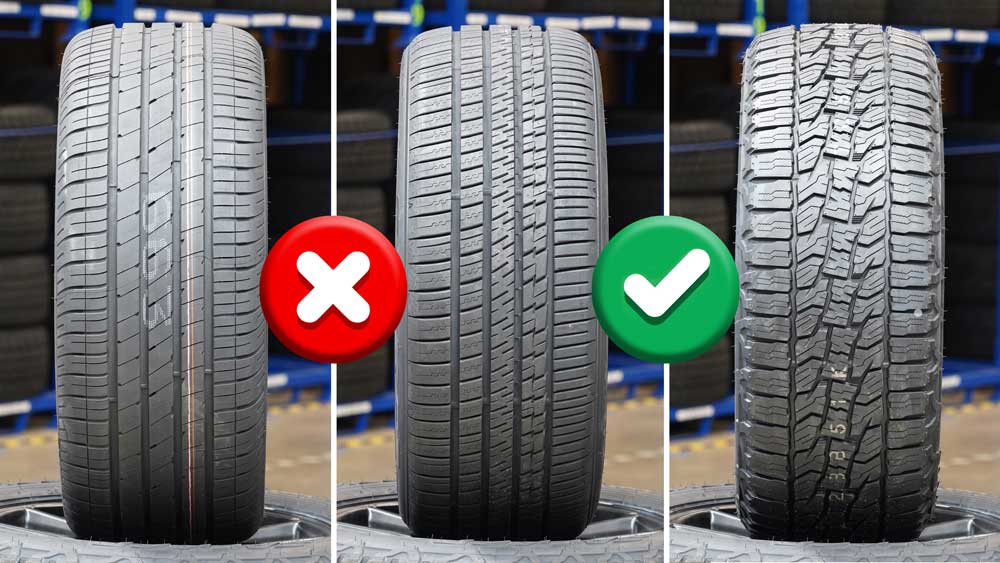
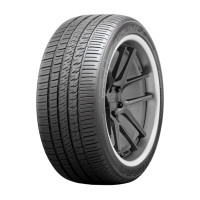
As this version of the Asymmetric 5 is specifically listed as M+S, it's been categorised as an ultra high performance all season tire, which is a perfect match for the new Falken Azenis FK460 AS. At face value, as both these tires sit in the same category, the main differences are that the Goodyear is fitted with acoustic foam and the Falken is not, and the Falken is warranted to 50,000 miles, where the Goodyear has no tread life warranty.
Finally, to give the test even more depth, what if you want to fit a mild all terrain tire on a smaller wheel size so you can do light off-roading with piece of mind? It's a lot of things to test, but I'm also including the Falken WildPeak Trail in 18" (the other tires are 20") as it will be a super interesting test to see how compromised the Model Y becomes with such a drastic change of wheel size and intent. The Wildpeak Trail is an mid all terrain tire which is offered with at 65,000 mile treadwear warranty.
Wet
As always, I started the test in the wet, and as the OE tire should be the perfect fit for this Model Y, I ran it first. Tesla and Goodyear done a really great job with this tire.
I know from murmurings from the industry that Tesla not only focus on noise, comfort and range, but that they also love a tire to steer hyper quickly, I'm not sure if it's to do with the desire to feel digital, but the Model Y with the Goodyear tire almost feels like a sports car it turns so quickly.
As you would expect, while the tire turned very quickly, it did break into understeer first which was manageable and pleasant.
So with this tire so tuned, what chance does the aftermarket all season tire have. Well, it turns out, quite a lot! I'm not going to claim that in terms of subjective handling it was better, but it pretty much equaled it, which I did not expect.
The steering was still crisp, the balance was still understeer and safe, though the FK460AS didn't quite give you the at limit feedback the Goodyear did, it did feel better on the brakes, and better midcorner in terms of outright grip. Really really impressive.
The difference in lap time was just over 1% in favour of the Falken. Given the fact that the Tesla tire is optimised for energy use, this is actually really impressive for the Goodyear, however the wet braking data shows a different story, with the Goodyear stopping nearly 10% later than the Falken. Would the average driver notice anything between the two tires, I really don't think so, other than braking if they really needed it.
How's your car going to be in the wet if you want to go offroading? Well, a little worse. Given the wheel size drop and the fact it's an AT tire, we are comparing a lot of variables at once which isn't ideal. The turn-in is slower, which will be down to both the wheel size and the tire type, there was less peak grip when turning and braking, which will be down to the fact it's a mild AT tire, and everything just happened a little more slowly.
Dry
The performance of the tires was very similar in the dry. The OE Goodyear did stretch it legs subjectively a little more. It was just a bit sharper than the FK460 AS, and a lot sharper than the all terrain, which certainly wasn't at home during the handling lap. The Goodyear also took back the lead in lap time and braking, but by a much smaller margin than in the wet.
Perhaps the Tesla chassis and steering combination hides certain negative aspects of the tires, but I'm genuinely impressed with just how good the Goodyear is on this, also impressed with how close the FK460 is given its higher starting tread depth.
Snow
Snow, now this is where it gets even more interesting! To be as transparent as I possibly can be, due to timing, this snow data came from Falken as part of an internal evaluation. I do however trust the data.
If you've looked at how the tires tread pattern looks, It will come as zero surprise the Goodyear was the worst in snow performance, 20% behind the all season in snow braking. What might be surprising to you is that the all terrain, the Wildpeak AT Trail was another 25% ahead of the all season! The AT Trail is "severe snow rated", which means it carries the 3 peak mountain snowflake symbol and it really shows with a huge difference in safety.
The story was similar in traction and handling, though not as pronounced as braking, with the Wildpeak AT Trail maintaining it's significant advantage over the FK460, which in turn had a sizeable advantage over the OE Goodyear.
Comfort
The all terrain proved to be the most comfortable, which if everything was equal would be a very unusual result, but it is on a 2" smaller wheel so it has way more sidewall meaning it could absorb the impacts with ease. But, it was also the noisiest - it wasn't loud, but on smooth road there was tread pattern noise there wasn't with the other two.
That said, if noise is a big deal for you, the acoustic foam does work. The OE tire was slightly quieter than the aftermarket, and generally more comfortable on all surfaces and impacts, but again not by as much as I thought it was going to be. I keep coming back to would the average person notice? I think on the noise, maybe, on the comfort, probably not.
Value
It should be no surprise that the OE Goodyear had the lowest energy use / rolling resistance, this is something manufacturers optimise heavily now to give better range numbers or a high MPG. On an electric vehicle the tire accounts for around one quarter of energy use, and on a traditional IC vehicle, one fifth of all energy used.
Results
So, what to make of all the data? As you can see from the spider chart below, The Goodyear OE tire has a clear advantage in areas which are good for car selling statistics - noise, rolling resistance, and subjective comfort if we ignore the 18" all terrain. The Goodyear also has an advantage in dry braking, but this is likely a result of the lower starting tread depth which is a huge advantage for dry performance.
The Azenis FK460 AS aftermarket ultra high performance all season certainly loses out in energy use, potentially losing out on 7% of range to the OE tire, but the gap in noise and comfort isn't huge. For the other performances of the tire, those which can be classified as driving safety in the wet and snow, the aftermarket tire vastly out performs the stock option. This is a worthy trade for a lot of people, and if I'd tested hydroplaning, that advantage would have been further extended.
Lastly, the Wildpeak AT Trail all terrain tire moved the balance of grip towards snow, and if we'd tested the off-road ability of the tires, it's safe to assume it would have a huge advantage here.
All three set of tires have their own sets of merits. Some people will be highly focused on energy use making the OE tire the only option, but others will want a higher level of safety in the wet and snow than provided.
Three excellent products giving the customer choice.

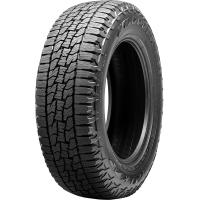
- 3PMSF: yes
- Weight: 16.57 kgs
- Tread: 8.6 mm
| Test | # | Result | % |
|---|---|---|---|
| Dry Braking | 3rd | 41 M | 86.59% |
| Dry Handling | 3rd | 44.35 s | 96.35% |
| Test | # | Result | % |
|---|---|---|---|
| Wet Braking | 3rd | 52.6 M | 83.27% |
| Wet Handling | 3rd | 50.25 s | 94.35% |
| Test | # | Result | % |
|---|---|---|---|
| Snow Braking | 1st | 13.1 M | 100% |
| Snow Traction | 1st | 21.6 s | 100% |
| Snow Handling | 1st | 82.5 s | 100% |
| Test | # | Result | % |
|---|---|---|---|
| Subj. Comfort | 1st | 100 Points | 100% |
| Subj. Noise | 3rd | 95 Points | 95% |
| Test | # | Result | % |
|---|---|---|---|
| Rolling Resistance | 2nd | 8.3 kg / t | 88.55% |
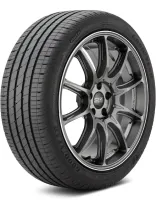
- Weight: 11.95 kgs
- Tread: 6.6 mm
| Test | # | Result | % |
|---|---|---|---|
| Dry Braking | 1st | 35.5 M | 100% |
| Dry Handling | 1st | 42.73 s | 100% |
| Test | # | Result | % |
|---|---|---|---|
| Wet Braking | 2nd | 47.2 M | 92.8% |
| Wet Handling | 2nd | 48.15 s | 98.46% |
| Test | # | Result | % |
|---|---|---|---|
| Snow Braking | 3rd | 19.1 M | 68.59% |
| Snow Traction | 3rd | 26.5 s | 81.51% |
| Snow Handling | 3rd | 87.6 s | 94.18% |
| Test | # | Result | % |
|---|---|---|---|
| Subj. Comfort | 2nd | 97 Points | 97% |
| Subj. Noise | 1st | 100 Points | 100% |
| Test | # | Result | % |
|---|---|---|---|
| Rolling Resistance | 1st | 7.35 kg / t | 100% |
- Weight: 13.79 kgs
- Tread: 7.7 mm
| Test | # | Result | % |
|---|---|---|---|
| Dry Braking | 2nd | 37.1 M | 95.69% |
| Dry Handling | 2nd | 42.79 s | 99.86% |
| Test | # | Result | % |
|---|---|---|---|
| Wet Braking | 1st | 43.8 M | 100% |
| Wet Handling | 1st | 47.41 s | 100% |
| Test | # | Result | % |
|---|---|---|---|
| Snow Braking | 2nd | 15.9 M | 82.39% |
| Snow Traction | 2nd | 23.1 s | 93.51% |
| Snow Handling | 2nd | 85.8 s | 96.15% |
| Test | # | Result | % |
|---|---|---|---|
| Subj. Comfort | 3rd | 95 Points | 95% |
| Subj. Noise | 2nd | 96 Points | 96% |
| Test | # | Result | % |
|---|---|---|---|
| Rolling Resistance | 3rd | 9.38 kg / t | 78.36% |
I am kinda suprise that Falken FK460 AS has higher Rolling Resistance than an All Terrain offering.
There's certainly an element of 18 vs 20 inch wheel size. I don't have the data for like for like sizes, but I wouldn't expect it to be the same as this.