Polish automotive publication Motor tested seven all-season tires in size 215/55 R17 for issue 48/2025. The lineup included two premium tires from Michelin and Continental, three mid-segment options from Nokian Tires, Vredestein, and Yokohama, and two budget choices from Polish brand Dębica and Chinese manufacturer Sunny.
The most interesting result is Nokian Tires' new Seasonproof 2 taking overall victory despite being a mid-segment tire competing against premium products. It scored maximum points in wet conditions, winning every wet test category. The testers noted this as evidence that mid-segment tires are now a real threat to premium products in the rankings.
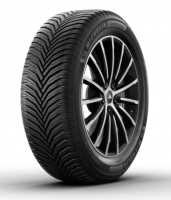
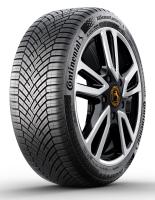
Michelin and Continental showed different strengths. The CrossClimate 2 was best in snow with the shortest braking distances and fastest acceleration, plus it dominated dry braking. The AllSeasonContact 2 was the most consistent tire across all surfaces, which the testers highlighted as a safety benefit since it won't surprise drivers when conditions change.
In the budget segment, the Polish Dębica Navigator 3 beat the pricier mid-segment Yokohama BluEarth-4S AW21. The Dębica delivered steady results throughout and had the lowest rolling resistance. The Yokohama only performed well on wet surfaces and was the noisiest tire with the worst fuel efficiency.
The Chinese Sunny NC501 raised safety concerns. It performed acceptably on dry roads and snow but failed on wet surfaces. The testers described its wet braking as borderline dangerous, warning it does not provide adequate safety during emergency stops in the rain.
Dry
Michelin won dry braking by a clear margin. Nokian, Sunny and Continental were grouped together behind.
Dry Braking
Spread: 4.90 M (12.6%)|Avg: 42.06 M
Dry braking in meters (100 - 5 km/h) (Lower is better)
Dry Braking: Safety Impact: Best vs Worst Tire
Continental was quickest but just 1.6 seconds covered all seven tires in dry handling.
Dry Handling
Spread: 1.60 s (1.4%)|Avg: 113.16 s
Dry handling time in seconds (Lower is better)
Continental AllSeasonContact 2
112.10 s
Debica Navigator 3
113.00 s
Yokohama BluEarth 4S AW21
113.10 s
Michelin CrossClimate 2
113.20 s
Sunny NC501
113.40 s
Nokian Seasonproof 2
113.60 s
Vredestein Quatrac Pro Plus
113.70 s
Wet
Nokian stopped over 6 meters shorter than last-placed Sunny, with Continental second.
Wet Braking
Spread: 6.40 M (22.1%)|Avg: 32.06 M
Wet braking in meters (80 - 5 km/h) (Lower is better)
Wet Braking: Safety Impact: Best vs Worst Tire
Nokian continued its wet dominance in handling. Sunny was again last, over 4 seconds behind.
Wet Handling
Spread: 4.40 s (5.9%)|Avg: 75.63 s
Wet handling time in seconds (Lower is better)
Nokian Seasonproof 2
74.20 s
Yokohama BluEarth 4S AW21
74.60 s
Vredestein Quatrac Pro Plus
74.90 s
Continental AllSeasonContact 2
75.30 s
Debica Navigator 3
75.70 s
Michelin CrossClimate 2
76.10 s
Sunny NC501
78.60 s
Nokian led aquaplaning resistance by a big margin. Sunny was again weakest, struggling to clear water.
Straight Aqua
Spread: 18.10 Km/H (19.6%)|Avg: 82.53 Km/H
Float Speed in Km/H (Higher is better)
Nokian Seasonproof 2
92.20 Km/H
Michelin CrossClimate 2
85.70 Km/H
Continental AllSeasonContact 2
84.00 Km/H
Debica Navigator 3
82.60 Km/H
Yokohama BluEarth 4S AW21
80.10 Km/H
Vredestein Quatrac Pro Plus
79.00 Km/H
Sunny NC501
74.10 Km/H
Snow
Michelin topped snow braking ahead of Nokian and Continental. Vredestein needed the most distance to stop.
Snow Braking
Spread: 1.40 M (8.9%)|Avg: 16.40 M
Snow braking in meters (40 - 5 km/h) (Lower is better)
Snow Braking: Safety Impact: Best vs Worst Tire
Michelin was quickest to accelerate on snow, Yokohama slowest.
Snow Traction
Spread: 0.80 s (15.4%)|Avg: 5.67 s
Snow acceleration time (5 - 40 km/h) (Lower is better)
Michelin CrossClimate 2
5.20 s
Continental AllSeasonContact 2
5.50 s
Sunny NC501
5.60 s
Debica Navigator 3
5.70 s
Nokian Seasonproof 2
5.80 s
Vredestein Quatrac Pro Plus
5.90 s
Yokohama BluEarth 4S AW21
6.00 s
Nokian was fastest on the snow handling track, nearly 6 seconds quicker than last-placed Yokohama.
Snow Handling
Spread: 5.70 s (6.6%)|Avg: 90.19 s
Snow handling time in seconds (Lower is better)
Nokian Seasonproof 2
86.80 s
Michelin CrossClimate 2
88.90 s
Continental AllSeasonContact 2
89.20 s
Debica Navigator 3
91.20 s
Vredestein Quatrac Pro Plus
91.20 s
Sunny NC501
91.50 s
Yokohama BluEarth 4S AW21
92.50 s
Comfort
Nokian was quietest, Yokohama loudest by over 3dB.
Noise
Spread: 3.20 dB (4.6%)|Avg: 70.86 dB
External noise in dB (Lower is better)
Nokian Seasonproof 2
69.40 dB
Michelin CrossClimate 2
70.40 dB
Vredestein Quatrac Pro Plus
70.50 dB
Sunny NC501
70.80 dB
Continental AllSeasonContact 2
70.90 dB
Debica Navigator 3
71.40 dB
Yokohama BluEarth 4S AW21
72.60 dB
Value
Budget tire Dębica had the lowest rolling resistance. Yokohama was worst for fuel efficiency.
Rolling Resistance
Spread: 1.85 kg / t (28.5%)|Avg: 7.48 kg / t
Rolling resistance in kg t (Lower is better)
Debica Navigator 3
6.48 kg / t
Continental AllSeasonContact 2
6.71 kg / t
Michelin CrossClimate 2
6.85 kg / t
Sunny NC501
7.90 kg / t
Nokian Seasonproof 2
8.03 kg / t
Vredestein Quatrac Pro Plus
8.04 kg / t
Yokohama BluEarth 4S AW21
8.33 kg / t
19,000 km
£1.45/L
8.0 L/100km
--
Annual Difference
--
Lifetime Savings
--
Extra Fuel/Energy
--
Extra CO2
Estimates based on typical driving conditions. Rolling resistance accounts for approximately 20% of IC vehicle fuel consumption and 25% of EV energy consumption. Actual savings vary based on driving style, vehicle weight, road conditions, and tire age. For comparative purposes only. Lifetime savings based on a 40,000km / 25,000 mile tread life.
The Nokian Tires Seasonproof 2 is the newest product from the Finnish manufacturer and emerges as the test winner with the highest overall score. This mid-segment tire achieves a perfect score on wet surfaces, delivering the best performance in this category among all competitors. While it slightly trails the premium tires in snow conditions, it still handles winter driving competently. On dry roads, the Seasonproof 2 performs at a level comparable to top premium products. The tire also stands out as the quietest in the test, contributing to a comfortable driving experience. Nokian Tires, traditionally classified in the mid-segment, clearly demonstrates premium-level aspirations with this well-rounded product.
The Michelin CrossClimate 2 excels in winter conditions, winning the snow competition outright with the best braking and acceleration performance. It also delivers very strong results on dry surfaces, particularly dominating the dry braking test where it significantly outperforms all rivals. The CrossClimate 2 loses the most points in wet asphalt competitions compared to its other categories, yet still provides a high level of safety in these conditions. As a premium-segment tire manufactured in Spain, it offers predictable and confidence-inspiring handling characteristics. The tire also achieves good fuel efficiency with relatively low rolling resistance.
The Continental AllSeasonContact 2 proves to be a very well-balanced tire that delivers a consistently high level of safety across all conditions. Notably, the tire performs comparably on every surface type, which makes it predictable and unlikely to surprise the driver with unexpected behavior. This consistency is a key safety attribute for an all-season tire. The AllSeasonContact 2 also benefits from low rolling resistance, contributing to better fuel economy. Manufactured in France, this premium-segment product demonstrates Continental's reputation for producing tires with excellent all-round parameters and dependable performance.
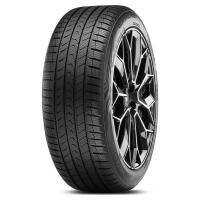
The Vredestein Quatrac Pro+ represents a reasonably well-balanced option within the mid-segment category. Its performance on both dry and wet asphalt is slightly weaker than premium-class competitors, but remains consistent across these surfaces. The tire's main weaknesses are its average snow performance parameters and a relatively high rolling resistance coefficient, which may impact fuel consumption. Manufactured in Hungary, the Quatrac Pro+ offers decent value as a mid-priced option, though drivers seeking the highest performance levels may want to consider the premium alternatives.
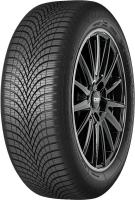
The Dębica Navigator 3 confirms its reputation as a capable budget tire with its fifth-place finish and respectable point total. This Polish-manufactured tire competes effectively against more expensive rivals and achieves stable, consistent results across all test categories. It never fails in any discipline and secures high positions in several tests, including winning the rolling resistance competition outright, making it the most fuel-efficient tire in the test. As the least expensive tire in the comparison, the Navigator 3 offers excellent value for cost-conscious drivers who don't want to compromise significantly on safety or performance.
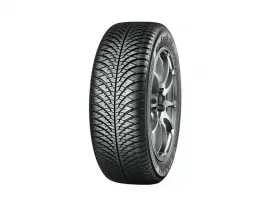
The Yokohama BluEarth-4S AW21 performs below expectations in this test. The tire only manages competitive results in wet conditions, while taking last or near-last positions in most other categories. Disappointingly, it loses the overall competition to the budget-focused Dębica despite being more expensive. The BluEarth-4S AW21 also records the highest noise levels and the worst rolling resistance of all tested tires, negatively impacting both comfort and fuel efficiency. Manufactured in the Philippines, this mid-segment tire struggles to justify its price point given its underwhelming overall performance.
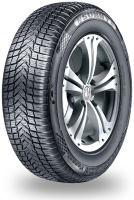
The Sunny NC501 finishes last in the overall rankings with an average point score. This Chinese-manufactured budget tire proves to be an improperly balanced product. While it performs adequately on dry surfaces and in winter conditions, it fails significantly on wet asphalt, losing all wet-surface tests. Most critically, the NC501 does not provide the required level of safety during emergency wet braking situations, with results described as being on the borderline of acceptability. Drivers should be particularly cautious about this tire's limitations in rainy conditions, where its shortcomings could pose genuine safety concerns.





Discussion