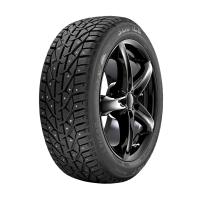
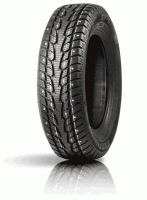
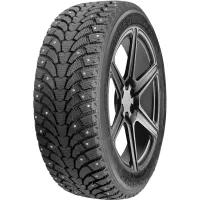
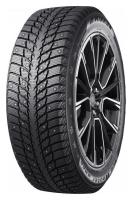
The 2023 TESTIRENKAAT Snow Tire Test tested eight tires designed for extreme winters in the popular 205/55 R16 size.
This is a really interesting test as the four premium tires are studless friction tires, and the four budget tires are studded, so it gives us an interesting data point to compare the best of the new studless friction soft compound tires against the cheaper end of the studded market.
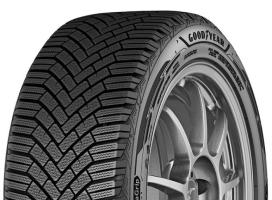
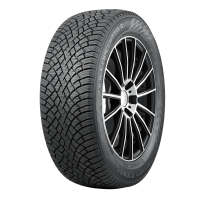
The testers had a few surprises from the studs vs friction results. The test saw a kind of changing of the guard, as Goodyear's new tire rises to the top among Nordic friction tires. The improvement over its predecessor is significant, and the Ultra Grip Ice 3 narrowly snatched victory from the Hakkapeliitta R5. The third-place Michelin falls noticeably behind the top two.
As for the main point of the test—the battle between friction and studded tires—the differences were surprisingly large. We initially thought that even a slightly cheaper studded tire would perform better than studless ones on ice, but only Antares succeeded, and that too only in longitudinal grip tests.
On asphalt, cheaper studded tires generally perform better, which is not surprising since their rubber hardness is closer to summer than winter tires. However, summer rubber compounds won't work in winter conditions, especially if the studs are also installed too deep or in the wrong positions.
The winter driving tests revealed why some tires cost more than others. The performance of cheaper studded tires drops significantly, emphasizing that making a winter tire that works well in varying conditions is not easy. Bad winter tires might perform quite well up to the grip limit, but their behavior can change radically beyond that.
Dry and Wet
On asphalt, inexpensive studded tires hold better on average than on snow and ice, which is not surprising, because the hardness of the rubber is closer to summer tires than winter tires. Still, the cheap studded tires can have surprising and even dangerous behavior.
Dry Braking
Dry Braking
Spread: 2.39 M (7.8%)|Avg: 31.60 M
Dry braking in meters (80 - 5 km/h) (Lower is better)
Dry Braking: Safety Impact: Best vs Worst Tire
Wet Braking
Wet Braking
Spread: 10.63 M (32.7%)|Avg: 38.48 M
Wet braking in meters (80 - 5 km/h) (Lower is better)
Wet Braking: Safety Impact: Best vs Worst Tire
Wet Handling
Wet Handling
Spread: 4.50 s (11.1%)|Avg: 42.00 s
Wet handling time in seconds (Lower is better)
Goodyear UltraGrip Ice 3
40.40 s
Tigar Tigar Ice
40.80 s
Sunfull SF W11
40.80 s
Pirelli Ice Zero FR
41.40 s
Nokian Hakkapeliitta R5
42.20 s
Winrun Winter Max S1 WR60
42.70 s
Michelin X Ice Snow
42.80 s
Antares GRIP 60 ice
44.90 s
Snow
In snow, the tires are rarely divided into two groups in all tests. In all tests, the friction tires are the best tires, with the low cost studs falling behind.
Snow Braking
Snow Braking
Spread: 1.68 M (14.9%)|Avg: 11.92 M
Snow braking in meters (Lower is better)
Goodyear UltraGrip Ice 3
11.28 M
Nokian Hakkapeliitta R5
11.52 M
Michelin X Ice Snow
11.56 M
Pirelli Ice Zero FR
11.57 M
Antares GRIP 60 ice
11.99 M
Tigar Tigar Ice
12.24 M
Winrun Winter Max S1 WR60
12.24 M
Sunfull SF W11
12.96 M
Snow Traction
Snow Traction
Spread: 1.10 s (25.3%)|Avg: 4.82 s
Snow acceleration time (5 - 35 km/h) (Lower is better)
Pirelli Ice Zero FR
4.34 s
Goodyear UltraGrip Ice 3
4.39 s
Nokian Hakkapeliitta R5
4.45 s
Michelin X Ice Snow
4.47 s
Tigar Tigar Ice
4.91 s
Winrun Winter Max S1 WR60
5.16 s
Sunfull SF W11
5.41 s
Antares GRIP 60 ice
5.44 s
Snow Handling
Snow Handling
Spread: 10.69 s (12.9%)|Avg: 88.14 s
Snow handling time in seconds (Lower is better)
Nokian Hakkapeliitta R5
83.04 s
Goodyear UltraGrip Ice 3
83.28 s
Michelin X Ice Snow
84.04 s
Pirelli Ice Zero FR
85.19 s
Antares GRIP 60 ice
90.82 s
Tigar Tigar Ice
91.69 s
Winrun Winter Max S1 WR60
93.33 s
Sunfull SF W11
93.73 s
Ice
It was noteworthy that on ice the premium friction tires beat the cheap studded tires in the handling tests. When the tires are straight, the studs bite better on slippery ice, and in the acceleration tests two studded tires fit in the top three - but only one in the braking test.
Ice Braking
Ice Braking
Spread: 2.20 M (14.9%)|Avg: 15.69 M
Ice braking in meters (25 - 5 km/h) (Lower is better)
Ice Braking: Safety Impact: Best vs Worst Tire
Ice Traction
Ice Traction
Spread: 1.76 s (29.6%)|Avg: 6.78 s
Ice acceleration time (5 - 25 km/h) (Lower is better)
Ice and Snow: Best control, excellent grip on ice, excellent grip on snow;
Wet Conditions: Summer tire-like steering, safe and easy to drive in wet conditions, extreme situation behavior not as good as the best..
Ice and Snow: Best control, excellent grip on snow, good braking grip;
Wet Conditions: Excellent extreme situation behavior, good driving characteristics on dry surfaces, oversteers in wet conditions..
Ice and Snow: Safe driving behavior on snow, very good steering on snow, general grip level on ice is good;
Wet Conditions: Excellent extreme situation behavior, good steering on dry surfaces, understeers in wet conditions..
Ice and Snow: Best traction on snow, most oversteering among friction tires, weakest grip on ice among friction tires;
Wet Conditions: Summer tire-like steering, best braking grip on dry surfaces, sharp grip limit in extreme situations..
Ice and Snow: Most balanced driving behavior among studded tires, weak grip on ice, mediocre grip on snow;
Wet Conditions: Good braking grip in wet conditions, good drivability in wet conditions, mediocre grip on dry surfaces..
Ice and Snow: Weak grip on ice, weakest grip on snow, very poor driving behavior on snow;
Wet Conditions: Very good braking grip in wet conditions, good drivability in wet conditions, mediocre drivability on dry surfaces..
Ice and Snow: Best traction on ice, very poor driving behavior on ice, weak grip on snow;
Wet Conditions: Weakest drivability on dry surfaces, worst extreme situation behavior, poor grip in wet conditions, very high tire noise..



Discussion