Michelin CrossClimate 2 vs CrossClimate 3: What the Tests Show


Contents
The Michelin CrossClimate 3 succeeded the CrossClimate 2 in Europe in July 2025, though the CrossClimate 2 is still sold and still turns up in tests. The two have only been measured side by side once, at the launch, and there will probably never be another test with both in it. That test is the direct answer, and alongside it I have lined up everything else we have: 27 full independent all-season tests of the CrossClimate 2 since 2021, the 7 the CrossClimate 3 has been through so far, the EU labels in the sizes they share, and our owner reviews.
Is the CrossClimate 3 better than the CrossClimate 2?
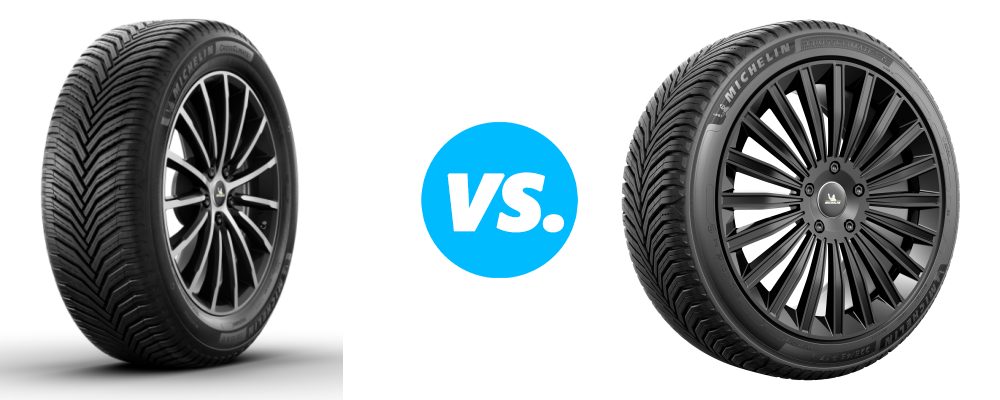
Yes. In the only test with both tires on the car, the CrossClimate 3 was ahead of the CrossClimate 2 in the dry, in the wet and on snow. What has changed is the competition. The CrossClimate 2 had a clear lead over its rivals in dry braking, and they have caught up, so in independent tests the CrossClimate 3 doesn't stand out from the field the way the CrossClimate 2 did when it was new. The wet was never a strength of the standard CrossClimate: the CrossClimate 3 is better there than the CrossClimate 2, but still not one of the best.
- Head to head: in my launch test the CrossClimate 3 stopped 3% shorter in the wet, lapped the wet and dry handling circuits quicker, edged the CrossClimate 2 in dry braking and was 7% quicker around the snow circle.
- Snow: it is still the benchmark. The CrossClimate 3 finished top 3 for snow braking in all 7 of its independent tests, and had the best snow handling in 5 of 6 measurements.
- Dry against rivals: the CrossClimate 2 stopped shortest in 19 of 31 dry braking measurements in its tests. The CrossClimate 3 has made the dry braking top 3 once in 9. As it out-brakes the CrossClimate 2 head to head, that is the rivals catching up, not the CrossClimate 3 going backwards.
- Wet against rivals: the CrossClimate 2 was never strong in the wet, top 3 for wet braking in just 3 of 37 measurements. The CrossClimate 3 is better in the wet than the CrossClimate 2, but it hasn't been top 3 for wet braking in its 9 measurements either.
- Comfort: testers and owners both rate the CrossClimate 3 as the more comfortable tire.
- Overall: the CrossClimate 2 won 6 of its 27 tests. The CrossClimate 3 has not won any of its 7 yet, but finished 4th or better in five of them.
- CrossClimate 3 Sport: launched at the same time, it fixes most of the CrossClimate 3's weak spots, above all in the wet. It stopped shorter on wet roads in all six tests of the pair, by 3.5% to 8.9%, but gives up tread life and some snow grip, and only comes in 18 inches and up.
Both tires currently score 9.5 out of 10 on Tire Reviews.
The launch test
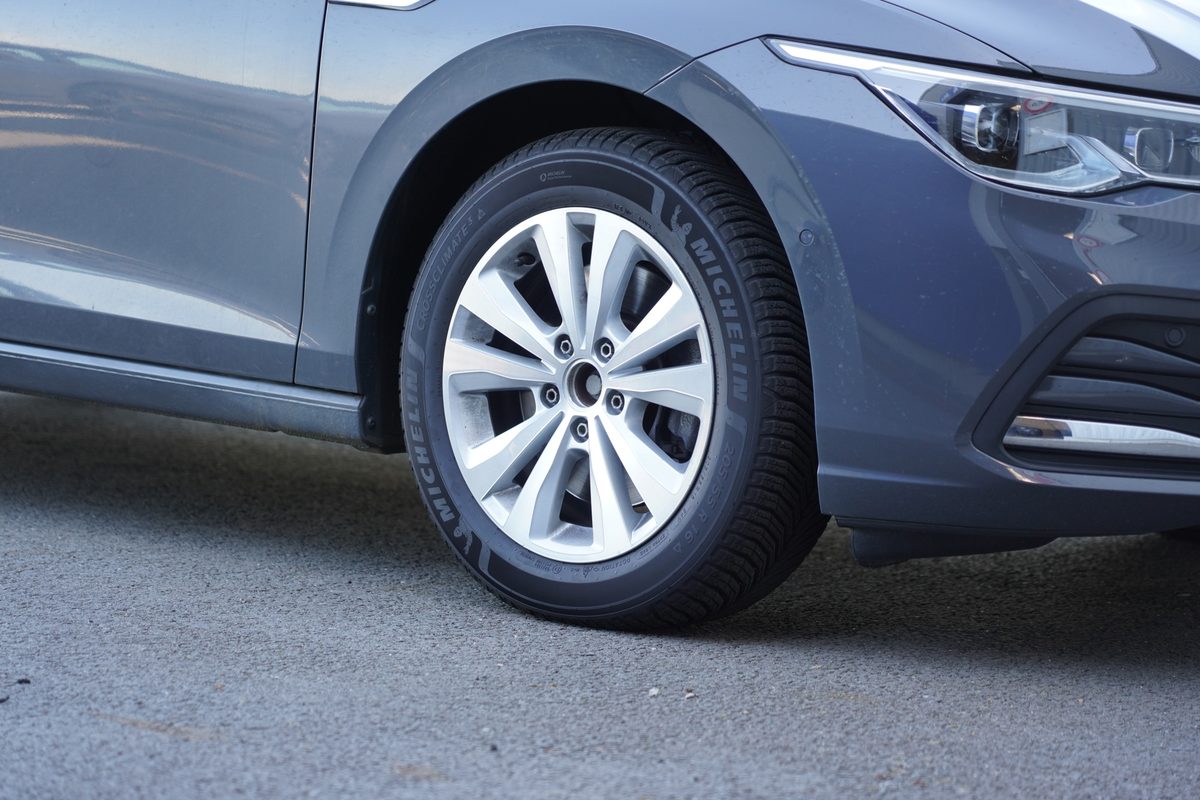
I spent a week at the launch driving both tires, and the results from that test (205/55 R16 on a VW Golf, with the snow figures from TÜV testing) are still the only direct comparison. The CrossClimate 3 was ahead in every measured discipline except curved aquaplaning and rolling resistance, but by small margins:
| Test | CrossClimate 2 | CrossClimate 3 |
|---|---|---|
| Wet braking | 31.23 m | 30.29 m |
| Wet handling lap | 100.73 s | 100.06 s |
| Curved aquaplaning | 2.68 m/s² | 2.56 m/s² |
| Dry braking | 38.96 m | 38.79 m |
| Dry handling lap | 81.4 s | 80.7 s |
| Snow braking | 9.22 m | 8.89 m |
| Snow circle | 23.4 s | 21.81 s |
| Rolling resistance | 7.1 kg/t | 7.2 kg/t |
That is a 3% shorter wet stop and a 7% quicker snow circle for the new tire, with dry braking almost level. Michelin's stated aims for the CrossClimate 3 were better wear and better wet grip without losing the CrossClimate 2's snow performance or rolling resistance, and it told us Dekra's wear testing put the new tire back at the top of the segment.
How each has done in independent tests
Since the launch, the CrossClimate 3 has been through seven full all-season tests:
- 2nd of 8 in the 2026 Auto Express test
- 4th of 15 in the 2026 Auto Bild test
- 4th of 12 in the 2026 Auto Bild Allrad SUV test
- 4th of 10 in the 2026 Auto Zeitung test
- 4th of 9 in the 2026 Die Reifentester test
- 7th of 15 in the 2025 Auto Bild test
- 8th of 10 in our own 2026/27 all-season test
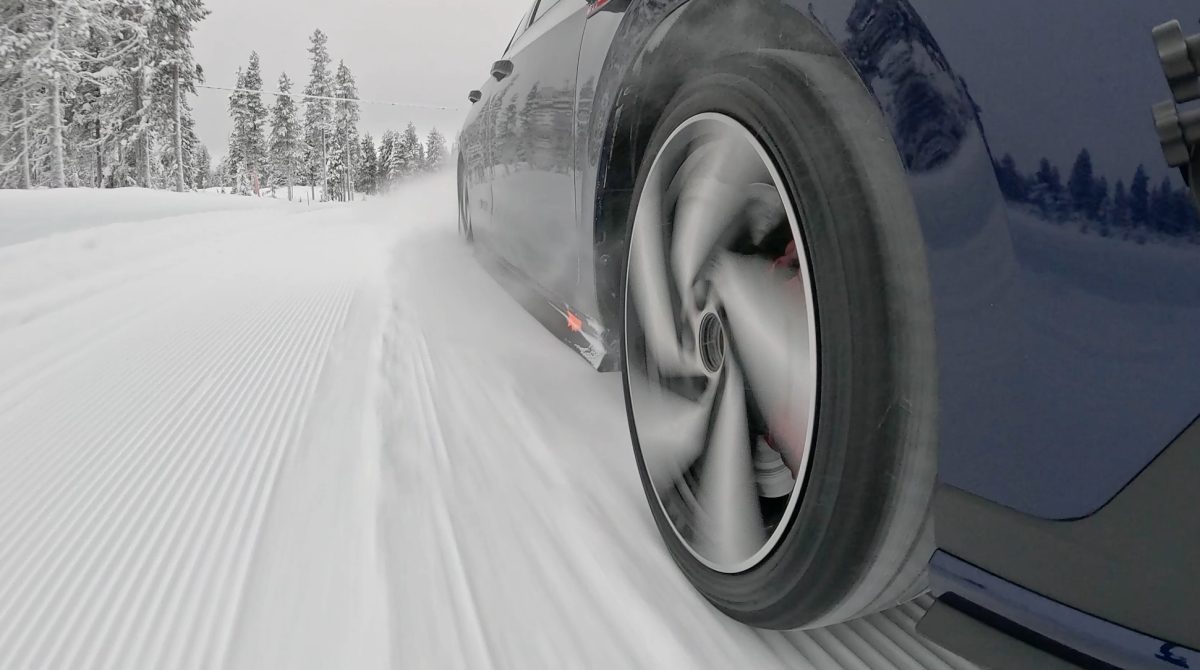
Our own test shows the pattern most clearly. The CrossClimate 3 won all four snow tests outright, with the shortest snow braking (26.49 m), the best snow traction and the fastest snow handling lap, and drivers rated it best on snow too. But it was 9th of 10 for wet braking (34.31 m against 31.82 m for the best) and 9th of 10 for wet handling. With its dry results mid-table at best, that left it 8th overall. The CrossClimate 3 Sport had the shortest wet stop in the same test and finished 2nd overall.
The CrossClimate 2 won six of its 27 tests: Auto Bild 2023, the 2024 Auto Bild Allrad minivan and SUV test, Sport Auto 2022, and our own all-season tests in 2021, 2022/23 and 2023. Its only win since the start of 2024 is that Allrad test, and it was 5th of 16 in the 2025 ADAC test. It is still being tested in sizes the CrossClimate 3 doesn't come in, and was 2nd of 16 in the 2026 ADAC test in 185/65 R15.
Discipline by discipline

This counts every measurement in those tests, so a test that measured wet braking at two temperatures counts twice. Reference tires are left out. The two records cover different years and different rivals, so read it as each tire against the field it faced, not against each other.
| Discipline | CrossClimate 2: best / top 3 | CrossClimate 3: best / top 3 |
|---|---|---|
| Snow braking | 11 / 23 of 27 | 5 / 7 of 7 |
| Snow traction | 13 / 21 of 25 | 4 / 6 of 7 |
| Snow handling | 14 / 23 of 24 | 5 / 6 of 6 |
| Dry braking | 19 / 30 of 31 | 0 / 1 of 9 |
| Rolling resistance | 11 / 21 of 22 | 0 / 2 of 7 |
| Wet braking | 1 / 3 of 37 | 0 / 0 of 9 |
| Wet handling | 0 / 0 of 23 | 0 / 1 of 6 |
| Aquaplaning | 3 / 17 of 45 | 0 / 2 of 13 |
| Noise | 2 / 7 of 22 | 1 / 4 of 7 |
| Comfort (tester rating) | 0 / 2 of 5 | 1 / 3 of 5 |
| Wear | 0 / 3 of 8 | 0 / 2 of 3 |
The CrossClimate 3 is the more consistent snow tire of the two, and it scores better on noise and comfort. In dry braking and rolling resistance, the clear lead the CrossClimate 2 had over its rivals hasn't carried over: the CrossClimate 3 sits mid-field there. Given it out-braked the CrossClimate 2 in the dry head to head, the dry braking result says more about how far the rivals have come than about the CrossClimate 3. In the wet, neither tire has been near the front of its tests. There are only three independent wear results for the CrossClimate 3 so far, too few to confirm Michelin's wear claim.
Against the same rivals
Some rivals have been tested against both tires, which is the closest thing to a like-for-like comparison. The figures show how often each Michelin finished ahead.
| Rival | CrossClimate 2 ahead | CrossClimate 3 ahead |
|---|---|---|
| Continental AllSeasonContact 2 | 4 of 13 | 3 of 9 |
| Bridgestone Turanza All Season 6 | 5 of 15 | 5 of 9 |
| Pirelli Cinturato All Season SF3 | 3 of 12 | 1 of 9 |
| Nokian Seasonproof 2 | 1 of 4 | 6 of 7 |
| Kleber Quadraxer 3 | 9 of 10 | 3 of 4 |
| Hankook Kinergy 4S2 | 9 of 16 | 2 of 4 |
The CrossClimate 3 does better against the Bridgestone and the Nokian than the CrossClimate 2 did, and worse against the Pirelli. The Continental AllSeasonContact 2 has finished ahead of both Michelins more often than not. The Goodyear Vector All Season 4, which won our 2026/27 test, has finished ahead of the CrossClimate 3 in all five tests they have shared. For direct comparisons see CrossClimate 3 vs AllSeasonContact 2 and CrossClimate 3 vs Cinturato All Season SF3.
EU labels in the same sizes
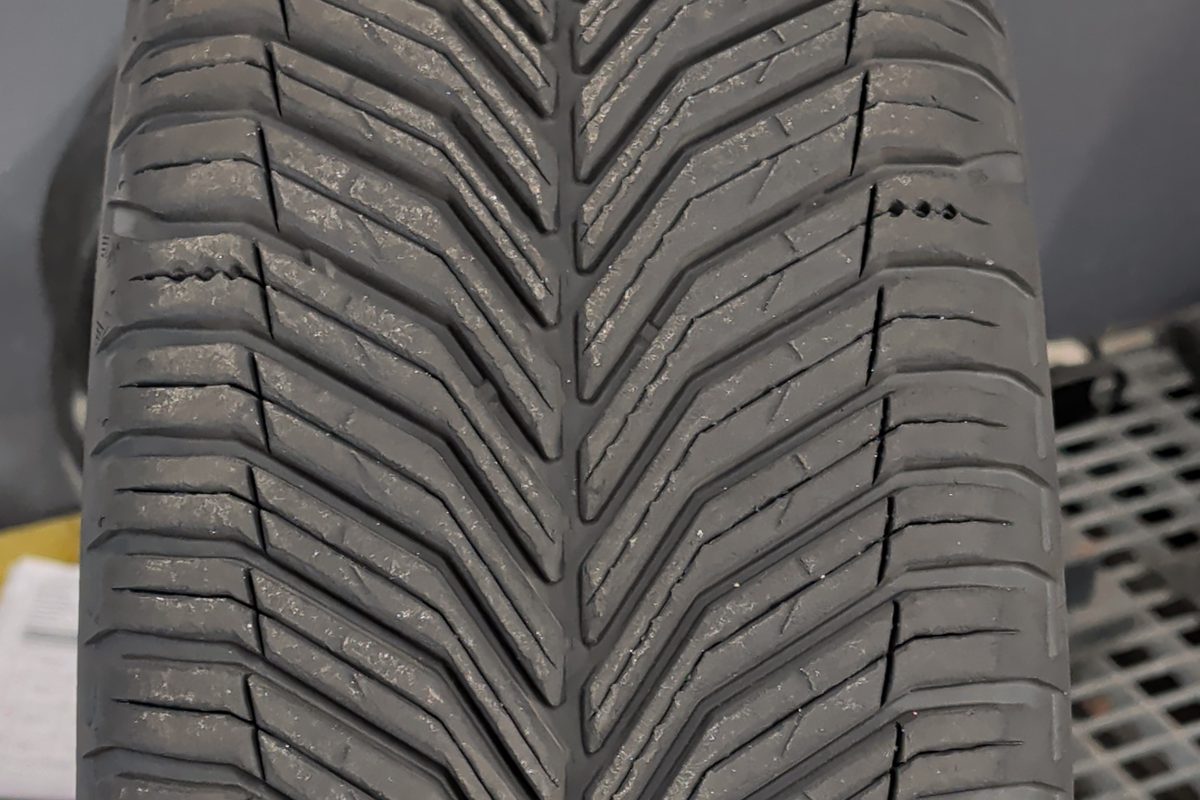
The EU label database lists 54 sizes for both tires. In none of them does the CrossClimate 3 have a worse wet grip grade, and it is a grade better in roughly one size in five. Its rolling resistance grade is the same in most sizes, and better more often than worse. Its noise figure is higher in most sizes, by about 1.4 dB on average: in 205/55 R16 it is 72 dB against 69 dB for the CrossClimate 2. That label figure is noise measured outside the car as it passes, not what you hear inside.
The CrossClimate 3 starts at 16 inches, so in 15-inch sizes the CrossClimate 2 is the only option. Michelin also dropped the separate CrossClimate 2 SUV, and the CrossClimate 3 covers both cars and SUVs.
What owners say
The CrossClimate 2 has 174 owner reviews on Tire Reviews covering 2.4 million miles, with an average of 7.98 out of 10. The CrossClimate 3 has 12 so far, averaging 8.18. Owners rate the CrossClimate 3 higher for comfort (9.0 against 8.3), wear (8.9 against 8.4) and handling (8.5 against 7.5), give the two almost the same scores for dry, wet and snow grip, and rate the CrossClimate 3 lower on ice (6.8 against 7.5). Twelve reviews is a small sample, so treat these as early impressions.
The CrossClimate 3 Sport
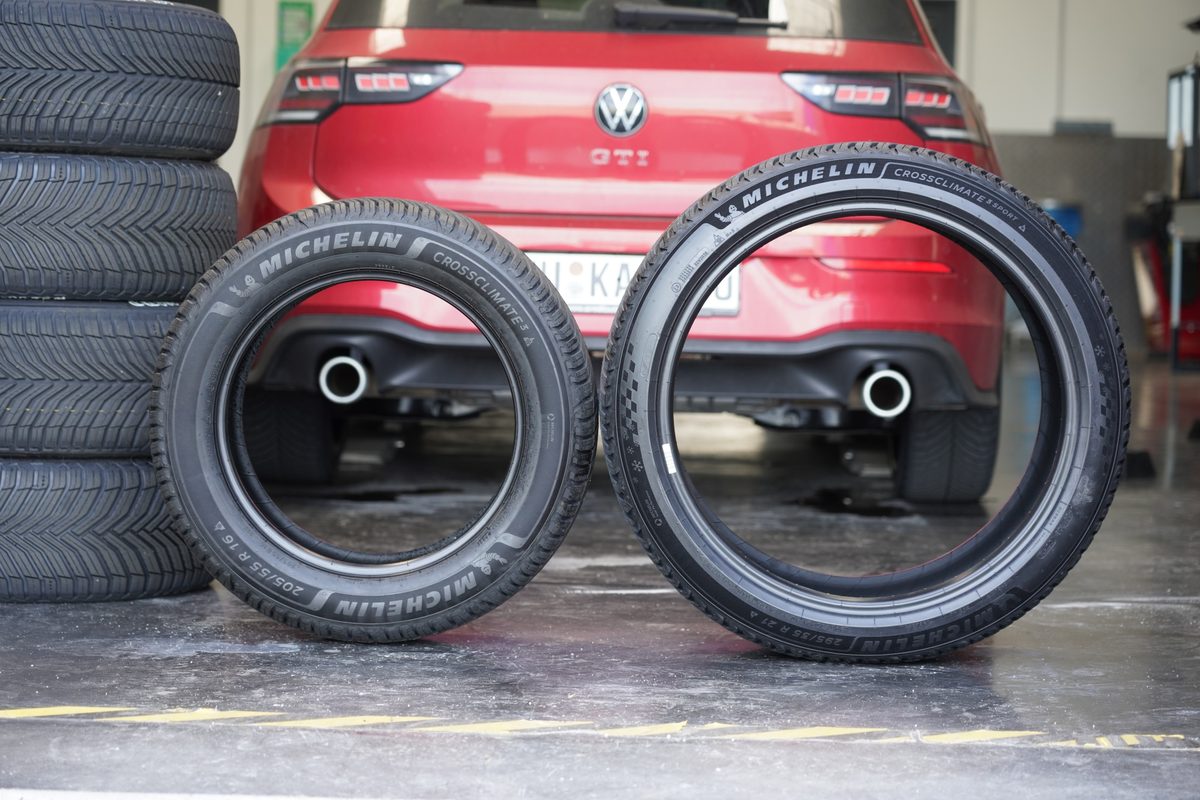
Michelin launched the CrossClimate 3 Sport at the same time as the CrossClimate 3, and it fixes most of what holds the standard tire back, above all in the wet. The trade-off is tread life. Unlike the CrossClimate 2 and 3, these two have been tested side by side six times, all in 225/40 R18: my first test of the pair, our 2026/27 test, my Michelin range test, the 2025 Auto Bild test, the 2026 Die Reifentester test and the 2025 Auto Motor und Sport test. The table counts how often each tire was ahead.
| Discipline | CrossClimate 3 Sport ahead | CrossClimate 3 ahead |
|---|---|---|
| Wet braking | 6 of 6 | 0 of 6 |
| Wet handling lap | 5 of 5 | 0 of 5 |
| Aquaplaning | 8 of 10 | 2 of 10 |
| Dry braking | 6 of 6 | 0 of 6 |
| Dry handling lap | 5 of 5 | 0 of 5 |
| Rolling resistance | 5 of 5 | 0 of 5 |
| Snow braking | 1 of 5 | 4 of 5 |
| Snow traction | 1 of 5 | 4 of 5 |
| Snow handling | 0 of 4 | 4 of 4 |
| Comfort (tester rating) | 0 of 3 | 3 of 3 |
| Noise | 0 of 4 | 4 of 4 |
| Wear | 0 of 1 | 1 of 1 |
The Sport stopped shorter in the wet in all six tests, by 3.5% to 8.9%, and was 2.8% to 5.1% quicker around the wet handling laps. In our 2026/27 test it had the shortest wet stop of the 10 tires, where the CrossClimate 3 was 9th, and in the Die Reifentester test it was 2nd of 9, where the CrossClimate 3 was last. Its wet handling laps are quicker than the CrossClimate 3's but not class-leading: 8th of 10 in our test and 8th of 15 in the Auto Bild test. Every size of the Sport is labelled A for wet grip and every size of the CrossClimate 3 is labelled B, and owners rate its wet grip 9.0 against 7.8, from 24 and 12 reviews.
It was also 2.7% to 4% shorter in dry braking, and had the lower rolling resistance every time it was measured. Overall it finished ahead of the CrossClimate 3 in my first test (1st against 3rd of 4), the Auto Bild test (3rd against 7th of 15) and our 2026/27 test (2nd against 8th of 10), and it scores 9.6 out of 10 on Tire Reviews.
On tread life, the Sport starts with about 1 mm less tread (6.6 mm against 7.5 mm in our 2026/27 test), and the only test to measure wear on both, the Auto Bild test, predicted 46,550 km against 64,050 km for the CrossClimate 3. That is 27% less, and 11th of 15 against 3rd. It is a single result, but it fits what Michelin told us at the launch: the CrossClimate 3 was aimed at leading the segment for wear, while the target for the Sport was two sets lasting as long as a Pilot Sport 5 summer set and a Pilot Alpin 5 winter set. Owners score the two almost the same for wear so far (8.8 against 8.9), but the Sport's reviews only cover about 88,000 miles.
The Sport also gives up some snow grip and refinement. The CrossClimate 3 stopped shorter on snow in four of the five tests, by up to 7.4%, was quicker in all four snow handling tests, and was the more comfortable and quieter tire every time. If snow is the main reason you want an all-season tire, stay with the CrossClimate 3. The size range may decide it anyway: the Sport comes in 18 to 23 inches and the CrossClimate 3 in 16 to 22, and only five sizes are in the EU label database for both.
Which to buy
- Regular snow: the CrossClimate 3. It has been the best all-season tire on snow in most of its tests.
- Wet roads are the priority: the CrossClimate 3 Sport, if your car takes 18-inch or larger wheels. The CrossClimate 3 is better in the wet than the CrossClimate 2, but the wet is still not its strength. In our 2026/27 test the CrossClimate 3 Sport and Goodyear Vector All Season 4 stopped shortest in the wet, and the Nokian Seasonproof 2 and Vector All Season 4 were quickest on the wet handling lap.
- 15-inch wheels: the CrossClimate 2, which is the only one of the two made in that size, and finished 2nd in the 2026 ADAC test in 185/65 R15.
- North America: Michelin says the CrossClimate 3 won't come to the US and Canada for several years, and the CrossClimate 2 AW stays on sale there. More on that here.
- Performance cars on 18 inches and up: the CrossClimate 3 Sport, as long as you accept shorter tread life and less snow grip than the CrossClimate 3. See the CrossClimate 3 Sport against the CrossClimate 3.
The CrossClimate 3 is a better tire than the CrossClimate 2. It was ahead in the dry, the wet and on snow in the only direct test, its labels are as good or better for wet grip size for size, and it is more comfortable. What it doesn't have is the clear lead over its rivals that the CrossClimate 2 had when it launched: rivals have caught up in the dry, and in the wet, which was never a strength of the standard CrossClimate, it is better than the CrossClimate 2 but still behind the best. It is still the best all-season tire on snow in most of its tests. If you have CrossClimate 2s that are working well, there is no need to switch early, and when they are worn out the CrossClimate 3 is the better replacement. If wet grip matters more to you than mileage and snow, and your car takes 18-inch or larger wheels, the CrossClimate 3 Sport is the one to buy.

Latest articles
 Atturo Launches the Trail Blade AT2, Its New All-Terrain TireAtturo has announced the Trail Blade AT2, a 3PMSF-rated all-terrain tire for pickups and SUVs that replaces the original Trail Blade A/T and arrives a... Who Cites Tire ReviewsRegulators, researchers, tire makers and the motoring press cite Tire Reviews tests and data. Each source is listed here with a link to the original. How We Score Our Tire TestsFrom our winter 2026 tests onwards, Tire Reviews scores its own tests with a new method in which each published weight is the share of the overall res...
 Pirelli Launches the Scorpion Winter 3, Its New Winter Tire for SUVsPirelli has launched the Scorpion Winter 3, the third generation of its SUV winter tire and the replacement for the Scorpion Winter 2. Pirelli says it...
Discussion