Top Tire Review has put six Asian-market ultra-high performance tires through a comprehensive test for 2024/25. The lineup includes five standard UHP tires - Continental MaxContact MC7, Michelin Pilot Sport 5, Goodyear Eagle F1 Asymmetric 6, Toyo Proxes TR1, and the Chinese-made RoadX RXMotion U11. Adding an interesting comparison, Hankook's EV-focused iON evo was included to see how a dedicated electric vehicle tire performs against traditional UHP options.
Testing was carried out using 235/45 R18 tires mounted on an Audi SQ2. Given Asia's frequent heavy rainfall, wet performance made up 40% of the final score, followed by dry performance (30%), noise and comfort (25%), and rolling resistance (5%).
Lateral wet grip in m/s squared (Higher is better)
Continental MaxContact MC7
0.95 m/s
Goodyear Eagle F1 Asymmetric 6
0.95 m/s
Hankook iON Evo
0.93 m/s
Michelin Pilot Sport 5
0.92 m/s
Toyo Proxes TR1
0.83 m/s
RoadX RXMOTION U11
0.78 m/s
Straight Aqua
Straight Aqua
Spread: 4.50 Km/H (5.8%)|Avg: 76.82 Km/H
Float Speed in Km/H (Higher is better)
Michelin Pilot Sport 5
78.10 Km/H
Hankook iON Evo
78.00 Km/H
Continental MaxContact MC7
77.90 Km/H
Goodyear Eagle F1 Asymmetric 6
77.80 Km/H
Toyo Proxes TR1
75.50 Km/H
RoadX RXMOTION U11
73.60 Km/H
Comfort
Subj. Comfort
Subj. Comfort
Spread: 0.60 Points (8.5%)|Avg: 6.65 Points
Subjective Comfort Score (Higher is better)
Continental MaxContact MC7
7.10 Points
Hankook iON Evo
6.80 Points
Toyo Proxes TR1
6.50 Points
RoadX RXMOTION U11
6.50 Points
Goodyear Eagle F1 Asymmetric 6
6.50 Points
Michelin Pilot Sport 5
6.50 Points
Noise
Noise
Spread: 0.80 dB (1.2%)|Avg: 69.03 dB
Internal noise in dB (Lower is better)
Hankook iON Evo
68.60 dB
Goodyear Eagle F1 Asymmetric 6
68.80 dB
Michelin Pilot Sport 5
69.00 dB
Toyo Proxes TR1
69.20 dB
Continental MaxContact MC7
69.20 dB
RoadX RXMOTION U11
69.40 dB
Value
Rolling Resistance
Rolling Resistance
Spread: 0.91 kg / t (11.9%)|Avg: 8.23 kg / t
Rolling resistance in kg t (Lower is better)
Hankook iON Evo
7.65 kg / t
Goodyear Eagle F1 Asymmetric 6
8.12 kg / t
Toyo Proxes TR1
8.17 kg / t
Continental MaxContact MC7
8.33 kg / t
Michelin Pilot Sport 5
8.54 kg / t
RoadX RXMOTION U11
8.56 kg / t
19,000 km
£1.45/L
8.0 L/100km
--
Annual Difference
--
Lifetime Savings
--
Extra Fuel/Energy
--
Extra CO2
Estimates based on typical driving conditions. Rolling resistance accounts for approximately 20% of IC vehicle fuel consumption and 25% of EV energy consumption. Actual savings vary based on driving style, vehicle weight, road conditions, and tire age. For comparative purposes only. Lifetime savings based on a 40,000km / 25,000 mile tread life.
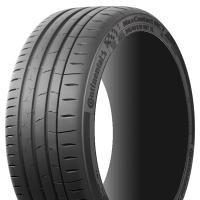
Continental MaxContact MC7 dominated the test, taking first place in most wet tests and dry braking. The tire led wet braking at 29.3m and wet handling with an 80.05s lap time. It also topped the comfort ratings at 7.1 points. While its overall performance was hard to fault, it scored mid-pack for interior noise at 69.2 dB and aquaplaning resistance, suggesting small room for improvement in these areas.
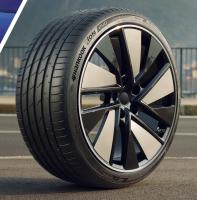
Hankook iON evo impressed as an EV-focused tire, finishing second overall. It performed strongly in the wet, stopping at 30.1m and lapping in 81.81s. The tire led both rolling resistance at 7.65 N/kN and interior noise at 68.6 dB - key metrics for EVs. However, its dry performance was less impressive, with mid-pack results in both braking and handling tests showing room for improvement.
Michelin Pilot Sport 5 secured third place with balanced performance. It excelled in aquaplaning tests, leading both longitudinal (78.1 km/h) and lateral (3.31 m/s²) measurements. The tire also performed well in wet handling with an 80.93s lap time. However, its rolling resistance was high at 8.54 N/kN, and comfort scores were average at 6.5 points, falling short of premium expectations.
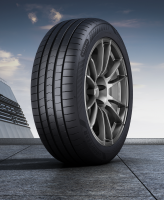
Goodyear Eagle F1 Asymmetric 6 showed its strength in dry conditions, leading both handling tests with a 53.64s lap time and 7.5 subjective score. It also performed well in wet cornering and lateral aquaplaning. The tire's main weakness was wet performance, particularly in braking where it needed 31.5m to stop - over 2m longer than the test winner.
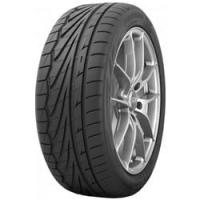
Toyo Proxes TR1 struggled in most performance tests, though did show some positives in efficiency. While its rolling resistance was competitive at 8.17 N/kN, the tire needed significant improvements across both wet and dry handling. Wet braking required 35.6m - over 6m longer than the leader, while both wet and dry handling lap times were among the slowest.
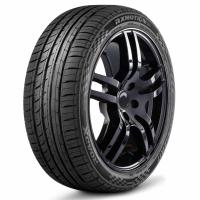
RoadX RXMotion U11 finished last, with notable weaknesses in wet performance. The tire needed 37.7m to stop in wet conditions and posted the slowest wet handling lap at 89.26s. Its only real strength was dry handling, where it performed better than expected for a budget option. The tire's low price point reflects its position as an economy option with significant performance compromises.




Discussion