For the 2025/26 Tire Reviews Nordic Studless Winter Tire Test, I have tested five friction winter tires plus two reference sets (a studded tire and a Central European winter tire) across 21 tests in 6 categories: snow, ice, wet, dry, comfort/noise, and rolling resistance. If you drive in regions with frequent snow and ice, this is the group test you need. All these tires are available to buy in North America and Europe!
Testing Methodology
Test Driver
Jonathan Benson
Tire Size
205/55 R16
Test Vehicle
VW Golf
Test Location
Professional Proving Ground
Test Year
2025
Tires Tested
5
Show full testing methodologyHide methodology
Every tire is tested using calibrated instrumented measurement and structured subjective assessment. Reference tires are retested throughout each session to correct for changing conditions, ensuring fair, repeatable comparisons. Multiple reference sets are used where needed so that control tire wear does not affect accuracy.
We use professional-grade testing equipment including GPS data loggers, accelerometers, and calibrated microphones. All tires are broken in and conditioned before testing begins. For full details on our equipment, preparation process, and calibration procedures, see our complete testing methodology.
Categories Tested
Dry Braking
For dry braking, I drive the test vehicle at an entry speed of 110 km/h and apply full braking effort to a standstill with ABS active on clean, dry asphalt. I typically use an 100–5 km/h measurement window. My standard programme is five runs per tire set where possible, although the sequence can extend to as many as fifteen runs if conditions and tire category justify it. I analyse the full set of runs and discard statistical outliers before averaging. Reference tires are run repeatedly throughout the session to correct for changing conditions.
Dry Handling
For dry handling, I drive at the limit of adhesion around a dedicated handling circuit with ESC disabled where possible so I can assess the tire's natural balance, transient response, and limit behaviour without electronic intervention masking the result. I usually complete between two and five timed laps per tire set, depending on the circuit, tire type, and consistency of conditions. I exclude laps affected by clear driver error or obvious environmental inconsistency. Control runs are carried out frequently throughout the session, and I often use multiple sets of control tires so that wear on the references does not become a meaningful variable. For more track-focused products, I also do endurance testing, which is a set number of laps at race pace to determine tire wear patterns and heat resistance over longer driving.
Subj. Dry Handling
Objective data is only part of the picture, so I also carry out a structured subjective handling assessment at the limit of adhesion on a dedicated dry handling circuit. I score steering precision, steering response, turn-in behaviour, mid-corner balance, corner-exit traction, breakaway characteristics, and overall confidence using a standardised 1–10 scale used consistently across my testing. The final assessment combines numeric scoring with written technical commentary. I complete familiarisation laps on the control tire before evaluating each candidate.
Wet Braking
For wet braking, I drive the test vehicle at an entry speed of 88 km/h and apply full braking effort to a standstill with ABS active on an asphalt surface with a controlled water film. I typically use an 80–5 km/h measurement window to isolate tire performance from variability in the initial brake application. My standard programme is eight runs per tire set where possible, although the sequence can extend to as many as fifteen runs if conditions and tire category justify it. I analyse the full set of runs and discard statistical outliers before averaging. To correct for changing conditions, I run reference tires repeatedly throughout the session — in wet testing, typically every three candidate test sets.
Wet Handling
For wet handling, I drive at the limit of adhesion around a dedicated handling circuit. I generally use specialist wet circuits with kerb-watering systems designed to maintain a consistent surface condition. ESC is disabled where possible so I can assess the tire's natural balance, transient response, and limit behaviour without electronic intervention masking the result. I usually complete between two and five timed laps per tire set, depending on the circuit, tire type, and consistency of conditions. I exclude laps affected by clear driver error or obvious environmental inconsistency. Control runs are carried out frequently throughout the session, and I often use multiple sets of control tires so that wear on the references does not become a meaningful variable.
Subj. Wet Handling
Objective data is only part of the picture, so I also carry out a structured subjective handling assessment at the limit of adhesion on a dedicated wet handling circuit. I score steering precision, steering response, turn-in behaviour, mid-corner balance, aquaplaning resistance, breakaway characteristics, and overall confidence using a standardised 1–10 scale used consistently across my testing. The final assessment combines numeric scoring with written technical commentary. I complete familiarisation laps on the control tire before evaluating each candidate.
Wet Circle
For wet lateral grip testing, I use a circular track of fixed radius, typically between 30 and 50 metres, broadly aligned with ISO 4138 principles. The surface is wetted in a controlled and repeatable manner. I progressively increase speed until the maximum sustainable cornering speed is reached. I normally record multiple laps in both clockwise and counterclockwise directions to reduce the influence of camber, banking, or directional track bias. I then calculate average lateral acceleration and compare the result with the reference tire.
Straight Aqua
To measure straight-line aquaplaning resistance, I drive one side of the vehicle through a water trough of controlled depth, typically around 7 mm, while the opposite side remains on dry pavement. I enter at a fixed speed and then accelerate progressively. I define aquaplaning onset as the point at which the wheel travelling through the water exceeds a specified slip threshold relative to the dry-side reference wheel. I usually perform four runs per tire set and average the valid results.
Curved Aquaplaning
For curved aquaplaning, I use a circular track, typically around 100 metres in diameter, with a flooded arc of controlled water depth, usually about 7 mm. The vehicle is instrumented with GPS telemetry and a tri-axial accelerometer. I drive through the flooded section at progressively increasing speed, typically in 5 km/h increments, and record the minimum sustained lateral acceleration at each step. The test continues until lateral acceleration collapses, indicating complete aquaplaning. The result is expressed as remaining lateral acceleration in m/s² as speed rises.
Snow Braking
For snow braking, I drive the test vehicle at an entry speed of 50 km/h and apply full braking effort to a standstill with ABS active on a groomed, compacted snow surface, measuring 45-5 km/h. I generally use a wide VDA (vehicle dynamic area) and progressively move across the surface between runs so that no tire ever brakes on the same piece of snow twice. My standard programme is twelve runs per tire set, although the sequence can extend further if the data justify it. I analyse the full set of runs and discard statistical outliers before averaging. The surface is regularly groomed throughout the session. To correct for changing snow surface conditions, I run reference tires repeatedly — typically every two candidate test sets.
Snow Traction
For snow traction, I accelerate the vehicle from rest on a groomed snow surface with traction control active and measure speed and time using GPS telemetry. I typically use a 5–35 km/h measurement window to reduce the influence of launch transients and powertrain irregularities. I use a wide VDA (vehicle dynamic area) and progressively move across the surface between runs so that no tire ever accelerates on the same piece of snow twice. The surface is regularly groomed throughout the session. I complete multiple runs per tire set and average the valid results. Reference tires are run typically every two candidate test sets to correct for changing snow surface conditions.
Snow Handling
For snow handling, I drive at the limit of adhesion around a dedicated snow handling circuit with ESC disabled where possible. The circuit is groomed and prepared after every run while tires are being changed, so each set runs on a consistently prepared surface. I usually complete between two and five timed laps per tire set, excluding laps affected by clear driver error or obvious environmental inconsistency. Because snow surfaces degrade more rapidly than asphalt, control runs are carried out more frequently — typically every two candidate test sets.
Subj. Snow Handling
Objective data is only part of the picture, so I also carry out a structured subjective handling assessment at the limit of adhesion on a dedicated snow handling circuit. The circuit is groomed and prepared after every run while tires are being changed, so each set runs on a consistently prepared surface. I score steering precision, turn-in behaviour, mid-corner balance, corner-exit traction, breakaway characteristics, and overall confidence on snow using a standardised 1–10 scale used consistently across my testing. The final assessment combines numeric scoring with written technical commentary. I complete familiarisation laps on the control tire before evaluating each candidate.
Snow Slalom
My slalom layout is variable rather than fixed, with cone count and spacing adjusted to suit the vehicle, tire category, and objective of the programme. On snow, the test is designed to evaluate transient response, lateral grip recovery, body control during rapid load transfer, and steering precision on a low-friction surface. The surface is regularly groomed throughout the session. Timing is usually recorded using VBOX rather than light gates. I average the valid runs and, where appropriate, disable ESC so the result reflects the tire's behaviour rather than the intervention strategy of the vehicle.
Ice Braking
For ice braking, I drive the test vehicle at an entry speed of 35 km/h and apply full braking effort to a standstill with ABS active on a prepared ice surface. Surface temperature is continuously monitored as ice friction properties vary substantially with temperature. My standard programme is twelve runs per tire set but with ice testing, you often do many more. I analyse the full set of runs and discard statistical outliers before averaging. Reference tires are run typically every two candidate test sets to correct for changing surface conditions.
Ice Traction
For ice traction, I accelerate the vehicle from rest on a prepared ice surface with traction control active and measure speed and time using GPS telemetry. I typically use a 5–35 km/h measurement window to reduce the influence of launch transients. I use a wide VDA (vehicle dynamic area) and progressively move across the surface between runs so that no tire ever accelerates on the same piece of ice twice. Surface temperature is continuously monitored. I complete multiple runs per tire set and average the valid results, with reference tires run typically every two candidate test sets.
Ice Handling
For ice handling, I drive at the limit of adhesion around a dedicated ice handling circuit with ESC disabled where possible. I usually complete between two and five timed laps per tire set, excluding laps affected by clear driver error or obvious environmental inconsistency. Surface temperature is continuously monitored. Control runs are carried out frequently — typically every two candidate test sets — to account for changing ice surface conditions.
Subj. Ice Handling
Objective data is only part of the picture, so I also carry out a structured subjective handling assessment on a prepared ice circuit. I score steering response, predictability, grip progression, breakaway characteristics, and overall confidence on ice using a standardised 1–10 scale used consistently across my testing. Surface temperature is monitored throughout. The final assessment combines numeric scoring with written technical commentary.
Subj. Comfort
To assess comfort, I drive on a wide range of road surfaces (often dedicated comfort tracks at test facilities) at speeds from 50 to 120 km/h, including smooth motorway, coarse surfaces, expansion joints, broken pavement, and sharp-edged obstacles. I evaluate primary ride quality, secondary ride quality, impact harshness, seat-transmitted vibration, and the tire's ability to absorb sharp inputs. Ratings are assigned on a 1–10 scale relative to the reference tire.
Noise
I measure external pass-by noise in accordance with UNECE Regulation 117 and ISO 13325 using the coast-by method on a compliant test surface. Calibrated microphones are positioned beside the test lane, and the vehicle coasts through the measurement zone under controlled conditions. I record the maximum A-weighted sound pressure level in dB(A), complete multiple runs over the relevant speed range, and normalise the result to the reference speed required by the procedure.
Rolling Resistance
Rolling resistance is measured under controlled laboratory conditions in accordance with ISO 28580 and UNECE Regulation 117 Annex 6. The tire is mounted on a test wheel and loaded against a large-diameter steel drum. After thermal stabilisation at the prescribed test speed, rolling resistance force is measured at the spindle and corrected according to the relevant procedure. The result is expressed as rolling resistance coefficient, typically in kg/tonne.
How each category is weighted in the overall score:
Dry10%
Dry Braking50%
Dry Handling40%
Subj. Dry Handling10%
Wet15%
Wet Braking40%
Wet Handling30%
Subj. Wet Handling10%
Wet Circle5%
Straight Aqua10%
Curved Aquaplaning5%
Snow35%
Snow Braking25%
Snow Traction25%
Snow Handling20%
Subj. Snow Handling10%
Snow Slalom10%
Ice25%
Ice Braking25%
Ice Traction25%
Ice Handling40%
Subj. Ice Handling10%
Comfort10%
Subj. Comfort50%
Noise50%
Value5%
Rolling Resistance100%
Snow
Snow and ice performance is really important for these types of winter tires. Yes, it's important for all winter tires, however these are the types of winter tires you fit if you live in a region that gets a lot of snow and ice, and they sacrifice dry and wet performance to give the best grip possible in winter conditions.
So are any of them bad in the snow? Not really. The Marshal was the slowest around the lap, but just 4.1% off the best. Subjectively you really did notice the tire taking a little longer to respond to steering inputs, and sliding a little longer once you started sliding, but it was certainly an acceptable level of grip.
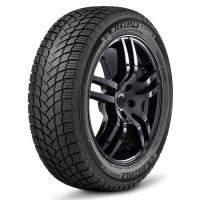
Then you had the Michelin and Nokian. The Michelin had great grip but its window between grip and no grip was rather abrupt, meaning it was a little trickier than the best to get around the lap. But let me emphasize: it is still an excellent tire in the snow. The Nokian felt a little more drivable, really nice to drive and a tire that works very well around the lap.
The Continental was the second fastest around the lap and had the best turn-in and steering reaction of all the tires. I found the front to be so sharp it brought the rear of the car in more, but you could really attack the corners and feel confident. The fastest tire by a tiny margin was the Goodyear, which had lots of grip and was very controllable.
How did the studded tire compare? Midpack. Studded tires generally have a slightly harder compound and/or construction than their friction counterparts in order to keep the studs in and pointing in the correct direction, so when you're driving in snow, you can be at a slight disadvantage.
The Continental WinterContact TS 870, which is what's called a Central European winter tire and is meant to be a step down in snow performance, was actually faster than the Marshal—an impressive result for a tire that should, in theory, be quite a lot better than the rest in the dry and wet.
Snow Handling
Spread: 3.30 s (4.1%)|Avg: 81.12 s
Snow handling time in seconds (Lower is better)
Goodyear UltraGrip Ice 3
79.64 s
Continental VikingContact 8
80.20 s
Nokian Hakkapeliitta R5
80.64 s
Michelin X Ice Snow
81.06 s
Nokian Hakkapeliitta 10 Ref
81.44 s
Continental WinterContact TS 870 Ref
81.91 s
Marshal iZen KW31
82.94 s
Snow Braking
Spread: 0.67 M (4.1%)|Avg: 16.75 M
Snow braking in meters (40 - 5 km/h) [Average Temperature -2.5c] (Lower is better)
Snow Braking: Safety Impact: Best vs Worst Tire
Snow Traction
Spread: 0.44 s (15.8%)|Avg: 3.08 s
Snow acceleration time (0 - 20 km/h) [Average Temperature -2.5c] (Lower is better)
Nokian Hakkapeliitta 10 Ref
2.79 s
Continental VikingContact 8
3.00 s
Goodyear UltraGrip Ice 3
3.08 s
Michelin X Ice Snow
3.12 s
Nokian Hakkapeliitta R5
3.13 s
Marshal iZen KW31
3.18 s
Continental WinterContact TS 870 Ref
3.23 s
Ice
Ice is hard. Really hard. Did you know that there are many different types of ice? Smooth ice, which you find at places like junctions and is the hardest type to grip on; rough ice, which is actually pretty grippy; rough ice with light snow, which is slippy; and of course ice can be anywhere between freezing and -40°C, which also totally changes the grip.
Why am I telling you this? So you understand why the handling results are different from traction and braking. Handling was tested on rough ice; traction and braking on smooth ice.
Once again the Marshal was the slowest, but like in the snow, it had acceptable levels of grip. The grip was super peaky, so not the most friendly to drive, but it was fine. The Michelin X-Ice Snow suffered the same fate—great grip, in fact really great grip—but it had a little delay on the steering, and you had to be super smooth compared to the other tires to get a time. Once you'd lost that grip, it dropped off quickly and took a while to recover.
Then, essentially, the final three tires were all excellent. The Continental, Nokian, and Goodyear were all super easy to drive and had really good grip—an outstanding job for these three in terms of blending grip and drivability.
The TS 870 once again surprisingly overperformed, but how about the studs? This is ice, surely the studs were the fastest?! Well, no. On rough ice, the softer compound of the friction tires can be a benefit as they flex more and key into the surface better than the studded tire. The studded tire was the most controllable though. Once it was sliding, you had so much reserve to keep the car going where you wanted it to - it was a pure joy.
The ice traction and braking testing was performed on smooth ice, and this is where the studs really flex - or don't flex, I guess. The studs were over 30% better than the best winter tire, and the TS 870 over 60% worse. This is a huge gap and really shows how a compound designed with ice in mind makes all the difference. It also put the Marshal pretty far back, highlighting the cheaper compounding of that product.
Ice Handling
Spread: 4.71 s (8.6%)|Avg: 56.60 s
Ice handling time in seconds [Average Temperature -13.5c] (Lower is better)
Goodyear UltraGrip Ice 3
54.53 s
Nokian Hakkapeliitta R5
54.76 s
Continental VikingContact 8
54.99 s
Michelin X Ice Snow
56.59 s
Marshal iZen KW31
57.31 s
Nokian Hakkapeliitta 10 Ref
58.77 s
Continental WinterContact TS 870 Ref
59.24 s
Ice Braking
Spread: 5.49 M (90%)|Avg: 8.04 M
Ice braking in meters (20 - 5 km/h) [Average Temperature -4.5c] (Lower is better)
Ice Braking: Safety Impact: Best vs Worst Tire
Ice Traction
Spread: 6.03 s (134.3%)|Avg: 7.17 s
Ice acceleration time (0 - 20 km/h) [Average Temperature -4.5c] (Lower is better)
Nokian Hakkapeliitta 10 Ref
4.49 s
Michelin X Ice Snow
6.46 s
Continental VikingContact 8
6.48 s
Goodyear UltraGrip Ice 3
6.50 s
Nokian Hakkapeliitta R5
7.54 s
Marshal iZen KW31
8.20 s
Continental WinterContact TS 870 Ref
10.52 s
Wet
Wet performance is certainly an important quality of a winter tire, but as this category of winter tire is designed to spend most of its life on snow and ice, and as it's currently impossible to make a tire that does amazingly well on both ice and the wet, it's fair to say the wet performance of these tires has taken a second place in development.
That said, there is quite a spread of grip, and very surprisingly - even to me as I was testing blind - it was the Michelin that was the slowest around the lap. It was a safely balanced tire but just lacked grip on the front axle. I was so shocked by this I pulled up all the recent tests of the X-Ice Snow, and yes, it seems the Michelin has fallen behind in the wet. It was one of the best on ice, so I guess they've traded wet performance for ice grip.
The Marshal was next, a little ahead on time, and pushed the balance of the Golf more towards oversteer, which you don't really want on the road. But the steering feel was good, so I'll give it a break.
Then there was quite a big gap to the third-placed Goodyear, which was really lovely to drive. Every time I use a Goodyear tire on a Golf, it's a really lovely experience. Sure, it didn't quite have the most grip, but the balance was there.
The new Continental was second overall, getting around the lap in a really easy, stable way. A little understeer is what you want, and that's what you got.
And finally, the Nokian Hakkapeliitta R5 was, quite frankly, unbelievable. Again, total surprise to me when discovering which was which, as historically the R5 has been more biased towards ice grip. But this time, it was in a class of its own in the wet.
Usually I can guess pretty accurately what tire I was on, but in this test everything seems a surprise.
Sadly, due to proving grounds being incredibly expensive and the surfaces of handling tracks incredibly important to keep consistent, I can't test the studded tire any further. But I can tell you that our Central European winter tire, the TS 870, is on a totally different level. If you've ever switched from a regular all-season or winter tire to a summer tire, you'll know how much tighter the car feels, and that's how it feels switching from one of these soft compound friction snow tires to a regular winter tire. But that's the benefit you get from lower ice performance.
Wet braking perfectly tracked wet handling, which always makes me so happy. Nokian had an even bigger advantage in the braking test, 12.5% better than the next best, the Continental.
Wet Handling
Spread: 11.71 s (13.6%)|Avg: 93.13 s
Wet handling time in seconds (Lower is better)
Continental WinterContact TS 870 Ref
86.30 s
Nokian Hakkapeliitta R5
90.64 s
Continental VikingContact 8
93.12 s
Goodyear UltraGrip Ice 3
93.51 s
Marshal iZen KW31
97.20 s
Michelin X Ice Snow
98.01 s
Wet Braking
Spread: 12.80 M (38.3%)|Avg: 41.30 M
Wet braking in meters (80 - 5 km/h) (Lower is better)
Wet Braking: Safety Impact: Best vs Worst Tire
Straight Aqua
Spread: 29.80 Km/H (34.7%)|Avg: 62.50 Km/H
Float Speed in Km/H (Higher is better)
Continental WinterContact TS 870 Ref
86.00 Km/H
Goodyear UltraGrip Ice 3
60.40 Km/H
Nokian Hakkapeliitta R5
58.50 Km/H
Michelin X Ice Snow
57.30 Km/H
Continental VikingContact 8
56.60 Km/H
Marshal iZen KW31
56.20 Km/H
Curved Aquaplaning
Spread: 1.85 m/sec2 (55.1%)|Avg: 2.00 m/sec2
Remaining lateral acceleration (Higher is better)
Continental WinterContact TS 870 Ref
3.36 m/sec2
Goodyear UltraGrip Ice 3
2.02 m/sec2
Marshal iZen KW31
1.79 m/sec2
Michelin X Ice Snow
1.69 m/sec2
Nokian Hakkapeliitta R5
1.63 m/sec2
Continental VikingContact 8
1.51 m/sec2
Dry
While in some regions these tires will barely see dry tarmac, I've of course still tested it.
In dry braking, the Nokian stopped the car the best, but just 0.3 meters ahead of the Continental, which were both a couple of meters ahead of the Marshal. Goodyear was fourth, and surprisingly the Michelin was last, which is unusual for the French tire. Unsurprisingly, the milder winter tire was the best overall, but not by as much as I expected.
The dry handling testing was the usual mix of steering testing and lane changes to assess stability and safety, and I did a lap time.
The Nokian was once again the best. This time Goodyear was in second and Continental in third, but as always the gaps were very close. All of the tires felt a little sloppy during high-speed lane changes, but that's part of being an extreme winter tire.
Dry Braking
Spread: 5.20 M (12%)|Avg: 46.52 M
Dry braking in meters (100 - 5 km/h) [Average Temperature 3.5c] (Lower is better)
Dry Braking: Safety Impact: Best vs Worst Tire
Dry Handling
Spread: 2.20 s (3.9%)|Avg: 58.30 s
Dry handling time in seconds (Lower is better)
Continental WinterContact TS 870 Ref
56.80 s
Nokian Hakkapeliitta R5
58.10 s
Goodyear UltraGrip Ice 3
58.40 s
Continental VikingContact 8
58.50 s
Michelin X Ice Snow
59.00 s
Marshal iZen KW31
59.00 s
Comfort
Surprisingly, the comfort testing was again incredibly close, but Goodyear and Nokian had the best comfort levels by a small margin. The Continental had the lowest external noise.
Subj. Comfort
Spread: 0.75 Points (7.5%)|Avg: 9.75 Points
Subjective Comfort Score (Higher is better)
Nokian Hakkapeliitta R5
10.00 Points
Goodyear UltraGrip Ice 3
10.00 Points
Michelin X Ice Snow
9.75 Points
Continental VikingContact 8
9.75 Points
Marshal iZen KW31
9.25 Points
Noise
Spread: 2.70 dB (3.9%)|Avg: 70.30 dB
External noise in dB (Lower is better)
Continental VikingContact 8
69.10 dB
Goodyear UltraGrip Ice 3
69.30 dB
Michelin X Ice Snow
69.60 dB
Continental WinterContact TS 870 Ref
70.50 dB
Nokian Hakkapeliitta R5
71.50 dB
Marshal iZen KW31
71.80 dB
Value
Finally, Continental had the lowest rolling resistance, and Nokian and Goodyear also performed well. The Michelin had what I would call a moderate rolling resistance, and the Marshal was at the level you'd probably start to notice at the fuel pumps.
Rolling Resistance
Spread: 2.26 kg / t (31%)|Avg: 8.06 kg / t
Rolling resistance in kg t (Lower is better)
Continental VikingContact 8
7.29 kg / t
Nokian Hakkapeliitta R5
7.48 kg / t
Goodyear UltraGrip Ice 3
7.59 kg / t
Michelin X Ice Snow
8.14 kg / t
Continental WinterContact TS 870 Ref
8.29 kg / t
Marshal iZen KW31
9.55 kg / t
19,000 km
£1.45/L
8.0 L/100km
--
Annual Difference
--
Lifetime Savings
--
Extra Fuel/Energy
--
Extra CO2
Estimates based on typical driving conditions. Rolling resistance accounts for approximately 20% of IC vehicle fuel consumption and 25% of EV energy consumption. Actual savings vary based on driving style, vehicle weight, road conditions, and tire age. For comparative purposes only. Lifetime savings based on a 40,000km / 25,000 mile tread life.
Excellent in the dry, good grip in the wet, best overall in snow, best overall on ice, good comfort with lowest external noise, lowest rolling resistance.
Low curved aquaplaning resistance.
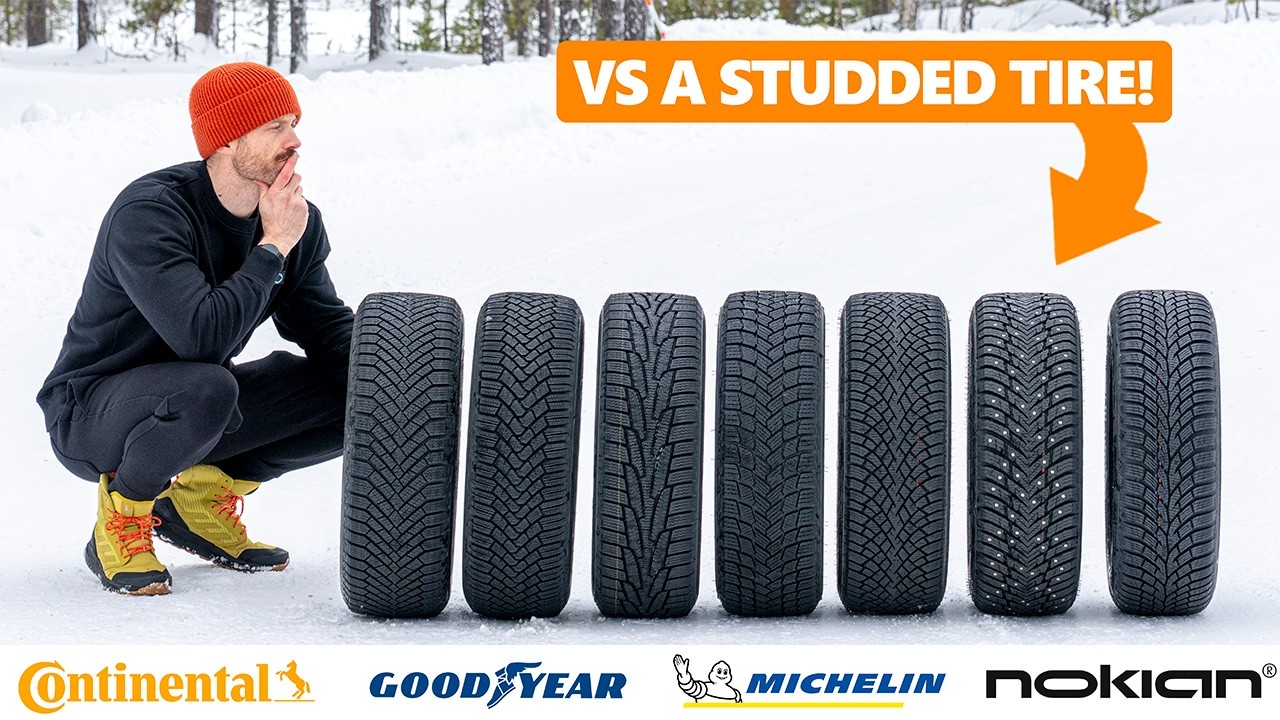
The new Continental VikingContact 8 wins the test, displaying impressively consistent results across all categories. It was one of the best in the dry, very good in the wet if you ignore an usually low curved aquaplaning result, the best overall in the snow, the best overall on ice, the quietest AND the lowest rolling resistance. That is a mega combination of abilities for the new Continental, which make it a deserved winner overall.
Good in the dry, very good in wet handling with best aquaplaning resistance, excellent in the snow, excellent on ice, best comfort levels, low rolling resistance.
Extended wet braking distance.
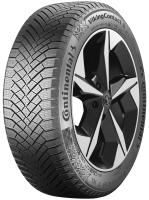
As always, Goodyear has developed a solid all round tire. It's only real weakness was wet braking where it was 14% off the best, however it was solid in the dry, good in wet handling, it had the best aquaplaning resistance which could be important in wet winters, was the best overall in the snow and 2nd best overall on ice. Add that to the joint best comfort scores and a reasonable rolling resistance, the UltraGrip Ice 3 is a very impressive tire.
Best in the dry, by far the best in the wet, good snow braking and snow handling, good rough ice handling, best comfort levels and low rolling resistance.
Significantly reduced grip on smooth ice, weak curved aquaplaning resistance.
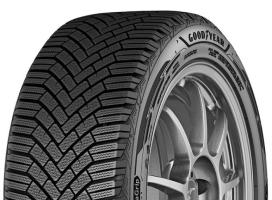
The Nokian Hakkapeliitta R5 would finish in second with a score weighting more towards dry and wet as it was simply in a league of its own in those conditions. Sadly, this dry and wet performance has compromised its winter ability, it was good in snow braking and snow handling, but struggled a little in snow traction, but the real issue was its smooth ice performance in the traction and braking tests were way off the group. Good comfort and a good rolling resistance round out a reasonable result for the R5, but I'd like to see some of that wet grip traded back for ice performance.
Very good snow braking, best ice braking and ice traction.
Weakest dry and wet performance with significantly extended wet braking distances, average rolling resistance.
The Michelin X-Ice Snow finishing fourth by a small margin was not on my bingo card at the start of this test, but data is data. It was strong overall in ice and not too far off the top 3 in the snow, but when you factor in a high rolling resistance and the weakest dry and wet performances overall, fourth is as good as it gets for the french tire. It is now an aging product, hopefully there will be an update soon.
Weak in the wet with extended wet braking distances, difficult subjective handling in all conditions, very weak on ice, high rolling resistance.
In last place was the Marshal iZen KW31. The fact that it was out performed by the central european winter tire in the snow sums it up, but the tire under performed in almost every category. Given this tire is designed for extreme climates but was nowhere near the group in snow and ice, it might be one to avoid.
I was a bit suprised that Nokian updated the compond and it made me hesitate to buy them this year (last year I had a set of Nokian Hakkapeliitta R5, they were excelent tires. So after a couple of weeks, i ordered a set of Goodyear UltraGrip Ice 3. The price were good in my region. Looking forward to see how they are.
Marketing is all this is. Look around, shop around. Read personal reviews. There are other brands at much cheaper prices. Stopped buying these ripoff brands long ago.





I was a bit suprised that Nokian updated the compond and it made me hesitate to buy them this year (last year I had a set of Nokian Hakkapeliitta R5, they were excelent tires.
So after a couple of weeks, i ordered a set of Goodyear UltraGrip Ice 3.
The price were good in my region.
Looking forward to see how they are.
Thanks for a great winter review!
Marketing is all this is. Look around, shop around. Read personal reviews. There are other brands at much cheaper prices. Stopped buying these ripoff brands long ago.
Would love to see the WS90 in this comparo as well for the north americans
Me too sadly we buy the tires in europe where it's not sold.
The dry test comments & graphs seem out of alignment.
Which part, in the final results or the text around the dry graphs?
The latter.
I had a re-read and it seems to make sense to me, which bit don't you like?
My bungle, I was forgetting that the Conti TS 870 wasn't part of the test proper.