German motorhome magazine promobil tested seven summer tires in size 225/75 R 16 C for its April 2026 issue. This is the standard fitment for the Fiat Ducato Maxi and Heavy variants, widely used as a base for motorhomes and campervans. Testing was carried out on a loaded Ducato Maxi to simulate real-world motorhome weights, with results split across wet (50%), dry (40%), and environmental (10%) categories. The seven tires came from Barum, Continental, Firestone, Goodyear, Michelin, Nokian, and Vredestein.
The Vredestein Comtrac 2+ took the overall win with the highest score in the test (9.3 out of 10), delivering the shortest braking distances and strongest cornering grip on both wet and dry surfaces. Its only real weakness is a high rolling resistance - the worst in the group - but promobil's view is that this matters little for motorhomes, where aerodynamic drag dominates fuel consumption at highway speeds. The new Nokian Cargoproof C finished second and was close behind on braking performance. At the other end, two tires received a rating of only "eingeschränkt empfehlenswert" (recommended with reservations): the Firestone Vanhawk 3 had consistently weak wet-surface results and vague steering feel, while the Barum Vanis 3 - despite comfortable dry-road manners - fell short on wet braking and aquaplaning protection.
Test Publication:
Pro Mobil
225/75 R16 C
7 tires
4 categories
Test Publication:
Pro Mobil
Test Size:
225/75 R16 C
Tires Tested:
7 tires
Pro Mobil is not affiliated with, and does not endorse, Tire Reviews. This is independent editorial coverage of their published test.
Dry
Nokian and Vredestein were virtually tied for the shortest dry braking distances, stopping over 3 metres earlier than the Barum at the bottom of the table. Continental also ended up toward the back here - a pattern that continues into wet braking.
- Nokian Cargoproof C
- Vredestein Comtrac 2 plus
- Firestone Vanhawk 3
- Goodyear Efficientgrip Cargo 2
- Michelin AGILIS 3
- Continental Vancontact Ultra
- Barum Vanis 3
Dry handling times were closely bunched, with only 2.2 km/h separating the fastest (Vredestein) from the slowest (Firestone). Barum and Nokian tied for second, which is notable given the Barum's poor braking results - it clearly has decent mechanical grip in corners even if it struggles under heavy longitudinal load.
- Vredestein Comtrac 2 plus
- Nokian Cargoproof C
- Barum Vanis 3
- Continental Vancontact Ultra
- Michelin AGILIS 3
- Goodyear Efficientgrip Cargo 2
- Firestone Vanhawk 3
Testers rated the Barum, Continental, and Vredestein highest for subjective dry handling, praising their predictable, forgiving balance. The Goodyear scored lower here despite having the sharpest steering response in the group - testers noted it felt nervous at the rear during fast direction changes, with a narrow window before breakaway.
- Continental Vancontact Ultra
- Vredestein Comtrac 2 plus
- Barum Vanis 3
- Nokian Cargoproof C
- Michelin AGILIS 3
- Firestone Vanhawk 3
- Goodyear Efficientgrip Cargo 2
Wet
The gap between tires opens up significantly on wet roads. Vredestein and Nokian were well clear of the field, stopping over 3 metres shorter than the next best. Barum finished last, more than 4 metres behind the Vredestein - equivalent to hitting an obstacle at roughly 30 km/h while the Vredestein has already stopped.
- Vredestein Comtrac 2 plus
- Nokian Cargoproof C
- Goodyear Efficientgrip Cargo 2
- Michelin AGILIS 3
- Continental Vancontact Ultra
- Firestone Vanhawk 3
- Barum Vanis 3
Vredestein and Nokian again pulled ahead in wet handling lap times, continuing their dominance from the braking tests. Firestone was the slowest by a clear margin, nearly 4 km/h off the pace - consistent with its weak scores across all wet tests.
- Vredestein Comtrac 2 plus
- Nokian Cargoproof C
- Continental Vancontact Ultra
- Michelin AGILIS 3
- Goodyear Efficientgrip Cargo 2
- Barum Vanis 3
- Firestone Vanhawk 3
Continental and Nokian joined Vredestein at the top of the subjective wet handling ratings. Testers noted that the Firestone felt vague and imprecise on wet roads, with an audible droning noise from the tread under cornering slip angles.
- Continental Vancontact Ultra
- Vredestein Comtrac 2 plus
- Nokian Cargoproof C
- Goodyear Efficientgrip Cargo 2
- Michelin AGILIS 3
- Barum Vanis 3
- Firestone Vanhawk 3
Vredestein posted the highest lateral grip on the wet circle, with Continental close behind. The spread here is tighter than in braking or handling, though Firestone again sat at the bottom - its tread compound appears to be the limiting factor across all wet grip tests.
- Vredestein Comtrac 2 plus
- Continental Vancontact Ultra
- Nokian Cargoproof C
- Barum Vanis 3
- Goodyear Efficientgrip Cargo 2
- Michelin AGILIS 3
- Firestone Vanhawk 3
Michelin led the straight-line aquaplaning test, a result that aligns with its strong tread-pattern drainage design and deep grooves. This is one of the few tests where the Vredestein didn't finish first, though it still placed second. Goodyear had the lowest aquaplaning resistance, floating up over 10 km/h earlier than the Michelin.
- Michelin AGILIS 3
- Vredestein Comtrac 2 plus
- Nokian Cargoproof C
- Continental Vancontact Ultra
- Firestone Vanhawk 3
- Barum Vanis 3
- Goodyear Efficientgrip Cargo 2
Comfort
Barum, Michelin, and Vredestein shared the top subjective comfort rating. The Barum's strong showing here is worth noting - whatever compromises in its compound hurt braking grip, they seem to benefit ride quality. Continental and Firestone were rated lowest for comfort.
- Michelin AGILIS 3
- Vredestein Comtrac 2 plus
- Barum Vanis 3
- Goodyear Efficientgrip Cargo 2
- Nokian Cargoproof C
- Firestone Vanhawk 3
- Continental Vancontact Ultra
Michelin was the quietest tire at 70.7 dB(A), closely followed by Firestone and Continental. Vredestein and Goodyear were the loudest at 72.0 dB(A) - a 1.3 dB(A) spread across the group, which is small but perceptible. Promobil noted that for motorhomes, aerodynamic noise from the body typically masks tire noise at higher speeds anyway.
- Michelin AGILIS 3
- Firestone Vanhawk 3
- Continental Vancontact Ultra
- Barum Vanis 3
- Nokian Cargoproof C
- Goodyear Efficientgrip Cargo 2
- Vredestein Comtrac 2 plus
Value
Continental and Michelin tied for the lowest rolling resistance at 5.4 kg/t, while the Vredestein was worst at 7.3 kg/t - a 35% difference. However, promobil pointed out that rolling resistance only dominates fuel consumption below about 70 km/h; above that, the aerodynamic drag of a motorhome body is the bigger factor, which limits the real-world fuel cost penalty of higher-resistance tires.
Results
Vredestein took a clear overall win on the strength of its wet and dry grip, with Nokian in second offering a similar safety profile at a lower price. Continental placed third as a good all-rounder with the best fuel efficiency. Firestone and Barum both received a reduced recommendation due to weak wet-road performance.
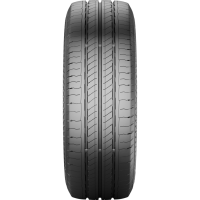
Vredestein Comtrac 2+ is the clear test winner, delivering the shortest braking distances on both wet and dry surfaces along with the best cornering grip across all conditions. On the handling course, it was the fastest tire in every test and received high subjective marks for predictable, well-balanced behavior. Ride comfort and interior noise levels are good. The main trade-off is a high rolling resistance - the worst in the test - and comparatively loud pass-by noise. For motorhome use, where safety margins matter more than marginal fuel savings, this is a minor penalty given the large advantage in grip.
| Test |
# |
Result |
Best |
Diff |
% |
| Dry Braking |
2nd |
41.1 M |
41 M |
+0.1 M |
99.76% |
| Dry Handling |
1st |
79.2 Km/H |
|
|
100% |
| Subj. Dry Handling |
1st |
9 Points |
|
|
100% |
| Test |
# |
Result |
Best |
Diff |
% |
| Wet Braking |
1st |
27 M |
|
|
100% |
| Wet Handling |
1st |
67.4 Km/H |
|
|
100% |
| Subj. Wet Handling |
1st |
9 Points |
|
|
100% |
| Wet Circle |
1st |
7.38 m/s |
|
|
100% |
| Straight Aqua |
2nd |
93.7 Km/H |
95.1 Km/H |
-1.4 Km/H |
98.53% |
| Test |
# |
Result |
Best |
Diff |
% |
| Subj. Comfort |
1st |
9 Points |
|
|
100% |
| Noise |
6th |
72 dB |
70.7 dB |
+1.3 dB |
98.19% |
| Test |
# |
Result |
Best |
Diff |
% |
| Rolling Resistance |
7th |
7.3 kg / t |
5.4 kg / t |
+1.9 kg / t |
73.97% |
Nokian Cargoproof C is a new entry that strikes a good balance between safety performance and economy. It matched the Vredestein for dry braking and came close on wet braking, posting the second-shortest stopping distances in both cases. Cornering behavior is stable with above-average grip, though at larger steering angles the reserves thin out, and the pass-by noise is on the louder side. Rolling resistance sits in the middle of the field. Overall, it offers strong all-round performance without a serious weakness in any area.
| Test |
# |
Result |
Best |
Diff |
% |
| Dry Braking |
1st |
41 M |
|
|
100% |
| Dry Handling |
2nd |
78.7 Km/H |
79.2 Km/H |
-0.5 Km/H |
99.37% |
| Subj. Dry Handling |
4th |
8 Points |
9 Points |
-1 Points |
88.89% |
| Test |
# |
Result |
Best |
Diff |
% |
| Wet Braking |
2nd |
27.4 M |
27 M |
+0.4 M |
98.54% |
| Wet Handling |
2nd |
66.8 Km/H |
67.4 Km/H |
-0.6 Km/H |
99.11% |
| Subj. Wet Handling |
1st |
9 Points |
|
|
100% |
| Wet Circle |
3rd |
7.28 m/s |
7.38 m/s |
-0.1 m/s |
98.64% |
| Straight Aqua |
3rd |
91 Km/H |
95.1 Km/H |
-4.1 Km/H |
95.69% |
| Test |
# |
Result |
Best |
Diff |
% |
| Subj. Comfort |
4th |
8 Points |
9 Points |
-1 Points |
88.89% |
| Noise |
5th |
71.7 dB |
70.7 dB |
+1 dB |
98.61% |
| Test |
# |
Result |
Best |
Diff |
% |
| Rolling Resistance |
3rd |
5.9 kg / t |
5.4 kg / t |
+0.5 kg / t |
91.53% |
Continental VanContact Ultra stands out for its very low rolling resistance and quiet pass-by noise, making it the most fuel-efficient and refined tire in the group alongside the Michelin. It also scored well for lateral grip and subjective handling, with testers noting secure, predictable cornering and good lane-change stability. The weak point is braking: stopping distances on both wet and dry surfaces are longer than average. Continental positions this tire more toward van and panel-van use than heavy overcab motorhomes, and the character reflects that - safe in corners, less aggressive under hard braking.
| Test |
# |
Result |
Best |
Diff |
% |
| Dry Braking |
6th |
44 M |
41 M |
+3 M |
93.18% |
| Dry Handling |
4th |
78.5 Km/H |
79.2 Km/H |
-0.7 Km/H |
99.12% |
| Subj. Dry Handling |
1st |
9 Points |
|
|
100% |
| Test |
# |
Result |
Best |
Diff |
% |
| Wet Braking |
5th |
30.6 M |
27 M |
+3.6 M |
88.24% |
| Wet Handling |
3rd |
66.1 Km/H |
67.4 Km/H |
-1.3 Km/H |
98.07% |
| Subj. Wet Handling |
1st |
9 Points |
|
|
100% |
| Wet Circle |
2nd |
7.34 m/s |
7.38 m/s |
-0.04 m/s |
99.46% |
| Straight Aqua |
4th |
89.6 Km/H |
95.1 Km/H |
-5.5 Km/H |
94.22% |
| Test |
# |
Result |
Best |
Diff |
% |
| Subj. Comfort |
6th |
7 Points |
9 Points |
-2 Points |
77.78% |
| Noise |
3rd |
70.9 dB |
70.7 dB |
+0.2 dB |
99.72% |
| Test |
# |
Result |
Best |
Diff |
% |
| Rolling Resistance |
1st |
5.4 kg / t |
|
|
100% |
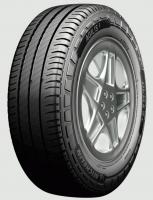
Michelin Agilis 3 is likely the longest-wearing tire in the test, with the shallowest tread depth at 8.1 mm and the lowest rolling resistance tied with Continental. It also delivered the best aquaplaning resistance of any tire tested, both longitudinal and lateral, and is the quietest on the road. Ride comfort was rated highly. However, braking performance on wet and dry surfaces is only mid-pack, and the subjective handling notes describe it as safe but not particularly sharp. This is a tire suited to high-mileage commercial or fleet use where fuel cost and longevity take priority over outright grip.
| Test |
# |
Result |
Best |
Diff |
% |
| Dry Braking |
5th |
43 M |
41 M |
+2 M |
95.35% |
| Dry Handling |
5th |
78.3 Km/H |
79.2 Km/H |
-0.9 Km/H |
98.86% |
| Subj. Dry Handling |
5th |
7 Points |
9 Points |
-2 Points |
77.78% |
| Test |
# |
Result |
Best |
Diff |
% |
| Wet Braking |
4th |
30.4 M |
27 M |
+3.4 M |
88.82% |
| Wet Handling |
4th |
65.6 Km/H |
67.4 Km/H |
-1.8 Km/H |
97.33% |
| Subj. Wet Handling |
5th |
7 Points |
9 Points |
-2 Points |
77.78% |
| Wet Circle |
6th |
7.21 m/s |
7.38 m/s |
-0.17 m/s |
97.7% |
| Straight Aqua |
1st |
95.1 Km/H |
|
|
100% |
| Test |
# |
Result |
Best |
Diff |
% |
| Subj. Comfort |
1st |
9 Points |
|
|
100% |
| Noise |
1st |
70.7 dB |
|
|
100% |
| Test |
# |
Result |
Best |
Diff |
% |
| Rolling Resistance |
1st |
5.4 kg / t |
|
|
100% |
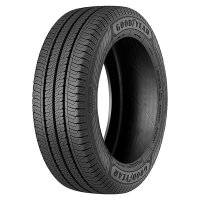
Goodyear Efficientgrip Cargo 2 showed a somewhat split personality in testing. On dry roads it was one of the more engaging tires, with the sharpest steering response in the group and good dry braking. On wet surfaces, however, grip drops off noticeably - wet braking and aquaplaning scores are below average, and testers noted the tire feels nervous at the rear during fast lane changes, with a narrow limit range before breakaway. It also has the lowest load index in the test at 118 versus 121 for all others, and is the heaviest tire at 19.0 kg. Rolling resistance is reasonable.
| Test |
# |
Result |
Best |
Diff |
% |
| Dry Braking |
4th |
42.5 M |
41 M |
+1.5 M |
96.47% |
| Dry Handling |
6th |
78.2 Km/H |
79.2 Km/H |
-1 Km/H |
98.74% |
| Subj. Dry Handling |
5th |
7 Points |
9 Points |
-2 Points |
77.78% |
| Test |
# |
Result |
Best |
Diff |
% |
| Wet Braking |
3rd |
29.5 M |
27 M |
+2.5 M |
91.53% |
| Wet Handling |
5th |
65.4 Km/H |
67.4 Km/H |
-2 Km/H |
97.03% |
| Subj. Wet Handling |
4th |
8 Points |
9 Points |
-1 Points |
88.89% |
| Wet Circle |
5th |
7.22 m/s |
7.38 m/s |
-0.16 m/s |
97.83% |
| Straight Aqua |
7th |
84.2 Km/H |
95.1 Km/H |
-10.9 Km/H |
88.54% |
| Test |
# |
Result |
Best |
Diff |
% |
| Subj. Comfort |
4th |
8 Points |
9 Points |
-1 Points |
88.89% |
| Noise |
6th |
72 dB |
70.7 dB |
+1.3 dB |
98.19% |
| Test |
# |
Result |
Best |
Diff |
% |
| Rolling Resistance |
3rd |
5.9 kg / t |
5.4 kg / t |
+0.5 kg / t |
91.53% |
Barum Vanis 3 is the budget option from the Continental group and behaves accordingly. Subjective handling on dry roads was praised as forgiving and easy to read, with decent cornering reserves and good ride comfort - the best-rated in the group for cabin refinement. The problems appear on wet roads: braking distances are among the longest, and aquaplaning protection is weak in both directions. Dry braking is also the worst in the test. At 155 Euro it is the second-cheapest tire here, but the safety shortcomings on wet surfaces led to a points deduction in the overall rating.
| Test |
# |
Result |
Best |
Diff |
% |
| Dry Braking |
7th |
44.2 M |
41 M |
+3.2 M |
92.76% |
| Dry Handling |
2nd |
78.7 Km/H |
79.2 Km/H |
-0.5 Km/H |
99.37% |
| Subj. Dry Handling |
1st |
9 Points |
|
|
100% |
| Test |
# |
Result |
Best |
Diff |
% |
| Wet Braking |
7th |
31.4 M |
27 M |
+4.4 M |
85.99% |
| Wet Handling |
6th |
65.2 Km/H |
67.4 Km/H |
-2.2 Km/H |
96.74% |
| Subj. Wet Handling |
5th |
7 Points |
9 Points |
-2 Points |
77.78% |
| Wet Circle |
4th |
7.23 m/s |
7.38 m/s |
-0.15 m/s |
97.97% |
| Straight Aqua |
6th |
84.7 Km/H |
95.1 Km/H |
-10.4 Km/H |
89.06% |
| Test |
# |
Result |
Best |
Diff |
% |
| Subj. Comfort |
1st |
9 Points |
|
|
100% |
| Noise |
4th |
71.6 dB |
70.7 dB |
+0.9 dB |
98.74% |
| Test |
# |
Result |
Best |
Diff |
% |
| Rolling Resistance |
5th |
6.8 kg / t |
5.4 kg / t |
+1.4 kg / t |
79.41% |
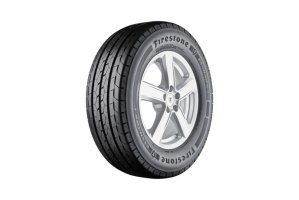
Firestone Vanhawk 3 finished last overall despite some isolated strengths. It produced good dry braking distances and was the quietest tire for pass-by noise. Beyond that, wet-surface performance was consistently poor across all tests - braking, lateral grip, handling, and aquaplaning. Testers described the steering as vague and imprecise, and noted an audible droning sound during cornering caused by slip-angle noise. Rolling resistance is high. The combination of weak wet grip and indifferent steering behavior makes it hard to recommend for motorhome use where loaded weights and high centers of gravity demand dependable tire response.
| Test |
# |
Result |
Best |
Diff |
% |
| Dry Braking |
3rd |
42.2 M |
41 M |
+1.2 M |
97.16% |
| Dry Handling |
7th |
77 Km/H |
79.2 Km/H |
-2.2 Km/H |
97.22% |
| Subj. Dry Handling |
5th |
7 Points |
9 Points |
-2 Points |
77.78% |
| Test |
# |
Result |
Best |
Diff |
% |
| Wet Braking |
6th |
31 M |
27 M |
+4 M |
87.1% |
| Wet Handling |
7th |
63.5 Km/H |
67.4 Km/H |
-3.9 Km/H |
94.21% |
| Subj. Wet Handling |
7th |
6 Points |
9 Points |
-3 Points |
66.67% |
| Wet Circle |
7th |
7.01 m/s |
7.38 m/s |
-0.37 m/s |
94.99% |
| Straight Aqua |
5th |
85.7 Km/H |
95.1 Km/H |
-9.4 Km/H |
90.12% |
| Test |
# |
Result |
Best |
Diff |
% |
| Subj. Comfort |
6th |
7 Points |
9 Points |
-2 Points |
77.78% |
| Noise |
2nd |
70.8 dB |
70.7 dB |
+0.1 dB |
99.86% |
| Test |
# |
Result |
Best |
Diff |
% |
| Rolling Resistance |
6th |
7.1 kg / t |
5.4 kg / t |
+1.7 kg / t |
76.06% |

For some reason, the Vredestein is shown as Ford Focus 1.5 TDCI, the Nokian as Audi Q8 and the Barum Vanis 3 as Volkswagen Thing!...