For the 2025/2026 winter season, Autožurnál TV has conducted a comparative test of seven winter tires in the 215/65 R17 size, using a Volkswagen Tiguan as the test vehicle.
The test included two new models for the season: the Michelin Alpin 7 and the Barum Polaris 6. These were tested against the Tomket Snowroad SUV 3, Lassa Competus Winter 2+, and Ceat WinterDrive SUV. The lineup also featured the Kormoran SUV Snow and Riken SUV Snow, two tires from the Michelin group with identical tread patterns, both produced in Serbia.
Each tire was evaluated on dry, wet, and snow-covered surfaces. The test protocol included measurements for braking, handling, longitudinal and lateral aquaplaning, snow traction, rolling resistance, and external pass-by noise.
Dry braking in meters (100 - 0 km/h) (Lower is better)
Michelin Alpin 7
44.90 M
Ceat WinterDrive SUV
44.90 M
Tomket Snowroad SUV 3
45.60 M
Barum Polaris 6
46.00 M
Riken Riken SUV Snow
46.20 M
Kormoran Kormoran SUV Snow
46.40 M
Lassa Competus Winter 2
48.30 M
Dry Handling
Dry Handling
Spread: 1.60 s (3.1%)|Avg: 51.56 s
Dry handling time in seconds (Lower is better)
Michelin Alpin 7
50.80 s
Tomket Snowroad SUV 3
51.00 s
Lassa Competus Winter 2
51.20 s
Ceat WinterDrive SUV
51.40 s
Barum Polaris 6
51.80 s
Riken Riken SUV Snow
52.30 s
Kormoran Kormoran SUV Snow
52.40 s
Wet
Wet Braking
Wet Braking
Spread: 14.80 M (28.2%)|Avg: 58.20 M
Wet braking in meters (100 - 0 km/h) (Lower is better)
Michelin Alpin 7
52.40 M
Ceat WinterDrive SUV
55.20 M
Lassa Competus Winter 2
55.40 M
Barum Polaris 6
56.30 M
Riken Riken SUV Snow
60.30 M
Kormoran Kormoran SUV Snow
60.60 M
Tomket Snowroad SUV 3
67.20 M
Wet Handling
Wet Handling
Spread: 11.90 s (13.4%)|Avg: 92.44 s
Wet handling time in seconds (Lower is better)
Michelin Alpin 7
88.50 s
Barum Polaris 6
90.30 s
Lassa Competus Winter 2
90.50 s
Ceat WinterDrive SUV
90.60 s
Kormoran Kormoran SUV Snow
93.40 s
Riken Riken SUV Snow
93.40 s
Tomket Snowroad SUV 3
100.40 s
Wet Circle
Wet Circle
Spread: 0.98 m/s (7.2%)|Avg: 12.98 m/s
Lateral wet grip in m/s squared (Higher is better)
Tomket Snowroad SUV 3
13.59 m/s
Riken Riken SUV Snow
13.31 m/s
Kormoran Kormoran SUV Snow
13.28 m/s
Lassa Competus Winter 2
12.73 m/s
Barum Polaris 6
12.70 m/s
Michelin Alpin 7
12.62 m/s
Ceat WinterDrive SUV
12.61 m/s
Straight Aqua
Straight Aqua
Spread: 10.70 Km/H (12.7%)|Avg: 79.01 Km/H
Float Speed in Km/H (Higher is better)
Michelin Alpin 7
84.30 Km/H
Lassa Competus Winter 2
81.70 Km/H
Ceat WinterDrive SUV
80.20 Km/H
Barum Polaris 6
79.80 Km/H
Kormoran Kormoran SUV Snow
76.90 Km/H
Riken Riken SUV Snow
76.60 Km/H
Tomket Snowroad SUV 3
73.60 Km/H
Curved Aquaplaning
Curved Aquaplaning
Spread: 11.90 m/sec2 (11.9%)|Avg: 92.44 m/sec2
Remaining lateral acceleration (Higher is better)
Tomket Snowroad SUV 3
100.40 m/sec2
Kormoran Kormoran SUV Snow
93.40 m/sec2
Riken Riken SUV Snow
93.40 m/sec2
Ceat WinterDrive SUV
90.60 m/sec2
Lassa Competus Winter 2
90.50 m/sec2
Barum Polaris 6
90.30 m/sec2
Michelin Alpin 7
88.50 m/sec2
Snow
Snow Braking
Snow Braking
Spread: 1.60 M (6.5%)|Avg: 25.63 M
Snow braking in meters (50 - 0 km/h) (Lower is better)
Barum Polaris 6
24.70 M
Kormoran Kormoran SUV Snow
25.10 M
Ceat WinterDrive SUV
25.60 M
Riken Riken SUV Snow
25.60 M
Michelin Alpin 7
25.90 M
Lassa Competus Winter 2
26.20 M
Tomket Snowroad SUV 3
26.30 M
Snow Traction
Snow Traction
Spread: 0.67 s (7.4%)|Avg: 9.36 s
Snow acceleration time (0 - 20 km/h) (Lower is better)
Barum Polaris 6
9.00 s
Ceat WinterDrive SUV
9.25 s
Kormoran Kormoran SUV Snow
9.27 s
Tomket Snowroad SUV 3
9.43 s
Michelin Alpin 7
9.43 s
Riken Riken SUV Snow
9.46 s
Lassa Competus Winter 2
9.67 s
Snow Handling
Snow Handling
Spread: 2.60 s (3.4%)|Avg: 77.11 s
Snow handling time in seconds (Lower is better)
Michelin Alpin 7
76.10 s
Barum Polaris 6
76.60 s
Kormoran Kormoran SUV Snow
76.60 s
Lassa Competus Winter 2
77.10 s
Ceat WinterDrive SUV
77.10 s
Riken Riken SUV Snow
77.60 s
Tomket Snowroad SUV 3
78.70 s
Comfort
Noise
Noise
Spread: 3.40 dB (4.8%)|Avg: 72.16 dB
External noise in dB (Lower is better)
Barum Polaris 6
70.40 dB
Ceat WinterDrive SUV
70.70 dB
Michelin Alpin 7
71.50 dB
Tomket Snowroad SUV 3
72.10 dB
Kormoran Kormoran SUV Snow
73.10 dB
Riken Riken SUV Snow
73.50 dB
Lassa Competus Winter 2
73.80 dB
Value
Rolling Resistance
Rolling Resistance
Spread: 1.77 kg / t (25.3%)|Avg: 8.03 kg / t
Rolling resistance in kg t (Lower is better)
Barum Polaris 6
6.99 kg / t
Michelin Alpin 7
7.25 kg / t
Tomket Snowroad SUV 3
7.77 kg / t
Lassa Competus Winter 2
8.00 kg / t
Kormoran Kormoran SUV Snow
8.71 kg / t
Ceat WinterDrive SUV
8.76 kg / t
Riken Riken SUV Snow
8.76 kg / t
19,000 km
£1.45/L
8.0 L/100km
--
Annual Difference
--
Lifetime Savings
--
Extra Fuel/Energy
--
Extra CO2
Estimates based on typical driving conditions. Rolling resistance accounts for approximately 20% of IC vehicle fuel consumption and 25% of EV energy consumption. Actual savings vary based on driving style, vehicle weight, road conditions, and tire age. For comparative purposes only. Lifetime savings based on a 40,000km / 25,000 mile tread life.
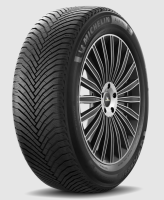
The Michelin Alpin 7 was the decisive winner of the test, earning the top spot in the overall ranking. This tire dominated on wet and dry surfaces, finishing first in both of these categories by achieving the best or second-best results in every single wet and dry test, from braking and handling to aquaplaning resistance. Its performance on snow, while not as dominant, was still competitive, placing it fourth in the snow category. The Michelin's superior mastery of wet and dry conditions solidified its position as the best tire in the comparison.
The Barum Polaris 6 was an exceptional performer, finishing second in the final overall standings. Its biggest strength was on snow, where it ranked first overall by winning the braking, acceleration, and traction tests and placing second in handling. On dry surfaces, it was rated second-best, largely due to having the lowest rolling resistance and being the quietest tire at both tested speeds. Its performance in wet conditions was also solid, placing fourth in that category with strong results in handling and aquaplaning resistance, showcasing its excellent all-around capabilities for winter driving.
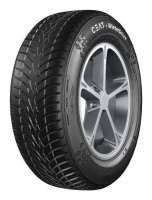
The Ceat WinterDrive SUV was a very balanced and capable tire, securing a well-deserved third place in the overall ranking. It demonstrated consistent performance across all surfaces, ranking third on snow, third on wet, and fourth on dry. Key strengths included tying for the shortest braking distance on dry pavement and achieving the best time in the wet track guidance test. Furthermore, it was the second-best tire in both the snow acceleration and snow traction tests, proving it to be a reliable and strong contender in all key performance areas.
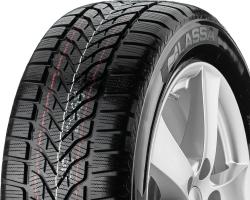
The Lassa Competus Winter 2+ earned fourth place overall, with its most impressive results occurring in wet conditions. It was the second-best tire in the wet category, achieving a second-place finish in longitudinal aquaplaning and third-place results in wet braking and handling. Its performance on other surfaces was mixed; on dry pavement, it had the longest braking distance and was the loudest tire, yet it managed the third-fastest handling time. The tire's weakness was on snow, where it placed sixth, held back by poor results in the acceleration and braking tests.
The Kormoran SUV Snow, which shares an identical tread design with the Riken tire, performed best in snowy conditions, where it ranked third overall. It demonstrated strong capabilities on snow with a second-place finish in braking and a shared second place in handling. However, its performance on clear roads was lacking; it ranked seventh in the dry category, with the slowest handling time and sixth-longest braking distance. In wet conditions, it consistently placed in the lower half of the group, which contributed to its final overall position being tied for fifth place.
The Riken SUV Snow finished the test tied for fifth place overall, delivering a performance profile nearly identical to its twin, the Kormoran tire. The tire did not stand out in any particular area, generally placing in the middle or lower end of the results across all conditions. It finished sixth in the dry category and fifth in the wet, with results for braking, handling, and noise that were consistently behind the leading competitors. Its snow performance was also mid-pack, ultimately defining it as a tire with average capabilities but no distinct advantages.
The Tomket Snowroad SUV 3 had a very poor showing, finishing last overall with a "not recommended" rating from the testers. Although it achieved a respectable third-place rank on dry surfaces, primarily due to a second-place finish in the handling test, its performance in adverse weather was a significant concern. The tire finished last in both the snow and wet categories, consistently recording the longest braking distances and slowest handling times. This critical weakness in winter and wet conditions led to its low final ranking.



Discussion