



Test setup & methodology
The test setting, the conditions recorded and how the results contribute to the score.
Show full testing methodology
Score Weighting
Weights express the scoring priorities, not how much each discipline actually changed the finishing order. The size of the performance gaps matters too. Category weights contribute to the overall score. Within each category, discipline weights divide that category’s share. Published finishing positions also need to be read alongside the editorial verdict.
| Test | Within category | Share of overall score |
|---|---|---|
| Dry · 39% | ||
| Dry Braking | 46% | 17.94% |
| Dry Handling | 45% | 17.55% |
| Subj. Dry Handling | 9% | 3.51% |
| Wet · 56% | ||
| Wet Braking | 41% | 22.96% |
| Wet Handling | 41% | 22.96% |
| Straight Aqua | 18% | 10.08% |
| Comfort · 5% | ||
| Subj. Comfort | 50% | 2.5% |
| Noise | 50% | 2.5% |
Our standard methods
The conditions above are recorded for this test. The descriptions below explain our standard procedures; measurement windows and run counts can vary by test.
Dry Braking
For dry braking, I drive the test vehicle at an entry speed of 110 km/h and apply full braking effort to a standstill with ABS active on clean, dry asphalt. I typically use an 100–5 km/h measurement window. My standard programme is five runs per tire set where possible, although the sequence can extend to as many as fifteen runs if conditions and tire category justify it. I analyze the full set of runs and discard statistical outliers before averaging. Reference tires are run repeatedly throughout the session to correct for changing conditions.
Dry Handling
For dry handling, I drive at the limit of adhesion around a dedicated handling circuit with ESC disabled where possible so I can assess the tire's natural balance, transient response, and limit behavior without electronic intervention masking the result. I usually complete between two and five timed laps per tire set, depending on the circuit, tire type, and consistency of conditions. I exclude laps affected by clear driver error or obvious environmental inconsistency. Control runs are carried out frequently throughout the session, and I often use multiple sets of control tires so that wear on the references does not become a meaningful variable. For more track-focused products, I also do endurance testing, which is a set number of laps at race pace to determine tire wear patterns and heat resistance over longer driving.
Subj. Dry Handling
I also carry out a structured subjective handling assessment at the limit of adhesion on a dedicated dry handling circuit. I score steering precision, steering response, turn-in behavior, mid-corner balance, corner-exit traction, breakaway characteristics, and overall confidence using a standardised 1–10 scale used consistently across my testing. The final assessment combines numeric scoring with written technical commentary. I complete familiarisation laps on the control tire before evaluating each candidate.
Wet Braking
For wet braking, I drive the test vehicle at an entry speed of 88 km/h and apply full braking effort to a standstill with ABS active on an asphalt surface with a controlled water film. I typically use an 80–5 km/h measurement window to isolate tire performance from variability in the initial brake application. My standard programme is eight runs per tire set where possible, although the sequence can extend to as many as fifteen runs if conditions and tire category justify it. I analyze the full set of runs and discard statistical outliers before averaging. To correct for changing conditions, I run reference tires repeatedly throughout the session — in wet testing, typically every three candidate test sets.
Wet Handling
For wet handling, I drive at the limit of adhesion around a dedicated handling circuit. I generally use specialist wet circuits with kerb-watering systems designed to maintain a consistent surface condition. ESC is disabled where possible so I can assess the tire's natural balance, transient response, and limit behavior without electronic intervention masking the result. I usually complete between two and five timed laps per tire set, depending on the circuit, tire type, and consistency of conditions. I exclude laps affected by clear driver error or obvious environmental inconsistency. Control runs are carried out frequently throughout the session, and I often use multiple sets of control tires so that wear on the references does not become a meaningful variable.
Straight Aqua
To measure straight-line aquaplaning resistance, I drive one side of the vehicle through a water trough of controlled depth, typically around 7 mm, while the opposite side remains on dry pavement. I enter at a fixed speed and then accelerate progressively. I define aquaplaning onset as the point at which the wheel travelling through the water exceeds a specified slip threshold relative to the dry-side reference wheel. I usually perform four runs per tire set and average the valid results.
Subj. Comfort
To assess comfort, I drive on a wide range of road surfaces (often dedicated comfort tracks at test facilities) at speeds from 50 to 120 km/h, including smooth motorway, coarse surfaces, expansion joints, broken pavement, and sharp-edged obstacles. I evaluate primary ride quality, secondary ride quality, impact harshness, seat-transmitted vibration, and the tire's ability to absorb sharp inputs. Ratings are assigned on a 1–10 scale relative to the reference tire.
Noise
I measure external pass-by noise in accordance with UNECE Regulation 117 and ISO 13325 using the coast-by method on a compliant test surface. Calibrated microphones are positioned beside the test lane, and the vehicle coasts through the measurement zone under controlled conditions. I record the maximum A-weighted sound pressure level in dB(A), complete multiple runs over the relevant speed range, and normalise the result to the reference speed required by the procedure.
While we've not been able to test ourselves, tests from many years ago indicate that retreaded tires don't perform as well as even a budget tire. Car tires typically aren't designed to be retreaded (commercial bus and lorry tires are), so the retreading process can leave you with not only poor performance, but a product that could be classified as unsafe.
Naturally in the past few years there have been improvements in the car retreading process, and one brand in particular, King Meiler, has established a name for itself as "the" retreading brand.
To find out whether a modern retread can match a premium, or even a budget tire, the Polish magazine "Motor" have tested the King Meiler HPZ against the premium Continental PremiumContact 6, and a much cheaper Debica Presto HP.
The results speak for themselves.
Dry
It's been a while since we've seen such huge differences in the dry between a premium tire and a brand like Debica, which indicates that this version of the Presto HP certainly isn't the grippiest tire on test, so for the retreaded tire to be so far behind in both dry braking and dry handling, indicates a serious lack of grip!
Dry Braking
Dry braking in feet
Lower is better ↓| Position / Tire | Result | Gap to best |
|---|---|---|
| 116 ft | Best | |
| 129 ft | +13 ft | |
| 139 ft | +23 ft |
The difference between best and worst was 19.7% (23 ft ≈ 1.6 Car Lengths).
Dry Handling
Dry handling time in seconds
Lower is better ↓| Position / Tire | Result | Gap to best |
|---|---|---|
| 52.6 s | Best | |
| 53.3 s | +0.70 s | |
| 55 s | +2.40 s |
The difference between best and worst was 4.6% (2.4 s).
Subj. Dry Handling
Subjective Dry Handling Score
Higher is better ↑| Position / Tire | Result | Gap to best |
|---|---|---|
| 7.4 Points | Best | |
| 5.4 Points | -2.00 Points | |
| 4.5 Points | -2.90 Points |
The difference between best and worst was 39.2% (2.9 Points).

Wet
Wet was a similar story to dry, except with larger margins. While the Debica stopped the car a pretty sizable 21 feet after the premium Continental, the King Meiler took a HUGE extra 80 feet to stop the car, again from 62 mph. This means, where the car on the Debica stops, the car fitted with the King-Meiler tires will still be doing more than 30 mph!
Wet Braking
Wet braking in feet
Lower is better ↓| Position / Tire | Result | Gap to best |
|---|---|---|
| 170 ft | Best | |
| 191 ft | +21 ft | |
| 250 ft | +80 ft |
The difference between best and worst was 46.9% (80 ft ≈ 5.4 Car Lengths).
Wet Handling
Wet handling time in seconds
Lower is better ↓| Position / Tire | Result | Gap to best |
|---|---|---|
| 86.7 s | Best | |
| 92 s | +5.30 s | |
| 100.5 s | +13.80 s |
The difference between best and worst was 15.9% (13.8 s).
The retread tire also performed poorly in straight aquaplaning.
Straight Aqua
Float Speed in mph
Higher is better ↑| Position / Tire | Result | Gap to best |
|---|---|---|
| 51.1 mph | Best | |
| 51.0 mph | -0.1 mph | |
| 44.2 mph | -6.9 mph |
The difference between best and worst was 13.6% (6.9 mph).
Environment
With the retreaded tire both noiser, and less comfortable than the premium and budget tires, its only positive quality was price. However, with the longevity of the tire untested, is a 100 euro saving really worth all the negative qualities?
Subj. Comfort
Subjective Comfort Score
Higher is better ↑| Position / Tire | Result | Gap to best |
|---|---|---|
| 7.5 Points | Best | |
| 6.5 Points | -1.00 Points | |
| 6 Points | -1.50 Points |
The difference between best and worst was 20% (1.5 Points).
Noise
External noise in dB
Lower is better ↓| Position / Tire | Result | Gap to best |
|---|---|---|
| 63.3 dB | Best | |
| 64.4 dB | +1.10 dB | |
| 64.7 dB | +1.40 dB |
All the tires in the Noise test finished less than 3% apart.
Results
Continental Premium Contact 6
195/65 R16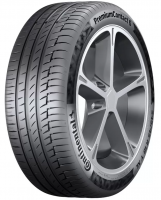
Category scores (% of best)
All discipline results (8)
Discipline positions compare the ranked tires in this test, not the whole market. These are individual measurements, not weighted overall scores.
| Test | Position in discipline | Result | Gap to best |
|---|---|---|---|
| Dry BrakingLower is better | 1st / 3 | 116 ft | Best in this discipline |
| Dry HandlingLower is better | 1st / 3 | 52.6 s | Best in this discipline |
| Subj. Dry HandlingHigher is better | 1st / 3 | 7.4 Points | Best in this discipline |
| Wet BrakingLower is better | 1st / 3 | 170 ft | Best in this discipline |
| Wet HandlingLower is better | 1st / 3 | 86.7 s | Best in this discipline |
| Straight AquaHigher is better | 2nd / 3 | 51.0 mph | -0.1 mph |
| Subj. ComfortHigher is better | 1st / 3 | 7.5 Points | Best in this discipline |
| NoiseLower is better | 2nd / 3 | 64.4 dB | +1.10 dB |
- Price
- 57.19
Debica Presto HP
195/65 R16
Category scores (% of best)
All discipline results (8)
Discipline positions compare the ranked tires in this test, not the whole market. These are individual measurements, not weighted overall scores.
| Test | Position in discipline | Result | Gap to best |
|---|---|---|---|
| Dry BrakingLower is better | 2nd / 3 | 129 ft | +13 ft |
| Dry HandlingLower is better | 2nd / 3 | 53.3 s | +0.70 s |
| Subj. Dry HandlingHigher is better | 2nd / 3 | 5.4 Points | -2.00 Points |
| Wet BrakingLower is better | 2nd / 3 | 191 ft | +21 ft |
| Wet HandlingLower is better | 2nd / 3 | 92 s | +5.30 s |
| Straight AquaHigher is better | 1st / 3 | 51.1 mph | Best in this discipline |
| Subj. ComfortHigher is better | 2nd / 3 | 6.5 Points | -1.00 Points |
| NoiseLower is better | 1st / 3 | 63.3 dB | Best in this discipline |
- Price
- 43.82
King Meiler HPZ
195/65 R16
Category scores (% of best)
All discipline results (8)
Discipline positions compare the ranked tires in this test, not the whole market. These are individual measurements, not weighted overall scores.
| Test | Position in discipline | Result | Gap to best |
|---|---|---|---|
| Dry BrakingLower is better | 3rd / 3 | 139 ft | +23 ft |
| Dry HandlingLower is better | 3rd / 3 | 55 s | +2.40 s |
| Subj. Dry HandlingHigher is better | 3rd / 3 | 4.5 Points | -2.90 Points |
| Wet BrakingLower is better | 3rd / 3 | 250 ft | +80 ft |
| Wet HandlingLower is better | 3rd / 3 | 100.5 s | +13.80 s |
| Straight AquaHigher is better | 3rd / 3 | 44.2 mph | -6.9 mph |
| Subj. ComfortHigher is better | 3rd / 3 | 6 Points | -1.50 Points |
| NoiseLower is better | 3rd / 3 | 64.7 dB | +1.40 dB |
- Price
- 32.43
For an interesting comparison heres a Finnish tire test of studded winter tires comparing retreaded Ässä tires to Goodyears, where the results for the retread were actually decent (in Finnish):
https://www.is.fi/autot/art...
Granted it is already from a few years back but does paint a different picture. Maybe you cant put all retreads in the same basket?
Thanks, I'll check it out!
Well, this is exactly, what we have seen over years. In MotorTalk i've been fired after writing bad things about KingMeiler. :) MotorTalk ist in the tire forum absolutely silly because of a Moderator, who don't likes critical words about KingMeiler an chinese KungFu-Tires. Critics are only allowed on premium tires..... The best was, the owner of the King-Meiler-Factory places loads of promotion there as posts.... if you try to ask for the truth, you'll get kicked off... I think, when she sees the wet-brake-results, she says you used oil instead of water when King-Meiler was on the track :D
My personal result: King-Meiler is dangerous rubberwaste, it should be prohibited in the EC, better in the whole world on passenger cars
Thanks, it´s what I expected after the Autobild Braking-Test.
At Motor-Talk, the biggest car-forum in Germany Kingmeiler-tires have a real fight-topic with some ultrahard Retreaded-worshipper and some ppl who have worse experiences with it.
I wrote even a 3rd-brand of a leading manufacturer (hope the translation for Drittmarke is correct?) is much better than a Kingmeiler, but you show even a 4th-brand beat it easy.
In Germany retreaded tires for cars have a very very small marketshare, dunno how it is in UK
It's certainly an interesting topic! I'm going to try and get a set of retreads into a test sometime, I'm not sure what brands I can get in the UK though.
A typo? You
mean the Conti instead of Debica?
“This
means, where the car on the Debica stops, the car fitted with the King-Meiler
tires will still be doing more than 48 km/h!”
And if I take a look at all summer tires test I
read the retreated tires are 195-65
I believe that was not a typo, braking speeds are often terrifying!
Could be, 18m difference is a lot. I think a normal car don´t need 18m to stop from 48km/h
Thanks, this is what folks suspected all along! It would be interesting to know if the EU tire label wet and noise markings are a true reflection of these results too.
Thanks for that, so still as bad as ever.
Thanks also for the youtube vid showing the Conti above compared to the Goodyear and Michelin. I have a MX5 NC with BBR turbo and used to have Michelin supersport in 17 inch, but as you mentioned the top tires now only appear made for 19 inch wheels on 1,2 liter Corsas...
:(
So that video very useful. The Goodyear seems a real no-brainer, nice compromise and a lot cheaper , you almost get a free tire if you buy a set of 4 !
Interesting the Conti wear .. I was in that camp that thought they made them really soft just to win the tests by the German car magazines.... :)
All the best, cracking website, hope it goes from strength to strength.
Thanks, let me know if you make the switch and how you find it!
Auto Bild also tested King Meiler sport 3 this year in 245/45R18 size. Also last place.
https://www.tirereviews.co....
I guess it's maybe safer to buy any Chinese brand, even the price may be the same.
A logical assumption to make
The results were even worst than I expected! In which tire size were they tested?
Sorry, article updated. It was 205/55 R16