



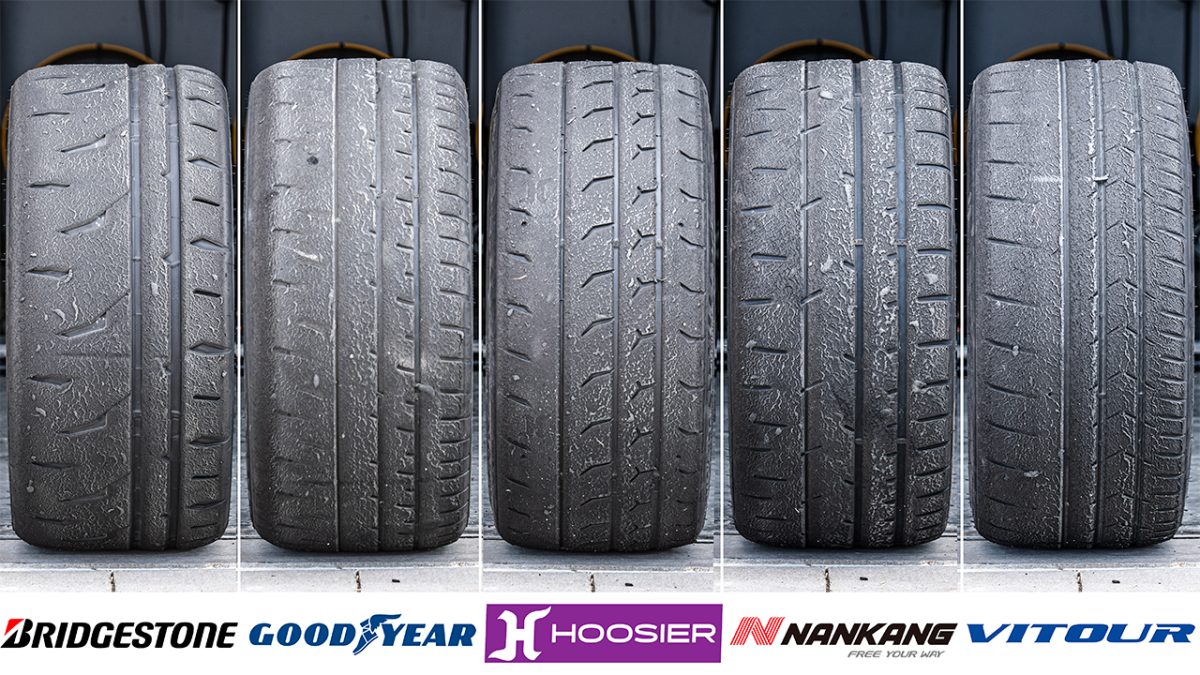
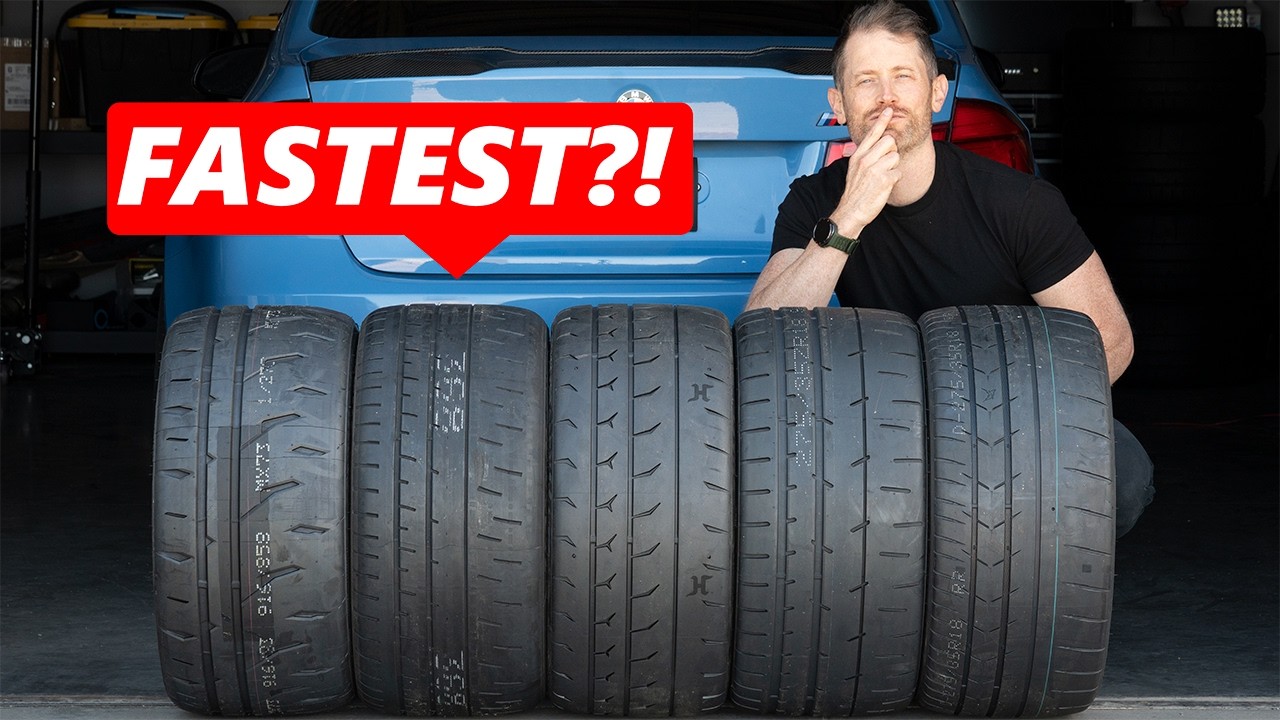
These are five of the fastest and most talked about track tires in the US market, tested in 275/35 R18 at UMC East. The group is the Bridgestone Potenza RE 71 RZ, Goodyear Eagle F1 SuperCar 3R, Hoosier TrackAttack Pro, Nankang Sportnex CR-S and Vitour Tempesta P1 plus.
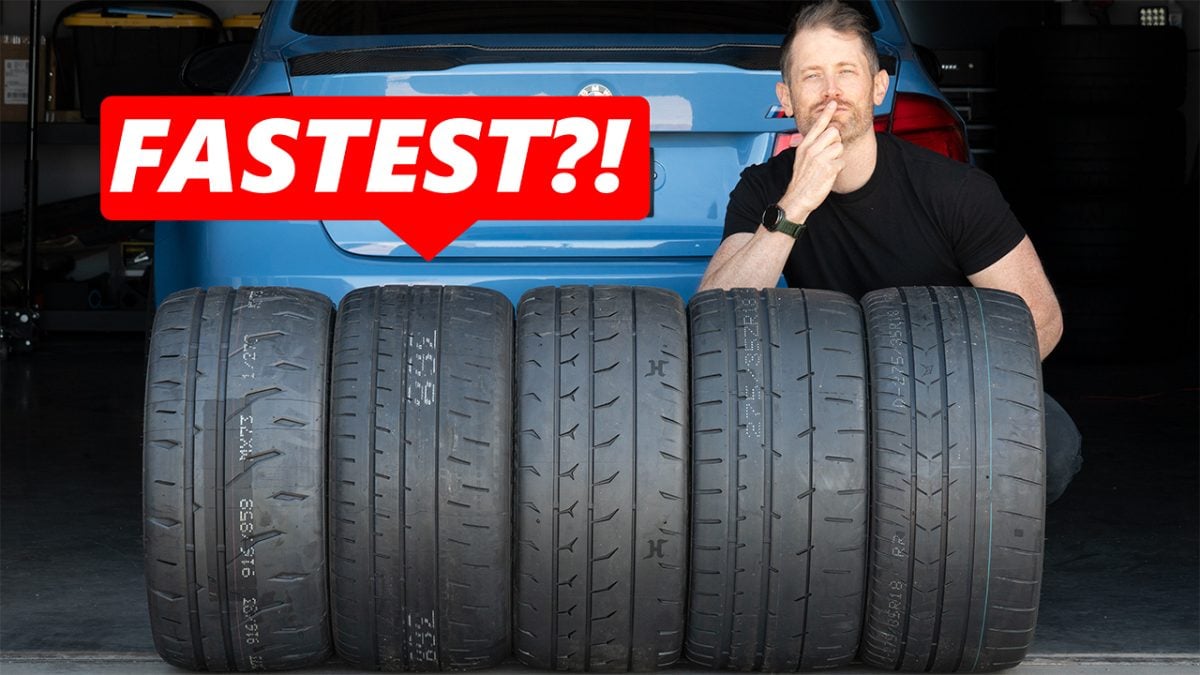
A couple of important bits before we get into it. The Goodyear is not a 200 treadwear tire, and it is not new, but I love it and wanted to see what stepping into something even stickier does to the driving experience. The Hoosier is a 200 treadwear tire, but it is moulded shallower out of the box than the Bridgestone, Nankang and Vitour, which should help dry pace and thermal behavior, but obviously raises questions about life and eligibility.
The test format was designed to capture both peak pace and how the tires coped with heat. I started at 25 psi, did a moderate out lap, then timed from the first flying lap. After four flying laps I did a cooling lap, reset pressures back down to 30 psi, and then went again for three more fast laps. So there were eight fast laps in total, with seven timed laps shown in the long-run data. The Goodyear was run on a different day with a greener circuit, so it needs to be treated slightly in isolation, even if the result is still very interesting.
Test setup & methodology
The test setting, the conditions recorded and how the results contribute to the score.
- Tire Pressures (as recorded)
- 30psi hot target
- Test Driver
- Jonathan Benson
Show full testing methodology
Score Weighting
Weights express the scoring priorities, not how much each discipline actually changed the finishing order. The size of the performance gaps matters too. Category weights contribute to the overall score. Within each category, discipline weights divide that category’s share. Published finishing positions also need to be read alongside the editorial verdict.
| Test | Within category | Share of overall score |
|---|---|---|
| Dry · 100% | ||
| Dry Handling | 46% | 46% |
| Dry Handling Long Run | 45% | 45% |
| Subj. Dry Handling | 9% | 9% |
Our standard methods
The conditions above are recorded for this test. The descriptions below explain our standard procedures; measurement windows and run counts can vary by test.
Dry Handling
For dry handling, I drive at the limit of adhesion around a dedicated handling circuit with ESC disabled where possible so I can assess the tire's natural balance, transient response, and limit behavior without electronic intervention masking the result. I usually complete between two and five timed laps per tire set, depending on the circuit, tire type, and consistency of conditions. I exclude laps affected by clear driver error or obvious environmental inconsistency. Control runs are carried out frequently throughout the session, and I often use multiple sets of control tires so that wear on the references does not become a meaningful variable. For more track-focused products, I also do endurance testing, which is a set number of laps at race pace to determine tire wear patterns and heat resistance over longer driving.
Dry Handling Long Run
For long-run handling assessment, I drive an extended session on a dry handling circuit, completing a high number of consecutive laps per tire set. The average lap time across the full session is used rather than the best laps, capturing how consistent each tire remains as it heats up under sustained high-load driving. This specifically tests thermal stability and performance degradation over extended use — a characteristic that standard short-format handling tests do not reveal.
Subj. Dry Handling
I also carry out a structured subjective handling assessment at the limit of adhesion on a dedicated dry handling circuit. I score steering precision, steering response, turn-in behavior, mid-corner balance, corner-exit traction, breakaway characteristics, and overall confidence using a standardised 1–10 scale used consistently across my testing. The final assessment combines numeric scoring with written technical commentary. I complete familiarisation laps on the control tire before evaluating each candidate.
Dry
Dry handling - fastest lap
The outright fastest lap went to the Goodyear, which is no real surprise given it sits outside the 200 treadwear group and has a very sticky compound. As mentioned, it ran on different day and while there was a common control, I don't think it makes for a perfect back-to-back comparison with the others. It is not the sharpest tire here, and it needs more steering angle than the more aggressive 200 TW tires, but the grip and security are excellent.
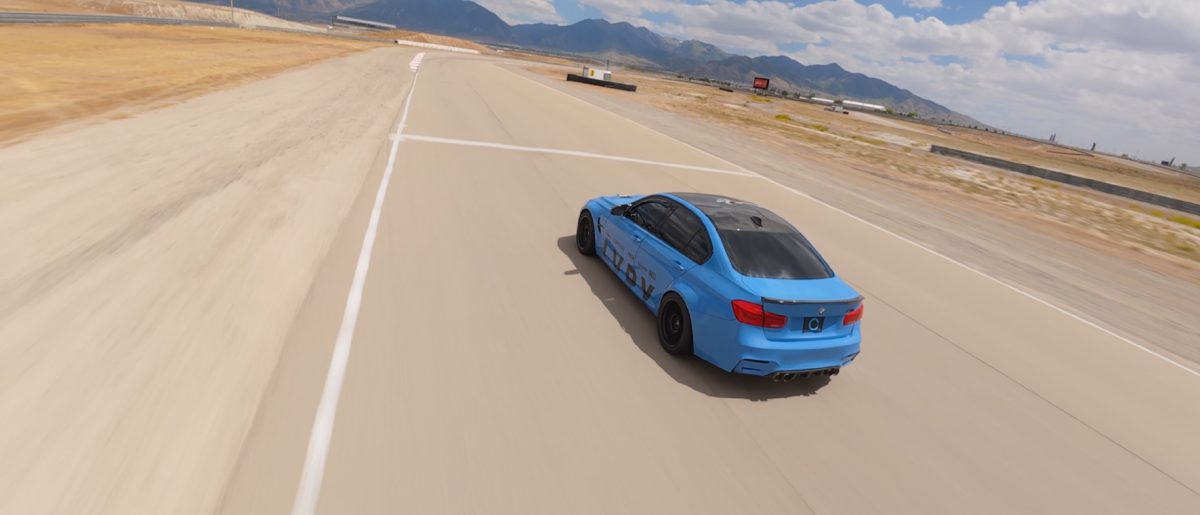
Among the proper 200 treadwear tires, the peak lap times were incredibly close. The Hoosier was the quickest of that group, with the Nankang, Bridgestone and Vitour all basically on top of each other. That is why I do not think the single fastest lap tells the whole story in this test. On one lap, all four 200 TW tires are properly fast.
Dry Handling
Dry handling time in seconds
Lower is better ↓| Position / Tire | Result | Gap to best |
|---|---|---|
| 98.6 s | Best | |
| 101.37 s | +2.77 s | |
| 101.59 s | +2.99 s | |
| 101.66 s | +3.06 s | |
| 101.69 s | +3.09 s |
The difference between best and worst was 3.1% (3.09 s).

Dry handling long run
This is the bit I care about most for my own driving, because I like doing longer runs and chasing good laps repeatedly. Here the order changes. The Nankang and Hoosier were almost inseparable across the run, with the Nankang just ending up best overall. Both tires stayed in their working window well, and both let me keep pushing without the balance falling away too much.
The Bridgestone sat in the middle. It was still quick and it did not collapse, but it did lose more than the Nankang and Hoosier. Subjectively it felt good early in the run, very much like the RE 71 RZ you would expect - sharp, grippy and friendly enough - but I did not feel a huge step over the older RE 71 RS in terms of thermal performance in this test. It also ran physically wide enough to rub the rear arch, which was not ideal.
The Vitour is the tire where the long-run data really explains my comments. I like it a lot for a lap, maybe a lap and a half. It is sharp, direct and has loads of grip when it is in the window, but on this car, with my driving style, I overheat the rears quite quickly. After that I was fighting the rear axle on entry, mid-corner and exit. If you are doing one-lap attacks or autocross-style use, I can absolutely see why people love it, but for repeated laps it was not the tire for me.
You can see all the rich data from the runs at testing.tyre.info, a system I have built for tire testing.
Dry Handling Long Run
Average long run time in seconds
Lower is better ↓| Position / Tire | Result | Gap to best |
|---|---|---|
| 102.5 s | Best | |
| 102.59 s | +0.09 s | |
| 103.32 s | +0.82 s | |
| 104.15 s | +1.65 s |
All the tires in the Dry Handling Long Run test finished less than 3% apart.
Subjective dry handling
Subjectively, the Hoosier was my favorite. I have called it manic before and I still mean that in the best way. The steering response is immediate, with very little delay between turning the wheel and the car going where you asked it to go. The trade-off is that the rear axle feels more alive, so if you have not levelled up your track driving it might be a bit busy. If you like that sort of thing, it is fantastic.
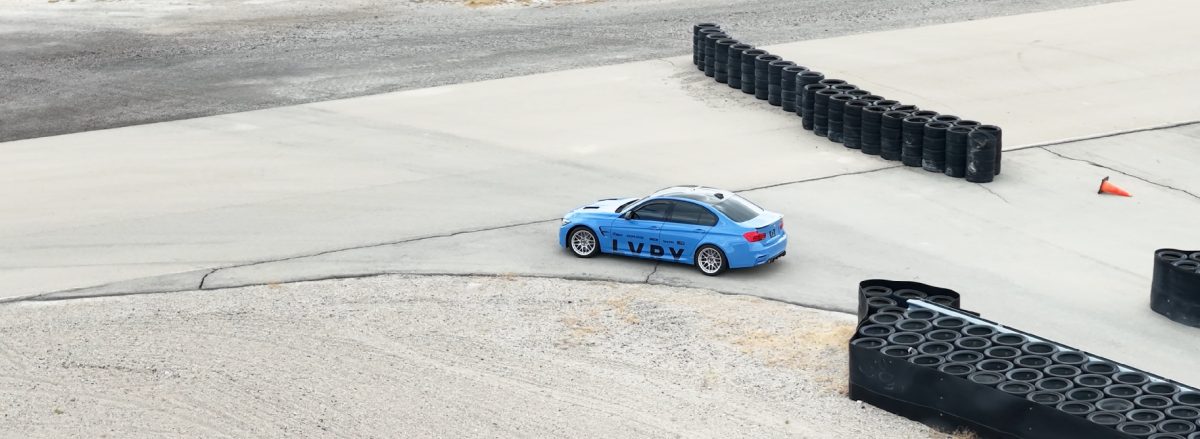
The Vitour also scored right at the top subjectively because its peak window is so good. It has very direct steering and feels extremely quick when it is fresh and at the right temperature. The issue is not the feel in that window, it is how quickly that window narrows for me on this car.
The Nankang and Bridgestone were slightly less exciting, but both were still very good. The Nankang felt a lot like the Bridgestone in the way it delivered its performance: direct enough, stable, good under braking and good over kerbs. It did not have the Hoosier's front-end excitement or the Vitour's one-lap sharpness, but it was easy to trust and very consistent. The Goodyear was the least aggressive in steering feel, but that relaxed character is also part of why it is so confidence inspiring.
Subj. Dry Handling
Subjective Dry Handling Score
Higher is better ↑| Position / Tire | Result | Gap to best |
|---|---|---|
| 9 Points | Best | |
| 9 Points | Best | |
| 8.5 Points | -0.50 Points | |
| 8.5 Points | -0.50 Points | |
| 8.5 Points | -0.50 Points |
The difference between best and worst was 5.6% (0.5 Points).

Thermal behavior and wear
This was the main reason I ran the test the way I did. I was using a new tire testing system which logs lap times, G-loads, eight-band tread surface temperatures, internal air temperature, internal pressure and ambient conditions. That gives a much clearer picture of what is happening when a tire starts to get hot, and it showed exactly why peak lap time does not tell the full story.
The Nankang was the consistency benchmark. It did not have the single-lap excitement of the Hoosier, but it just kept working. I have seen people say it can take longer to warm up, and that is probably a fair trade-off for a tire that copes well with heat, but on this car, at this track, in warm ambient conditions, I did not have a warm-up problem. It was there from the first flying lap and stayed there.
The Hoosier was also very stable, and its lower starting tread depth almost certainly helps here. Less tread block movement usually means better response and less heat build-up, but it also means I cannot yet say how it compares for total life against the deeper tires. It is also illegal in some categories at its new moulded depth, which matters if you are buying tires for a specific rule set.
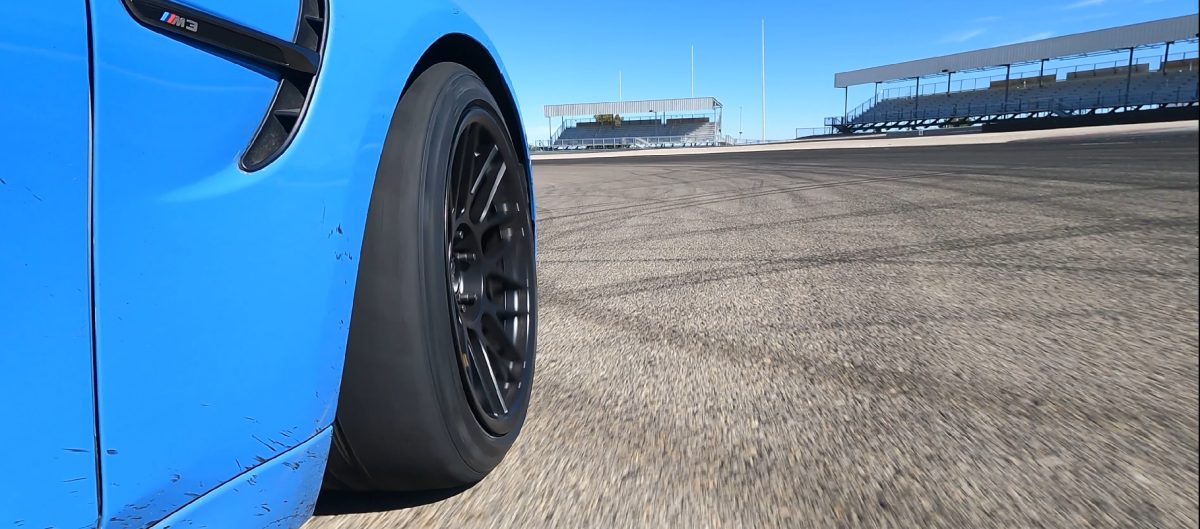
The Bridgestone looked very strong for wear. In fact, out of this group it looked closest to new at the end of my running, and I know from others using it in events like One Lap of America that it wears extremely well and can get faster as it wears. So while it was not the strongest long-run tire in my test, if you liked the RE 71 RS, the RZ should make a lot of sense from a value and life point of view.
The Vitour's problem was temperature. It warmed quickly and was very fast early, but the rear grip went away quickly for me. I know Vitour has newer products coming in this category, and if they keep the steering and peak grip while improving consistency, that could be very interesting. The P1 plus, though, is not the tire I would pick for my own longer track sessions.
Verdict
I do not think there is one single best tire here for everyone. Track tires are too use-case dependent for that. Your car, your driving style, your session length, the rules you run under and how much you care about wear all change the answer.
If I was choosing the tire I enjoyed driving the most, it would be the Hoosier TrackAttack Pro. It is fast, thermally stable and has that very immediate front end I love. It is expensive, it starts with less tread depth, and it will not be legal everywhere, but as a driving experience it was my favorite.
If you just want a huge amount of grip and a very secure, predictable platform, the Goodyear Eagle F1 SuperCar 3R is excellent. It feels more like a race tire than the 200 TW products here, but that is also the problem for many people: it is not a 200 treadwear tire, so it does not fit many North American rule sets.
Of the more normal 200 treadwear tires, my pick is the Nankang Sportnex CR-S. It suits my driving style, it is fast on the first lap, it stays in the window better than the Bridgestone and Vitour in my use, and it is also the cheapest of those three. I have been telling people to try the CR-S for a while, and this test is another reason why.
The Bridgestone Potenza RE 71 RZ is still a very good tire. It did not show a huge pace or thermal step over what I remember from the RE 71 RS in this particular test, but it looks like it wears very well, and that could make it the sensible choice for a lot of people over a season.
The Vitour Tempesta P1 plus is the one I would pick for a short hit rather than a longer run. It has excellent steering and peak grip, and I can completely understand why people love it, but on my car and with my driving it overheated too quickly at the rear. For one-lap work it would be high on my list. For repeated laps, it is not for me.
Nankang Sportnex CR S
275/35 R18
All discipline results (3)
Discipline positions compare the ranked tires in this test, not the whole market. These are individual measurements, not weighted overall scores.
| Test | Position in discipline | Result | Gap to best |
|---|---|---|---|
| Dry HandlingLower is better | 3rd / 5 | 101.59 s | +2.99 s |
| Dry Handling Long RunLower is better | 1st / 4 | 102.5 s | Best in this discipline |
| Subj. Dry HandlingHigher is better | 3rd / 5 | 8.5 Points | -0.50 Points |
Hoosier TrackAttack Pro
275/35 R18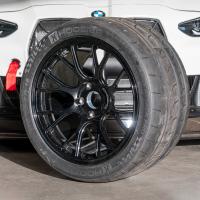
All discipline results (3)
Discipline positions compare the ranked tires in this test, not the whole market. These are individual measurements, not weighted overall scores.
| Test | Position in discipline | Result | Gap to best |
|---|---|---|---|
| Dry HandlingLower is better | 2nd / 5 | 101.37 s | +2.77 s |
| Dry Handling Long RunLower is better | 2nd / 4 | 102.59 s | +0.09 s |
| Subj. Dry HandlingHigher is better | 1st / 5 | 9 Points | Best in this discipline |
Bridgestone Potenza RE 71 RZ
275/35 R18
All discipline results (3)
Discipline positions compare the ranked tires in this test, not the whole market. These are individual measurements, not weighted overall scores.
| Test | Position in discipline | Result | Gap to best |
|---|---|---|---|
| Dry HandlingLower is better | 4th / 5 | 101.66 s | +3.06 s |
| Dry Handling Long RunLower is better | 3rd / 4 | 103.32 s | +0.82 s |
| Subj. Dry HandlingHigher is better | 3rd / 5 | 8.5 Points | -0.50 Points |
Vitour Tempesta P1+
275/35 R18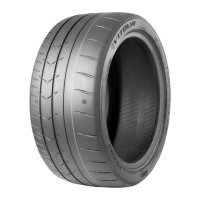
All discipline results (3)
Discipline positions compare the ranked tires in this test, not the whole market. These are individual measurements, not weighted overall scores.
| Test | Position in discipline | Result | Gap to best |
|---|---|---|---|
| Dry HandlingLower is better | 5th / 5 | 101.69 s | +3.09 s |
| Dry Handling Long RunLower is better | 4th / 4 | 104.15 s | +1.65 s |
| Subj. Dry HandlingHigher is better | 1st / 5 | 9 Points | Best in this discipline |
Goodyear Eagle F1 SuperCar 3R
275/35 R18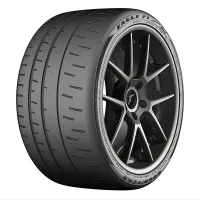
All discipline results (2)
Discipline positions compare the ranked tires in this test, not the whole market. These are individual measurements, not weighted overall scores.
| Test | Position in discipline | Result | Gap to best |
|---|---|---|---|
| Dry HandlingLower is better | 1st / 5 | 98.6 s | Best in this discipline |
| Subj. Dry HandlingHigher is better | 3rd / 5 | 8.5 Points | -0.50 Points |
Discussion