Every tire is tested using calibrated instrumented measurement and structured subjective assessment. Reference tires are retested throughout each session to correct for changing conditions, ensuring fair, repeatable comparisons. Multiple reference sets are used where needed so that control tire wear does not affect accuracy.
We use professional-grade testing equipment including GPS data loggers, accelerometers, and calibrated microphones. All tires are broken in and conditioned before testing begins. For full details on our equipment, preparation process, and calibration procedures, see our complete testing methodology.
Categories Tested
Dry Braking
For dry braking, I drive the test vehicle at an entry speed of 110 km/h and apply full braking effort to a standstill with ABS active on clean, dry asphalt. I typically use an 100–5 km/h measurement window. My standard programme is five runs per tire set where possible, although the sequence can extend to as many as fifteen runs if conditions and tire category justify it. I analyse the full set of runs and discard statistical outliers before averaging. Reference tires are run repeatedly throughout the session to correct for changing conditions.
Dry Handling
For dry handling, I drive at the limit of adhesion around a dedicated handling circuit with ESC disabled where possible so I can assess the tire's natural balance, transient response, and limit behaviour without electronic intervention masking the result. I usually complete between two and five timed laps per tire set, depending on the circuit, tire type, and consistency of conditions. I exclude laps affected by clear driver error or obvious environmental inconsistency. Control runs are carried out frequently throughout the session, and I often use multiple sets of control tires so that wear on the references does not become a meaningful variable. For more track-focused products, I also do endurance testing, which is a set number of laps at race pace to determine tire wear patterns and heat resistance over longer driving.
Subj. Dry Handling
Objective data is only part of the picture, so I also carry out a structured subjective handling assessment at the limit of adhesion on a dedicated dry handling circuit. I score steering precision, steering response, turn-in behaviour, mid-corner balance, corner-exit traction, breakaway characteristics, and overall confidence using a standardised 1–10 scale used consistently across my testing. The final assessment combines numeric scoring with written technical commentary. I complete familiarisation laps on the control tire before evaluating each candidate.
Wet Braking
For wet braking, I drive the test vehicle at an entry speed of 88 km/h and apply full braking effort to a standstill with ABS active on an asphalt surface with a controlled water film. I typically use an 80–5 km/h measurement window to isolate tire performance from variability in the initial brake application. My standard programme is eight runs per tire set where possible, although the sequence can extend to as many as fifteen runs if conditions and tire category justify it. I analyse the full set of runs and discard statistical outliers before averaging. To correct for changing conditions, I run reference tires repeatedly throughout the session — in wet testing, typically every three candidate test sets.
Wet Handling
For wet handling, I drive at the limit of adhesion around a dedicated handling circuit. I generally use specialist wet circuits with kerb-watering systems designed to maintain a consistent surface condition. ESC is disabled where possible so I can assess the tire's natural balance, transient response, and limit behaviour without electronic intervention masking the result. I usually complete between two and five timed laps per tire set, depending on the circuit, tire type, and consistency of conditions. I exclude laps affected by clear driver error or obvious environmental inconsistency. Control runs are carried out frequently throughout the session, and I often use multiple sets of control tires so that wear on the references does not become a meaningful variable.
Subj. Wet Handling
Objective data is only part of the picture, so I also carry out a structured subjective handling assessment at the limit of adhesion on a dedicated wet handling circuit. I score steering precision, steering response, turn-in behaviour, mid-corner balance, aquaplaning resistance, breakaway characteristics, and overall confidence using a standardised 1–10 scale used consistently across my testing. The final assessment combines numeric scoring with written technical commentary. I complete familiarisation laps on the control tire before evaluating each candidate.
Snow Braking
For snow braking, I drive the test vehicle at an entry speed of 50 km/h and apply full braking effort to a standstill with ABS active on a groomed, compacted snow surface, measuring 45-5 km/h. I generally use a wide VDA (vehicle dynamic area) and progressively move across the surface between runs so that no tire ever brakes on the same piece of snow twice. My standard programme is twelve runs per tire set, although the sequence can extend further if the data justify it. I analyse the full set of runs and discard statistical outliers before averaging. The surface is regularly groomed throughout the session. To correct for changing snow surface conditions, I run reference tires repeatedly — typically every two candidate test sets.
Snow Traction
For snow traction, I accelerate the vehicle from rest on a groomed snow surface with traction control active and measure speed and time using GPS telemetry. I typically use a 5–35 km/h measurement window to reduce the influence of launch transients and powertrain irregularities. I use a wide VDA (vehicle dynamic area) and progressively move across the surface between runs so that no tire ever accelerates on the same piece of snow twice. The surface is regularly groomed throughout the session. I complete multiple runs per tire set and average the valid results. Reference tires are run typically every two candidate test sets to correct for changing snow surface conditions.
Snow Handling
For snow handling, I drive at the limit of adhesion around a dedicated snow handling circuit with ESC disabled where possible. The circuit is groomed and prepared after every run while tires are being changed, so each set runs on a consistently prepared surface. I usually complete between two and five timed laps per tire set, excluding laps affected by clear driver error or obvious environmental inconsistency. Because snow surfaces degrade more rapidly than asphalt, control runs are carried out more frequently — typically every two candidate test sets.
Subj. Comfort
To assess comfort, I drive on a wide range of road surfaces (often dedicated comfort tracks at test facilities) at speeds from 50 to 120 km/h, including smooth motorway, coarse surfaces, expansion joints, broken pavement, and sharp-edged obstacles. I evaluate primary ride quality, secondary ride quality, impact harshness, seat-transmitted vibration, and the tire's ability to absorb sharp inputs. Ratings are assigned on a 1–10 scale relative to the reference tire.
Subj. Noise
For subjective noise assessment, I drive at constant speeds across multiple surface types with the windows closed, ventilation off, and audio system off. I assess overall noise level, tonal quality, cavity boom, pattern noise, broadband roar, and sensitivity to both speed and road texture. Each tire is rated on a 1–10 scale and supported by written observations on noise character and annoyance.
How each category is weighted in the overall score:
Dry26%
Dry Braking45%
Dry Handling45%
Subj. Dry Handling9%
Wet37%
Wet Braking44%
Wet Handling44%
Subj. Wet Handling11%
Snow21%
Snow Braking35%
Snow Traction30%
Snow Handling35%
Comfort5%
Subj. Comfort45%
Subj. Noise45%
Tire Weight9%
Value11%
Price100%
What's the best ultra high performance all season tire on the market? To find out, I test 7 of the most popular ultra high performance all season tires, and test them in dry handling, dry braking, wet handling, wet braking, noise and comfort tire tests, to see which is the top UHP AS tire.
Ultra high performance all season tires are performance sports tires that are designed to be used all year, and perform well in hot summer conditions and cold winter weather, while having more snow performance than a summer tire.
Dry
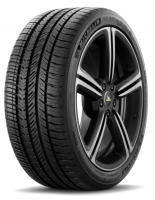
During dry braking testing, the Michelin Pilot Sport All Season 4 had an impressive lead to the second placed Bridgestone Potenza RE880AS.
Dry Braking
Spread: 2.69 M (7.7%)|Avg: 36.16 M
Dry braking in meters (60 - 0 M) (Lower is better)
Michelin Pilot Sport All Season 4
34.97 M
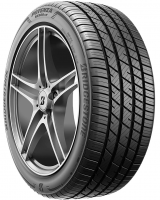
Bridgestone Potenza RE980AS
35.47 M
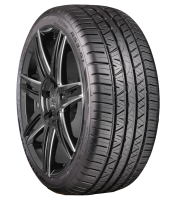
Cooper Zeon RS3 G1
35.82 M
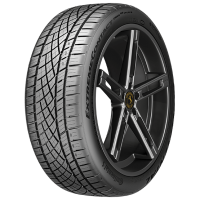
Continental Extremecontact DWS 06
36.17 M
Goodyear Eagle Exhilarate
36.53 M
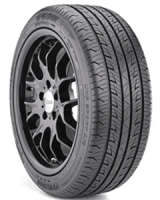
Fuzion UHP Sport AS
36.53 M
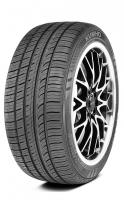
Kumho Ecsta PA51
37.66 M
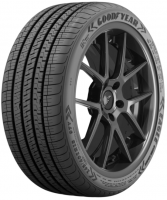
The Goodyear Eagle Exhilarate proved to be the most dynamic UHP all season tire during the dry handling testing, with the Michelin a close second.
Dry Handling
Spread: 1.36 s (2.7%)|Avg: 50.24 s
Dry handling time in seconds (Lower is better)
Goodyear Eagle Exhilarate
49.54 s
Michelin Pilot Sport All Season 4
49.65 s
Bridgestone Potenza RE980AS
49.97 s
Kumho Ecsta PA51
50.45 s
Continental Extremecontact DWS 06
50.52 s
Cooper Zeon RS3 G1
50.67 s
Fuzion UHP Sport AS
50.90 s
Subjectively the Goodyear also had a small lead over the Michelin and Bridgestone, with the Cooper, Continental and Kumho all having similar overall scores, but delivering the result in different ways.
Subj. Dry Handling
Spread: 3.00 Points (30%)|Avg: 8.57 Points
Subjective Dry Handling Score (Higher is better)
Goodyear Eagle Exhilarate
10.00 Points
Bridgestone Potenza RE980AS
9.50 Points
Michelin Pilot Sport All Season 4
9.50 Points
Continental Extremecontact DWS 06
8.00 Points
Cooper Zeon RS3 G1
8.00 Points
Kumho Ecsta PA51
8.00 Points
Fuzion UHP Sport AS
7.00 Points
Wet
Michelin retained its advantage during wet braking testing, but this time had to share the top spot with the Cooper Zeon RS3 G1. The budget Fuzion tire took significantly longer than the other tires to stop the car.
Wet Braking
Spread: 3.03 M (16.1%)|Avg: 19.61 M
Wet braking in meters (45 - 0 M) (Lower is better)
Michelin Pilot Sport All Season 4
18.84 M
Cooper Zeon RS3 G1
18.84 M
Bridgestone Potenza RE980AS
19.03 M
Goodyear Eagle Exhilarate
19.03 M
Continental Extremecontact DWS 06
19.22 M
Kumho Ecsta PA51
20.46 M
Fuzion UHP Sport AS
21.87 M
In a very close group, the Continental ExtremeContact DWS06 proved to have the quickest laptime, but any of the top five tires were extremely close.
Wet Handling
Spread: 2.52 s (5.1%)|Avg: 50.28 s
Wet handling time in seconds (Lower is better)
Continental Extremecontact DWS 06
49.65 s
Bridgestone Potenza RE980AS
49.66 s
Goodyear Eagle Exhilarate
49.71 s
Michelin Pilot Sport All Season 4
49.84 s
Cooper Zeon RS3 G1
49.88 s
Kumho Ecsta PA51
51.07 s
Fuzion UHP Sport AS
52.17 s
As in the dry, subjectively all the top tires were very close during the wet handling testing.
Subj. Wet Handling
Spread: 4.00 Points (40%)|Avg: 8.36 Points
Subjective Wet Handling Score (Higher is better)
Bridgestone Potenza RE980AS
10.00 Points
Goodyear Eagle Exhilarate
9.50 Points
Continental Extremecontact DWS 06
9.00 Points
Michelin Pilot Sport All Season 4
8.50 Points
Kumho Ecsta PA51
8.00 Points
Cooper Zeon RS3 G1
7.50 Points
Fuzion UHP Sport AS
6.00 Points
Snow - Updated 16th Febuary 2021
Snow braking testing showed the Michelin to have a clear advantage over the group, with only the Continental anywhere close in terms of raw grip.
Snow Braking
Spread: 2.92 M (21.4%)|Avg: 15.68 M
Snow braking in meters (20 - 5 mph) (Lower is better)
Snow Braking: Safety Impact: Best vs Worst Tire
Snow handling saw a very similar order to snow braking, with the Michelin retaining its vast lead, and the Continental being the best of the rest.
Snow Handling
Spread: 10.87 s (10.9%)|Avg: 107.30 s
Snow handling time in seconds (Lower is better)
Michelin Pilot Sport All Season 4
99.66 s
Continental Extremecontact DWS 06
106.74 s
Bridgestone Potenza RE980AS
106.91 s
Fuzion UHP Sport AS
108.23 s
Goodyear Eagle Exhilarate
108.98 s
Kumho Ecsta PA51
110.08 s
Cooper Zeon RS3 G1
110.53 s
Snow traction moved Kumho slightly up the order, with Michelin again dominating the snow testing.
Snow Traction
Spread: 1.24 s (25.5%)|Avg: 5.69 s
Snow acceleration time (5 - 20 mph) (Lower is better)
Michelin Pilot Sport All Season 4
4.86 s
Kumho Ecsta PA51
5.53 s
Continental Extremecontact DWS 06
5.70 s
Fuzion UHP Sport AS
5.82 s
Goodyear Eagle Exhilarate
5.89 s
Bridgestone Potenza RE980AS
5.93 s
Cooper Zeon RS3 G1
6.10 s
Environment
The Cooper had the best subjective comfort on test, with the Goodyear and Continental a close second.
Subj. Comfort
Spread: 3.50 Points (35%)|Avg: 8.07 Points
Subjective Comfort Score (Higher is better)
Cooper Zeon RS3 G1
10.00 Points
Continental Extremecontact DWS 06
9.50 Points
Goodyear Eagle Exhilarate
9.50 Points
Michelin Pilot Sport All Season 4
8.00 Points
Bridgestone Potenza RE980AS
6.50 Points
Kumho Ecsta PA51
6.50 Points
Fuzion UHP Sport AS
6.50 Points
The Kumho had the best subjective noise qualities on test.
Subj. Noise
Spread: 3.50 Points (35%)|Avg: 8.29 Points
Subjective in car noise levels (Higher is better)
Kumho Ecsta PA51
10.00 Points
Goodyear Eagle Exhilarate
9.50 Points
Continental Extremecontact DWS 06
8.50 Points
Michelin Pilot Sport All Season 4
8.00 Points
Cooper Zeon RS3 G1
8.00 Points
Fuzion UHP Sport AS
7.50 Points
Bridgestone Potenza RE980AS
6.50 Points
There seems to be a link between tire weight and comfort levels, as the heavier tires on test were some of the least comfortable.
Tire Weight
Spread: 7.60 Kg (17.9%)|Avg: 46.85 Kg
Tire Weight Per Set (Lower is better)
Continental Extremecontact DWS 06
42.48 Kg
Goodyear Eagle Exhilarate
45.00 Kg
Fuzion UHP Sport AS
45.56 Kg
Cooper Zeon RS3 G1
47.36 Kg
Michelin Pilot Sport All Season 4
47.72 Kg
Bridgestone Potenza RE980AS
49.72 Kg
Kumho Ecsta PA51
50.08 Kg
The Fuzion was significantly cheaper than all but the Kumho, with a set of 4 Fuzion tires costing over 300 dollars less to buy.
Good grip in the dry and wet, significant lead in dry braking and shortest wet braking.
Expensive purchase price, average levels of noise and comfort.
The new Michelin Pilot Sport All Season 4 earns a win in its first test, proving to have a balanced performance in almost all tests, and an impressive ability to top the vehicle quickly and safely in all conditions.
Excellent all round tire, sporty handling in the dry and wet, good levels of comfort, low noise, well priced.
Average dry braking.
The Goodyear Eagle Exhilarate is an impressively sporty feeling ultra high performance tire, that manages to blend good handling with good levels of nose and comfort.
Excellent performance in the dry and wet, quick feeling sporty steering.
Low levels of comfort, high levels of noise, lacked steering detail at the very limit, expensive.
The Bridgestone Potenza RE980AS is a dynamic feeling ultra high performance all season tire with excellent grip in the dry and wet, that just lacks a little detail at the limit of grip.
Excellent wet braking, good dry braking, highest levels of comfort.
Average dry and wet handling, subjectively it felt more like a touring tire than a UHP tire.
The Cooper Zeon RS3-G1 proved to have excellent levels of comfort and good grip in dry and wet braking, but didn't feel as sporty as the best tires on test.
Excellent wet handling, good levels of comfort, low levels of noise.
Average dry performance, subjectively it felt more like a touring tire than a UHP tire.
The Continental ExtremeContact DWS06 was very strong in the wet and had good levels of comfort, but had an average performance in the dry, feeling more like a comfort bias tire.
Low purchase price, quietest tire on test, good handling in the dry.
Longest dry braking distance, slow wet handling time, low levels of comfort.
The Kumho Ecsta PA51 had good dry handling, and felt sporty at lower speeds, but it had limited grip during dry and wet braking and low levels of comfort compared to the best on test.
The Fuzion UHP Sport AS was the least expensive tire on test, and had reasonable levels of comfort, but it lacked outright grip and couldn't match the more expensive tires in any of the objective tests.
what is the time difference in lap time between Michelin Pilot Sport 4 All season tire compared to Pilot Sport 4 Summer , on dry, on one lap ? thank you.
thank you ,great. forgot to add in summer conditions. i saw your previous great compare of tire in cold and wet temperatures. i wonder how much we give up in UHP AS vs UHP Summer in dry, warm conditions (20-30C)
Hello, thanks for great test! I was just wondering what would you recommend for all season tire closest to summer performance tire? Have to get MS tires so I can use highway fall and spring. I have Nokian Haka 3 for winter season. Audi Q5
Hello, I really love the detailed reviews and helpful information.
Did you happen to do any aquaplane resistance tests with the all season UHP? If not, did you get a feel of which ones might stand out? Goodyear Exhilirate or ExtremeContact?
Thanks. That’s the 1 category that I've seen take many cars out in 1 day than any other(2 tonight).
I didn't, and I don't remember any extra subjective notes about it, sorry. While aquaplaning is rare, it can be a big issue! At a guess I would say the Conti would be the tire to pick if aquaplaning is important to you.
I’ve been watching the YouTube channel and running through the site and I’ve not been able to find a review on the Goodyear F1 Asymmetric 5 M+S UHP All seasons that come stock on the Tesla Model Ys.
Is there a chance this is in your lineup soon? Loads of non M+S reviews but not that specific tire.
Hi, love the site, and videos, and all the info! Thank you!! In the 7 UHP Tires Test, was it the Continental Extreme Contact DWS 06, or the DWS 06 Plus that was tested? If not the Plus, why?
It was non-plus, the plus wasn't available on the market at time of purchasing tires for the test (which is often way in advance of the video being published)
Will we ever see reviews for American all seasons ( touring not UHP ). I come here to answer my families tire questions for summer performance, performance winters, Nordic winters and all weathers. But most of the tires sold in NA are touring (american) all seasons. You posted Consumer Reports' winter tire testing but not their (american) all seasons testing. WHY DO YOU HATE US! :-) It would be nice to get your prospective on the balance between tread wear and wet performance. I'm very confused on the difference between non performance european summers and non performance american all seasons.
Hi, just subscribed to tire reviews and have been watching several of the very informative videos and related articles. So much to take on board and consider. I have an AMG C63S estate. With the weather recently changing colder, I found myself going sideways at a sensible/normal/usual speed for the same location. It was 2 degrees. The tread depth is fine and they are MO marked Conti's front and Dunlop's rear that were on when I bought it. I now understand they are 'summer' tires, and performance drops off below about 7 degrees..... I wonder how many people make the same uninformed mistake with worse consequences! I'm now looking to change them. I was previously aware of 'winter' tires, but in my 40+ years of driving various cars have just had 'normal' tires on all year. I now only do a low mileage, and wouldn't use it in the snow, but it is my daily drive so at least want to be able to safely use it in the cold. I'm not planning on tracking it either, just some occasional spirited driving on quiet B roads etc', otherwise normal driving on UK roads, so was thinking of 'normal' tires, at least for the winter months, but struggled to find them in the existing tire sizes. I don't really need 'winter' tires so having studied this site, I'm leaning more towards all season tires, but they only seem to do my size in the UHP category. I've watched the wet / dry / snow UHP A/S reviews, but they seemed to be in extremes of snow and warm. For UK climate and snow being a low priority, which would you fit to a 500bhp rear wheel drive car? Do they even do an MO marked version? Thanks.
You don't get this type of tire in the uk, you're best off putting winter tires on if you want mobility in all conditions, or just leaving your summer/normal tires on and dealing with the fact a C63S is going to struggle with traction in cold and wet with almost any tires
The dilemma! Crossclimate 2s for the occasional snow or PAS4s for the days when it's dry! Do you think the PAS4s will be better in the dry even when it's sub zero temps (e.g -5 to -10C)?
Would love to see this comparison as well, i.e premium touring all season and UHP all season, I was debating between DWS06 and Crossclimate for my GLA45AMG, DWS06 was cheaper despite being UHP, not too sure what makes it "Ultra High Performance" beacuse it seems it just compromised on every single aspect especially on poor weather condition where it seems the "All Weather" Crossclimate is superior, but UHP do have higher speed rating and perhaps better dry handling which is rather useless because no one really do track in winter or in all season tires.
Just bought a mini Cooper electric came with Perelli summer tires live in New Jersey 8 days of snow looking for your recommendation winter tire all season tire?
Hello TireReviews! Would it be possible please, to inform us what UHP All Season tires are available in Europe? As you know much better, many if not most, especially the best ones, are currently available mainly in the U.S. and Canada. Also, if there is any indication that some of these might also be marketed in European countries in the near future. Personally I need size 205/45ZR17/XL 88(Y or W) for a Peugeot 207RC and reading your review, but also being a Michelin biased driver, ideally or in ... theory, if that was possible (!) I think I would be happy with the Michelin Pilot Sport All Season 4. Anyway, I am very satisfied with the summer Pilot Sport 4 that have to be replaced soon. Mind you that in Greece where I live, the mid and north country have a winter climate not much milder than central Europe's, just the winter is shorter. With thanks for the valuable, rich and reliable information that you are offering us!
Unfortunately as far as I'm aware there are currently no UHPAS tires available in your size outside of maybe the Vredestein Quatrac Pro. I'm hoping that will change in the future.
Thanks a lot for your prompt response! It seems that probably I'll have to fit summer tires, as usual, or wait a bit ... In that case and if it is not asking too much, instead of the Michelin Pilot Sport 4, in your opinion could I try the Good Year Eagle F1 Asymmetric 5 this time? Is it comfortable enough, as the RC has really hard suspensions. (For example the Potenza RE050A with which it came from the factory, made the car even harder, while the difference in softness with the Michelin is impressive).
Please review the new Continental ExtremeContact DWS06plus with a snow review if you can. I’d love to see how it performs compared to the outgoing DWS06.
Hi there. I love your reviews, which I watch on YouTube whenever you post. Wondering if you can help me with a decision.
I just purchased a new 2020 Audi A3 Technik (in Canada, where I live, it is a sedan/saloon and it has the 45 tfsi engine and Quattro). It is quick (0-60 in 5.5 seconds) because it is small and light, though it is obviously not a powerful car. It came with the typical, dull all-season tires one might expect, so I am wanting to upgrade in the Spring. I have already purchased a set of winter tires, on aftermarket rims, as winters here can be nasty. Previously, I had a set of Yokohama Advan Apex V601 (summer performance) tires on my most recent car - a Mustang GT. They were great with that much power (460hp to the rear wheels). Before that I had a set of Pirelli Ultra High Performance all-season tires on a Subaru Legacy (symmetrical all-wheel drive, of course). They seemed great with that amount of power and all-wheel drive.
For my Audi, I am considering either Summer performance tires, as I had for my Mustang, or All-season tires, such as Grand Touring (e.g. Continental PureContact LS) or Ultra High Performance (e.g. Yokohama Advan Sport A/S+).
My question is this - with Quattro and only 228 hp / 258 ft.lbs. torque, will I really notice much of a difference between these categories? I love to drive mountain highways during the summer, perhaps faster than I should, and on straighter highways I like to cruise at speeds between 130-150 km/h. I know I need a good speed rating, V or higher, but I'm just not sure what type of tire to get.
Any tips or advice or thoughts would be greatly appreciated!
If you're really after enjoyment, I'd certainly be looking at a UHP summer tire rather than all season, you just can't beat them. But, if you might encounter poor weather on those tires, their appeal quickly drops, so for me, the decision should be based on your driving patterns.
Good question. As they stand now, they will have too little wet grip to be competitive in the European market thanks to the very low tread wear, however I think a European adapted version of these tires would be super useful.
I see. Oh well. I still believe it is a shame. In your opinion, which of the tires we have available in the UK would be the closest to these? I want a performance tire for the summer that wont let me stuck with a bit of snow. I already had the Michelin CrossClimate+, and while its all I need for the snow it is not a good summer tire, I wouldn't say its comparable to even mediocre summer tires, at its best. Much less a high performance tire (like the ones you tested here, even when they are not fully summer tires).
Currently I'm in between the Goodyear Vector 4Seasons Gen 3 or the Bridgestone Weather Control A005... For a (relatively) high performance car (C320 with a remap) which would be the closest in performance to these from the USA market?
I have not found a way to compare them, except extrapolating data from this test:
I'm afraid you've already had the most summer like AS tire with the CrossClimate. If you want to retain summer performance, you're going to need to fit a summer and AS / winter tire combination.
The CC+ will vastly out perform the Exhilarate in the snow and ice though.
You have a choice - in the US already now, the Michelin CrossClimate 2 (from 2021 in Europe), which is better than CC+ and maybe you could already find some of the first US tests there comparing it with your 2 preferred favorites.
Based on that US comparison, if applicable, you could make your informed choice in Europe, soon next year (21).
P.S. Don't forget the brand new (10/2020) baked sportive Dunlop Sport All Season...
When launched, the word "Sport" is mentioned in the introduction promo text 13 times! :-) https://news.goodyear.eu/th...
I'm also seeking a UK "winter" tire solution for my Aston Martin (V8 Vantage). Not planning on taking it out in the snow and ice, so I think full winter tires such as the OEM SottoZero would be overkill. Just need something that stops it performing like Bambi on ice when the temp drops below 5 degs. What options are there? I've been looking into it and hardly any of the all season tires go big enough 275/35/R19.
Thanks for the swift reposnse, and great reviews by the way. I did find an option on BS Weathercontrol EVO if I go up a tad in profile to 275/40 rears and 235/45 fronts, you seemed to rate these highly for UK driving conditions. Any thoughts on how these might compare to the OEM winter of SottoZero serie 2?
I've never tested the Pirelli, especially not the OE version of that tire. It's a tricky one to call, for most combinations I'd go with the A005, however with the SottoZero being an asym pattern and potentially modified to cope with the astons power, I'm on the fence (sorry)
OEM winter Pirelli SottoZero serie 2 is a very old winter model, so there is good chance that the new all seasons BS Weathercontrol EVO will be for the UK weather overall much better (except heavy snow/ice).
that's what I was thinking, the SottoZero must be 10 year old tech. I see Pirelli now offer a Winter version of the P-Zero, this might be what I'm looking for, so I've enquired with them about size availability in the UK.
Is there a chance a more recent aston would have run the same size they updated it? It's not unusual for aftermarket tires to receive silent compound updates. But if it was a tire that was really homologated ten years ago, that definitely swings it.
I think the last model to have been developed with a 19" wheel option would have been the V8Vs from around 2012. The newer models such as the new Vantage and DB11 would be a 20" winter tire option, having just looked this up the tire option on the DB11 is now a Blizzak whereas the new Vantage remains on the SottoZero, albeit at the 20" size. The 19" SottoZero is still a dealer fit option for the older cars like mine, but I've no idea if the compound will have been updated at all from the original homologation. Only feedback so far from the AM Forum is that people still rate the SottoZero, but I guess that's with nothing to compare against. Feels like we need a new group test!!!
In the 18' tire category you would have a much broader and cheaper offer, have you checked your car's homologated smaller tire sizes? You can also save on buying lower speed index, for winter tire its conditionally allowed. Pirelli SottoZero 2 was replaced directly by SottoZero 3, many years ago. Although the brand new coming Winter P-Zero would be still better, not sure if you will soon get your 19' size...and the price of the brand new model...
For the UK and your big car it might still be better to go for the all seasons tire (garage space, costs, longevity reasons).




what is the time difference in lap time between Michelin Pilot Sport 4 All season tire compared to Pilot Sport 4 Summer , on dry, on one lap ? thank you.
I don't know, however I'm going to test this in Sept :)
thank you ,great.
forgot to add in summer conditions. i saw your previous great compare of tire in cold and wet temperatures.
i wonder how much we give up in UHP AS vs UHP Summer in dry, warm conditions (20-30C)
Hello, thanks for great test! I was just wondering what would you recommend for all season tire closest to summer performance tire? Have to get MS tires so I can use highway fall and spring. I have Nokian Haka 3 for winter season. Audi Q5
Hello, I really love the detailed reviews and helpful information.
Did you happen to do any aquaplane resistance tests with the all season UHP? If not, did you get a feel of which ones might stand out? Goodyear Exhilirate or ExtremeContact?
Thanks. That’s the 1 category that I've seen take many cars out in 1 day than any other(2 tonight).
I didn't, and I don't remember any extra subjective notes about it, sorry. While aquaplaning is rare, it can be a big issue! At a guess I would say the Conti would be the tire to pick if aquaplaning is important to you.
I’ve been watching the YouTube channel and running through the site and I’ve not been able to find a review on the Goodyear F1 Asymmetric 5 M+S UHP All seasons that come stock on the Tesla Model Ys.
Is there a chance this is in your lineup soon? Loads of non M+S reviews but not that specific tire.
As this seems to be a tesla specific tire and only available in north america, i might struggle to test it, sorry!
Hi, love the site, and videos, and all the info! Thank you!! In the 7 UHP Tires Test, was it the Continental Extreme Contact DWS 06, or the DWS 06 Plus that was tested? If not the Plus, why?
Thanks!
Chris
It was non-plus, the plus wasn't available on the market at time of purchasing tires for the test (which is often way in advance of the video being published)
Will we ever see reviews for American all seasons ( touring not UHP ). I come here to answer my families tire questions for summer performance, performance winters, Nordic winters and all weathers. But most of the tires sold in NA are touring (american) all seasons. You posted Consumer Reports' winter tire testing but not their (american) all seasons testing. WHY DO YOU HATE US! :-) It would be nice to get your prospective on the balance between tread wear and wet performance. I'm very confused on the difference between non performance european summers and non performance american all seasons.
Working on it for next year :)
If you have the latest consumer reports tests feel free to email them over, I'll happily update the site :)
I sent using contact us, page ( No email address on website ), your move sir!
Thanks for sending, sadly I've not got anything. You can email me on hello @ tirereviews.co.uk :)
I used a google drive link, perhaps your spam filter caught it. I just emailed the PDF's directly. Again, your move sir!
Hi, just subscribed to tire reviews and have been watching several of the very informative videos and related articles. So much to take on board and consider. I have an AMG C63S estate. With the weather recently changing colder, I found myself going sideways at a sensible/normal/usual speed for the same location. It was 2 degrees. The tread depth is fine and they are MO marked Conti's front and Dunlop's rear that were on when I bought it. I now understand they are 'summer' tires, and performance drops off below about 7 degrees..... I wonder how many people make the same uninformed mistake with worse consequences! I'm now looking to change them. I was previously aware of 'winter' tires, but in my 40+ years of driving various cars have just had 'normal' tires on all year. I now only do a low mileage, and wouldn't use it in the snow, but it is my daily drive so at least want to be able to safely use it in the cold. I'm not planning on tracking it either, just some occasional spirited driving on quiet B roads etc', otherwise normal driving on UK roads, so was thinking of 'normal' tires, at least for the winter months, but struggled to find them in the existing tire sizes. I don't really need 'winter' tires so having studied this site, I'm leaning more towards all season tires, but they only seem to do my size in the UHP category. I've watched the wet / dry / snow UHP A/S reviews, but they seemed to be in extremes of snow and warm. For UK climate and snow being a low priority, which would you fit to a 500bhp rear wheel drive car? Do they even do an MO marked version? Thanks.
You don't get this type of tire in the uk, you're best off putting winter tires on if you want mobility in all conditions, or just leaving your summer/normal tires on and dealing with the fact a C63S is going to struggle with traction in cold and wet with almost any tires
I wonder how the CrossClimate 2s would compare with the PAS4s!
They've a fair bit better in the snow, not not as good in the dry. Not sure on wet
The dilemma! Crossclimate 2s for the occasional snow or PAS4s for the days when it's dry! Do you think the PAS4s will be better in the dry even when it's sub zero temps (e.g -5 to -10C)?
I do yes, but that's a guess!
Would love to see this comparison as well, i.e premium touring all season and UHP all season, I was debating between DWS06 and Crossclimate for my GLA45AMG, DWS06 was cheaper despite being UHP, not too sure what makes it "Ultra High Performance" beacuse it seems it just compromised on every single aspect especially on poor weather condition where it seems the "All Weather" Crossclimate is superior, but UHP do have higher speed rating and perhaps better dry handling which is rather useless because no one really do track in winter or in all season tires.
So the majority of these UHP AS tires are not available in the UK specifically.
Seeing as you recommend an AS tire over a full winter for the UK, what would you recommend?
I'm looking for either:
205/40/R18 (OEM size but restricts options)
215/40/R18
225/40/R18
It's sad they're not.
CC2 is the go-to recommendation for me at the moment, but the Hankook, Conti and Goodyear products all have their merits too.
So the CC2 tread pattern blocks don't look the most sporty, although that may just be misleading...
Which of the above recommendations would you say is most biased towards performance cars in lieu of the top UHP options?
Sadly none are biased towards performance cars, but the CC2 is usually the most "sporty" of the all season tires available.
Just bought a mini Cooper electric came with Perelli summer tires live in New Jersey 8 days of snow looking for your recommendation winter tire all season tire?
The Michelin CrossClimate 2 is an excellent all weather tire that will perform in snow
What was the test water depth?
Handling is usually around 1mm and aquaplaning around 8mm
Hello TireReviews! Would it be possible please, to inform us what UHP All Season tires are available in Europe? As you know much better, many if not most, especially the best ones, are currently available mainly in the U.S. and Canada. Also, if there is any indication that some of these might also be marketed in European countries in the near future. Personally I need size 205/45ZR17/XL 88(Y or W) for a Peugeot 207RC and reading your review, but also being a Michelin biased driver, ideally or in ... theory, if that was possible (!) I think I would be happy with the Michelin Pilot Sport All Season 4. Anyway, I am very satisfied with the summer Pilot Sport 4 that have to be replaced soon. Mind you that in Greece where I live, the mid and north country have a winter climate not much milder than central Europe's, just the winter is shorter. With thanks for the valuable, rich and reliable information that you are offering us!
Unfortunately as far as I'm aware there are currently no UHPAS tires available in your size outside of maybe the Vredestein Quatrac Pro. I'm hoping that will change in the future.
Thanks a lot for your prompt response! It seems that probably I'll have to fit summer tires, as usual, or wait a bit ... In that case and if it is not asking too much, instead of the Michelin Pilot Sport 4, in your opinion could I try the Good Year Eagle F1 Asymmetric 5 this time? Is it comfortable enough, as the RC has really hard suspensions. (For example the Potenza RE050A with which it came from the factory, made the car even harder, while the difference in softness with the Michelin is impressive).
I think the Asym 5 is a great alternative, the difference in comfort levels is often smaller than the difference in price!
Please review the new Continental ExtremeContact DWS06plus with a snow review if you can. I’d love to see how it performs compared to the outgoing DWS06.
I'll try and sort something this year
Hi there. I love your reviews, which I watch on YouTube whenever you post. Wondering if you can help me with a decision.
I just purchased a new 2020 Audi A3 Technik (in Canada, where I live, it is a sedan/saloon and it has the 45 tfsi engine and Quattro). It is quick (0-60 in 5.5 seconds) because it is small and light, though it is obviously not a powerful car. It came with the typical, dull all-season tires one might expect, so I am wanting to upgrade in the Spring. I have already purchased a set of winter tires, on aftermarket rims, as winters here can be nasty. Previously, I had a set of Yokohama Advan Apex V601 (summer performance) tires on my most recent car - a Mustang GT. They were great with that much power (460hp to the rear wheels). Before that I had a set of Pirelli Ultra High Performance all-season tires on a Subaru Legacy (symmetrical all-wheel drive, of course). They seemed great with that amount of power and all-wheel drive.
For my Audi, I am considering either Summer performance tires, as I had for my Mustang, or All-season tires, such as Grand Touring (e.g. Continental PureContact LS) or Ultra High Performance (e.g. Yokohama Advan Sport A/S+).
My question is this - with Quattro and only 228 hp / 258 ft.lbs. torque, will I really notice much of a difference between these categories? I love to drive mountain highways during the summer, perhaps faster than I should, and on straighter highways I like to cruise at speeds between 130-150 km/h. I know I need a good speed rating, V or higher, but I'm just not sure what type of tire to get.
Any tips or advice or thoughts would be greatly appreciated!
Morgan
Nice little car!
If you're really after enjoyment, I'd certainly be looking at a UHP summer tire rather than all season, you just can't beat them. But, if you might encounter poor weather on those tires, their appeal quickly drops, so for me, the decision should be based on your driving patterns.
Amazing video, as always. Now for the important bit. Which can we get in the UK? And WHY ON EARTH are they available in the USA but not in Europe???
Good question. As they stand now, they will have too little wet grip to be competitive in the European market thanks to the very low tread wear, however I think a European adapted version of these tires would be super useful.
I see. Oh well. I still believe it is a shame. In your opinion, which of the tires we have available in the UK would be the closest to these? I want a performance tire for the summer that wont let me stuck with a bit of snow. I already had the Michelin CrossClimate+, and while its all I need for the snow it is not a good summer tire, I wouldn't say its comparable to even mediocre summer tires, at its best. Much less a high performance tire (like the ones you tested here, even when they are not fully summer tires).
Currently I'm in between the Goodyear Vector 4Seasons Gen 3 or the Bridgestone Weather Control A005... For a (relatively) high performance car (C320 with a remap) which would be the closest in performance to these from the USA market?
I have not found a way to compare them, except extrapolating data from this test:
https://www.tirerack.com/ti...
And this one:
https://www.tirerack.com/ti...
Where we can see that the Exhilarate vastly outperform the CrossClimate+
Thanks!
I'm afraid you've already had the most summer like AS tire with the CrossClimate. If you want to retain summer performance, you're going to need to fit a summer and AS / winter tire combination.
The CC+ will vastly out perform the Exhilarate in the snow and ice though.
I was hoping that the Vector 4Seasons Gen 3 would be better! Oh well, is not that we have that much choice. Thanks!
You have a choice - in the US already now, the Michelin CrossClimate 2 (from 2021 in Europe), which is better than CC+ and maybe you could already find some of the first US tests there comparing it with your 2 preferred favorites.
Based on that US comparison, if applicable, you could make your informed choice in Europe, soon next year (21).
P.S. Don't forget the brand new (10/2020) baked sportive Dunlop Sport All Season...
When launched, the word "Sport" is mentioned in the introduction promo text 13 times! :-)
https://news.goodyear.eu/th...
Thanks... to small!!! it is for compact cars :)
The early reports of the US spec CC2 seem to have it as a more comfort bias tire.
In the UK from 1.1.2021 the newly imported tires might be sold with the extra WTO tariff in...depends on dealers.
I'm also seeking a UK "winter" tire solution for my Aston Martin (V8 Vantage). Not planning on taking it out in the snow and ice, so I think full winter tires such as the OEM SottoZero would be overkill. Just need something that stops it performing like Bambi on ice when the temp drops below 5 degs. What options are there? I've been looking into it and hardly any of the all season tires go big enough 275/35/R19.
I'm not sure of any all season option in that size, so I'd be looking at smaller wheels, or a summer bias performance winter tire such as the 860s:
https://www.tyrereviews.com...
Thanks for the swift reposnse, and great reviews by the way. I did find an option on BS Weathercontrol EVO if I go up a tad in profile to 275/40 rears and 235/45 fronts, you seemed to rate these highly for UK driving conditions. Any thoughts on how these might compare to the OEM winter of SottoZero serie 2?
I've never tested the Pirelli, especially not the OE version of that tire. It's a tricky one to call, for most combinations I'd go with the A005, however with the SottoZero being an asym pattern and potentially modified to cope with the astons power, I'm on the fence (sorry)
No worries. I'll try the AM forums for some feedback
Let me know what you discover!
OEM winter Pirelli SottoZero serie 2 is a very old winter model, so there is good chance that the new all seasons BS Weathercontrol EVO will be for the UK weather overall much better (except heavy snow/ice).
that's what I was thinking, the SottoZero must be 10 year old tech. I see Pirelli now offer a Winter version of the P-Zero, this might be what I'm looking for, so I've enquired with them about size availability in the UK.
Is there a chance a more recent aston would have run the same size they updated it? It's not unusual for aftermarket tires to receive silent compound updates. But if it was a tire that was really homologated ten years ago, that definitely swings it.
I think the last model to have been developed with a 19" wheel option would have been the V8Vs from around 2012. The newer models such as the new Vantage and DB11 would be a 20" winter tire option, having just looked this up the tire option on the DB11 is now a Blizzak whereas the new Vantage remains on the SottoZero, albeit at the 20" size. The 19" SottoZero is still a dealer fit option for the older cars like mine, but I've no idea if the compound will have been updated at all from the original homologation. Only feedback so far from the AM Forum is that people still rate the SottoZero, but I guess that's with nothing to compare against. Feels like we need a new group test!!!
In the 18' tire category you would have a much broader and cheaper offer, have you checked your car's homologated smaller tire sizes? You can also save on buying lower speed index, for winter tire its conditionally allowed.
Pirelli SottoZero 2 was replaced directly by SottoZero 3, many years ago. Although the brand new coming Winter P-Zero would be still better, not sure if you will soon get your 19' size...and the price of the brand new model...
For the UK and your big car it might still be better to go for the all seasons tire (garage space, costs, longevity reasons).