

Test Charts / EVO
2020 EVO UHP Summer Tire Test
Compare each discipline in the tested size. See the measured result, position and gap to the best tire, then read the verdict for the trade-offs behind the finishing order.
- Tested size
- 235/35 R19
- Tires tested
- 7
- Disciplines
- 10

Read the measurements, not just the rank
Lower is better for braking distances and lap times; higher is better for subjective scores and aquaplaning speed. Bars start at zero. Read the gap alongside the position: adjacent tires can be separated by very different margins.
Positions and gaps always refer to the full test field within each group. Selecting tires does not recalculate rankings or change the best-in-test benchmark.
Focus on your tires
Select tires to highlight them throughout the charts.
Positions and gaps always refer to the full test field within each group. Selecting tires does not recalculate rankings or change the best-in-test benchmark.
Dry
3Dry Braking
Dry braking in feet (62 - 0 mph)
Lower is better ↓| Position / Tire | Result | Gap to best | Residual speed |
|---|---|---|---|
| 110 ft | Best | 0 mph | |
| 111 ft | +1 ft | 6 mph | |
| 112 ft | +2 ft | 10 mph | |
| 114 ft | +4 ft | 14 mph | |
| 116 ft | +6 ft | 19 mph | |
| 117 ft | +7 ft | 19 mph | |
| 118 ft | +8 ft | 21 mph |
The difference between best and worst was 7.4% (8 ft ≈ 0.6 Car Lengths). From 80 mph, the Vredestein Ultrac Vorti would still be travelling at 21 mph when the Michelin Pilot Sport 4 S had stopped.
Residual speed is calculated from the measured braking distances, assuming constant deceleration; it is not a separate measurement.
Dry Handling
Dry handling time in seconds
Lower is better ↓| Position / Tire | Result | Gap to best |
|---|---|---|
| 52.15 s | Best | |
| 52.15 s | Best | |
| 52.5 s | +0.35 s | |
| 52.5 s | +0.35 s | |
| 52.65 s | +0.50 s | |
| 52.95 s | +0.80 s | |
| 53.1 s | +0.95 s |
All the tires in the Dry Handling test finished less than 3% apart.
Subj. Dry Handling
Subjective Dry Handling Score
Higher is better ↑| Position / Tire | Result | Gap to best |
|---|---|---|
| 63 Points | Best | |
| 61.5 Points | -1.50 Points | |
| 59 Points | -4.00 Points | |
| 57 Points | -6.00 Points | |
| 56 Points | -7.00 Points | |
| 56 Points | -7.00 Points | |
| 53.5 Points | -9.50 Points |
The difference between best and worst was 15.1% (9.5 Points).

Wet
5Wet Braking
Wet braking in feet (50 - 0 mph)
Lower is better ↓| Position / Tire | Result | Gap to best | Residual speed |
|---|---|---|---|
| 85 ft | Best | 0 mph | |
| 91 ft | +6 ft | 20 mph | |
| 92 ft | +7 ft | 21 mph | |
| 94 ft | +9 ft | 25 mph | |
| 94 ft | +9 ft | 25 mph | |
| 97 ft | +12 ft | 28 mph | |
| 99 ft | +14 ft | 30 mph |
The difference between best and worst was 15.8% (14 ft ≈ 0.9 Car Lengths). From 80 mph, the Dunlop SportMaxx RT 2 would still be travelling at 30 mph when the Michelin Pilot Sport 4 S had stopped.
Residual speed is calculated from the measured braking distances, assuming constant deceleration; it is not a separate measurement.
Wet Handling
Wet handling time in seconds
Lower is better ↓| Position / Tire | Result | Gap to best |
|---|---|---|
| 46 s | Best | |
| 46.7 s | +0.70 s | |
| 46.7 s | +0.70 s | |
| 46.8 s | +0.80 s | |
| 47.2 s | +1.20 s | |
| 48 s | +2.00 s | |
| 48.5 s | +2.50 s |
The difference between best and worst was 5.4% (2.5 s).
Subj. Wet Handling
Subjective Wet Handling Score
Higher is better ↑| Position / Tire | Result | Gap to best |
|---|---|---|
| 62 Points | Best | |
| 58.5 Points | -3.50 Points | |
| 56.5 Points | -5.50 Points | |
| 56 Points | -6.00 Points | |
| 55.5 Points | -6.50 Points | |
| 55 Points | -7.00 Points | |
| 54.5 Points | -7.50 Points |
The difference between best and worst was 12.1% (7.5 Points).
Wet Circle
Wet Circle Lap Time in seconds
Lower is better ↓| Position / Tire | Result | Gap to best |
|---|---|---|
| 12.39 s | Best | |
| 12.42 s | +0.03 s | |
| 12.42 s | +0.03 s | |
| 12.54 s | +0.15 s | |
| 12.54 s | +0.15 s | |
| 12.6 s | +0.21 s | |
| 12.71 s | +0.32 s |
All the tires in the Wet Circle test finished less than 3% apart.
Straight Aqua
Float Speed in mph
Higher is better ↑| Position / Tire | Result | Gap to best |
|---|---|---|
| 46.2 mph | Best | |
| 44.9 mph | -1.3 mph | |
| 44.7 mph | -1.5 mph | |
| 44.6 mph | -1.6 mph | |
| 44.6 mph | -1.6 mph | |
| 44.5 mph | -1.7 mph | |
| 44.4 mph | -1.8 mph |
The difference between best and worst was 3.9% (1.8 mph).
Comfort
1Subj. Comfort
Subjective Comfort Score
Higher is better ↑| Position / Tire | Result | Gap to best |
|---|---|---|
| 25 Points | Best | |
| 24.5 Points | -0.50 Points | |
| 23.5 Points | -1.50 Points | |
| 22.5 Points | -2.50 Points | |
| 22.5 Points | -2.50 Points | |
| 22 Points | -3.00 Points | |
| 22 Points | -3.00 Points |
The difference between best and worst was 12% (3 Points).
Value
1Rolling Resistance
Rolling resistance in kg t
Lower is better ↓| Position / Tire | Result | Gap to best | Extra fuel / year |
|---|---|---|---|
| 0.83 kg/t | Best | $0 | |
| 0.84 kg/t | +0.01 kg/t | $4 | |
| 0.87 kg/t | +0.04 kg/t | $14 | |
| 0.89 kg/t | +0.06 kg/t | $21 | |
| 0.92 kg/t | +0.09 kg/t | $32 | |
| 0.98 kg/t | +0.15 kg/t | $53 | |
| 1.02 kg/t | +0.19 kg/t | $67 |
The difference between best and worst was 22.9% (0.19 kg / t). Over 12,000 miles a year at $3.60/gal, the Pirelli P Zero PZ4 uses about 19 gal ($67) more fuel than the Continental Sport Contact 6.
Adjust the assumptions
Calculated estimates, not additional measurements. Use the controls to explore the assumptions. These calculators use the full test field, independently of your tire selection above.
Test setup & methodology
The test setting, the conditions recorded and how the results contribute to the score.
Recorded test conditions
Recorded test conditions
- Dry Braking
- 62.1 → 0.0 mph
- Wet Braking
- 49.7 → 0.0 mph
More tire tests
Cross-check this test
Where these tires were tested again, and how the verdict held up.
2021 Auto Bild 19 inch Summer Tire Test
235/35 R1915 tires tested
6 of these 7 tires tested again
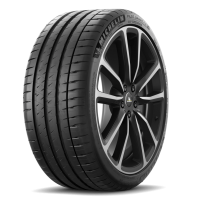
2020 UHP, UUHP and Track Day Tire Test
245/35 R1910 tires tested
5 of these 7 tires tested again
Continental Sport Contact 6 / Michelin Pilot Sport 4 S / Michelin Pilot Sport Cup 2
This test’s winner finished 1st there2021 Tire Reviews UHP Summer Tire Test
225/40 R1814 tires tested
4 of these 7 tires tested again
Goodyear Eagle F1 Asymmetric 5 / Michelin Pilot Sport 4 / Michelin Pilot Sport 4 S
This test’s winner finished 1st there