

Continental SportContact 7 vs Goodyear Eagle F1 SuperSport
- TR Score
- 9.7/10
- Owners say
- 84% · 134
- TR Score
- 8.9/10
- Owners say
- 84% · 66
In the 11 independent tests that ran both tires, the Continental SportContact 7 finished ahead 10 times and the Eagle F1 SuperSport once. The SportContact 7 had 11.3% lower rolling resistance; the Eagle F1 SuperSport held 4% more grip in curved aquaplaning.
Data updated

Which should you buy?
Pick the Continental SportContact 7 for the best all-round max-performance summer tire: consistently shorter wet/dry braking, strong lap pace, and notably better rolling resistance. Choose the Goodyear Eagle F1 SuperSport if your priority is a more track-leaning, engaging handling balance and you're buying in a fitment known to work well on your car-ideally at a meaningful price advantage-while accepting higher energy consumption and less consistent wet/braking performance.
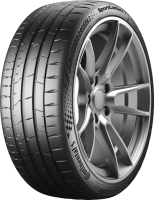
Where the SportContact 7 is stronger
- Consistently class-leading wet braking and strong wet safety margins (e.g., 42.4 m vs 51.5 m in Autobild 2026; 50.13 m vs 56.65 m in Tire Reviews 2022)
- Very strong dry braking performance across sizes (frequent winner; often several percent shorter stops)
- Best-in-class efficiency for the segment: wins rolling resistance in most shared tests (often ~7-18% better)
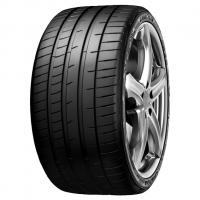
Where the Eagle F1 SuperSport is stronger
- Engaging, track-friendly dynamics with strong steering/handling feel in the right fitments (notably EVO 2025; praised for balance and adjustability)
- Can match/edge the Continental in dry handling lap time or subjective 'fun' scores in some tests
- Often strong aquaplaning metrics-especially curved aquaplaning (wins this category more often in the dataset)
The bullet points are analysis of the shared tests and of owner reviews; the measured wins in each discipline are in the tables below. Where the two disagree, the figures are right.
SportContact 7 vs Eagle F1 SuperSport at a glance
| Category | SportContact 7 | Gap | Eagle F1 SuperSport |
|---|---|---|---|
| Shared tests won11 shared tests | 10 | 1 | |
| Dry22 measurements | 15 | The SportContact 7 stopped 4.7% shorter in the dry (9 tests) | 6 |
| Wet39 measurements | 25 | The SportContact 7 stopped 8.5% shorter in the wet (9 tests) | 13 |
| Comfort12 measurements | 9 | 3 | |
| Value9 measurements | 8 | The SportContact 7 had 11.3% lower rolling resistance (9 tests) | 1 |
| Tire Reviews Scoreevery test and review we hold | 9.7/10 | The SportContact 7 by 0.8 | 8.9/10 |
| Owner rating134 and 66 reviews | 84% | Too close to call | 84% |
| Would buy againshare of owners | 80% | Too close to call | 81% |
| Pricein the 5 tests that listed prices | Cheaper | The Eagle F1 SuperSport was dearer in 3 of 5 | +1.5% |
| Sizes madeEU label registrations | 123 | 65 sizes made in both | 75 |
Wins count every measurement the shared tests recorded for both tires; a tick marks the tire ahead on that line. Subjective driver scores count as wins but are never averaged, because each test uses its own scale.
Head to head in 11 tests, 2022 to 2026
Each row is one published test in which both tires ran on the same car, in the same size, on the same day. The line is the whole field, winner on the left.
| Test | SportContact 7 | Field | Eagle F1 SuperSport |
|---|---|---|---|
| The BEST Performance Summer Tires for 2026 Tested! | P3 of 8 | P4 of 8 | |
| 2026 Autobild Sports Cars Summer Tire Test | P1 of 8 | P8 of 8 | |
| 2026 ACE Summer Tire Test | P2 of 10 | P8 of 10 | |
| 2025 EVO Summer Tire Test | P3 of 9 | P2 of 9 | |
| 2025 Die Reifentester UHP Summer Tire Test | P3 of 8 | P4 of 8 | |
| 2025 Autobild Sports Cars UUHP Tire Test | P1 of 7 | P3 of 7 | |
| 2024 EVO Summer Tire Test | P1 of 7 | P3 of 7 | |
| 2024 Sports Car Tire Test | P1 of 7 | P6 of 7 | |
| 2023 ACE / Gute Fahrt UHP Summer Tire Test | P1 of 7 | P6 of 7 | |
| 2022 Sport Auto UHP, UUHP and Semi Slick Tire Test | P1 of 10 | P3 of 10 | |
| 2022 Tire Reviews UUHP Summer Tire Test | P1 of 10 | P4 of 10 |

Performance profile
15 measurements from the 11 shared tests, each tire shown as its share of the better figure in every test.
Where each is furthest ahead
SportContact 7
Eagle F1 SuperSport
Point at or tap any spoke for both tires' figures.
In each test the better of the two figures counts as 100% and the other as its share of it, so a 118 ft stop against 112 ft is 95%; each spoke averages the shared tests that recorded it. The scale stops at 90%: a point further in sits on the hub's edge, hollow. 2 measurements recorded in only one shared test are left off; every measurement is in the table further down.
Where each scores higher
SportContact 7
Eagle F1 SuperSport
Not ahead in any category
Point at or tap any spoke for both tires' figures.
Category scores are percentiles among tires of the same season and class: 90 means this tire out-performs 90% of them, measured across every test we hold, not only the ones it appeared in.
Where owners rate each higher
SportContact 7
Eagle F1 SuperSport
Point at or tap any spoke for both tires' figures.
Owners rate the SportContact 7 84% from 134 reviews and the Eagle F1 SuperSport 84% from 66. Each spoke is one question owners answer out of 10; reviews are vetted by hand before publication.
Every measurement, side by side
Averages of the figures both tires posted in the same tests. The gap is the average of each test's own gap, so figures from different cars and years are never mixed. Open a discipline for its measurements, and a measurement for every test's figure.
| Measurement | SportContact 7 | Gap | Eagle F1 SuperSport | Wins | ||||||||||||||||||||||||||||||||||||
|---|---|---|---|---|---|---|---|---|---|---|---|---|---|---|---|---|---|---|---|---|---|---|---|---|---|---|---|---|---|---|---|---|---|---|---|---|---|---|---|---|
| 109 | 4.7% | 115 | 8-1 | |||||||||||||||||||||||||||||||||||||
|
||||||||||||||||||||||||||||||||||||||||
| 74.78 | 0.2% | 74.58 | 2-2 | |||||||||||||||||||||||||||||||||||||
|
||||||||||||||||||||||||||||||||||||||||
| 70.7 | 1.9% | 69.3 | 4-0 | |||||||||||||||||||||||||||||||||||||
|
||||||||||||||||||||||||||||||||||||||||
| scored | 0.2% | scored | 1-2 | |||||||||||||||||||||||||||||||||||||
|
||||||||||||||||||||||||||||||||||||||||
| scored | 2.4% | scored | 0-1 | |||||||||||||||||||||||||||||||||||||
|
||||||||||||||||||||||||||||||||||||||||
| 118 | 8.5% | 131 | 7-2 | |||||||||||||||||||||||||||||||||||||
|
||||||||||||||||||||||||||||||||||||||||
| 83.89 | 2.2% | 85.96 | 2-2 | |||||||||||||||||||||||||||||||||||||
|
||||||||||||||||||||||||||||||||||||||||
| 50.3 | 7.4% | 47.3 | 3-0 | |||||||||||||||||||||||||||||||||||||
|
||||||||||||||||||||||||||||||||||||||||
| scored | 4.3% | scored | 2-2 | |||||||||||||||||||||||||||||||||||||
|
||||||||||||||||||||||||||||||||||||||||
| 16.2 | 1.5% | 15.9 | 1-0 | |||||||||||||||||||||||||||||||||||||
|
||||||||||||||||||||||||||||||||||||||||
| 11.4 | 8.2% | 12.53 | 3-0 | |||||||||||||||||||||||||||||||||||||
|
||||||||||||||||||||||||||||||||||||||||
| 51.7 | 0.3% | 51.5 | 6-3 | |||||||||||||||||||||||||||||||||||||
|
||||||||||||||||||||||||||||||||||||||||
| 58.1 | 4% | 59.8 | 1-4 | |||||||||||||||||||||||||||||||||||||
|
||||||||||||||||||||||||||||||||||||||||
| scored | 13.7% | scored | 3-1 | |||||||||||||||||||||||||||||||||||||
|
||||||||||||||||||||||||||||||||||||||||
| scored | 18.8% | scored | 2-0 | |||||||||||||||||||||||||||||||||||||
|
||||||||||||||||||||||||||||||||||||||||
| 72.55 | 0.3 dB | 72.88 | 4-2 | |||||||||||||||||||||||||||||||||||||
|
||||||||||||||||||||||||||||||||||||||||
| 8.86 | 11.3% | 10 | 8-1 | |||||||||||||||||||||||||||||||||||||
|
||||||||||||||||||||||||||||||||||||||||
Braking distances and lap times are better when lower; speeds, wear and grip figures when higher. A test's figures are its own: sizes, cars, surfaces and temperatures differ from one to the next, which is why the averages here are only ever of tests the two tires shared. "Scored" rows are subjective driver ratings: each test uses its own scale, so only the wins are counted.
Scores beyond the shared tests
On the Tire Reviews Score, which weighs every test and review we hold, the SportContact 7 scores 9.7 and the Eagle F1 SuperSport 8.9 out of 10.
| SportContact 7 | Category | Eagle F1 SuperSport | ||
|---|---|---|---|---|
| 99 | Dry | 94 | ||
| 98 | Wet | 83 | ||
| 29 | Comfort | 14 | ||
| 39 | Value | 4 | ||
Category scores are percentiles among tires of the same season and class: 90 means this tire out-performs 90% of them, measured across every test we hold, not only the ones it appeared in.
What owners say
| SportContact 7 | Category | Eagle F1 SuperSport | ||
|---|---|---|---|---|
| 9.5 | Dry Grip | 9.5 | ||
| 9.1 | Wet Grip | 8.1 | ||
| 8.7 | Road Feedback | 9.1 | ||
| 9 | Handling | 9.1 | ||
| 6.7 | Wear | 7.2 | ||
| 7.7 | Comfort | 7.3 | ||
Owners rate the SportContact 7 84% from 134 reviews and the Eagle F1 SuperSport 84% from 66. Reviews are vetted by hand before publication; ownership is not verified.
Continental SportContact 7
- 84%from 134 reviews
- 80%would buy again
- 1,308,502 milesdriven by reviewers
Owners rate the Continental SportContact 7 very highly overall (average 83%), with the strongest agreement around outstanding dry and wet grip, backed up by confident handling and strong steering response. Comfort and noise are often described as better than expected for a UHP summer tire, though experiences vary by car and set-up. The main recurring drawback is wear: around a third of owners who mention tread life report rapid wear, meaning running costs can be high if you drive hard or run a heavier, high-torque car.
- Exceptional dry grip and traction
- Very strong wet grip and confidence in rain
- Sharp, secure dry handling
- Good steering feel and feedback
- Rapid tread wear and short life for many drivers
- Ride can feel harsh or uncomfortable on some set-ups
- Road noise can be intrusive on rough surfaces
Summarised by AI from 117 vetted reviews; the reviews themselves are on the tire page.
All 134 SportContact 7 reviewsIn comparison with non sport tires like the Continental PremiumContact 6 the grip in dry conditions is outstanding and better like other tires I have driven (e.g. Goodyear Eagle F1 Asymetric). The Wet-Grip is surprisingly good and did not fade with lower tread depth (yet). No disturbing noise while driving.
Goodyear Eagle F1 SuperSport
- 84%from 66 reviews
- 81%would buy again
- 470,802 milesdriven by reviewers
Most owners agree the Goodyear Eagle F1 SuperSport delivers outstanding dry grip and confidence, backed up by sharp steering response and strong dry handling, with many also praising its stability when driven hard. Wet grip is generally rated good for a UUHP tire, though around one in ten owners specifically criticise wet handling, and a similar share note it can struggle in colder conditions. Comfort is the main compromise: close to three in ten owners find it too firm or unsettled over bumps. Tread life is more mixed, with a meaningful minority reporting rapid wear (especially on higher-torque use) while others see impressive longevity for the category.
- Exceptional dry grip, even when driven hard
- Precise steering response and strong feedback
- Very capable dry handling and cornering confidence
- Good wet grip for a UUHP summer tire
- Firm, busy ride that can feel harsh over bumps
- Tread life is inconsistent, with some reporting fast wear
- Poor cold-weather grip; not a winter-friendly choice
Summarised by AI from 61 vetted reviews; the reviews themselves are on the tire page.
All 66 Eagle F1 SuperSport reviewsThe Goodyear SuperSport tires deliver immediate feedback and precise handling. The best part is how they completely changed the behavior of my S3 3‑door: it used to push from the nose, but with these tires the front end finally bites and the rear becomes playful.
The car is so much more fun to drive now.
They’re also almost indestructible, especially compared to Pirelli and Michelin (which have their own strengths, but durability isn’t one of them).
I really enjoyed these tires and would absolutely buy them again — unless Goodyear releases a new SuperSport.
Thanks, Goodyear. Great work.
Sizes, EU label and lineage
From the EU label registrations for each tire: 123 sizes of the SportContact 7 and 75 of the Eagle F1 SuperSport, 65 of them made in both.
| Category | SportContact 7 | Eagle F1 SuperSport |
|---|---|---|
| Season | Summer | Summer |
| Sizes made | 123 sizes, 18 to 24 inch | 75 sizes, 18 to 23 inch |
| Made in both | 65 sizes 225/40 R18225/45 R18235/40 R18245/40 R18245/45 R18255/35 R18225/35 R19225/40 R19235/35 R19235/40 R19245/30 R19245/35 R19and 53 more | |
| EU label wet grip | A85%B15% | A89%B11% |
| EU label rolling resistance | C61%D16%A14%B9% | D47%C30%B17%A5% |
| EU label noise | 70-75 dB B98%A2% | 69-75 dB B85%A15% |
| On the market since | - | 2021 |
| Replaced | Continental Sport Contact 6 (2015) | - |
| Awards | Highly Recommended: Best Tires for High Performance Cars (DriverReviews, 2026/27) Highly Recommended: Best Tires for Hot Hatches (Compact Sports Cars) (DriverReviews, 2026/27) Commended: Best Tires for High Performance Cars (DriverReviews, 2024/25) Highly Recommended: Best Tires for Hot Hatches (DriverReviews, 2024/25) Winner: Best Tires for Large Family Cars (DriverReviews, 2024/25) Winner: Supersports Tire of the Year (WhatTire, 2024) Winner: Supersports Tire of the Year (WhatTire, 2023) Winner: Supersports Tire of the Year (WhatTire, 2022) Winner: Tire of the Year (WhatTire, 2022) | - |
| Price in the shared tests | The Eagle F1 SuperSport was the dearer tire in 3 of the 5 tests that listed prices, by 1.5% on average. Each test priced the tires in its own market at the time; only the gap is comparable. | |
Label grades are shown as the share of registered sizes carrying each grade, so "B (88%), C (12%)" means most sizes are B. Grades vary by size; check the label for yours.
Reading the results
Written from the test results and owner reviews above. It is analysis, not a measurement: where it and the tables disagree, the tables are right.
Continental's SportContact 7 and Goodyear's Eagle F1 SuperSport sit in the same max-performance summer bracket, but they approach “fast road” differently. Across 11 shared professional tests in multiple fitments (from 225/40 R18 up to 295/30 R20), the SportContact 7 repeatedly targets all-round measurable performance-especially braking and efficiency-while the Eagle F1 SuperSport leans more toward an engaging, track-friendly driving style.
The headline pattern is consistency versus character. The SportContact 7 converts its balance into results (10 wins vs 1), regularly topping wet and dry braking and often leading overall tests. The Goodyear can feel excellent and occasionally matches or edges the Continental in subjective enjoyment and some handling metrics, but its performance swings more with fitment and it's more frequently penalized on rolling resistance and, in several tests, wet stopping power.
Conclusion
On the evidence, the Continental SportContact 7 is the safer, faster, and more rounded choice for most drivers. It dominates where it matters most on the road: braking and wet safety. The gaps can be meaningful-e.g., in Autobild Sports Cars 2026 (255/35 R19) wet braking was 42.4 m for the Continental vs 51.5 m for the Goodyear (a huge +17.7% advantage for SC7), and in Tire Reviews 2022 (255/35 R19) wet handling was 83.24 s vs 93.99 s. It also repeatedly delivers better efficiency, winning rolling resistance 8 times; differences like 8.8 vs 10.4 kg/t (Tire Reviews 2026) are the kind you'll notice in running costs and EV/ICE range alike.
The Goodyear Eagle F1 SuperSport still makes sense if your priority is “feel” and a more track-leaning balance, and when the fitment suits the car it can be outstanding to drive-EVO 2025 (235/35 R19) put it 2nd overall with excellent wet and dry handling impressions, and Tire Reviews 2022 even tagged it “track master.” But it's clearly an older design now: several tests call out high rolling resistance and, at times, mid-pack braking. The practical takeaway is simple: choose the SportContact 7 if you want maximum real-world pace and safety with fewer compromises; choose the Eagle F1 SuperSport if you value an involving, adjustable handling character and expect sharper pricing-while accepting higher energy use and more variable wet/braking outcomes depending on size and vehicle setup.
SportContact 7 vs Eagle F1 SuperSport: your questions
Is the Continental SportContact 7 or the Goodyear Eagle F1 SuperSport the better tire?
In the 11 independent tests that ran both tires, the Continental SportContact 7 finished ahead 10 times and the Eagle F1 SuperSport once. On the Tire Reviews Score, which weighs every test and review we hold, the SportContact 7 scores 9.7 and the Eagle F1 SuperSport 8.9 out of 10.
Which is better in the wet, the SportContact 7 or the Eagle F1 SuperSport?
The SportContact 7 led 25 of the 39 wet measurements the shared tests recorded. On average it stopped 8.5% shorter in the wet across 9 tests.
Which is better in the dry?
The SportContact 7 led 15 of the 22 dry measurements the shared tests recorded. On average it stopped 4.7% shorter in the dry across 9 tests.
Which lasts longer and costs less to run?
The SportContact 7 had 11.3% lower rolling resistance (9 tests). Owners rate wear 6.7/10 for the SportContact 7 and 7.2/10 for the Eagle F1 SuperSport.
Which is quieter and more comfortable?
Owners rate comfort 7.7/10 for the SportContact 7 and 7.3/10 for the Eagle F1 SuperSport.
What do owners say?
Owners rate the SportContact 7 84% from 134 reviews and the Eagle F1 SuperSport 84% from 66. 80% of SportContact 7 owners would buy it again, against 81% for the Eagle F1 SuperSport.
Which is more expensive?
In the 5 tests that listed prices, the Eagle F1 SuperSport was the dearer tire in 3 of them, by 1.5% on average. Prices are the test's own at the time, in its own market.
Are they available in the same sizes?
The SportContact 7 is made in 123 sizes (18 to 24 inch) and the Eagle F1 SuperSport in 75 (18 to 23 inch). 65 sizes are available in both. On the EU label the SportContact 7 is graded A for wet grip and C for rolling resistance in most sizes; the Eagle F1 SuperSport A and D.
More comparisons with these tires
vs  Continental SportContact 7 vs Michelin Pilot Sport 5
4-1 in 5 shared tests
vs
 Continental SportContact 7 vs Michelin Pilot Sport 4 S
9-2 in 12 shared tests
vs
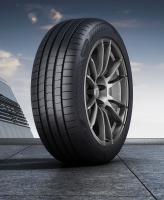 Continental SportContact 7 vs Goodyear Eagle F1 Asymmetric 6
5-2 in 8 shared tests
vs
 Continental SportContact 7 vs Pirelli P Zero PZ5
4-2 in 6 shared tests
 vs
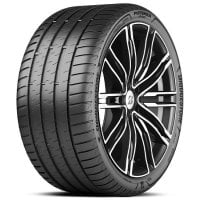
Bridgestone Potenza Sport Evo vs Continental SportContact 7
1-2 in 3 shared tests
vs
 Continental SportContact 7 vs Pirelli P Zero PZ4
9-1 in 10 shared tests
 vs
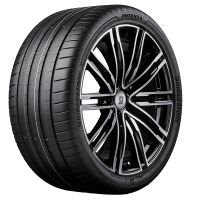
Bridgestone Potenza Sport vs Continental SportContact 7
3-10 in 15 shared tests
vs
Goodyear Eagle F1 SuperSport vs Michelin Pilot Sport 4 S
2-11 in 13 shared tests
Every Continental vs Goodyear test → All comparisons → Compare three or more tires →
Run either of these?
Your review is the part of this page no test can supply: how the tire wore, how it aged, what it was like in the rain in year three. It takes about five minutes.
Where this data comes from
Finishing positions and measurements are transcribed from each published test. A test only counts here when both tires ran in it, so every figure was recorded on the same car, size and day as the one it is compared to.
About the TR Score
The Tire Reviews Score rates each tire out of 10 from every independent test result and vetted owner review we hold, so two tires can be compared even before a test has run them together.
Who does the testing
Every test published as a Tire Reviews test is run by Jonathan Benson, who has been testing tires independently since 2007.
Discussion