

Bridgestone vs Michelin
376 shared professional tests: Michelin finished ahead in 242, Bridgestone in 124 and 10 were drawn. Owners rate Michelin 8.1 and Bridgestone 7.1 out of 10 across 7,464 reviews.
The quick answer
 Bridgestone
Premium · 210 tires on sale · Bridgestone Group
 Michelin
Premium · 171 tires on sale · Michelin Group
Michelin leads in more of the categories we measure. Built from every professional test both brands entered and every vetted owner review we hold for their tires - the evidence is all further down the page. Data updated October 30, 2026.

Bridgestone vs Michelin at a glance
Bridgestone and Michelin are both premium brands with long histories and deep R and D, and they regularly appear in the same independent tire tests. Bridgestone is part of the Bridgestone Group and fields a slightly larger current line-up (201 active tires) than Michelin (169), which can matter if you drive something niche or want more fitment choice.
Looking across hundreds of head-to-head test appearances and thousands of owner reviews, the picture is consistent: Michelin more often converts test entries into higher placings and stronger long-run ownership satisfaction, while Bridgestone more often shows sharp, confidence-led wet-road behavior and tends to undercut Michelin on like-for-like test pricing.
| Category | Bridgestone | Michelin | Winner |
|---|---|---|---|
| Overall test record | 124 wins | 242 wins | Michelin |
| Wet Braking | 129 ft | 130 ft | Bridgestone |
| Dry Braking | 126 ft | 125 ft | Michelin |
| Snow Braking | 78 ft | 76 ft | Michelin |
| Rolling Resistance | 7.95 kg/t | 7.8 kg/t | Evenly matched |
| Noise | 71.65 dB | 70.89 dB | Michelin |
| Tread life (wear tests) | 25,029 miles | 30,671 miles | Michelin |
| Price | cheaper in 131 of 141 tests | cheaper in 9 of 141 tests | Bridgestone |
| Overall owner score | 7.1 / 10 | 8.1 / 10 | Michelin |
Head-to-head test record
Across 376 professional tests where both brands fielded a tire, Michelin finished ahead in 242 and Bridgestone in 124 (10 drew).
By season
| Category | shared tests | Bridgestone | Michelin | draws |
|---|---|---|---|---|
| Summer | 184 | 63 | 119 | 2 |
| Winter | 123 | 41 | 79 | 3 |
| All Season | 64 | 19 | 40 | 5 |
| All Weather | 4 | 0 | 4 | 0 |
The cleanest signal is the shared-test record - 355 tests where both brands were present and each brand is represented by its best-placed tire. Here Michelin leads clearly, winning 227 to Bridgestone's 119 with 9 draws, and it also posts the stronger average finishing position (75.1 percentile vs 61.5). The pattern holds in recent results too: in the last 5 years (147 shared tests), Michelin wins 89 to 53 with 5 draws. This does not mean Michelin wins every category in every test, but it does show Michelin more reliably lands the higher overall ranking when test scores are aggregated across multiple disciplines.
How we count: only tests entered by both brands are used, and each brand is represented by its best-placed tire in that test. Owner-review and label figures cover the brands' full current ranges.
Performance by metric
Averaged across shared tests, which brand leads each measured discipline and by how much.
Bridgestone won 138 of 229 tests · 5.1% typical margin
Michelin won 134 of 220 tests · 3.1% typical margin
Michelin won 98 of 183 tests · 3.2% typical margin
each won 82 of 168 tests
Michelin won 113 of 150 tests · 1.7% typical margin
Michelin won 83 of 122 tests · 3.4% typical margin
Bridgestone won 70 of 111 tests · 8.9% typical margin
Bridgestone won 51 of 103 tests · 0.9% typical margin
Bridgestone won 71 of 103 tests · 1.9% typical margin
Bridgestone won 48 of 80 tests · 2.1% typical margin
Bridgestone won 33 of 65 tests · 1.1% typical margin
Michelin won 31 of 65 tests
Michelin won 59 of 98 tests · 4.9% typical margin
Michelin won 51 of 97 tests · 2.4% typical margin
Michelin won 54 of 78 tests · 3.3% typical margin
Michelin won 43 of 73 tests · 10.1% typical margin
Michelin won 48 of 65 tests · 1.8% typical margin
Michelin won 23 of 46 tests · 1% typical margin
Bridgestone won 31 of 46 tests · 2.3% typical margin
Michelin won 21 of 41 tests · 7.7% typical margin
Bridgestone won 22 of 36 tests · 2.1% typical margin
Bridgestone won 20 of 33 tests · 1% typical margin
Michelin won 17 of 31 tests
Michelin won 17 of 28 tests
Michelin won 35 of 57 tests · 3.1% typical margin
Bridgestone won 46 of 57 tests · 5.5% typical margin
Michelin won 39 of 48 tests · 5.2% typical margin
Bridgestone won 23 of 43 tests · 3.2% typical margin
Michelin won 27 of 41 tests · 8.6% typical margin
Michelin won 27 of 34 tests · 1.3% typical margin
Bridgestone won 19 of 30 tests · 7.5% typical margin
Bridgestone won 13 of 25 tests · 0.8% typical margin
Bridgestone won 17 of 25 tests · 1.9% typical margin
Michelin won 24 of 25 tests · 6.2% typical margin
Michelin won 23 of 25 tests · 3.3% typical margin
Bridgestone won 16 of 20 tests · 1.5% typical margin
Bridgestone won 54 of 70 tests · 4.9% typical margin
Michelin won 42 of 70 tests · 2.2% typical margin
Michelin won 44 of 62 tests · 3.6% typical margin
Bridgestone won 37 of 60 tests · 3.1% typical margin
Bridgestone won 40 of 52 tests · 6.3% typical margin
Michelin won 38 of 49 tests · 1.7% typical margin
Bridgestone won 29 of 38 tests · 11.6% typical margin
Michelin won 26 of 38 tests · 2.9% typical margin
Bridgestone won 16 of 32 tests · 0.7% typical margin
Bridgestone won 23 of 32 tests · 1.2% typical margin
Michelin won 21 of 32 tests · 1.6% typical margin
Michelin won 17 of 22 tests · 2% typical margin
By individual test metrics, Bridgestone's strongest theme is wet control and wet-limit behavior: it leads wet braking on average (39 m vs 39.44 m) and wins that metric 128 times to 82, and it is also ahead on curved aquaplaning (8.09 vs 7.92 m/sec2, 63 wins to 38) plus wet handling in both common formats (75.88 vs 75.16 km/h with 66-28 wins, and 71.45 vs 71.76 s with 44-29 wins) and wet circle (14.56 vs 14.76 s with 45-9 wins, and 6.63 vs 6.47 m/s with 17-6 wins). Michelin, however, stacks advantages across efficiency, refinement, winter grip and durability: it leads dry braking (37.77 vs 38.36 m, 124-76 wins), straight aquaplaning speed (80.97 vs 80.48 km/h, 93-76 wins), rolling resistance (7.8 vs 7.98 kg/t, 78-72 wins), and cabin noise in the larger dataset (70.85 vs 71.58 dB, 104-30 wins). In winter disciplines it leads snow braking (23.25 vs 23.68 m, 69-34 wins), snow traction (for example 2382.54 vs 2301.76 N, 44-12 wins), and ice braking (15.35 vs 15.88 m). The biggest single practical separator is wear: across 46 wear tests Michelin averages 49,458.89 km vs 40,057.98 km and wins 43 to 3.
Typical margin is the average gap between the two brands within a single test. Test conditions vary, so it can be larger than the difference between the overall averages shown. Judged scores use a different scale in each test, so only the win record is comparable.
Which brand wins each season
Head-to-head test wins by season.
Michelin leads 119 to 63 here
- Bridgestone strongest at
- Sand Traction
- Michelin strongest at
- Abrasion
Michelin leads 40 to 19 here
- Bridgestone strongest at
- Value
- Michelin strongest at
- Subj. Snow Handling
Michelin leads 79 to 41 here
- Bridgestone strongest at
- Curved Aquaplaning
- Michelin strongest at
- Subj. Noise
Season-by-season, Michelin leads the shared-test record in every major category: Summer is 117 wins to 62 (2 draws) across 181 tests, Winter is 72 to 39 (3 draws) across 114 tests, and All Season is 35 to 17 (4 draws) across 56 tests - plus All Weather is 3 to 0 (over 3 tests). Within those seasons, the flavour changes: in Summer, Michelin is the metric leader for wet braking, dry braking, straight aquaplaning, rolling resistance, noise, dry handling and curved aquaplaning, while Bridgestone's standout is wet handling (31 wins to 15). In Winter, Bridgestone flips several road-safety and efficiency metrics - it leads wet braking (50-11 wins), straight aquaplaning (33-20), rolling resistance (35-9) and curved aquaplaning (26-7) - but Michelin still leads the core snow and dry-grip metrics (snow braking 34-25, dry braking 37-15, snow traction 23-11) and noise (33-10). In All Season tests, Bridgestone again tends to own wet braking (40-10), straight aquaplaning (20-18), curved aquaplaning (16-10) and dry handling (12-10), while Michelin leads dry braking (34-16), snow braking (34-7), rolling resistance (26-10) and noise (23-5).
What owners say
Owner reviews, vetted by hand before publication and weighted by how many reviews each tire has. Ownership is not verified.
Owner feedback reinforces the test trend in day-to-day satisfaction: Michelin's review-weighted overall score is 8.05 out of 10 from 3,961 reviews, ahead of Bridgestone's 7.08 from 3,334. Michelin also leads the two ownership signals that most strongly predict long-term happiness - wear (7.97 vs 6.74) and would buy again (7.7 vs 6.2) - alongside comfort (8.13 vs 6.75) and wet grip (8.18 vs 7.26). Bridgestone owners still report solid dry grip (8.18) and reasonable handling (7.3), but Michelin's higher subscores across grip, comfort and longevity suggest fewer compromises for most drivers.
Price & value
How long each brand lasts, and how they compare on price.
Tread life (wear tests)
Michelin lasted longer in wear testing, winning 48 of 52 tests by an average of 27.7%.
Price
Bridgestone was the cheaper of the two in 131 of 141 shared tests.
On average Bridgestone cost about 12% less than Michelin.
Value depends on both purchase price and how long the tire lasts. On longevity, the test evidence is lopsided: Michelin averages 49,458.89 km vs Bridgestone's 40,057.98 km in wear testing, a 28.5% gap, with Michelin winning 43 of 46 wear tests - meaning a higher upfront cost can be offset by fewer replacements. On purchase price in shared tests, Bridgestone is usually the cheaper pick: across 129 shared-test price samples, Bridgestone averages 11.8% lower than Michelin and is cheaper in 120 of 129 cases (Michelin cheaper in 9). Put together, Bridgestone tends to win on initial outlay, while Michelin more often wins on cost-per-kilometer if you keep tires long enough to realise the wear advantage.
Fuel economy & EU labels
Current range
How broad each brand's current line-up is.
Bridgestone
| Passenger Car | SUV / 4x4 | Motorcycle | Van | |
|---|---|---|---|---|
| Summer | 82 | 12 | 32 | 1 |
| All Season | 24 | 16 | 9 | 2 |
| Winter | 25 | 3 | - | 1 |
| All Weather | 2 | - | - | - |
Michelin
| Passenger Car | SUV / 4x4 | Motorcycle | Van | |
|---|---|---|---|---|
| Summer | 47 | 9 | 39 | 2 |
| All Season | 23 | 15 | 9 | 2 |
| Winter | 17 | 6 | 1 | - |
| All Weather | 1 | - | - | - |
Bridgestone offers the broader catalogue and more sizes, which improves the odds of finding a close match for your car and driving style: 201 active tires and 5,543 total sizes, versus Michelin's 169 active tires and 3,012 sizes. Bridgestone is especially broader in Summer (129 lines vs 96) and Winter (28 vs 24), while Michelin is slightly broader in All Season (48 vs 42). For niche categories, Michelin lists more EV-focused tires (3 vs 2) and more all-terrain options (6 vs 5). In practice, Bridgestone's wider size coverage suits harder-to-fit vehicles or drivers who want more choice within a budget, while Michelin's range is narrower but tends to be more consistently top-scoring when you can get the right fitment.
Recommended picks per category
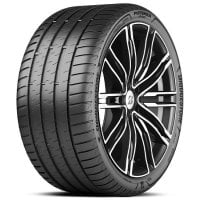
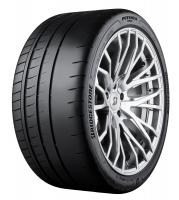
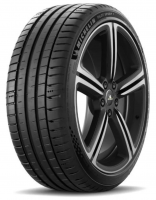
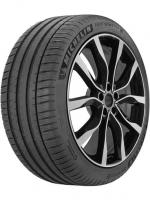
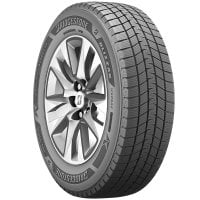
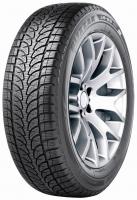
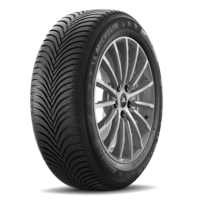
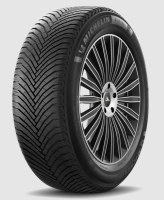
The top-rated current tires from each brand, by season.

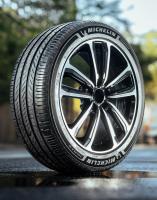
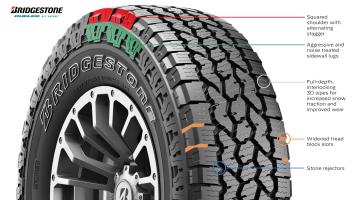
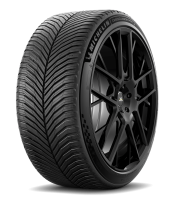
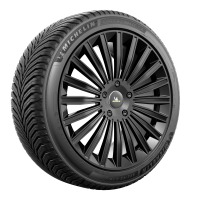
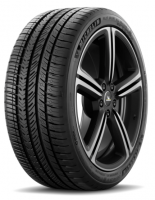
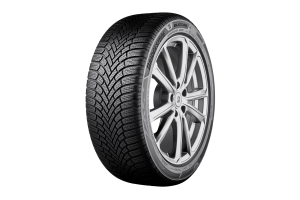
Popular Bridgestone vs Michelin tire matchups
Head-to-head comparisons between specific tires from these brands.
 Bridgestone Potenza Sport vs Michelin Pilot Sport 4 S
 Bridgestone Turanza 6 vs Michelin Primacy 4+
 Bridgestone Turanza T005 vs Michelin Primacy 4
 Bridgestone Turanza All Season 6 vs Michelin CrossClimate 2
 Bridgestone Blizzak Ice vs Michelin X Ice Snow
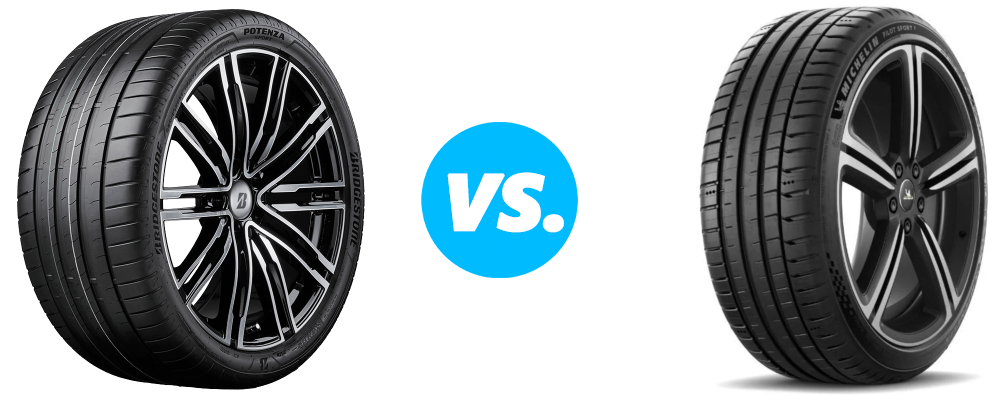 Bridgestone Potenza Sport vs Michelin Pilot Sport 5
Frequently asked questions
Is Bridgestone better than Michelin?
Across 376 shared professional tests, Michelin finished ahead of Bridgestone in 242 (10 drew), and holds a higher owner-review score of 8.1 vs 7.1 out of 10. Bridgestone leads on value.
Which is better in the wet, Bridgestone or Michelin?
In Wet Braking, Bridgestone averaged 129 ft versus 130 ft, winning 138 of 229 shared tests. In Wet Handling, Bridgestone averaged 47.1 mph versus 46.7 mph, winning 71 of 103 shared tests.
Which lasts longer, Bridgestone or Michelin?
In independent tire wear testing across 52 shared tests, Michelin lasted longer, averaging 30,671 miles versus 25,029 miles (about 27.7% further) and winning 48 of them. Owner-rated tread life agrees, at 8 vs 6.7 out of 10.
Which is cheaper, Bridgestone or Michelin?
Bridgestone is usually the cheaper choice, coming in lower in 131 of 141 shared tests, on average about 12% less than Michelin.
Which is better in winter, Bridgestone or Michelin?
Across 123 shared winter tests, Michelin finished ahead in 79. 43% of its current range is 3PMSF winter-certified, versus 33% for Bridgestone. In Snow Braking, Michelin averaged 76 ft versus 78 ft, winning 83 of 122 shared tests.
Which is better for electric cars, Bridgestone or Michelin?
For an EV the priorities are low rolling resistance for range and low noise for a quiet cabin. Michelin also currently lists 3 EV-specific tires versus 2 for Bridgestone.
Which brand is quieter and more comfortable, Bridgestone or Michelin?
Owners rate Michelin higher for comfort, at 8.1 vs 6.7 out of 10. In Noise, Michelin averaged 70.89 dB versus 71.65 dB, winning 113 of 150 shared tests.
Would owners buy Bridgestone or Michelin again?
Michelin owners are more likely to buy the same brand again, scoring 7.7 vs 6.2 out of 10 on would-buy-again across 7,464 combined reviews.
Final verdict
Category verdicts are fairly clear. If you prioritize wet-road behavior and you want strong safety margins in wet handling-style tests while keeping upfront cost down, Bridgestone's metric profile and its 11.8% lower average shared-test price point fit that brief. If you want the brand that more consistently finishes higher overall across multi-metric tests, plus noticeably stronger tread life, refinement and owner satisfaction, Michelin has the stronger evidence base.
Overall lean: Michelin leads in more areas that typically decide long-term ownership - shared-test outcomes, wear, noise and broad winter metrics - while Bridgestone is the sharper-value buy upfront and a very credible pick for wet-climate drivers who want strong wet dynamics and wide fitment choice. Choose Bridgestone for price-sensitive replacements and wet-road confidence, and choose Michelin if you want to pay once and keep them longer with higher odds of top-tier all-round performance.