



Vi Bilagare has published its 2026 studded tire test, an eight-tire comparison in 215/65 R17 measured over 13 separate tests. The ice and snow work was carried out on tracks outside Alvsbyn in northern Sweden in late February using a Volkswagen Tiguan, and the dry and wet asphalt rounds followed at Tampere in Finland in late April with a Tiguan R and a Skoda Kodiaq. A reference tire was run at intervals through every test so the measured results could be corrected for changes in the surface.
Nokian's new Hakkapeliitta 01 wins, but the more interesting reading is underneath the result. Bridgestone was thrown out of the classification entirely for stud protrusion above the legal limit. The cheapest tire in the test, the Nankang, recorded the shortest snow braking distance of the whole field. And the overall winner finished second from last for steering feel on dry asphalt, behind tires it beat comfortably almost everywhere else.
Test setup & methodology
The test setting, the conditions recorded and how the results contribute to the score.
Recorded test conditions
Recorded test conditions
- Dry Braking
- 62.1 → 3.1 mph
- Wet Braking
- 62.1 → 3.1 mph
- Snow Braking
- 21.7 → 3.1 mph
- Ice Braking
- 15.5 → 3.1 mph
There is a regulatory story behind all of this. The Finnish authority Traficom has tightened the road-wear limits for studded tires, replacing the outgoing A classification with a stricter A+ grade that applies across the Nordic region. Since January 2025 a manufacturer has needed approval under the new rules to launch a studded tire at all; from January 2027 every newly manufactured studded tire must meet them, although tires built before that date can still be sold until January 2029. Rather than pushing studded tires off the market, that has accelerated development of new stud designs. Continental launched a new studded tire of its own, the IceContact 8, for the same reason, but it was not available in this size when testing began in February 2026. Prices in the results table are Swedish kronor per tire. This is our summary of the headline findings; for the complete data set and the full methodology, see Vi Bilagare's original test.
Ice
Ice is what a studded tire is bought for and it carries the most weight in the scoring. Bridgestone tops all three ice tests, but that result comes with a caveat covered further down: its studs stood well proud of the legal limit. Among the tires that complied, the Nokian Hakkapeliitta 01 is clearly the strongest, quickest away from a standstill, shortest to stop and fastest through the corners, and the easiest of the eight to drive at the limit. Michelin is next, with Goodyear a little further back. Kumho is nowhere: it needs around seven seconds longer than the Nokian to reach 25 km/h.
Ice Traction
Ice acceleration time
Lower is better ↓| Position / Tire | Result | Gap to best |
|---|---|---|
| 8.46 s | Best | |
| 10.43 s | +1.97 s | |
| 10.55 s | +2.09 s | |
| 12.46 s | +4.00 s | |
| 12.52 s | +4.06 s | |
| 12.94 s | +4.48 s | |
| 13.61 s | +5.15 s | |
| 17.31 s | +8.85 s |
The difference between best and worst was 104.6% (8.85 s).
Under braking the order is much the same. Nordman, which shares a tread pattern with an older Hakkapeliitta but uses a harder compound, gives up roughly three meters to its Nokian relative from only 25 km/h, and Kumho needs nearly seven meters more than the Nokian to stop.
Ice Braking
Ice braking in feet (16 - 3 mph)
Lower is better ↓| Position / Tire | Result | Gap to best | Residual speed |
|---|---|---|---|
| 27 ft | Best | 0 mph | |
| 35 ft | +8 ft | 39 mph | |
| 37 ft | +10 ft | 42 mph | |
| 41 ft | +14 ft | 46 mph | |
| 45 ft | +18 ft | 51 mph | |
| 47 ft | +20 ft | 52 mph | |
| 50 ft | +23 ft | 54 mph | |
| 58 ft | +31 ft | 58 mph |
The difference between best and worst was 113% (31 ft ≈ 2.1 Car Lengths). From 80 mph, the Kumho WinterCraft Ice Wi32 would still be travelling at 58 mph when the Bridgestone Blizzak Spike 3 had stopped.
Residual speed is calculated from the measured braking distances, assuming constant deceleration; it is not a separate measurement.
In the corners Nokian has the best grip of the legal tires and is also the most predictable. Nankang is the surprise, staying calm at the limit in a way budget tires usually do not, while Kumho is the hardest to control and Pirelli is a long way off the pace.
Ice Handling
Ice handling time in seconds
Lower is better ↓| Position / Tire | Result | Gap to best |
|---|---|---|
| 77.82 s | Best | |
| 77.95 s | +0.13 s | |
| 78.51 s | +0.69 s | |
| 79.07 s | +1.25 s | |
| 80.37 s | +2.55 s | |
| 82.92 s | +5.10 s | |
| 84.18 s | +6.36 s | |
| 86.36 s | +8.54 s |
The difference between best and worst was 11% (8.54 s).
Snow
Snow is the great leveller here. Stud protrusion matters far less once the surface is soft, because what counts is packing the tread with snow so it can grip the snow on the road, and every tire in the test does that to a similar standard. Under acceleration the whole field is covered by about a fifth of a second.
Snow Traction
Snow acceleration time
Lower is better ↓| Position / Tire | Result | Gap to best |
|---|---|---|
| 4.87 s | Best | |
| 4.93 s | +0.06 s | |
| 5 s | +0.13 s | |
| 5.02 s | +0.15 s | |
| 5.03 s | +0.16 s | |
| 5.05 s | +0.18 s | |
| 5.08 s | +0.21 s | |
| 5.09 s | +0.22 s |
The difference between best and worst was 4.5% (0.22 s).
Braking is just as tight, with under three per cent separating the first seven tires despite repeated runs. This is where the Nankang produces the upset of the test, stopping shortest of all eight and ahead of every premium tire here. Bridgestone is the only one to struggle, finishing about five per cent behind.
Snow Braking
Snow braking in feet (22 - 3 mph)
Lower is better ↓| Position / Tire | Result | Gap to best | Residual speed |
|---|---|---|---|
| 46 ft | Best | 0 mph | |
| 46 ft | 0 ft | 2 mph | |
| 46 ft | 0 ft | 7 mph | |
| 46 ft | 0 ft | 10 mph | |
| 47 ft | +1 ft | 12 mph | |
| 47 ft | +1 ft | 12 mph | |
| 47 ft | +1 ft | 12 mph | |
| 48 ft | +2 ft | 17 mph |
The difference between best and worst was 5% (2 ft). From 80 mph, the Bridgestone Blizzak Spike 3 would still be travelling at 17 mph when the Nankang Ice Activa Grip 2 SUV had stopped.
Residual speed is calculated from the measured braking distances, assuming constant deceleration; it is not a separate measurement.
Handling spreads the field a little further. Nokian is quickest through the corners, and Nankang again finishes high and is one of the easiest tires to control at the limit. Bridgestone can let go suddenly, and so can Kumho, from an already low grip level.
Snow Handling
Snow handling time in seconds
Lower is better ↓| Position / Tire | Result | Gap to best |
|---|---|---|
| 69.1 s | Best | |
| 69.49 s | +0.39 s | |
| 69.66 s | +0.56 s | |
| 70.77 s | +1.67 s | |
| 70.95 s | +1.85 s | |
| 71 s | +1.90 s | |
| 71.22 s | +2.12 s | |
| 72.57 s | +3.47 s |
The difference between best and worst was 5% (3.47 s).
Wet
Pirelli owns the wet. It stops shortest from 100 km/h, with Goodyear about a meter further on and Nokian two. At the other end, Nankang is still travelling at over 40 km/h at the point where the Pirelli has come to a complete stop, which is a substantial difference in a real incident.
Wet Braking
Wet braking in feet (62 - 3 mph)
Lower is better ↓| Position / Tire | Result | Gap to best | Residual speed |
|---|---|---|---|
| 177 ft | Best | 0 mph | |
| 181 ft | +4 ft | 11 mph | |
| 184 ft | +7 ft | 15 mph | |
| 192 ft | +15 ft | 22 mph | |
| 197 ft | +20 ft | 25 mph | |
| 200 ft | +23 ft | 27 mph | |
| 203 ft | +26 ft | 28 mph | |
| 208 ft | +31 ft | 31 mph |
The difference between best and worst was 17.5% (31 ft ≈ 2.1 Car Lengths). From 80 mph, the Nankang Ice Activa Grip 2 SUV would still be travelling at 31 mph when the Pirelli Ice Zero 2 had stopped.
Residual speed is calculated from the measured braking distances, assuming constant deceleration; it is not a separate measurement.
Pirelli is also the quickest and the most satisfying through tight wet corners. Nokian understeers more, Goodyear is well balanced, Bridgestone can slide if the speed is too high, and Kumho simply has low cornering grip throughout.
Wet Handling
Wet handling time in seconds
Lower is better ↓| Position / Tire | Result | Gap to best |
|---|---|---|
| 40.17 s | Best | |
| 40.46 s | +0.29 s | |
| 40.6 s | +0.43 s | |
| 41.26 s | +1.09 s | |
| 41.48 s | +1.31 s | |
| 41.62 s | +1.45 s | |
| 41.67 s | +1.50 s | |
| 41.99 s | +1.82 s |
The difference between best and worst was 4.5% (1.82 s).
Deep standing water tells the same story. Pirelli resists aquaplaning best, Nokian is around six per cent behind it, and Nankang has nowhere near the same resistance, trailing Pirelli by nearly twenty per cent.
Straight Aqua
Float Speed in mph
Higher is better ↑| Position / Tire | Result | Gap to best |
|---|---|---|
| 45.7 mph | Best | |
| 42.9 mph | -2.8 mph | |
| 42.7 mph | -3.0 mph | |
| 42.5 mph | -3.2 mph | |
| 42.2 mph | -3.5 mph | |
| 40.6 mph | -5.1 mph | |
| 39.1 mph | -6.6 mph | |
| 37.2 mph | -8.5 mph |
The difference between best and worst was 18.6% (8.5 mph).

Dry
Goodyear and Pirelli stop best on dry asphalt. Kumho is far happier here than it is in the wet and brakes well, while Bridgestone has the hardest time of it and comes to rest around a car length after the best.
Dry Braking
Dry braking in feet (62 - 3 mph)
Lower is better ↓| Position / Tire | Result | Gap to best | Residual speed |
|---|---|---|---|
| 168 ft | Best | 0 mph | |
| 168 ft | 0 ft | 4 mph | |
| 172 ft | +4 ft | 12 mph | |
| 172 ft | +4 ft | 13 mph | |
| 172 ft | +4 ft | 13 mph | |
| 176 ft | +8 ft | 17 mph | |
| 177 ft | +9 ft | 18 mph | |
| 182 ft | +14 ft | 22 mph |
The difference between best and worst was 8.2% (14 ft ≈ 0.9 Car Lengths). From 80 mph, the Bridgestone Blizzak Spike 3 would still be travelling at 22 mph when the Goodyear UltraGrip Arctic 2 had stopped.
Residual speed is calculated from the measured braking distances, assuming constant deceleration; it is not a separate measurement.
Subjective dry handling is where the test winner comes unstuck. No tire likes corners as much as Pirelli, and Michelin impresses with good steering feel and straight-line stability, but the Nokian's steering is vague and it is not easy to place under pressure, leaving it second from last. Nankang slides wide in the avoidance tests and finishes bottom.
Subj. Dry Handling
Subjective Dry Handling Score
Higher is better ↑| Position / Tire | Result | Gap to best |
|---|---|---|
| 10 Points | Best | |
| 10 Points | Best | |
| 8 Points | -2.00 Points | |
| 8 Points | -2.00 Points | |
| 6 Points | -4.00 Points | |
| 6 Points | -4.00 Points | |
| 4 Points | -6.00 Points | |
| 2 Points | -8.00 Points |
The difference between best and worst was 80% (8 Points).
Noise
Cabin noise was measured with a decibel meter at the driver's ears, with the subjective assessment carrying the greater weight in the rating. This is where Nokian's new stud technology is at its most convincing: previous Hakkapeliitta studded tires have been noisy, and this one is the quietest tire in the test on both the measurement and the subjective judgement. Nordman, Kumho and above all Bridgestone go the other way, the latter's long stud protrusion producing a pronounced clatter against the road.
Noise
Internal noise in dB
Lower is better ↓| Position / Tire | Result | Gap to best |
|---|---|---|
| 69.5 dB | Best | |
| 70.8 dB | +1.30 dB | |
| 70.9 dB | +1.40 dB | |
| 70.9 dB | +1.40 dB | |
| 71 dB | +1.50 dB | |
| 71.1 dB | +1.60 dB | |
| 71.7 dB | +2.20 dB | |
| 72.4 dB | +2.90 dB |
The difference between best and worst was 4.2% (2.9 dB).
Subj. Noise
Subjective in car noise levels
Higher is better ↑| Position / Tire | Result | Gap to best |
|---|---|---|
| 10 Points | Best | |
| 8 Points | -2.00 Points | |
| 8 Points | -2.00 Points | |
| 8 Points | -2.00 Points | |
| 6 Points | -4.00 Points | |
| 4 Points | -6.00 Points | |
| 4 Points | -6.00 Points | |
| 2 Points | -8.00 Points |
The difference between best and worst was 80% (8 Points).
Consumption
Energy use was measured at a constant 70 km/h over twenty kilometers of an oval track. Kumho rolls easily and is the most economical tire in the test. Despite the new stud technology, Nokian is one of the thirstier tires here, and Bridgestone needs around six per cent more energy than the Kumho to hold the same steady speed.
Fuel Consumption
Fuel consumption in Liters per 100 km
Lower is better ↓| Position / Tire | Result | Gap to best | Extra fuel / year |
|---|---|---|---|
| 6.17 l/100km | Best | $0 | |
| 6.24 l/100km | +0.07 l/100km | $13 | |
| 6.3 l/100km | +0.13 l/100km | $24 | |
| 6.43 l/100km | +0.26 l/100km | $48 | |
| 6.45 l/100km | +0.28 l/100km | $51 | |
| 6.45 l/100km | +0.28 l/100km | $51 | |
| 6.52 l/100km | +0.35 l/100km | $64 | |
| 6.58 l/100km | +0.41 l/100km | $75 |
The difference between best and worst was 6.6% (0.41 l/100km). Over 12,000 miles a year at $3.60/gal, the Bridgestone Blizzak Spike 3 uses about 21 gal ($75) more fuel than the Kumho WinterCraft Ice Wi32.
Adjust the assumptions
Calculated estimates, not additional measurements. Use the controls to explore the assumptions.
Why Bridgestone was disqualified
Bridgestone holds type approval for a maximum stud protrusion of 1.2 mm. Vi Bilagare measured more than 1.3 mm on the test tires straight out of the factory, and after 500 km of running in the studs had worked their way out to a full 1.5 mm, close to twice the protrusion of the Goodyear and well beyond every applicable limit. That is a real advantage on ice, and the magazine judged the deviation large enough that the tires would not have passed an independent production inspection, so it removed Bridgestone from the classification. This is the second time in a short period that Vi Bilagare has criticised the stud fitment on tires from the same Bridgestone factory; two years ago the complaint was that studs pointed in different directions and at odd angles, with some coming loose during testing.
Results
Nokian's Hakkapeliitta 01 takes the win because the scoring rewards what a studded tire is actually for, and on ice and snow it is the class of the field. It is not the complete tire though, and buyers who spend most of the winter on clear or wet tarmac will find the Goodyear a more even performer and the Pirelli a far better drive. Michelin sits between the two, strong in a straight line on snow and ice and pleasant on asphalt, but held back by its wet grip. Further down, the Nankang is a genuinely capable snow tire undone by its wet and dry behavior, and the Kumho is simply outclassed in the tests that matter most here. As always with a test in a single size, the ranking may look different in another dimension, so read the individual scores against the conditions you actually drive in.
Nokian Hakkapeliitta 01
215/65 R17 103T XL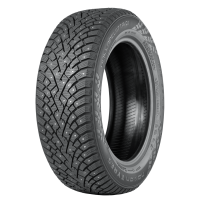
Category scores (% of best)
All discipline results (14)
Discipline positions compare the ranked tires in this test, not the whole market. These are individual measurements, not weighted overall scores.
| Test | Position in discipline | Result | Gap to best |
|---|---|---|---|
| Dry BrakingLower is better | 5th / 8 | 172 ft | +4 ft |
| Subj. Dry HandlingHigher is better | 7th / 8 | 4 Points | -6.00 Points |
| Wet BrakingLower is better | 3rd / 8 | 184 ft | +7 ft |
| Wet HandlingLower is better | 2nd / 8 | 40.458 s | +0.29 s |
| Straight AquaHigher is better | 2nd / 8 | 42.9 mph | -2.8 mph |
| Snow BrakingLower is better | 4th / 8 | 46 ft | 0 ft |
| Snow TractionLower is better | 6th / 8 | 5.05 s | +0.18 s |
| Snow HandlingLower is better | 1st / 8 | 69.097 s | Best in this discipline |
| Ice BrakingLower is better | 2nd / 8 | 35 ft | +8 ft |
| Ice TractionLower is better | 2nd / 8 | 10.43 s | +1.97 s |
| Ice HandlingLower is better | 2nd / 8 | 77.953 s | +0.13 s |
| Subj. NoiseHigher is better | 1st / 8 | 10 Points | Best in this discipline |
| NoiseLower is better | 1st / 8 | 69.5 dB | Best in this discipline |
| Fuel ConsumptionLower is better | 7th / 8 | 6.519 l/100km | +0.35 l/100km |
- Origin
- Finland
- Shore
- 54
- Stud Count
- 242
- Weight
- 12.8 kgs
- Tread
- 8.9 mm
- Price
- 2736.00
Goodyear UltraGrip Arctic 2
215/65 R17 103T XL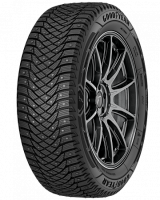
Category scores (% of best)
All discipline results (14)
Discipline positions compare the ranked tires in this test, not the whole market. These are individual measurements, not weighted overall scores.
| Test | Position in discipline | Result | Gap to best |
|---|---|---|---|
| Dry BrakingLower is better | 1st / 8 | 168 ft | Best in this discipline |
| Subj. Dry HandlingHigher is better | 3rd / 8 | 8 Points | -2.00 Points |
| Wet BrakingLower is better | 2nd / 8 | 181 ft | +4 ft |
| Wet HandlingLower is better | 3rd / 8 | 40.597 s | +0.43 s |
| Straight AquaHigher is better | 4th / 8 | 42.5 mph | -3.2 mph |
| Snow BrakingLower is better | 6th / 8 | 47 ft | +1 ft |
| Snow TractionLower is better | 4th / 8 | 5.02 s | +0.15 s |
| Snow HandlingLower is better | 3rd / 8 | 69.664 s | +0.57 s |
| Ice BrakingLower is better | 4th / 8 | 41 ft | +14 ft |
| Ice TractionLower is better | 6th / 8 | 12.94 s | +4.48 s |
| Ice HandlingLower is better | 3rd / 8 | 78.509 s | +0.69 s |
| Subj. NoiseHigher is better | 2nd / 8 | 8 Points | -2.00 Points |
| NoiseLower is better | 2nd / 8 | 70.8 dB | +1.30 dB |
| Fuel ConsumptionLower is better | 5th / 8 | 6.445 l/100km | +0.28 l/100km |
- Origin
- Poland
- Shore
- 56
- Stud Count
- 220
- Weight
- 13.1 kgs
- Tread
- 9.8 mm
- Price
- 2483.00
Michelin X Ice North 4
215/65 R17 103T XL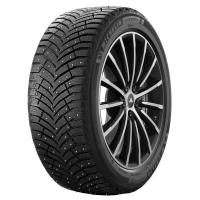
Category scores (% of best)
All discipline results (14)
Discipline positions compare the ranked tires in this test, not the whole market. These are individual measurements, not weighted overall scores.
| Test | Position in discipline | Result | Gap to best |
|---|---|---|---|
| Dry BrakingLower is better | 3rd / 8 | 172 ft | +4 ft |
| Subj. Dry HandlingHigher is better | 1st / 8 | 10 Points | Best in this discipline |
| Wet BrakingLower is better | 6th / 8 | 200 ft | +23 ft |
| Wet HandlingLower is better | 6th / 8 | 41.622 s | +1.45 s |
| Straight AquaHigher is better | 5th / 8 | 42.2 mph | -3.5 mph |
| Snow BrakingLower is better | 2nd / 8 | 46 ft | 0 ft |
| Snow TractionLower is better | 1st / 8 | 4.87 s | Best in this discipline |
| Snow HandlingLower is better | 2nd / 8 | 69.494 s | +0.40 s |
| Ice BrakingLower is better | 3rd / 8 | 37 ft | +10 ft |
| Ice TractionLower is better | 3rd / 8 | 10.55 s | +2.09 s |
| Ice HandlingLower is better | 4th / 8 | 79.069 s | +1.25 s |
| Subj. NoiseHigher is better | 5th / 8 | 6 Points | -4.00 Points |
| NoiseLower is better | 3rd / 8 | 70.9 dB | +1.40 dB |
| Fuel ConsumptionLower is better | 4th / 8 | 6.432 l/100km | +0.27 l/100km |
- Origin
- Italy
- Shore
- 57
- Stud Count
- 282
- Weight
- 12.2 kgs
- Tread
- 8.2 mm
- Price
- 2437.00
Pirelli Ice Zero 2
215/65 R17 103T XL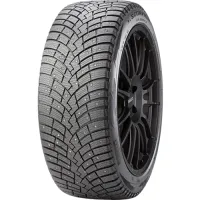
Category scores (% of best)
All discipline results (14)
Discipline positions compare the ranked tires in this test, not the whole market. These are individual measurements, not weighted overall scores.
| Test | Position in discipline | Result | Gap to best |
|---|---|---|---|
| Dry BrakingLower is better | 2nd / 8 | 168 ft | 0 ft |
| Subj. Dry HandlingHigher is better | 1st / 8 | 10 Points | Best in this discipline |
| Wet BrakingLower is better | 1st / 8 | 177 ft | Best in this discipline |
| Wet HandlingLower is better | 1st / 8 | 40.172 s | Best in this discipline |
| Straight AquaHigher is better | 1st / 8 | 45.7 mph | Best in this discipline |
| Snow BrakingLower is better | 5th / 8 | 47 ft | +1 ft |
| Snow TractionLower is better | 2nd / 8 | 4.93 s | +0.06 s |
| Snow HandlingLower is better | 5th / 8 | 70.95 s | +1.85 s |
| Ice BrakingLower is better | 7th / 8 | 50 ft | +23 ft |
| Ice TractionLower is better | 4th / 8 | 12.46 s | +4.00 s |
| Ice HandlingLower is better | 7th / 8 | 84.181 s | +6.36 s |
| Subj. NoiseHigher is better | 2nd / 8 | 8 Points | -2.00 Points |
| NoiseLower is better | 3rd / 8 | 70.9 dB | +1.40 dB |
| Fuel ConsumptionLower is better | 3rd / 8 | 6.304 l/100km | +0.14 l/100km |
- Origin
- Romania
- Shore
- 62
- Stud Count
- 196
- Weight
- 11.2 kgs
- Tread
- 7.8 mm
- Price
- 2212.00
Nordman North 9 SUV
215/65 R17 103T XL
Category scores (% of best)
All discipline results (14)
Discipline positions compare the ranked tires in this test, not the whole market. These are individual measurements, not weighted overall scores.
| Test | Position in discipline | Result | Gap to best |
|---|---|---|---|
| Dry BrakingLower is better | 6th / 8 | 176 ft | +8 ft |
| Subj. Dry HandlingHigher is better | 5th / 8 | 6 Points | -4.00 Points |
| Wet BrakingLower is better | 5th / 8 | 197 ft | +20 ft |
| Wet HandlingLower is better | 7th / 8 | 41.669 s | +1.50 s |
| Straight AquaHigher is better | 3rd / 8 | 42.7 mph | -3.0 mph |
| Snow BrakingLower is better | 3rd / 8 | 46 ft | 0 ft |
| Snow TractionLower is better | 5th / 8 | 5.03 s | +0.16 s |
| Snow HandlingLower is better | 6th / 8 | 71.004 s | +1.91 s |
| Ice BrakingLower is better | 5th / 8 | 45 ft | +18 ft |
| Ice TractionLower is better | 5th / 8 | 12.52 s | +4.06 s |
| Ice HandlingLower is better | 6th / 8 | 82.917 s | +5.10 s |
| Subj. NoiseHigher is better | 6th / 8 | 4 Points | -6.00 Points |
| NoiseLower is better | 6th / 8 | 71.1 dB | +1.60 dB |
| Fuel ConsumptionLower is better | 2nd / 8 | 6.236 l/100km | +0.07 l/100km |
- Origin
- Finland
- Shore
- 61
- Stud Count
- 192
- Weight
- 11.7 kgs
- Tread
- 10.0 mm
- Price
- 2352.00
Nankang Ice Activa Grip 2 SUV
215/65 R17 103T XL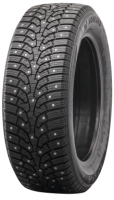
Category scores (% of best)
All discipline results (14)
Discipline positions compare the ranked tires in this test, not the whole market. These are individual measurements, not weighted overall scores.
| Test | Position in discipline | Result | Gap to best |
|---|---|---|---|
| Dry BrakingLower is better | 7th / 8 | 177 ft | +9 ft |
| Subj. Dry HandlingHigher is better | 8th / 8 | 2 Points | -8.00 Points |
| Wet BrakingLower is better | 8th / 8 | 208 ft | +31 ft |
| Wet HandlingLower is better | 5th / 8 | 41.483 s | +1.31 s |
| Straight AquaHigher is better | 8th / 8 | 37.2 mph | -8.5 mph |
| Snow BrakingLower is better | 1st / 8 | 46 ft | Best in this discipline |
| Snow TractionLower is better | 8th / 8 | 5.09 s | +0.22 s |
| Snow HandlingLower is better | 4th / 8 | 70.766 s | +1.67 s |
| Ice BrakingLower is better | 6th / 8 | 47 ft | +20 ft |
| Ice TractionLower is better | 7th / 8 | 13.61 s | +5.15 s |
| Ice HandlingLower is better | 5th / 8 | 80.372 s | +2.55 s |
| Subj. NoiseHigher is better | 2nd / 8 | 8 Points | -2.00 Points |
| NoiseLower is better | 5th / 8 | 71 dB | +1.50 dB |
| Fuel ConsumptionLower is better | 6th / 8 | 6.451 l/100km | +0.29 l/100km |
- Origin
- China
- Shore
- 55
- Stud Count
- 213
- Weight
- 12.8 kgs
- Tread
- 8.8 mm
- Price
- 1630.00
Kumho WinterCraft Ice Wi32
215/65 R17 103T XL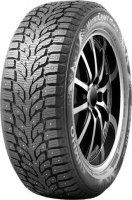
Category scores (% of best)
All discipline results (14)
Discipline positions compare the ranked tires in this test, not the whole market. These are individual measurements, not weighted overall scores.
| Test | Position in discipline | Result | Gap to best |
|---|---|---|---|
| Dry BrakingLower is better | 4th / 8 | 172 ft | +4 ft |
| Subj. Dry HandlingHigher is better | 3rd / 8 | 8 Points | -2.00 Points |
| Wet BrakingLower is better | 7th / 8 | 203 ft | +26 ft |
| Wet HandlingLower is better | 8th / 8 | 41.988 s | +1.82 s |
| Straight AquaHigher is better | 7th / 8 | 39.1 mph | -6.6 mph |
| Snow BrakingLower is better | 6th / 8 | 47 ft | +1 ft |
| Snow TractionLower is better | 3rd / 8 | 5 s | +0.13 s |
| Snow HandlingLower is better | 8th / 8 | 72.572 s | +3.48 s |
| Ice BrakingLower is better | 8th / 8 | 58 ft | +31 ft |
| Ice TractionLower is better | 8th / 8 | 17.31 s | +8.85 s |
| Ice HandlingLower is better | 8th / 8 | 86.362 s | +8.54 s |
| Subj. NoiseHigher is better | 6th / 8 | 4 Points | -6.00 Points |
| NoiseLower is better | 7th / 8 | 71.7 dB | +2.20 dB |
| Fuel ConsumptionLower is better | 1st / 8 | 6.165 l/100km | Best in this discipline |
- Origin
- South Korea
- Shore
- 62
- Stud Count
- 200
- Weight
- 12.0 kgs
- Tread
- 8.6 mm
- Price
- 1437.00
Bridgestone Blizzak Spike 3
215/65 R17 103T XL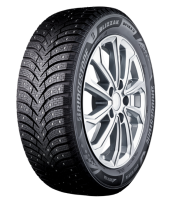
Category scores (% of best)
All discipline results (14)
Discipline positions compare the ranked tires in this test, not the whole market. These are individual measurements, not weighted overall scores.
| Test | Position in discipline | Result | Gap to best |
|---|---|---|---|
| Dry BrakingLower is better | 8th / 8 | 182 ft | +14 ft |
| Subj. Dry HandlingHigher is better | 5th / 8 | 6 Points | -4.00 Points |
| Wet BrakingLower is better | 4th / 8 | 192 ft | +15 ft |
| Wet HandlingLower is better | 4th / 8 | 41.255 s | +1.08 s |
| Straight AquaHigher is better | 6th / 8 | 40.6 mph | -5.1 mph |
| Snow BrakingLower is better | 8th / 8 | 48 ft | +2 ft |
| Snow TractionLower is better | 7th / 8 | 5.08 s | +0.21 s |
| Snow HandlingLower is better | 7th / 8 | 71.218 s | +2.12 s |
| Ice BrakingLower is better | 1st / 8 | 27 ft | Best in this discipline |
| Ice TractionLower is better | 1st / 8 | 8.46 s | Best in this discipline |
| Ice HandlingLower is better | 1st / 8 | 77.821 s | Best in this discipline |
| Subj. NoiseHigher is better | 8th / 8 | 2 Points | -8.00 Points |
| NoiseLower is better | 8th / 8 | 72.4 dB | +2.90 dB |
| Fuel ConsumptionLower is better | 8th / 8 | 6.575 l/100km | +0.41 l/100km |
- Origin
- Hungary
- Shore
- 63
- Stud Count
- 262
- Weight
- 12.4 kgs
- Tread
- 9.2 mm
- Price
- 2463.00
Discussion