

Continental VikingContact 8 vs Nokian Hakkapeliitta 10
- TR Score
- 9.2/10
- Owners say
- 83% · 8
- TR Score
- 8.8/10
- Owners say
- 75% · 10
In the 3 independent tests that ran both tires, the Continental VikingContact 8 finished ahead 1 times and the Hakkapeliitta 10 not once.
Data updated

Which should you buy?
Choose Continental VikingContact 8 for mixed city/highway winters, low noise, and best efficiency. Choose Nokian Hakkapeliitta 10 if you regularly face hard ice or untreated roads where maximum studded grip outweighs comfort, noise, and fuel economy trade-offs-or when ice safety is your absolute priority.
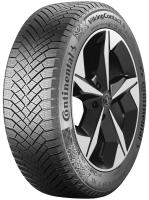
Where the VikingContact 8 is stronger
- Class-leading all-rounder with 3 overall test wins and consistently high scores across surfaces
- Excellent comfort and low noise (e.g., 9 vs 5 points comfort; top subjective noise ratings)
- Best efficiency/rolling resistance in testing (around 3-4% lower fuel consumption)
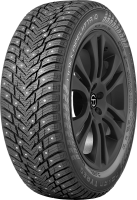
Where the Hakkapeliitta 10 is stronger
- Outstanding ice performance with studs (e.g., ice braking 33.9 m vs 47.1 m; perfect 80/80 winter points in one test)
- Exceptional traction and drivability on ice and packed snow with precise, predictable steering
- Competitive wet metrics in parts (e.g., a wet braking win; slight straight-line aquaplaning edge)
The bullet points are analysis of the shared tests and of owner reviews; the measured wins in each discipline are in the tables below. Where the two disagree, the figures are right.
VikingContact 8 vs Hakkapeliitta 10 at a glance
| Category | VikingContact 8 | Gap | Hakkapeliitta 10 |
|---|---|---|---|
| Shared tests won3 shared tests | 1 | 0 | |
| Dry2 measurements | 2 | 0 | |
| Wet5 measurements | 2 | Level between the two. | 2 |
| Snow3 measurements | 2 | 0 | |
| Ice3 measurements | 0 | 3 | |
| Comfort2 measurements | 2 | 0 | |
| Value1 measurement | 1 | 0 | |
| Tire Reviews Scoreevery test and review we hold | 9.2/10 | The VikingContact 8 by 0.4 | 8.8/10 |
| Owner rating8 and 10 reviews | 83% | The VikingContact 8 by 8 points | 75% |
| Would buy againshare of owners | 88% | The VikingContact 8 by 18 points | 70% |
Wins count every measurement the shared tests recorded for both tires; a tick marks the tire ahead on that line. Subjective driver scores count as wins but are never averaged, because each test uses its own scale.
Head to head in 3 tests, 2024 to 2025
Each row is one published test in which both tires ran on the same car, in the same size, on the same day. The line is the whole field, winner on the left.
| Test | VikingContact 8 | Field | Hakkapeliitta 10 |
|---|---|---|---|
| 2025 Studded, Friction and European Winter Tire Test | P1 of 7Nordic Friction Winter Tires | P2 of 8Studded Winter Tires | |
| 2025 Friction and Studded Winter Tire Test | P1 of 7Nordic Friction Winter Tires | P1 of 7Studded Winter Tires | |
| The Best Studded / Friction Winter Tires for 2024 | P1 of 6Nordic Friction Winter Tires | P2 of 6Studded Winter Tires |

Performance profile
15 measurements from the 3 shared tests, each tire shown as its share of the better figure in every test.
Where each is furthest ahead
VikingContact 8
Hakkapeliitta 10
Point at or tap any spoke for both tires' figures.
In each test the better of the two figures counts as 100% and the other as its share of it, so a 118 ft stop against 112 ft is 95%; each spoke averages the shared tests that recorded it. The scale stops at 70%: a point further in sits on the hub's edge, hollow.
Where each scores higher
VikingContact 8
Hakkapeliitta 10
Point at or tap any spoke for both tires' figures.
Category scores are percentiles among tires of the same season and class: 90 means this tire out-performs 90% of them, measured across every test we hold, not only the ones it appeared in.
Where owners rate each higher
VikingContact 8
Hakkapeliitta 10
Point at or tap any spoke for both tires' figures.
Owners rate the VikingContact 8 83% from 8 reviews and the Hakkapeliitta 10 75% from 10. Each spoke is one question owners answer out of 10; reviews are vetted by hand before publication.
Every measurement, side by side
Averages of the figures both tires posted in the same tests. The gap is the average of each test's own gap, so figures from different cars and years are never mixed. Open a discipline for its measurements, and a measurement for every test's figure.
| Measurement | VikingContact 8 | Gap | Hakkapeliitta 10 | Wins | ||||||||
|---|---|---|---|---|---|---|---|---|---|---|---|---|
| 103 | 3.1% | 106 | 1-0 | |||||||||
|
||||||||||||
| scored | 12.5% | scored | 1-0 | |||||||||
|
||||||||||||
| 130 | 5.6% | 122 | 0-1 | |||||||||
|
||||||||||||
| 40.3 | 2.9% | 41.5 | 1-0 | |||||||||
|
||||||||||||
| scored | 10% | scored | 1-0 | |||||||||
|
||||||||||||
| 35.2 | 1.6% | 35.8 | 0-1 | |||||||||
|
||||||||||||
| 163 | 1.4% | 165 | 1-0 | |||||||||
|
||||||||||||
| 5.8 | 3.3% | 6 | 1-0 | |||||||||
|
||||||||||||
| scored | = | scored | 0-0 | |||||||||
|
||||||||||||
| 155 | 28% | 111 | 0-1 | |||||||||
|
||||||||||||
| 6.3 | 23.8% | 4.8 | 0-1 | |||||||||
|
||||||||||||
| scored | 25% | scored | 0-1 | |||||||||
|
||||||||||||
| scored | 80% | scored | 1-0 | |||||||||
|
||||||||||||
| scored | 28.6% | scored | 1-0 | |||||||||
|
||||||||||||
| 5.73 | 3.7% | 5.95 | 1-0 | |||||||||
|
||||||||||||
Braking distances and lap times are better when lower; speeds, wear and grip figures when higher. A test's figures are its own: sizes, cars, surfaces and temperatures differ from one to the next, which is why the averages here are only ever of tests the two tires shared. "Scored" rows are subjective driver ratings: each test uses its own scale, so only the wins are counted.
Scores beyond the shared tests
On the Tire Reviews Score, which weighs every test and review we hold, the VikingContact 8 scores 9.2 and the Hakkapeliitta 10 8.8 out of 10.
| VikingContact 8 | Category | Hakkapeliitta 10 | ||
|---|---|---|---|---|
| 77 | Dry | 36 | ||
| 47 | Wet | 22 | ||
| 92 | Comfort | 47 | ||
| 85 | Value | 61 | ||
| 81 | Snow | 86 | ||
| 91 | Ice | 89 | ||
Category scores are percentiles among tires of the same season and class: 90 means this tire out-performs 90% of them, measured across every test we hold, not only the ones it appeared in.
What owners say
| VikingContact 8 | Category | Hakkapeliitta 10 | ||
|---|---|---|---|---|
| 7.7 | Dry Grip | 7.3 | ||
| 8.5 | Wet Grip | 7.1 | ||
| 7.4 | Road Feedback | 6.5 | ||
| 7.5 | Handling | 7.8 | ||
| 7.8 | Wear | 7.4 | ||
| 9.1 | Comfort | 6.3 | ||
| 8.6 | Snow Grip | 9.2 | ||
| 9 | Ice Grip | 8.8 | ||
Owners rate the VikingContact 8 83% from 8 reviews and the Hakkapeliitta 10 75% from 10. Reviews are vetted by hand before publication; ownership is not verified.
Continental VikingContact 8
- 83%from 8 reviews
- 88%would buy again
- 33,500 milesdriven by reviewers
Drivers overwhelmingly rate the Continental VikingContact 8 as an excellent Nordic-style winter tire, praising exceptional grip and confidence on ice and snow along with strong handling and braking in harsh conditions. Multiple reviews also highlight a quiet, comfortable ride with little to no tramlining. A minority view reports underwhelming stability/traction, suggesting performance may vary by vehicle or conditions.
- Exceptional ice and snow grip
- Confidence-inspiring handling and stability in winter conditions
- Quiet ride
- High comfort/impact absorption
Summarised by AI from 6 vetted reviews; the reviews themselves are on the tire page.
All 8 VikingContact 8 reviewsVery good grip in the snow and ice though cornering they did feel rather soft but that is expected of winter tires. I have no complaints as they handled the conditions I threw at them flawlessly. Drove through snow and ice covered roads in a snow storm with zero signs of losing grip during acceleration or through corners. They also handled slush covered roads excellently.
Nokian Hakkapeliitta 10
- 75%from 10 reviews
- 70%would buy again
- 83,700 milesdriven by reviewers
Drivers generally describe the Nokian Hakkapeliitta 10 as a top-tier studded winter tire, delivering outstanding traction and confidence on hard-packed snow and ice, with several owners calling it “bulletproof” in harsh conditions. The most consistent drawback is noticeable road noise on dry pavement, and multiple users also report weaker dry/wet handling feel or wet braking compared with premium studless alternatives. A smaller subset report that winter performance can drop off markedly after 2-3 seasons/around 20k miles despite remaining tread, which hurts perceived value for some.
- Exceptional snow and ice traction (braking, acceleration, cornering)
- High confidence and stability in severe winter conditions
- Strong performance in deep snow vs studless competitors
- Good tread life/low wear reported by several owners
- Noticeable road noise/“racket” on dry pavement (typical of studded tires)
- Dry/wet handling feel and wet braking not as strong as some premium alternatives (less feedback, can feel wobbly)
Summarised by AI from 9 vetted reviews; the reviews themselves are on the tire page.
All 10 Hakkapeliitta 10 reviewsBought these for northeast winter and 2025/26 was a bear (2023 CX-5). I travel over High Point mountain NJ up and down and Wurtsboro mountain NY up in morn down at end of day daily over 40 miles one way (look them up, not fun). NJ does a great job clearing the roads NY O boy not so much. These were bullet proof unplowed NY roads no problem up the mountains and down I drank my coffee calmly. Held the track on one lane each way country road unplowed while crazy trailer driver flying in from the other way (had me checking my life ins. in my head) but no problem the Hakka's and CX-5 just did their thing despite his stupidity. Never a slip never a slit slide never a wheel spin. My buddies and I refer to them as the beasts, loud in the dry yea couples miles less MPH (2) yup , who cares!
Bought a set of sharp alloy rims for them to boot no tire changes, bad for your tires.My one friend going to take them for 400 USD (a gift after one season) and I am going for the Hakka 01 with new retractable stud tech, we shall see........yes I am a rubber head I have tire problem!
Sizes, EU label and lineage
| Category | VikingContact 8 | Hakkapeliitta 10 |
|---|---|---|
| Season | Winter | Winter |
| Replaced | Continental VikingContact 7 (2018) | Nokian Hakkapeliitta 9 |
| Replaced by | - | Nokian Hakkapeliitta 01 |
Reading the results
Written from the test results and owner reviews above. It is analysis, not a measurement: where it and the tables disagree, the tables are right.
This head-to-head pits two Nordic winter heavyweights with very different philosophies: the studless Continental VikingContact 8 and the studded Nokian Hakkapeliitta 10. Across four shared professional tests, the Continental claimed three overall wins (with one draw), signaling outstanding all-round capability, refinement, and efficiency. The Nokian counters with class-leading ice and deep-winter traction where its studs deliver a performance ceiling that friction tires simply can't reach.
The data shows a clear pattern. Nokian dominates pure ice metrics by large margins (for example, ice braking 33.9 m vs 47.1 m; ice traction advantages of 24-31%), while Continental consistently rides, handles, and sips fuel better, often winning dry and wet handling plus subjective comfort and noise. Aquaplaning is a shared weakness for Nordic friction tires, yet straight-line aquaplaning slightly favored the Nokian in one test, while Continental's curved aquaplaning lag was noted. The choice ultimately hinges on how often you drive on bare or wet pavement versus hard ice.
Conclusion
For most drivers who split time between plowed city streets, highways, and variable winter conditions, the Continental VikingContact 8 is the safer, quieter, and more economical bet. It repeatedly wins overall thanks to balanced grip on snow and ice, confident dry/wet handling, excellent stability, low noise, and the best rolling resistance (circa 3-4% lower fuel use measured at 5.726 vs 5.946 l/100 km). Its few weaknesses-chiefly curved aquaplaning-are manageable with sensible speeds in heavy slush.
If your winter reality is frequent hard ice and packed snow-think rural Nordic routes, mountain passes, or untreated surfaces-the Nokian Hakkapeliitta 10's studs provide a decisive safety margin. It posted perfect 80/80 winter-surface points in one test and slashes stopping distances on ice (up to ~28% shorter) while delivering predictable, precise behavior in extreme slipperiness. You'll trade for higher noise, harsher ride, and notably worse efficiency, and it feels less composed on bare pavement. In short: Continental for everyday winter versatility and refinement; Nokian for maximum security on ice when conditions justify the studded compromise.
VikingContact 8 vs Hakkapeliitta 10: your questions
Is the Continental VikingContact 8 or the Nokian Hakkapeliitta 10 the better tire?
In the 3 independent tests that ran both tires, the Continental VikingContact 8 finished ahead 1 times and the Hakkapeliitta 10 not once. On the Tire Reviews Score, which weighs every test and review we hold, the VikingContact 8 scores 9.2 and the Hakkapeliitta 10 8.8 out of 10.
Which is better in the wet, the VikingContact 8 or the Hakkapeliitta 10?
Across the shared tests the wet measurements are split 2-2 between the VikingContact 8 and the Hakkapeliitta 10.
Which is better in the dry?
The VikingContact 8 led 2 of the 2 dry measurements the shared tests recorded.
Which is better in snow?
The VikingContact 8 led 2 of the 3 snow measurements the shared tests recorded.
Which is quieter and more comfortable?
Owners rate comfort 9.1/10 for the VikingContact 8 and 6.3/10 for the Hakkapeliitta 10.
What do owners say?
Owners rate the VikingContact 8 83% from 8 reviews and the Hakkapeliitta 10 75% from 10. 88% of VikingContact 8 owners would buy it again, against 70% for the Hakkapeliitta 10.
More comparisons with these tires
vs  Continental VikingContact 8 vs Michelin X Ice Snow
6-0 in 6 shared tests
vs
 Continental VikingContact 8 vs Nokian Hakkapeliitta R5
6-0 in 6 shared tests
vs
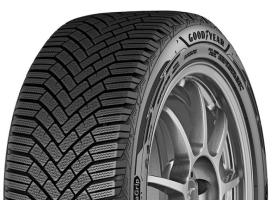 Continental VikingContact 8 vs Goodyear UltraGrip Ice 3
6-1 in 7 shared tests
 vs
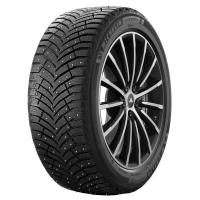
Michelin X Ice North 4 vs Nokian Hakkapeliitta 10
0-7 in 7 shared tests
vs
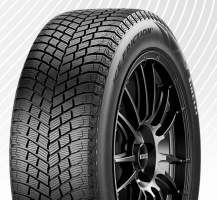 Continental VikingContact 8 vs Pirelli Ice Friction
3-0 in 3 shared tests
vs
Nokian Hakkapeliitta 10 vs Nokian Hakkapeliitta R5
2-2 in 6 shared tests
 vs
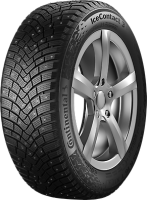
Continental IceContact 3 vs Nokian Hakkapeliitta 10
0-7 in 7 shared tests
 vs
Goodyear UltraGrip Arctic 2 vs Nokian Hakkapeliitta 10
1-6 in 7 shared tests
Run either of these?
Your review is the part of this page no test can supply: how the tire wore, how it aged, what it was like in the rain in year three. It takes about five minutes.
Where this data comes from
Finishing positions and measurements are transcribed from each published test. A test only counts here when both tires ran in it, so every figure was recorded on the same car, size and day as the one it is compared to.
About the TR Score
The Tire Reviews Score rates each tire out of 10 from every independent test result and vetted owner review we hold, so two tires can be compared even before a test has run them together.
Who does the testing
Every test published as a Tire Reviews test is run by Jonathan Benson, who has been testing tires independently since 2007.
Discussion