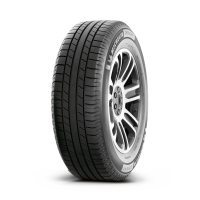
The Defender 2 shows what a standard touring all-season tire offers when it is asked to work in winter. It is good in the dry, sound in the wet and quiet with it, but on snow and ice it is plainly out of its element and needs to be driven with real caution.
Where the Michelin Defender 2 finished in each measured discipline, across every test that measured it against at least two other tires. Field beaten is the share of the other tires it outranked in that measurement.
Record by discipline
Discipline
Tests
Avg finish
Field beaten
Firsts
Dry
Dry Braking
4
P3.3 of 6.3
46%
1
Dry Handling
1
P4 of 5
25%
-
Dry Circle
2
P1 of 4.5
100%
2
Subj. Dry Handling
2
P5.5 of 8
40%
-
Subj. Road Score
2
P3 of 4.5
45%
-
Wet
Wet Braking
4
P4 of 6.3
36%
-
Wet Handling
3
P6.7 of 7.3
10%
-
Subj. Wet Handling
2
P7 of 8
18%
-
Wet Circle
1
P3 of 3
0%
-
Straight Aqua
1
P1 of 5
100%
1
Snow
Snow Braking
4
P6 of 6.3
6%
-
Snow Traction
2
P6 of 8
28%
-
Snow Handling
3
P6.7 of 6.7
0%
-
Subj. Snow Handling
1
P2 of 3
50%
-
Ice
Ice Braking
3
P4 of 6.7
53%
-
Ice Traction
1
P2 of 3
50%
-
Comfort
Subj. Comfort
3
P3.3 of 4.7
48%
1
Subj. Noise
2
P1.5 of 4.5
90%
1
Noise
1
P5 of 5
0%
-
Value
Value
1
P5 of 5
0%
-
Rolling Resistance
1
P4 of 5
25%
-
Head-to-head record
Overall finishing position against the tires that have most often shared a test with the Michelin Defender 2. Only tires tested alongside it at least three times are listed.
Across four independent tests, the Michelin Defender 2 consistently comes across as a civilised, road-biased touring all-season with standout steering sharpness and a few isolated dynamic highs, but with clear limits in low-grip conditions. Testers repeatedly praised its steering feel (tagged in 100% of write-ups, including “the sharpest and most enjoyable steering here”), and it also delivered some strong objective results such as best-in-class dry braking (1st of 6 in the 2025 Tire Rack Touring All-Season test) and class-leading comfort/noise in the 2026 Tire Rack all-weather vs winter comparison (1st of 3 for both subjective comfort and noise). It also showed real wet safety potential in specific metrics, notably winning straight-line aquaplaning in the 2026 high-mileage all-season test (1st of 5).
Performance Strengths
Aquaplaning resistanceStrongin 1 of 4 testsDetails
1st of 5 for straight aquaplaning (66.65 km/h), 2026 high-mileage all-season test
The Defender 2 shows what a standard touring all-season tire offers when it is asked to work in winter. It is good in the dry, sound in the wet and quiet with it, but on snow and ice it is plainly out of its element and needs to be driven with real caution.
Tire Reviews · 215/55 R17 Tested by Tire ReviewsRecommended
The Michelin Defender 2 finished fifth, which in a test of five premium tires still means it is a tire I recommend. It was best in test for straight aquaplaning by a clear margin, its dry handling was competitive, and it has the sharpest and most enjoyable steering here, which makes it the pick if you want a touring tire that still feels alert. What it gives up is grip, consistently and in every condition. It was slowest on the wet handling lap, it understeers when pushed and takes a long time to recover as you lift, and its snow results were among the weakest. It is also the most expensive tire here to buy, which leaves it last on cost per warranted mile. I suspect the missing grip is a deliberate trade for the longevity Michelin are known for.
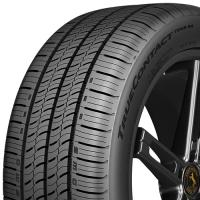
StrongStraight Aqua WeakDry BrakingDry HandlingWet BrakingWet HandlingSubj. Wet HandlingSnow BrakingSnow TractionSubj. ComfortNoiseValueRolling Resistance WinnerContinental TrueContact Tour 54
The Michelin Defender2 serves as a good reference point for the Standard Touring category, providing a decent ride that absorbs small bumps well, though with some excess body motion. The steering is precise but can feel sluggish at low speeds. On the track, its performance is limited by a lack of ultimate grip in both wet and dry conditions, leading to frequent and significant understeer, making emergency maneuvers a handful. In winter conditions, it struggled significantly compared to the group, with the longest braking distances and difficulty applying power.




 Continental TrueContact Tour 54