
Are Cheap Tires Worth It? The Data Behind the Price Tags
We analysed 285 tire tests comparing Premium, Mid-Range and Budget tires. See how braking distance, handling, and wear differ by price category.

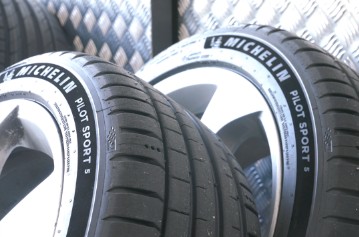 We analysed 285 independent tire tests covering 3,677 individual results to answer one of the most common questions drivers ask: are cheap tires really worth the saving? Every test in our dataset directly compares Premium, Mid-Range, Economy and Budget tires under identical conditions — same car, same day, same track.
The results are striking. Premium tires win 89% of all tests and finish in the top three 80% of the time. Most critically, across 64 head-to-head wet braking comparisons, budget tires needed an average of 8.5m more to stop — a gap that, at motorway speeds, could mean the difference between a near-miss and a collision.
Below, we break down the numbers across braking, handling, aquaplaning, fuel efficiency, comfort, and real-world owner satisfaction — so you can see exactly where the money goes and make an informed decision.
On-Road Reality Check
Charts show the gap. This section lets you feel it. Move the speed slider and watch how the same test averages play out in a sudden wet-road braking moment.
Imagine brake lights appearing suddenly ahead on a wet motorway.
Model assumption: braking distance scales with speed squared, while preserving the measured Premium vs Budget ratio.
When premium tires have already stopped, budget tires are still carrying:
Budget tires are still moving at 33.8 km/h (21.0 mph).
At 80 km/h in the wet, premium tires stop in about 39.1m while budget tires need 47.6m. That is roughly 8.5m (1.9 car lengths) of extra travel.
Derived from 64 head-to-head Premium vs Budget wet-braking comparisons in this dataset.
How Do Cheap Tires Rank in Tests?
Premium tires average position 4.5 and win 89.4% of all tests. Budget tires average position 29.9, accounting for just 0% of test wins. Mid-range tires sit at position 10.6 with 17.8% of all top-3 finishes.
In this dataset, Premium is 4.5 versus Budget at 29.9, a 25.4 advantage for Premium.
In this dataset, Premium is 89.4% versus Budget at 0.0%, a 89.4 percentage points advantage for Premium.
In this dataset, Premium is 80.4% versus Budget at 0.2%, a 80.2 percentage points advantage for Premium.
Safety: The Hidden Cost of Cheap Tires
Across 64 direct comparisons, budget tires needed 8.5m more to stop in the wet — roughly 1.9 car lengths at highway speed. In wet handling, premium tires score 56 percentile points higher on average, meaning more predictable grip when it matters most.
In 64 head-to-head tests, premium tires stopped in an average of 39.1m while budget tires needed 47.6m — a difference of 8.5m.
Braking distance is measured from a set speed until the car stops completely. In wet conditions, tire performance varies dramatically — the compound, tread pattern, and siping all affect how effectively water is dispersed. Every extra metre of stopping distance at motorway speeds represents roughly 0.1 seconds of travel time where you have no control. In this dataset, premium tires average 39.1m in wet braking versus 47.6m for budget, a 8.5m difference.
Dry braking distances are usually closer across price tiers because total available grip is higher on dry tarmac. Even so, small gaps still matter in emergency stops. Here, premium averages 34.9m and budget 37.7m in dry braking, a 2.8m difference. As expected, the dry gap (2.8m) is tighter than the wet gap (8.5m).
Wet handling measures how predictable and controllable a tire is through corners on a wet track. Higher-scoring tires give the driver more warning before losing grip, making emergency manoeuvres safer. This is one of the categories where premium compounds show the largest advantage. In this dataset, Premium is 69.9/100 versus Budget at 14.0/100, a 55.9 points advantage for Premium.
Aquaplaning occurs when a layer of water builds up between the tire and road surface, causing total loss of grip. The speed shown is the point at which the tire begins to aquaplane — higher is safer. Good tread design channels water away faster, keeping rubber in contact with tarmac at higher speeds. In this dataset, Premium is 80.8 km/h versus Budget at 79.5 km/h, a 1.3 km/h advantage for Premium.
Curved aquaplaning tests how well a tire keeps lateral grip while cornering through standing water. It captures a dangerous real-world scenario: entering a bend where water depth suddenly increases. In this dataset, premium scores 59.3/100 versus 37.8/100 for budget, a 21.5-point advantage.
Do Cheap Tires Cost More Long-Term?
Premium tires score 20 points higher for rolling resistance, which translates to lower fuel consumption over the life of the tire. Premium tires also tend to last longer, scoring 60 vs 29 on wear performance. For overall value (combining price, wear, and fuel efficiency), Budget tires score highest at 54.
Tire wear tests measure how many kilometres a tire lasts under standardised conditions. Premium tires average 41,805 km before replacement compared to 35,875 km for budget — a difference of 5,930 km. When factoring in the cost per kilometre driven, a premium tire that lasts significantly longer may actually work out cheaper. In this dataset, Premium is 41,805 km versus Budget at 35,875 km, a 5,930 km advantage for Premium.
The cost-per-1000km metric combines purchase price with wear test data to calculate how much each kilometre actually costs. This accounts for the fact that a more expensive tire that lasts twice as long may actually be cheaper to run. It’s one of the most revealing metrics in our dataset. In this dataset, Premium is 10.90 €/1000km versus Budget at 6.00 €/1000km, a 4.90 €/1000km advantage for Budget.
In 1 of 8 tests, budget tires were actually more expensive per kilometre than premium — their lower purchase price couldn’t offset significantly worse wear.
Environmental Impact
Tires are a major source of microplastic pollution — tire wear particles account for up to 28% of microplastics entering waterways. Rolling resistance also directly affects fuel consumption and CO₂ emissions. Here’s how the price tiers compare on environmental impact.
Abrasion tests measure how much material a tire sheds as it wears. Different test organisations use different units (g/1000km, mg/km/t, mm/1000km), so we show normalised percentile scores rather than raw values. Lower abrasion means fewer tire-wear particles entering the environment. ADAC and AutoBild are among the test organisations that now routinely measure tire particulate emissions. In this dataset, Premium is 71.7/100 versus Budget at 49.6/100, a 22.1 points advantage for Premium.
Rolling resistance directly affects fuel consumption and CO₂ emissions. A tire with 7.8 kg/t rolling resistance uses measurably less fuel than one at 8.3 kg/t. Over 20,000 km, the difference adds up to several tanks of fuel and a meaningful reduction in carbon emissions. In this dataset, Premium is 7.8 kg/t versus Budget at 8.3 kg/t, a 0.5 kg/t advantage for Premium.
Comfort & Noise: Can You Feel the Difference?
Beyond outright performance, tires have a huge impact on how your car feels to drive every day. Road noise, ride comfort, and vibration filtering vary significantly between price tiers — and these are the things you notice on every journey.
Pass-by noise is measured in decibels (dB) under standardised conditions. The differences here are small — 70.5 dB for premium vs 69.4 dB for budget — but the decibel scale is logarithmic, so even a 1 dB difference is noticeable inside the cabin. The real comfort gap shows up in subjective testing below. In this dataset, Premium is 70.5 dB versus Budget at 69.4 dB, a 1.1 dB advantage for Budget.
Subjective scores are awarded by professional test drivers who assess real-world ride quality — how the tire absorbs bumps, filters vibrations, and how quiet it feels inside the car. These scores often reveal differences that lab measurements miss. In this dataset, Premium is 58.9/100 versus Budget at 30.3/100, a 28.6 points advantage for Premium.
Subjective noise ratings are judged by professional drivers and capture how intrusive the sound feels inside the cabin, including pitch and tone. A tire with lower measured dB can still feel harsher if it has a high-frequency whine. Here, premium scores 47.6/100 vs budget at 25.0/100 on subjective noise, while measured pass-by noise is relatively close at 70.5 dB vs 69.4 dB. This is why subjective noise scoring is often treated as the gold standard for perceived cabin comfort.
What Do Real Drivers Think?
Based on 30,456 owner reviews, premium tires score 6.7/10 on the \"would buy again\" question vs budget tires at 4.9/10. The biggest gap reported by drivers is in wet grip: premium owners rate it 7.6/10 compared to 5.2/10 for budget. Mid-range tires score well across all categories, with owners rating them 7.3/10 for buy-again satisfaction from 9,468 reviews.
In this dataset, Premium is 6.7/10 versus Budget at 4.9/10, a 1.8 points advantage for Premium.
In owner reviews, Premium is 7.6/10 versus Budget at 5.2/10, a 2.4 points advantage for Premium.
In owner reviews, Premium is 8.5/10 versus Budget at 6.8/10, a 1.7 points advantage for Premium.
In owner reviews, Premium is 7.4/10 versus Budget at 5.8/10, a 1.6 points advantage for Premium.
In owner reviews, Premium is 7.0/10 versus Budget at 6.4/10, a 0.6 points advantage for Premium.
The Verdict
After analysing all the data, three clear conclusions emerge. Premium tires lead on safety, mid-range tires offer the best overall value, and the cheapest budget tires are a false economy for most drivers. Here’s the breakdown.
Safety
When it comes to safety, the data is clear: premium tires stop 8.5m shorter in the wet. In an emergency, that distance can be the difference between a near-miss and a collision. Wet handling shows a similar pattern, with premium tires scoring 56 percentile points higher — meaning more predictable grip and safer cornering on wet roads.
The Bottom Line
Premium tires take 89.4% of all test wins vs budget’s 0%. If safety is your priority, avoid the cheapest options. If you’re on a budget, mid-range tires offer the best balance of safety and value. If you’re on a tight budget, steer clear of the very cheapest options and look at mid-range instead — they’re the floor for acceptable performance. This analysis is based on 285 independent tests covering 3,677 tire results.
How We Analysed the Data
Show methodology details
This analysis is based on 285 independent tire tests covering 3,677 individual tire results. Every test included at least two different brand categories (Premium, Mid-Range, Economy, or Budget) to allow direct, fair comparisons under identical conditions.
Test Selection
We only include tests where tires from multiple price categories were tested together on the same vehicle, on the same day, at the same facility. This eliminates variables like weather, road surface, and vehicle condition that would make cross-test comparisons unreliable.
How Scores Are Calculated
For each metric, we average the raw measured values across all tests for each brand category. For example, the wet braking figure shown is the mean stopping distance of all Premium tires across every included test, compared to the mean for Budget tires. This gives a clear, real-world picture of performance differences using actual units — metres, km/h, kg/t, and decibels — rather than abstract scores.
Brand Categories
Each tire brand is classified as Premium, Mid-Range, Economy, or Budget based on the manufacturer’s market positioning and typical price point. These classifications are consistent across all tests and are assigned independently of test results.
Continuous Updates
This page is automatically regenerated whenever new test results are published. As more data is added, the averages become increasingly reliable. Seasonal filters allow you to view results specifically for summer, winter, or all-season tires, since performance characteristics differ significantly between tire types.
Frequently Asked Questions
Are cheap tires safe?
Budget tires are legal and meet minimum safety standards, but our data from 64 tests shows they consistently underperform premium tires in critical areas. Budget tires need an average of 8.5m more to stop in wet conditions. For urban driving at low speeds the difference may be acceptable, but at motorway speeds it becomes a significant safety concern.
Do premium tires last longer?
Our data shows premium tires generally score higher on wear tests, but the difference varies. Some mid-range and economy tires offer competitive longevity. The real long-term cost depends on combining wear life with fuel efficiency, where premium tires typically excel thanks to lower rolling resistance.
What is the best value tire category?
Mid-range tires offer the best overall value. They finish in the top 3 in 17.8% of tests, deliver close-to-premium safety performance, and cost significantly less. Economy tires can also be good value for lower-mileage drivers who do mostly urban driving.
How much difference do tires really make?
Tires are the only part of your car touching the road, and our data shows dramatic differences between categories. Premium tires win 89.4% of all tests compared to budget tires at just 0%. In wet braking alone, the average gap is 8.5m, which at 80 km/h could be the difference between stopping safely and a collision.
Are mid-range tires worth it?
Absolutely. Mid-range tires are the sweet spot for most drivers. They deliver the majority of premium-level safety performance at a lower price, and finish in the top 3 in 17.8% of tests. Unless you drive a high-performance car or do very high mileage, mid-range is often the smartest choice.