

Continental WinterContact TS 870 vs Michelin Alpin 7
- TR Score
- 9.2/10
- Owners say
- 83% · 26
- TR Score
- 9.5/10
- Owners say
- 89% · 11
In the 6 independent tests that ran both tires, the Continental WinterContact TS 870 finished ahead 5 times and the Alpin 7 once. The WinterContact TS 870 stopped 3.7% shorter in the wet; the Alpin 7 lasted 11.2% longer in the wear tests.
Data updated

Which should you buy?
Pick the Continental WinterContact TS 870 for maximum wet-road safety and the most consistently top overall performance in European-style winters (cold, wet, variable). Pick the Michelin Alpin 7 if you regularly face snow/ice and you prioritize rolling efficiency and mileage, accepting that wet braking and aquaplaning margins are typically not as strong as the Continental.
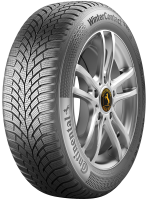
Where the WinterContact TS 870 is stronger
- Class-leading wet safety: wins wet braking in all 5 shared tests and is repeatedly top-tier for aquaplaning (e.g., ADAC 225/50 R17 straight aquaplaning 83.1 vs 78.6 km/h; curved 3.2 vs 2.7 m/s²)
- Consistently higher overall test performance: 5/5 overall wins in shared tests (including ADAC and Auto Express victories)
- Refined and quiet for a winter tire: wins noise in 4/5 tests and noted for easy, predictable control at the limit
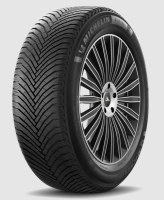
Where the Alpin 7 is stronger
- Stronger on true winter surfaces: leads snow traction (wins 4/5) and ice braking (wins 2/2 where measured), with ADAC describing exceptional precision and large safety reserves on snow
- Better efficiency: consistently lower rolling resistance (wins 3/3), making it well suited to high-mileage winter driving
- Often competitive for wear/mileage potential (e.g., ADAC 225/50 R17 projected wear 46,800 km vs 43,200 km for Continental)
The bullet points are analysis of the shared tests and of owner reviews; the measured wins in each discipline are in the tables below. Where the two disagree, the figures are right.
WinterContact TS 870 vs Alpin 7 at a glance
| Category | WinterContact TS 870 | Gap | Alpin 7 |
|---|---|---|---|
| Shared tests won6 shared tests | 5 | 1 | |
| Dry8 measurements | 7 | The WinterContact TS 870 stopped 1.6% shorter in the dry (6 tests) | 0 |
| Wet21 measurements | 18 | The WinterContact TS 870 stopped 3.7% shorter in the wet (6 tests) | 2 |
| Snow14 measurements | 4 | The Alpin 7 stopped 1.5% shorter on snow (6 tests) | 9 |
| Ice2 measurements | 0 | The Alpin 7 stopped 3.8% shorter on ice (2 tests) | 2 |
| Comfort4 measurements | 4 | The WinterContact TS 870 was 0.6 dB quieter (4 tests) | 0 |
| Value11 measurements | 1 | The Alpin 7 lasted 11.2% longer in the wear tests (3 tests) | 7 |
| Tire Reviews Scoreevery test and review we hold | 9.2/10 | The Alpin 7 by 0.3 | 9.5/10 |
| Owner rating26 and 11 reviews | 83% | The Alpin 7 by 6 points | 89% |
| Would buy againshare of owners | 83% | The Alpin 7 by 17 points | 100% |
| Pricein the 5 tests that listed prices | Cheaper | The Alpin 7 was dearer in 4 of 5 | +7% |
| Sizes madeEU label registrations | 44 | 11 sizes made in both | 49 |
Wins count every measurement the shared tests recorded for both tires; a tick marks the tire ahead on that line. Subjective driver scores count as wins but are never averaged, because each test uses its own scale.
Head to head in 6 tests, 2025 to 2026
Each row is one published test in which both tires ran on the same car, in the same size, on the same day. The line is the whole field, winner on the left.
| Test | WinterContact TS 870 | Field | Alpin 7 |
|---|---|---|---|
| 2026 AvD Winter Tire Test | P4 of 15 | P2 of 15 | |
| 2026 ADAC Winter Tire Test - 225/50 R17 | P2 of 16 | P4 of 16 | |
| 2026 ADAC Winter Tire Test - 185/65 R15 | P1 of 16 | P2 of 16 | |
| 2026 Auto Express Winter Tire Test | P1 of 11 | P4 of 11 | |
| 2025 TUV Test of Pirelli Cinturato Winter 3 vs Rivals | P2 of 5 | P5 of 5 | |
| 2025 Auto Express Winter Tire Test | P1 of 8 | P4 of 8 |

Performance profile
17 measurements from the 6 shared tests, each tire shown as its share of the better figure in every test.
Where each is furthest ahead
WinterContact TS 870
Alpin 7
Point at or tap any spoke for both tires' figures.
In each test the better of the two figures counts as 100% and the other as its share of it, so a 118 ft stop against 112 ft is 95%; each spoke averages the shared tests that recorded it. The scale stops at 95%: a point further in sits on the hub's edge, hollow. 1 measurement recorded in only one shared test is left off; every measurement is in the table further down.
Where each scores higher
WinterContact TS 870
Alpin 7
Point at or tap any spoke for both tires' figures.
Category scores are percentiles among tires of the same season and class: 90 means this tire out-performs 90% of them, measured across every test we hold, not only the ones it appeared in.
Where owners rate each higher
WinterContact TS 870
Alpin 7
Point at or tap any spoke for both tires' figures.
Owners rate the WinterContact TS 870 83% from 26 reviews and the Alpin 7 89% from 11. Each spoke is one question owners answer out of 10; reviews are vetted by hand before publication.
Every measurement, side by side
Averages of the figures both tires posted in the same tests. The gap is the average of each test's own gap, so figures from different cars and years are never mixed. Open a discipline for its measurements, and a measurement for every test's figure.
| Measurement | WinterContact TS 870 | Gap | Alpin 7 | Wins | ||||||||||||||||||||||||
|---|---|---|---|---|---|---|---|---|---|---|---|---|---|---|---|---|---|---|---|---|---|---|---|---|---|---|---|---|
| 135 | 1.6% | 137 | 5-0 | |||||||||||||||||||||||||
|
||||||||||||||||||||||||||||
| 58.42 | 0.6% | 58.75 | 2-0 | |||||||||||||||||||||||||
|
||||||||||||||||||||||||||||
| 121 | 3.7% | 126 | 6-0 | |||||||||||||||||||||||||
|
||||||||||||||||||||||||||||
| 127 | 3.3% | 132 | 1-0 | |||||||||||||||||||||||||
|
||||||||||||||||||||||||||||
| 78.4 | 2.7% | 80.7 | 3-0 | |||||||||||||||||||||||||
|
||||||||||||||||||||||||||||
| 12.1 | 2.6% | 12.42 | 1-0 | |||||||||||||||||||||||||
|
||||||||||||||||||||||||||||
| 52.3 | 3.2% | 50.7 | 4-1 | |||||||||||||||||||||||||
|
||||||||||||||||||||||||||||
| 66.8 | 5.6% | 76.4 | 3-1 | |||||||||||||||||||||||||
|
||||||||||||||||||||||||||||
| 69 | 1.5% | 67 | 1-4 | |||||||||||||||||||||||||
|
||||||||||||||||||||||||||||
| 6.6 | 1.9% | 6.46 | 1-2 | |||||||||||||||||||||||||
|
||||||||||||||||||||||||||||
| 597 | 4.6% | 624 | 0-2 | |||||||||||||||||||||||||
|
||||||||||||||||||||||||||||
| 76.19 | 0.6% | 76.49 | 2-1 | |||||||||||||||||||||||||
|
||||||||||||||||||||||||||||
| 63 | 3.8% | 61 | 0-2 | |||||||||||||||||||||||||
|
||||||||||||||||||||||||||||
| 70.18 | 0.6 dB | 70.72 | 4-0 | |||||||||||||||||||||||||
|
||||||||||||||||||||||||||||
| 24,884 | 11.2% | 27,940 | 1-2 | |||||||||||||||||||||||||
|
||||||||||||||||||||||||||||
| 8.06 | 5.8% | 7.59 | 0-4 | |||||||||||||||||||||||||
|
||||||||||||||||||||||||||||
| 5.55 | = | 5.55 | 0-0 | |||||||||||||||||||||||||
|
||||||||||||||||||||||||||||
| 78 | 1.8% | 76.5 | 0-1 | |||||||||||||||||||||||||
|
||||||||||||||||||||||||||||
Braking distances and lap times are better when lower; speeds, wear and grip figures when higher. A test's figures are its own: sizes, cars, surfaces and temperatures differ from one to the next, which is why the averages here are only ever of tests the two tires shared. "Scored" rows are subjective driver ratings: each test uses its own scale, so only the wins are counted.
Scores beyond the shared tests
On the Tire Reviews Score, which weighs every test and review we hold, the WinterContact TS 870 scores 9.2 and the Alpin 7 9.5 out of 10.
| WinterContact TS 870 | Category | Alpin 7 | ||
|---|---|---|---|---|
| 84 | Dry | 78 | ||
| 98 | Wet | 82 | ||
| 53 | Comfort | 64 | ||
| 68 | Value | 85 | ||
| 70 | Snow | 77 | ||
| 16 | Ice | 84 | ||
Category scores are percentiles among tires of the same season and class: 90 means this tire out-performs 90% of them, measured across every test we hold, not only the ones it appeared in.
What owners say
| WinterContact TS 870 | Category | Alpin 7 | ||
|---|---|---|---|---|
| 8.8 | Dry Grip | 8.7 | ||
| 9 | Wet Grip | 8.9 | ||
| 7.3 | Road Feedback | 7.5 | ||
| 8.1 | Handling | 8.4 | ||
| 8.8 | Wear | 9.7 | ||
| 8.4 | Comfort | 9.4 | ||
| 7.9 | Snow Grip | 9.2 | ||
| 7.3 | Ice Grip | 7.3 | ||
Owners rate the WinterContact TS 870 83% from 26 reviews and the Alpin 7 89% from 11. Reviews are vetted by hand before publication; ownership is not verified.
Continental WinterContact TS 870
- 83%from 26 reviews
- 83%would buy again
- 166,321 milesdriven by reviewers
Drivers generally rate the Continental WinterContact TS 870 very highly, highlighting strong wet-road grip, impressive aquaplaning resistance, and a secure, confidence-inspiring feel at speed. Many also report good comfort/low noise and solid all-round performance across typical European winter conditions, with several noting decent wear. A smaller but noticeable group reports weaker traction on hard-packed snow/ice (especially hill starts/climbing) and a few mention efficiency/range penalties and some wet-surface noise/whistling.
- Excellent wet grip and wet braking
- Strong resistance to aquaplaning/standing water
- High stability and confidence at motorway speeds
- Comfortable ride with generally low noise
- Hard-packed snow/ice traction and hill-start/climbing can be disappointing for some
- Efficiency/rolling resistance concerns (reduced EV range or worse fuel economy) mentioned by a few
- Some report noticeable noise/whistling, particularly on wet roads
Summarised by AI from 22 vetted reviews; the reviews themselves are on the tire page.
All 26 WinterContact TS 870 reviewsBeen a few years with these tires now and they are ok. Not as great as everyone makes them out to be, but a solid winter tire nonetheless.
The pros:
-Quiet
-Economic (no difference in fuel consumption compared to my summer tires)
- Good grip in all conditions but snow.The cons:
-Not very good on snow. I've had cheap tires that performed the same for half of the price. They are fine on Ice though.
-I got them on sale for 70ish Euros and that's a good price for what you are getting. But I have seen them go for 140 and more (same size and all) and that is honestly a rip-off. Check that you are getting a decent price.Would I buy them again? At 70 euros maybe. But I think I will opt for Nordic Winter Tires next time.
Michelin Alpin 7
- 89%from 11 reviews
- 100%would buy again
- 67,100 milesdriven by reviewers
Drivers rate the Michelin Alpin 7 very highly overall, most often praising its very low noise and notably improved ride comfort/refinement versus previous winter or summer setups. Reviews frequently highlight confident grip and stability in dry and wet conditions, with many also reporting strong performance in snow and slush. A smaller set of users mention a softer sidewall/less direct steering feel, and a couple note that for true Nordic winters (deep snow/ice-heavy conditions) a dedicated Nordic winter tire may be a better fit.
- Very quiet/low road noise (near summer-tire levels for many)
- High ride comfort and good bump/pothole absorption
- Strong dry and wet grip with stable handling, including at higher speeds
- Good snow and slush traction with predictable control
- Soft sidewalls/less direct steering feel (floatier feedback, slightly longer-feeling dry braking for some)
- Higher energy consumption/efficiency loss versus summer tires (typical winter-tire penalty)
Summarised by AI from 11 vetted reviews; the reviews themselves are on the tire page.
All 11 Alpin 7 reviewsDefinitely comfortable, safe tires that provide amazing grip on snow and ice. I'm very satisfied, I won't use another tire.
Sizes, EU label and lineage
From the EU label registrations for each tire: 44 sizes of the WinterContact TS 870 and 49 of the Alpin 7, 11 of them made in both.
| Category | WinterContact TS 870 | Alpin 7 |
|---|---|---|
| Season | Winter | Winter |
| Sizes made | 44 sizes, 14 to 19 inch | 49 sizes, 15 to 20 inch |
| Made in both | 11 sizes 185/65 R15195/65 R15195/55 R16195/60 R16205/55 R16205/60 R16215/55 R16215/60 R16195/45 R17225/45 R17225/50 R17 | |
| EU label wet grip | B82%C18% | B100% |
| EU label rolling resistance | C78%D22% | C66%B30%D5% |
| EU label noise | 69-72 dB B100% | 69-71 dB B100% |
| Severe snow (3PMSF) sizes | 90 of 90 | 64 of 64 |
| On the market since | - | 2024 |
| Replaced | Continental WinterContact TS 860 (2016) | - |
| Awards | Winner: Best Winter Tire (DriverReviews, 2025/26) Highly Recommended: Best Winter Tires (DriverReviews, 2024/25) | Highly Recommended: Best Winter Tire (DriverReviews, 2025/26) Winner: Best Winter SUV Tire (DriverReviews, 2025/26) |
| Price in the shared tests | The Alpin 7 was the dearer tire in 4 of the 5 tests that listed prices, by 7% on average. Each test priced the tires in its own market at the time; only the gap is comparable. | |
Label grades are shown as the share of registered sizes carrying each grade, so "B (88%), C (12%)" means most sizes are B. Grades vary by size; check the label for yours.
Reading the results
Written from the test results and owner reviews above. It is analysis, not a measurement: where it and the tables disagree, the tables are right.
Continental's WinterContact TS 870 and Michelin's Alpin 7 sit right at the top of the premium touring winter-tire market, but they chase performance in slightly different ways. Across five shared professional tests (two ADAC 2026 tests plus two Auto Express tests and a TÜV benchmark), the Continental shows a consistent pattern: it is repeatedly the “wet-weather authority” and often the most complete all-rounder, while still being quiet and easy to drive.
The Michelin Alpin 7, meanwhile, keeps coming back as the more winter-surface-biased option-stronger on snow traction and ice braking-and it also stands out for efficiency (rolling resistance) and often for mileage potential. The trade-off, shown clearly in multiple tests, is that the Alpin 7 tends to give away measurable stopping distance and aquaplaning margin on wet roads, where many European winters are actually spent day-to-day.
Conclusion
If you drive in a climate where cold rain, standing water and damp motorways dominate your winter, the Continental WinterContact TS 870 is the clearer, evidence-led pick. It beat the Alpin 7 overall in all five shared tests (including ADAC 2026: 2/16 vs 4/16 in 225/50 R17 and 1/16 vs 2/16 in 185/65 R15), and it repeatedly delivered meaningful wet-safety advantages: for example in ADAC 225/50 R17 wet braking (34.7 m vs 36.8 m) and especially aquaplaning (curved 3.2 vs 2.7 m/s²; straight 83.1 vs 78.6 km/h). Auto Express also described it as the strongest wet tire in its 2026 test, winning wet braking/handling with clear margins.
Choose the Michelin Alpin 7 when your priorities are frequent snow/ice use, fuel efficiency, and high mileage-especially if you're willing to accept that its wet performance is generally “safe but not class-leading.” It consistently wins the winter-surface metrics (category summary: snow traction 4-1, snow braking 3-1, ice braking 2-0), and it repeatedly posts lower rolling resistance (winning 3-0), which is a real benefit for high-mileage drivers. The practical takeaway: TS 870 is the safer, more confidence-inspiring 'wet winter' all-rounder; Alpin 7 is the more efficient, snow/ice-leaning choice for drivers who value economy and winter bite over wet-road sharpness.
WinterContact TS 870 vs Alpin 7: your questions
Is the Continental WinterContact TS 870 or the Michelin Alpin 7 the better tire?
In the 6 independent tests that ran both tires, the Continental WinterContact TS 870 finished ahead 5 times and the Alpin 7 once. On the Tire Reviews Score, which weighs every test and review we hold, the WinterContact TS 870 scores 9.2 and the Alpin 7 9.5 out of 10.
Which is better in the wet, the WinterContact TS 870 or the Alpin 7?
The WinterContact TS 870 led 18 of the 21 wet measurements the shared tests recorded. On average it stopped 3.7% shorter in the wet across 6 tests.
Which is better in the dry?
The WinterContact TS 870 led 7 of the 8 dry measurements the shared tests recorded. On average it stopped 1.6% shorter in the dry across 6 tests.
Which is better in snow?
The Alpin 7 led 9 of the 14 snow measurements the shared tests recorded. On average it stopped 1.5% shorter on snow across 6 tests.
Which lasts longer and costs less to run?
The Alpin 7 lasted 11.2% longer in the wear tests (3 tests), had 5.8% lower rolling resistance (4 tests) and shed 1.8% less rubber in the abrasion test (2 tests). Owners rate wear 8.8/10 for the WinterContact TS 870 and 9.7/10 for the Alpin 7.
Which is quieter and more comfortable?
The WinterContact TS 870 was 0.6 dB quieter (4 tests). Owners rate comfort 8.4/10 for the WinterContact TS 870 and 9.4/10 for the Alpin 7.
What do owners say?
Owners rate the WinterContact TS 870 83% from 26 reviews and the Alpin 7 89% from 11. 83% of WinterContact TS 870 owners would buy it again, against 100% for the Alpin 7.
Which is more expensive?
In the 5 tests that listed prices, the Alpin 7 was the dearer tire in 4 of them, by 7% on average. Prices are the test's own at the time, in its own market.
Are they available in the same sizes?
The WinterContact TS 870 is made in 44 sizes (14 to 19 inch) and the Alpin 7 in 49 (15 to 20 inch). 11 sizes are available in both. On the EU label the WinterContact TS 870 is graded B for wet grip and C for rolling resistance in most sizes; the Alpin 7 B and C.
More comparisons with these tires
 vs
Continental WinterContact TS 870 P vs Michelin Alpin 7
5-0 in 5 shared tests
 vs
Bridgestone Blizzak 6 vs Continental WinterContact TS 870
1-6 in 7 shared tests
vs
 Continental WinterContact TS 870 vs Hankook Winter I cept RS3
10-0 in 10 shared tests
 vs
Goodyear UltraGrip Performance 3 vs Michelin Alpin 7
8-4 in 12 shared tests
vs
Continental WinterContact TS 870 vs Goodyear UltraGrip Performance 3
10-1 in 11 shared tests
vs
Bridgestone Blizzak 6 vs Michelin Alpin 7
5-5 in 11 shared tests
 vs
Bridgestone Blizzak LM005 vs Continental WinterContact TS 870
4-6 in 11 shared tests
vs
 Michelin Alpin 7 vs Pirelli Cinturato Winter 3
0-5 in 5 shared tests
Every Continental vs Michelin test → All comparisons → Compare three or more tires →
Run either of these?
Your review is the part of this page no test can supply: how the tire wore, how it aged, what it was like in the rain in year three. It takes about five minutes.
Where this data comes from
Finishing positions and measurements are transcribed from each published test. A test only counts here when both tires ran in it, so every figure was recorded on the same car, size and day as the one it is compared to.
About the TR Score
The Tire Reviews Score rates each tire out of 10 from every independent test result and vetted owner review we hold, so two tires can be compared even before a test has run them together.
Who does the testing
Every test published as a Tire Reviews test is run by Jonathan Benson, who has been testing tires independently since 2007.
Discussion