
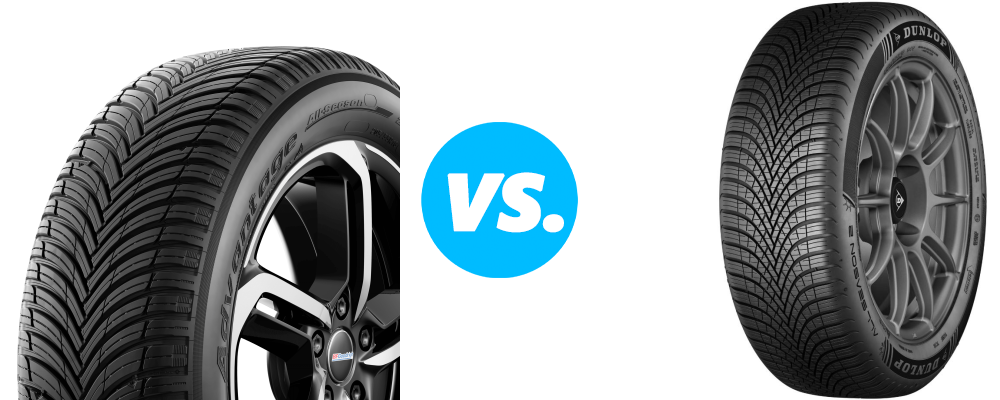
BFGoodrich Advantage All Season vs Dunlop All Season 2
The BFGoodrich consistently stops shorter on dry roads and shines in snow traction and handling, while Dunlop counters with stronger wet performance and a standout value proposition driven by exceptional tread life. If you commute through varied weather, the choice here largely hinges on whether you prize dry/snow assurance or wet-road confidence and long-term running costs.
Test Results
Independent comparison tire tests are the best source of data to get tire information from, and the good news is there have been four tests which compare both tires directly!
| Tire | Test Wins | Performance |
|---|---|---|
| BFGoodrich Advantage All Season | one | |
| Dunlop All Season 2 | three |
While it might look like the Dunlop All Season 2 is better than the BFGoodrich Advantage All Season purely based on the higher number of test wins, tires are very complicated objects which means where one tire is better than the other can be more important in real world use.
Let's look at how the two tires compare across multiple tire test categories.
Key Strengths
- Best-in-test consistency for dry braking across all shared tests
- Strong snow performance (traction, handling, slalom) with short snow stops
- Good straight-line aquaplaning resistance and lower interior noise
- Slight fuel-use edge in multiple tests
- Stronger wet performance (braking, handling, curved aquaplaning)
- Outstanding tread life and abrasion, leading to lower cost per 1,000 km
- Balanced all-round capability with few major weaknesses
- Competitive rolling resistance and environmental score

Dry Braking
Looking at data from four tire tests, the BFGoodrich Advantage All Season was better during four dry braking tests. On average the BFGoodrich Advantage All Season stopped the vehicle in 6.39% less distance than the Dunlop All Season 2.
Best In Dry Braking: BFGoodrich Advantage All Season
See how the Dry Braking winner was calculated >>
Dry Handling [Km/H]
Looking at data from one tire tests, the BFGoodrich Advantage All Season was better during one dry handling [km/h] tests. On average the BFGoodrich Advantage All Season was 2.09% faster around a lap than the Dunlop All Season 2.
Best In Dry Handling [Km/H]: BFGoodrich Advantage All Season
See how the Dry Handling winner was calculated >>
Wet Braking
Looking at data from four tire tests, the Dunlop All Season 2 was better during four wet braking tests. On average the Dunlop All Season 2 stopped the vehicle in 2.89% less distance than the BFGoodrich Advantage All Season.
Best In Wet Braking: Dunlop All Season 2
See how the Wet Braking winner was calculated >>
Wet Braking - Concrete
Looking at data from one tire tests, the Dunlop All Season 2 was better during one wet braking - concrete tests. On average the Dunlop All Season 2 stopped the vehicle in 4.51% less distance than the BFGoodrich Advantage All Season.
Best In Wet Braking - Concrete: Dunlop All Season 2
See how the Wet Braking - Concrete winner was calculated >>
Wet Handling [Km/H]
Looking at data from one tire tests, the Dunlop All Season 2 was better during one wet handling [km/h] tests. On average the Dunlop All Season 2 was 2.49% faster around a wet lap than the BFGoodrich Advantage All Season.
Best In Wet Handling [Km/H]: Dunlop All Season 2
See how the Wet Handling winner was calculated >>
Wet Circle
Looking at data from one tire tests, the Dunlop All Season 2 was better during one wet circle tests. On average the Dunlop All Season 2 was 3.88% faster around a wet circle than the BFGoodrich Advantage All Season.
Best In Wet Circle: Dunlop All Season 2
See how the Wet Circle winner was calculated >>
Straight Aqua
Looking at data from two tire tests, the BFGoodrich Advantage All Season was better during two straight aqua tests. On average the BFGoodrich Advantage All Season floated at a 2.57% higher speed than the Dunlop All Season 2.
Best In Straight Aqua: BFGoodrich Advantage All Season
See how the Straight Aqua winner was calculated >>
Curved Aquaplaning
Looking at data from two tire tests, the Dunlop All Season 2 was better during one curved aquaplaning tests. On average the Dunlop All Season 2 slipped out at a 4.36% higher speed than the BFGoodrich Advantage All Season.
Best In Curved Aquaplaning: Dunlop All Season 2
See how the Curved Aquaplaning winner was calculated >>
Snow Braking
Looking at data from two tire tests, the BFGoodrich Advantage All Season was better during one snow braking tests. On average the BFGoodrich Advantage All Season stopped the vehicle in 1.49% less distance than the Dunlop All Season 2.
Best In Snow Braking: BFGoodrich Advantage All Season
See how the Snow Braking winner was calculated >>
Snow Traction
Looking at data from two tire tests, the BFGoodrich Advantage All Season was better during two snow traction tests. On average the BFGoodrich Advantage All Season had 4.64% better snow traction than the Dunlop All Season 2.
Best In Snow Traction: BFGoodrich Advantage All Season
See how the Snow Traction winner was calculated >>
Snow Handling [Km/H]
Looking at data from one tire tests, the BFGoodrich Advantage All Season was better during one snow handling [km/h] tests. On average the BFGoodrich Advantage All Season was 3.49% faster around a lap than the Dunlop All Season 2.
Best In Snow Handling [Km/H]: BFGoodrich Advantage All Season
See how the Snow Handling winner was calculated >>
Snow Slalom
Looking at data from one tire tests, the BFGoodrich Advantage All Season was better during one snow slalom tests. On average the BFGoodrich Advantage All Season was 11.24% faster through a slalom than the Dunlop All Season 2.
Best In Snow Slalom: BFGoodrich Advantage All Season
See how the Snow Slalom winner was calculated >>
Ice Braking
Looking at data from one tire tests, the Dunlop All Season 2 was better during one ice braking tests. On average the Dunlop All Season 2 stopped the vehicle 3.27% shorter than the BFGoodrich Advantage All Season.
Best In Ice Braking: Dunlop All Season 2
See how the Ice Braking winner was calculated >>
Noise
Looking at data from two tire tests, the BFGoodrich Advantage All Season was better during two noise tests. On average the BFGoodrich Advantage All Season measured 0.76% quieter than the Dunlop All Season 2.
Best In Noise: BFGoodrich Advantage All Season
See how the Noise winner was calculated >>
Wear
Looking at data from two tire tests, the Dunlop All Season 2 was better during two wear tests. On average the Dunlop All Season 2 is predicted to cover 29.88% miles before reaching 1.6mm than the BFGoodrich Advantage All Season.
Best In Wear: Dunlop All Season 2
See how the Wear winner was calculated >>
Value
Looking at data from two tire tests, the Dunlop All Season 2 was better during two value tests. On average the Dunlop All Season 2 proved to have a 32.44% better value based on price/1000km than the BFGoodrich Advantage All Season.
Best In Value: Dunlop All Season 2
See how the Value winner was calculated >>
Rolling Resistance
Looking at data from one tire tests, the Dunlop All Season 2 was better during one rolling resistance tests. On average the Dunlop All Season 2 had a 0.39% lower rolling resistance than the BFGoodrich Advantage All Season.
Best In Rolling Resistance: Dunlop All Season 2
See how the Rolling Resistance winner was calculated >>
Fuel Consumption
Looking at data from two tire tests, the BFGoodrich Advantage All Season was better during two fuel consumption tests. On average the BFGoodrich Advantage All Season used 1.52% less fuel than the Dunlop All Season 2.
Best In Fuel Consumption: BFGoodrich Advantage All Season
See how the Fuel Consumption winner was calculated >>
Abrasion
Looking at data from one tire tests, the Dunlop All Season 2 was better during one abrasion tests. On average the Dunlop All Season 2 emitted 13.33% less particle wear matter than the BFGoodrich Advantage All Season.
Best In Abrasion: Dunlop All Season 2
See how the Abrasion winner was calculated >>
Real World Driver Reviews
Tire Reviews also collects real world driver reviews for the BFGoodrich Advantage All Season and Dunlop All Season 2.
In total the BFGoodrich Advantage All Season has been reviewed 0 times and drivers have given the tire 0% overall.
The Dunlop All Season 2 has been reviewed 6 times and drivers have given the tire 78% overall.
This means in real world driving, people prefer the Dunlop All Season 2.
View all BFGoodrich Advantage All Season driver reviews >>
Conclusion
For drivers prioritizing wet-weather safety and long service life, Dunlop All Season 2 is the safer, cheaper long-term bet. For those who value short dry stops, crisp dry handling, and robust winter traction without stepping up to a dedicated winter tire, the BFGoodrich Advantage All Season fits well. The practical takeaway: pick BFGoodrich for dry/snow assurance; pick Dunlop for wet-road confidence and wallet-friendly longevity.
Key Differences
- Dry braking: BFGoodrich consistently shorter (e.g., −6-9% vs Dunlop in multiple tests)
- Wet braking/handling: Dunlop leads (e.g., −2.9 to −3.7% wet braking; better wet handling/circle)
- Snow: BFGoodrich stronger in traction/handling; Dunlop slightly better on ice braking
- Aquaplaning: BFGoodrich better straight, Dunlop better in curved scenarios
- Noise: BFGoodrich quieter by around 0.9 dB in AutoBild; marginally quieter in ADAC
- Value and longevity: Dunlop massively better wear (+36-50%) and cost per 1,000 km
Overall Winner: Dunlop All Season 2
Based on the tire test data and user reviews we have in our database, the Dunlop All Season 2 has demonstrated better overall performance in this comparison. However, as you can see from the spider diagram above, each tire has its own strengths which should be considered in your final tire buying choice.Similar Comparisons
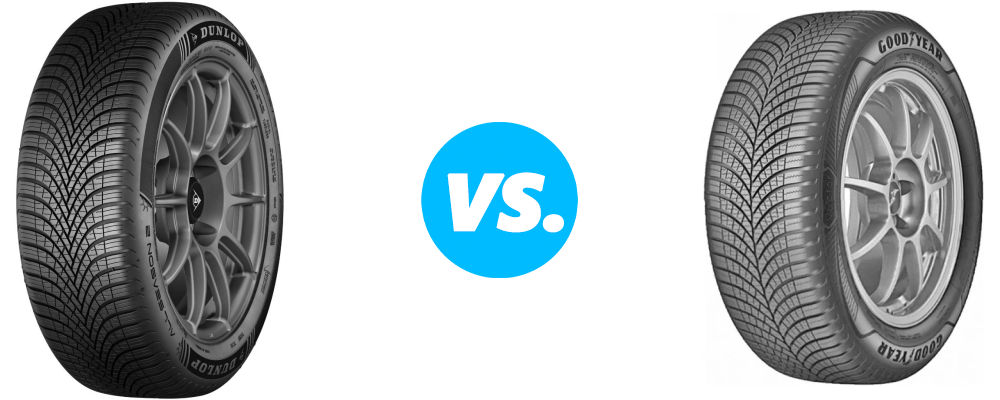
Looking for more tire comparisons? Here are other direct comparisons involving these tires:


Footnote
This page has been developed using tire industry testing best practices. This means we are only comparing tests which have had both tires in the same test.
Why is this important? Tire testing is heavily affected by things like surface grip levels and surface temperature, which means you can only compare values from the same day. During a tire test external condition changes are calculated into the overall results, but it is not possible to calculate this between tire tests performed on different days or at different locations.
As a result you will see other tests on Tire Reviews which feature both the %s and %s, but as they weren't conducted on the same day, the results are not comparable.
Lots of other websites do this sort of tire comparison, Tire Reviews doesn't.
Discussion
- No comments yet — be the first.